These 15 ground beef dinners give 24 to 44 g of protein per serving and 240 to 750 calories.
- Enchiladas (44 g) and shepherd's pie (39 g) lead, thanks to cheese, beans and lentils.
- 90% lean beef has 20.0 g of protein per 100 g raw, against 17.2 g for 80% lean.
- Brown meat can still be undercooked, so you check that every dish reaches 160°F.
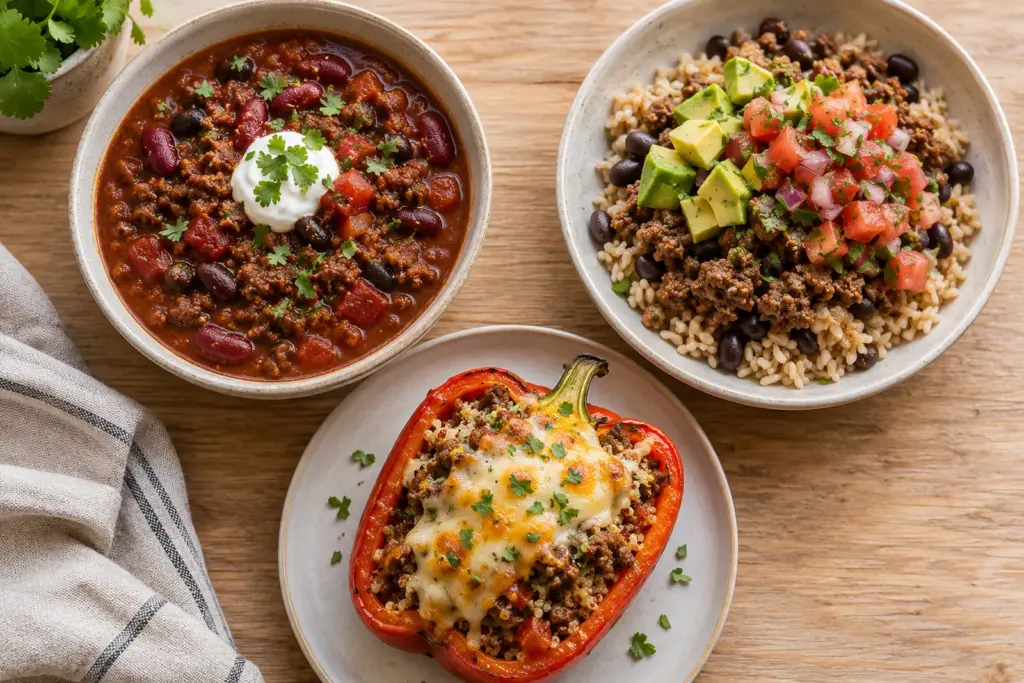
Each recipe starts with 1 pound of ground beef (sold as hamburger meat in some stores and beef mince in the UK), serves 4, and gives its protein per serving, so you can compare weekday dinners before you shop. Every nutrition figure comes from USDA FoodData Central values, and the sections below show the math so you can redo it for your own pack of beef.
Which Ground Beef Has the Most Protein?
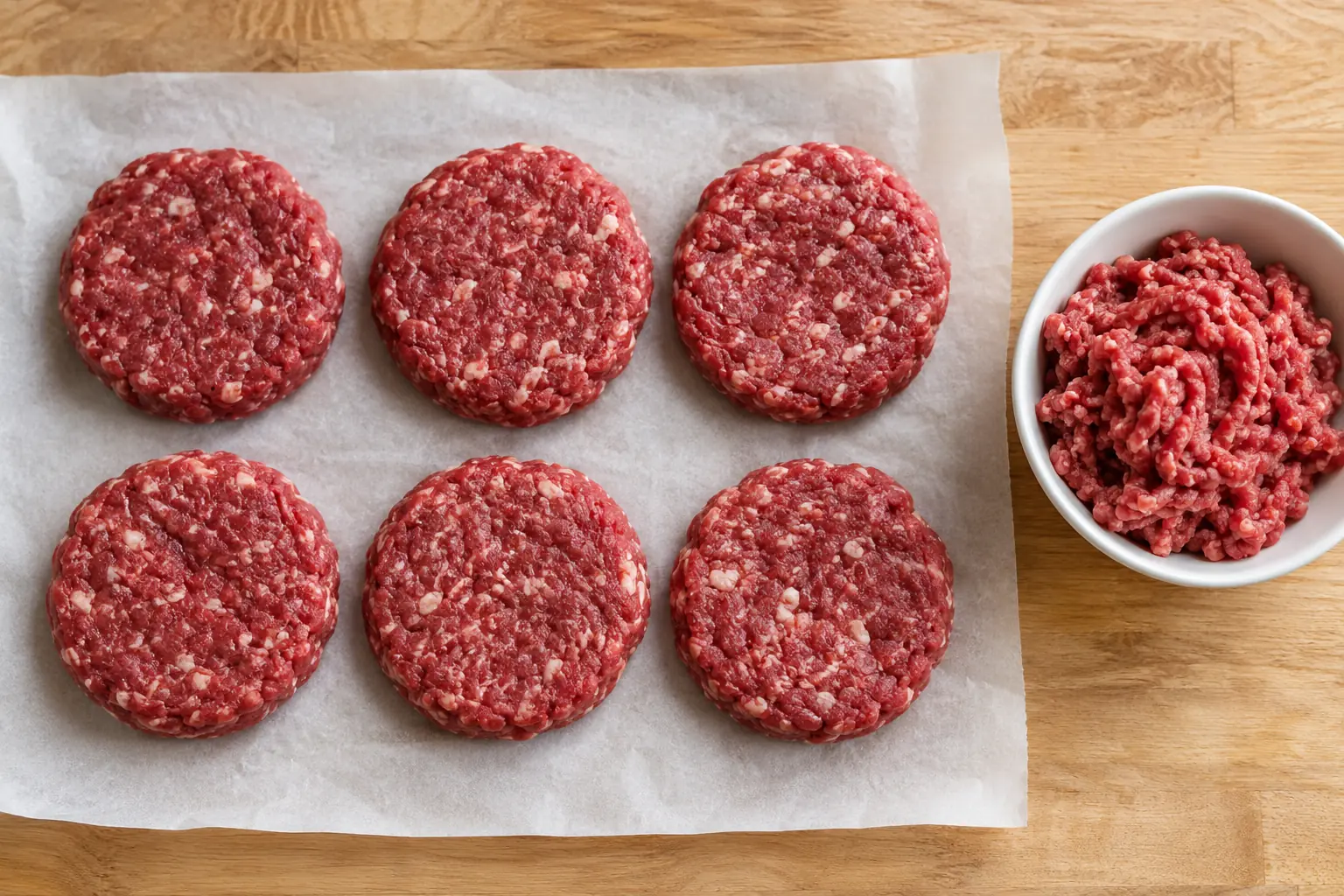
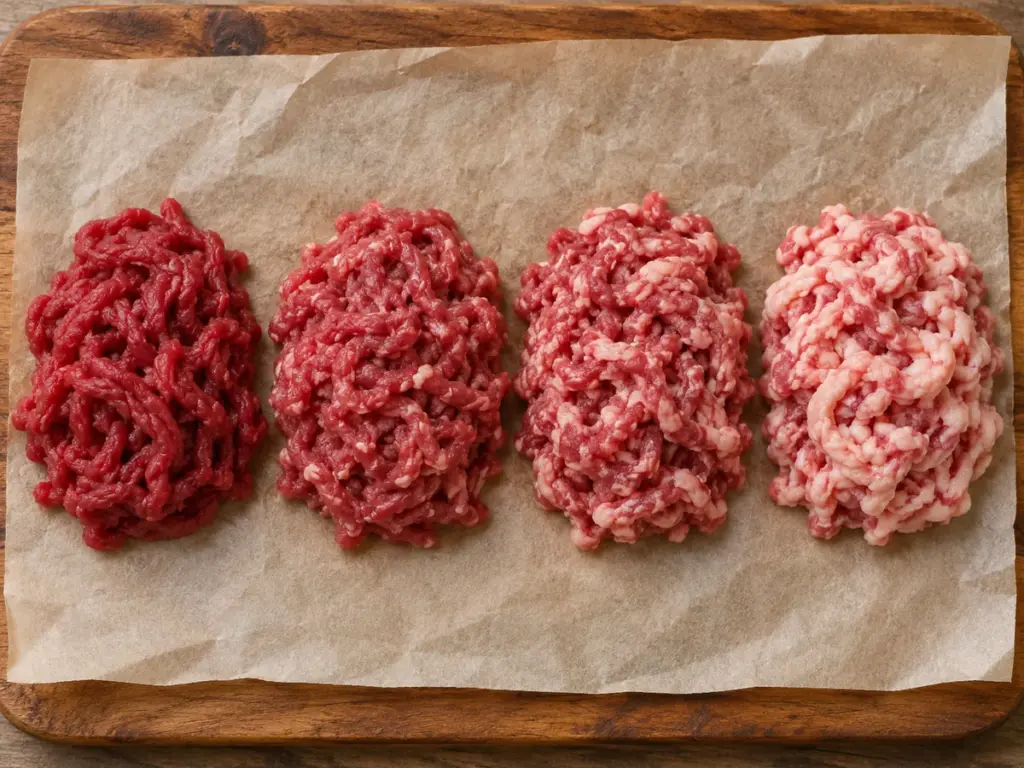
Leaner ground beef has more protein by weight, because less of each ounce is fat. USDA lists raw 93/7 beef at 20.85 g of protein per 100 g, 90/10 at 20.0 g, 85/15 at 18.59 g and 80/20 at 17.17 g.
In a 4-ounce raw portion, you get about 4 grams more protein from the leanest pack than from the fattiest.
| Raw ground beef | Protein per 4 oz | Fat per 4 oz | Calories per 4 oz | Protein per pound |
|---|---|---|---|---|
| 93% lean | 23.6 g | 7.9 g | 172 | 94.6 g |
| 90% lean | 22.6 g | 11.3 g | 199 | 90.7 g |
| 85% lean | 21.0 g | 17.0 g | 243 | 84.3 g |
| 80% lean | 19.4 g | 22.6 g | 287 | 77.9 g |
Every recipe uses 90% lean, 10% fat beef except the Bolognese, whose ingredient list names 80/20. If you buy 80/20 for the others, you subtract about 3 grams of protein per serving.
Ground sirloin comes from one lean cut and has less fat than regular ground beef, so you can use it in any recipe that calls for 90/10.
- Skillet dishes, where you drain the pan
- Fillings baked inside vegetables
- The most protein: about 13 g more per pound than 80/20
- Sauces that simmer 20 minutes or longer, like the Bolognese
- Kofta and meatloaf muffins, at about 3 g less protein per serving
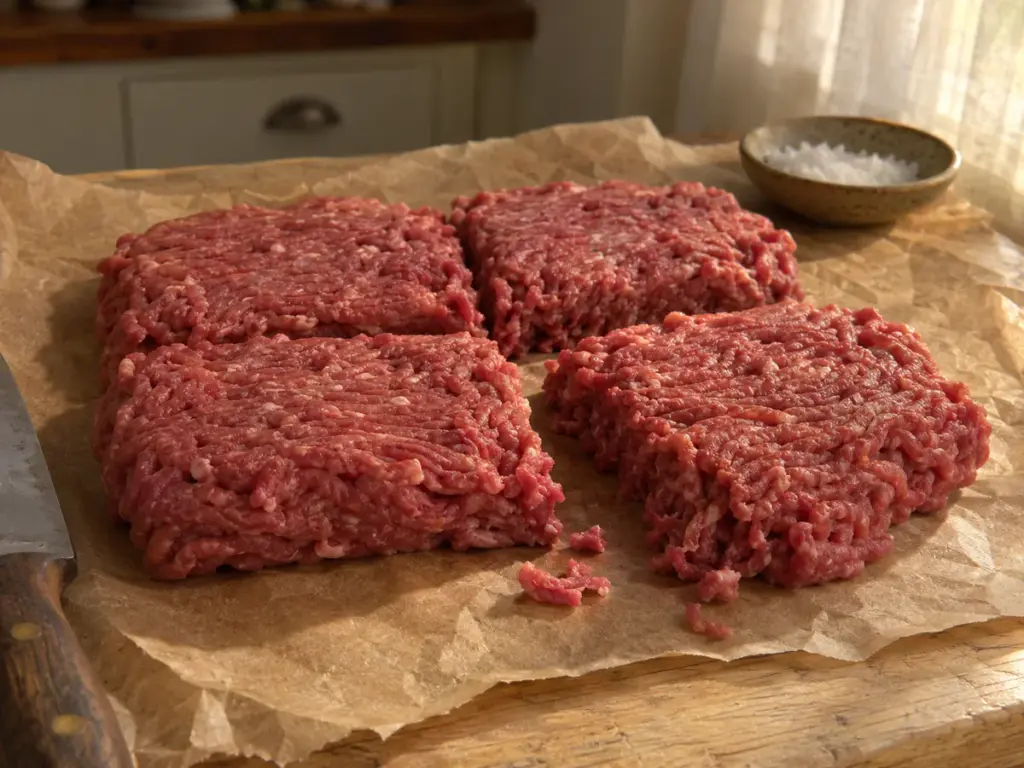
The recipes divide 1 pound of raw beef into four portions, which is 4 ounces raw per person. Beef loses about a quarter of its weight in the pan (4 raw ounces cook down to about 3), and the cooked-weight protein figures are in the FAQ.
If you cook for a bigger crowd, scale up from the per-person beef amounts for each dish.
How Much Protein Does Each Recipe Have?
The lists rank all 15 recipes by estimated protein per serving and name where the extra protein comes from. Every recipe makes 4 servings, so you multiply by 4 for the whole pot.
- Beef and Black Bean Enchiladas (recipe 10), 44 g, from cheddar, black beans and tortillas
- Beef and Lentil Shepherd's Pie (recipe 6), 39 g, from lentils, mashed potatoes and peas
- Classic Beef Chili (recipe 1), 36 g, from kidney beans and black beans
- Cheesy Beef and Cauliflower Casserole (recipe 12), 36 g, from cheddar, Parmesan and sour cream
- Ground Beef and Mushroom Stroganoff (recipe 13), 34 g, from whole wheat noodles and sour cream
- Stuffed Bell Peppers with Quinoa (recipe 2), 33 g, from cheddar and quinoa
- Korean Beef Bibimbap Bowls (recipe 11), 33 g, from four fried eggs and rice
- High-Protein Beef Taco Bowls (recipe 5), 31 g, from black beans and brown rice
- Low-Carb Beef Zucchini Boats (recipe 7), 30 g, from mozzarella and zucchini
- Beef and Quinoa Stuffed Cabbage Rolls (recipe 14), 29 g, from quinoa, rice and an egg
- Mediterranean Beef Kofta with Tzatziki (recipe 15), 29 g, from Greek yogurt in the tzatziki
- Ground Beef and Broccoli Stir-Fry (recipe 4), 27 g, from broccoli and soy sauce
- Beef and Veggie Meatloaf Muffins (recipe 8), 26 g, from egg and breadcrumbs
- Beef and Spinach Skillet (recipe 3), 24 g, almost all from the beef
- Spaghetti Squash with Beef Bolognese (recipe 9), 24 g, from the 80/20 beef and a little tomato paste
Brand, can size and how you portion the pot move each number by a few grams, so treat them as estimates. The Daily Value for protein on US food labels is 50 g and the one for fiber is 28 g, according to the FDA, so a serving of any recipe here gives about half of the protein value or more.
Which Recipe Fits Your Calorie, Fiber or Carb Goal?
If protein is not your only goal, these picks sort the same USDA-based estimates by calories, carbs and fiber, per serving.
- Fewest calories: 3. Beef and Spinach Skillet (240), 8. Meatloaf Muffins (290) and 4. Stir-Fry (310).
- Most protein per 100 calories: the skillet at 9.9 g, then the muffins at 9.0 g and the zucchini boats at 8.8 g.
- Lowest carbs: the skillet (2 g), kofta (7 g), stir-fry (8 g) and zucchini boats (10 g).
- Most fiber: chili (13 g), shepherd's pie (10 g), then enchiladas and taco bowls (9 g each).
- Under 600 calories: 12 of the 15, while stroganoff (about 600) and shepherd's pie (about 610) sit right at the line.
- No pasta or noodles: every recipe except the stroganoff.
The enchiladas are the one recipe well past 600, at about 750 calories per serving, because 1 ½ cups of cheddar and eight flour tortillas add up. If you want an easy trim, you can use less cheese, and recipe 10 gives the numbers.
Which Add-Ins Raise the Protein the Most?
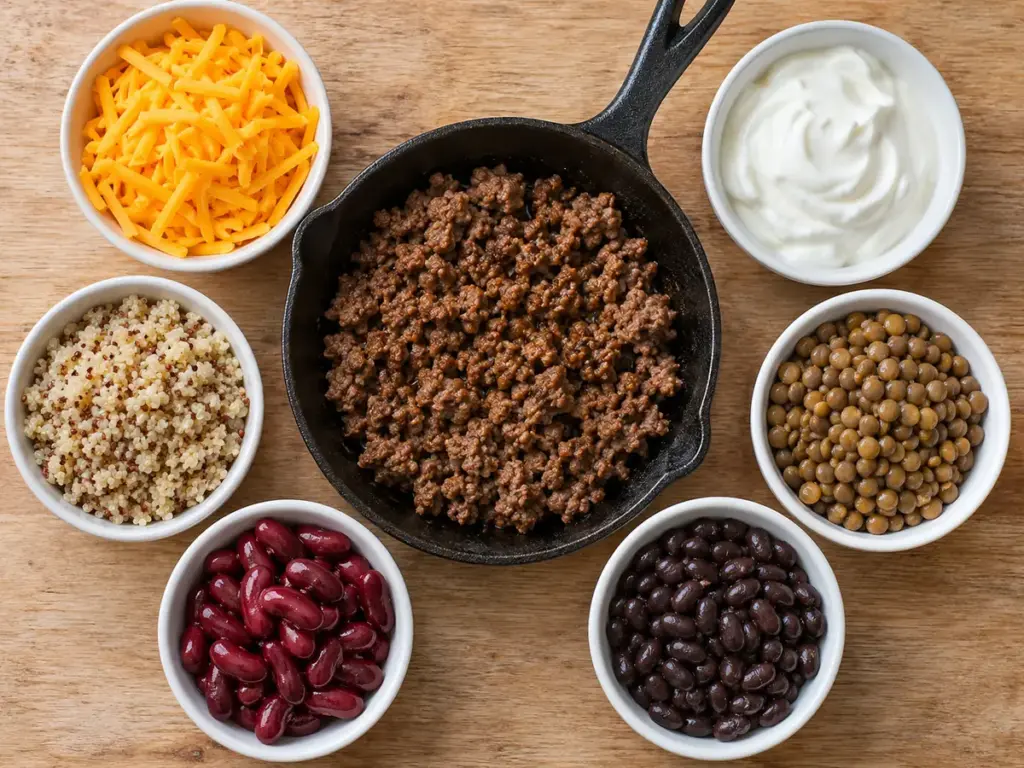
Beef supplies 51 to 96 percent of the protein in these recipes, and the rest comes from add-ins. Each add-in below adds a different amount at its typical serving, from USDA values, so you can see which ones move the number most.
| Add-in | Amount | Protein |
|---|---|---|
| Cheddar, shredded | 1 cup | 25.8 g |
| Whole milk Greek yogurt | 1 cup | 22.1 g |
| Cooked lentils | 1 cup | 17.9 g |
| Black beans, drained | 1 cup | 15.2 g |
| Kidney beans, drained | 1 cup | 12.8 g |
| Large eggs | 2 eggs | 12.6 g |
Cheese and yogurt add the most protein per cup, and they also add fat, so you see more calories in the cheesy recipes than in the bean ones. Beans and lentils come next, and lentils edge out black beans by about 3 g per cup.
Smaller add-ins give less, such as grated Parmesan at 14.2 g per half cup, quinoa at 8.1 g per cup and brown rice at 5.5 g per cup. Four cups of raw spinach add just 3.4 g, so you will find the spinach skillet near the bottom of the ranking.
How Do You Cook Ground Beef to a Safe 160°F?
Ground beef is safe once the center reaches 160°F, and you can only check that reliably with a food thermometer. Color is not a safe guide: in USDA research, about 1 in 4 beef patties turned brown before they reached 160°F.
- Spread the beef in one layer. Use a pan wide enough that you can keep the meat in a single layer, then break it into pieces as it browns.
- Brown it, then test it. Once no pink shows, you have passed only a first check, and the color can mislead you in either direction.
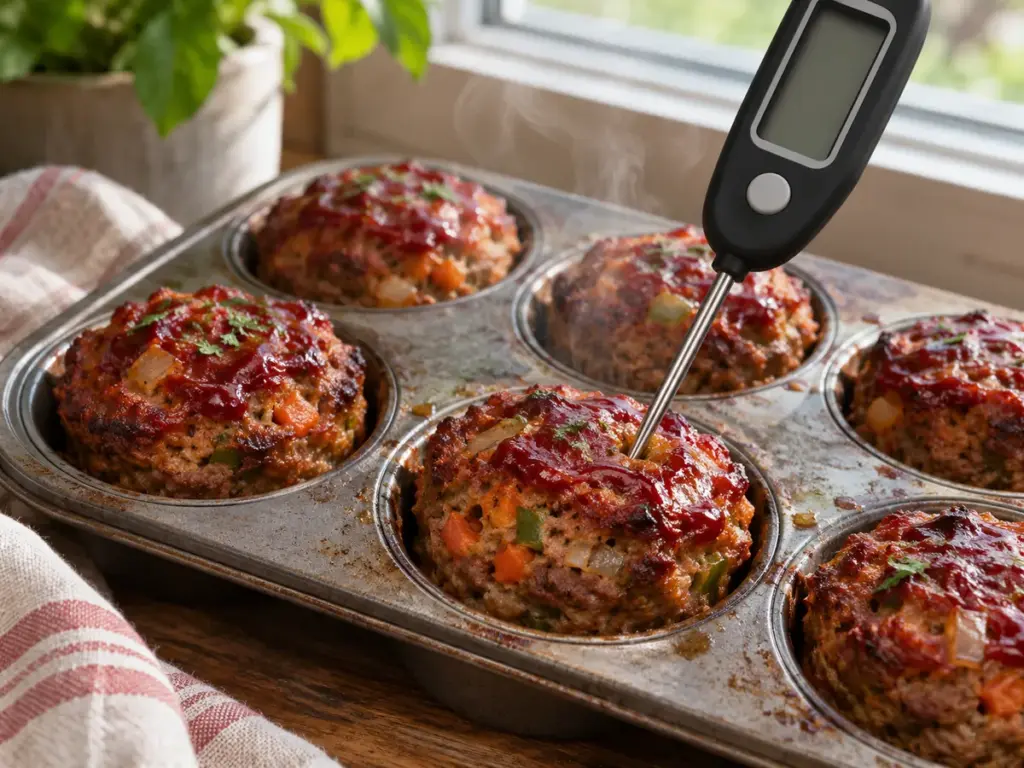
- Probe the thickest part. For crumbles, you stir and test several spots. For meatloaf muffins, kofta and any shaped meat, push the thermometer into the center.
- Drain the fat that pools. The recipes say to drain when needed. The protein stays in the meat.
The recipes below say "until browned and no pink remains" as the first check. The real check is a thermometer reading of 160°F, taken before you add the next ingredient, or at the end when the beef cooks through in the oven.
1. Classic Beef Chili
Two cans of beans add about 43 g of protein to this pot, nearly half of the 91 g the pound of beef supplies, so you get a hearty chili without extra meat. You'll need about 45 minutes.
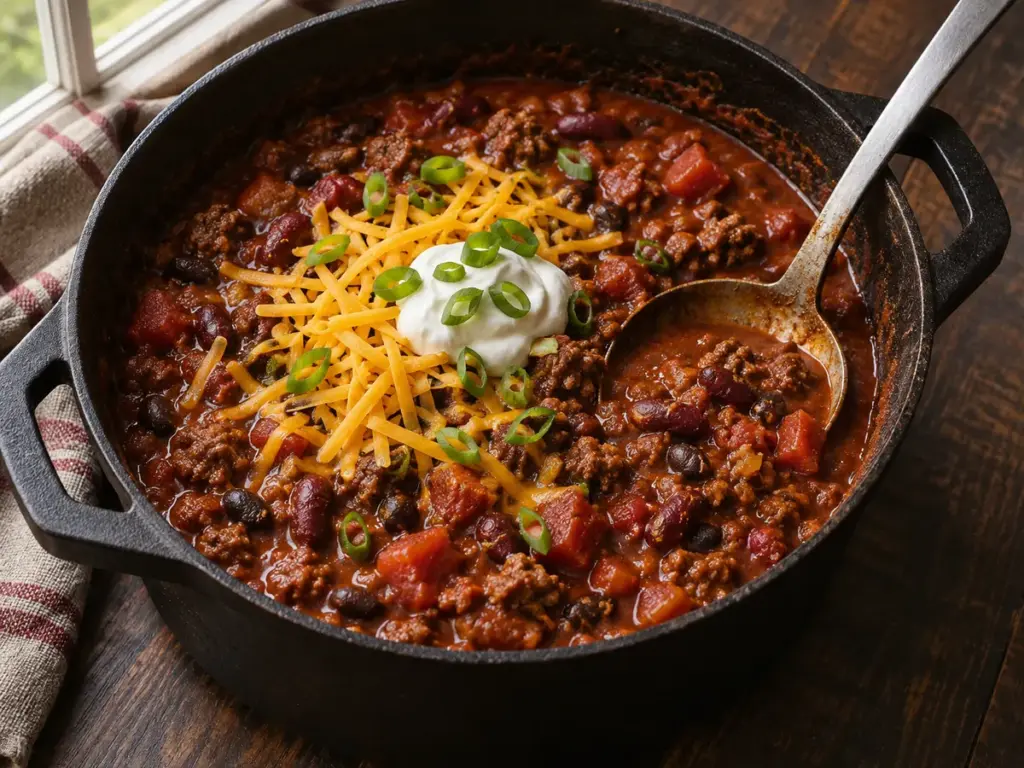
Per serving (1 of 4): about 440 calories, 36 g of protein, 13 g of fiber, 38 g of carbs and 17 g of fat.
Why It Works
The beans give you 13 g of fiber per serving, nearly half of the 28 g Daily Value, and as they soften they thicken the pot without any flour.
When you stir the spices into the browned beef before the liquid goes in, they toast in the beef fat for a minute, and we'd keep that step for a chili with more depth than one where the spices only simmer.
Ingredients
- 1 pound 90% lean ground beef
- 1 tablespoon olive oil
- 1 medium onion, diced
- 3 cloves garlic, minced
- 1 can (14.5 oz) diced tomatoes
- 1 can (15 oz) kidney beans, drained and rinsed
- 1 can (15 oz) black beans, drained and rinsed
- 2 tablespoons chili powder
- 1 teaspoon ground cumin
- ½ teaspoon smoked paprika
- Salt and black pepper to taste
- 1 cup beef broth or water
Instructions
- Heat the olive oil in a large pot over medium heat. Add the onion and cook, stirring now and then, until you see it turn soft and translucent, about 5 minutes.
- Add the garlic and cook for 1 minute, until you can smell it. Take care not to let it burn.
- Raise the heat to medium-high and add the beef. Break it up with a spoon and cook until it is browned, about 7 minutes. Drain excess fat if you need to.
- Stir in the chili powder, cumin, smoked paprika, salt and pepper until the meat and onions are evenly coated.
- Add the tomatoes, both cans of beans and the broth. Bring to a simmer, reduce the heat to low and partly cover the pot. Cook 25 to 30 minutes, stirring now and then, until you see the sauce thicken.
- Taste, adjust the seasoning and serve warm, with shredded cheese, sour cream or chopped green onions if you like.
Swaps and Extras
- If you use pinto beans in place of either can of kidney or black beans, the protein stays within about 1 g per serving.
- Chipotle powder, ground from smoke-dried jalapeños, gives you a smokier pot in place of chili powder.
- 93% lean beef adds about 1 g of protein and takes about 25 calories off each serving.
- Toppings count: if you add ¼ cup of shredded cheddar to a bowl, you add about 6 g of protein and 110 calories.
- Serving ideas: you can ladle the chili over brown rice or pair it with cornbread, and a spoonful of plain Greek yogurt on top adds extra protein.
- Leftovers: chili thickens as it cools, so you add a splash of broth when you warm it.
2. Stuffed Bell Peppers with Ground Beef and Quinoa
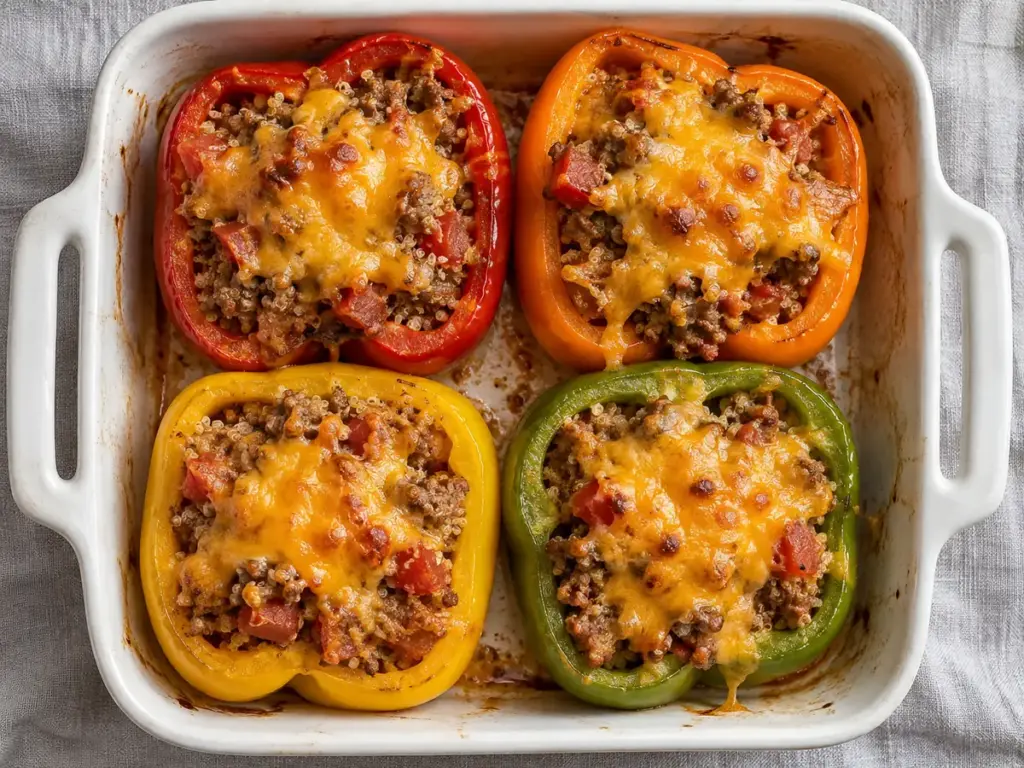
Quinoa and cheese carry the protein here: the cup of cooked quinoa adds about 8 g and the cup of cheddar about 26 g, on top of 91 g from the beef. You'll need about 1 hour.
Per serving (1 of 4): about 460 calories, 33 g of protein, 6 g of fiber, 24 g of carbs and 26 g of fat.
Why It Works
Cooked quinoa goes in already soft, so you need no added liquid, and draining the tomatoes keeps juice from pooling inside the pepper.
The foil steams the peppers tender during the first 30 minutes, and the last 10 minutes uncovered give you a browned cheese top.
Ingredients
- 4 large bell peppers, tops cut off and seeds removed, any color
- 1 pound 90% lean ground beef
- 1 cup cooked quinoa
- 1 small onion, finely chopped
- 2 cloves garlic, minced
- 1 cup canned diced tomatoes, drained
- 1 teaspoon dried oregano
- ½ teaspoon salt
- ¼ teaspoon black pepper
- 1 cup shredded cheddar or mozzarella
- 1 tablespoon olive oil
Instructions
- Preheat the oven to 375°F (190°C). Cut the tops off the peppers, remove the seeds and membranes, and stand the peppers upright in a baking dish.
- Heat the olive oil in a large skillet over medium heat. Cook the onion for 3 to 4 minutes, until you see it soften, then add the garlic and cook 1 minute more.
- Add the beef and cook, breaking it up, until you see no pink. Drain excess fat if you need to.
- Stir in the quinoa, drained tomatoes, oregano, salt and pepper. Cook 2 minutes to combine.
- Fill each pepper with the mixture and top with the cheese. Cover loosely with foil and bake 30 minutes, then remove the foil and bake 10 minutes more, until you can pierce the peppers easily and the cheese is melted and lightly golden.
- Spoon any juices from the pan over the peppers before serving.
Swaps and Extras
- Orange, red or yellow peppers hold the filling as well as green ones, and we'd pick them if you want a sweeter shell.
- If you use brown rice in place of quinoa, you lose less than 1 g of protein per serving.
- For other fillings, a pepper stuffed with ground beef can also take rice, tomato or taco spices in place of the quinoa.
- If you use dairy-free cheese, you lose up to 6 g of protein per serving, because the cheddar supplies about that much.
- Prep ahead: you can fill the peppers up to a day early and refrigerate them, then bake them just before dinner, adding a few minutes if they go in cold.
3. Beef and Spinach Skillet
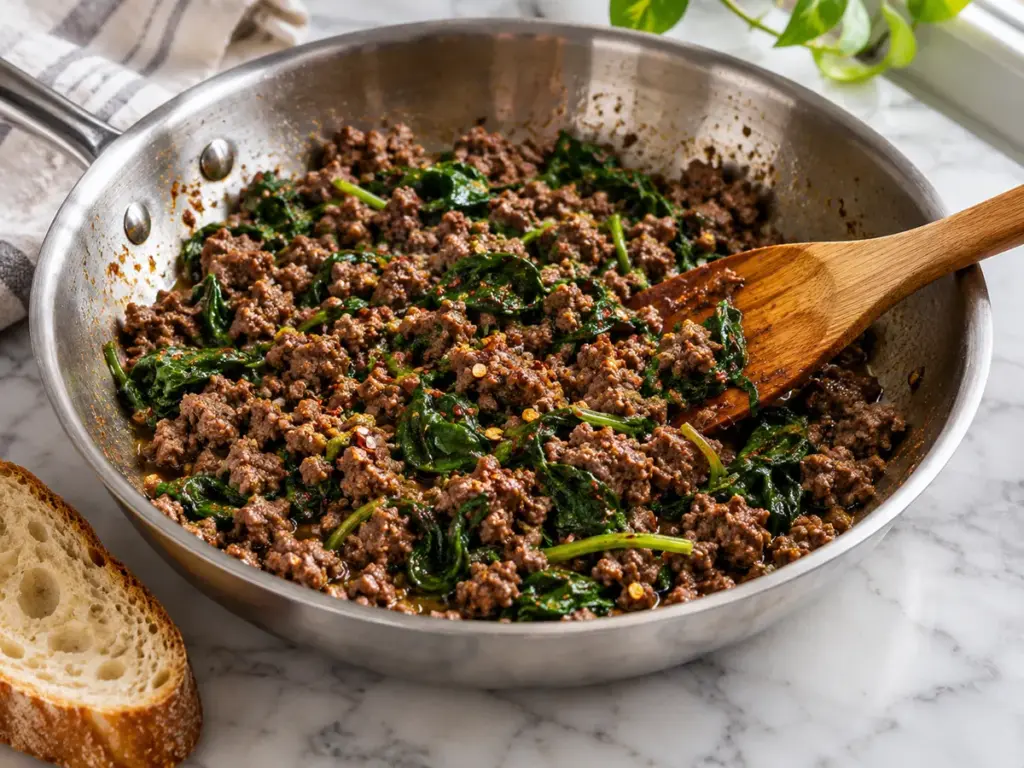
This is tied with the Bolognese for the lowest-protein recipe on the list, at about 24 g per serving, because 4 cups of spinach add only about 3 g to the pan. If you serve it over a cup of cooked quinoa, your plate gains about 8 g, and brown rice adds about 5 g.
It cooks in one pan, with the beef browned first and the vegetables added after, the same order most ground beef skillet dinners follow. You'll need about 20 minutes.
Per serving (1 of 4): about 240 calories, 24 g of protein, 1 g of fiber, 2 g of carbs and 15 g of fat.
Why It Works
You add the garlic and pepper flakes after the beef has browned, so they cook for a minute or two instead of burning in a hot, empty pan.
A pan full of raw leaves wilts to a small handful in 3 to 4 minutes, so you add the spinach last and in batches.
Ingredients
- 1 pound 90% lean ground beef
- 4 cups fresh spinach, roughly chopped if the leaves are large
- 3 cloves garlic, minced
- ¼ teaspoon crushed red pepper flakes, more or less to taste
- 1 tablespoon olive oil
- ½ teaspoon salt
- ¼ teaspoon black pepper
Instructions
- Heat the olive oil in a large skillet over medium heat until it shimmers. Add the beef, break it apart with a spatula and cook until you see no pink, 5 to 7 minutes. Drain excess fat if you need to.
- Stir in the garlic and red pepper flakes and cook 1 to 2 minutes, until you can smell the garlic but it has not browned.
- Add the spinach in batches, stirring each batch into the beef as it wilts. You'll need 3 to 4 minutes for this.
- Season with salt and pepper, taste, and cook 1 minute more to blend the flavors.
- Remove from the heat and serve over cooked rice or quinoa, or with crusty bread.
Swaps and Extras
- Cooked lentils: if you stir in 1 cup, you add about 4.5 g of protein and 4 g of fiber per serving.
- If you top your plate with a fried egg, you add about 6 g of protein.
- Kale or chard can replace the spinach, but chopped kale needs a few more minutes to soften.
- Leftovers: you can warm them in a skillet with a splash of water, so the spinach does not dry out.
4. Ground Beef and Broccoli Stir-Fry
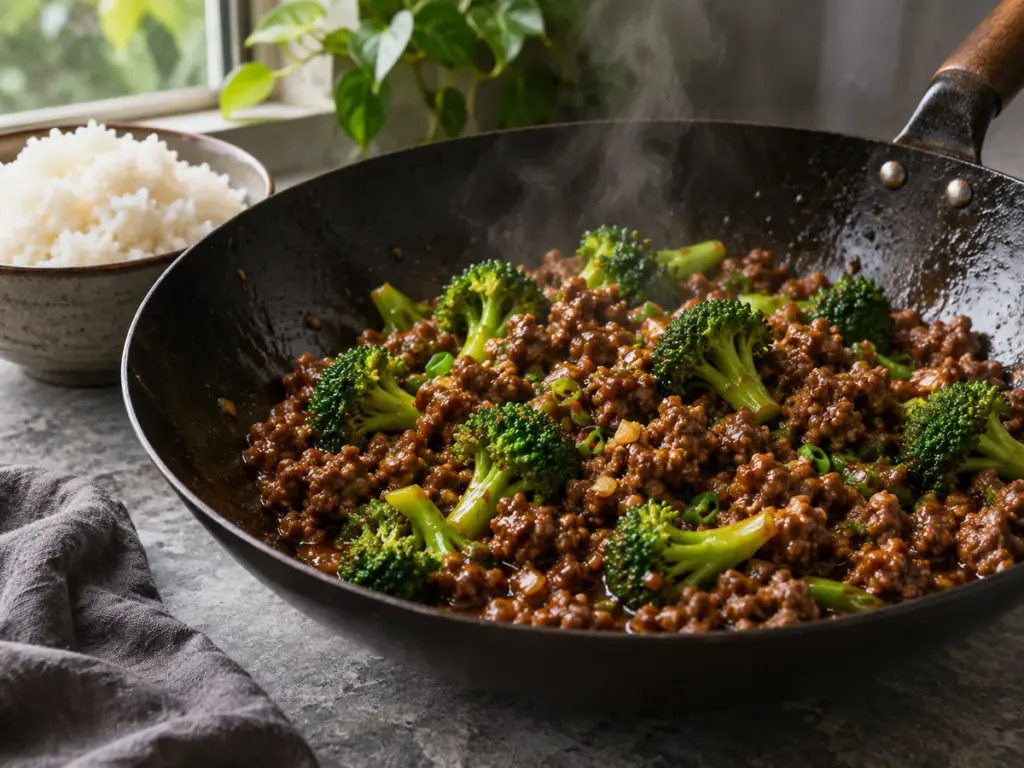
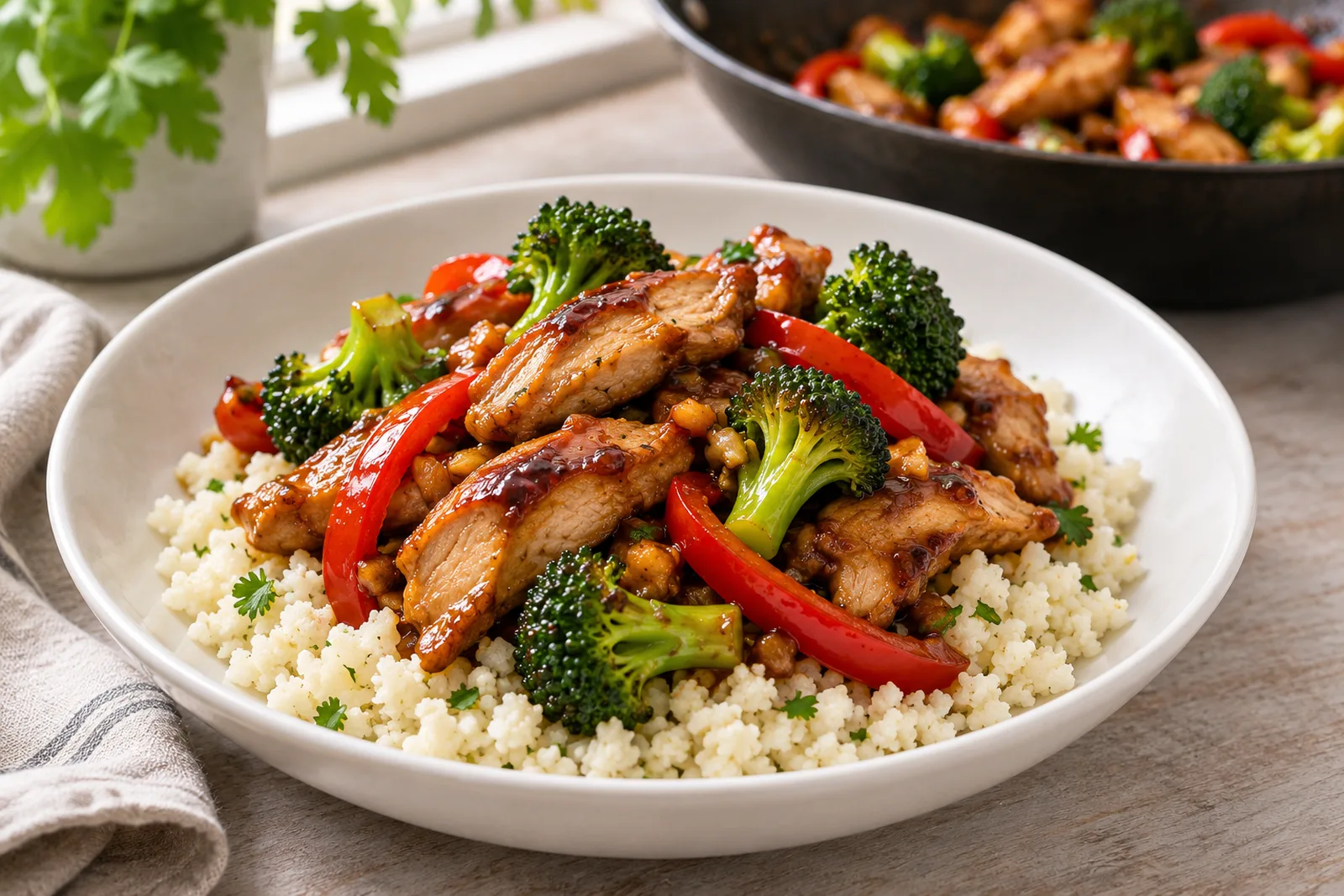
Broccoli adds about 10 g and the soy sauce about 5 g to the pan, which lifts the dish to about 27 g of protein per serving, without counting the rice the recipe only suggests as a side. You'll need about 20 minutes.
Per serving (1 of 4): about 310 calories, 27 g of protein, 2 g of fiber, 8 g of carbs and 20 g of fat.
Why It Works
You whisk the cornstarch into the cold sauce first, so it thickens without lumps and coats the beef in a glossy glaze.
If you add the broccoli after the beef and cook it only 3 to 4 minutes, it stays bright green and crisp.
Ingredients
- 1 pound 90% lean ground beef
- 4 cups broccoli florets, fresh or thawed from frozen
- 2 tablespoons vegetable oil
- 3 cloves garlic, minced
- 1 tablespoon fresh ginger, minced
- ¼ cup soy sauce
- 1 tablespoon oyster sauce
- 1 teaspoon cornstarch
- ¼ cup water
- ½ teaspoon black pepper
- 1 teaspoon sesame oil, optional
Instructions
- Heat the vegetable oil in a large skillet or wok over medium-high heat. Add the beef, break it apart as it cooks and brown it for 5 to 7 minutes, until you see no pink. Drain excess fat if you need to.
- Add the garlic and ginger and stir for about 1 minute, until you can smell them. Keep the garlic from burning.
- Add the broccoli and stir-fry 3 to 4 minutes, until you see it turn bright green and begin to soften while it stays crisp.
- Whisk the soy sauce, oyster sauce, cornstarch and water in a small bowl until smooth. Pour it into the skillet and cook 2 to 3 minutes, until you see the sauce thicken and coat the beef and broccoli.
- Remove from the heat and stir in the pepper and the sesame oil, if using. Serve right away over steamed rice or cauliflower rice.
Swaps and Extras
- Tamari makes it gluten-free, as long as the tamari and oyster sauce labels both say gluten-free.
- You get a soy-free dish with coconut aminos.
- Oyster sauce has shellfish in it, so you leave it out or use a mushroom-based stir-fry sauce when someone has an allergy.
- Cauliflower florets replace the broccoli for fewer carbs, and 1 cup of edamame stirred in adds about 5 g of protein per serving.
- Sauce ahead: you can whisk it a day early, and it needs another stir before it goes in, because the cornstarch settles.
5. High-Protein Beef Taco Bowls
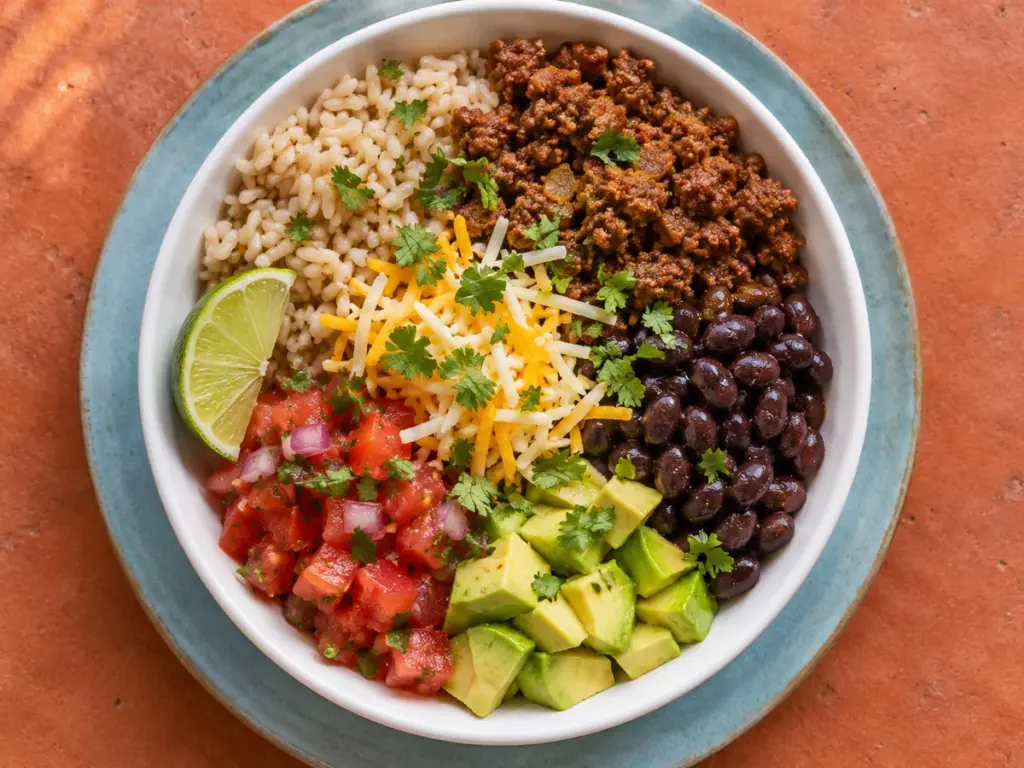
Brown rice adds about 11 g and a cup of black beans about 15 g, so the bowl reaches about 31 g of protein per serving, while the avocado, salsa and spices together add only about 6 g. You'll need about 15 minutes once the rice is cooked.
Per serving (1 of 4): about 480 calories, 31 g of protein, 9 g of fiber, 42 g of carbs and 22 g of fat.
Why It Works
Rice, black beans and avocado together give you 9 g of fiber in each bowl.
When you season the beef after it browns, the spices coat every crumble without scorching, and you keep the whole bowl hot by warming the beans separately.
Ingredients
- 1 pound 90% lean ground beef
- 1 tablespoon olive oil
- 1 teaspoon chili powder
- 1 teaspoon ground cumin
- ½ teaspoon garlic powder
- ½ teaspoon smoked paprika
- Salt and black pepper to taste
- 2 cups cooked brown rice
- 1 cup canned black beans, drained and rinsed
- 1 medium avocado, diced
- ½ cup fresh salsa
- Optional toppings: chopped cilantro, lime wedges, shredded cheese, sour cream
Instructions
- Heat the olive oil in a large skillet over medium heat. Add the beef and cook, breaking it apart with a spoon, until it is browned and cooked through, 6 to 8 minutes.
- Stir in the chili powder, cumin, garlic powder, smoked paprika, salt and pepper. Cook 1 minute so the spices warm in the hot beef.
- Warm the black beans in a small pot or the microwave.
- Spoon the rice into bowls and top with the seasoned beef, black beans, avocado and salsa.
- Add any optional toppings, such as cilantro, a squeeze of lime, shredded cheese or sour cream, and serve right away.
Swaps and Extras
- If you spoon the beef over cauliflower rice, you get a grain-free bowl like the low-carb dinner bowls built on it, and the swap cuts about 100 calories and 20 g of carbs per serving for under 1 g of protein.
- Quinoa in place of brown rice adds about 1 g of protein per serving.
- If you use plain Greek yogurt in place of sour cream, you get more protein, at 9.0 g per 100 g against 2.4 g.
6. Beef and Lentil Shepherd's Pie
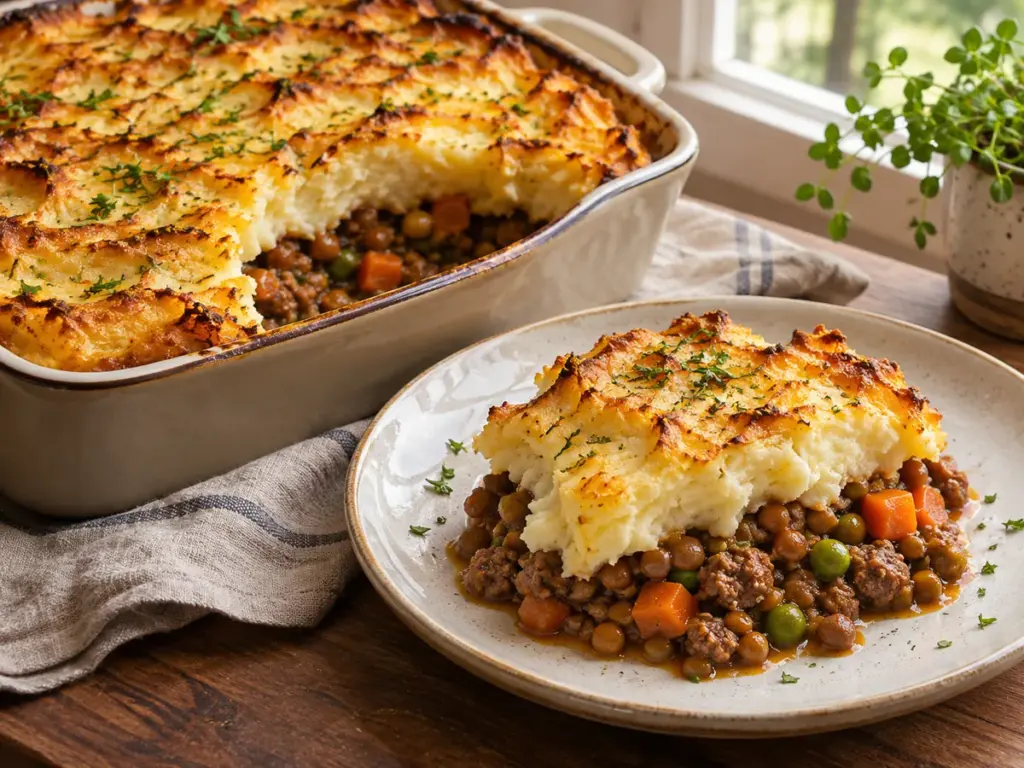
One cup of dry lentils brings about 47 g of protein, roughly half of what the beef gives, and the peas and mashed potatoes add about 7 g and 8 g more, so each serving has about 39 g of protein. Shepherd's pie is traditionally made with lamb, so a beef version is also called cottage pie.
Per serving (1 of 4): about 610 calories, 39 g of protein, 10 g of fiber, 60 g of carbs and 23 g of fat. You'll need about 1 hour.
Why It Works
Lentils soak up the beef juices and broth, so the filling stays moist and stretches the beef further.
If you spread the mashed potatoes all the way to the edges of the dish, the filling stays covered and the top browns evenly in the 20-minute bake.
Ingredients
- 1 pound 90% lean ground beef
- 1 cup dry brown or green lentils, rinsed and drained
- 4 cups water or low-sodium beef broth
- 1 medium onion, finely chopped
- 2 cloves garlic, minced
- 2 medium carrots, diced
- 1 cup frozen peas, thawed
- 2 tablespoons tomato paste
- 1 teaspoon Worcestershire sauce
- 2 cups mashed potatoes, made with butter and milk
- 2 tablespoons olive oil
- Salt and black pepper to taste
Instructions
- Bring the water or broth to a boil in a pot, add the lentils, then reduce the heat and simmer uncovered 20 to 25 minutes, until a lentil is tender when you taste one. Drain any extra liquid and set the lentils aside.
- Heat the olive oil in a large skillet over medium heat. Cook the onion, garlic and carrots about 5 minutes, until you see them soften.
- Add the beef, breaking it up with a spoon, and cook until you see no pink. Drain excess fat if you need to.
- Stir in the lentils, tomato paste, Worcestershire sauce and peas. Season with salt and pepper and cook 5 minutes more.
- Preheat the oven to 400°F (200°C). Spread the meat and lentil mixture in a baking dish and cover it evenly with the mashed potatoes. Bake 20 minutes, until you see the topping turn golden and slightly crisp at the edges.
Swaps and Extras
- You can swap green or brown lentils for each other, while red lentils cook faster and turn soft.
- Sweet potatoes can replace the white potatoes in the topping.
- Mashed cauliflower keeps the protein about the same and lowers the carbs.
- You can balance the rich topping with a green vegetable or crisp salad, two of the easiest shepherd's pie sides.
- Prep ahead: you can assemble the pie up to a day early and keep it covered in the refrigerator, then bake it until it is steaming hot in the middle.
7. Low-Carb Beef Zucchini Boats
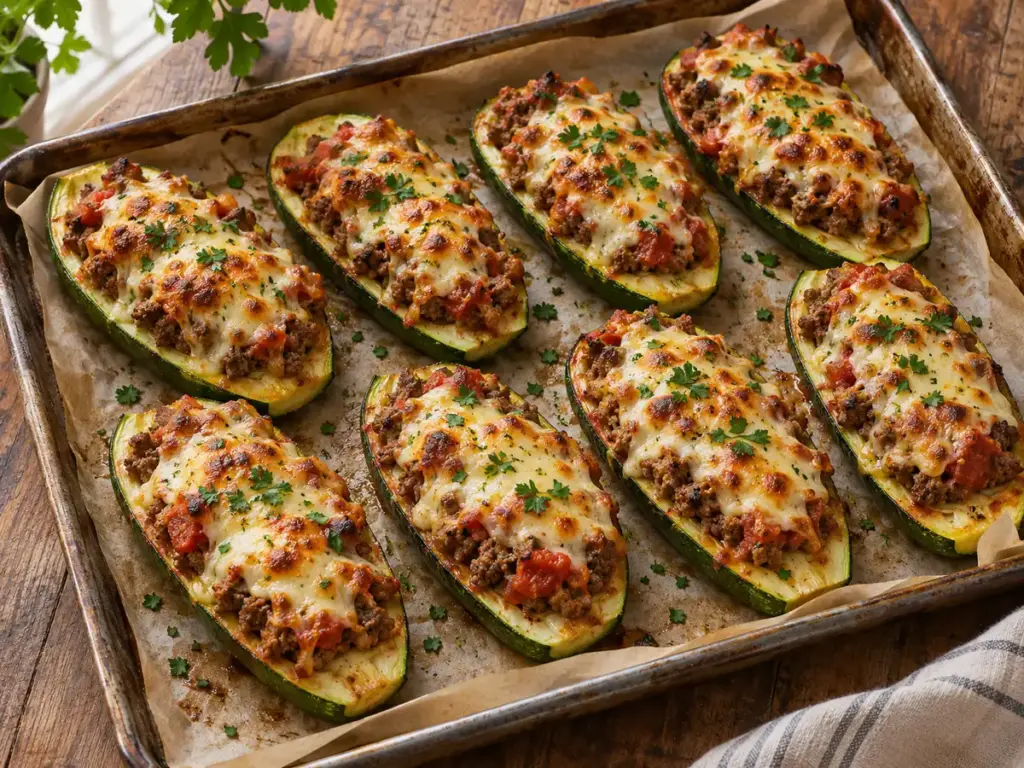
Mozzarella adds about 20 g and the four zucchini about 10 g, which gives about 30 g of protein per serving with 2 boats per person. The scooped-out zucchini goes back into the filling, so nothing is wasted.
Per serving (1 of 4): about 340 calories, 30 g of protein, 2 g of fiber, 10 g of carbs and 20 g of fat. You'll need about 35 minutes.
Why It Works
Zucchini holds a lot of water, so the boats bake on a sheet pan for only 15 to 20 minutes, and if you bake them longer, the shells go soft and leak.
When you cook the chopped flesh with the beef for 2 minutes, some of its water cooks off before the filling goes into the shells.
Ingredients
- 4 medium zucchini, halved lengthwise and hollowed out into 8 boats
- 1 pound 90% lean ground beef
- 1 small onion, finely chopped
- 2 cloves garlic, minced
- 1 cup shredded mozzarella
- 1 tablespoon olive oil
- 1 teaspoon dried Italian seasoning
- Salt and black pepper to taste
- Chopped fresh parsley or basil, optional
Instructions
- Preheat the oven to 375°F (190°C). Scoop the center out of each zucchini half to make a boat, then chop the scooped flesh and set it aside.
- Heat the olive oil in a large skillet over medium heat. Cook the onion and garlic about 3 minutes, until you see them soften.
- Add the beef, breaking it apart, and cook about 6 minutes, until you see no pink. Stir in the chopped zucchini, Italian seasoning, salt and pepper and cook 2 minutes more.
- Spoon the beef mixture into the boats, sprinkle the mozzarella on top and set them on a baking sheet.
- Bake 15 to 20 minutes, until you can pierce the zucchini easily and the cheese is melted and bubbly. Top with fresh herbs if you like and serve warm.
Swaps and Extras
- Taco seasoning in place of Italian seasoning gives a Southwestern version.
- Dairy-free cheese makes it dairy-free, but takes up to 5 g of protein off each serving.
- Another ½ cup of mozzarella adds about 2.5 g of protein and 33 calories per serving.
- If water collects on the baking sheet before you serve the boats, blot them with a paper towel.
8. Beef and Veggie Meatloaf Muffins
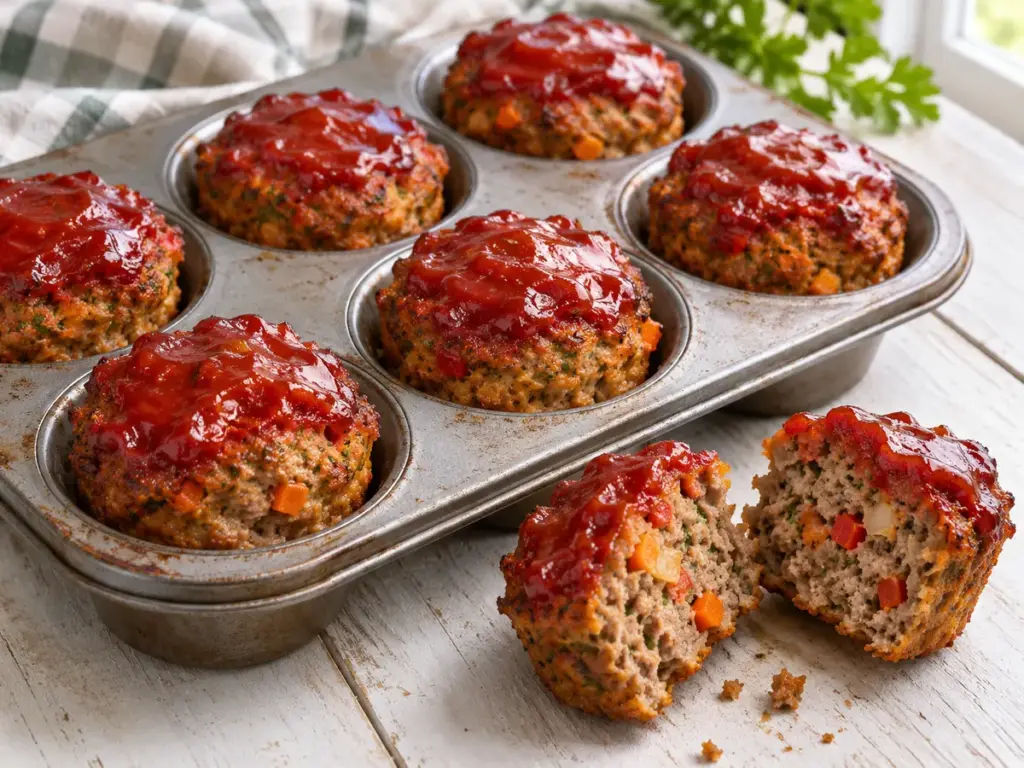
The egg and breadcrumbs add about 11 g, so the batch gives about 26 g of protein per serving, or about 9 g per muffin when 12 muffins make 4 servings of 3.
The beef is raw when it goes in the oven, so you check one muffin with a thermometer and wait for 160°F. You'll need about 35 minutes.
Per serving (1 of 4): about 290 calories, 26 g of protein, 2 g of fiber, 16 g of carbs and 13 g of fat.
Why It Works
Small muffins cook through in 20 to 25 minutes, much faster than a full meatloaf, and you get each portion already shaped.
You mix the beef gently because overmixing makes the muffins tough, and the grated vegetables keep them moist.
Ingredients
- 1 pound 90% lean ground beef
- ½ cup finely chopped onion
- ½ cup finely chopped bell pepper
- ½ cup grated carrot
- ⅓ cup breadcrumbs
- 1 large egg
- ¼ cup ketchup
- 2 cloves garlic, minced
- 1 teaspoon Worcestershire sauce
- 1 teaspoon dried Italian seasoning
- Salt and pepper to taste
- Optional: ¼ cup grated Parmesan
Instructions
- Preheat the oven to 375°F (190°C) and grease a 12-cup muffin tin or line it with paper liners.
- In a large bowl, combine the beef, onion, bell pepper, carrot, breadcrumbs, egg, ketchup, garlic, Worcestershire sauce, Italian seasoning, salt and pepper. Mix gently until just combined, because overmixing makes the muffins tough.
- Divide the mixture among the muffin cups and press it down lightly. Sprinkle Parmesan on top, if using.
- Bake 20 to 25 minutes, until you see the tops brown. Push a meat thermometer into the center of one muffin, and bake longer until it reads 160°F (71°C).
- Let the muffins cool a few minutes before taking them out of the tin. Serve warm with your favorite sides.
Swaps and Extras
- Grated zucchini, carrot or bell pepper can replace the chopped vegetables.
- If you want a gluten-free muffin, crushed oats replace the breadcrumbs, as long as the oats are labeled gluten-free.
- The optional Parmesan adds about 2 g of protein per serving.
9. Spaghetti Squash with Beef Bolognese
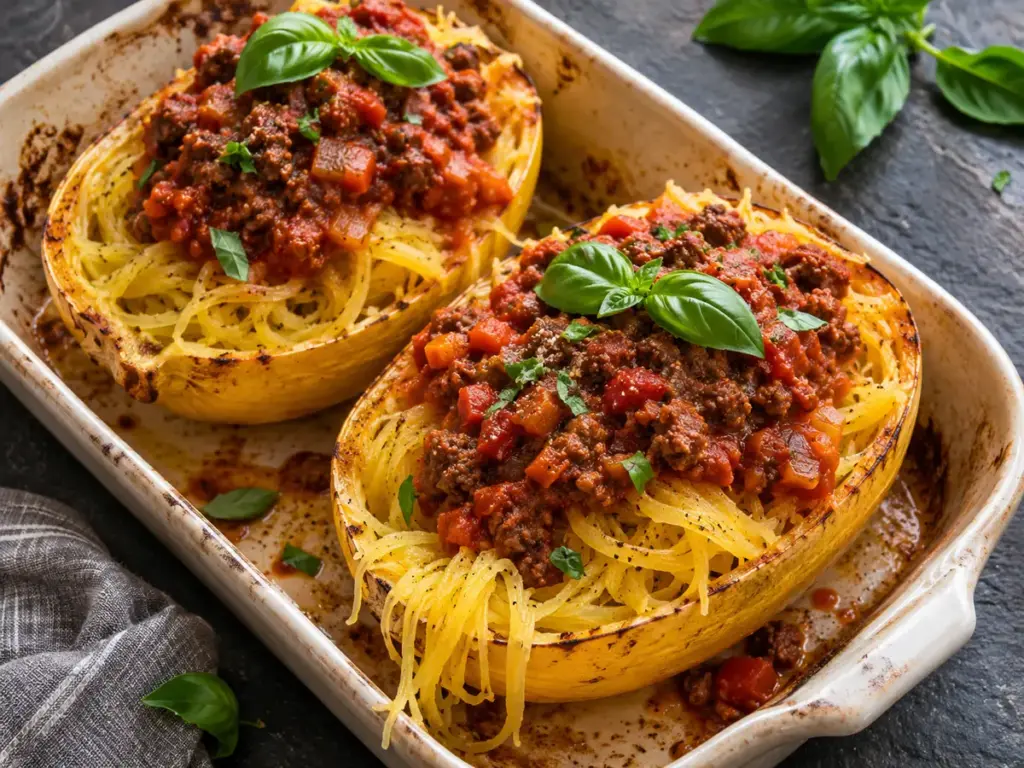
This is the only recipe that names 80/20 beef, which gives 78 g of protein per pound against 91 g for 90/10, and the squash adds only about 5 g, so a serving has about 24 g of protein.
If you use 90/10 beef in the same pot, you get about 27 g. You'll need about 1 hour, because the sauce simmers while the squash roasts.
Per serving (1 of 4): about 440 calories, 24 g of protein, 6 g of fiber, 28 g of carbs and 28 g of fat.
Why It Works
80/20 beef suits this sauce, because it simmers 20 to 25 minutes, the fat carries flavor, and you can spoon off what pools on top.
When you cook the tomato paste for 1 minute before the tomatoes go in, it darkens in the pan, and we'd keep that minute because it deepens the sauce.
Ingredients
- 1 medium spaghetti squash, halved lengthwise and seeded
- 1 tablespoon olive oil
- 1 pound 80/20 ground beef
- 1 small onion, finely chopped
- 2 cloves garlic, minced
- 1 carrot, finely diced
- 1 celery stalk, finely diced
- 1 can (14 oz) crushed tomatoes
- ¼ cup tomato paste
- ½ cup beef broth or water
- 1 teaspoon dried oregano
- ½ teaspoon dried basil
- Salt and black pepper to taste
- Chopped fresh parsley or basil, optional
Instructions
- Preheat the oven to 400°F (200°C). Brush the cut sides of the squash with olive oil and sprinkle with salt. Place the halves cut side down on a baking sheet and roast about 40 minutes, until the flesh is tender and you can shred it easily with a fork.
- While the squash roasts, brown the beef in a large skillet over medium heat, breaking it up, until you see no pink. Spoon off excess fat.
- Add the onion, garlic, carrot and celery and cook about 5 minutes, until you see them soften. Stir in the tomato paste and cook 1 minute to deepen its flavor.
- Pour in the crushed tomatoes and broth and season with the oregano, basil, salt and pepper. Bring to a simmer and cook gently 20 to 25 minutes, stirring now and then, until you see it thicken.
- Scrape the squash into strands with a fork, divide it among bowls and spoon the sauce on top. Garnish with fresh herbs if you like.
Swaps and Extras
- Mushrooms or cooked lentils replace the beef for a vegetarian sauce.
- Zucchini noodles or cauliflower rice replace the squash.
- Whole wheat spaghetti, 2 ounces dry per person, adds about 7 g of protein and 140 calories per serving compared with the squash.
- Rings instead of halves: if you cut the squash crosswise, you get longer strands, because the strands run around the squash.
- Prep ahead: you can cook the sauce a day early and roast the squash the day you serve it.
10. Beef and Black Bean Enchiladas
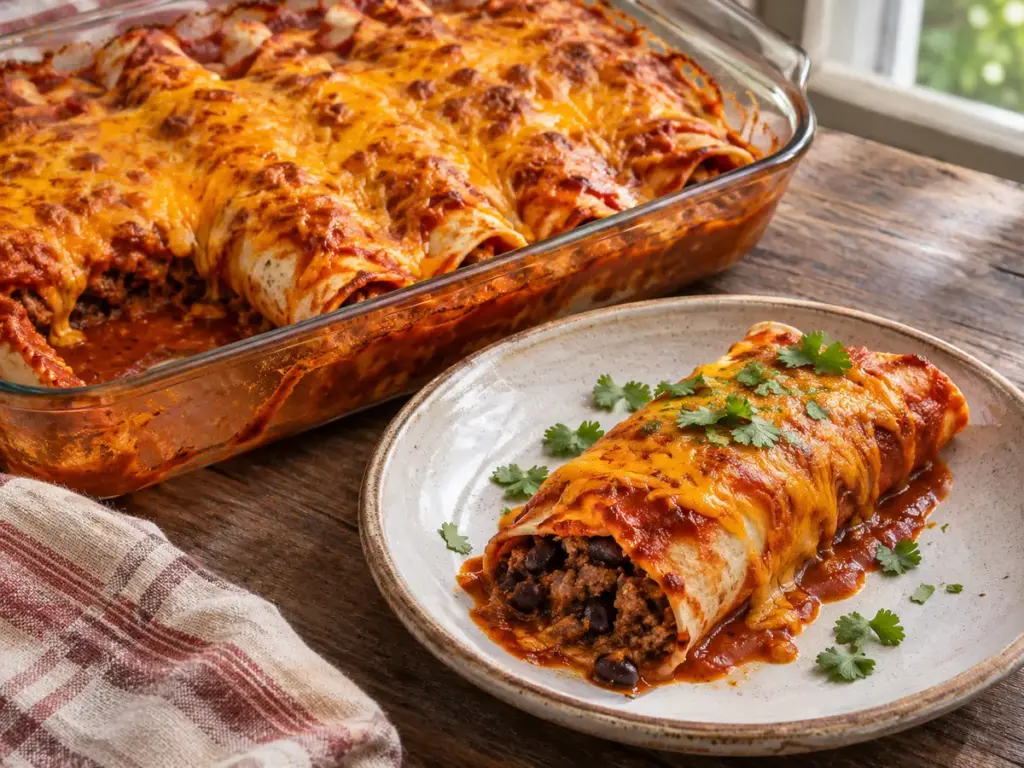
Cheddar adds about 39 g, black beans about 23 g and the flour tortillas about 21 g, which together come close to the 91 g from the beef, and that is why this dish tops the list at about 44 g of protein per serving. The 8 tortillas make 4 servings of 2 enchiladas.
Per serving (1 of 4): about 750 calories, 44 g of protein, 9 g of fiber, 54 g of carbs and 39 g of fat. You'll need about 50 minutes.
Why It Works
If you warm the tortillas for a few seconds in a dry pan or the microwave, they bend without cracking when you roll them.
You spread a little sauce in the bottom of the dish so the enchiladas do not stick and the filling stays moist during the 20-minute bake.
Ingredients
- 1 pound 90% lean ground beef
- 1 (15-ounce) can black beans, drained and rinsed
- 1 small onion, finely chopped
- 2 cloves garlic, minced
- 1 teaspoon ground cumin
- 1 teaspoon chili powder
- ½ teaspoon smoked paprika
- 1 (10-ounce) can red enchilada sauce
- 8 small flour tortillas
- 1 ½ cups shredded cheddar
- 2 tablespoons olive oil
- Salt and pepper to taste
Instructions
- Preheat the oven to 375°F (190°C) and lightly grease a 9x13-inch baking dish.
- Heat the olive oil in a large skillet over medium heat. Cook the onion 3 to 4 minutes, until you see it soften, then add the garlic and cook 1 minute.
- Add the beef, breaking it up, and cook 6 to 8 minutes, until you see no pink. Drain excess fat if you need to.
- Stir in the black beans, cumin, chili powder, smoked paprika, salt and pepper and cook 2 minutes more. Remove from the heat.
- Pour about ½ cup of the enchilada sauce into the baking dish. Spoon about ¼ cup of the beef and bean mixture onto each tortilla, roll it up and place it seam side down in the dish.
- Pour the remaining sauce over the enchiladas and sprinkle with the cheddar.
- Bake uncovered 20 minutes, until the cheese is melted and bubbly. Let the dish rest a few minutes before serving.
Swaps and Extras
- A Mexican cheese blend or mozzarella gives a milder top.
- Less cheese: if you use 1 cup of cheddar instead of 1 ½ cups, you take about 57 calories and 3 g of protein off each serving.
11. Korean Beef Bibimbap Bowls
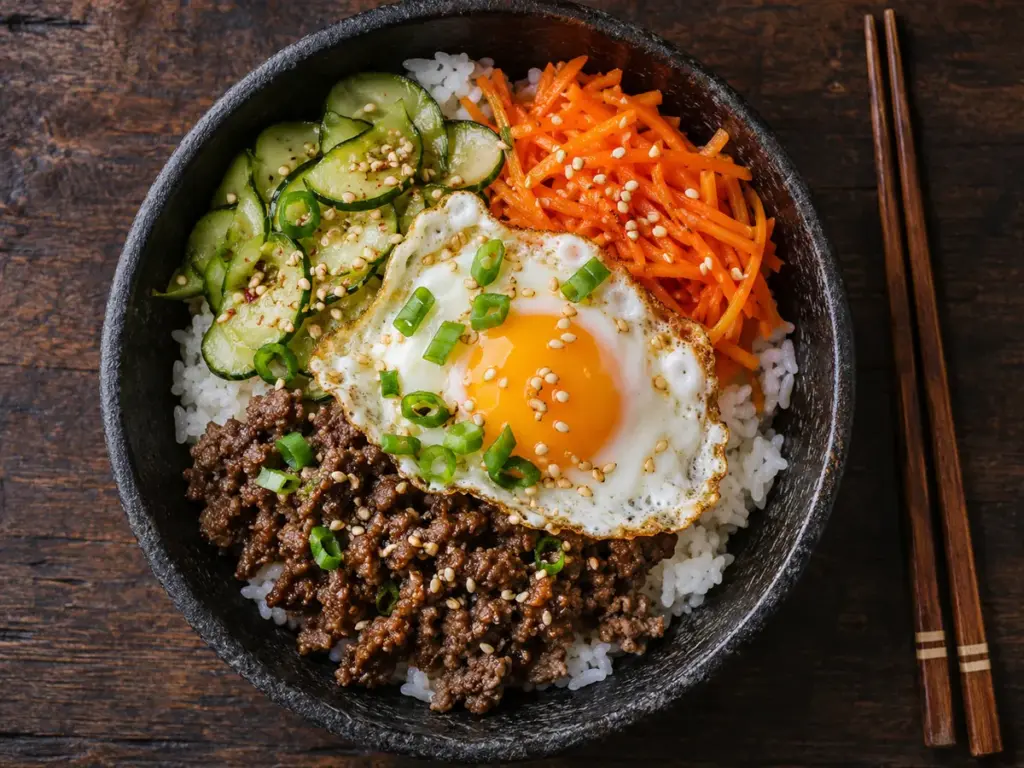
Four fried eggs add about 25 g and the rice about 9 g, so each bowl has about 33 g of protein, with one egg on top of each of the 4 bowls.
Soy sauce, garlic and sesame oil season the beef the way they do in Korean BBQ beef dinners, and you'll need about 25 minutes plus the rice.
Per serving (1 of 4): about 470 calories, 33 g of protein, 1 g of fiber, 29 g of carbs and 23 g of fat.
Why It Works
You cook the beef until the sauce clings and slightly caramelizes, so the sweet-salty glaze stands against the plain rice and pickles.
The runny yolk works as a sauce that coats the rice when you stir your bowl.
Ingredients
- 1 pound 90% lean ground beef
- 3 cloves garlic, minced
- 3 tablespoons soy sauce
- 1 tablespoon sesame oil
- 1 tablespoon brown sugar
- 2 cups cooked white rice
- 1 cup pickled vegetables, such as cucumbers, carrots or radishes, thinly sliced
- 2 teaspoons vegetable oil
- 4 large eggs
- 1 green onion, sliced
- 1 tablespoon toasted sesame seeds
Instructions
- In a large skillet over medium heat, cook the beef with the garlic, breaking it apart, until you see no pink, 6 to 8 minutes.
- Stir in the soy sauce, sesame oil and brown sugar. Cook 2 minutes more, until the beef is coated and slightly caramelized. Remove from the heat.
- Heat the vegetable oil in a small pan over medium heat. Fry the eggs 3 to 4 minutes, until you see the whites set and the yolks still runny.
- Divide the rice among 4 bowls. Top each with the beef, pickled vegetables and a fried egg.
- Garnish with the green onion and sesame seeds and serve.
Swaps and Extras
- You can use brown rice or quinoa in place of the white rice, and brown rice adds about 1 g of fiber per serving.
- Firm yolks: the FDA advises cooking eggs until the yolk and white are firm for young children, pregnant people, older adults and anyone with a weakened immune system.
- You can serve the bowls with kimchi or extra pickled vegetables on the side.
12. Cheesy Beef and Cauliflower Casserole
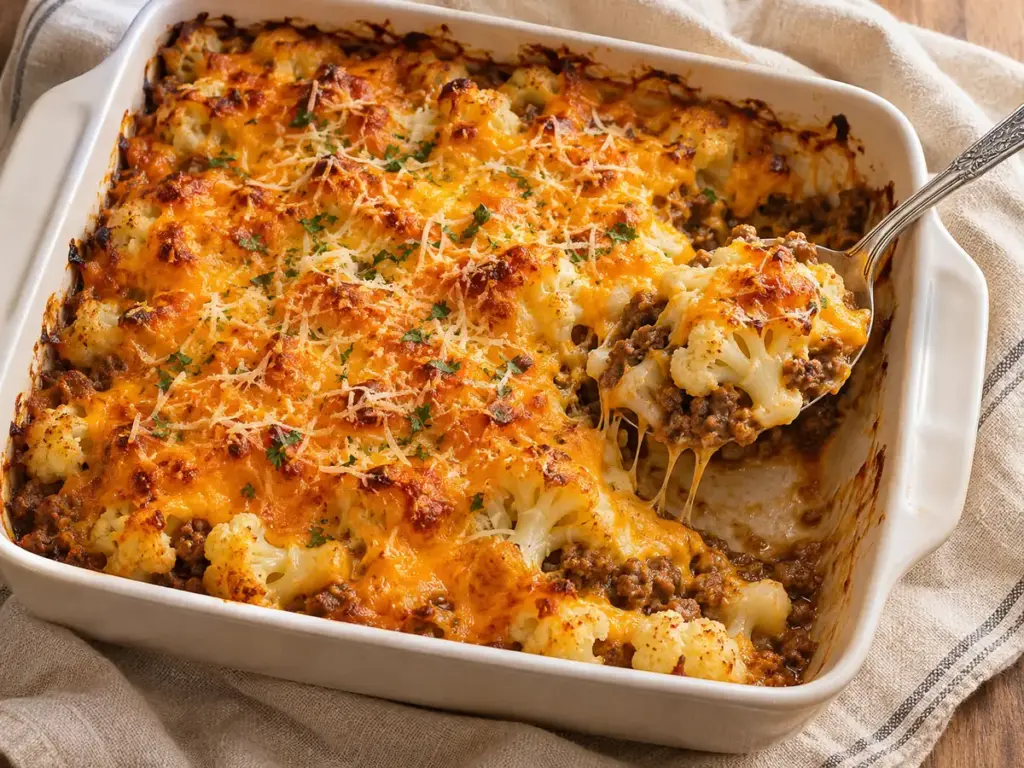
Cheddar and Parmesan together add about 40 g, and the sour cream and cauliflower add about 3 g and 10 g, so you get about 36 g of protein per serving without potatoes or pasta. You'll need about 50 minutes.
Per serving (1 of 4): about 520 calories, 36 g of protein, 3 g of fiber, 12 g of carbs and 37 g of fat.
Why It Works
If you steam the cauliflower for only 5 to 7 minutes and drain it well, the casserole does not turn watery in the oven.
You mix half the cheese into the filling and sprinkle half on top, which gives a creamy middle and a golden crust.
Ingredients
- 1 medium head of cauliflower, cut into florets
- 1 pound 90% lean ground beef
- 1 cup shredded sharp cheddar
- ½ cup grated Parmesan
- ½ cup sour cream
- 1 small onion, finely chopped
- 2 cloves garlic, minced
- ½ teaspoon dried thyme
- Salt and black pepper to taste
- 2 tablespoons olive oil
Instructions
- Preheat the oven to 375°F (190°C). Steam or boil the cauliflower 5 to 7 minutes, until you can just pierce it with a fork. Drain well and set aside.
- Heat the olive oil in a large skillet over medium heat. Cook the onion 3 to 4 minutes, until you see it soften, then add the garlic and cook 1 minute.
- Add the beef and cook, breaking it up, until you see no pink. Season with the thyme, salt and pepper and drain excess fat if you need to.
- In a large bowl, gently combine the cauliflower, beef mixture, sour cream, half of the cheddar and half of the Parmesan.
- Transfer to a casserole dish and top with the remaining cheeses. Bake uncovered 20 to 25 minutes, until the top is golden and bubbling, then let it rest a few minutes.
Swaps and Extras
- Broccoli florets can replace the cauliflower.
- Plain Greek yogurt in place of the sour cream adds about 2 g of protein and takes about 25 calories off each serving.
- If you want more baked dinners like this one, other ground beef casseroles use the same one-dish bake.
13. Ground Beef and Mushroom Stroganoff
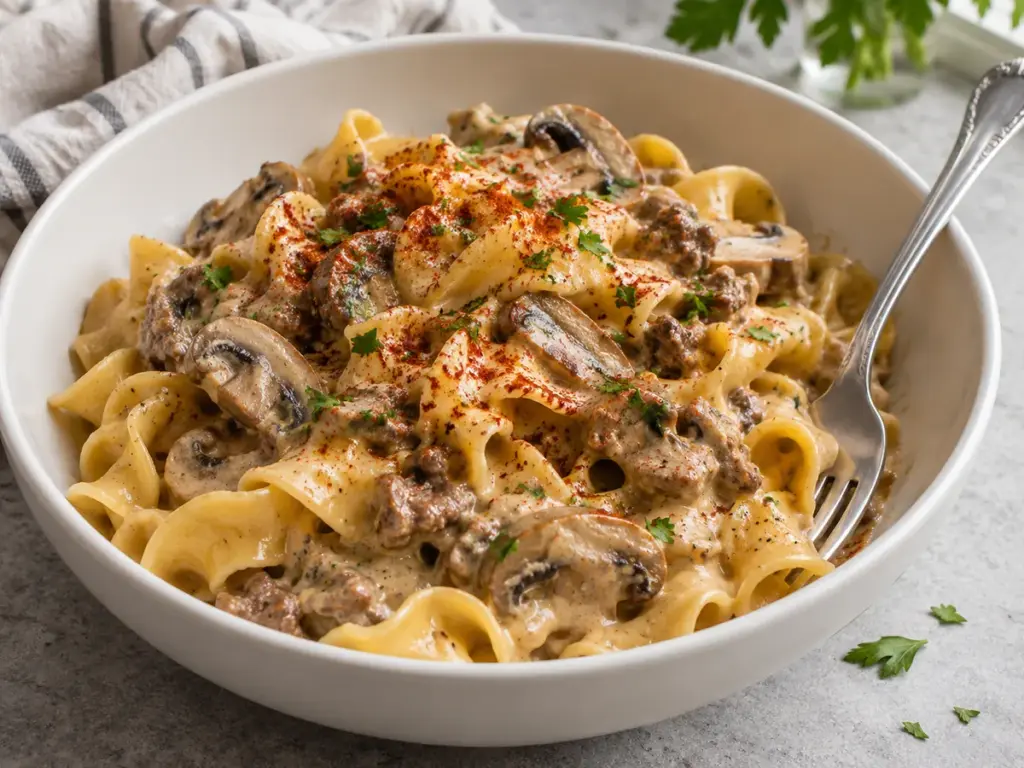
Here the pasta carries a big share of the protein: 8 ounces of dry whole wheat noodles supply about 32 g of protein, and the sour cream adds about 6 g more, so a serving gives you about 34 g of protein.
You stir the sour cream in over low heat and keep the sauce from boiling, because it can curdle. You'll need about 35 minutes.
Per serving (1 of 4): about 600 calories, 34 g of protein, 6 g of fiber, 50 g of carbs and 31 g of fat.
Why It Works
When you cook the mushrooms until they release their juices and shrink, those juices go into the sauce, and we'd count on them for a meatier stroganoff.
The whole wheat noodles supply about 5 g of the 6 g of fiber per serving.
Ingredients
- 1 pound 90% lean ground beef
- 8 ounces mushrooms, sliced cremini or white button
- 1 small onion, diced
- 2 cloves garlic, minced
- 1 cup beef broth
- 1 cup sour cream
- 2 teaspoons Worcestershire sauce
- 1 teaspoon paprika
- Salt and black pepper to taste
- 8 ounces whole wheat noodles, cooked according to the package directions
- 2 tablespoons olive oil or butter
Instructions
- Heat the olive oil or butter in a large skillet over medium heat. Cook the onion about 3 minutes, until you see it start to soften.
- Add the beef, breaking it up with a spoon, and cook 6 to 8 minutes, until you see no pink. Drain excess fat if you need to.
- Stir in the mushrooms and garlic and cook about 5 minutes, until you see the mushrooms soften and release their juices.
- Sprinkle in the paprika, then add the broth and Worcestershire sauce. Bring to a gentle simmer and cook 5 minutes to reduce slightly.
- Lower the heat and stir in the sour cream until the sauce is creamy and hot. Do not boil. Season with salt and pepper.
- Serve over the cooked noodles, with chopped parsley if you like.
Swaps and Extras
- You can use plain Greek yogurt in place of the sour cream if you stir it in off the heat, so it does not split.
- Gluten-free noodles replace the wheat ones.
- Mashed cauliflower instead of noodles takes about 200 calories, 40 g of carbs and 8 g of protein off each plate.
14. Beef and Quinoa Stuffed Cabbage Rolls
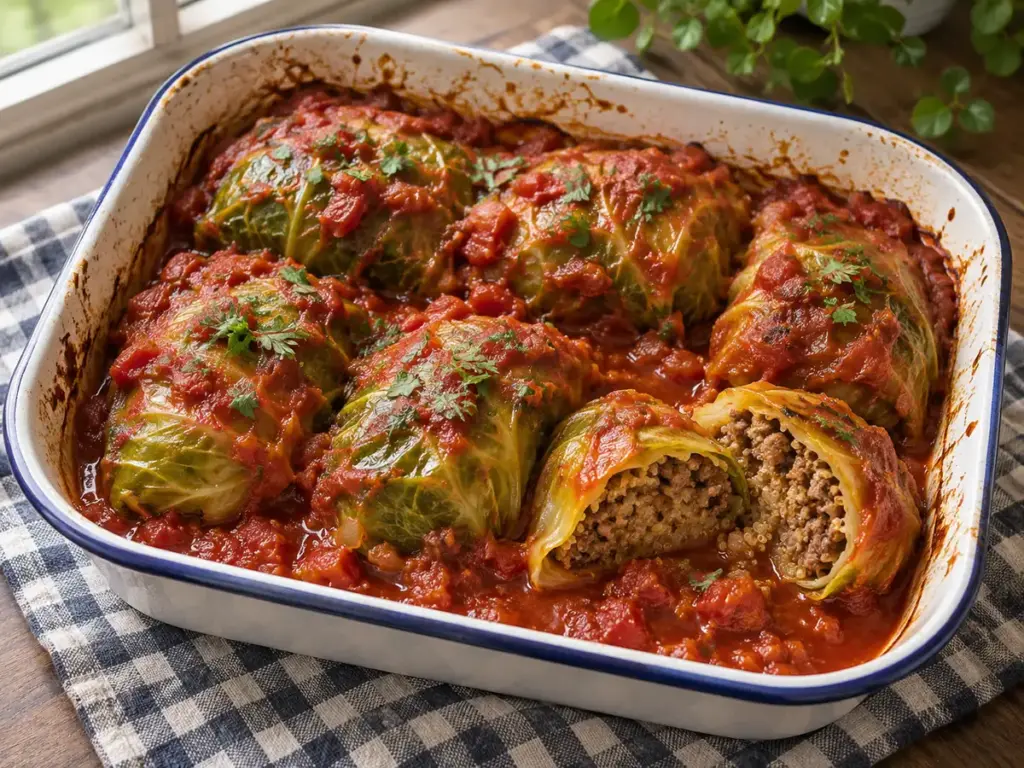
Quinoa, rice and one egg add about 17 g to the filling, which brings each serving to about 29 g of protein.
The egg goes into the filling raw, so you bake the rolls until the middle of one reads 160°F. You'll need about 1 hour 15 minutes.
Per serving (1 of 4): about 410 calories, 29 g of protein, 5 g of fiber, 27 g of carbs and 21 g of fat.
Why It Works
A blanch of about 2 minutes lets the leaves bend without tearing, and you shave the thick rib flat so each leaf rolls tighter.
The egg holds the beef and quinoa together, so a roll stays intact when you cut it.
Ingredients
- 1 medium green cabbage, core removed and outer leaves separated
- 1 pound 90% lean ground beef
- 1 cup cooked quinoa, cooled
- 1 small onion, finely chopped
- 2 cloves garlic, minced
- 1 cup tomato sauce
- ½ cup cooked white rice, optional
- 1 large egg, lightly beaten
- 1 teaspoon dried Italian herbs
- ½ teaspoon salt
- ¼ teaspoon black pepper
- 2 tablespoons olive oil
Instructions
- Preheat the oven to 350°F (175°C). Bring a large pot of water to a boil and blanch the cabbage leaves about 2 minutes, until you can bend them easily. Drain and let them cool.
- Heat the olive oil in a skillet over medium heat. Cook the onion about 4 minutes, until you see it turn translucent, then add the garlic and cook 1 minute. Move both to a mixing bowl.
- Add the beef to the skillet and brown it, breaking it apart. Drain excess fat and add the beef to the bowl.
- Stir in the quinoa, the rice if using, the egg, the herbs, salt and pepper until well combined.
- Put a few spoonfuls of filling on each cabbage leaf, fold in the edges and roll tightly. Place the rolls seam side down in a baking dish and pour the tomato sauce over them.
- Cover with foil and bake 45 minutes. Remove the foil and bake 10 minutes more, until the sauce thickens slightly and a thermometer in the center of a roll reads 160°F (71°C).
- Let the rolls rest a few minutes and serve with extra sauce spooned over them.
Swaps and Extras
- Cauliflower rice or bulgur replaces the quinoa.
- Diced tomatoes with herbs replace the plain tomato sauce.
- If you skip the optional rice, you save about 25 calories and 6 g of carbs per serving.
- Prep ahead: you can roll the cabbage up to a day early, refrigerate the rolls in the dish and pour the sauce over them just before baking.
15. Mediterranean Beef Kofta with Tzatziki
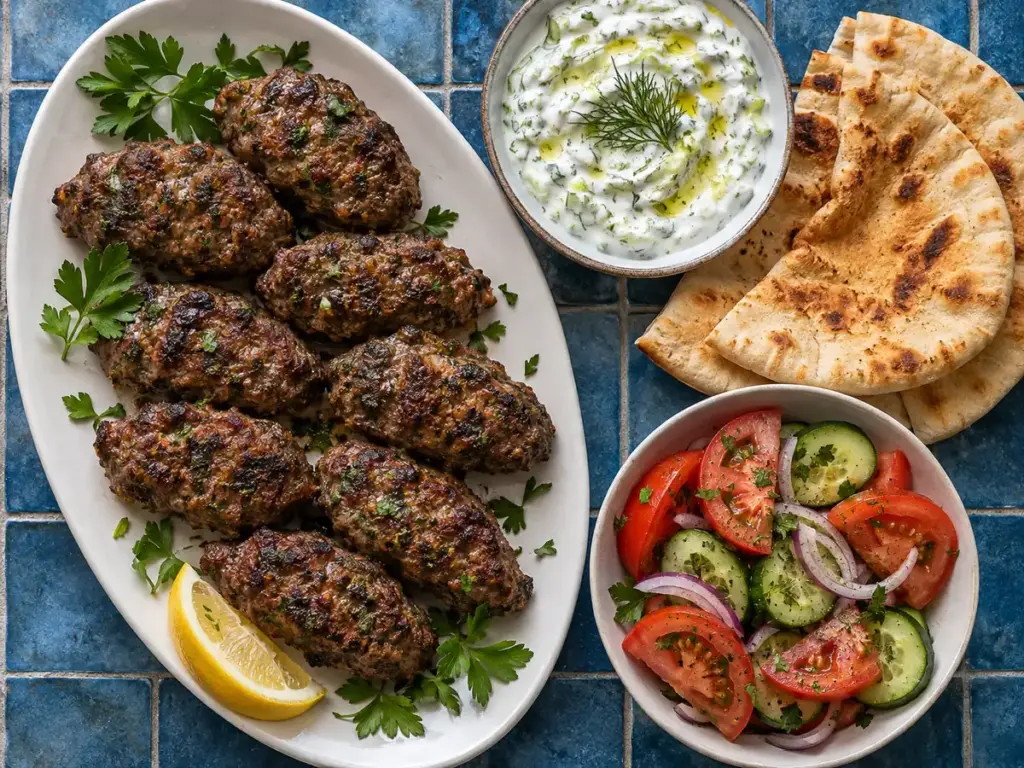
The tzatziki adds protein here: 1 cup of Greek yogurt adds about 22 g to the recipe, which brings each serving to about 29 g of protein when 8 to 10 patties are split among 4 people. You'll need about 30 minutes.
Per serving (1 of 4): about 340 calories, 29 g of protein, 1 g of fiber, 7 g of carbs and 21 g of fat.
Why It Works
If you grate the onion, it adds juice and flavor without chunks, and the kofta holds together on the skillet or the skewer.
When you squeeze the grated cucumber dry, the tzatziki stays thick instead of watery.
Kofta Ingredients
- 1 pound 90% lean ground beef
- 1 small onion, finely grated or minced
- 3 cloves garlic, minced
- ¼ cup fresh parsley, finely chopped
- 1 teaspoon ground cumin
- 1 teaspoon ground coriander
- ½ teaspoon ground cinnamon
- ½ teaspoon salt
- ¼ teaspoon black pepper
- 2 tablespoons olive oil
Tzatziki Ingredients
- 1 cup Greek yogurt
- ½ cucumber, grated and squeezed dry
- 2 cloves garlic, minced
- 1 tablespoon fresh dill, chopped
- 1 tablespoon lemon juice
- Salt and pepper to taste
Instructions
- In a large bowl, combine the beef, onion, garlic, parsley, cumin, coriander, cinnamon, salt and pepper. Mix gently by hand until everything is evenly combined.
- Shape the mixture into 8 to 10 oblong patties, or long shapes on skewers.
- Heat the olive oil in a grill pan or skillet over medium-high heat. Cook the kofta 4 to 5 minutes per side, until you see them browned, and check that the center reads 160°F (71°C).
- While the kofta cook, mix the yogurt, cucumber, garlic, dill, lemon juice, salt and pepper in a bowl and adjust the seasoning.
- Serve the kofta warm with a spoonful of tzatziki, with pita, salad or roasted vegetables on the side.
Swaps and Extras
- Half ground lamb with the beef gives a richer kofta, and lamb needs the same 160°F, as in these ground lamb dinners.
- Plant-based yogurt makes the tzatziki dairy-free.
- Wooden skewers need a soak in water before you thread the meat, so they do not burn.
- A whole wheat pita on the side adds about 6 g of protein and 170 calories per person.
Can You Use Ground Turkey or Chicken Instead?
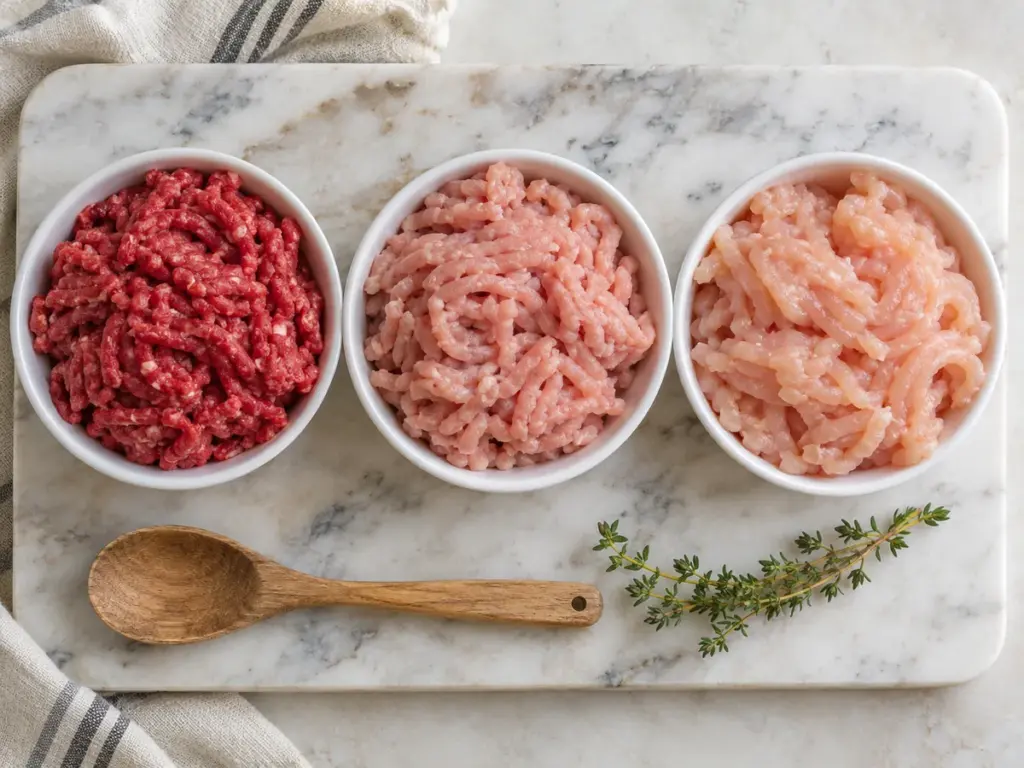
You can, and every recipe above works with either, but the protein drops a little. Ground poultry has less protein per pound than 90/10 beef, and you cook it to 165°F instead of 160°F.
| Raw ground meat | Protein per 100 g | Protein per pound | Per serving vs. 90/10 |
|---|---|---|---|
| Beef, 90% lean | 20.0 g | 90.7 g | Baseline |
| Turkey, 93% lean | 18.73 g | 85.0 g | About 1 g less |
| Chicken | 17.44 g | 79.1 g | About 3 g less |
| Turkey, 85% lean | 16.9 g | 76.7 g | About 4 g less |
Ground chicken gives up more protein than 93% lean turkey, and it has fewer calories and a milder flavor, which is the trade-off behind choosing chicken over beef. If you want less fat and the smallest protein loss, 93% lean turkey is the better pick.
Which Recipes Work for Meal Prep?
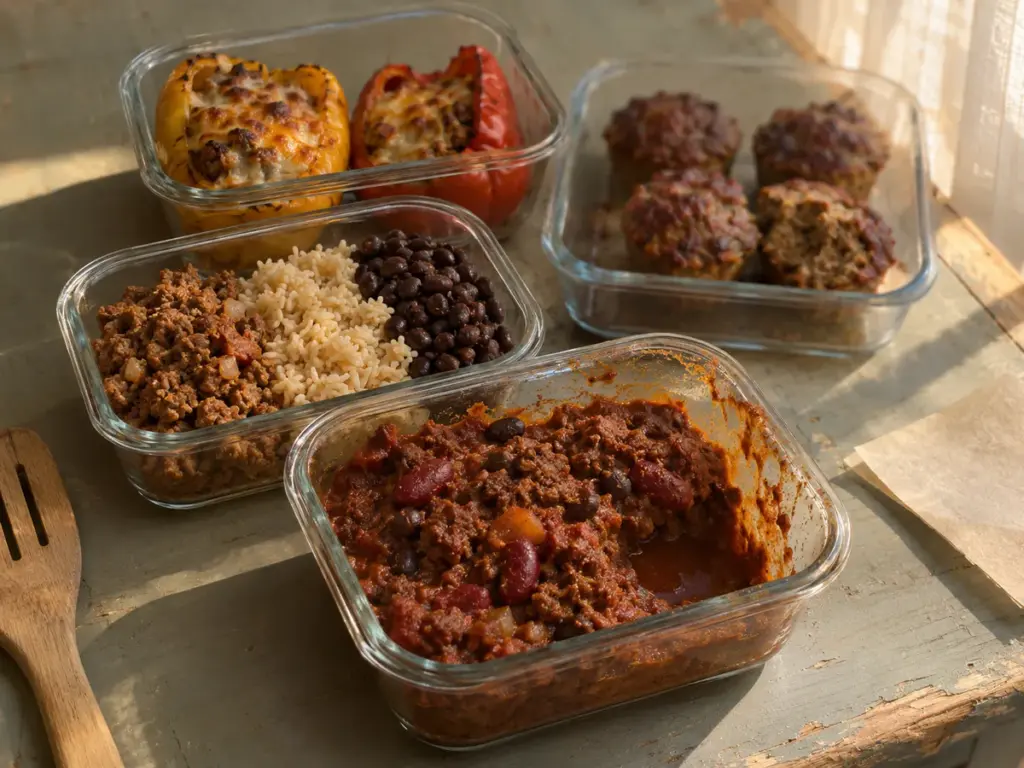
Most of these dishes pack into single portions once they cool, and the ones that are one finished mixture are the easiest.
- Portion the finished dish: you can pack chili, shepherd's pie, enchiladas, stuffed peppers, cabbage rolls, the casserole, stroganoff and meatloaf muffins into a container as one serving each.
- Pack in parts: for taco bowls and bibimbap, the beef, rice and beans go in the container, and you add the avocado, salsa or fried egg when you eat.
- Zucchini boats: they keep releasing water in the refrigerator, so we'd bake only as many boats as you will eat that day.
- Sauces: you store the tzatziki separately from the kofta, and the sour cream topping separately from the chili.
How Long Do These Leftovers Keep?
Cooked ground beef dishes keep 3 to 4 days in the refrigerator and 2 to 3 months in the freezer, according to USDA FoodKeeper. Raw ground beef keeps only 1 to 2 days in the refrigerator and 3 to 4 months in the freezer, so a pack you will not cook within two days belongs in the freezer on the day you buy it.
- Within 2 hours: leftovers go into the refrigerator, and shallow containers help them cool quickly.
- 165°F when you reheat: FSIS says you bring leftovers to 165°F and sauces to a rolling boil.
- One serving per container: when you freeze by portion, you thaw only what you need.
Sources
- USDA FoodData Central, SR Legacy release: raw and cooked ground beef at 93/7, 90/10, 85/15 and 80/20, raw ground turkey and chicken, cooked lentils, black beans, kidney beans, quinoa, brown and white rice, cheddar, Parmesan, mozzarella, eggs, Greek yogurt and the vegetables and sauces used in the estimates, with energy, protein, fiber and carbohydrate values
- USDA FSIS, Color of Cooked Ground Beef as It Relates to Doneness: 160°F for ground beef and the finding that patties can brown before they are safe
- USDA FSIS, Leftovers and Food Safety: chilling, reheating to 165°F and 3 to 4 day storage
- USDA FSIS, Slow Cookers and Food Safety: thaw meat before it goes into a slow cooker
- USDA FSIS, The Big Thaw: thawing ground beef in the refrigerator and cooking frozen meat without thawing
- USDA FoodKeeper: ground beef and leftovers with meat storage times
- FDA, Daily Value on the Nutrition and Supplement Facts Labels: 50 g protein and 28 g fiber Daily Values
- FDA, What You Need to Know About Egg Safety: cooking eggs until the yolk and white are firm
Frequently Asked Questions
Does Cooking Change the Protein in Ground Beef?
When you cook beef, it loses water and some fat, so cooked beef has more protein per gram. USDA lists 90% lean crumbles, pan-browned, at 28.45 g per 100 g, against 20.0 g raw.
The total in the pan stays close to the same, which is why the recipes count the raw weight.
For burgers, a cooked 3-ounce (85 g) patty of 90% lean beef has about 21 g of protein, so a high-protein hamburger meal starts there before the bun and toppings.
Can You Cook Ground Beef From Frozen?
Yes. USDA FSIS says you can cook frozen beef on the stove or in the oven without thawing, and it takes about 50% longer.
FSIS also says to thaw meat before it goes into a slow cooker, so you do not put frozen beef in one. Beef thawed in the refrigerator should be cooked or refrozen within 1 to 2 days, and the 160°F check applies either way.

Andrew Gray is the founder of Gusto Meadow, a food site for home cooks. He writes ingredient substitutes, food comparisons, taste guides, storage guides and dinner ideas, with numbers drawn from sources such as USDA, FDA and university extension services.
At Gusto Meadow, Andrew focuses on fresh, seasonal ingredients and simple methods that anyone can follow. His goal is to make cooking feel fun, doable, and rewarding — whether you’re preparing a quick weeknight dinner or exploring something new.
Storage and food-safety numbers follow USDA, FDA and university extension guidance.