
We've stumbled upon something pretty unique in the fruit aisle, and it's about time we share the scoop with everyone.
Meet the Pepino melon, a gem that's still flying under the radar for many.
This little wonder isn't your usual fruit pick, and oh boy, are your taste senses in for a surprise.
Fresh, juicy, and oddly familiar, yet entirely its own thing - that's the Pepino melon for you.
We're about to dive deep into what makes the Pepino melon the next big thing on your fruit radar.
What is Pepino Melon?
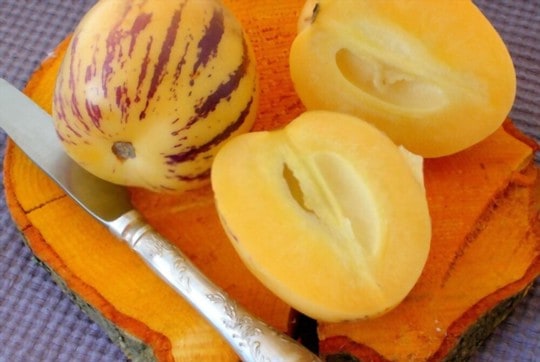
Also called "Pepino dulce," which means sweet cucumber, it's a fruit native to South America, and you can find it in the markets of Bolivia, Chile, Peru, and Columbia.
You can also find it in Kenyan markets.
However, it isn't easily available in many because it's quite sensitive to handling and gets ruined easily while traveling.
The Pepino melon grows on a "ground cover trailing plant" rather than a tree.
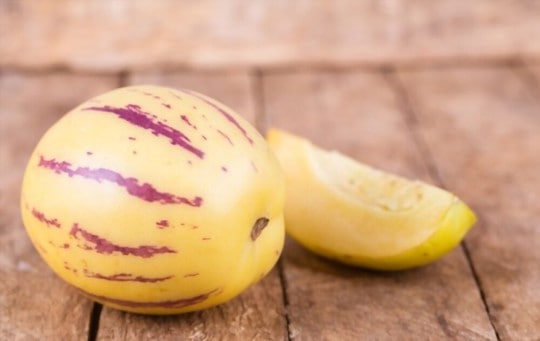
Pepino melon has a tear-drop shape and light yellow-green shade with distinct purple streaks.
With the advancement in science and technology, scientists are also developing cultivars in Turkey, Mauritius, Chile, and New Zealand.
Hence, you might very soon see the melon at a local market.
One reason for the melon's popularity is that nothing goes waste with this fruit.
Another is its taste, but we still don't know.
So, let's find out below.
Pepino's mild sweetness can complement citrus desserts; lemon dessert pairing ideas lists nine options that work well with subtle fruit flavors.
What Does Pepino Melon Taste Like?
We learned what Pepino melon is, where it grows, and how it looks.
Now, it's time to learn about its taste.
The melons are milder flavor-wise and less sweet than other melons.
The fruit likely gets its name for its distinct cucumber-melon flavor.
You may also get a taste similar to honeydew, cantaloupe, and cucumber - or explore Kiwano taste mystery guide for another unusual melon profile.
It has a texture that's similar to pears.
When fully ripe, its skin looks deep yellow or gold rather than pale green, which means it's still unripe.
Pepino melon also goes by several names, such as tree melon, melon pear, and mellowfruit.
When buying the fruit, choose the ones that are glossy, fragrant, and yield very easily to pressure.
For every 100gm of Pepino melon, you get energy (22Kcal), carbs (5gms), dietary fiber (1gm), and protein (0.6gm).
The melon also has antioxidants, minerals, and vitamins.
The nutrients present in the fruit can be beneficial for the skin and lower the risk of cancers.
It can also help in maintaining heart rate and blood pressure.
Traditionally, the natives used the melon to relieve rheumatic symptoms, skin ailments, and respiratory problems.
How to Cook and Use Pepino Melon?
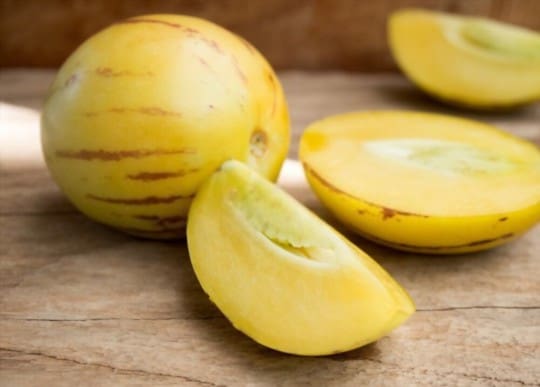
Since it's a fruit, the best way to enjoy Pepino melon is to remove the peel, slice, and eat it.
However, it doesn't mean there aren't other ways to eat the melon.
You can eat pepinos in multiple ways.
Before consuming the fruit, though, it's necessary to wash the fruit thoroughly with clean water.
You can then prepare it whether you want to eat it raw or cooked.
If you're thinking of eating unripe pepinos, you have to prepare them the way you would squash.
If your fruit is ripe, you can prepare it like a honeydew melon.
The skin is edible, it tends to get harder when the fruit ripens.
Hence, it's best to throw it away.
Cut the fruit in half length-wise and remove the parts with the seeds and cut into shapes which you prefer.
Suppose you're planning to eat only the melon; you can make slices, and if you wish to add it to salads, cut it in wedges or as suitable for the dish.
You can also poach or bake it and add it to charcuterie platters and salsas.
It also pairs well with lemon or lime juice or with salty cheese.
So, there are plenty of ways that you can eat the melon.
Enjoy it exclusively or create dishes with other ingredients.
Quick vegetable sides pair well with fresh fruit; 22 veggie sides under 12 minutes offers fast, fresh options to serve alongside pepino.
Flavor Characteristics of Pepino Melon
Not found everywhere, you can locate Pepino melons in several locations these days.
But once ripe, eat it as soon as possible, so you don't waste the fruit.
With so many different ways to consume the melon, you will not feel bored with it.
Every time you plan to eat it, choose a different method.
With its taste being pretty subtle, it won't overwhelm a dish but blend in nicely and still retain its flavor.
Besides, you also get plenty of nutrients, especially when eating it uncooked.
Since the rind and seeds are both edible, you can look for some recipes if you don't know how to prepare them.
For other unusual melon profiles, Kiwano taste mystery guide explores a bright, tangy option. For a subtler alternative, winter melon flavor revealed breaks down a milder, firmer melon.
Frequently Asked Questions
This little wonder isn't your usual fruit pick, and oh boy, are your taste senses in for a surprise. If you're up for trying new flavors, then stick around.
Another is its taste, but we still don't know.
Some people enjoy Pepino Melon right away while others need a few tries. The flavor can grow on you, especially when paired with familiar ingredients in a dish you already like.
Does it taste different depending on how it is prepared?
Preparation makes a significant difference.
Raw, roasted, fried, and steamed versions each bring out different qualities - sweetness, bitterness, earthiness, or richness - in the same ingredient.
Yes. Different cultivars, origins, or processing methods produce meaningful flavor differences.
If one version did not appeal to you, trying a different variety is worth the effort.