Heart of palm tastes mild and slightly nutty, with a tender, crisp bite that cooks often compare to artichoke hearts or asparagus.
- Most cans and jars hold it in brine, so it tastes salty until you rinse it.
- Once you open a can, it keeps 3 to 4 days in the fridge.
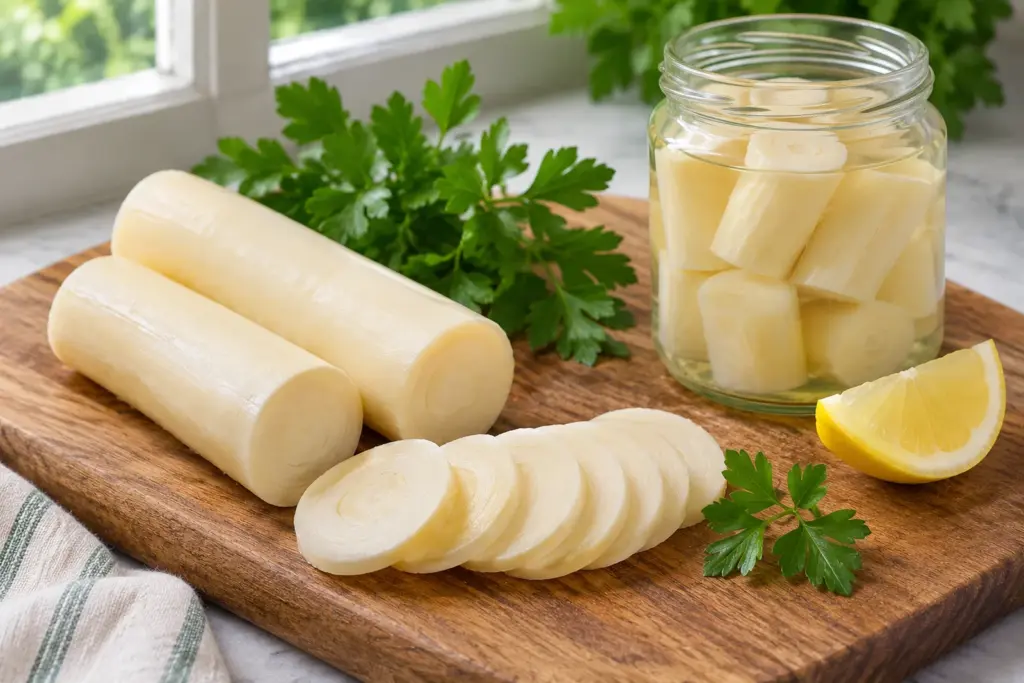
Heart of palm is the pale inner core of certain palm trees, and it is one of the mildest vegetables in our food taste guides. Because it brings little flavor of its own, it works best in a dish where something else does the seasoning, such as a tangy dressing, a creamy dip or a spiced crab-style cake.
1. What Does Heart of Palm Taste Like?
Brand and cooking sites describe heart of palm the same way: a mild, slightly nutty flavor and a tender, crisp texture. It looks like a pale ivory tube, and a slice has a clean, snappy bite, closer to a crisp stalk than to a soft vegetable.
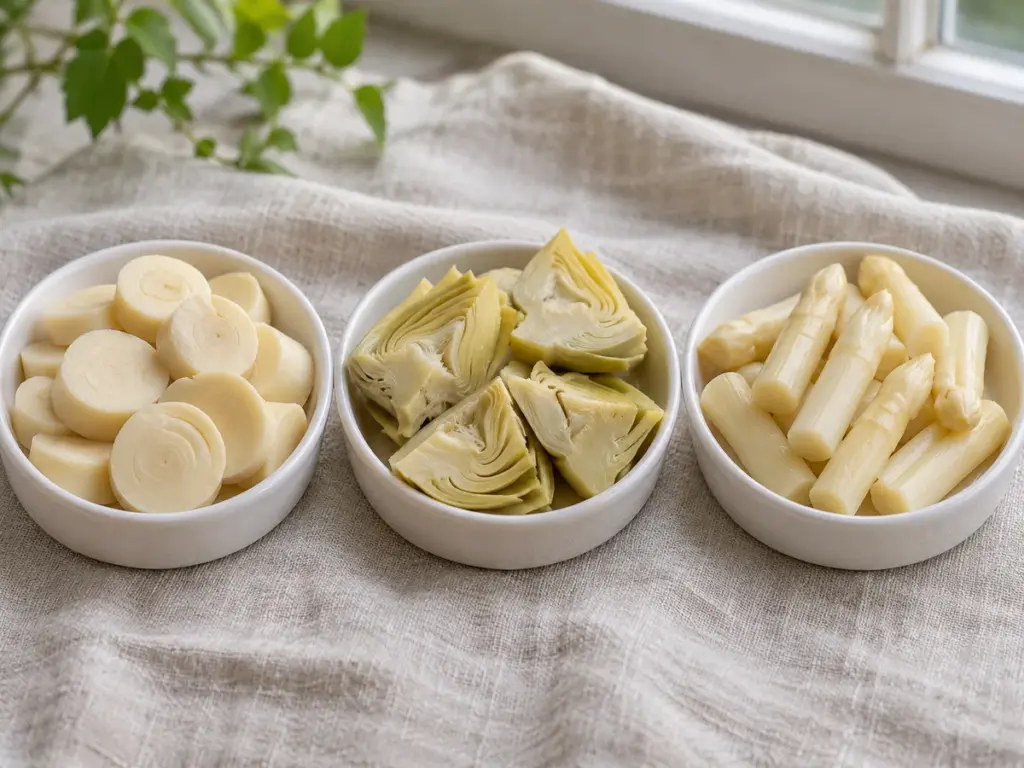
Cooks usually reach for two comparisons when they describe it. If you already know either one, you have a good guide to what to expect:
- Artichoke hearts are the most common comparison. Heart of palm shares their gentle, slightly nutty taste, and the flavor of a whole artichoke is stronger and more earthy than the palm core.
- White asparagus is the other one. It has the same pale color and tender stalk, but white asparagus can lean toward a faint bitterness that heart of palm doesn't have.
Neither comparison is exact, and cooks disagree about which is closer, so treat both as a rough map. What stays the same in every description is how quiet the flavor is. Heart of palm adds crunch and a clean, light taste, and it takes on the flavor of whatever you pair it with, which is why a lemon vinaigrette or a garlicky dip makes such a difference.
2. Does Canned Heart of Palm Taste Different from Fresh?
Most heart of palm sold in US stores is packed in cans or jars with a light brine to keep it shelf-stable, so the version you taste is usually the canned one. The brine can leave a salty, slightly sharp edge on the surface, and the vegetable underneath is much milder than that.
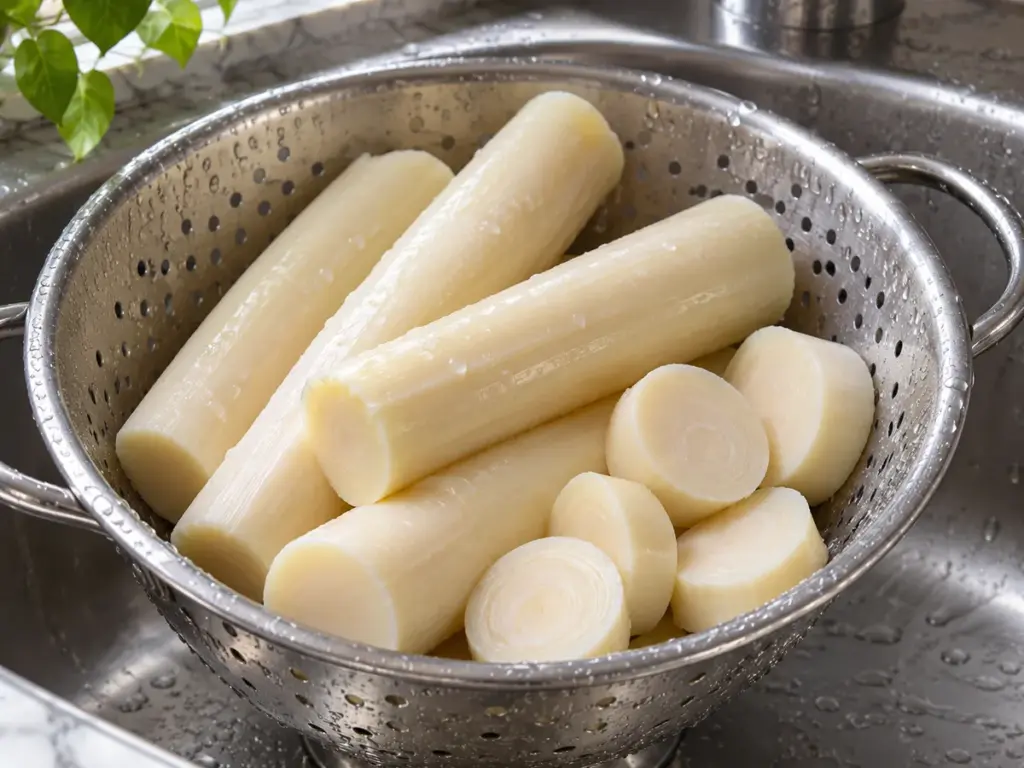
You get the closest match to the real flavor if you drain the can and give the pieces a quick rinse under cold water. DeLallo says to give them a quick rinse if you like before you eat them, and we'd do it every time you plan to serve them cold in a salad.
3. What Is Heart of Palm Pasta?
Some brands cut heart of palm into noodle shapes and sell it as pasta. Retail listings show it as lasagna sheets, linguine and angel hair in a pouch, usually packed in liquid like the canned stalks.
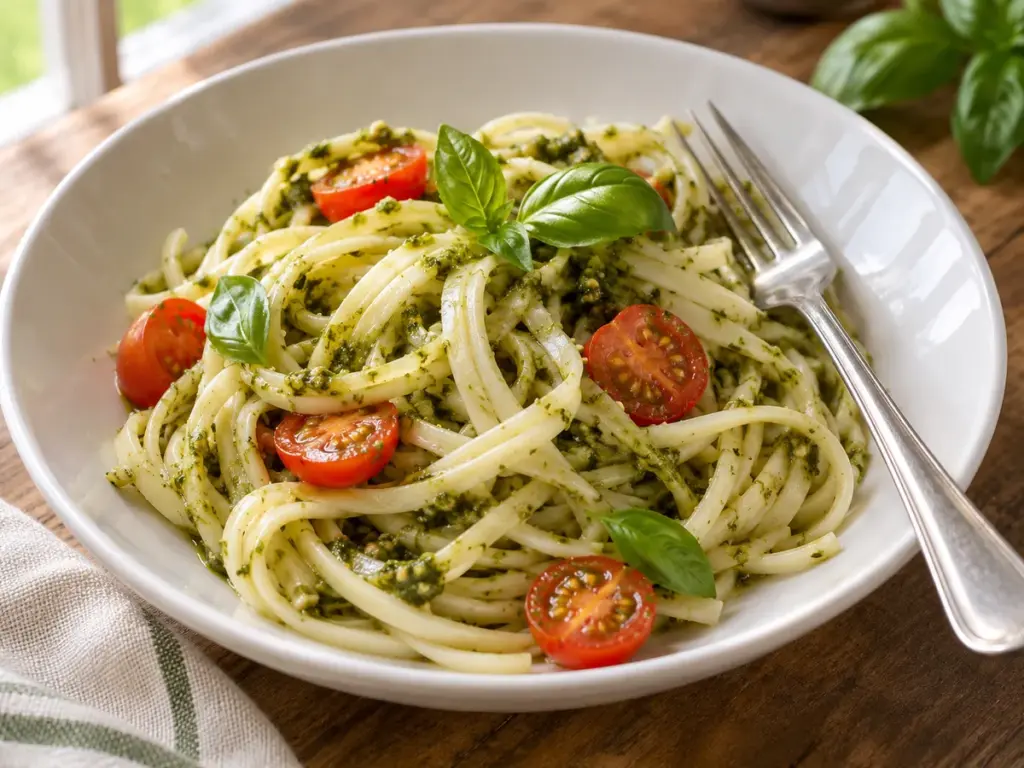
It is not wheat pasta, so it does not taste or chew like it. Like zucchini noodles, it is a vegetable cut into a pasta shape, so expect the same mild, crisp-tender bite. A few habits make it better:
- Drain it and rinse it well. Retail listings tell you to rinse it with plenty of water, which removes the packing liquid that otherwise leaks into your sauce.
- Cook it only as long as the package says. Directions vary by brand, from about 5 to 10 minutes in simmering water, and a longer time makes the noodles soft rather than tender-crisp.
- Pick a sauce with a lot of flavor. A bold basil pesto, a garlicky cream sauce or a spicy tomato sauce gives the mild noodles something to carry.
If you plan to count carbs or compare it with other low-carb pasta alternatives, read the label on the exact package you buy, because brands differ and we have not verified a single figure for all of them.
4. How Do You Cook and Serve Heart of Palm?
Heart of palm is already cooked and ready to eat from the can, so you can use it cold or heat it through. Slice it into rounds for salads, blend it into dips, or flake it with a fork when you want a seafood stand-in. Each use leans on a different side of its texture:
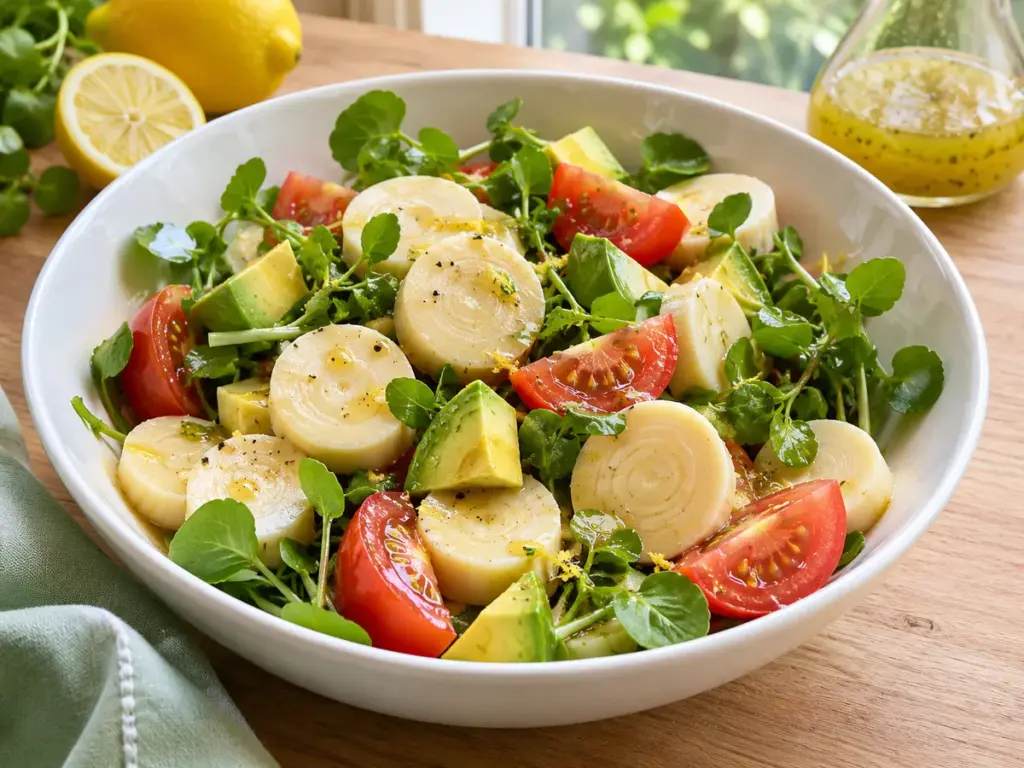
- Salads. Cut the stalks into rounds and toss them with avocado, tomato or watercress. The rounds stay crisp in a vinaigrette, and the dressing supplies the flavor the palm lacks.
- Creamy dips. Blend drained pieces with olive oil, lemon zest and garlic. The palm gives the dip body and a mild base without a strong taste of its own.
- Skillet or grill. Pat the stalks dry, brush them with oil and brown them with other vegetables. The browned edges add the roasted flavor the plain vegetable doesn't have.
- Soups, stews and pizza. Add small pieces near the end of cooking, or scatter them over a pizza, so they keep some bite.
Can You Make Vegan "Crab" Cakes and "Calamari"?
Yes, because heart of palm has a flaky texture that makes it a popular alternative to seafood in plant-based cooking. It does not taste like the sea, so you add that flavor yourself.
For crab-style cakes, pull the stalks apart with a fork, squeeze out the extra liquid, and mix in a binder, breadcrumbs and a seafood seasoning such as Old Bay. If you want to copy the flavor of imitation crab, you aim for something sweet, salty and lightly briny, so add a little seafood seasoning and lemon.
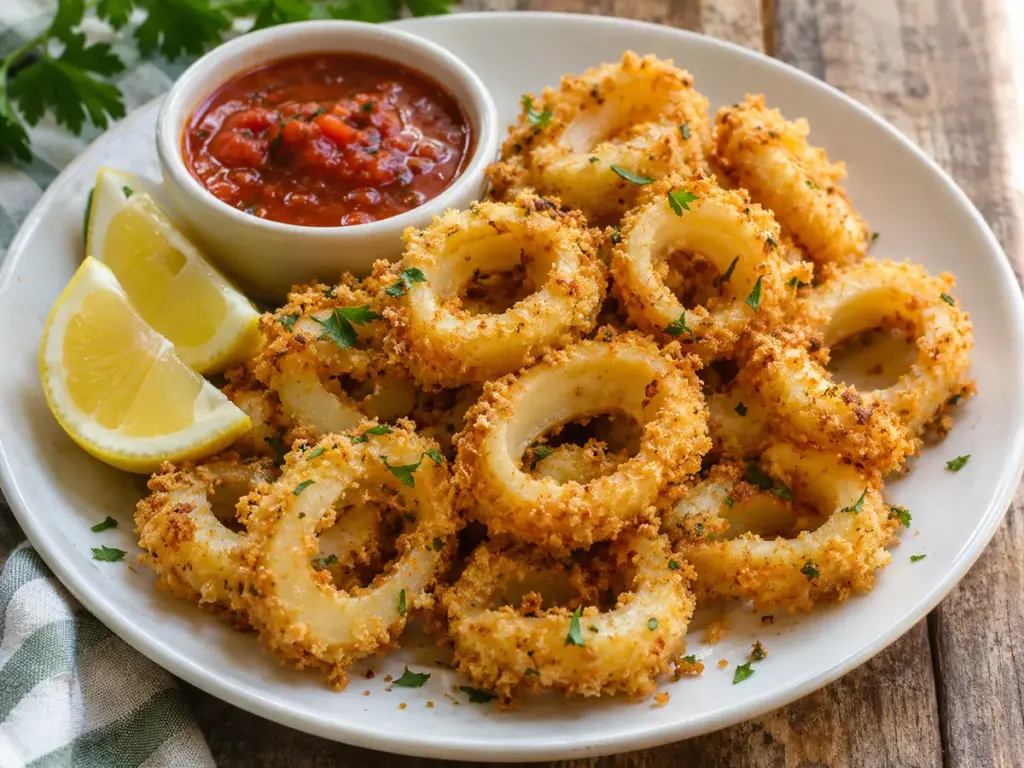
For calamari-style rings, follow these steps. The goal is a dry surface, so the coating sticks and crisps instead of steaming off:
- Drain and rinse. Rinse the stalks to remove the brine, then pat them very dry with a towel.
- Cut rings. Slice the stalks crosswise into rings about as thick as a thumb joint.
- Coat. Dip each ring in plant milk or beaten egg, then press it into seasoned flour or breadcrumbs.
- Fry. Shallow-fry the rings in hot oil until golden, then drain them on paper towels and serve right away with lemon.
The coating and the frying carry the flavor here, because the palm itself is mild. Real calamari is chewier and tastes of the sea, so serve the rings with lemon and a sharp dipping sauce to fill that gap.
5. How Long Does Opened Heart of Palm Last?
The USDA's FoodKeeper has no line for heart of palm itself, so we use its entry for low-acid canned goods. That entry gives 2 to 5 years in the pantry for an unopened can with no dents, rust or swelling, and 3 to 4 days in the refrigerator after you open it.
After you open the can, move the leftover pieces and their liquid to a covered glass or plastic container, and keep it in the fridge instead of leaving the open can on a shelf. Throw the pieces out after the fourth day, or sooner if they smell sour or feel slimy.
6. Is Heart of Palm Sustainable?
It depends on the palm. Some palms grow a single trunk, and cutting out the heart kills the whole tree, while others grow in clumps, and growers can cut one stem and leave the rest to keep growing.
- Juçara (Euterpe edulis) has one trunk, so taking the palm heart kills the plant
- Wild harvest and illegal cutting led Brazil to classify juçara as endangered in 2008
- Açaí palm (Euterpe oleracea) has several stems per plant
- For multi-stemmed palms such as peach palm and açaí, DeLallo says producers cut only one stalk at a time
A can that names peach palm (pejibaye) or says "farmed" is the lower-risk pick.
Labels rarely give the whole story. If you can, pick a can or jar that names the palm or says it is farmed, and treat one that says nothing about its source as a question mark.
Sources
- DeLallo: What Are Hearts of Palm? (taste, texture, packing and harvest)
- USDA FoodKeeper (low-acid canned goods: unopened 2 to 5 years, opened 3 to 4 days)
- Juçara palm study, PMC (single-stem palm, harvest kills the plant, endangered classification)
- Expansion of açaí fruit and heart-of-palm production, PMC (single-stem and multistem Euterpe species)

Food writer at GustoMeadow. Writes ingredient substitutes, food comparisons, taste guides and storage guides for home cooks.
Storage and food-safety numbers follow USDA, FDA and university extension guidance.