
Did you know there's a silent rivalry brewing in the seafood section of your grocery store? Pacific salmon and Atlantic salmon are duking it out for the title of 'Most Likely to End Up on Your Dinner Plate'.
What's the big deal, you ask? Well, strap in, because we're about to spill the salmon secrets.
I remember my first salmon cooking fiasco - the kitchen smelled like a fishy Fenway Park.
Turns out, knowing your salmon can save your dinner. And your dignity.
Pacific salmon? Wild, free, and living the dream until it ends up on your plate.
Atlantic salmon? Mostly farmed, chillin' in pens.
Different vibes, different tastes. Who will win?
What is Pacific Salmon?

Pacific Salmon are a type of fish found in the Pacific Ocean.
These salmon are known for their bright red flesh, long journeys to freshwater breeding grounds, and rich flavor.
They come in different species including Sockeye, Chinook, Coho, Pink, and Chum.
Pacific Salmon is typically caught in Alaska and British Columbia, where strict regulatory standards protect wild populations.
It is high in omega-3 fatty acids and essential amino acids.
Its meaty flesh makes it popular for grilling or smoking.
One interesting detail about Pacific Salmon is its role as a keystone species that supports entire systems throughout its lifecycle - from feeding bears to enriching forest soils with its carcass remnants.
As such changes due to climate change or human activity may cause cascading effects on wildlife dependent on it, also creating an ecological balance of nutrition for our environment while gracing our dinner table with its deliciousness.
Citrus is a natural partner for salmon dishes; for dessert pairing ideas that highlight lemon, see lemon dessert pairing ideas for complementary flavors.
What is Atlantic Salmon?

Atlantic salmon is a species of fish found in the Atlantic Ocean and its adjacent seas.
It is a migratory fish that spawns in freshwater rivers and streams but spends most of its life in salt water.
The Atlantic salmon has a long, slender body with silver-blue scales and small black spots on the upper part of its body.
It is prized for its firm, pink flesh which has a rich flavour profile.
The average size of an Atlantic salmon is around 6 to 12 pounds, although larger specimens have been caught weighing up to 100 pounds.
Unlike Pacific salmon, which die after spawning, Atlantic salmon can spawn multiple times during their lifetime - see steelhead vs Atlantic comparison for lifecycle differences.
However, overfishing and habitat destruction have greatly reduced the numbers of wild Atlantic salmon populations.
Differences Between Pacific Salmon and Atlantic Salmon
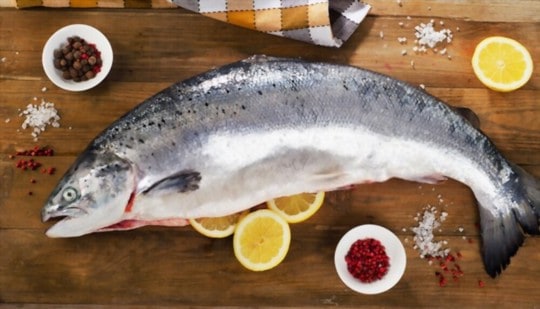
Pacific and Atlantic salmon belong to different genera, and they have several differences that set them apart in terms of their physical appearance, habitat, and nutritional value.
For a contrast with a very different white-fleshed fish, consider the barramundi vs salmon comparison for cooking and texture differences.
Habitat and Origin
Pacific and Atlantic salmon have distinctive habitats and origins, resulting in distinct differences between the two species.
Pacific salmon are primarily found on the west coast of North America and east Asia, while Atlantic salmon are native to rivers that flow into the Atlantic Ocean.
The different environments have led to genetic variations, as well as differences in size, color, and taste.
Pacific salmon spawn in freshwater streams before migrating out into the ocean.
They then return to their natal streams to spawn again at the end of their life cycle.
In contrast, Atlantic salmon live in freshwater rivers before moving out to sea as adults.
They typically return to their home river after several years in the ocean to spawn once and die.
Interestingly, certain types of Pacific salmon such as sockeye and chum are known for their bright red flesh due to a diet of krill and plankton, while other species like coho and pink have lighter-colored meat.
Atlantic salmon has a more delicate flavor and is considered a gourmet fish by many due to its tender flesh.
Physical Characteristics
Salmon varieties have distinct features that differentiate them from one another.
Pacific and Atlantic salmon are two widely consumed types of salmon with varying physical characteristics.
For instance, Pacific salmon species typically have a more simplifyd shape with a larger tail fin compared to their Atlantic counterparts.
Also, Pacific salmon possess smaller scales, fewer spots, and a more bright hue.
Also, Atlantic salmon usually have a longer and narrower head than Pacific species.
These fish also produce larger scales, more spots on their sides, and a paler coloration.
In terms of size, Pacific salmon tend to be larger than the Atlantic salmon.
While both types of salmon species require similar spawning conditions, they prefer different habitats during their adult lives.
Pacific salmon reside in colder waters along the coastlines of Alaska while Atlantic species live in warmer coastal waters and rivers within northern Europe and North America.
In summary, it is important to recognize the distinct physical differences between the two commonly eaten varieties of salmon when selecting them for dishes or recipes.
Understanding these disparities can lead to an informed decision regarding which type of fish is ideal for your desired taste and dish preparation method.
Flavor and Taste
The taste and flavor of Pacific Salmon and Atlantic Salmon differ slightly, owing to their distinct living environments and feeding habits.
Pacific Salmon has a more strong, meatier taste with a higher fat content than the Atlantic salmon due to their feeding on krill and plankton in deep waters.
On the other hand, Atlantic salmon is mild in its flavor, with a hint of sweetness, mainly feeding on smaller crustaceans and fish in shallower waters.
One important factor that distinguishes between these two popular types of fish is their texture.
The flesh of Pacific salmon is deeper red or orange color than Atlantic salmon's pale-pinkish flesh.
Their muscular structure also differs as the Pacific Salmon tend to have a firmer texture compared to softer Atlantic Salmon.
In addition to their dissimilarities in taste, texture, and color, there are specific geographical restrictions as well.
Pacific Salmons are found in regions such as Alaska, British Columbia, California, Washington state while Atlantic Salmons are typically cultivated in North America's Northern region, including Scotland and Norway.
In creating an outstanding meal using either type of fish depends on individual preferences; it's ultimately up to personal choice when it comes to buying any of the delicious kinds available out there.
To better understand subtle aroma versus taste distinctions when describing salmon, see extract vs flavor differences for sensory clarity.
Nutritional Composition
Salmon is a widely consumed and appreciated fish globally, with Pacific and Atlantic Salmon being the most commonly known species.
Nutritional Composition of both varies largely in terms of their Omega 3 Fatty Acids content.
Pacific Salmon is rich in Omega 3's EPA and DHA, while Atlantic Salmon contains more Omega 6 Fatty Acids.
These fatty acids play a important role in maintaining heart health, lowering inflammation and improving brain function.
In terms of nutrient density, Pacific Salmon offers higher amounts of essential nutrients like vitamins D and B12, protein, Iron, Zinc and Potassium than Atlantic salmon.
For a primer on yeasty, umami flavor profiles that sometimes appear in smoked fish descriptions, see yeasty wonders taste guide for umami context.
Similarities Between Pacific Salmon and Atlantic Salmon

Salmon is a popular fish loved by many worldwide.
Pacific and Atlantic salmon are two species of the fish that are both delicious and share some similarities.
Both species have similar nutritional values and pink colored flesh but differ in size, habitat, and taste.
Both Atlantic and Pacific salmon have similar nutrients, such as omega-3s, they vary in their sizes.
Pacific salmon are generally smaller than Atlantic salmon, which can grow up to 150 pounds.
Besides this, they differ in habitats too; Atlantic salmons spawn in extensive freshwater rivers while Pacific salmons prefer shallow streams with gravel beds.
Also, the texture and taste also set these species apart.
Atlantic salmons tend to be mild with a creamy taste, while Pacific salmons have a more strong flavor.
Also, since each type of salmon comes from different water sources hence cooking time and techniques vary too.
When comparing species, also weigh preservation options; frozen vs fresh salmon comparison for quality and convenience helps decide which to buy.
Cooking and Culinary Uses
Pacific and Atlantic salmon have distinct usage in gourmet cooking.
While both types are often interchangeable, the difference lies in palatability and texture.
Pacific salmon has a firmer flesh with a more strong flavor, while Atlantic salmon is more mild-tasting with a delicate texture, making it ideal for sushi and sashimi.
Grilling, baking, broiling or smoking works well for both types.
However, for dishes that require longer cooking times like stews or soups, using Pacific salmon will result in better flavor as it breaks down slower than its Atlantic counterpart.
Another aspect of culinary use is the importance of knowing the country of origin and sustainable fishing practices of the supplier.
By doing so, you can ensure that the ingredients used are fresh and free from harmful practices that could harm wildlife or the environment.
For guidance on whether to use wine or vinegar-style flavors in sauces and marinades, see white cooking wine vs white wine vinegar flavor uses.
Sustainability and Environmental Considerations
The impact of Pacific and Atlantic salmon on the environment is an important consideration for sustainable consumption.
Differences in habitat, population size and fishing methods must be considered to ensure long-term ecological balance.
Pacific salmon populations are generally healthier due to stricter conservation measures in the salmon farming industry, while the Atlantic salmon industry has a larger market demand leading to overfishing concerns.
It is important that consumers have access to accurate information on their purchasing choices to encourage responsible consumption practices.
Differences in Taste and Habitat of Pacific and Atlantic Salmon
As both Pacific and Atlantic salmon offer unique flavors, it is difficult to crown one as a clear winner.
However, based on the geographic origins, there are some mild differences in terms of taste, texture and fat content.
So while there are some slight differences between the two types of salmon in terms of taste and texture, they both offer delicious and nutritious options for any meal.
It's important to consider sustainability when making your choice and enjoy them in moderation as part of a balanced diet.
Frequently Asked Questions
Different vibes, different tastes. They share some similarities but each has qualities that make it better suited for certain recipes.
Often, yes. The two share enough common ground that most palates won't notice a swap.
Pacific Salmon is usually milder while Atlantic Salmon brings more intensity.
Nutritional differences exist but are often minor in typical serving sizes. Neither is universally healthier - it depends on what specific nutrients or dietary goals you are focused on.
Which stores better after opening?
Once opened, one keeps better in the refrigerator with proper sealing.
The other may oxidize or separate more quickly, so using it promptly or in smaller quantities works better.
Explore how roe contributes to texture and flavor in dishes: salmon roe taste guide. For broader tasting notes on the fish itself, see salmon flavor deep dive.