
Summary of key points
The primary difference between caviar and roe pertains to the type of fish eggs and their processing. Caviar specifically refers to the salt-cured eggs of sturgeon fish, well-known for its luxurious texture and flavor, often served in fine dining establishments.
Roe, on the other hand, is a general term for fish eggs or seafood eggs, including a wide variety of species beyond sturgeon, such as salmon (salmon roe) and sea urchin. While all caviar is roe, not all roe qualifies as caviar, with the latter commanding a higher price and status in culinary circles.
Caviar and roe: they're not just fancy words for expensive sushi toppings.
We were in the same boat. Paddling through a sea of confusion.
Why do some people get all wide-eyed over one and not the other? Is it the flavor?
The price tag? Or maybe it's something to do with how you're supposed to eat them-pinkies up, right?
Brace yourselves, because we're about to deep-get into this mystery. We've all been at that awkward dinner party.
The one where caviar is on the menu, and everyone acts like they've eaten it since birth.
We're here to level the playing field. No more pretending to text because you can't have another conversation about fish eggs.
It's time to get clued in.
What is Caviar?

Caviar: a luxurious delicacy.
Derived from the eggs of sturgeon fish, this gourmet treat is often enjoyed on its own and used to garnish dishs.
It's a symbol of wealth and refinement.
The flavors of caviar are distinct.
From Beluga to Ossetra, each type has its own taste profile; buttery, nutty, briny, or earthy.
The texture is noteworthy - caviar bursts with a delicate pop when eaten, melting on the tongue.
Not all fish eggs qualify as caviar.
True caviar must come from sturgeon species.
Roe from other fish, like salmon or trout, is referred to as "roe" or "fish eggs".
Quality matters too - size, color, firmness, and age determine price and desirability.
What is Roe?

Roe is fish eggs or the internal ovaries.
It's a popular dish worldwide.
Common types are salmon, trout, and sturgeon roe.
They come in various shapes, sizes, and colors.
Providing a unique cooking experience.
The eggs are harvested from female fish when their ovaries are full.
Then processed to be consumed.
Full of flavor and salty taste.
Often used as a topping for sushi or other seafood.
Caviar differs from roe.
It's the salted eggs of sturgeon fish species.
Including beluga, ossetra, and sevruga caviar.
These special roes have qualities that make them sought after.
Differences Between Caviar and Roe
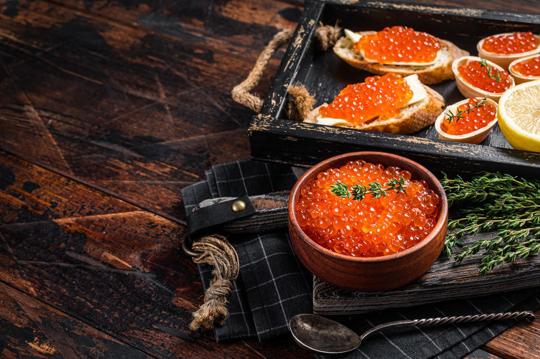
Caviar and roe are two distinct types of fish eggs.
Caviar is more esteemed and pricey, as it's obtained from sturgeon.
Meanwhile, roe is a general term for the eggs of various fish.
This makes a difference in flavor, texture, and the whole cooking experience.
Origin and Species
Caviar & roe are distinct delicacies from different species.
Caviar from sturgeon has a rich and buttery flavor, while roe refers to fish eggs from various other species offering unique tastes & textures.
Caviar is from the Caspian Sea, while roe captures the essence of diverse waters worldwide.
Appearance-wise, caviar has small, glossy beads from golden to black & adds elegance to dishes.
While roe has a broader spectrum of hues like bright reds, oranges & greens, improving presentation & anticipation.
Indulging in caviar shows creamy texture & rich undertones coating your mouth with luxury.
Roe exposes one's palate to delicate pops with bursts of briny flavors within each egg.
Uncovering their uniqueness reveals the expertise to master their extraction & appreciate their complex allure.
Processing and Preparation
Harvesting the eggs from fish must be done gently, so as not to cause any damage.
Then, they must be cleaned to remove all impurities.
After, the right amount of salt is added to boost flavor and act as a preservative.
Pack them into fancy containers and store in a cool place.
This all contributes to the special taste and texture that makes caviar unique from roe.
Flavor and Texture
Caviar and roe are distinct in flavor and texture.
Caviar offers a rich, buttery taste with a hint of brininess.
Its texture is from smooth to slightly grainy, with a delicate pop when eaten.
Roe's flavor varies depending on the fish it comes from.
It can be mild like caviar, or have a stronger fish flavor.
Its texture can be firmer than caviar, but still pops in the mouth.
Caviar has unique and complex flavors, from nutty to creamy undertones.
It is associated with luxury due to its scarcity and high price.
Roe is more accessible, with different types and prices.
It is versatile and can be used in many dishes, like sushi or as a garnish.
Both offer a tasty experience for seafood lovers.
Whether one chooses caviar's luxurious taste or roe's versatility, each promises an indulgent experience.
Cost and Rarity
Caviar and roe are similar in appearance, but they have distinct differences.
Caviar is more expensive because it comes from sturgeon fish, which take years to mature and reproduce slowly.
Roe, on the other hand, comes from more abundant fish such as salmon and trout.
They reproduce faster, making roe more affordable and accessible.
Certain varieties of roe can still have a higher price due to freshness, type of fish, processing, and quality.
Both caviar and roe offer unique flavors, but the cost and rarity sets them apart.
Similarities Between Caviar and Roe

Caviar and roe are both types of fish eggs, which are considered a delicacy.
They come from various fish species, like sturgeon, salmon, and trout.
Both caviar and roe have a distinct flavor and texture that make them sought-after.
Appearance-wise, they can be tricky to differentiate.
They come in small, round spheres that vary in color based on the fish.
Taste-wise, they are rich and slightly salty, although caviar is often said to be more refined.
Caviar is usually more expensive, as it is rarer and in high demand.
It is served on its own or as a garnish for fancy dishes.
Roe, on the other hand, is more commonly found in regular dishes, like sushi rolls or salads.
Culinary Uses of Caviar and Roe
Caviar and roe are two delicacies popular in cooking.
Caviar is cured eggs from fish like sturgeon, while roe is the eggs of multiple species.
Both add flavor and texture to dishes, prized by chefs and foodies.
Caviar can be used as a garnish or topping, such as on sushi or oysters.
Its salty flavor goes great with mild flavors.
It's also enjoyed alone, for example on toast or crackers with crème fraîche or butter.
Roe is very versatile.
It can be used in sauces, dressings, or spreads.
Cream cheese or sour cream can be mixed with roe to make spreads for sandwiches or bagels.
Roe offers lots of possibilities for chefs.
Caviar and roe have differences.
Caviar is seen as luxurious due to its high cost, while roe is more affordable and accessible.
How to Serve Caviar and Roe
Caviar and roe are unique treats that need to be handled with care.
Here's how to serve them properly:
Pick the right accompaniments:
- Blinis or toast points for caviar.
- Crackers or cucumber slices for roe.
Make a fancy display:
- Serve on a chilled plate.
- Arrange the sides neatly.
- Offer lemon wedges, chives, or sour cream with caviar.
- Sprinkle herbs or olive oil over roe.
- Use mother of pearl spoons for caviar.
- Provide small plates or napkins.
While both come from fish eggs, caviar only comes from sturgeon, and roe can come from other fish such as salmon, trout, or flying fish.
Knowing this info helps when presenting these delicacies at social events or restaurants.
Quality Indicators for Caviar vs Roe
Caviar and roe have different textures, flavors, and colors, but both offer a unique taste experience that is both savory and indulgent.
While the differences between them may seem complicated to understand at first, taking the time to discover more about how they're made and what affects their flavor is well worth it when you dine on these delicious delicacies.
Knowing exactly what you're tasting, from the subtly salty flavor of caviar to the unique texture of roe, will improve your acquaintance with these excellent treats.
So get into this fascinating world today and let your palate explore the treats that await.
Frequently Asked Questions
The primary difference between caviar and roe pertains to the type of fish eggs and their processing. They share some similarities but each has qualities that make it better suited for certain recipes.
Sometimes. Caviar works where Roe is called for in certain dishes, but not all.
Check whether the recipe relies on a specific quality before substituting.
Cold preparations like salads and dressings often favor the option with a sharper, more defined flavor. Heat can mellow both, so the distinction matters more in uncooked dishes.
Do professional cooks prefer one over the other?
Professional preference depends heavily on the dish and cuisine style.
Each has its context where it outperforms the other, so most experienced cooks keep both on hand.