Parmigiano-Reggiano is the classic Caesar cheese: whisk some into the dressing and shave more over the top.
- Grana Padano and US Parmesan swap in 1:1, and Pecorino Romano needs a lighter hand.
- Aged Asiago, aged Gouda and Manchego shave over the leaves for a nuttier finish.
- Feta, goat cheese and Roquefort crumble on after you toss.
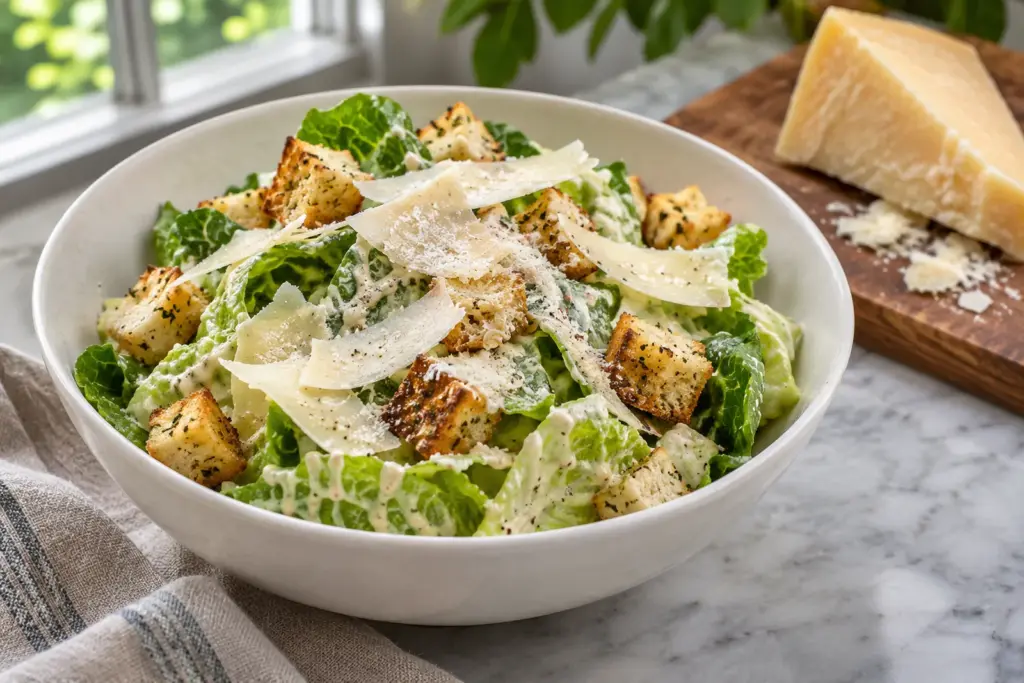
A Caesar can open a dinner, sit beside steak among the side dishes on the plate, or turn into a main course with grilled chicken. The cheese you pick decides whether the dressing tastes nutty and savory or sharp and salty.
Twelve cheeses earn a place below, with how much to use, a salt ranking and six popular cheeses that do not belong on romaine.
Which Cheese Belongs in a Classic Caesar Salad?
Cesare Cardini is said to have created the salad at his Tijuana restaurant on July 4, 1924, according to Salon. The first version combined whole romaine leaves, garlic-flavored oil, Worcestershire sauce, lemons, eggs and Parmesan.
Anchovies came with the version his brother Alex made, and other accounts credit the mother of Livio Santini, one of Cardini’s chefs. Who invented it is still disputed, but the earliest list of ingredients already has cheese in it.
A Caesar differs from a house salad in the dressing: both recipes cited here whisk egg yolk, anchovy, citrus juice and grated cheese into olive oil.
What Makes a Cheese Work in Caesar Dressing?
The dressing already brings salt and umami from anchovies, acid from citrus and richness from egg yolk, so the cheese has to hold its own against all three.
- Hard and dry, so it grates fine and dissolves into the dressing without thinning it.
- Aged, because months in the cellar build the nutty, savory flavor that still tastes like cheese after the lemon.
- Not too salty, since the dressing already has anchovy; the salt table below ranks six of them.
- Crumbly and soft cheeses go on after tossing, so they stay in pieces.
- Parmigiano-Reggiano
- US Parmesan
- Grana Padano
- Pecorino Romano
- Aged Asiago, aged Gouda, Manchego
- Ricotta salata, feta, Cotija
- Goat cheese, Roquefort
12 Best Cheeses for Caesar Salad
1. Parmigiano-Reggiano
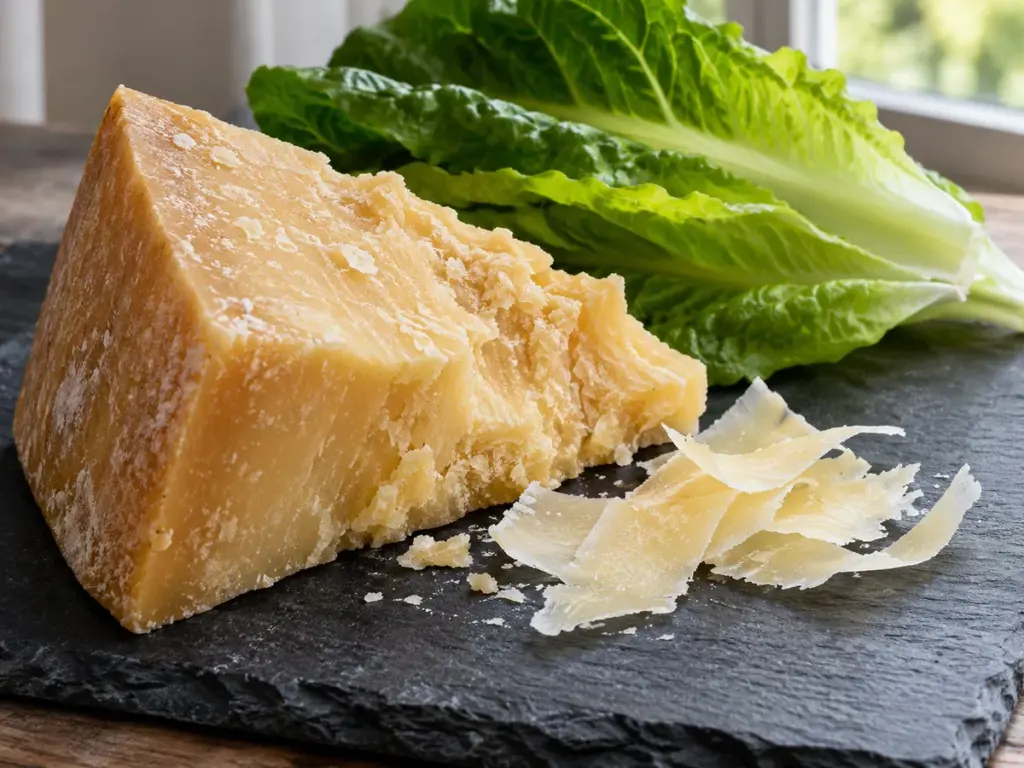
Parmigiano-Reggiano is the cheese most Caesar recipes name, and its Consortium sets a minimum maturation of 12 months, the longest minimum of any PDO cheese.
The Consortium describes cheese aged 20 to 26 months as soluble, crumbly and grainy, a good fit for a dressing. You can grate it on a rasp-style grater, then shave a second handful over the leaves at the table.
The Consortium’s product guide lists the ingredients as part-skimmed cow’s milk, cheese cultures, salt and rennet.
2. Parmesan Made in the US
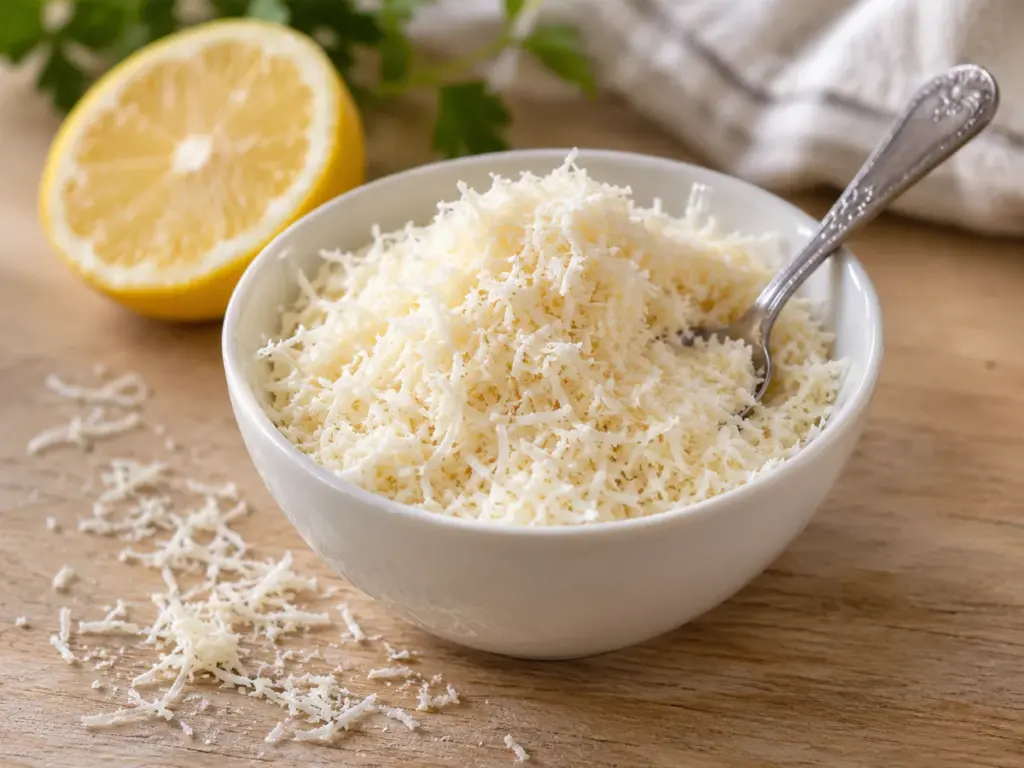
In the US, FDA’s standard of identity defines Parmesan by its makeup: no more than 32% moisture, at least 32% milkfat in the solids and a cure of at least 10 months.
A domestic wedge still has the hard, dry texture the dressing needs, though Parmesan and Parmigiano-Reggiano differ in aging minimum and origin, so read the label.
You can whisk the US wedge into the dressing and keep your Parmigiano-Reggiano for the shavings on top. USDA lists hard Parmesan at about 333 mg of sodium per ounce, the number the salt table below uses for the baseline.
3. Grana Padano
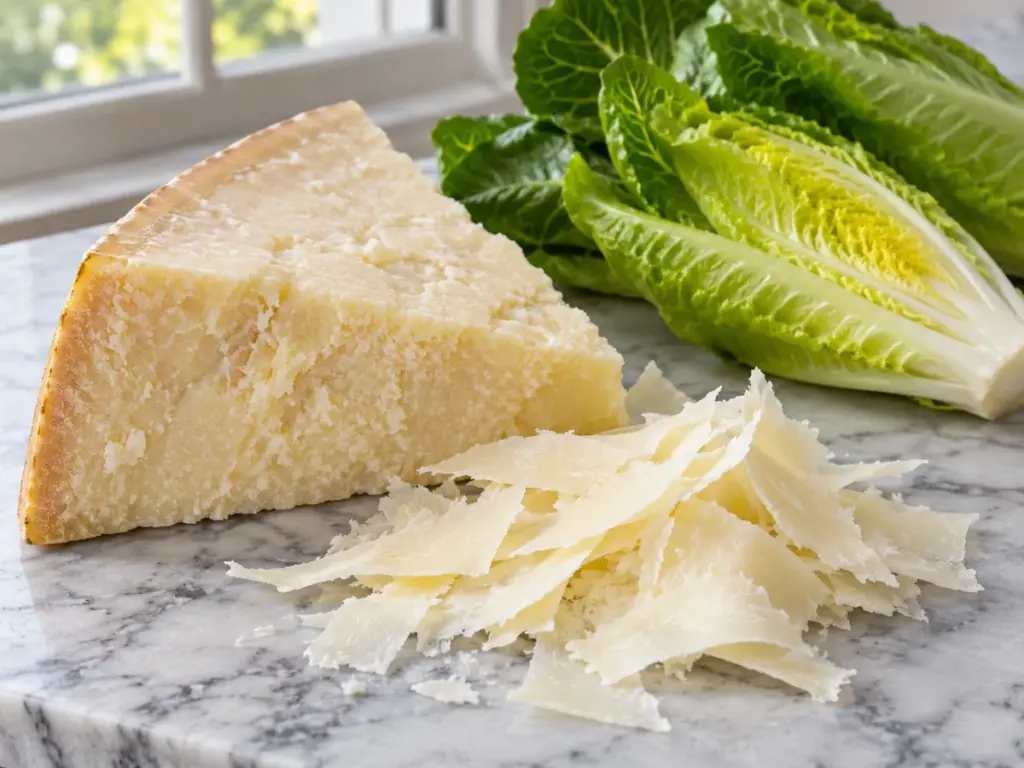
Grana Padano is a PDO cheese from northern Italy. Its Consortium says the milk is partially skimmed by natural surface skimming, and every wheel stays in the maturing warehouse at least nine months.
It is a hard cheese, so you can use the same amount as Parmigiano-Reggiano: some whisked into the dressing and some shaved on top. Its Consortium names calf rennet in the recipe, so it is not a vegetarian cheese, which matters if one of your guests skips meat.
It is also one of the usual Parmesan stand-ins when the Parmesan runs out.
4. Pecorino Romano
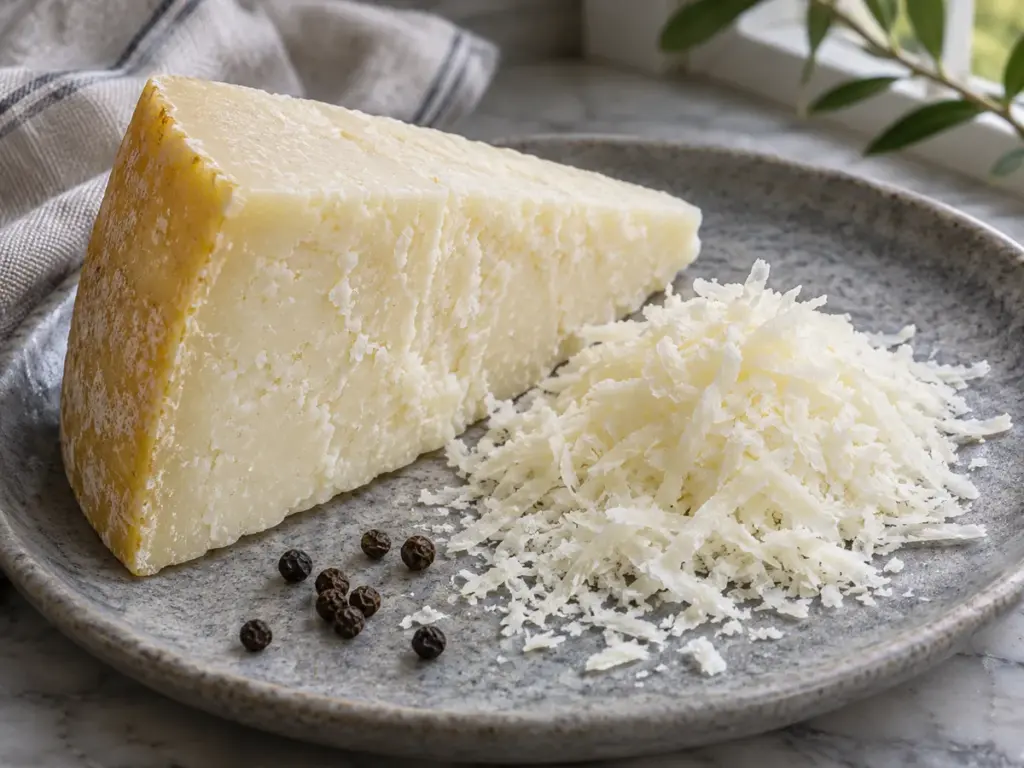
Pecorino Romano is made from fresh whole sheep’s milk, and its Consortium says it can be sold after 5 months as a table cheese and 8 months as a grating cheese.
The Consortium calls the grated type “intensely spicy”. USDA lists about 406 mg of sodium per ounce, against 333 mg for hard Parmesan.
Pecorino works best whisked in: you can start with about three quarters of the Parmigiano amount, taste, then add more. Its piquant flavor grows stronger with age.
5. Aged Asiago
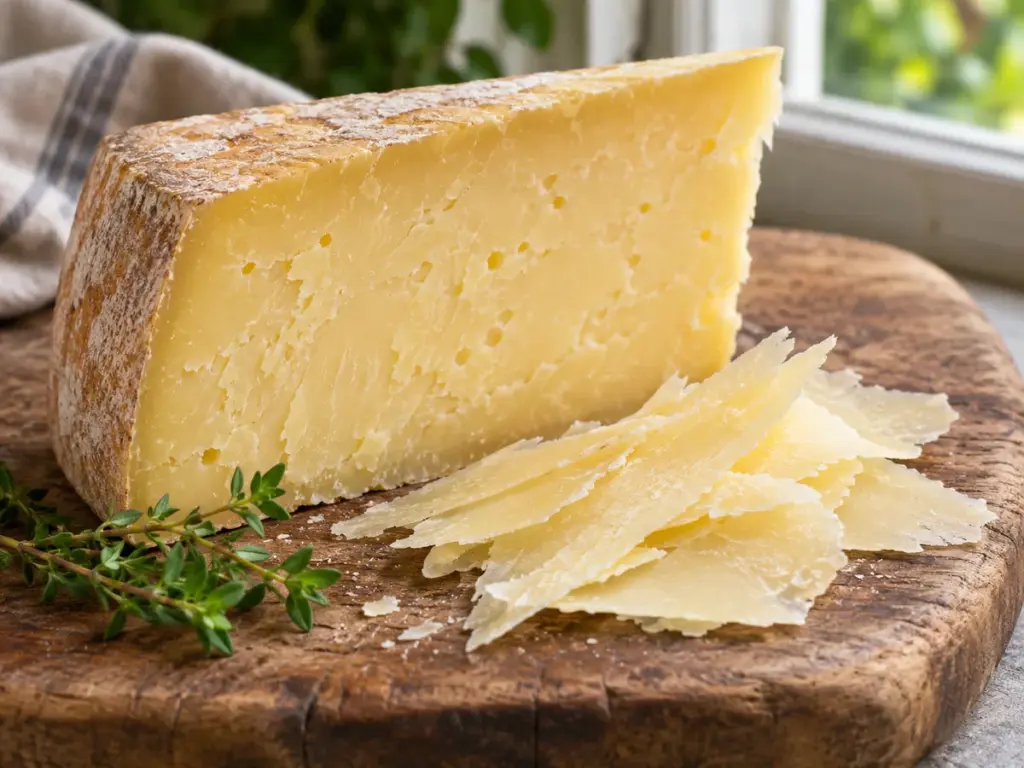
Only aged Asiago works here. Culture magazine says wheels matured at least nine months are sold as Vecchio or Stravecchio, firmer, drier and “well-suited for grating.”
The younger Mezzano, aged at least three months, is supple and semisoft, and Asiago Pressato is a softer, holey type, so skip both, since semisoft cheese does not grate.
You can use aged Asiago in the same amount as Parmesan, or shave it into curls with a vegetable peeler.
Culture says Asiago d’Allevo is made from raw cow’s milk from mountain pastures in Italy’s Veneto region, and that its flavor grows more intense and sharp with age. Older wheels have a “much firmer, drier texture,” which is why they grate.
6. Aged Gouda
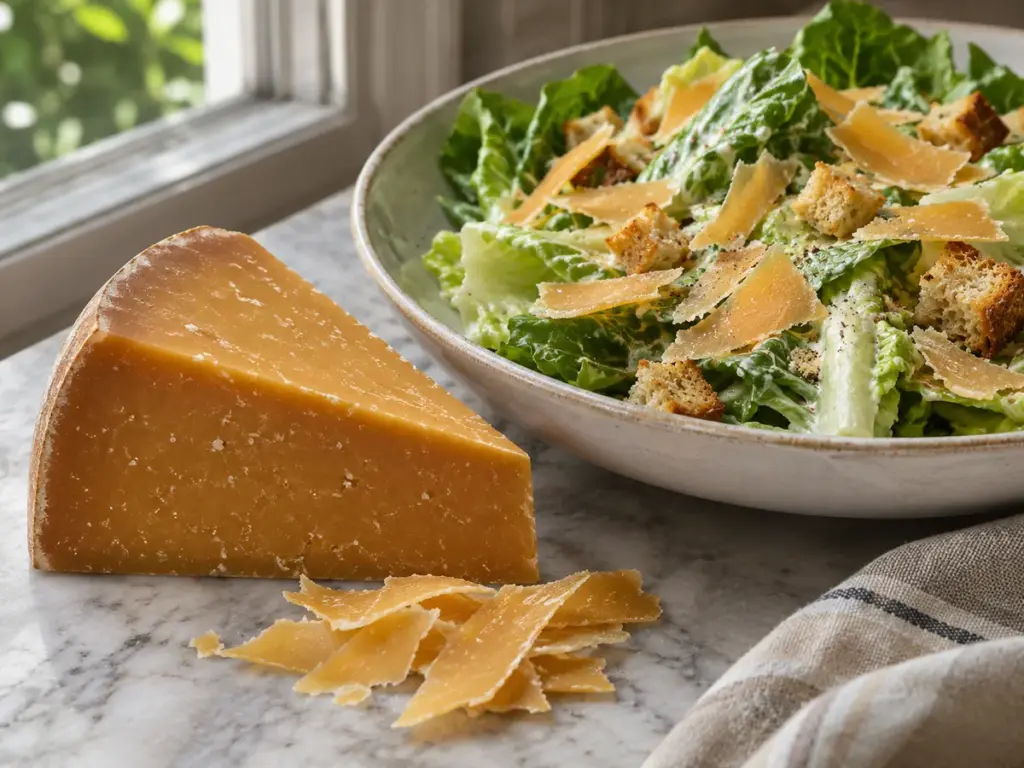
Regular Gouda is aged for a shorter time, so pick a wheel labeled aged. Cheese.com says aged Gouda turns crumbly and crystalline and often holds crunchy protein crystals.
The same page gives aged Gouda nutty, caramel and butterscotch notes with a touch of salt, and says it can be grated onto dishes. You can shave it into wide ribbons or grate it coarsely over the leaves.
Its sweetness suits a grilled-chicken Caesar, where the dressing is salty. Younger wheels taste milder, and Gouda’s taste shifts as the cheese matures.
7. Manchego
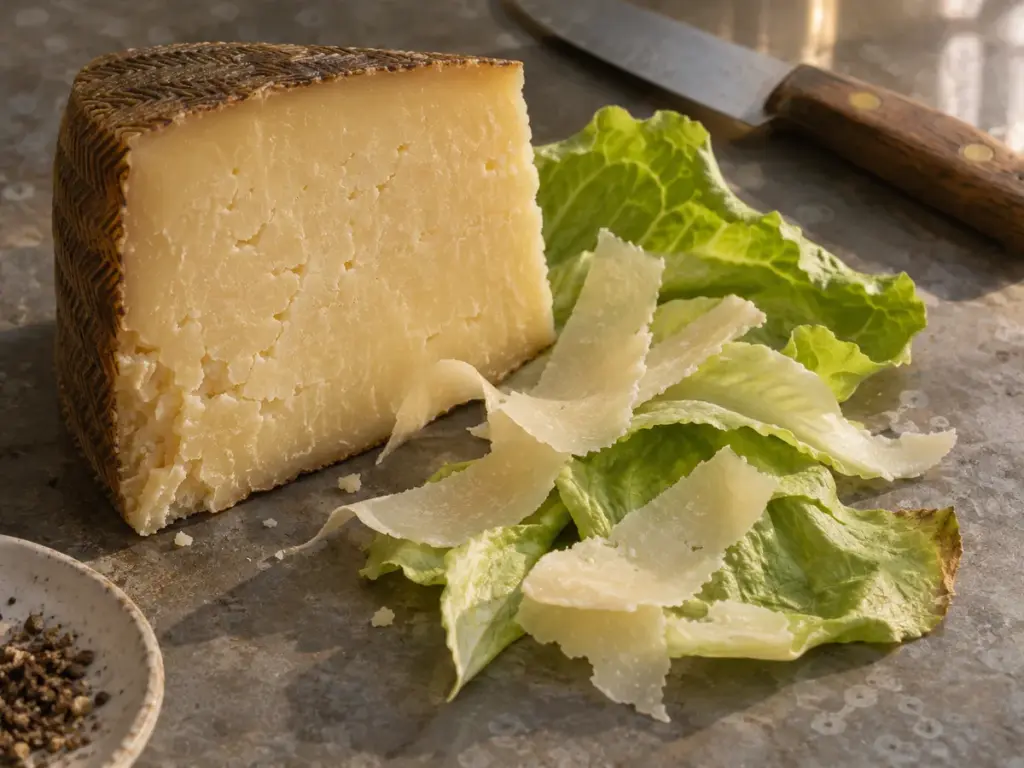
Manchego is a sheep’s milk cheese, and Culture magazine says the real one is made only from the whole milk of Manchega sheep raised in La Mancha.
Culture places semi-curado at 3 months, curado at 6 months and viejo at one year, and says older wheels turn drier and more crumbly with caramel and nut notes.
If you buy Manchego for a Caesar, choose a curado or viejo and shave it with a peeler. The young semi-curado is moist and supple, so it slices softly instead of grating.
8. Ricotta Salata
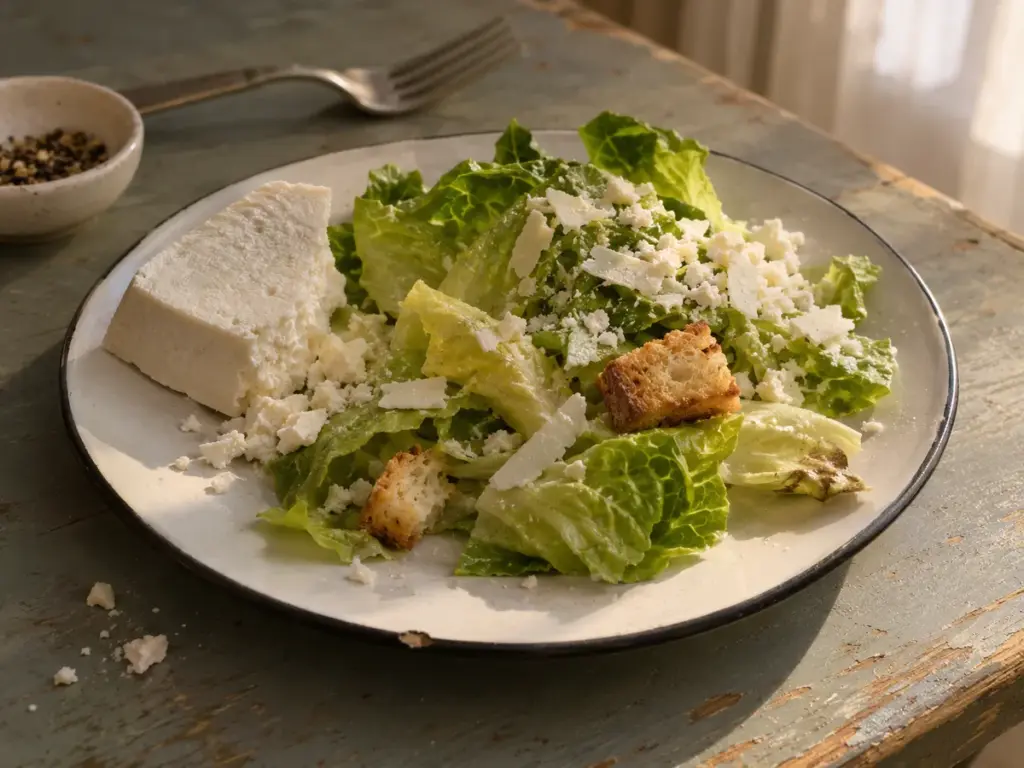
Fresh ricotta is too wet for a Caesar you toss, but ricotta salata is ricotta that has been pressed, salted and aged.
Wisconsin Cheese describes it as harder, less creamy and saltier than fresh ricotta, mild and nutty, and says you can “slice it, grate it, or crumble it over any dish.”
Wisconsin Cheese calls it a “Sicilian-born version of ricotta” with a mild, nutty taste and a slightly briny finish, and it names feta as a close match. You can crumble it over the romaine after tossing. When your store has none, feta or Cotija fill the same crumbly role.
9. Feta
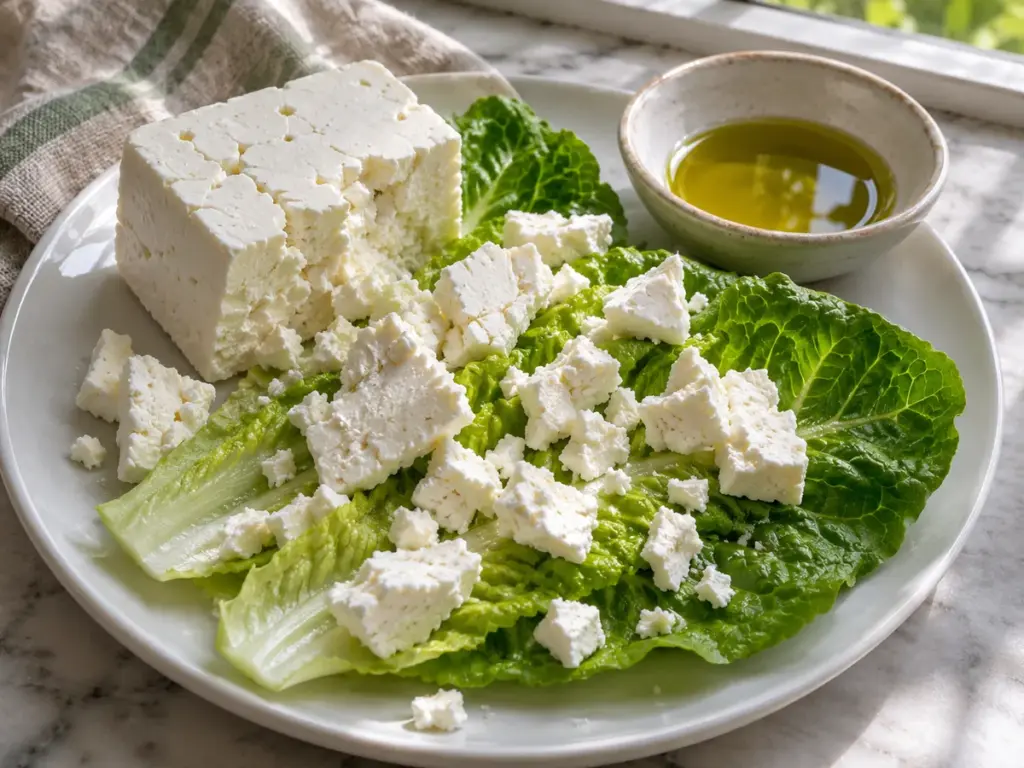
Feta PDO is made only with the milk of native Greek ewes and goats and, per the European Commission, ripens at least two months. The Commission calls its flavor salty and slightly acidic.
Because feta brings salt of its own, you can cut back the anchovy or Worcestershire a little to keep its tangy taste in balance.
Pat the crumbles dry and add them after you toss, because brine that drips into the bowl thins the dressing.
10. Cotija
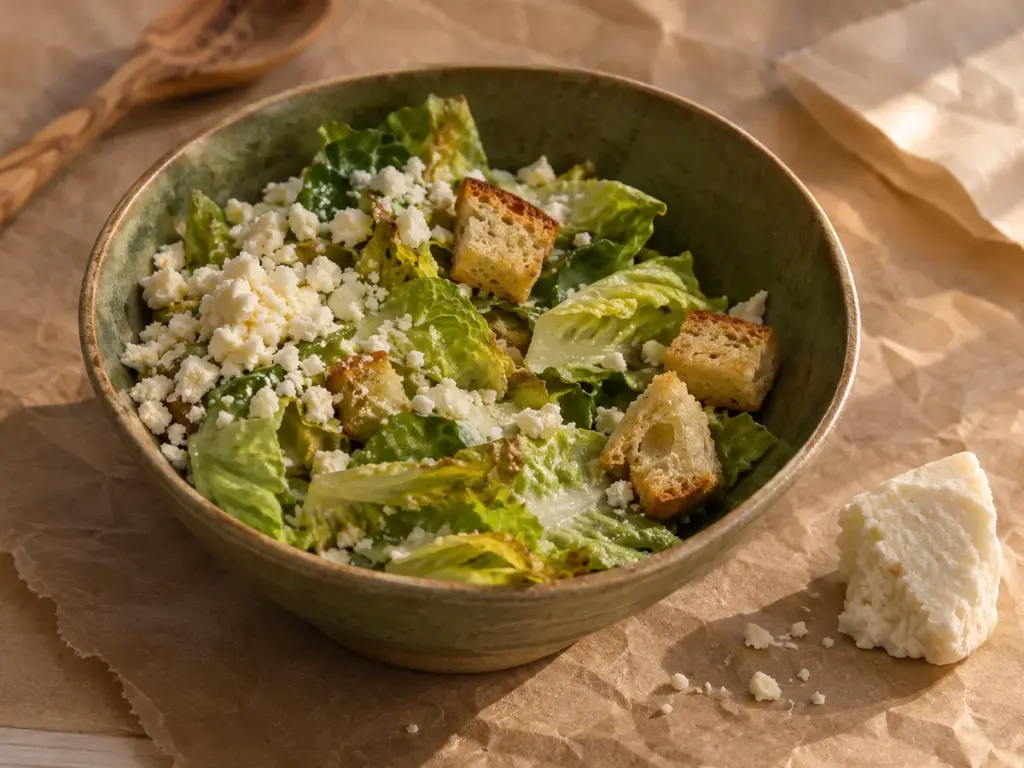
Cotija is a Mexican cheese with a dense, close and crumbly texture. Culture magazine calls it a very highly salted cheese with an assertive, salty bite.
Its mountain version is made from raw cow’s milk and aged at least seven months. You can sprinkle small crumbles after tossing and taste before you add salt, since the cheese already brings plenty.
Culture says a good wheel has a lactic tang that is pleasant in the mouth, and that the heavy salting began as a way to preserve the cheese before refrigeration. Feta crumbles too, though Cotija is the aged, denser cheese.
11. Goat Cheese
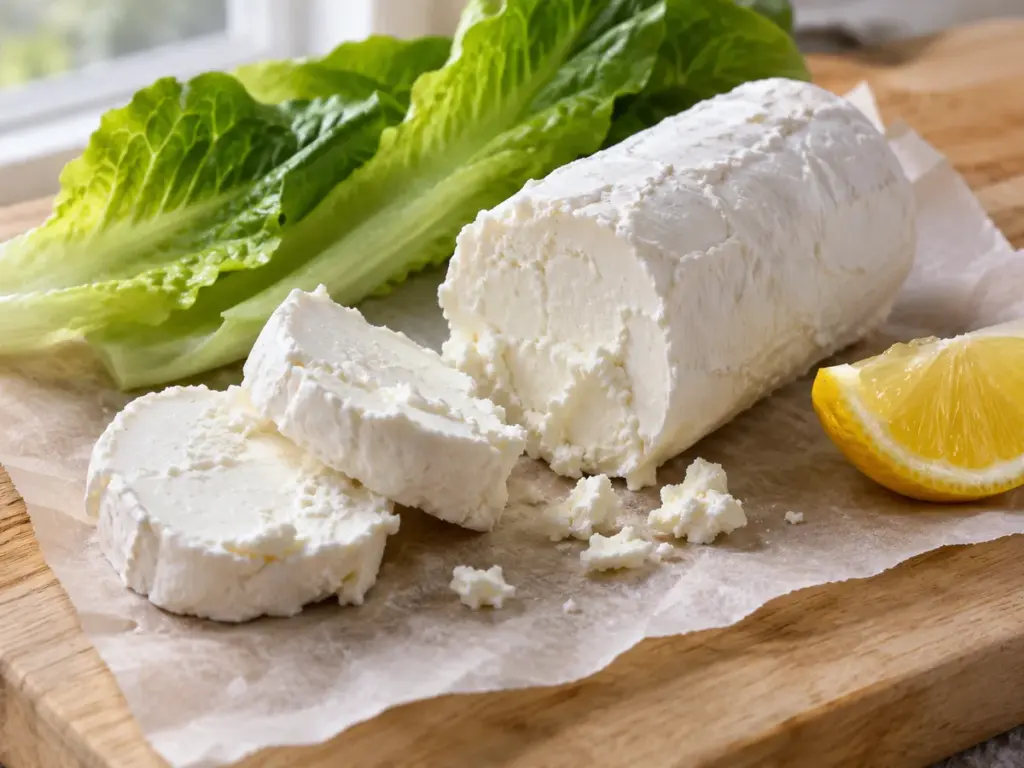
Chevre, or fresh goat cheese, is soft, creamy and tangy, and it is the softest cheese here, so it crumbles instead of grating.
If you chill the log first, you can crumble it over the salad after tossing so it stays in distinct pieces instead of smearing into the dressing.
USDA lists soft goat cheese at about 130 mg of sodium per ounce, the lowest in the salt table below, so it adds the least salt to a dressing that already has anchovy.
12. Roquefort
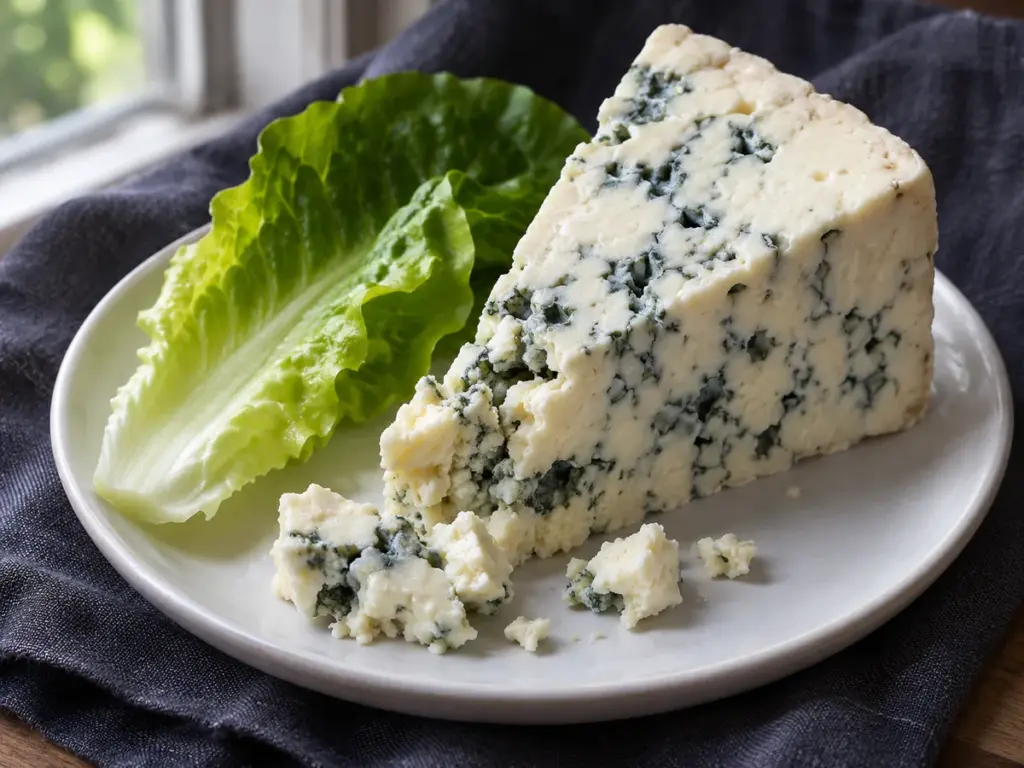
Roquefort is a blue cheese made from raw, whole sheep’s milk, and it may only be aged in the village itself, Roquefort-sur-Soulzon. Taste France says its blue veins come from Penicillium roqueforti, a mold that grows only in the Roquefort caves.
USDA lists about 513 mg of sodium per ounce, the highest of the cheeses compared below, so you need only a small amount, and the dressing needs a light hand with salt.
Gorgonzola is the usual stand-in when you cannot find Roquefort, and the two differ in milk, texture and strength.
How Salty Is Each Cheese?
Sodium by weight shows you which cheese needs the lightest hand, because the dressing already carries anchovy.
| Cheese | Sodium per ounce |
|---|---|
| Roquefort | 513 mg |
| Pecorino Romano | 406 mg |
| Parmesan, hard | 333 mg |
| Feta | 323 mg |
| Gouda | 232 mg |
| Goat cheese, soft | 130 mg |
The numbers come from USDA FoodData Central for one ounce (28 g) of each cheese. Goat cheese and Gouda leave the most room for the dressing’s salt, while Roquefort and Pecorino Romano need the least added salt.
Which Cheeses Should You Skip in Caesar Salad?
Six popular cheeses do not suit a Caesar, for the reasons below.
- Cheddar is moist and tangy, with about 185 mg of sodium per ounce in USDA data, so it lacks the dry grate and salty edge of an aged hard cheese. If cheddar is all you have, grate your oldest block over the top and keep it out of the dressing.
- Swiss has about 53 mg of sodium per ounce, so the anchovy dressing covers it.
- Brie and Camembert are soft and rinded, so they smear into the dressing instead of staying in pieces.
- Fresh ricotta is spoonable and wet, with about 31 mg of sodium per ounce, so it adds moisture and almost no salt. Ricotta salata (item 8) is the version to use.
- Mozzarella is mild and wet, and it waters down the leaves. Save it for tomato and basil.
How Much Cheese Does a Caesar Salad Need?
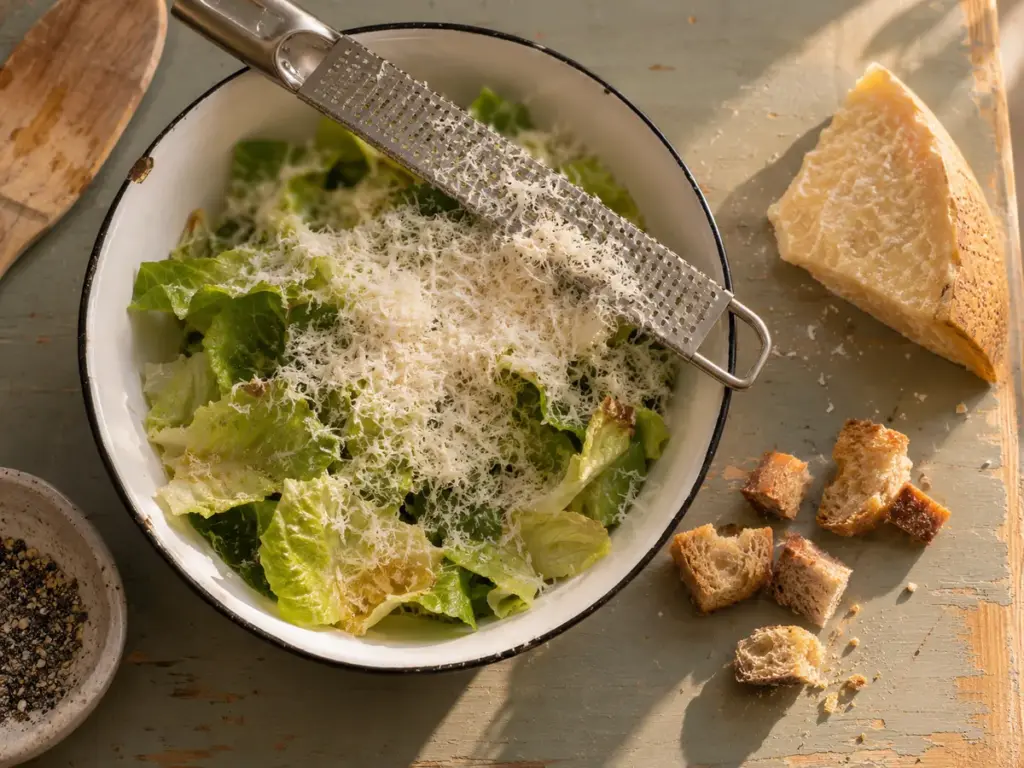
For four servings, Jessica Gavin’s classic Caesar uses 3 tablespoons of Parmesan plus more for garnish, and Sunset’s OG Caesar whisks in ¼ cup of finely grated Parmigiano-Reggiano plus more for garnish.
You can use that range for any hard cheese, and add crumbly cheeses by the small handful.
- Grate the hard cheese fine. Whisk it into the dressing last, after the yolk, anchovy, citrus and oil, as both recipes do.
- Toss the romaine. Coat every leaf.
- Add the croutons. They go in after the dressing, so they stay crisp.
- Finish with the topping cheese. Shave or crumble it last.
Which Form of Cheese Should You Buy?
- A wedge you grate yourself gives you control over the fineness.
- Dry grated Parmesan from a shaker has about 511 mg of sodium per ounce in USDA data, against 333 mg for a hard wedge, so taste the dressing before you add salt.
- A wedge named Parmigiano-Reggiano carries the Consortium’s 12-month minimum, while a plain “Parmesan” follows FDA’s 10-month rule.
Which Caesar Cheeses Contain Animal Rennet?
- Pecorino Romano is coagulated with lamb’s rennet paste, says its Consortium.
- Grana Padano gets calf rennet, per its Consortium.
- Parmigiano-Reggiano lists rennet among its ingredients.
Gavin’s and Sunset’s recipes both use anchovy, so if you cook for a vegetarian, you need a different dressing and a cheese whose label names microbial or vegetable rennet.
Which Cheese Fits a Caesar Wrap?
- In the dressing: finely grated Parmesan or Pecorino Romano coats chopped romaine evenly.
- On the romaine: a small handful of feta or Cotija adds salt in each bite without adding wet.
Is the Raw Egg in Caesar Dressing Safe?
Both Gavin’s and Sunset’s dressings use a raw egg yolk to bind the oil and citrus juice. FDA’s consumer guidance names Caesar salad dressing among recipes with eggs raw or undercooked when served, and says to use shell eggs treated to destroy Salmonella or pasteurized egg products. It also says to store eggs at 40°F or below.
FDA’s retail guidance says the same for foods such as Caesar salad that are not thoroughly cooked: substitute pasteurized eggs or egg products for raw shell eggs.
Sources
- Salon: The history of Caesar salad
- 21 CFR 133.165: Parmesan and Reggiano cheese (FDA standard of identity)
- Parmigiano Reggiano Consortium: The Product and product guide
- Grana Padano Consortium: how it is produced
- Pecorino Romano Consortium: characteristics
- culture: Asiago d’Allevo, Manchego and Cotija
- Cheese.com: Aged Gouda
- Wisconsin Cheese: Ricotta salata
- European Commission: Feta PDO
- Taste France: Roquefort PDO
- FDA: What you need to know about egg safety
- FDA: Assuring the safety of menu and deli items made with raw shell eggs
- USDA FoodData Central, FDC 170848 (Parmesan, hard), 171247 (Parmesan, grated), 171249 (Romano), 173420 (feta), 171250 (Roquefort), 171241 (Gouda), 173435 (goat, soft), 173414 (cheddar), 171251 (Swiss), 170851 (ricotta)
- USDA FoodKeeper data: hard cheese including block Parmesan, and Parmesan shredded or grated
- Jessica Gavin: Classic Caesar salad and Sunset: The OG Caesar salad
Frequently Asked Questions
How Long Does a Wedge of Parmesan Keep in the Fridge?
USDA FoodKeeper lists hard cheese such as block Parmesan at 3 to 4 weeks in the refrigerator once opened, and 6 months unopened.
Can You Freeze Parmesan for Caesar Salad?
FoodKeeper gives a hard wedge 6 months in the freezer, and lists freezing as not recommended for shredded or grated Parmesan.

Food writer at GustoMeadow. Writes ingredient substitutes, food comparisons, taste guides and storage guides for home cooks.
Storage and food-safety numbers follow USDA, FDA and university extension guidance.