
Feijoas are a unique category of fruit that originates from the South American continent but is also grown in Hawaii & New Zealand.
They belong to a rare fruit type that grows on temperate trees and can be eaten raw or cooked.
Today, we hope to address questions about the flavor and benefits of Feijoas, as well as the facts you should be aware of before eating any.
So, what do Feijoas taste like?
What are Feijoas?
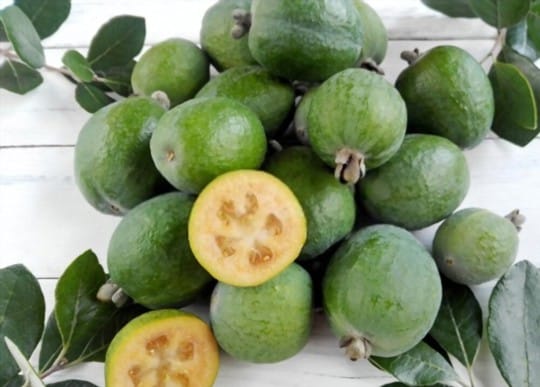
Feijoas are oval in shape, 1-2 inch fruits that are often eaten by slicing the fruit in half, scraping out the thick flesh, and discarding the peel.
They are derived from a South American plant and are commonly referred to as "pineapple guavas" due to their spherical, spike-filled form and flavor - similar in tropical intrigue to acai berry taste guide for comparison.
After blooming in the springtime, the edible fruits of feijoa trees mature in the autumn season and flourish in subtropical environments such as those found in both New Zealand & Hawaii.
They are extremely popular in New Zealand for their flavor, where they are frequently processed into chutney to preserve them fresh throughout the winter.
Feijoas are fruits that can be eaten raw or cooked, and they are widely used to make jams and relishes.
Because they are self-pollinating plants, filled with vitamin C, and reasonably easy to raise, they are widely accessible in nearby nurseries and orchard tree growers.
Feijoas can pair well with citrus notes in sweets - see suggested pairings in this lemon dessert pairing ideas and options for inspiration.
What Do Feijoas Taste Like?
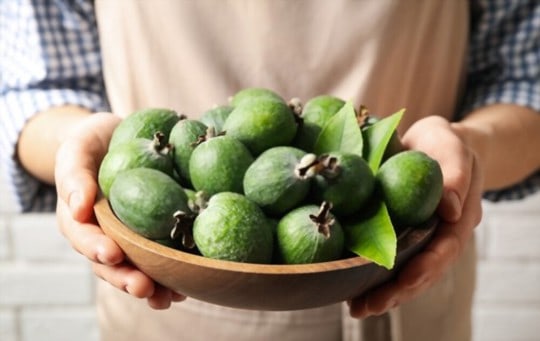
Feijoas possess an extended, egg-like form; their outer layer has a lime-like appearance and texture.
This fruit has a distinctive blend of both tart & sweet scents that allude to its tropical flavoring.
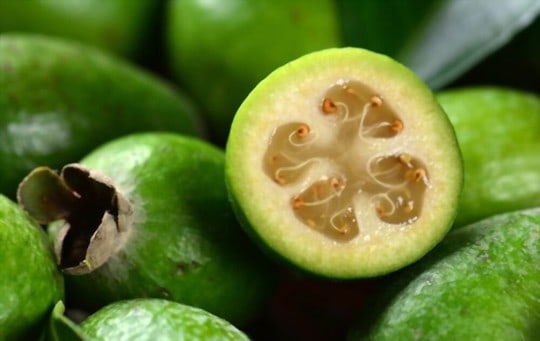
The interior of the fruit has a rough feel that mimics that of a matured pear and is smooth and dense.
Although the fruit has a jelly-natured seedling space within it, the whole thing is eatable.
The flavors of banana, quince, pineapple, and deliciously sweet grapes combine to make feijoa.
To sum up the flavor palette of Feijoas, it is a pleasant blend of fruits such as pineapples, guavas, pears, starfruits, quinces, and strawberries, giving it a sugary sweet-tart flavor and distinctive volatile scent.
Feijoas have many medical advantages, including immunity support, skin, hair, and scalp health promotion, help with regulating blood pressure, and digestion support.
Along with its a fantastic source of antioxidants to fight free radicals that accumulate in our bodies, they also serve as an excellent supply of important nutrients like iron, calcium, potassium, & vitamin C.
Feijoas are an excellent option for individuals maintaining a healthy diet or striving to eat more beneficial because of their high-fiber quality, which may assist in making you experience satisfaction and fullness.
They additionally feature a glycemic index that is low, which means that the sugar they contain flows into the circulatory system more gradually compared to other fruits.
This helps in facilitating in the control of blood glucose degrees.
The fruit is also a good source of vitamin E & essential antioxidants, both of which help the body fight off oxidative damage.
How to Eat Feijoas?
The ester methyl benzoate contained inside Feijoas is what gives it a sugary fragrance.
Although the flesh has a dense and textured consistency, it still appeals to the palate.
Seeds that resemble jellies are found inside the flesh of the fruit's cavity.
Feijoas are often made into condiments like jellies, jams, and sauces, in spite of typically being eaten raw.
Fruits like Feijoas need to be treated carefully to prevent destruction as they are fragile.
Ahead of consuming the fruit, it is suggested that you rinse it with chilled water to eliminate any particles or chemicals that could have seeped into its tender flesh.
Also, it may assist with assessing maturation and ensure no dangerous chemicals have been administered to them.
Feijoas are most frequently eaten by cutting them into two halves, then using a spoon or blade to remove the flesh.
Another option is to cut the fruit into quarters and scoop out the flesh with a spoon.
Feijoas can be eaten unsweetened or flavored with honey, sugar, maple syrup, or vanilla-flavored seasonings.
Feijoas are fruits that may be used in an assortment of foods because of their mild flavor.
They taste great in ice cream, sorbet, jellies, jams, other baked goods, fruit smoothies, and slaw.
Although they are frequently associated with desserts, they can also be used in meals that are savory and go well with things like aged cheese, papaya fruit, citrus fruits, sour cream, nuts, fish, duck, pork, and chicken.
Feijoa slices add fresh, tangy contrast to creamy dips and snacks; similar combo suggestions appear in this guacamole pairing ideas and combos.
Unique Flavors of Feijoa Fruit
Summing up, feijoa is a rare product that typically occurs in South American countries and is a cross between the strawberry, guava, & pineapple fruit families.
When eaten raw, it has a supple, tender feel and is simple to peel.
Feijoas can be consumed by themselves or introduced to various dishes for extra flavor.
You would have had pleasant recollections of munching them directly from the branches as a child, but even if they are store-bought, they are tempting when consumed on their own as well.
Frequently Asked Questions
Today, we hope to address questions about the flavor and benefits of Feijoas, as well as the facts you should be aware of before eating any. So, what do Feijoas taste like?
They are derived from a South American plant and are commonly referred to as "pineapple guavas" due to their spherical, spike-filled form and flavor.
Several foods share flavor notes with Feijoas. Tasting similar items side by side is the easiest way to map out what you enjoy and find new favorites.
Can you adjust the intensity of the flavor?
Yes.
Pairing it with acidic, sweet, or fatty components shifts the perceived intensity.
A squeeze of citrus brightens mild flavors, while fats like butter or oil mellow sharper ones.
Avoid pairings that clash with its dominant flavor note. Competing intensities - very sweet with very sour, or heavy with delicate - tend to obscure rather than go with the taste.
For a contrast in tropical flavor profiles, compare feijoas with acai notes in the acai berry taste guide for comparison. For citrus context and texture differences, see the pomelo flavor breakdown guide.