
Persimmon has a unique flavor that blends honeyed sweetness with subtle hints of apricot and a delicate floral undertone, accompanied by a smooth, custard-like texture when fully ripe.
When unripe, persimmons can be astringent and firm, almost chalky, but as they ripen or are cooked, they soften considerably and their sweetness intensifies, often yielding a jammy consistency that enhances baked dishes or preserves.
The taste of ripe persimmon is often compared to a cross between a mango and a very sweet pear, making it both familiar and intriguingly distinct.
What is Persimmon?

First of all, let's start with the basics - what is a persimmon? Persimmon is a type of fruit that belongs to the genus Diospyros.
There are two main types of persimmons - the astringent variety and the non-astringent variety.
The astringent variety contains high levels of tannins and can be quite puckery to eat.
The non-astringent variety has low levels of tannins and is much less puckery.
There are many different types of persimmons, but the most common type is the Hachiya persimmon.
This persimmon is an astringent variety that is shaped like an acorn.
It has a deep orange color and is very sweet to eat.
The Fuyu persimmon is the most common type of non-astringent persimmon.
This persimmon is also shaped like an acorn, but it has a light yellow-orange color.
It is not as sweet as the Hachiya persimmon, but it is still tasty.
When ripe, persimmons are a deep orange color and jelly-like consistency.
They are quite small, averaging around two inches in diameter.
The skin of persimmon is edible but can be quite astringent if eaten when the fruit is not ripe.
Compared to other fruits, persimmons are quite high in fiber.
They are also a good source of vitamins A and C and potassium.
If you have never had a persimmon before, the best way to eat one is to cut it in half and scoop out the flesh with a spoon.
Lemon dessert pairings list highlights nine options that complement fruit-based desserts and can inspire persimmon-based sweets.
What Does a Persimmon Taste Like?
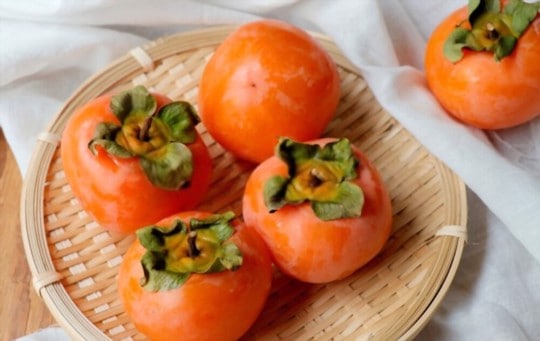
For anyone who doesn't know, a persimmon is an edible fruit that resembles a tomato.
The taste of persimmon can be difficult to describe because it is not like any other fruit out there - compare it to acai berry taste guide to see a different tropical flavor profile.
When eaten ripe, a persimmon tastes sweet and slightly tangy.
The flesh of the fruit is soft and has a jelly-like consistency.
Some people say that the taste of persimmon is similar to that of a peach or apricot.
If you eat unripe persimmons, they will be bitter and astringent.
So it is important to make sure you eat them when they are ripe.
Persimmons can be eaten fresh or used in cooked dishes.
They are a popular ingredient in Asian cuisine.
There are tons of recipes out there that use persimmons, so be sure to experiment.
I love the taste of a ripe persimmon.
It's sweet and refreshing, and it's a great snack or dessert.
If you've never tried one before, I recommend giving them a go.
You might be surprised by how delicious they are.
How to Pick a Persimmon?

If you're looking to buy a persimmon, there are a few things you need to know.
First of all, not all persimmons are created equal.
There are two main types of persimmons: the hachiya and the fuyu.
The hachiya is a soft, jelly-like fruit eaten when it is ripe.
The Fuyu is a firmer fruit that can be eaten either green or ripe.
It's important to pick the right persimmon for you, depending on what you want to do with it.
If you're going to eat it fresh, you should buy a hachiya persimmon.
If you're going to use it in cooked dishes, you should buy a Fuyu persimmon.
When picking out a persimmon, look for firm and has no blemishes or bruises.
It should also have a bright orange color.
Avoid any persimmons that are soft or have brown spots on them.
If you're not sure which type of persimmon to buy, ask your local grocer for help.
They should be able to point you in the right direction.
Picking out a ripe persimmon is easy once you know what to look for.
With their bright orange color and firm flesh, they're hard to miss.
Just be sure to avoid any that are soft or have brown spots on them.
To speed up the process of ripening unripe persimmons, place them in a paper bag with an apple.
The astringent fruits will be ready to eat when they feel soft and flexible or have pulled off their leaves easily--usually within one week.
Once you have ripe persimmons, they can be stored in the fridge for up to two weeks.
Be sure to eat them before they start to brown or get soft.
Delicious Choices: 5 best substitutes for persimmon helps when fresh persimmons aren't available. persimmon recipe ideas lists ways to use persimmons in sweet and savory dishes.
Frequently Asked Questions
It has a deep orange color and is very sweet to eat. It is not as sweet as the Hachiya persimmon, but it is still tasty.
They are also a good source of vitamins A and C and potassium.
Some people enjoy Persimmon right away while others need a few tries. The flavor can grow on you, especially when paired with familiar ingredients in a dish you already like.
Does it taste different depending on how it is prepared?
Preparation makes a significant difference.
Raw, roasted, fried, and steamed versions each bring out different qualities - sweetness, bitterness, earthiness, or richness - in the same ingredient.
Yes. Different cultivars, origins, or processing methods produce meaningful flavor differences.
If one version did not appeal to you, trying a different variety is worth the effort.