
Have you ever seen something that looks very much like potatoes, but they're hanging on a tree?
These aren't potatoes that people tied to a tree, but they're called sapodilla and are deliciously addicting.
Being native to parts of Mexico, you can do much with this fruit without getting tired of its taste.
And if you're lucky to be in their area, you'll even find them at roadside stalls.
What does sapodilla taste like?
What Is Sapodilla?

The common name for Manilkara zapota, sapodilla, is the fruit of the sapodilla tree, a bully tree native to the southern parts of Mexico, Central America, and the Caribbean.
Sapodilla forms through tiny white flowers and grows into 2 to 6 inches wide fruits, about the size of a tennis ball.
In the US, they're abundantly found during their harvest season, i.e., February through June.
One thing to remember is that sapodilla trees take around 5 to 8 years to fruit.
So, if you find that some trees only flower but don't set fruits, they're probably young ones.
This fruit has many names, some of which are Sapota, Mudapples, and Noseberry; the natives like to call it Chiku or Chikoo.
Sapodilla is peachy-colored inside with a black, pointed seed; the outsides are rather tan, brown, or reddish brown, and you may even mistake it for a tuber.
For ideas on complementary fruit pairings and bright dessert notes, review lemon dessert pairing ideas and options.
For a tropical contrast in flavor profiles, see acai berry flavor notes and contrast.
What Does Sapodilla Taste Like?
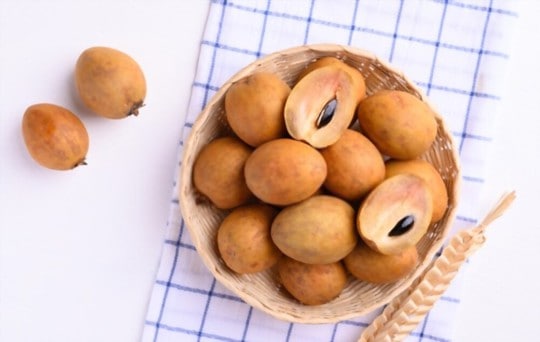
The plain, potato-like appearance of sapodilla envelops a completely different flavor.
It's a defining example of how you should never judge a fruit by its appearance.
Perfectly ripened sapodilla tastes sweet like molasses and smells somewhat like ripe pumpkins.
And you can effortlessly tell which ones are ripe because it shows in the fruit peel; most look delicate, and the fruit feels soft like a cooked potato.
When you eat it, the fruit's texture and feel are almost like pears and mangoes; juicy, fleshy, and sometimes crunchy.
Depending on the climatic conditions, sapodilla can be crunchy like a pear or fleshy like a mango.
And it's also perfect for eating right from the rind- just peel the skin like you do a mango and slurp the fruit.
Sapodilla has a pretty similar flavor to Mamey Sapote (another plant in the sapodilla family).
But the latter is more nutrient-rich and has a lower glycemic index.
Unlike sapodilla's juicy texture, mamey is more on the creamy end, somewhat similar to avocadoes.
However, their tastes are very similar, with mamey aligning more with a honey-flavored pumpkin pie.
Raw Sapodilla is on a different level of flavor and will be firmer when you feel it with your hands.
And whatever you do, never attempt to eat them.
They're unpalatably bitter and will even cause you irritation.
Sometimes, it can even lead to difficulty in breathing, particularly in those with sensitive throats.
How To Eat and Serve Sapodilla?

This fruit is highly celebrated for its rich vitamin A and C content, so you can take advantage of its benefits and make it a part of your diet.
Take a look at some fun uses of sapodilla:
- Jams: What can you make with some sugar, lemon juice, and a dash of seasonings? You get a deliciously aromatic and sweet jam. Just be ready for some constant stirring and battling the temptation to lick a little while it's cooking.
- Desserts: Making a dessert is the easiest thing you can do with sapodillas. Because of their sweet taste and fun texture, they make excellent options to pair with fruits like apples, grapes, and many berries. And to take it a notch higher, switch your whole cream to Greek yogurt, and you'll have a ton of health benefits coming your way.
- Cocktail: Sometimes, you need a little bitterness to accompany a sweet flavor, and for days like that, you can do a cocktail. Simply get your favorite wine and mix it with fresh sapodilla juice with some syrup and lemon juice.
While the fruit is edible and healthy, you must avoid even attempting to eat the seeds.
It has sharp edges and can be big trouble if swallowed.
Also, never serve sapodilla to diabetics; it's a high glycemic index fruit and will instantly spike sugar levels.
For inspiration on savory accompaniments that complement fruit-based salsas, check what to eat with guacamole combos.
How To Buy Sapodilla?

While you can easily order sapodillas at online supermarkets, the best way to buy them is to head to a farmers' market first.
Once you're there, look for stalls with the fruit and follow this checklist to get the best-tasting sapodillas:
For tips on finding specialty pantry items and where to look in stores, see where to buy miso in grocery stores.
- Go for soft to medium-firm: Soft (and hence, ripe) sapodillas are the best you can get if you're buying less. But if you're thinking of buying in bulk, get some medium-firm ones, so they do not get spoilt and pungent when you store them.
- Never get the extremes: This simply means don't buy anything that is too firm (which is raw) or those that are squishy-soft (they'll most likely spoil soon or might be spoilt).
- Do the scratch test: If you're unsure about the firmness's reliability, make a small scratch on the fruit and check the color underneath. Brown means ripe sapodilla, while green means it's still raw.
- Avoid deliberately buying unripe ones to store: Of course, you can ripen raw sapodillas by storing them for about a week or so (at room temperature), but they won't taste as good as naturally ripened ones.
Final Thought
Sapodilla is one fruit that can rival many tastes.
With a similar taste profile to some common frits, and a texture similar to others, you cannot get enough of its taste every time you eat it.
So if you ever find them at your local supermarket or online, buy a bunch of them; they shouldn't be too expensive to empty your pockets.
And as a reward, they'll offer you a juicy, sweet taste that can even revive a dead palate.
You'll get all of this in one bite, but there's another that you don't want to ruin your first impression with- raw sapodilla.
Steer clear of them, and you'll be safe and happy.
Sapodilla's sweetness pairs differently across menus. acai berry flavor notes and contrast offers a tropical comparison. what to eat with guacamole combos lists savory pairings that work alongside fruit-based salsas.
Frequently Asked Questions
Being native to parts of Mexico, you can do much with this fruit without getting tired of its taste. This fruit has intense flavors when you compare a ripe to a raw one, so keep reading to know all about it.
The plain, potato-like appearance of sapodilla envelops a completely different flavor.
Freshness matters. Sapodilla tends to have a brighter, more pronounced taste when fresh.
Stored or aged versions may develop mellower or slightly different flavor notes.
Significantly. Younger or less ripe versions are often sharper, more astringent, or more bitter.
As it matures, flavors typically mellow and deepen into something more complex and approachable.
Texture and taste are inseparable. A pleasant texture encourages slower eating and better flavor perception.
Off-putting textures - too mushy, too fibrous, or unexpectedly gritty - can make even good flavors less enjoyable.