
Ever get into a dish that leaves your palate intrigued and wanting more?
That's the magic of sea grapes for you.
These tiny green orbs, plucked from the ocean's gardens, pack a surprising punch in flavor and texture.
Often tagged as the ocean's caviar, sea grapes are nothing short of a sensation.
Crisp, salty, and with a hint of the sea in every bite, they bring a refreshing change to the table.
While not everyone may know about them, those who do can't get enough.
Ready to take a plunge into the bright world of sea grapes? Join us as we show the unique taste that these marine delicacies offer.
What are Sea Grapes?
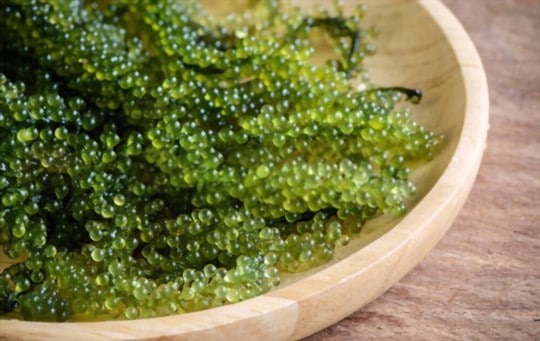
Don't be confused by its name; sea grapes are not fruits (not even close).
Instead, they are a species of green algae or seaweed found in the coastal regions of the Indo-Pacific.
The scientific name of sea grapes is Caulerpa lentillifera.
However, they're popularly known as sea grapes or green caviar.
Why the nicknames? That's because it looks very similar to grapes or fish roe with their small green bubbles.
These bubbles are known as the leaves of the plant.
They grow on their stem, which is also edible.
American households are not very familiar with this seaweed, they're popularly used in Oceania, East Asia, and Southeast Asia cuisines - see sea bass flavor profile guide for another popular coastal ingredient.
Sea grapes are known as umi-budo in Japan and are considered a well-known ingredient there.
In popular cuisines, sea grapes are usually eaten raw or with other side dishes such as rice, salads, and soups.
Some people also pair it with sashimi and ice cream.
So, if you're wondering if sea grapes are actually safe for consumption, then the answer is a big YES.
In fact, sea grapes are believed to be highly nutritional as well.
They may help in strengthening bones and joints, improving eye health, preventing diabetes and stress, and lots more.
What Do Sea Grapes Taste Like?
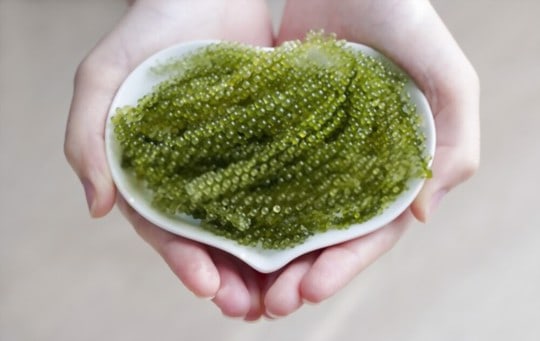
Have you ever tried seaweed before? Then, you'll definitely enjoy the flavor of sea grapes too, because they taste more or less the same.
However, sea grapes tend to have a slimy texture, similar to that of fish roe.
When you bite into its soft texture, it'll burst into rich flavors, making a loud popping sound in your mouth.
Hence, many people use sea grapes to make satisfying ASMR videos.
The overall flavor of sea grapes will remind you of the ocean's freshness - compare with sea urchin taste description to explore another briny delicacy.
They're mildly salty, resembling the "taste of the sea.
" Flavor-wise, you can compare it to seaweeds like wakame and kombu.
However, most people enjoy eating these algae mainly for their texture and not the flavor itself.
The burst of each bubble in your mouth will release a briny, fresh taste, reminding you of clams.
Some people also say that chewing further brings about a sweet undertone and acidic taste.
Now that you know all about its flavor, what about its nutritional content? How healthy are sea grapes?
Sea grapes are high in iron, manganese, copper, and potassium.
Hence, they're often compared with purple grapes in terms of nutrition.
In addition, sea grapes are also an excellent source of vitamins A, B, C, and K.
How to Cook Sea Grapes?
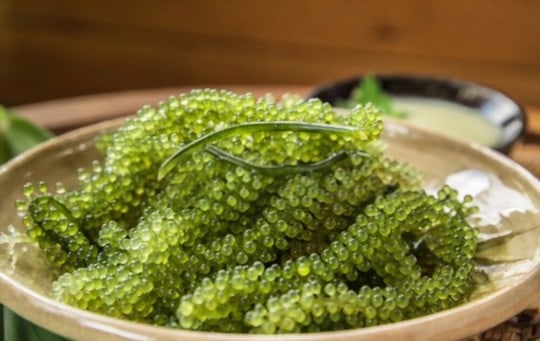
Whether you eat sea grapes raw or cooked, make sure to wash them properly.
You can do so by rinsing them in water and then soaking them in a bowl of cold water for a few minutes.
Soaking them in water will bring back their crunchy texture and freshness.
Sea grapes are widely eaten raw.
You can serve it on the side of your rice or just about any entrée.
Most people also eat this seaweed with noodles and soups.
When eaten raw, sea grapes will add a nice crunch and freshness to a dish.
It also does an excellent job at balancing out heavy and oily dishes.
Many people recommend you to try it with a dipping sauce like miso, vinegar, or soy - similar seasoning works when sampling sea moss flavor notes.
This combination is particularly famous in Okinawa, Japan.
Here are some more creative ways of using sea grapes:
- Serve with beer and soy sauce.
- Use as an attractive garnish .
- Use as a sushi ingredient.
- Add to a hot cup of water .
- Add to your soups.
Final Thought
As we have reached the end of our post, we hope you've learned a lot about sea grapes here.
And now that you know sea grapes are equally delicious and healthy, you should definitely try them out today.
Wondering where to buy sea grapes? To find the freshest sea grapes, you'd have to travel to Southeast or East Asia.
However, we know that's not possible for many people.
But the is that you can easily find this seaweed online.
Sea grapes are usually packed in brine when shipped to other countries.
So, once you get your hands on them, make sure to soak them in water to get rid of the brine and fishy smell.
And enjoy its freshness in the comfort of your home.
Savor other ocean textures and flavors with sea cucumber taste exploration. What to Serve with Sea Bass? 7 Tasty Side Dishes lists suitable accompaniments for coastal mains.
Frequently Asked Questions
These tiny green orbs, plucked from the ocean's gardens, pack a surprising punch in flavor and texture. Crisp, salty, and with a hint of the sea in every bite, they bring a refreshing change to the table.
Join us as we show the unique taste that these marine delicacies offer.
Freshness matters. Sea Grapes tends to have a brighter, more pronounced taste when fresh.
Stored or aged versions may develop mellower or slightly different flavor notes.
Significantly. Younger or less ripe versions are often sharper, more astringent, or more bitter.
As it matures, flavors typically mellow and deepen into something more complex and approachable.
Texture and taste are inseparable. A pleasant texture encourages slower eating and better flavor perception.
Off-putting textures - too mushy, too fibrous, or unexpectedly gritty - can make even good flavors less enjoyable.