
Humans are curious being, often intrigued to know about obscure things, including food that doesn't fall under the conventional realm.
In this case, slugs may not be mainly known as a kitchen delicacy but have stirred interest among a specific section of the people.
However, is this shell-less mollusk edible or safe to eat? Unless you're into unconventional foods, these questions are probably in your mind.
Both that, we'll answer important aspects related to it.
Let's get into it with that said.
What are Slugs?

The term 'slug' refers to all forms of gastropod mollusks without a shell.
It's also commonly known as a land slug.
Various kinds of this species are found across the globe, varying in shapes and sizes, but the external anatomy remains the same.
Like snails, it has tentacles on its head, giving sensory and optical senses.
Instead of a shell, it has a mantle covering the top of the head.
Although these species are categorized under the same class-Gastropoda, significant differences start from behavior to anatomy.
Water comprises half of the slugs' bodies. These mollusks are found primarily on moist ground after heavy rain.
You'll find them in the damp area under rocks, tree bark, and fallen logs during the dry season.
They have soft tissues which make them highly prone to desiccation due to the absence of an outer shell.
Hence, mucus generation is important for this mollusk to survive.
If curious about complementary tastes, a list of lemon dessert pairings list shows how acidity balances richer flavors in unexpected dishes.
For a contrasting fruit perspective, read about acai berry flavor reveal to see how wholly different textures and tastes compare.
What Do Slugs Taste Like?

Most people might be familiar with snails as part of kitchen delicacy compared to this shell-less mollusk.
However, some people consume slugs.
It may not be the aesthetically pleasing creature, and to have it may not be everyone's cup of tea.
Still, unconventional food like this tends to have divided opinions.
Some people like it, while others may not. It also mainly depends on how you prepare it.
The texture is rubbery, and its outer body is quite slimy.
The taste of a slug would be best described as mild, closely similar to snails.
It also largely depends on the ingredients and the preparation process involved.
Because of the presence of mucus, it has a hint of bitterness.
In this case, proper cleaning is required before you proceed with the cooking.
Not many are enthusiastic about eating slugs, which is understandable.
However, some people relish this mollusk. Regardless, it has high nutritional value.
It's a good source of protein and minerals and also has a high caloric value.
Cleaning these critters is important if you plan to have them.
Since they're scavengers, they may carry parasites that might cause a potential health risk.
Once cleaned, you may prepare it any way you want, from stir-frying to backwoods boil.
We suggest using richly-flavored ingredients since it has a mild taste.
Want to know how to prepare these critters?
How to Prepare and Eat Slugs?
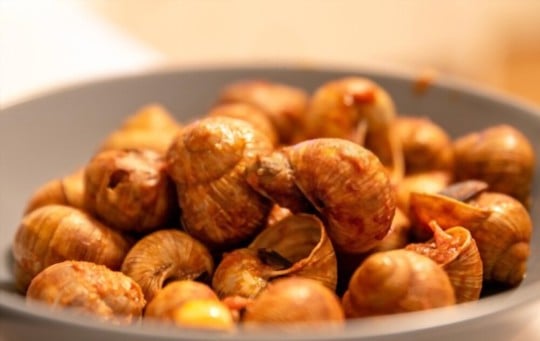
Since slugs are scavengers, thorough cleaning is to prevent potentially life-threatening diseases.
They're considered safe but come with a caveat.
If you plan on having these critters, putting them in a container filled with damp cornmeal for a day or two is highly advisable.
Or, put it in wet lettuce, and let them purge.
Once done with toxic cleansing elements, proceed with your cooking experience.
Some of the ways to have these shell-less mollusks are as follows:
- Stir-fry slug.
Stir-frying these critters is one of the best ways to relish their taste.
First, you need to blanch slugs in boiling water and then slice them.
Take a wok or skillet to stir-fry along with vegetables.
Add soy sauce to improve the taste further.
- Slug pasta.
Give your pasta a new taste by adding these critters.
Stir-fry them in butter first, and then add the pasta sauce.
Let it cook under low-medium heat for ten minutes.
Fold cooked pasta in the mix and then serve it.
- Deep-fried slugs.
Another great way to enjoy these mollusks is by deep-frying them.
Preparing this way will be an excellent introduction to slugs if it's your first time.
First, you need to boil them in hot water for two minutes.
After this, immerse them in egg and then rub them in bread crumbs.
Deep fry them like how you do with fried chicken. Fry until it's golden brown.
When planning a spread, consider simple sides such as chips or mild dips; what to eat with guacamole combinations offers ideas for approachable pairings.
Flavor Experience of Eating Slugs
Slugs may not be the most pleasant-looking creature, but they are essential to our system.
Consumption of these critters is a personal choice but comes with a caveat.
Although it's considered safe to eat, it's prone to carry parasites that may pose a potential health risk.
If you plan to have it, ensure it's adequately cleaned and thoroughly cooked.
Avoid raw slugs since they're scavengers and are likely to have toxic elements.
Acai presents a unique, tart profile worth exploring further - acai berry flavor reveal explains those nuances. Distinguishing labeling from perception can help set expectations - extract vs flavor comparison clarifies the difference between concentrated extracts and described flavors.
Frequently Asked Questions
In this post, we'll reveal what slugs taste like. The taste of a slug would be best described as mild, closely similar to snails.
Because of the presence of mucus, it has a hint of bitterness.
The texture of Slugs depends on how it is prepared. Raw, cooked, and processed forms each offer a distinct mouthfeel that changes the overall eating experience.
Is there a strong smell that comes with the taste?
Aroma and taste are closely linked.
A strong smell usually signals an equally bold flavor.
If the smell is mild, expect a subtler taste that becomes more apparent with seasoning.
Depends on the ingredient. Some improve dramatically with heat, developing sweetness or losing bitterness.
Others are best raw, where cooking dulls the brightness that makes them worth trying.