Today, we're slicing into the meat of the matter - smoked versus dehydrated jerky.
Smoked jerky dances in a smokehouse before it hits your palate. It's all about flavor depth.
Dehydrated jerky? It's the busy bee, shedding water faster than you can say "jerky."
We've tried both. Laughed at our failed attempts.
Celebrated the chewy victories.
Now, it's our mission to guide you through this savory showdown.
What is Smoked Jerky?
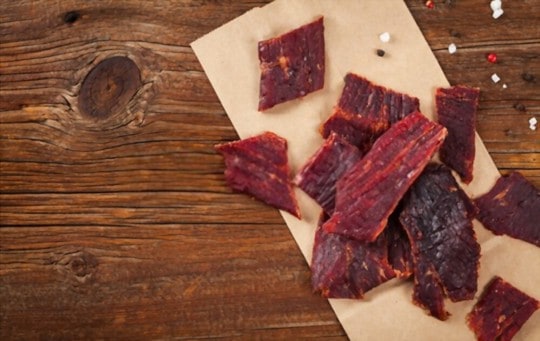
Smoked jerky refers to a tasty snack made by preserving meat through smoking.
It is a tasty and straightforward way of transforming ordinary meat into a tempting delicacy.
Smokers use hardwood fire or pellets to cook meat at low temperatures, allowing the smoke's aroma to penetrate it without cooking it entirely - see kielbasa vs smoked sausage comparison for similar smoked-meat differences.
The result is a chewy, flavorful snack that can last longer than its dehydrated counterpart.
Some smokers prefer to marinate meat in seasonings before smoking to enhance flavor.
Popular seasonings include black pepper, garlic powder, onion powder, and cayenne pepper.
This technique can be used on various meats such as beef, venison, or turkey to create unique and savory snacks.
What is Dehydrated Jerky?
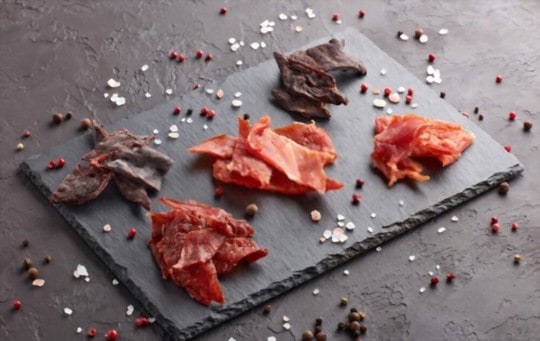
Jerky is a popular snack that has been around for centuries.
Dehydrated Jerky is a type of jerky that has been dried out through the process of dehydration.
This method involves the use of low heat to remove moisture from the meat while still retaining its flavor and nutritional value.
Dehydrated jerky is made by thinly slicing lean meat such as beef, chicken, or turkey and then marinating it in a mixture of salt, spices, and other seasonings.
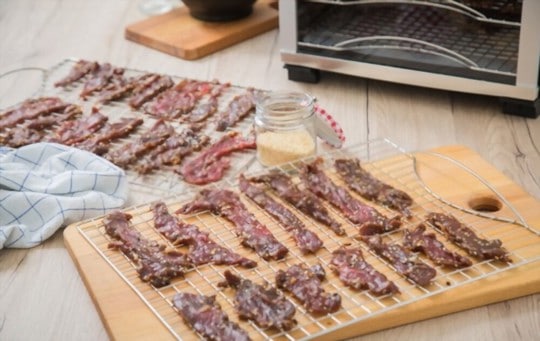
The marinated meat is then placed in a dehydrator where it is slowly dried out over several hours.
The result is a chewy, flavorful snack that can be enjoyed on-the-go.
Differences Between Smoked Jerky and Dehydrated Jerky
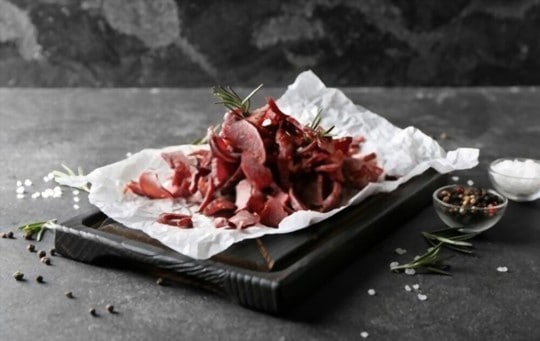
Jerky is a well-known snack that can be enjoyed by people of all ages.
Although many may assume that smoked and dehydrated jerky are the same, there are significant differences between them - consult the sliced jerky vs ground comparison to see how cut and processing change texture.
Smoked jerky involves cooking or marinating meat in smoke for an extended period to dry it out gradually.
It is cooked over low heat, and the smoke creates unique flavors in the meat.
On the other hand, dehydrated jerky is produced using a dehydrator that circulates warm air, removing moisture from the meat to preserve it.
While both jerky types offer distinct tastes and textures, their nutritional content varies too.
Dehydrated variations are usually leaner because they require less fat to produce compared to smoked options.
When choosing between smoked or dehydrated jerky, it's essential to consider your dietary preferences and restrictions carefully.
Also, investigating how each process results in different flavors and textures can help determine which type of beef jerky you prefer.
1 - Preparation Method
The way that jerky is prepared can differ, leading to different tastes and textures.
One type of preparation involves smoking the meat, while the other involves dehydration.
Smoking involves exposing the meat to smoke from burning wood chips or other materials, creating a unique smoky flavor.
Dehydration involves removing moisture from the meat with heat and air flow, resulting in a chewy texture.
Both methods have their own unique benefits and can affect the taste and texture of the final product.
2 - Flavor and Texture
Jerky is a favorite snack for many people worldwide, and the preparation methods play a huge role in the resulting flavors and textures.
The difference between smoked and dehydrated jerky is vast, ranging from taste to texture.
Smoking imparts a smoky flavor that can range from mild to strong depending on the wood used for smoking - for more on how flavor sources differ, read the extract vs flavor comparison.
In contrast, dehydration preserves the meat's natural flavor while removing most of its moisture.
As a result, dehydrated jerky is usually chewier than smoked jerky.
Also, Dehydrated jerky has more softness and pliability since it lacks smoke's hardening effect.
However, Smoked jerky has more varied textures with different degrees of crunchiness due to variations in smoking time temperatures.
Overall, both methods produce an amazingly tasty treat with slight differences in their properties.
The texture and flavor preferences are a matter of individual opinion and liking.
3 - Cooking Time and Temperature
For jerky, cooking time and temperature are important factors.
This is because the proper combination of both can yield delicious and safe-to-eat jerky.
Cooking time and temperature depend on the type of smoker used.
For example, using a pit smoker requires 8-12 hours at 165 degrees Fahrenheit while electric smokers require 4-6 hours at 155 degrees Fahrenheit.
On the other hand, dehydrated jerky typically involves a longer cooking time with a lower temperature of about 145-160°F for approximately 6-10 hours.
It's important to use a thermometer to ensure that the meat reaches an internal temperature of at least 160°F regardless of the cooking method or equipment being used.
Different liquids and acids alter cooking chemistry; white cooking wine vs white wine vinegar comparison clarifies when to use each in recipes that affect texture and temperature.
Similarities Between Smoked Jerky and Dehydrated Jerky
There are many similarities between the two methods of preserving meat.
Both methods aim to remove the moisture from the meat, which extends its shelf life and enhances the flavor and texture.
Smoked Jerky involves exposing the meat to smoke for long hours while dehydrating jerky uses low heat to dry out the meat.
The outcome of both processes is a chewy, protein-packed snack that has a long shelf life.
Both smoked jerky and dehydrated jerky can be prepared using various meats such as beef, turkey, or chicken.
Also, it is common to use spices or marinades to improve the flavor of both types of jerky.
Both types of jerky require minimal storage space and can easily be packed for on-the-go snacking during activities like camping or hiking.
Unique details for these two methods depend on minimal differences in how they are made and cooked.
For example, smoked jerky often has a smokier taste than dehydrated because of exposure to wood smoke.
On the other hand, dehydrated jerky could have slightly different textures based on how long it was dried or how much heat was applied during dehydration.
Overall, both smoked jerky and dehydrated jerky have similarities in their tasty outcomes resulting from different techniques; hence anyone can experiment with whichever method that suits them best.
Smoked preservation techniques crossover with fish preparations; smoked haddock substitutes as fish swaps lists alternatives that replicate smoky seafood profiles.
Factors to Consider When Choosing Between Smoked Jerky and Dehydrated Jerky
Several factors should be considered.
- The taste of both types varies - smoked jerky has a distinct smoky flavor while dehydrated jerky has a chewier texture.
- Also, the preparation process is different - smoked jerky requires a smoker whereas dehydrated jerkies can be made with simple at-home dehydrators.
- Lastly, the shelf-life of the two also differs - smoked jerky can last longer due to added preservatives in the smoking process.
Overall, personal preferences and convenience must be weighed when deciding between smoked or dehydrated jerky.
When convenience and technique matter, consider substitutions in related steps; eggless breading top substitutes shows options for crisp coatings without eggs.
1 - Taste Preference
For those who enjoy snacking on jerky, the taste preference is important in choosing between smoked and dehydrated ones.
Understanding the difference between the two can help in making an informed decision.
- One of the main differences between smoked and dehydrated jerky is the overall flavor. Smoked jerky has a strong smoky taste due to the wood chips used in the smoking process.
- Dehydrated jerky, on the other hand, has a more natural flavor as it's made without any added smoke or seasoning.
- The texture of smoked and dehydrated jerky also differs. Smoked versions tend to be more tender and easy to chew while dehydrated ones are usually tougher and harder to break down.
- Smoked jerky comes with different flavor options since different types of wood chips impart unique tastes. For example, hickory chips provide a smoky flavor with a hint of sweetness, while mesquite chips have a slightly bitter taste.
- Dehydrated jerky does not have much variety in terms of flavors but still manages to be delicious with its natural taste profile that many people enjoy.
- Finally, some health-conscious individuals might prefer dehydrated over smoked jerky as it contains fewer preservatives and artificial ingredients.
Note that both smoked and dehydrated jerky have their own unique taste and texture profiles.
Depending on one's personal preferences, either option can be a great choice for snacking.
To sharpen flavor descriptions and comparisons, see what acai berry tastes like guide for an example of breaking down subtle taste notes.
2 - Shelf Life and Storage
Jerky's longevity and storage conditions are important in determining its texture, flavor, freshness, and mold susceptibility.
Properly stored jerky can last up to six months or a year, while poorly stored jerky could perish within weeks.
When storing smoked or dehydrated jerky for extended periods, the packaging material is a critical factor.
Vacuum sealing jars or bags protect from air exposure and moisture transmission, reducing oxidation reaction and spoilage risk.
Also, avoiding high-temperature fluctuations during storage is important in preserving the quality of your jerky.
3 - Availability and Convenience
Availability and convenience are important factors to consider.
While both types of jerky are widely available in stores and online, their convenience may vary based on factors such as the brand and type.
Some brands may offer more flavors or pack sizes than others, making it easier for consumers to find their preferred option.
Also, some brands may have a faster production time for one type of jerky than the other, making it more convenient for those who prioritize quick access to snacks.
Availability and convenience can also depend on the consumer's location.
For instance, certain regions may have a higher demand for smoked jerky over dehydrated jerky, resulting in a greater availability of the former in local stores.
On the other hand, dehydrated jerky may be more convenient for those who live an active lifestyle as it is usually lightweight and easy to carry around.
Ultimately, availability and convenience are subjective factors that vary from person to person.
It's important for consumers to assess their own needs and preferences before purchasing either type of jerky.
By doing so, they can ensure that they're getting the best product possible without sacrificing on convenience or accessibility.
Popular Varieties and Brands of Smoked Jerky and Dehydrated Jerky
With so many brands and varieties of jerky available in the market, it can be overwhelming to pick the right one.
Smoked and dehydrated are the two most popular types of jerky.
While smoked jerky uses heat and smoke for cooking, dehydrated jerky is dried at a low temperature over an extended period.
Some of the popular brands offering smoked or dehydrated jerky include Jack Link's, Krave, Oberto, and Slim Jim.
You can find various flavors and meat options like beef, turkey, pork, venison, and chicken to satisfy your palate.
One significant difference between smoked and dehydrated jerky is their texture.
Smoked jerky has more tender meat with a slight taste of smokiness while dehydrated jerky has a chewy texture that makes it slightly harder to eat.
Also, smoking meats involve soaking them in brine solution before applying heat which helps prevent bacteria growth.
In contrast, dehydration cannot eliminate bacteria growth.
If you have never tried either type of jerky before or don't know what flavor or brand to choose from, start by trying out classic beef-flavored jerkies from any leading brand.
Once you find the type that tickles your fancy buds nicely, branch out into other flavors and meat options slowly - this will help you determine your preferences in terms of taste and texture without much hassle.
Pairing jerky with cheese can amplify flavors; smoked gouda taste guide explains flavor notes that work well with smoky meats.
When to Use Smoked vs Dehydrated Jerky
Jerky lovers may debate which is better between smoked and dehydrated jerky.
Both techniques of preserving meat have their pros and cons.
Smoked jerky undergoes a curing process that involves using aromatic wood chips, giving it a smoky flavor and changing the color of the meat.
Dehydrated jerky, on the other hand, involves removing moisture from the meat to preserve it for longer periods.
In addition to these differences, both methods achieve different textures in jerky recipes.
Smoked jerky can result in chewier meat as compared to dehydrated ones that are usually harder and more brittle.
By understanding the variations between smoked and dehydrated beef jerky making processes you can decide what suits your taste preference best and choose accordingly.
Whether you enjoy juicy smoky beef slices or crunchy salty snacks containing high protein, experimenting with various recipes can open up new and exciting possibilities for your palate.
Smoked paprika brings deep smokiness; what smoked paprika tastes like explains the flavor. best substitutes for smoked paprika lists five swap options.
Frequently Asked Questions
This method involves the use of low heat to remove moisture from the meat while still retaining its flavor and nutritional value. They share some similarities but each has qualities that make it better suited for certain recipes.
In many recipes, yes. Smoked Jerky and Dehydrated Jerky fill similar roles, though each brings its own character.
Try a small test batch before committing to a full swap.
Availability varies by region. One is usually a standard grocery store item while the other may require a specialty or international market depending on where you live.
Can a beginner tell the difference by taste?
In a side-by-side tasting, yes.
The difference becomes less obvious when mixed into a recipe with other ingredients.
Most people notice the distinction more clearly on its own.