
Have you seen those fiery red dishes with white, cylindrical ingredients on Korean shows? It's spicy, as you've guessed, and is a significant part of Korean cuisine.
And they call it Tteokbokki. You've probably heard this name everywhere on social media.
And it's no surprise that people worldwide are captivated by this single dish.
Tteokbokki is widely appreciated for its rich flavor.
But it doesn't end there; if you cook it right, it can be one of the healthiest Korean food.
So, what does Tteokbokki taste like that creates such hype among everyone who knows it? We'll find out shortly.
What is Tteokbokki?

Tteokbokki is a Korean dish that consists of cylindrical tteok (rice cakes) cooked in a rich sauce.
It is a filling meal option popular as street food and a staple in all Korean homes.
This dish is a favorite in the region because of its diverse taste profile - similar to how what acai berry tastes like reveals surprising notes.
Because of its significance in the region, many consider it the mac and cheese of Korea.
And with its frequent appearances in TV shows and films, the dish has become a worldwide sensation, and no one seems to dislike it.
A traditional Tteokbokki uses rice cakes, green onions, spicy sauce, boiled eggs, fish cakes, and anchovy broth.
You can make the sauce using chili flakes, hot Korean chili paste, and sugar.
However, if you are interested in a vegan Tteokbokki, you can substitute the anchovy broth for a veg version.
Use mushrooms, carrots, and napa cabbage instead of eggs and fish cakes.
If serving a sweet finish, consider which flavors complement citrus - what goes well with lemon in desserts lists nine compatible options.
What Does Tteokbokki Taste Like?
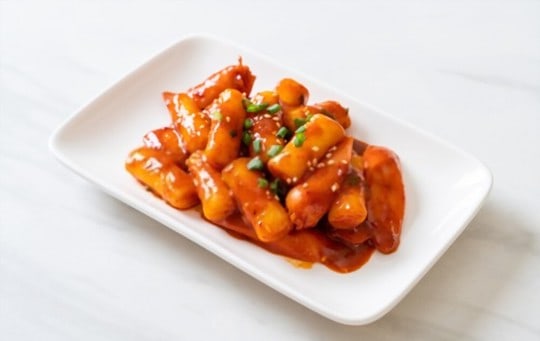
Sweet and spicy- that's the short way to describe the taste of Tteokbokki.
This dish is sweet, savory, and spicy and has a mild, garlicky aftertaste.
Meanwhile, the texture is chewy and tender, similar to semi-soft cheese.
The anchovy broth gives the dish an umami base, while the sugar and chili paste give it sweet and spicy elements.
Other ingredients like eggs and carrots give the dish its distinct texture and visual appeal.
One item that significantly determines the outcome of a Tteokbokki is scallions.
It keeps the dish fragrant and adds subtle spicy and peppery flavors to the sauce.
Scallions are one reason why many people enjoy a Tteokbokki.
But it's also packed with health benefits, such as preventing flu and other diseases by providing loads of vitamin C to boost your immune system.
The flavor will develop depending on the ingredients you add to the sauce.
If the spiciness of Tteokbokki does not align with your palate, you can combat it with grated cheese and sesame oil.
Because the main ingredient is rice, it tastes like seasoned rice.
You can also think of it as a flavorful mochi.
Mochi uses daifuku paste as a filling and has a minimal taste, while Tteokbokki is loaded with complex flavors.
Sometimes, people compare the taste of Tteokbokki to savory gnocchi.
Both have similar textures, the latter feels mushier.
But when you cannot access rice cakes, you can substitute it with gnocchi, but don't let it cook for long.
How to Cook and Serve Tteokbokki?

Tired of having the same spicy Tteokbokki that leaves a burning sensation in your mouth? Try these exciting methods the next time you cook them.
Remember to cook the rice cakes enough so they the sauces well.
Because of the cheesy and creamy elements, onions, scallions, button mushrooms, and bacon make great accompaniments for the dish - or try fast veggie sides that cook under 12 minutes for a lighter balance.
- Creamy Teokbokki: This method is basically rice cakes cooked in cheese and heavy cream and will remind you of pasta. Because of the cheesy and creamy elements, onions, scallions, button mushrooms, and bacon make great accompaniments for the dish. This method is free of overwhelming spices and is a favorite among kids.
- Black bean paste Tteokbokki: Black bean paste (Jjajangmyeon in Korean) is one item you'll find in all Korean homes. Its rich flavor makes it very suitable for people who like its food flavorful but cannot handle overly spicy food. You can add it to the standard Tteokbokki recipe and reduce the amount of chili paste.
- Soy sauce Tteokbokki: Soy sauce will make the dish less spicy and give it a satisfying brown hue. Shitake mushrooms, ground beef, and a few chopped veggies are some ingredients that go with the rice cakes. But as always, chili paste will give it a richer taste. Scallions make the dish more flavorful, so be sure to get generous with them. This is a very kid-friendly and protein-rich option. .
Tteokbokki's Distinctive Flavor Profile
Sometimes, the food our palate chooses isn't suitable for our health.
And it's a similar case for Tteokbokki, one of Korea's famous dishes.
But there's ; you can make the dish healthy by switching out some ingredients, like reducing the amount of pepper paste and chili flakes.
While a regular Tteokbokki can be sweet and spicy, using a milder sauce can easily make it suitable for your palate.
You can replace the spicy sauce with a toned-down version like cheese or soy sauce.
Regardless of the standard recipes' restrictions, experimenting with new flavors will always make the process exciting for you and your guests.
Frequently Asked Questions
It's spicy, as you've guessed, and is a significant part of Korean cuisine. Tteokbokki is widely appreciated for its rich flavor.
So, what does Tteokbokki taste like that creates such hype among everyone who knows it?
Several foods share flavor notes with Tteokbokki. Tasting similar items side by side is the easiest way to map out what you enjoy and find new favorites.
Can you adjust the intensity of the flavor?
Yes.
Pairing it with acidic, sweet, or fatty components shifts the perceived intensity.
A squeeze of citrus brightens mild flavors, while fats like butter or oil mellow sharper ones.
Avoid pairings that clash with its dominant flavor note. Competing intensities - very sweet with very sour, or heavy with delicate - tend to obscure rather than go with the taste.
Tteokbokki's bold profile pairs well with quick vegetable sides - fast veggie sides that cook under 12 minutes provides ideas. For understanding concentrated tastes versus whole-flavor impressions, see extract vs flavor comparison explains the distinction.