All 13 hummus recipes are vegan and share one base: a 15-ounce can of chickpeas, tahini, lemon juice and garlic.
- Blend the tahini and lemon juice for 30 seconds before the chickpeas go in.
- Thin the dip with 2 to 4 tablespoons of can liquid or cold water until it spreads.
- Keep homemade hummus 3 to 4 days in the fridge, or 2 days if it has avocado.
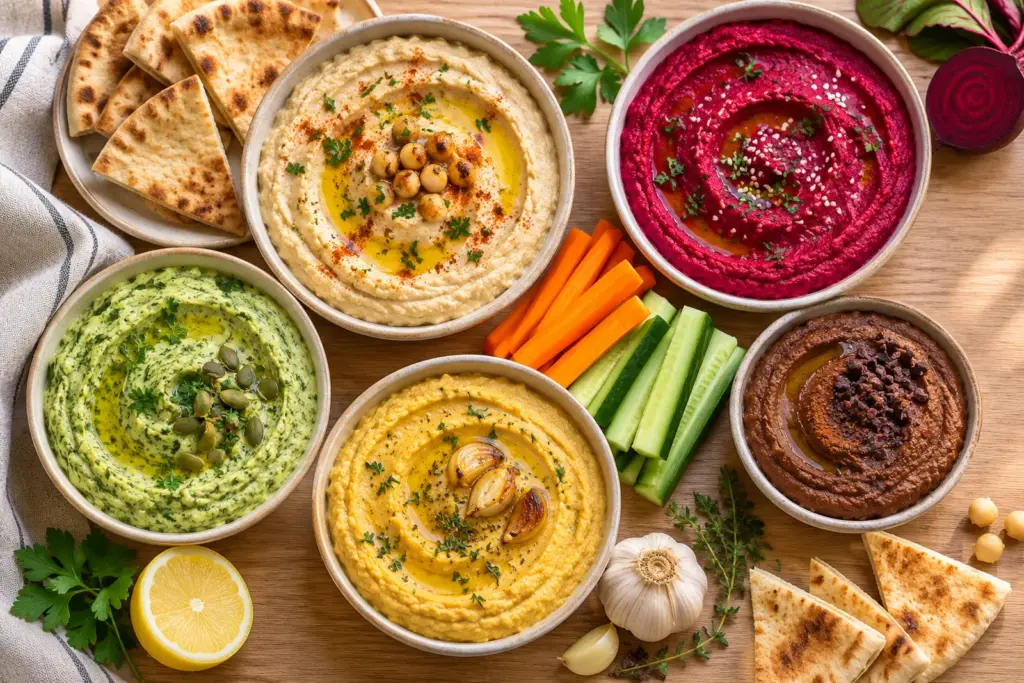
The lineup runs from a plain classic and a mellow roasted garlic dip to a magenta beet version and a chocolate hummus you serve with fruit. Every recipe uses canned chickpeas and a food processor, so you can switch flavors without learning a new method, and the notes after recipe 13 show how to start from dried chickpeas and which swaps keep the list vegan.
1. Classic Creamy Hummus
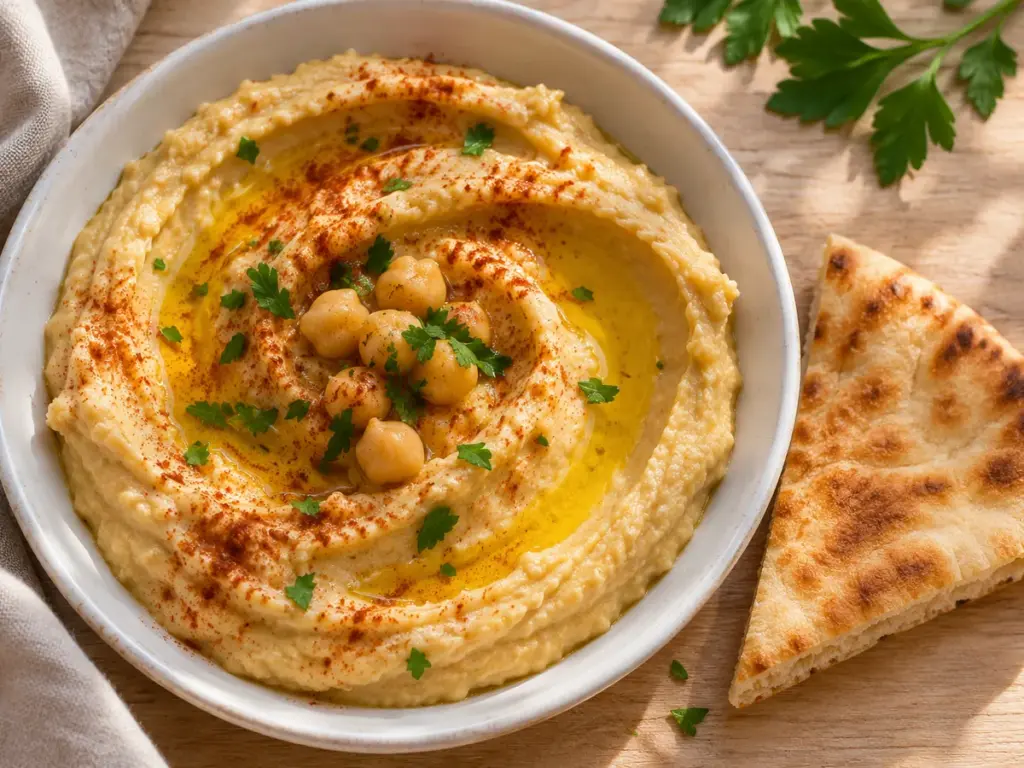
This is the base the other twelve recipes build on, a pale, smooth dip with a lemon edge and a little cumin. When you blend the tahini and lemon juice first, the mixture turns thick and pale, and that step gives the finished hummus its silky body.
- 1 (15 oz) can chickpeas (about 1 ½ cups), drained and rinsed, with 2 to 3 tablespoons of the can liquid saved
- ⅓ cup tahini, stirred well
- 3 tablespoons fresh lemon juice (about 1 large lemon)
- 1 large garlic clove, crushed
- 2 tablespoons extra-virgin olive oil, plus more for serving
- ¾ teaspoon kosher salt and ½ teaspoon ground cumin (optional)
- Blend the tahini and lemon juice for 30 seconds, until thick and pale.
- Add the garlic, salt and cumin, and blend 10 to 15 seconds.
- Add half the chickpeas and blend 30 seconds, until the mixture starts to smooth and thicken.
- Add the rest of the chickpeas, 1 to 2 tablespoons of the saved liquid and the olive oil, and blend 1 to 2 minutes, scraping the bowl once, until silky.
- Taste, adjust the salt or lemon, then drizzle with olive oil and sprinkle with paprika.
If you drained every drop of can liquid, use cold water instead. Add it 1 tablespoon at a time, and leave the dip a little looser than you want it, because hummus firms up in the fridge.
2. Roasted Garlic Hummus
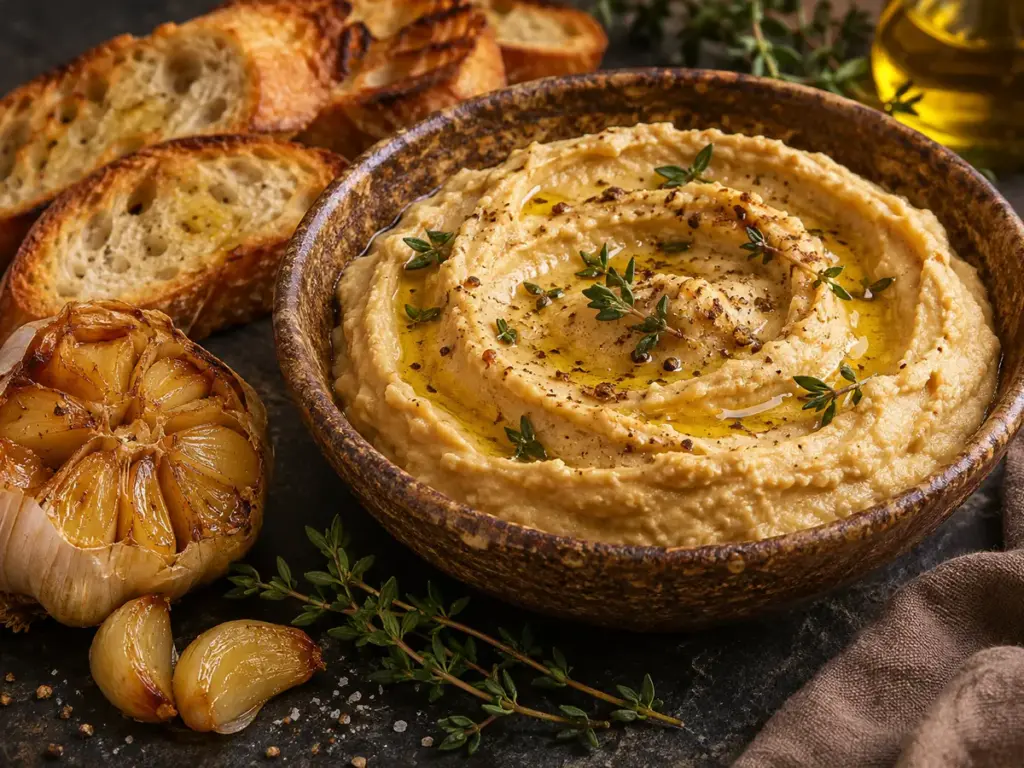
A whole head of roasted garlic goes into this dip, and the dry heat of the oven turns its sharp raw bite into a mellow, sweet flavor. You get a garlicky hummus that tastes round and gentle, with no raw clove in it.
- 1 (15 oz) can chickpeas, drained and rinsed
- 1 head garlic, top sliced off, for roasting
- ¼ cup tahini, stirred well
- 3 tablespoons lemon juice
- 3 tablespoons extra-virgin olive oil, plus 1 teaspoon for roasting and more for serving
- 2 to 4 tablespoons water or can liquid, to thin
- ½ teaspoon salt and ½ teaspoon ground cumin (optional), with paprika and parsley for serving
- Heat the oven to 400°F (200°C). Drizzle the garlic head with 1 teaspoon olive oil, wrap it in foil, and roast 35 to 40 minutes, until the cloves are very soft and lightly golden.
- Squeeze the roasted cloves into a food processor with the chickpeas, tahini, lemon juice, salt and cumin, and process 30 to 60 seconds, until coarse.
- Add the 3 tablespoons olive oil and 2 tablespoons water, and process 30 to 45 seconds until smooth. Add more water 1 tablespoon at a time for a silkier dip.
- Taste, adjust the salt and lemon, and serve with olive oil, paprika and parsley, at room temperature or chilled.
Let the garlic cool until you can hold the head, then squeeze the cloves out of their skins. If you need a sesame-free dip, sunflower seed butter fills in for the tahini and keeps the creamy, nutty body.
3. Spicy Sriracha Hummus
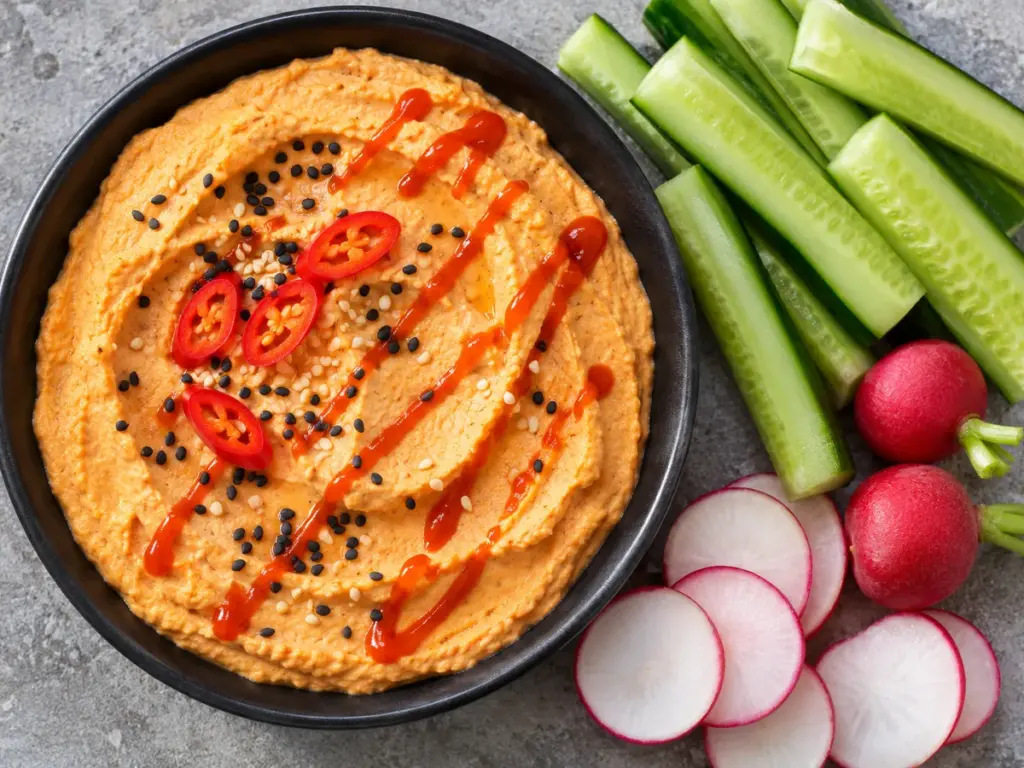
Sriracha adds garlicky, slightly sweet heat and tints the dip pale orange, so the only other spice it needs is cumin. You set the heat yourself, because the recipe takes anywhere from 1 to 2 tablespoons.
- 1 (15 oz) can chickpeas, drained and rinsed, with 2 tablespoons of the liquid saved
- ⅓ cup tahini, stirred well
- 2 tablespoons lemon juice
- 1 to 2 tablespoons sriracha
- 1 small garlic clove, minced
- 2 tablespoons extra-virgin olive oil, plus more for serving
- ¾ teaspoon kosher salt and ½ teaspoon ground cumin
- Add the chickpeas, tahini, lemon juice, garlic, sriracha, cumin and salt to a food processor.
- Blend 45 to 60 seconds, until mostly smooth.
- With the processor running, add 1 tablespoon olive oil and 2 tablespoons of the saved liquid, and blend 20 to 30 seconds more. Add up to 2 tablespoons water if it is too thick.
- Taste, add salt or sriracha, drizzle with olive oil, and chill 30 minutes if you like it firmer.
Start with 1 tablespoon of sriracha, blend, and taste before you add the second. Chili garlic sauce or another hot sauce can replace it, but read the label first, because a few chili sauces contain fish sauce or shrimp.
4. Avocado Hummus
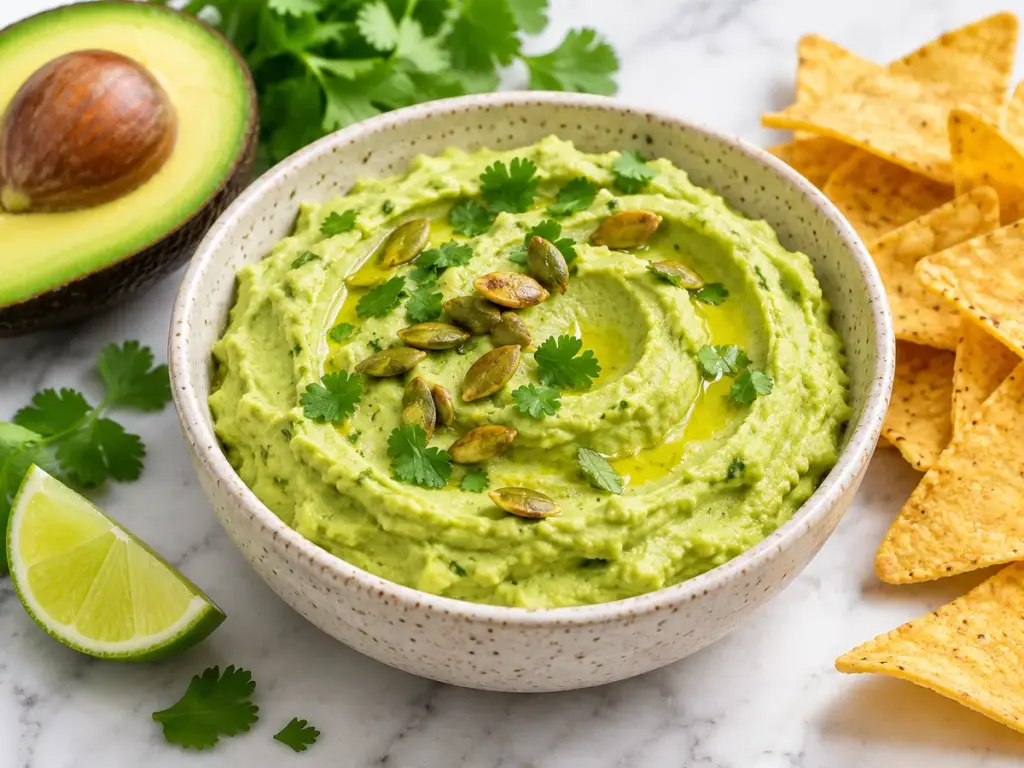
A medium ripe avocado makes this hummus pale green and extra creamy, so it needs only 2 tablespoons of tahini. It is a good spread for toast or tortilla chips, and it tastes freshest on the day you make it.
- 1 (15 oz) can chickpeas, drained and rinsed
- 1 medium ripe avocado, pitted and scooped
- 2 tablespoons tahini, stirred well
- 2 tablespoons lemon juice
- 1 clove garlic, peeled
- 2 tablespoons extra-virgin olive oil, plus more for serving
- ½ teaspoon ground cumin, ½ teaspoon kosher salt and 2 to 4 tablespoons cold water, to thin
- Add the chickpeas, avocado, tahini, lemon juice, garlic, olive oil, cumin and salt to a food processor or blender.
- Blend 30 to 45 seconds, stopping once to scrape the sides, until mostly smooth.
- Add 2 tablespoons cold water and blend 10 to 15 seconds more, adding more water until the dip is silky and spreadable.
- Top with olive oil and smoked paprika or cilantro, and serve right away.
Avocado browns where it touches air, so press plastic wrap onto the surface before you chill it, and eat the dip within 2 days. Out of tahini? Plain unsweetened soy or coconut yogurt works in its place at 2 tablespoons, and the dip comes out a little thinner.
5. Beetroot Hummus
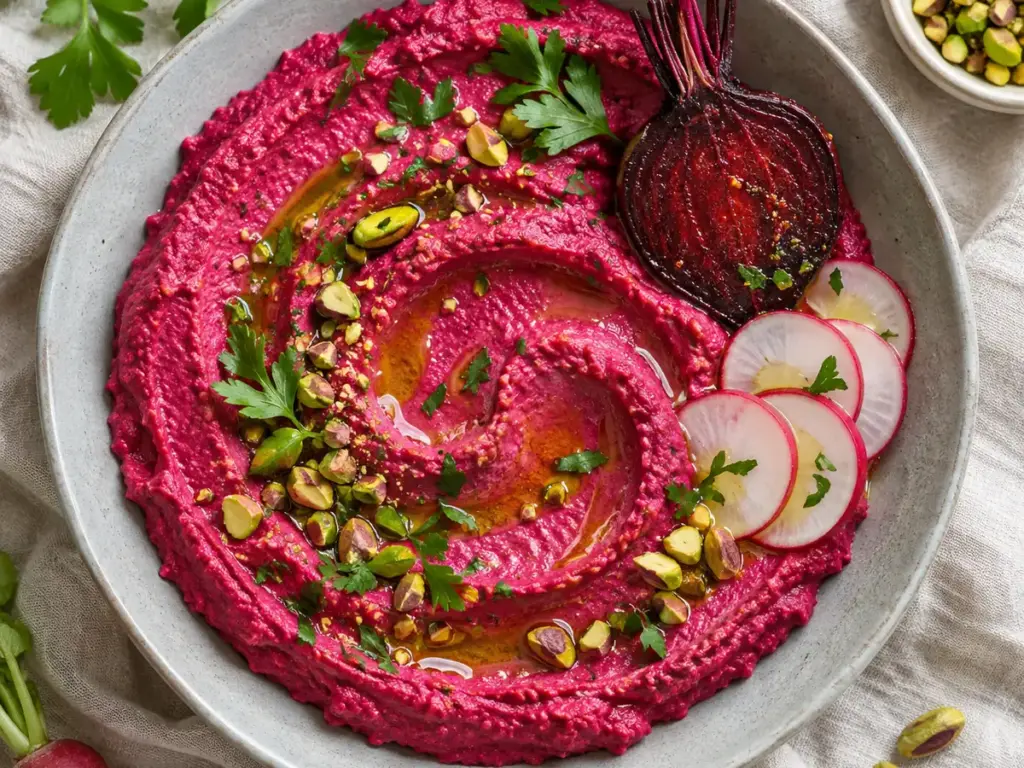
Two medium beets (about 10 oz) tint the whole bowl deep magenta and add the earthy sweetness of beets, which the lemon juice keeps from tasting heavy. The roasting step takes the longest, but the color is worth it.
- 2 medium beets (about 10 oz), roasted, peeled and chopped
- 1 (15 oz) can chickpeas, drained and rinsed
- ¼ cup tahini, stirred well
- 2 tablespoons lemon juice
- 1 clove garlic, minced
- 2 tablespoons olive oil, plus 1 teaspoon for roasting and more for serving
- ½ teaspoon salt, ½ teaspoon ground cumin and 2 to 4 tablespoons cold water, with smoked paprika and parsley for serving
- Heat the oven to 400°F. Toss the whole beets with 1 teaspoon olive oil, wrap them in foil, and roast 35 to 45 minutes, until a fork slides in easily. Cool, peel and chop.
- Blend the chickpeas, beets, tahini, lemon juice, garlic, cumin, salt and 2 tablespoons olive oil about 1 minute, until smooth. Add water 1 tablespoon at a time if the dip is too thick.
- Chill at least 30 minutes, then drizzle with olive oil and sprinkle with paprika and parsley.
Use a board and towel you do not mind staining, because beet juice dyes wood and cloth. Pre-cooked vacuum-packed beets skip the roasting and still give you the color.
6. Herbed Green Hummus
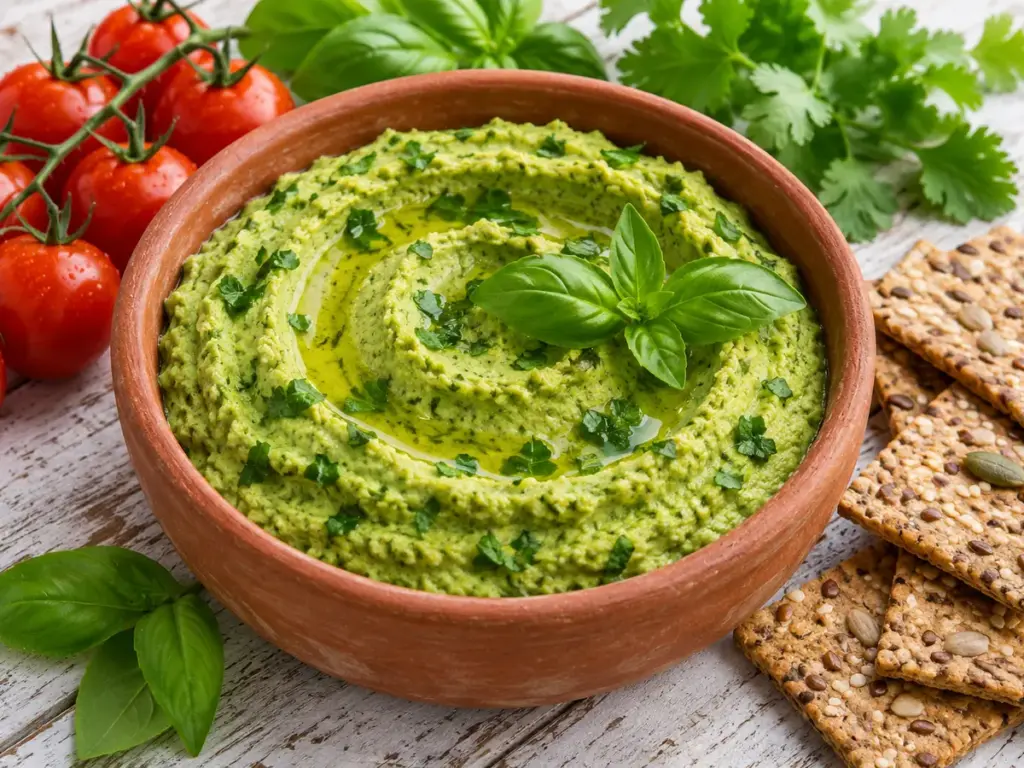
Cilantro and basil turn the dip bright green and give it a fresh, peppery edge. When you pulse the herbs with the tahini and lemon juice first, they chop fine and the color spreads evenly through the hummus.
- 1 (15 oz) can chickpeas, drained and rinsed
- ⅓ cup tahini, stirred well
- 3 tablespoons lemon juice
- 1 large garlic clove, smashed
- ⅓ cup packed fresh cilantro, stems mostly removed, and ½ cup packed fresh basil, tender leaves only
- ¼ cup extra-virgin olive oil, plus more for serving
- 2 to 4 tablespoons cold water or can liquid, ½ teaspoon kosher salt, ¼ teaspoon ground cumin (optional) and black pepper
- Pulse the herbs, lemon juice, garlic, tahini and salt 20 to 30 seconds, until the herbs are finely chopped.
- Add the chickpeas and half the olive oil, and blend 45 to 60 seconds, scraping the sides once.
- Blend in the water and the rest of the oil for 30 to 45 seconds, until smooth and spreadable.
- Taste, adjust the salt, lemon or cumin, and chill 15 minutes or serve at room temperature.
If cilantro tastes soapy to you, use fresh parsley. Baby spinach or arugula can replace the basil and still keep the dip green.
7. Smoky Paprika Hummus
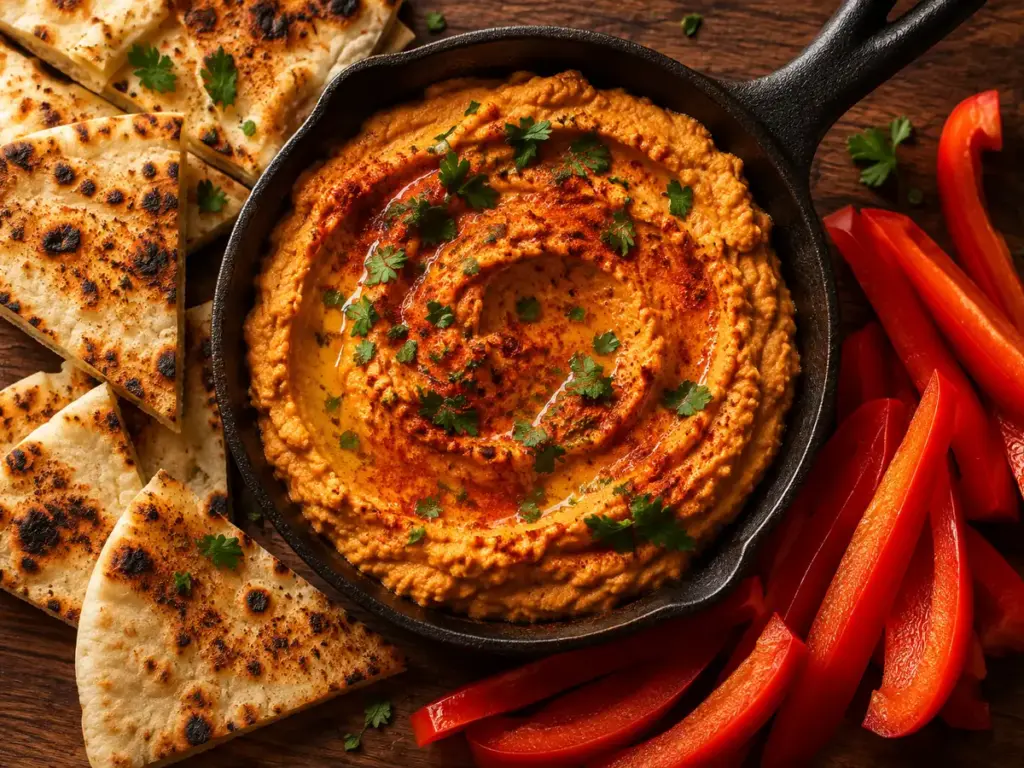
One teaspoon of smoked paprika gives this hummus a warm, savory smoke note and a brick-orange tint. It works as a sandwich spread as well as a dip, and a dusting on top makes the smoke smell stronger as you serve it.
- 1 (15 oz) can chickpeas, drained and rinsed, with 2 to 4 tablespoons of the liquid saved
- ⅓ cup tahini, stirred well
- 2 tablespoons lemon juice
- 1 garlic clove, smashed
- 1 teaspoon smoked paprika, plus more for serving
- ½ teaspoon ground cumin and ½ teaspoon kosher salt
- 2 tablespoons extra-virgin olive oil, plus more for serving, and chopped parsley
- Blend the tahini, lemon juice, garlic, paprika, cumin and salt 30 seconds, until creamy and slightly thick.
- Add half the chickpeas and 1 tablespoon of the saved liquid, and pulse 20 to 30 seconds.
- Add the rest of the chickpeas, the olive oil and 1 to 3 tablespoons more liquid, and blend 30 to 60 seconds, until smooth.
- Top with olive oil, extra paprika and parsley, and chill 30 minutes if you want it firmer.
Swap in ½ teaspoon of chipotle powder when you want more smoke and a little heat. When you blend the spices with the tahini and lemon first, they spread evenly and you never bite into a pocket of paprika.
8. Sun-Dried Tomato Hummus
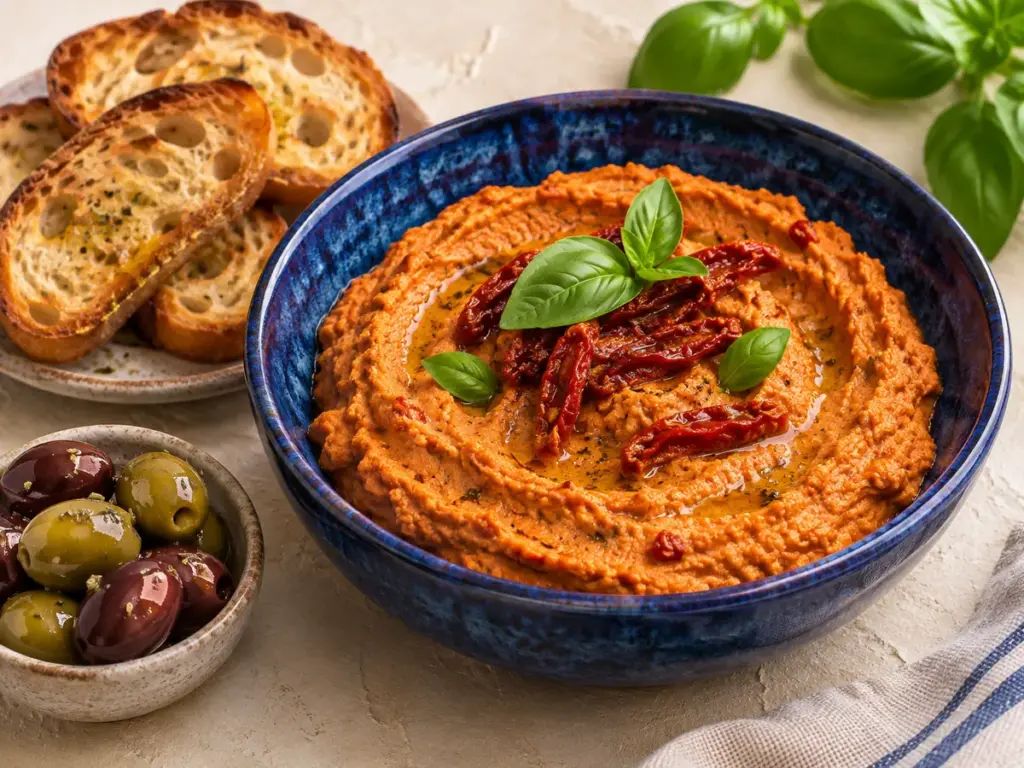
Sun-dried tomatoes bring concentrated, slightly sweet tomato flavor and a red-orange color. The oil on oil-packed tomatoes also adds richness, so 2 tablespoons of olive oil is enough for the whole batch.
- 1 (15 oz) can chickpeas, drained and rinsed, with 2 tablespoons of the liquid saved
- ½ cup oil-packed sun-dried tomatoes, drained
- ¼ cup tahini, stirred well
- 3 tablespoons lemon juice
- 1 large garlic clove, peeled
- 2 tablespoons olive oil, plus more for serving
- ½ teaspoon ground cumin, ½ teaspoon kosher salt and 2 to 4 tablespoons water
- Blend the tomatoes, garlic, lemon juice, tahini, cumin and half the olive oil 30 seconds, until nearly smooth.
- Add the chickpeas and 2 tablespoons of the saved liquid, and blend 45 to 60 seconds.
- Add the rest of the oil and up to 2 tablespoons more water, and blend 10 to 15 seconds, until spreadable.
- Chill 30 minutes to let the flavors blend, or serve right away with a drizzle of olive oil.
Dry-packed tomatoes work too. Soak them in hot water for 10 minutes and drain them, and the flavor stays concentrated even though the texture is softer. Spread the finished dip on toasted baguette slices and top it with the tomato and basil of vegan bruschetta.
9. Lemon-Tahini Hummus
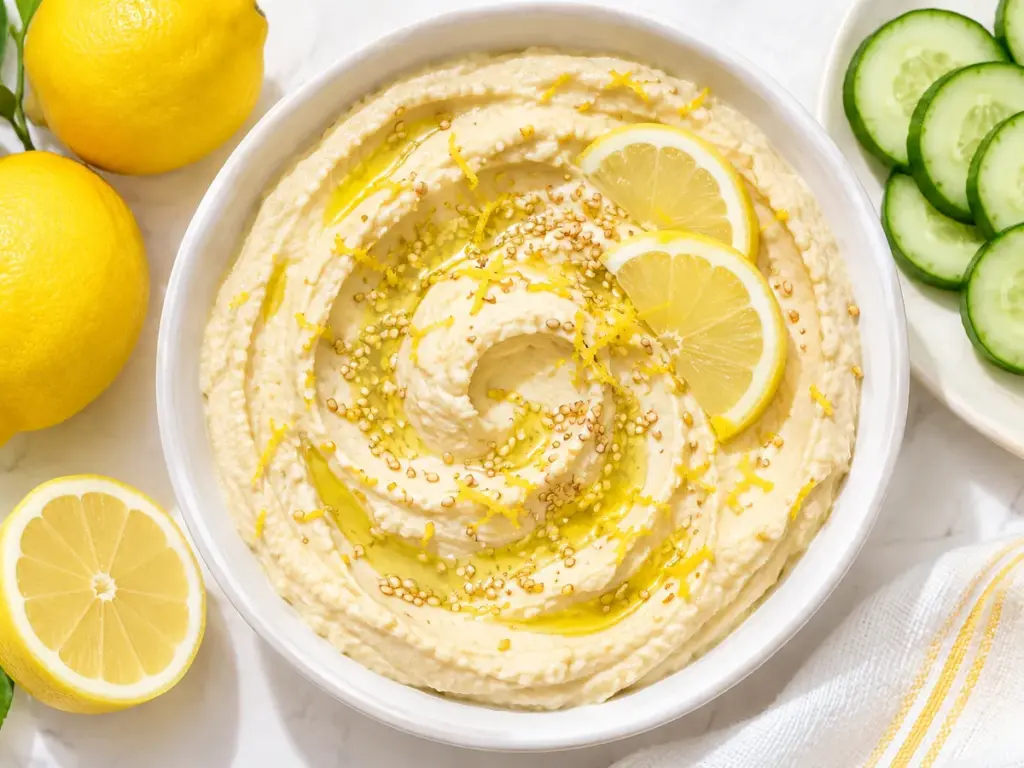
This is the plainest dip on the list, and its flavor comes from just two ingredients: 3 tablespoons of lemon juice and ⅓ cup of tahini. It tastes bright, sharp and nutty, with only a pinch of cumin behind it.
- 1 (15 oz) can chickpeas, drained and rinsed, with 2 tablespoons of the liquid saved
- ⅓ cup tahini, stirred well
- 3 tablespoons lemon juice (about 1 large lemon), plus lemon zest and sesame seeds for serving
- 1 clove garlic, minced
- 2 tablespoons extra-virgin olive oil, plus more for serving
- 2 to 4 tablespoons water or can liquid, ¾ teaspoon kosher salt and ¼ teaspoon ground cumin (optional)
- Blend the tahini, lemon juice, garlic and salt 30 seconds, until thick and creamy.
- Add half the chickpeas and blend 45 seconds, until partly smooth.
- Add the rest of the chickpeas and 2 tablespoons of the saved liquid, and blend 1 minute, adding more liquid 1 tablespoon at a time until it spreads easily.
- Top with olive oil, zest and sesame seeds, and serve warm or chilled.
Zest the lemon before you squeeze it, because a squeezed lemon is hard to zest. If you have no lemons, white wine vinegar works in the same amount, and the dip tastes a little less fruity.
10. Caribbean Coconut Hummus
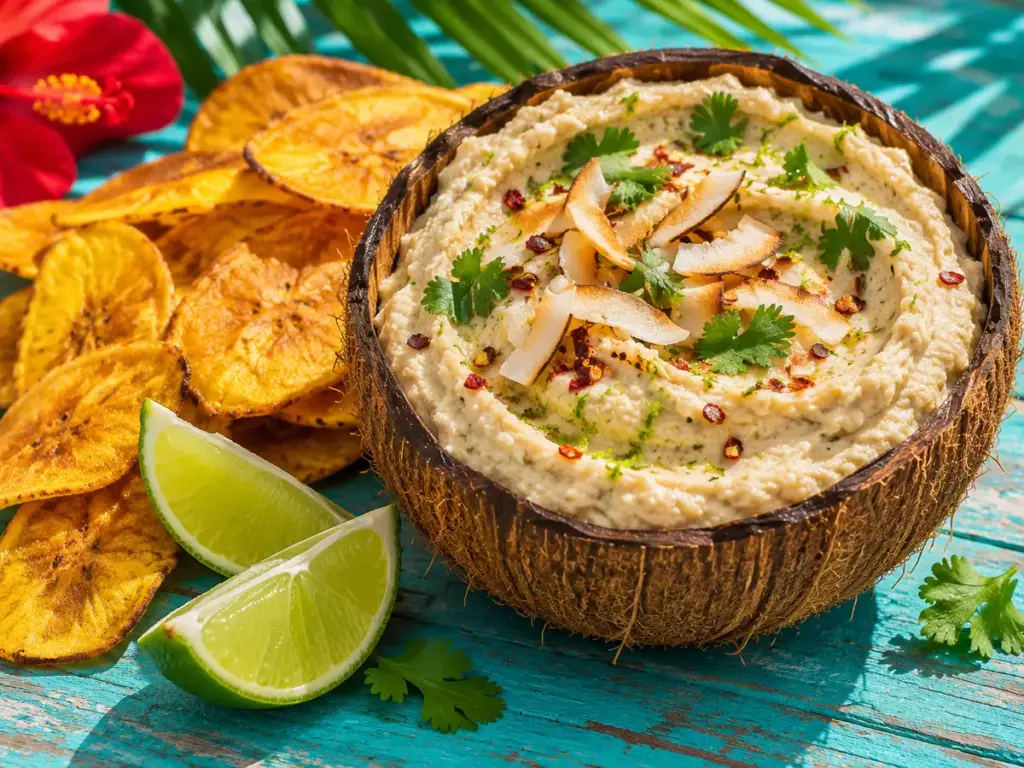
Canned coconut milk and lime juice give this hummus a tropical, mildly sweet flavor and an off-white color. The tahini keeps the texture familiar, so it still scoops like regular hummus.
- 1 (15 oz) can chickpeas, drained and rinsed
- ¼ cup tahini, stirred well
- ⅓ cup full-fat canned coconut milk
- 2 tablespoons fresh lime juice (about 1 lime)
- 1 small garlic clove, peeled
- 2 tablespoons olive oil, plus more for serving
- ½ teaspoon ground cumin and ¾ teaspoon kosher salt
- Rinse the chickpeas under cold water and shake off the excess.
- Blend the chickpeas, tahini, coconut milk, lime juice, garlic, cumin and salt 1 to 2 minutes, until mostly smooth.
- Scrape the sides, then drizzle in the olive oil with the motor running and blend 30 to 45 seconds, until smooth and glossy.
- Thin with up to 2 tablespoons more coconut milk or water, and serve with olive oil and raw vegetables, crackers or plantain chips.
Stir or shake the can before you measure, because the thick cream rises to the top. For a richer dip, use ¼ cup coconut cream thinned with 2 tablespoons water, and expect a slightly thicker result.
11. Chocolate Hummus
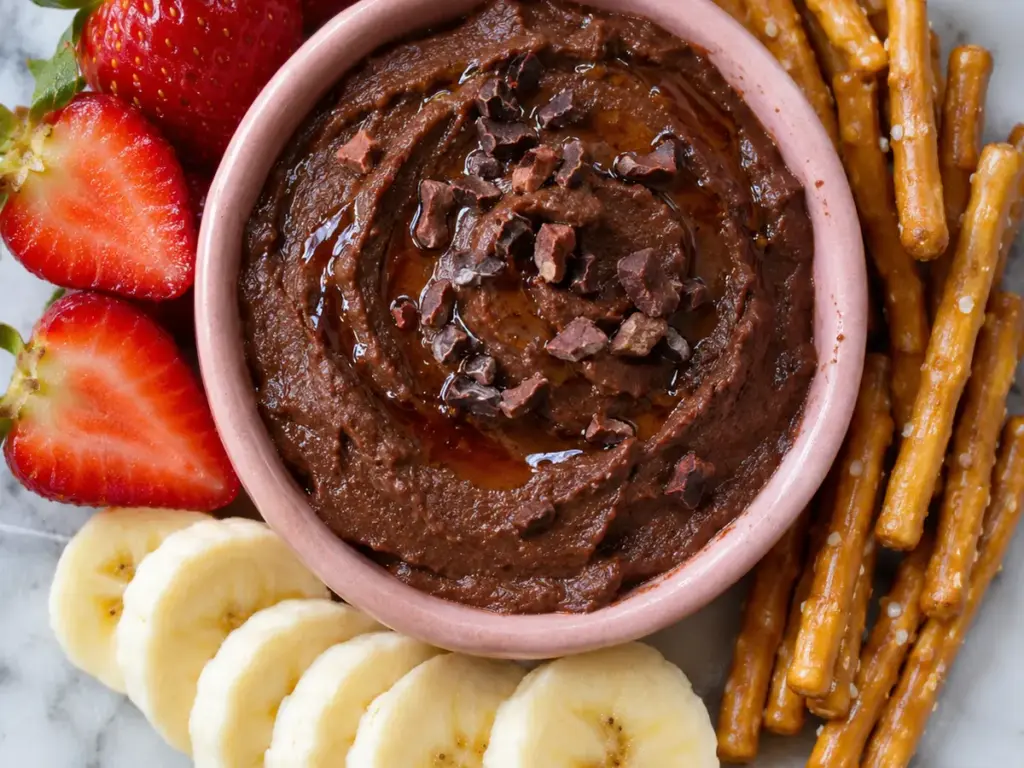
Cocoa powder and maple syrup turn chickpeas into a sweet, dark-brown dip for fruit and pretzels. The tahini adds a nutty depth that balances the cocoa, and the maple syrup lets you set the sweetness by taste.
- 1 (15 oz) can chickpeas, drained and rinsed
- ¼ cup unsweetened cocoa powder, sifted if lumpy
- ¼ cup tahini, stirred well
- ⅓ cup pure maple syrup, adjusted to taste
- 2 tablespoons neutral oil or melted coconut oil
- 1 teaspoon vanilla extract and ¼ teaspoon fine salt
- 2 to 4 tablespoons water, to thin
- Put the chickpeas, cocoa, tahini, maple syrup, vanilla and salt in a food processor or high-speed blender.
- Blend 45 to 60 seconds, scraping the sides, until the mixture looks creamy.
- Drizzle in the oil and 2 tablespoons water while blending, 30 to 60 seconds, until smooth. Add more water 1 tablespoon at a time until it spreads.
- Taste, adjust the salt or sweetness, and chill 30 minutes before serving.
Use agave syrup in place of the maple syrup if that is what you have, since it pours the same way. Chocolate hummus works as a dessert dip, and the best dippers for chocolate hummus are crisp pretzels and cold strawberries.
12. Vegan Feta Hummus
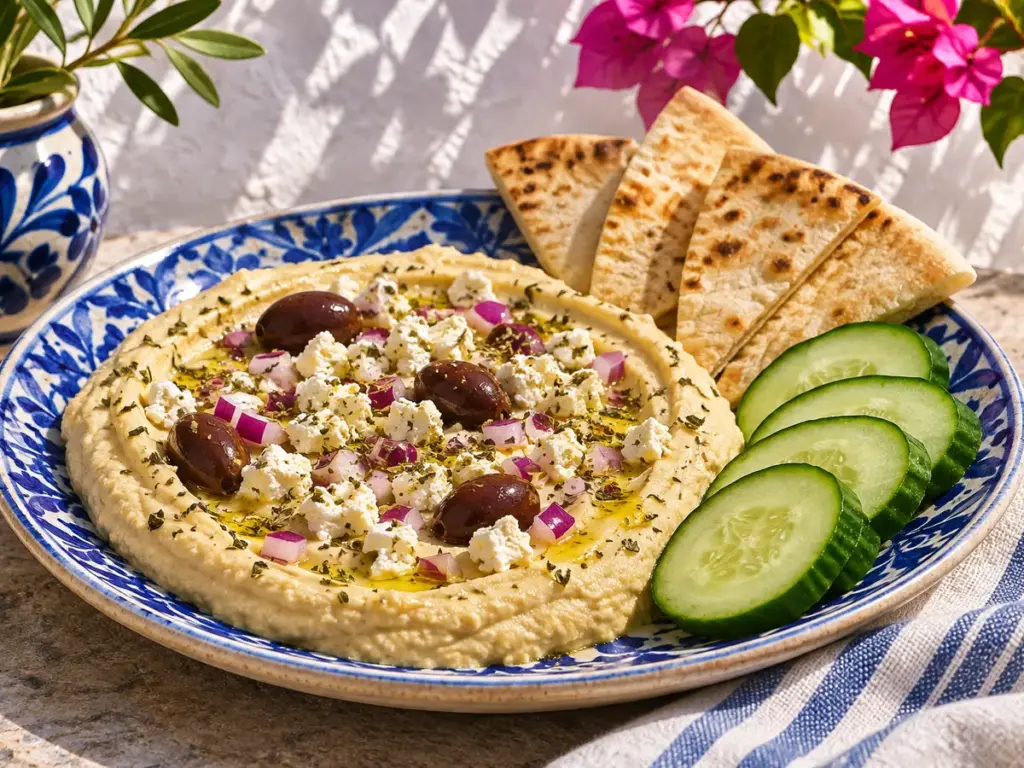
Crumbled vegan feta adds salty, tangy bits that cut through the richness of the tahini. You blend it right in, so the dip tastes tangy and savory, like a Mediterranean spread.
- 1 (15 oz) can chickpeas, drained and rinsed
- 4 oz vegan feta, crumbled
- ¼ cup tahini, stirred well
- 3 tablespoons lemon juice
- 1 garlic clove, peeled
- 2 tablespoons extra-virgin olive oil, plus more for serving
- 2 to 4 tablespoons water or can liquid, ½ teaspoon kosher salt, ½ teaspoon ground cumin (optional), and smoked paprika and parsley for serving
- Add the chickpeas, tahini, lemon juice, garlic, olive oil, salt, cumin and vegan feta to a food processor, and pulse 30 to 45 seconds.
- Process 45 to 60 seconds, scraping the sides once. Add 2 tablespoons water if needed and blend until smooth.
- Taste, adjust the salt and lemon, and blend 10 to 15 seconds.
- Top with olive oil, paprika and parsley, and chill 30 minutes if you want it firmer.
Check that the package says vegan or dairy-free, because a feta labeled only "vegetarian" still contains milk. With no vegan feta on hand, blend 4 oz of firm silken tofu with 1 teaspoon apple cider vinegar and ¼ teaspoon salt, and use that in its place.
13. Curry Spiced Hummus
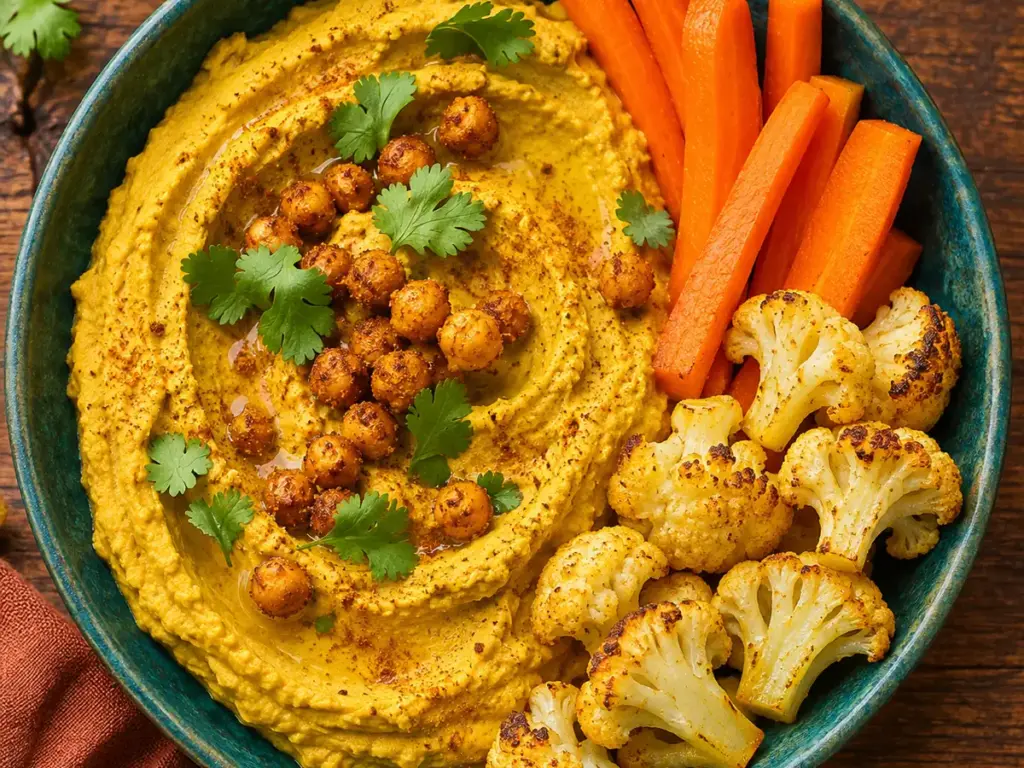
Curry powder gives this hummus a warm, golden color and a mild spice that goes well with carrots and roasted cauliflower. When you blend the powder with the tahini and lemon first, the spice spreads evenly.
- 1 (15 oz) can chickpeas, drained and rinsed
- ⅓ cup tahini, stirred well
- 2 tablespoons lemon juice
- 1 ½ teaspoons curry powder, mild or hot
- 1 clove garlic, minced
- 2 tablespoons olive oil, plus more for serving
- ¾ teaspoon kosher salt and 2 to 4 tablespoons water, to thin, plus cilantro and a few whole chickpeas for topping
- Blend the tahini and lemon juice 30 seconds, until creamy and slightly pale.
- Add the curry powder, garlic, olive oil and salt, and pulse 15 to 20 seconds.
- Add the chickpeas and 2 tablespoons water, and blend 45 to 60 seconds, until mostly smooth.
- Scrape down the bowl, blend again with up to 2 tablespoons more water until silky, and drizzle with olive oil.
Use Madras curry powder for more heat. The timing and method stay the same. Sunflower seed butter replaces the tahini when you need a sesame-free version.
14. Hummus Basics: Chickpeas, Swaps and Storage
Should You Use Canned or Dried Chickpeas?
Canned chickpeas are the fastest route, and every recipe above counts on one 15-ounce can. USDA data puts a drained can at about 253 grams of chickpeas (FDC 173800), which is the 1 ½ cups each recipe lists. If you cook dried chickpeas, ¾ cup of dry chickpeas gives you the same amount, because dry chickpeas roughly double in volume once cooked.
Use 1 (15 oz) can of canned chickpeas, drained and rinsed. They are ready to blend, and rinsing lowers the sodium from 246 mg to 212 mg per 100 g (FDC 173800 and 173801).
How Do You Cook Dried Chickpeas for Hummus?
North Dakota State University Extension gives a method that keeps the skins from splitting. Follow these steps, and keep the chickpeas covered with water the whole time.
- Rinse and sort. Rinse 2 cups of dried chickpeas and pick out any stones.
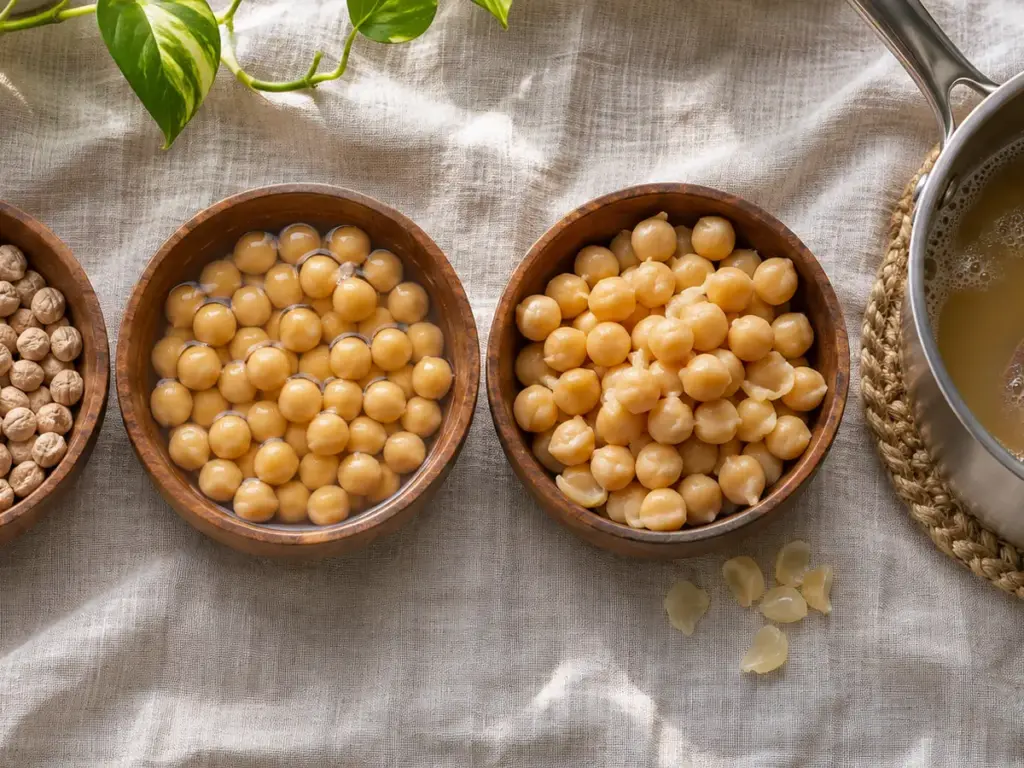
- Hot soak. Boil them in 10 cups of water for 2 to 3 minutes, cover the pot, and let them stand 4 to 24 hours. Move the pot to the fridge once the soak passes 4 hours.
- Drain and rinse. Throw out the soak water and rinse the chickpeas with cool water.
- Simmer gently. Add 2 cups of fresh water for every 1 cup of dry chickpeas, bring to a boil, then keep a gentle simmer for 90 to 120 minutes. A rapid boil splits the skins.
- Test for softness. A chickpea should crush easily between two fingers, and for hummus we'd cook them a little past that point, until they mash with no resistance.
A pot of cooked chickpeas also makes more than one dip, and the extra goes into curries and stews with chickpeas.
Does the Baking Soda Trick Work?
Which Swaps Keep Hummus Vegan?
None of the 13 recipes uses honey, dairy, butter, Worcestershire sauce or fish sauce. The only ingredients worth a label check are vegan feta and chili sauces, and these swaps stay vegan when you are missing something:
Swap tahini for sunflower seed butter, or almond or cashew butter. Almond or cashew butter is thicker, so add a little extra water. Plain sesame-free sunflower butter gives a roasted flavor without any sesame.
| Ingredient | Vegan swap | What changes |
|---|---|---|
| Chickpeas | 1 (15 oz) can cannellini beans | Milder and smoother, much like white bean hummus. |
| Yogurt or other creamy dairy | Plain unsweetened soy or coconut yogurt, in the same amount | Slightly thinner and a little less tangy. |
| Honey | Maple syrup or agave syrup, in the same amount | Agave tastes neutral, and maple adds a light caramel note. |
How Long Does Homemade Hummus Keep?
Plan on 3 to 4 days in a covered container in the fridge, which is the USDA FSIS limit for refrigerated leftovers. USDA FoodKeeper allows up to 7 days for traditional hummus made without preservatives and does not recommend freezing it, so treat 7 days as the outer limit and not the goal. Store-bought tubs get about a week after opening under the same FoodKeeper listing.
What Should You Serve with Hummus?
Sturdy chips that scoop thick hummus suit the classic, the roasted garlic and the smoky paprika dips, while carrots, cucumber and roasted cauliflower carry the curry and herbed green versions. For a bigger spread, falafel and roasted potatoes turn a bowl of dip into a meal, and crispy vegan snacks add crunch. One tablespoon (15 g) of plain home-prepared hummus has about 27 calories and 36 mg of sodium (USDA FDC 172454), and flavored versions vary with the add-ins.
Sources
- NDSU Extension: Pocket Guide to Preparing Pulse Foods (soaking, simmer time, yield, baking soda)
- America's Test Kitchen: Ultracreamy Hummus (baking soda method)
- USDA FSIS: Leftovers and Food Safety (3 to 4 days refrigerated)
- USDA FoodKeeper (hummus storage and freezing)
- USDA FoodData Central, FDC 172454 (home-prepared hummus), FDC 173800 and FDC 173801 (canned chickpeas)

Andrew Gray is the founder of Gusto Meadow, a food site for home cooks. He writes ingredient substitutes, food comparisons, taste guides, storage guides and dinner ideas, with numbers drawn from sources such as USDA, FDA and university extension services.
At Gusto Meadow, Andrew focuses on fresh, seasonal ingredients and simple methods that anyone can follow. His goal is to make cooking feel fun, doable, and rewarding — whether you’re preparing a quick weeknight dinner or exploring something new.
Storage and food-safety numbers follow USDA, FDA and university extension guidance.