Mooncakes taste dense, sweet and rich: a thin crust around a thick paste, most often lotus seed or red bean.
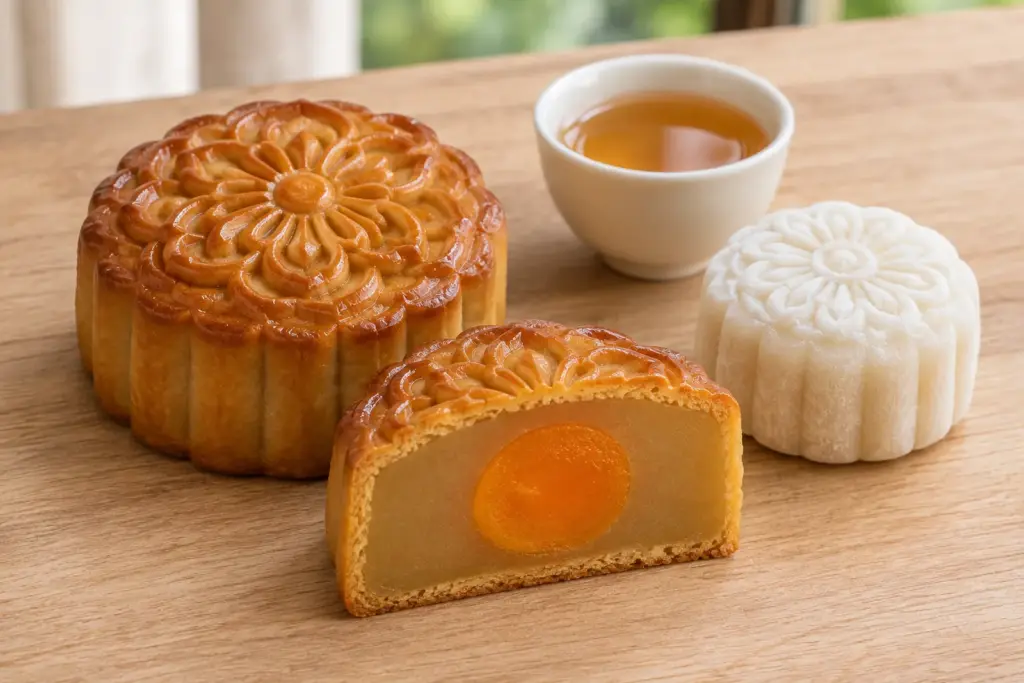
- A salted egg yolk in the middle adds a salty, crumbly bite to the sweet paste.
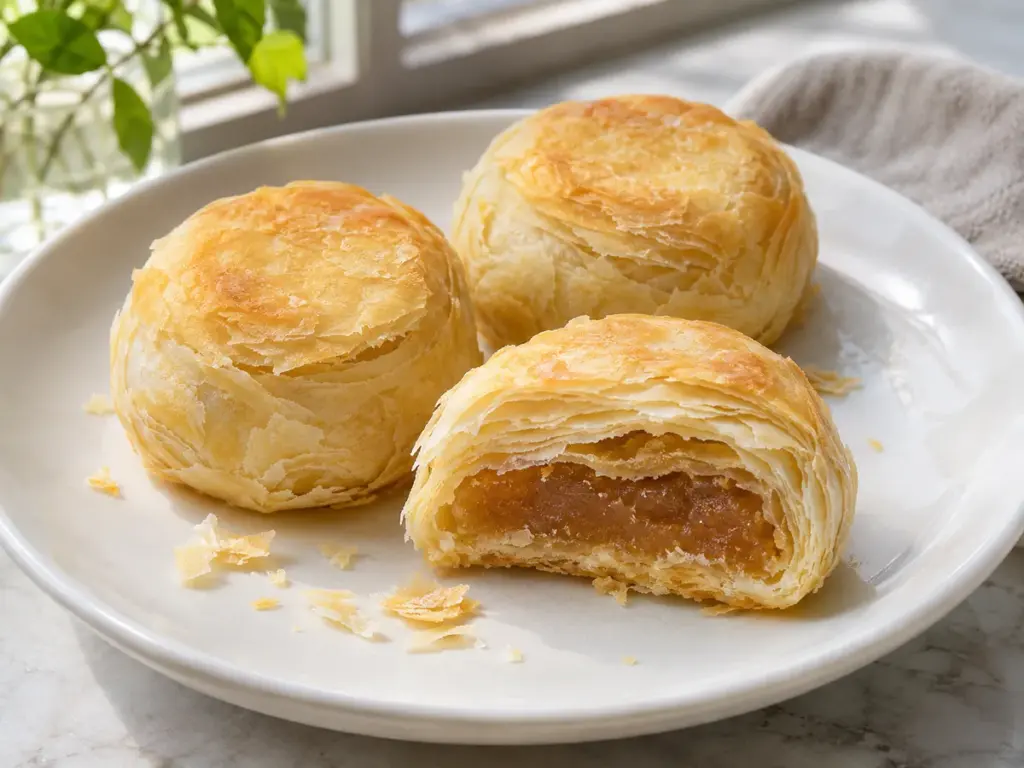
- Snow skin mooncakes are unbaked, chewy like mochi and eaten cold, while Suzhou ones are flaky and made with lard.
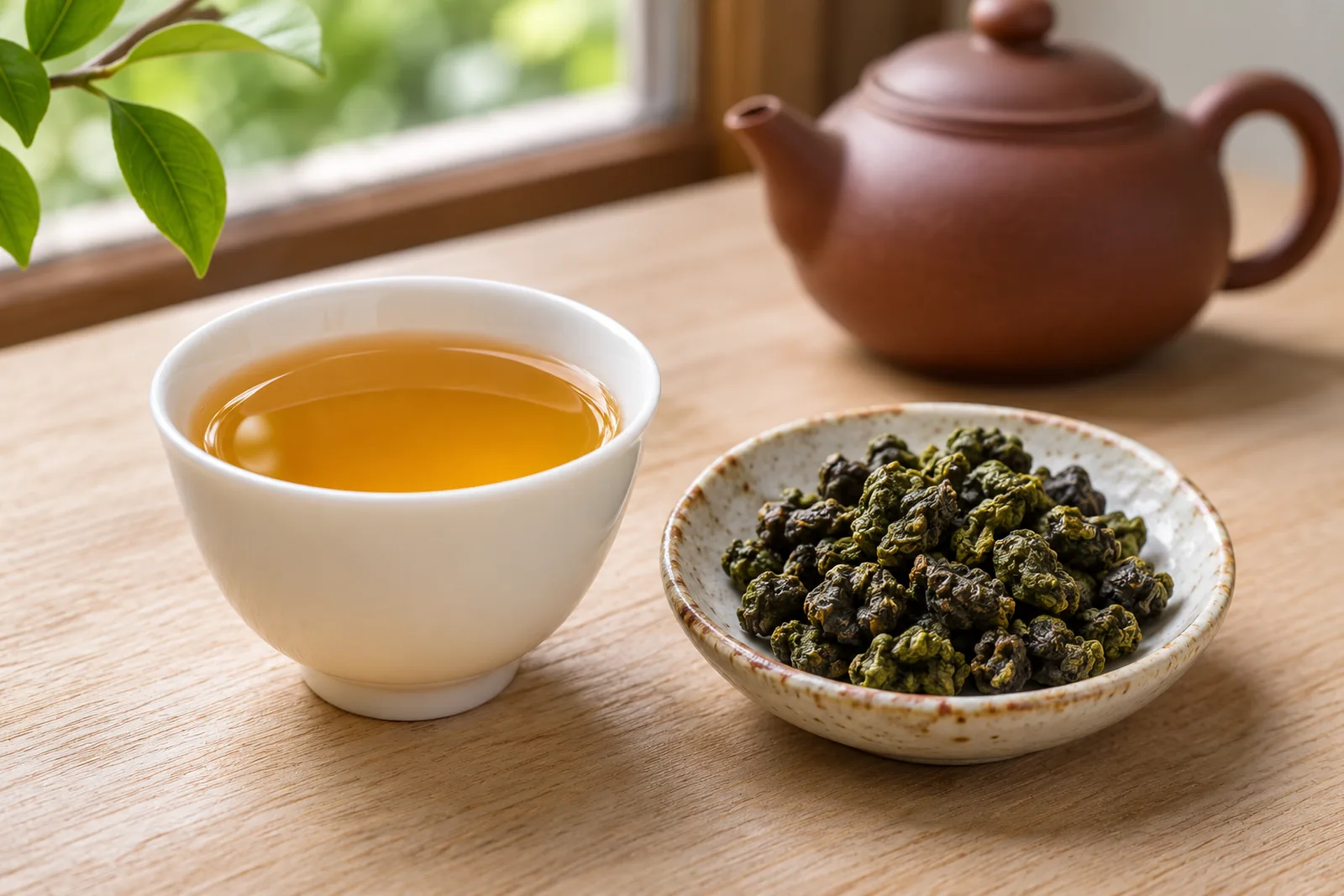
- Most people cut one into thin wedges and eat it with tea.
Among the sweets and pastries by taste, mooncakes change the most from one version to the next, so you get the best answer by reading the crust and the filling named on the box.
1. What Are Mooncakes?
A mooncake is a round Chinese pastry with a thin crust around a thick, sweet filling. Families, friends and business partners give and eat them at the Mid-Autumn Festival, which falls on the 15th day of the 8th lunar month, the night of the full moon.
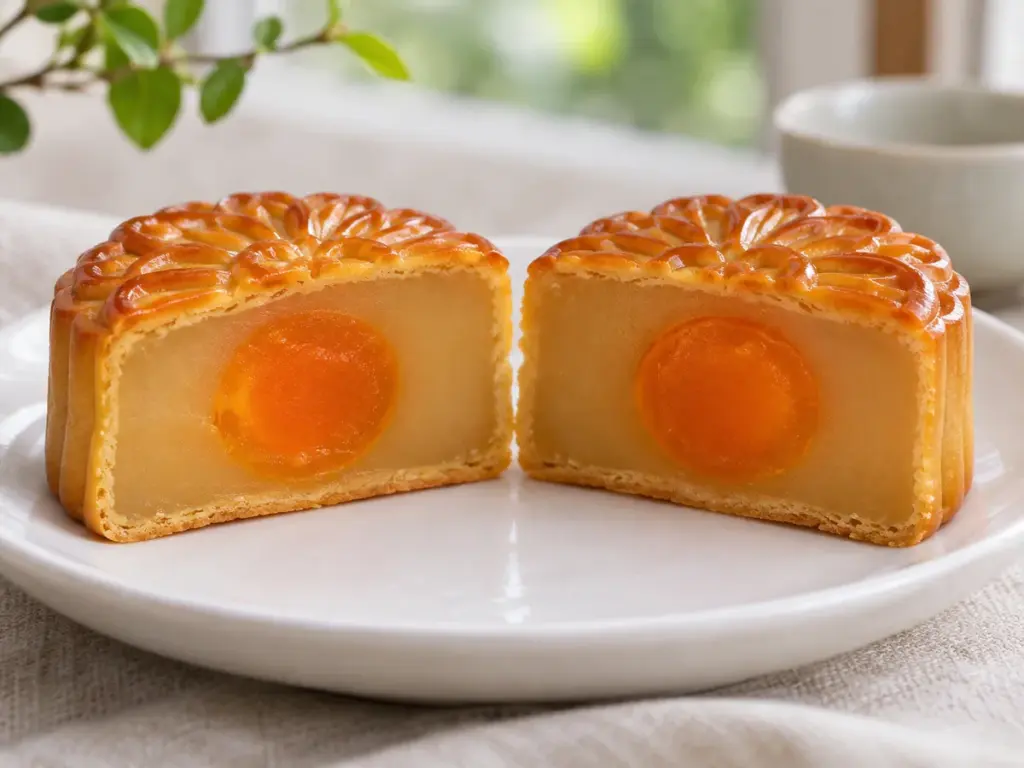
A Cantonese-style mooncake is about 4 inches (10 cm) wide and 1.2 to 1.6 inches (3 to 4 cm) thick, and its crust is only 2 to 3 mm thick. That is why almost every bite is filling.
The festival grows out of much older moon worship. The ancient ritual text Liji describes emperors making sacrifices to the moon in autumn.
The cake itself is younger than many pages claim. The earliest known mention of a "mooncake" is in a Song dynasty book, where it was an ordinary food with no tie to the festival, and the first documented link to Mid-Autumn comes in the Ming dynasty. The popular story that rebels hid messages inside mooncakes to overthrow the Yuan dynasty is a legend, not a documented event.
2. What Do Mooncakes Taste Like?
The filling sets most of the flavor and the crust sets the texture, so you can predict a mooncake by matching its type to this table.
| Type | Crust | What you taste | Texture |
|---|---|---|---|
| Cantonese, lotus seed paste | Thin, baked, golden | Mild, sweet and slightly nutty | Smooth, dense, sticky-soft |
| Cantonese with salted yolk | Thin, baked, golden | Sweet paste with a salty, rich yolk | Smooth paste around a firm, crumbly yolk |
| Red bean paste | Thin, baked, golden | Sweet, earthy and bean-like | Thick, smooth or a little grainy |
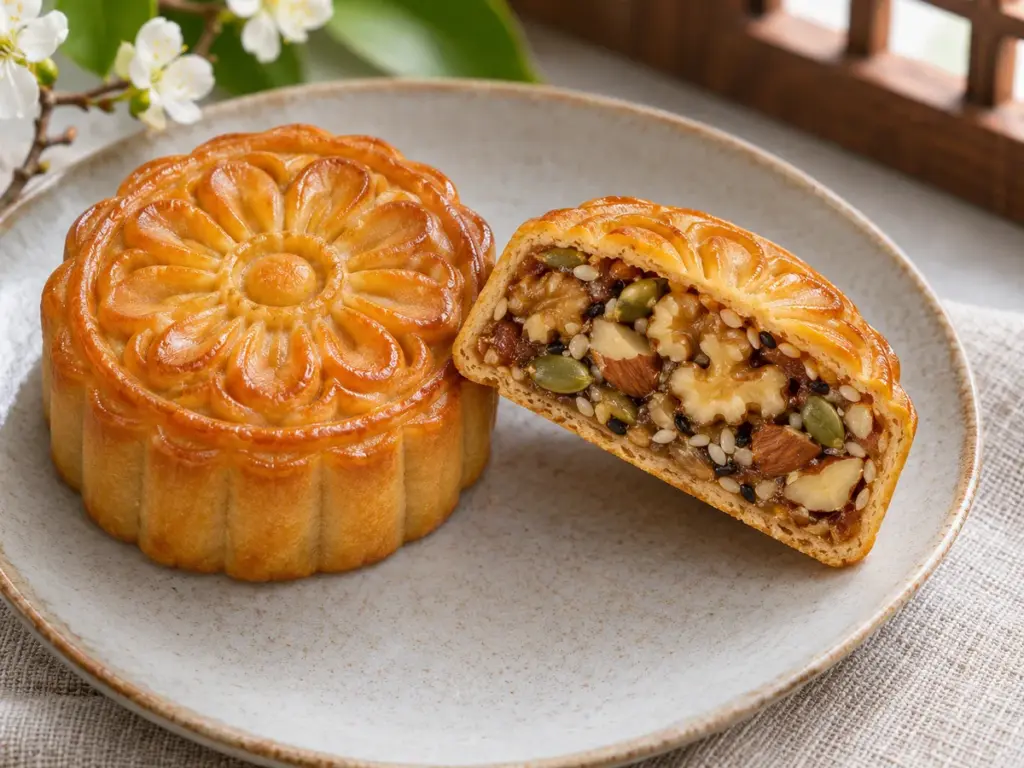
Five kernel has the same thin, baked, golden crust and tastes of toasted nuts and seeds, sweet, with a chunky, chewy texture and crunchy bits.
- Suzhou has flaky layers made with lard, tastes sweet or savory and rich, and its crisp layers crumble.
- Snow skin uses unbaked glutinous rice, like mochi, tastes as the filling does, and is soft, chewy and served cold.
- Yunnan ham has a dense, crumbly hot water crust and a salty-sweet filling of ham and sugar.
The Cantonese rows are the mooncakes most people picture, so they come first, followed by Suzhou and the regional styles, then snow skin and newer flavors.
3. What Do Cantonese Baked Mooncakes Taste Like?
The crust is made from a thick sugar syrup, lye water, flour and oil, which gives it a deep golden color and a soft, slightly chewy bite.
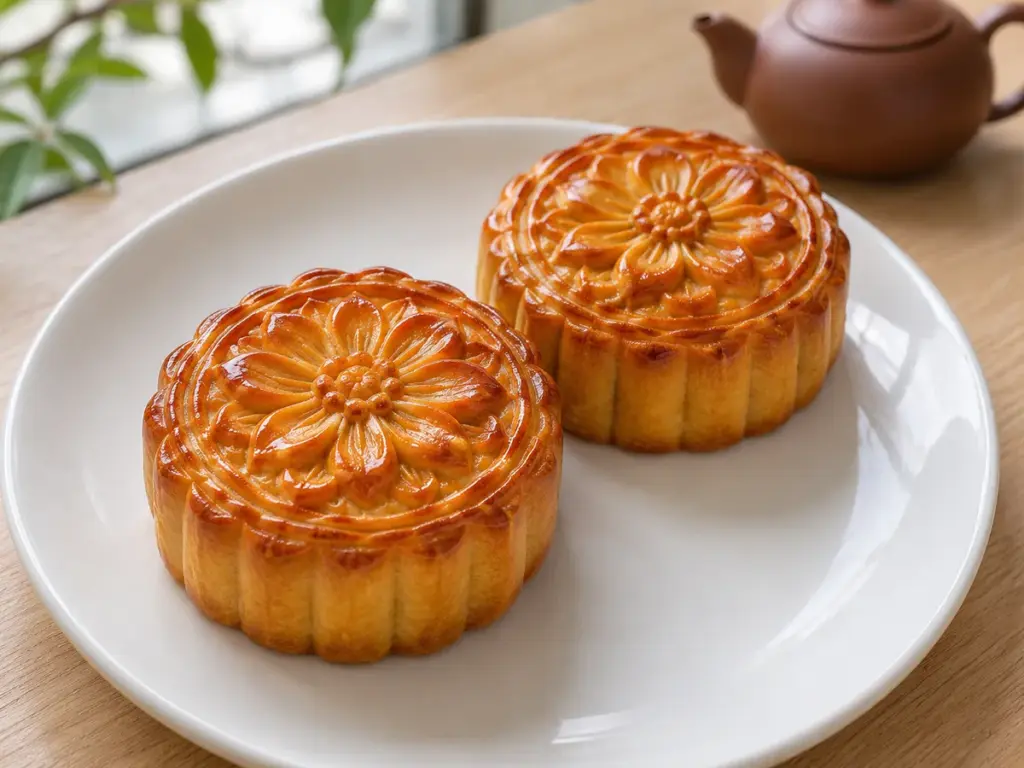
Lotus Seed Paste
Lotus seed paste is the filling most Cantonese mooncakes use. It tastes mild, sweet and a little nutty, and it feels smooth and dense on the tongue. Because the paste is so sweet, a small slice goes a long way.
Salted Egg Yolk
A cured duck egg yolk sits in the center of many baked mooncakes. It is salty and rich, firmer and crumblier than the paste around it, and it cuts the sweetness for a bite. The number of yolks depends on the cake:
- One or two yolks in most cakes that have them.
- Four yolks in elaborate versions, one for each moon phase.
Red Bean Paste
Red bean paste is usually made from adzuki beans, so it tastes earthier and more bean-like than lotus paste. You may know the same sweet paste from red bean ice cream, where it reads as mild and slightly nutty.
Five Kernel
Five-kernel filling is a coarse mix of nuts and seeds:
- Nuts and seeds: usually walnuts, almonds, sesame and pumpkin or melon seeds.
- Binder: maltose syrup.
- Extras: some makers add candied winter melon or Jinhua ham.
You get crunch, chew and the slight bitterness of walnuts against the sugar, which is why this is the mooncake people argue about. It was once considered the height of sophistication, and some modern eaters now find it less appealing.
4. What Do Suzhou and Regional Mooncakes Taste Like?
A Suzhou mooncake is smaller than a Cantonese one and made of flaky layers of dough with plenty of sugar and lard. The lard gives the pastry a richer flavor than shortening would, and the layers break into crumbs when you bite. Sweet versions are common, and savory ones, often with minced pork, are served hot.
Two other regional styles taste quite different from either of those.
- Teochew: the flaky crust is thinner than a Cantonese one, the aroma of lard stands out after roasting, and a yam filling gives you mild, starchy taro in place of the usual paste.
- Yunnan: a dense, crumbly crust made from rice, wheat and buckwheat flours holds sugar and Xuanwei cured ham, which makes it salty and sweet at once.
5. What Do Snow Skin and Newer Mooncakes Taste Like?
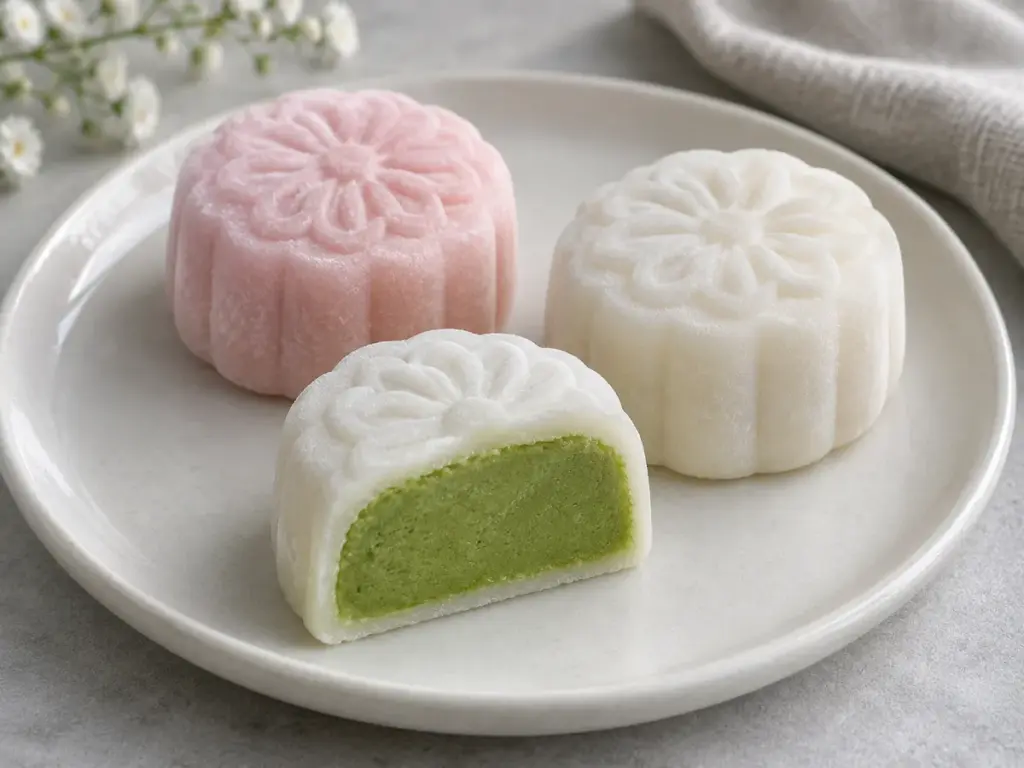
Snow skin mooncakes are not baked. Their crust is glutinous rice dough, so you get the chew of mochi around the filling, and the cake has to stay chilled until you eat it. They appeared on the market in the early 1980s.
- Soft, slightly chewy golden crust
- Dense, rich and very sweet
- Kept in a cool, dry place
- Soft, chewy rice skin
- Eaten cold, straight from the fridge
- Kept at 4°C (39°F) or below
Because the skin has no flavor of its own, the filling carries the taste. Makers fill snow skin and baked cakes with custard, grassy matcha, taro, fruit and even ice cream, and jelly crusts made with agar, gelatin or konjac are another modern option. Flavors vary by maker, so read the box before you assume a sweetness level.
6. Why Do Mooncakes Taste So Dense and Sweet?
Most recipes cook the paste down with a lot of sugar and oil, and the thin crust leaves little room for anything lighter. The numbers back up what your tongue says: Hong Kong's Centre for Food Safety calls most mooncakes high in sugar and fat and treats more than 20 g of fat or 15 g of sugar per 100 g as high.
The same test found fat between 15 and 28.1 percent of the cake by weight and sugar (sucrose) between 7.7 and 25.3 percent. It estimated that half a traditional mooncake supplies about a third of a day's recommended fat, which is why people cut one cake into several pieces.
7. How Do You Serve Mooncakes?
You eat mooncakes at the Mid-Autumn Festival on the night of the full moon, and you can also give a box to relatives, clients and friends. They count as sweet snacks rather than a plated dessert, so you can have them any time of day, not only at the end of a meal.
- Check the type. Snow skin and ice-cream cakes come out of the fridge or freezer, while baked ones sit at room temperature.
- Cut thin wedges. One cake is dense and heavy, so cut it into small pieces and share it around the table.
- Pour tea. Tea resets your mouth between bites of sweet paste.
- Eat slowly. Take one wedge at a time and go back for another.
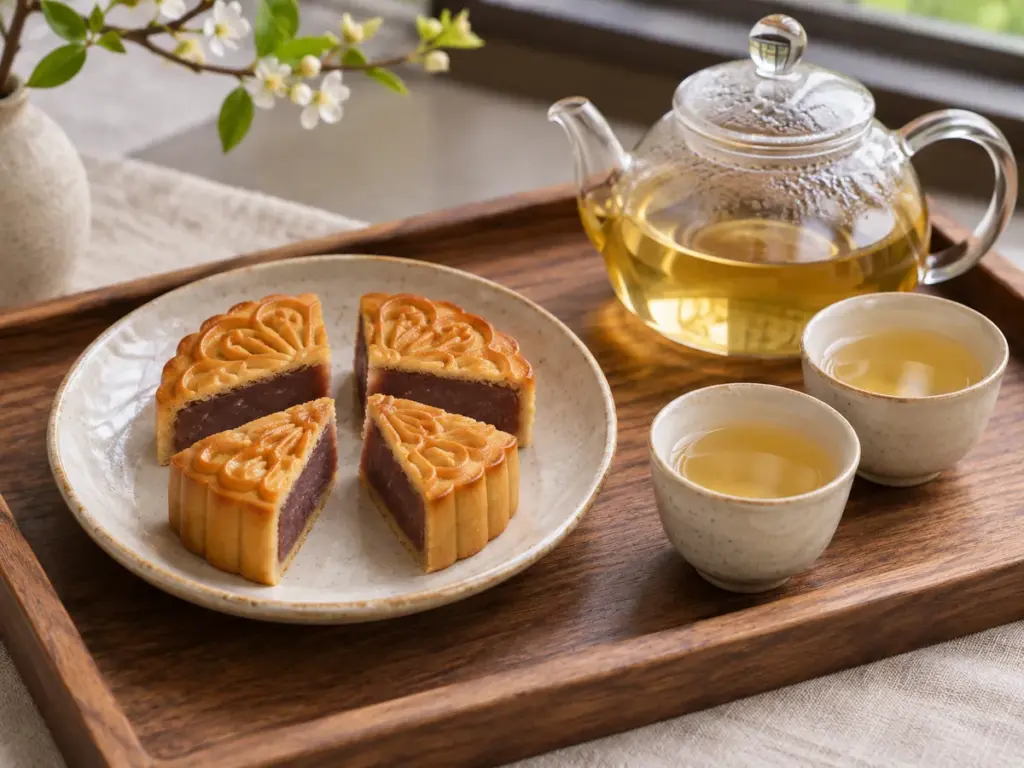
One Time Out Kuala Lumpur pairing guide suggests matching the tea to the cake:
- Lotus paste: a neutral, semi-fermented oolong or tie guan yin, because the cake is very sweet and the tea should not compete.
- Five kernel: a lighter ripe pu-erh to handle the busy filling.
- Snow skin: a light tea such as first flush Darjeeling, so the subtle filling still comes through.
8. How Long Do Mooncakes Keep?
For anything packaged, the date on the box and its storage line decide, and the rules differ a lot by type.
| Type | Where to keep it | Rule |
|---|---|---|
| Traditional baked | Cool, dry place | Airtight once opened, and eat before the date on the package |
| Snow skin | Fridge, 4°C (39°F) or below | Do not leave it out for long, and throw it away after more than 2 hours at room temperature |
| Ice cream | Freezer, -18°C (0°F) or below | Do not refreeze after thawing |
Baked mooncakes are the safest to leave out because baking kills most pathogens, but that does not make them last forever. Throw out any cake that has changed color or smells unpleasant. If you carry snow skin or ice-cream cakes outdoors, pack them in an icebox and eat them soon.
No food agency we found gives a day count for homemade baked mooncakes, which have no printed date. Recipe sites commonly say about a week in an airtight container at room temperature and up to two weeks in the fridge, so treat those as rough quality windows rather than safety limits.
If you are unsure how long a homemade or unlabeled cake has been out, we would put it in the fridge, and a snow skin cake always goes there.
Sources
- Hong Kong Centre for Food Safety, Mooncakes and Food Safety (storage, room-temperature limit)
- Hong Kong Centre for Food Safety, Food Safety Tips for Mooncakes (traditional and snowy mooncakes)
- Hong Kong Government, CFS test results on mooncakes (high-fat and high-sugar thresholds, 2016)
- Singapore Food Agency, Safety of Mooncakes
- Hong Kong Consumer Council, mooncake test, September 1999 (kcal, fat and sugar per 100 g)
- Wikipedia, Mooncake (styles, dimensions, serving)
- The Star, Where do mooncakes come from? (origin legends and records)
- Time Out Kuala Lumpur, Mooncake and tea pairing guide

Food writer at GustoMeadow. Writes ingredient substitutes, food comparisons, taste guides and storage guides for home cooks.
Storage and food-safety numbers follow USDA, FDA and university extension guidance.