
The best swap for dry mustard is Dijon mustard, at 1 tablespoon for each teaspoon of dry mustard.
- Any prepared mustard follows the same ratio, but it adds liquid and vinegar, so a thin sauce may loosen.
- In a dry rub or spice blend, you will want turmeric or ground mustard seeds instead.
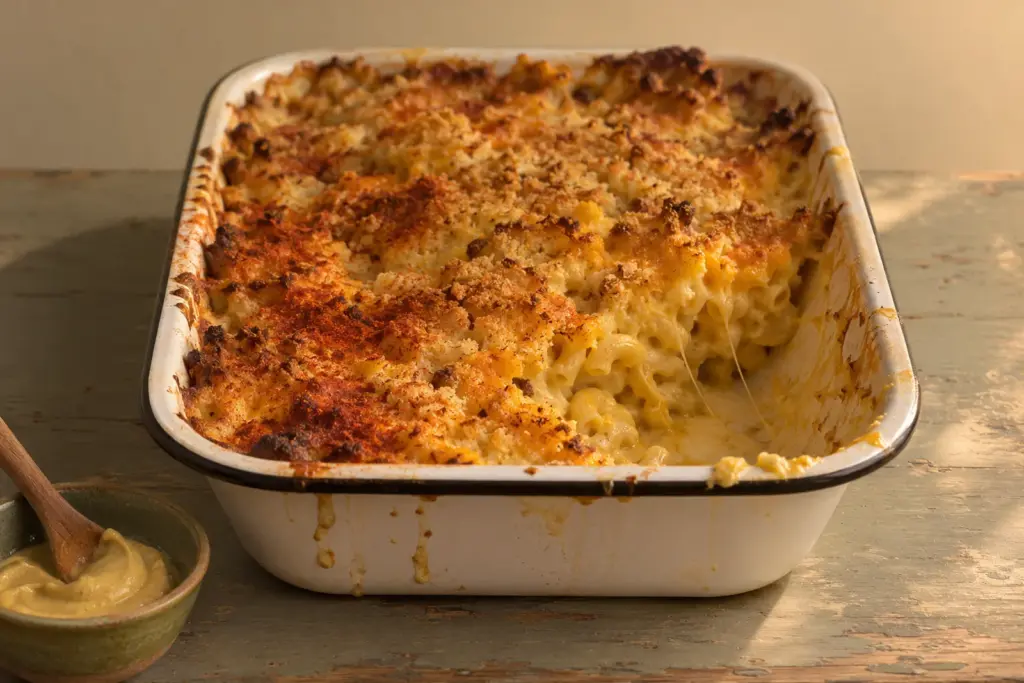
Dry mustard and ground mustard name the same fine powder, which McCormick describes as ground mustard seeds. Most pantry swaps for it are other mustards you already own, plus a few spices.
What Does Dry Mustard Do in a Recipe?
In a recipe, dry mustard gives a sharp, hot, slightly bitter bite and a yellow tint without adding any liquid. McCormick describes ground mustard as having an intense aroma with a sharp, hot, and slightly bitter taste, and the taste of ground mustard changes with what you mix it with.
The heat forms only when the powder meets liquid, because wetting crushed seed lets the enzyme myrosinase build the pungent mustard oils.
When you stir the powder into cold water you get the hottest mustard, hot water gives a milder one, and wine or vinegar slows the reaction so the flavor lasts longer, according to Wikipedia.
6 Best Substitutes for Dry Mustard
| Swap | For 1 teaspoon dry mustard | Best in |
|---|---|---|
| Dijon mustard | 1 tablespoon | Sauces, casseroles |
| Yellow mustard | 1 tablespoon | Deviled eggs, dressings |
| Mustard seeds, ground | ½ teaspoon | Rubs, dry mixes |
| Turmeric | 1 teaspoon | Color, mild flavor |
| Horseradish powder | A pinch at a time | Cold sauces, finishing |
| Wasabi powder | A pinch at a time | Dips, dressings |
McCormick or North Dakota State University (NDSU) Extension gives a ratio for Dijon, yellow mustard, ground seeds and turmeric. No extension or brand source gives one for horseradish or wasabi powder, so you add those a pinch at a time.
If you are canning, keep the dry mustard in the recipe instead of swapping it (see Canning and Pickling below).
1. Dijon Mustard
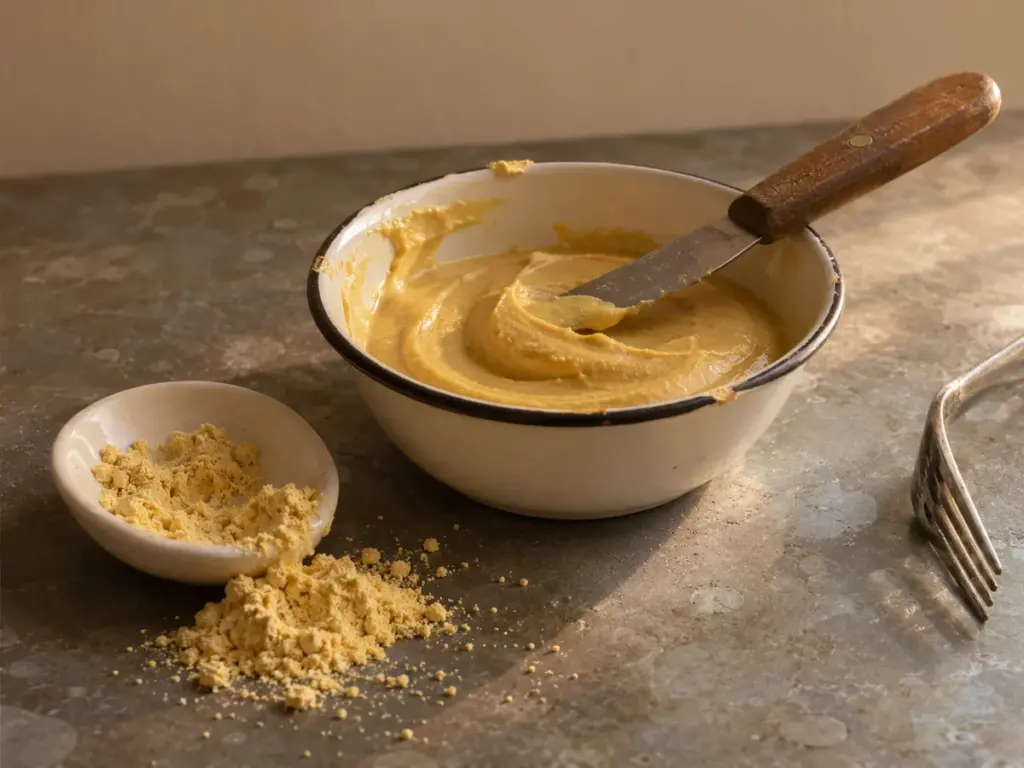
McCormick calls Dijon the best substitute for ground mustard because the two taste alike, so each teaspoon of dry mustard becomes 1 tablespoon of Dijon in your recipe.
Because Dijon is a wet condiment, it brings liquid and acid into the dish along with the mustard flavor.
Most Dijon today is made with white wine instead of the verjuice (unripe-grape juice) it started with, so the jar carries wine as well as seed (Wikipedia).
2. Yellow Mustard
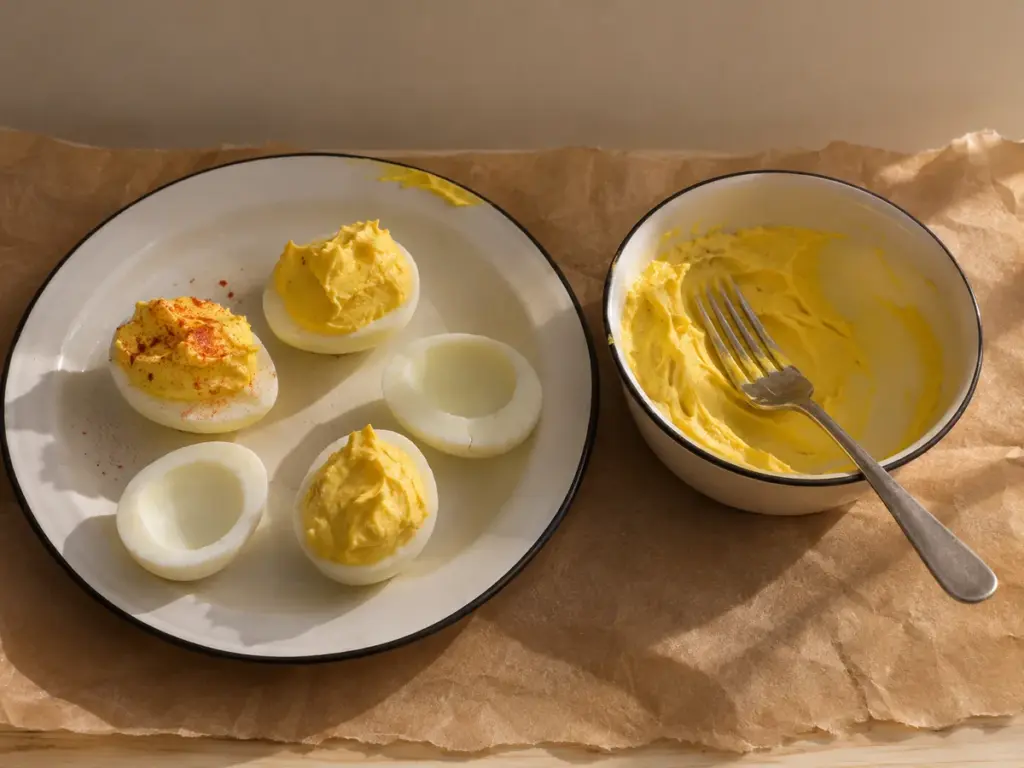
Yellow mustard follows the same ratio, 1 tablespoon per teaspoon of dry mustard, because NDSU Extension's substitution chart lists 1 tablespoon of prepared mustard for 1 teaspoon of dry mustard without naming a type.
McCormick names Dijon as the closest match, so yellow mustard is the fallback when your Dijon jar is empty.
Prepared mustards often get their yellow color from added turmeric, which is close to the color dry mustard gives. If the filling or sauce has to stay thick, you stir it in half a teaspoon at a time.
3. Whole Mustard Seeds, Ground Fine
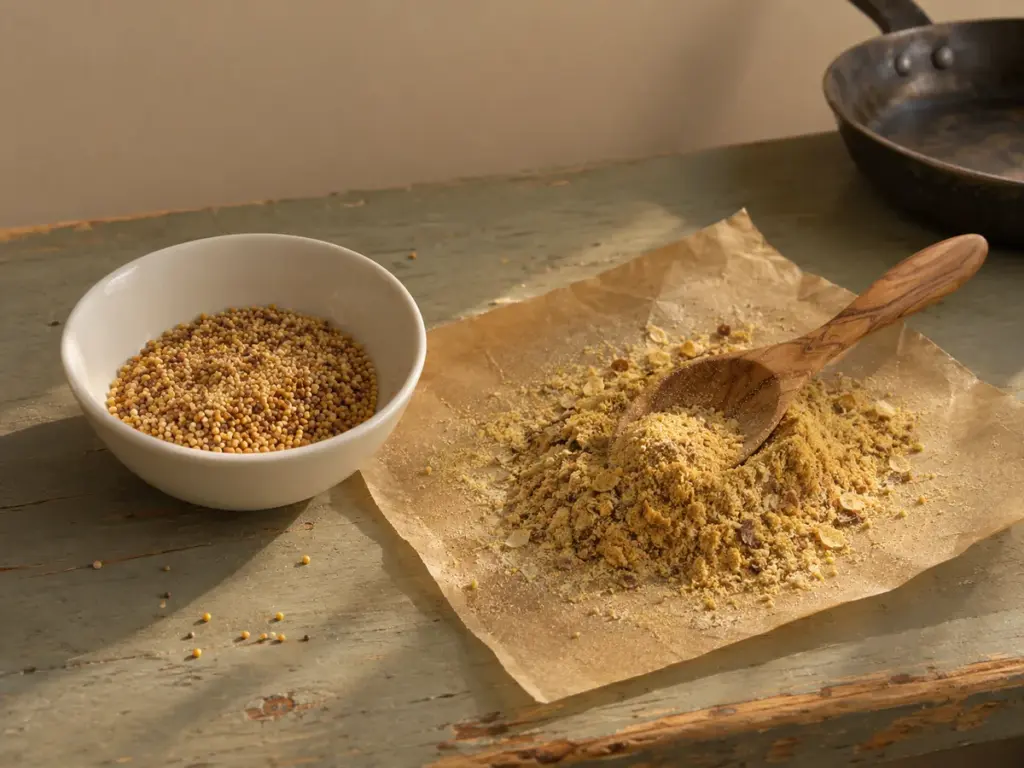
You can grind whole seeds in a spice grinder, one of the ways McCormick lists for making your own ground mustard.
NDSU Extension lists ½ teaspoon of mustard seeds for 1 teaspoon of dry mustard, and McCormick's conversion chart lists 1 teaspoon of seeds as 1½ teaspoons of ground mustard, which works out to about ⅔ teaspoon of seeds per teaspoon of powder (calculated).
Anything from ½ to ⅔ teaspoon of whole seeds covers both sources, and you grind them after you measure.
McCormick notes that ground mustard is hotter than the seed, so you start at ½ teaspoon and taste before you add more. The seeds add no liquid, so they suit rubs and dry mixes.
4. Turmeric
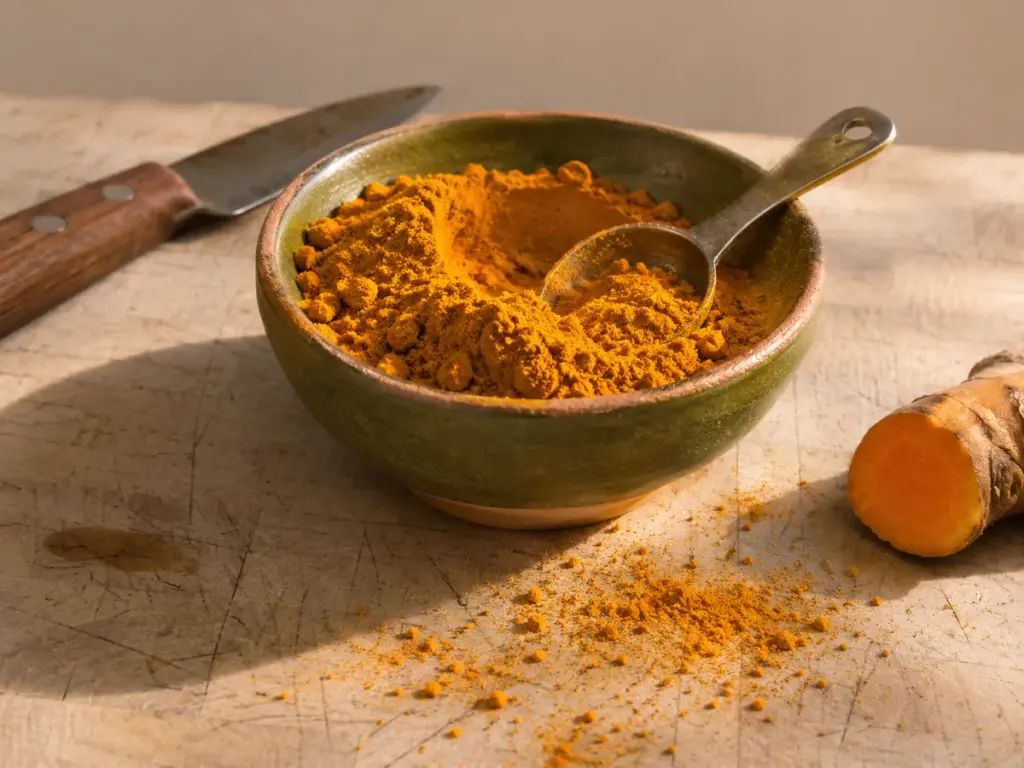
McCormick says turmeric has a similar color and taste to dry mustard but is not as spicy, and it says to use the recipe's measurement for ground mustard: 1 teaspoon of turmeric for 1 teaspoon of dry mustard.
Turmeric fits when the dish needs mustard's yellow color and a mild background flavor more than its heat. Turmeric is a different plant from mustard, so it also suits you if you avoid mustard, as long as the label lists only turmeric.
5. Horseradish Powder
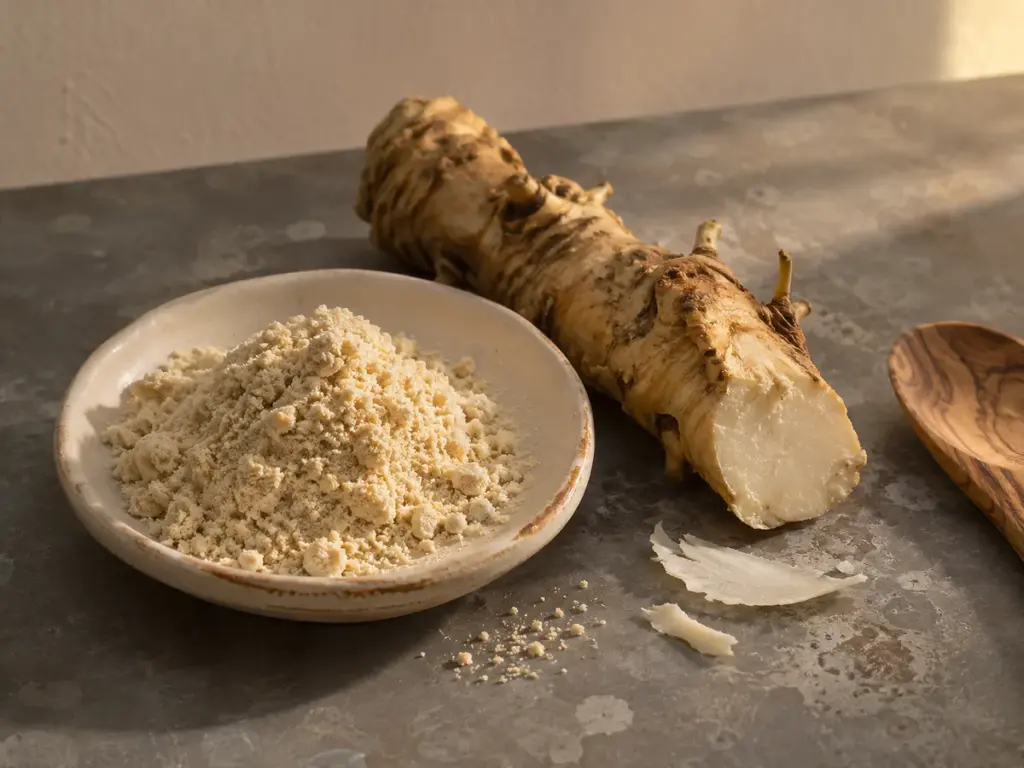
Horseradish belongs to the same plant family as mustard and carries mustard oil among its volatile oils (Wikipedia), so it brings a similar sharp heat. No source gives a ratio for it, so you add a pinch at a time and taste after each one.
Wikipedia notes that horseradish root loses its pungency once exposed to air or heat and turns bitter. It says that about the root, and we'd treat the powder the same way, adding it at the end by stirring it into cold sauces and dressings or sprinkling it in just before you serve.
Jarred horseradish is root mixed with vinegar, and horseradish sauces are less pungent than crushed root, so the jar brings less heat and more liquid than the powder does.
6. Wasabi Powder
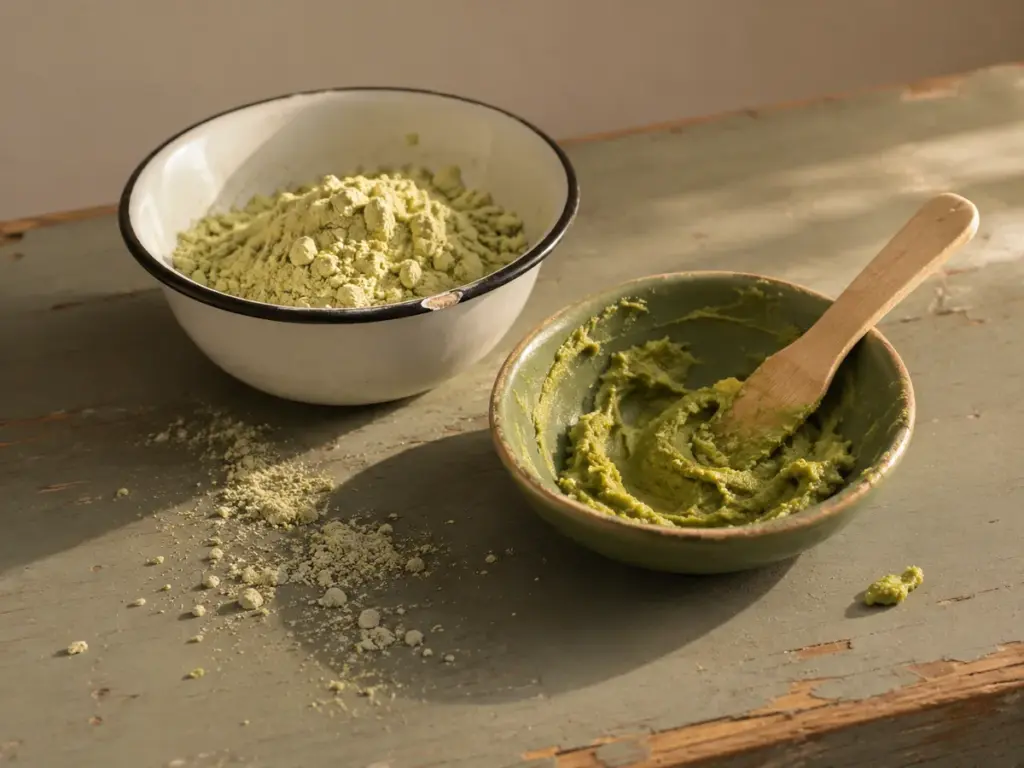
Much of the wasabi powder you can buy is a blend of horseradish, mustard, starch and green food coloring, and some packages list no wasabi plant at all (Wikipedia). It goes in by the pinch, like horseradish powder, since no source gives a ratio for it either.
A blend with mustard in it is still mustard, so if you are swapping because you avoid mustard, the ingredient list tells you whether this one works.
The green coloring can tint a pale dish, so we'd leave it out of a cheese sauce or an egg filling.
How Much Prepared Mustard Equals Your Dry Mustard?
When you need a different amount, the 1 teaspoon to 1 tablespoon ratio from McCormick and NDSU scales like this (calculated from that ratio):
| Dry mustard | Prepared mustard |
|---|---|
| ¼ teaspoon | ¾ teaspoon |
| ½ teaspoon | 1½ teaspoons |
| 1 teaspoon | 1 tablespoon |
| 1 tablespoon | 3 tablespoons |
| 2 tablespoons | 6 tablespoons |
Prepared mustard is made by mixing ground seed with water or an acidic liquid such as wine or vinegar (Wikipedia), so a tablespoon of it carries extra liquid and vinegar that a teaspoon of powder lacks. That liquid may loosen a thin sauce, which is why the dish notes below add it in stages.
Which Swap Works for Which Dish?
For mac and cheese, McCormick suggests stirring ground mustard into macaroni and cheese for extra heat alongside the other mac and cheese spices. Its baked mac and cheese uses 2 tablespoons for 16 ounces of macaroni, 4 cups of milk and 6 cups of Cheddar.
At the ratio above, that becomes 6 tablespoons of Dijon, or ⅜ cup (calculated). That much Dijon brings real liquid, so you may want to add it in stages and hold back some milk if the sauce turns thin.
For deviled eggs, McCormick's smoky deviled eggs recipe uses ½ teaspoon of ground mustard for 6 eggs and ¼ cup of mayonnaise.
At that ratio you need 1½ teaspoons of Dijon or yellow mustard (calculated), and since the filling loosens as the mustard goes in, a little at a time keeps it thick.
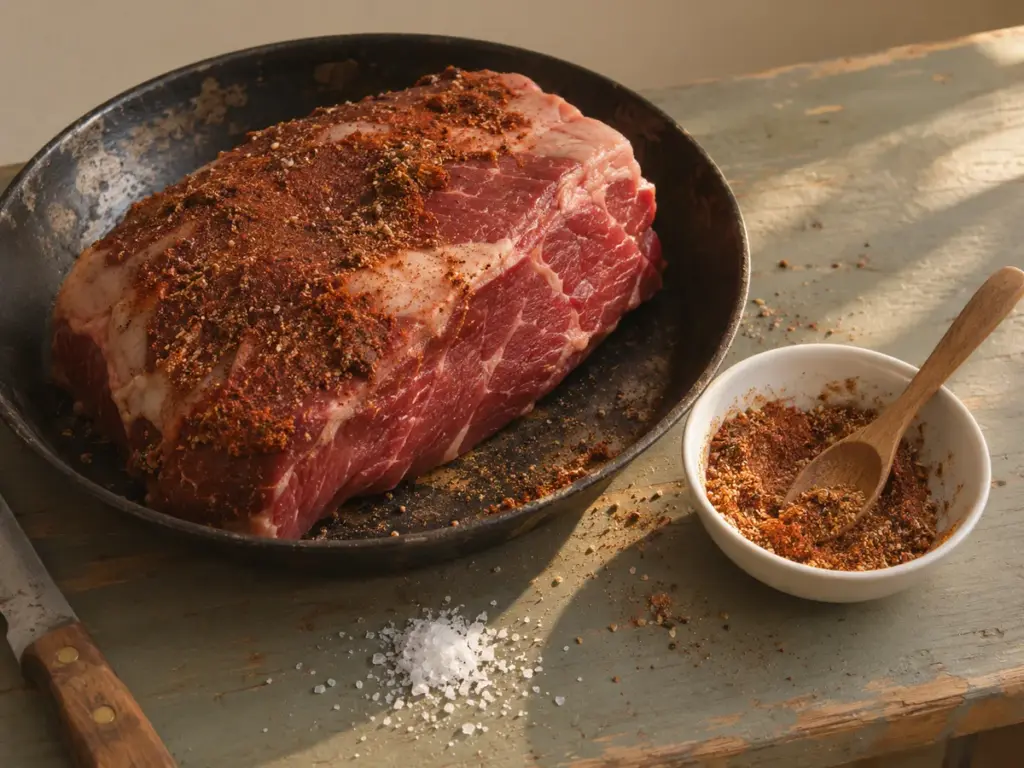
For rubs and roasting, McCormick suggests ground mustard as a dry rub for beef and a seasoning for roasted vegetables.
In a rub you want ground mustard seeds or turmeric, since a spoonful of wet mustard turns a dry rub into a paste.
Can You Use Dry Mustard Instead of Prepared Mustard?
Yes, and McCormick calls ground mustard an excellent substitute in recipes that call for Dijon or whole-grain mustard.
When a recipe lists any prepared mustard, such as squeeze-bottle yellow mustard, the same equivalence works backward, so you can use 1 teaspoon of dry mustard for 1 tablespoon (from that ratio).
Dry mustard turns into a stand-in for prepared mustard once you mix it with water, vinegar or wine to the thickness you want.
In the other direction, McCormick says ground mustard is hotter than whole seed, so when it stands in for whole seeds in a recipe, you start with a pinch and taste as you go. For a sauce or dressing, McCormick prefers prepared whole-grain mustard.
Is Mustard a Major Allergen?
Sources
- McCormick, About Ground Mustard: Uses, Pairings and Substitutes: Dijon as the best substitute, 1 tablespoon per teaspoon, turmeric, taste, uses.
- McCormick, Mustard Seed Uses, Substitutes and Recipes: ground mustard hotter than the seed.
- McCormick, Spice Conversions: 1 teaspoon mustard seeds = 1½ teaspoons ground mustard.
- McCormick, Baked Mac and Cheese and Smoky Deviled Eggs: ground mustard amounts.
- North Dakota State University Extension, Ingredient Substitutions: 1 teaspoon dry mustard = 1 tablespoon prepared mustard or ½ teaspoon mustard seeds.
- Wikipedia, Mustard (condiment), Horseradish and Wasabi: myrosinase, cold water, acid, imitation wasabi.
- National Center for Home Food Preservation, General Information on Pickling and Pickled Corn Relish.
- FDA, Food Allergies; Canadian Food Inspection Agency, Food Allergies and Allergen Labelling.

Food writer at GustoMeadow. Writes ingredient substitutes, food comparisons, taste guides and storage guides for home cooks.
Storage and food-safety numbers follow USDA, FDA and university extension guidance.



