
There's feta, Brie, mozzarella, cheddar, and parmesan cheese that are all common and popular.
Then comes Camembert cheese.
Unlike its well-known counterparts, Camembert is a bit of a mystery wrapped in a riddle.
It's soft but not as gooey as Brie. It's pungent but not as sharp as cheddar.
So what does Camembert cheese taste like?
Camembert cheese does look like any other cheese out there.
But what about its flavor? Does it taste familiar?
Can you use it like you use any other cheese? What's special about this mysterious cheese?
To find out, just read on.
What is Camembert Cheese?
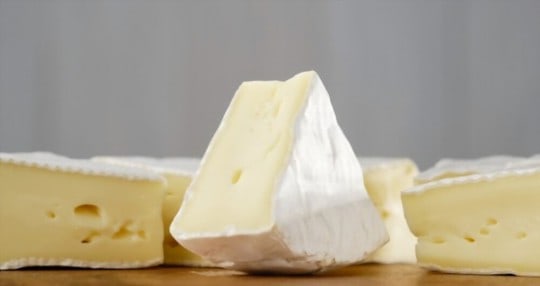
Camembert cheese is a soft, creamy, and moist cheese that originates from the Normandy region of France.
The cheese is made from unpasteurized cow's milk and has a subtle flavor.
It is often sold in small rounds, wrapped in paper or wax, and has an edible white rind.
Camembert cheese has a long and interesting history.
The cheese was first made in the 18th century by a woman named Marie Harel.
Legend has it that a priest from Brie taught Ms. Harel how to make the cheese.
Camembert has a close resemblance to Brie, another French cheese.
Both kinds of cheese are soft, have a white rind, and are made from unpasteurized cow's milk.
However, there are some key differences between the two.
Camembert has a stronger and more earthy flavor than Brie and a more pungent aroma.
Today, Camembert can be made from both pasteurized and raw milk.
Since it doesn't include any artificial preservatives or fillers, the cheese is 100% gluten-free and unadulterated.
However, vegetarians should watch out as it does contain animal rennet.
Pairing suggestions that complement Camembert appear in Camembert side dish ideas for boards.
What Does Camembert Cheese Taste Like?

As different people have different palates, there is no single answer to this question.
Some might say that Camembert cheese has a nutty taste, while others might describe it as being creamy.
Ultimately, it is up to the individual to decide what Camembert cheese tastes like.
Generally, some of the words that people usually use to describe the flavor of Camembert include garlicky, fruity, grassy, mushroomy, nutty, eggy, and milky - for a garlicky comparison, see Boursin as a garlicky comparison.
So, try it out for yourself today and see how you would describe the taste of Camembert cheese.
Aroma-wise, Camembert is not one to joke with.
The smell of a ripened Camembert is one that would easily entice you to take a bite (or two, or three).
Of course, that is, if you like the funky and pungent smell of cheese with notes of mushroom, earth, and cabbage.
Compared to brie cheese, the taste and smell of Camembert are more pronounced.
The flavor of Camembert, overall, is more intense and earthier than the latter too.
White rind on the cheese, most cheese connoisseurs will suggest you eat it.
The rind usually has a tartiness to itself that balances out the creaminess of the cheese.
However, if you're not a fan of mold, you can always cut it off.
As you may already know, cheese, in general, has a wide range of health benefits.
And camembert is no exception.
As far as nutritional value goes, Camembert is a good source of protein, calcium, and phosphorus.
Plus, it also offers a good range of vitamins A, B, E, and K1.
How to Cook and Use Camembert Cheese?
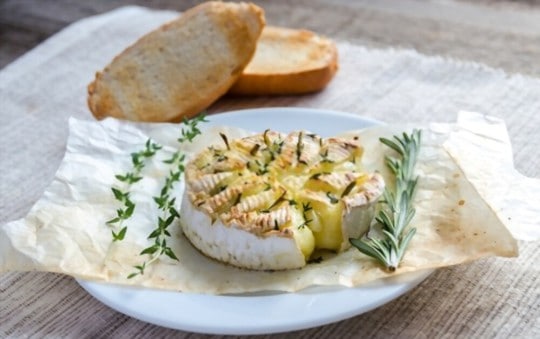
Now that you know what Camembert cheese tastes like, it's time to learn how to cook with it.
Firstly, you can definitely eat this cheese on its own.
Just take it out of the fridge about 30 minutes to an hour before you plan on eating it.
This will allow the cheese to come up to room temperature and reach its full flavor potential.
If you're feeling a little fancy, you can also bake your Camembert cheese.
Simply preheat your oven to 350° F and place the Camembert cheese in an oven-safe dish.
Bake for about 10 to 15 minutes, or until the cheese is oozy and gooey.
Serve with some crusty bread on the side, and enjoy - or add quick vegetables from 22 veggie sides under 12 minutes for a speedy accompaniment.
Here are some more fancy ways to use camembert cheese:
- Include it in a savory tart or quiche.
- Make a grilled cheese sandwich with it.
- Add it to your mac and cheese for an extra cheesy flavor.
- Use it as a pizza topping.
- Stuff some roasted chicken breasts with it.
Final Thought
If you're a fan of cheeses in general, there's a high chance you'll enjoy Camembert cheese.
With its creamy flavor, this French cheese is perfect for those who love strong-tasting cheeses.
And, it can be used in a variety of dishes too.
If it's your first time trying Camembert cheese, we suggest you eat it on its own first to get a feel for the taste.
Once familiar with the flavor, you can start cooking with it.
Trust us; Camembert cheese will definitely take your dishes up a notch.
Frequently Asked Questions
It's pungent but not as sharp as cheddar. So what does Camembert cheese taste like?
But what about its flavor? Try it in a few different preparations to find which version you prefer.
What pairs well with Camembert Cheese?
Camembert Cheese pairs well with ingredients that complement its natural flavor.
Try it alongside contrasting textures and seasonings to find combinations you enjoy.
Yes, noticeably. Fresh versions tend to have a brighter, more pronounced flavor.
Older or improperly stored versions can taste muted, sour, or slightly off - freshness matters here.
Start with a preparation that shows its natural flavor without overwhelming additions. Simple seasoning and a familiar context - alongside something they already enjoy - eases the introduction.
Explore complementary textures and mild cheeses in ricotta taste guide explained. For a different rich profile, see Dubliner flavor tasting notes.