Weeknights fill up fast, so having a small stash of make-ahead meals changes everything. We pick recipes that need one focused prep session and then store or freeze without losing flavor.
That approach keeps evenings relaxed and makes feeding the family less of a scramble.
This collection includes hearty grain bowls, slow-simmered sauces, sheet-pan dinners, lunch-ready salads, and soups that freeze beautifully. Each recipe notes how long it keeps, the best reheating method, and simple swaps for ingredients we already have.
We aimed for a mix of comforting dishes and brighter, veggie-forward options.
Most recipes double easily so we can batch-cook on a weekend and grab meals all week. Minimal cleanup and quick side suggestions mean dinner comes together fast with little planning.
We end up with tastier leftovers and fewer evenings spent staring at the fridge.
1. Spicy Tofu Kimchi Stir-Fry with Bright Flavor
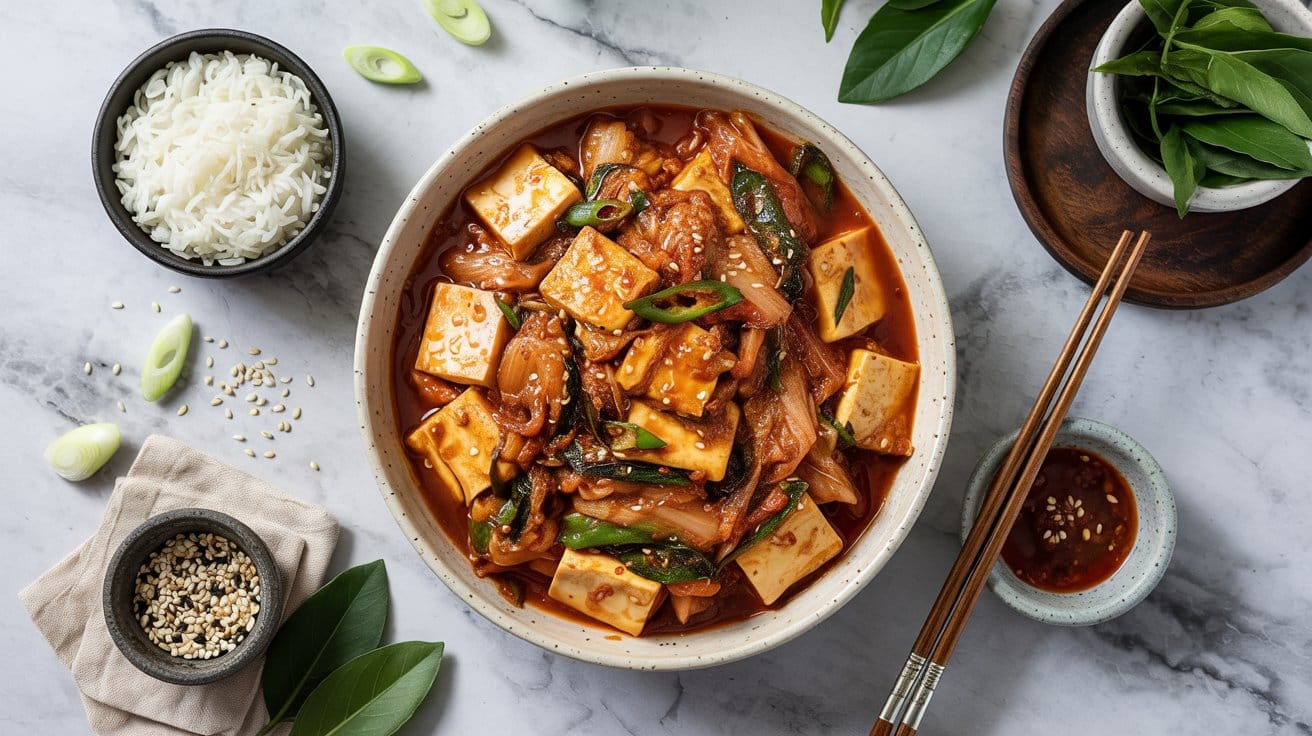
This bright, spicy stir-fry pairs crisp-seared tofu with tangy, well-fermented kimchi for a fast weeknight meal - try restaurant-style vegan pasta ideas when pasta feels right for a quick dinner.
Why This Recipe Works
It balances bold kimchi acidity with crunchy, golden tofu for great texture. The one-pan method keeps cooking time short and cleanup minimal.
- Tangy aged kimchi - The fermented kimchi brings pronounced sourness and spice that drives the dish's character.
- Crispy seared tofu - Pan-frying creates a firm exterior that holds up to the saucy kimchi without falling apart.
- Gochujang-spiked sauce - A bit of gochujang adds depth and a rounded chili-sweetness that goes with the kimchi.
- Finishing sesame and scallions - Fresh scallions and toasted sesame seeds add brightness and a nutty crunch at the end.
Ingredient Swap Ideas
Use these to adjust spice level or ingredients you already have - or adapt flavors from tuna salad ideas for bread-free meals for protein-forward, no-bread options.
- Firm tofu - Swap with tempeh for a nuttier texture and similar protein content.
- Kimchi - Swap with sauerkraut plus ½ teaspoon gochugaru for tang and mild heat if kimchi is unavailable.
- Gochujang - Swap with 1 teaspoon sambal oelek plus 1 teaspoon honey to mimic heat and sweetness.
- Soy sauce - Swap with tamari or coconut aminos for a gluten-free option that keeps umami.
Ingredients
- 14 oz firm tofu - drained and pressed.
- 1 cup kimchi - chopped, with juice reserved.
- 1 tablespoon gochujang - Korean chili paste.
- 1 tablespoon soy sauce - or tamari.
- 1 tablespoon sesame oil - divided.
- 1 tablespoon vegetable oil - for frying.
- 2 cloves garlic - minced.
- 1 small onion - thinly sliced.
- 2 scallions - sliced.
- 1 teaspoon sugar - balances acidity.
- 1 teaspoon sesame seeds - toasted.
- 2 cups cooked short-grain rice - warm for serving.
Instructions
- Press the tofu 15 minutes, then cut into ½-inch cubes and pat dry with paper towels.
- Heat vegetable oil in a large skillet over medium-high heat and fry tofu until golden on all sides, about 8-10 minutes; transfer to a plate.
- Reduce heat to medium and add half the sesame oil, garlic, and onion; sauté 2-3 minutes until softened.
- Add chopped kimchi and its reserved juice, then stir in gochujang, soy sauce, and sugar; cook 2-3 minutes until sauce is glossy.
- Return tofu to the pan, toss to coat, simmer 1-2 minutes, then finish with remaining sesame oil, scallions, and sesame seeds; serve over warm rice.
2. Gochujang Glazed Eggplant with Sticky Heat
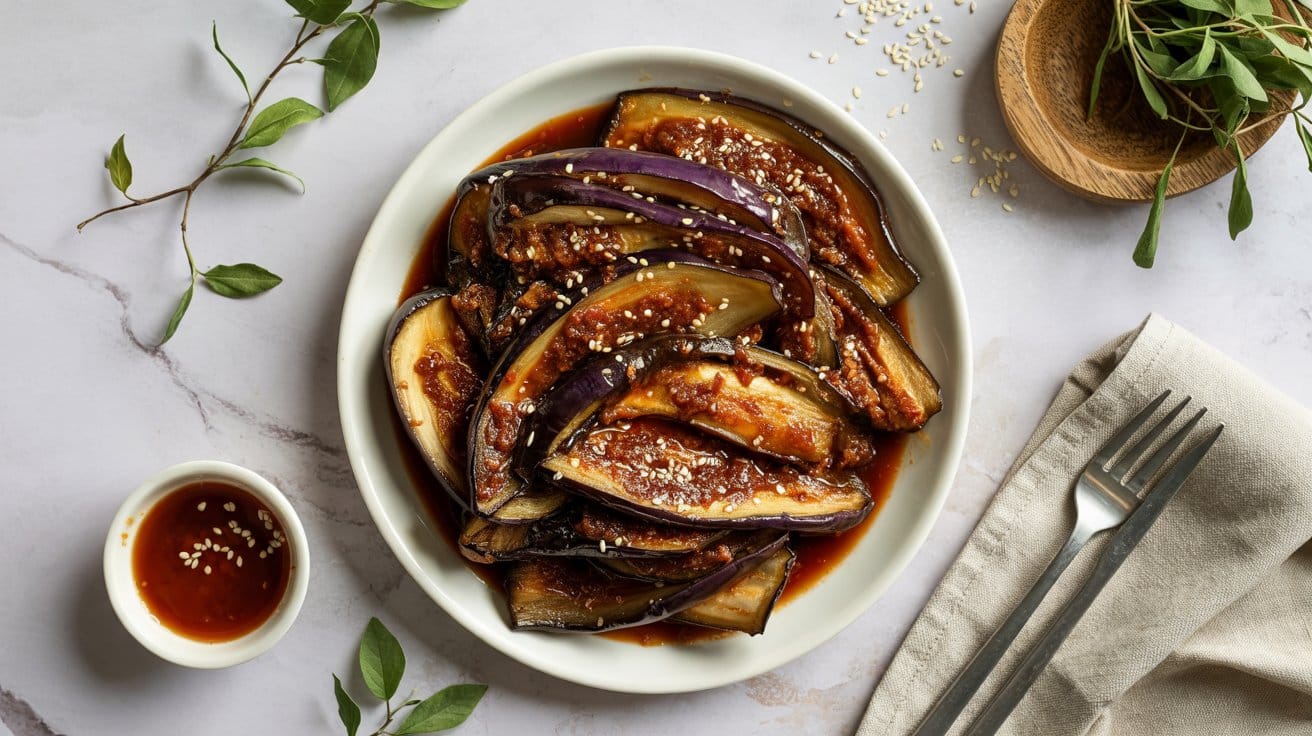
You can make it in one skillet for a quick weeknight main or serve it as a shareable side - pair with vegan skewer appetizers with glaze for more sticky, shareable bites.
The contrast of silky interior and charred edges pairs well with rice or simple greens.
Why This Recipe Works
You get bold, layered heat without overpowering the eggplant. The method is quick and forgiving for busy cooks.
- Glossy gochujang glaze - The sauce reduces to a sticky coating that clings to the eggplant and balances sweet and spicy notes.
- Charred, tender eggplant - High heat creates crisp edges while the flesh becomes silky and absorbing.
- Skillet-first method - Pan-roasting concentrates flavor and keeps the texture consistent across pieces.
- Garnish-forward finish - Sesame oil, scallions, and toasted seeds add aroma and a fresh contrast to the glaze.
Ingredient Swap Ideas
Swaps help you adapt the recipe to what you have or dietary needs without changing the method.
- Eggplant - Use 1 large globe eggplant in place of Japanese eggplants; it yields meatier slices but may need a bit more cooking time.
- Gochujang - Replace with 2 tablespoons miso plus 1 tablespoon chili paste and 1 tablespoon honey for a similar savory-heat profile.
- Soy sauce - Swap with tamari or coconut aminos for a gluten-free option while keeping the savory depth.
- Brown sugar - Use 2 tablespoons maple syrup or honey to keep the glaze sticky and sweet for a vegan or natural-sweetener alternative.
Ingredients
- 2 medium Japanese eggplants (about 1 ¼ lb) - cut into 1-inch pieces.
- 1 tablespoon kosher salt - for drawing out moisture.
- 3 tablespoons vegetable oil - divided.
- 3 tablespoons gochujang - Korean red chili paste.
- 2 tablespoons soy sauce - or tamari for gluten-free.
- 2 tablespoons rice vinegar - for brightness.
- 1 ½ tablespoons brown sugar - packed.
- 2 cloves garlic - minced.
- 1 teaspoon fresh ginger - grated.
- 1 teaspoon cornstarch - mixed with 1 tablespoon water.
- 1 teaspoon sesame oil - for finishing.
- 2 scallions - thinly sliced for garnish.
- 1 tablespoon sesame seeds - toasted for garnish.
- Cooked rice or noodles - for serving.
Instructions
- Salt the eggplant pieces and rest 15 minutes, then rinse and pat dry with paper towels.
- Heat 2 tablespoons oil in a large skillet over medium-high heat and add the eggplant in a single layer; cook 8-10 minutes, turning occasionally, until browned and tender.
- Whisk gochujang, soy sauce, rice vinegar, brown sugar, garlic, and ginger in a small bowl.
- Push eggplant to the side, add remaining 1 tablespoon oil if needed, pour the sauce into the pan, and stir to coat the eggplant.
- Stir in the cornstarch slurry and simmer 2-3 minutes until the glaze thickens to a sticky shine; finish with sesame oil and transfer to a serving dish.
- Sprinkle with scallions and toasted sesame seeds, and serve with rice or noodles.
3. Vegan Korean Bibimbap with Colorful Vegetables
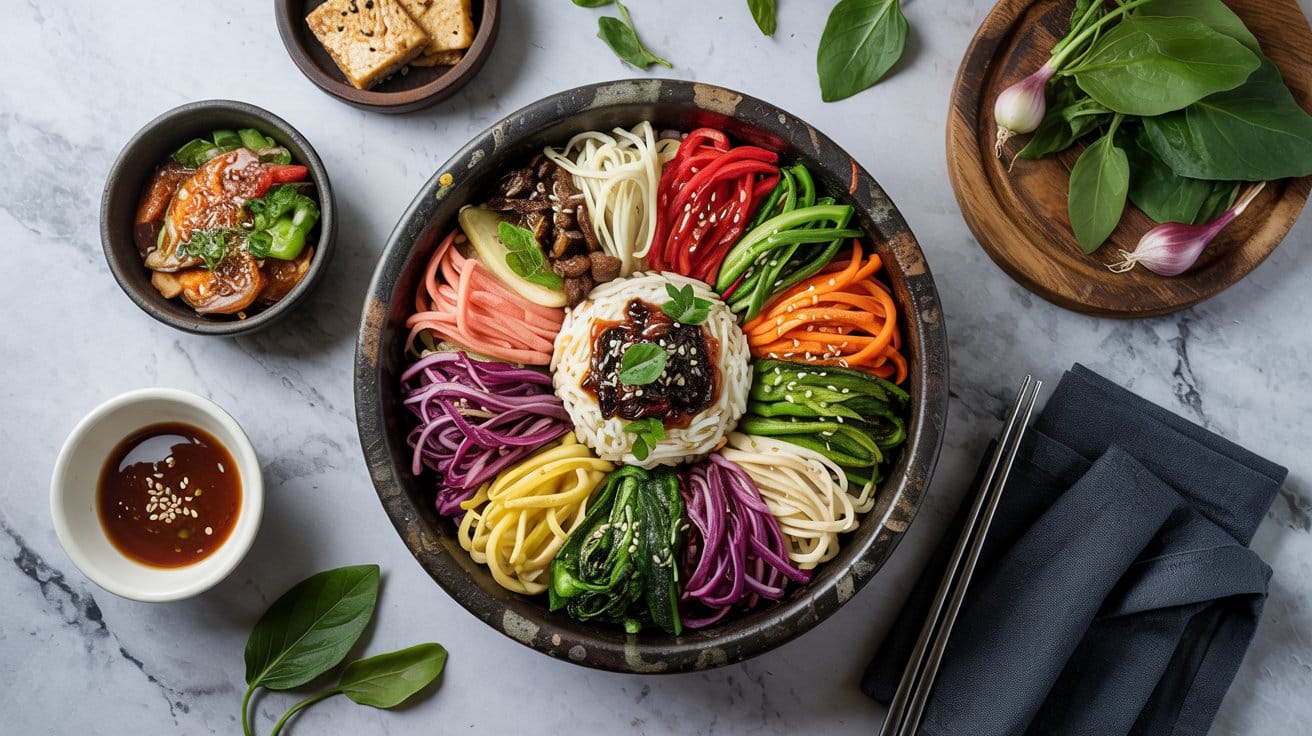
It's bright, filling, and great for weeknights or as a make-ahead option for lunches - also try bold zesty vegan wrap recipes for portable, flavor-packed lunches.
Why This Recipe Works
This bowl balances textures and bold flavors for a lively, nourishing meal. The components are simple to prep and assemble so you can serve a colorful plate quickly.
- Heat-and-sweet gochujang sauce - A single sauce ties the bowl together with spicy, sweet, and savory notes that complement each vegetable.
- Sturdy pan-fried tofu - Crispy outside and tender inside, the tofu provides hearty plant protein that holds up during mixing.
- Colorful, quick-cooked vegetables - Carrots, zucchini, mushrooms, spinach, and sprouts each keep a distinct texture and flavor when cooked briefly.
- Hands-on assembly - You control proportions and spice by arranging components in the bowl and drizzling sauce to taste.
Ingredient Swap Ideas
Simple swaps let you tailor the bowl to pantry contents or dietary needs while keeping the same method and flavor.
- Extra-firm tofu - Swap with tempeh for a firmer, nuttier texture that browns well in a skillet.
- Short-grain white rice - Swap with cooked brown rice or short-grain barley for more fiber; increase cooking time or use pre-cooked grains.
- Gochujang - Swap with a mix of chili paste, miso, and a touch of maple syrup for a similar sweet-spicy-savory balance.
- Spinach - Swap with baby bok choy or kale for a heartier green that needs a slightly longer sauté.
Ingredients
- 2 cups short-grain white rice - rinsed.
- 3 cups water - for cooking rice.
- 14 oz extra-firm tofu - pressed and cut into ½-inch cubes.
- 2 tablespoons neutral oil - for frying.
- 1 medium zucchini - julienned.
- 2 medium carrots - julienned.
- 4 oz shiitake mushrooms - sliced.
- 5 oz fresh spinach - blanched and squeezed.
- 1 cup bean sprouts - rinsed.
- 4 scallions - thinly sliced.
- 3 tablespoons gochujang - Korean red pepper paste.
- 2 tablespoons tamari or soy sauce - for seasoning.
- 1 tablespoon toasted sesame oil - for finishing.
- 1 tablespoon maple syrup - for sauce sweetness.
- 1 tablespoon rice vinegar - for sauce balance.
- 1 clove garlic - minced.
- 1 teaspoon toasted sesame seeds - for garnish.
- Salt - to taste.
Instructions
- Cook the rice with 3 cups water on the stove or in a rice cooker until tender, about 18 minutes simmering then 10 minutes resting off heat.
- Whisk gochujang, tamari, maple syrup, rice vinegar, sesame oil, garlic, and 1-2 tablespoons water until smooth and set aside.
- Heat 1 tablespoon oil in a skillet over medium-high and pan-fry tofu until golden on all sides, about 6-8 minutes; season lightly with salt and transfer to a plate.
- In the same skillet, add the remaining oil and sauté mushrooms until soft, about 4 minutes, then stir-fry carrots and zucchini separately until just tender, 2-3 minutes each.
- Quickly blanch spinach in boiling water for 30 seconds and drain, and toss bean sprouts in the hot skillet for 1-2 minutes with a splash of tamari.
- Divide rice among bowls, arrange tofu and vegetables on top, drizzle sauce and a little extra sesame oil, then sprinkle scallions and sesame seeds before serving.
4. Tofu Katsu Don with Rice for Comfort Food
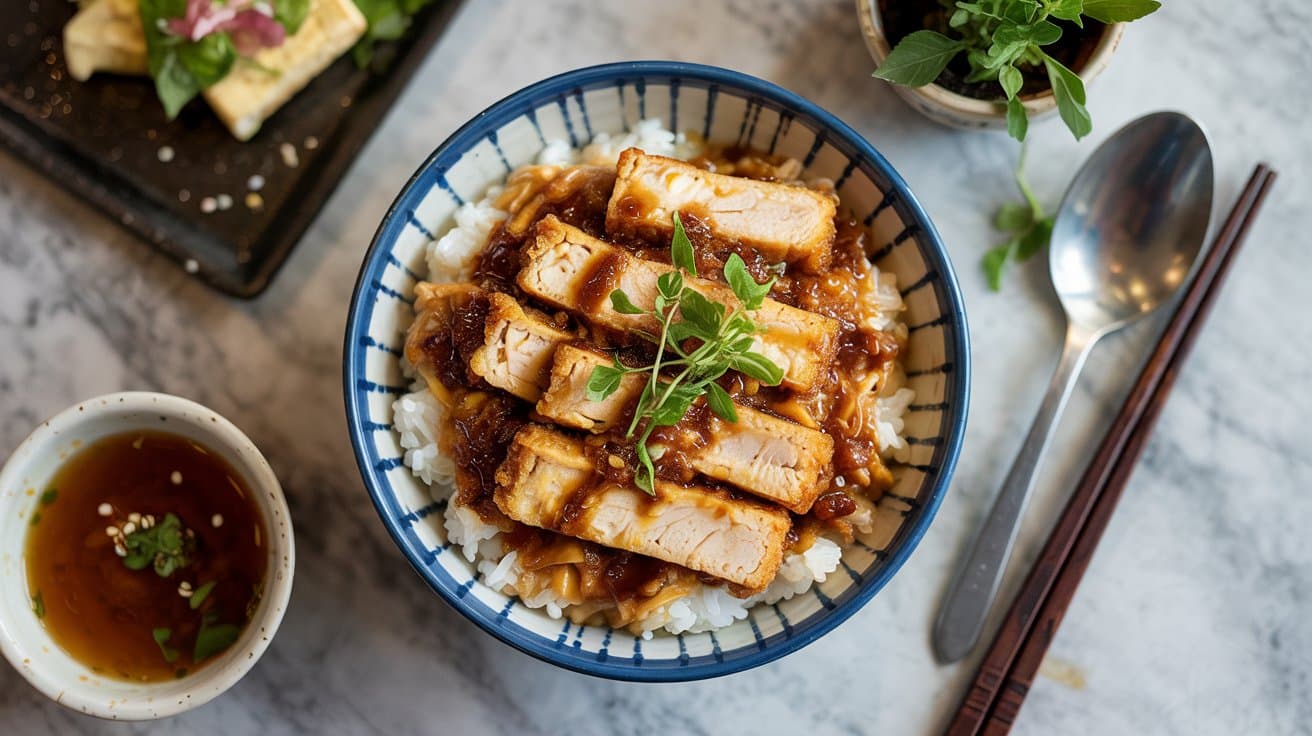
This crispy tofu cutlet dish pairs crunchy panko-coated tofu with a savory-sweet simmer sauce and a lightly cooked egg topping. It's comforting, balanced, and comes together quickly on weeknights or for an easy weekend meal.
Why This Recipe Works
This recipe delivers crisp texture alongside a warm, savory sauce. You finish everything in one pan for focused flavor and minimal cleanup.
- Panko-crisped tofu cutlets - The airy panko browns fast to give a crunchy shell that contrasts with soft rice.
- Dashi-based simmer - A broth-based sauce of dashi (or vegetable stock), soy, and mirin creates deep umami that soaks into the tofu.
- Silky egg pour - Lightly beaten eggs poured over the simmering sauce form a tender, custard-like layer that ties the bowl together.
- One-skillet finish - You fry the cutlets and finish them in the same pan, keeping flavor concentrated and cleanup simple.
Ingredient Swap Ideas
Swaps let you adapt for diet or pantry while keeping the same textures and flavors. Use the options below to adjust protein, gluten, or pantry limits.
- Firm tofu - Swap with tempeh slices for a nuttier, firmer texture that holds up to frying.
- Panko breadcrumbs - Use crushed gluten-free crackers or cornflakes for a gluten-free crunchy coating.
- Dashi or vegetable broth - Substitute mushroom broth for extra umami if you want a meat-free depth.
- Eggs (for finishing) - Use a blended silken tofu mixed with 1 teaspoon cornstarch per egg replaced to mimic a set, creamy finish for a vegan version.
Ingredients
- 14 oz firm tofu (1 block) - pressed and sliced into 4 cutlets.
- ½ cup all-purpose flour - for dredging.
- 2 large eggs - beaten for coating.
- 1 cup panko breadcrumbs - for coating.
- 2 tablespoons vegetable oil - for shallow frying.
- 3 cups cooked short-grain rice - hot, for serving.
- 1 medium yellow onion - thinly sliced.
- 1 cup dashi or low-sodium vegetable broth - for the simmer sauce.
- 3 tablespoons soy sauce - for the sauce.
- 2 tablespoons mirin - for the sauce.
- 1 tablespoon granulated sugar - for the sauce.
- 2 large eggs - lightly beaten for finishing.
- 2 green onions - thinly sliced for garnish.
Instructions
- Press the tofu for 15 minutes, then slice each block into 4 cutlets about ½ inch thick.
- Set up three shallow bowls with flour, the 2 beaten eggs, and panko, then dredge each cutlet in flour, dip in egg, and press into panko to coat.
- Heat the oil in a large skillet over medium heat and fry the cutlets until golden brown, about 3-4 minutes per side, then transfer to a plate.
- Add the sliced onion, broth, soy sauce, mirin, and sugar to the same skillet and simmer 3-4 minutes until the onion is soft.
- Nest the fried cutlets into the simmering sauce, pour the 2 lightly beaten eggs evenly over them, cover, and cook 1-2 minutes until the eggs are just set.
- Serve each cutlet over hot rice and scatter green onions on top.
5. Korean Vegan BBQ Cauliflower Wings Crispy
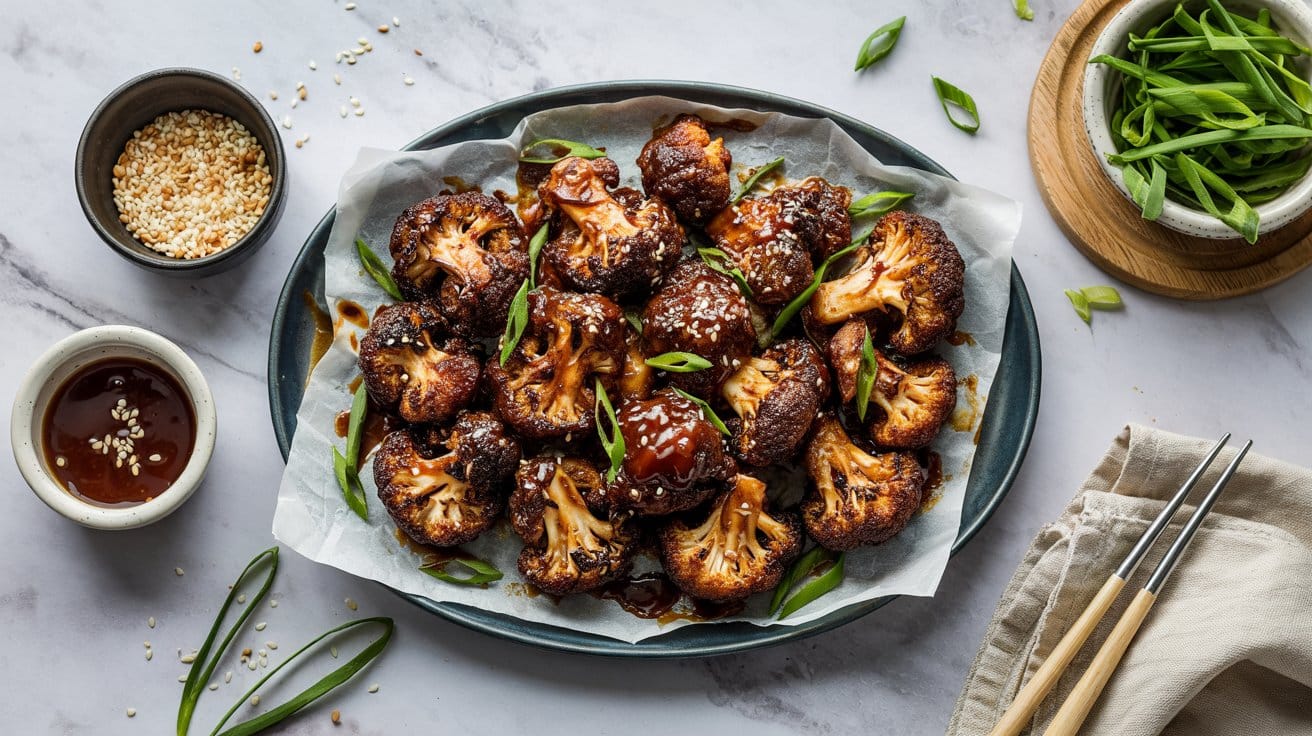
These crispy, saucy cauliflower "wings" combine smoky-sweet Korean-style glaze with a crunchy baked coating. You can make them for game day, a casual dinner, or as a shareable party snack.
The texture holds up well after saucing, and the flavor works with simple sides like steamed rice or a crisp salad - consider chef-level vegan plating recipes when plating these as a showy appetizer.
Why This Recipe Works
These cauliflower wings deliver a satisfying crunch and bold, savory-sweet sauce that clings to each floret. The baking method keeps them lighter than frying while still producing crisp edges.
- Sticky umami glaze - A gochujang-forward sauce balances heat, salt, and sweetness so each piece tastes layered and bold.
- Double-texture method - A batter-plus-panko approach gives a crisp exterior and tender interior for a wing-like bite.
- Oven crisping at high heat - Roasting at 425°F creates caramelized edges without deep frying.
- Sauce-set finish - Returning sauced florets to the oven briefly sets the glaze so it won't slide off when served.
Ingredient Swap Ideas
Swaps let you adjust heat, gluten status, or pantry limits without changing the overall method.
- Gochujang - Use 2 tablespoons miso plus 1 tablespoon sriracha for similar umami and heat if you don't have gochujang.
- All-purpose flour - Substitute ¾ cup gluten-free 1:1 flour mix to keep the batter gluten-free while maintaining structure.
- Panko breadcrumbs - Use 1 cup crushed cornflakes for a crisp, gluten-free coating alternative.
- Soy sauce - Swap with tamari or coconut aminos to reduce wheat or lower sodium while preserving salty depth.
Ingredients
- 1 head cauliflower (about 1.5-2 lb) - cut into bite-sized florets.
- ¾ cup all-purpose flour - for the batter.
- ¼ cup cornstarch - adds extra crispness.
- 1 teaspoon baking powder - helps the batter puff.
- 1 teaspoon salt - divided as needed.
- ½ teaspoon black pepper - ground.
- ¾ cup unsweetened plant milk - for the batter.
- 1 cup panko breadcrumbs - for coating.
- 2 tablespoon neutral oil - for brushing the florets before baking.
- 3 tablespoon gochujang - Korean red chili paste for the sauce.
- 3 tablespoon maple syrup - sweetener for the sauce.
- 2 tablespoon soy sauce - or tamari.
- 1 tablespoon rice vinegar - brightens the sauce.
- 1 teaspoon sesame oil - adds toasted flavor.
- 2 cloves garlic - minced for the sauce.
- 2 tablespoon water - to thin the sauce if needed.
- 1 tablespoon sesame seeds - toasted, for garnish.
- 2 scallions - thinly sliced, for garnish.
Instructions
- Preheat the oven to 425°F and line a rimmed baking sheet with parchment paper or a silicone mat.
- Whisk flour, cornstarch, baking powder, ¾ teaspoon salt, black pepper, and plant milk into a thick batter; toss cauliflower florets in the batter to coat evenly.
- Press battered florets into panko, place them on the prepared sheet, brush lightly with oil, and bake 20-25 minutes, flipping once, until golden and crisp at the edges.
- Whisk gochujang, maple syrup, soy sauce, rice vinegar, sesame oil, garlic, and 2 tablespoons water in a small saucepan; simmer 2-3 minutes until glossy and slightly thickened.
- Transfer baked florets to a large bowl, pour the sauce over them, toss to coat, then spread them back on the sheet and bake 5-7 minutes more to set the glaze.
- Sprinkle with sesame seeds and sliced scallions, then serve hot with rice or a simple dipping sauce.
6. Sesame Soy Cucumber Salad Refreshingly Light
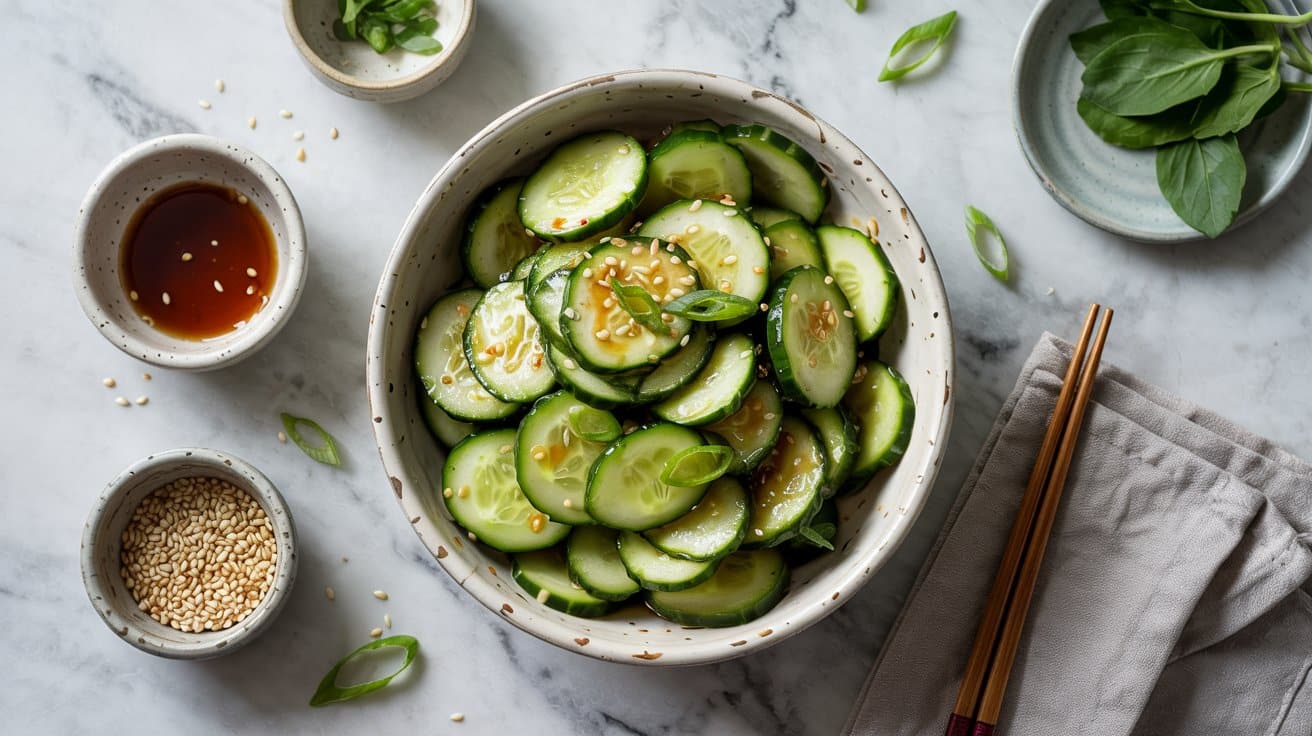
It takes minutes to toss together and is best served chilled or at room temperature - see crisp cucumber salad recipes for more cooling side options.
Why This Recipe Works
These two sentences explain why the dish is enjoyable and practical.
- Rapid flavor soak - The simple dressing penetrates the cucumber quickly so you get big flavor with little time.
- Nutty sesame finish - Toasted sesame oil and seeds add a warm, aromatic note that goes with the soy.
- Crunch retained - A brief salting and rest softens cucumbers slightly while keeping a satisfying bite.
- Flexible serving options - You can serve it cold as a side or at room temperature with grilled proteins or bowls.
Ingredient Swap Ideas
Swaps help you adjust for allergies, pantry contents, or personal taste without changing the method.
- Soy sauce - Use tamari or coconut aminos for a gluten-free alternative that keeps the savory base.
- Toasted sesame oil - Substitute with regular sesame oil or a mild olive oil for less intense nutty flavor.
- Rice vinegar - Swap with apple cider vinegar for a slightly fruitier acidity that still brightens the salad.
- Toasted sesame seeds - Use crushed roasted peanuts for crunch and a similar nutty note if seeds are unavailable.
Ingredients
- 2 large English cucumbers - thinly sliced.
- 2 tablespoons soy sauce - low-sodium recommended.
- 1 tablespoon rice vinegar - unseasoned.
- 1 tablespoon toasted sesame oil - for nutty aroma.
- 1 teaspoon granulated sugar - balances acidity.
- 1 clove garlic - minced.
- 2 teaspoons toasted sesame seeds - plus a pinch extra for garnish.
- 2 scallions - thinly sliced.
- ⅛ teaspoon red pepper flakes - for a touch of heat.
Instructions
- Slice the cucumbers thinly and place them in a colander or large bowl so they can release excess water.
- Sprinkle ½ teaspoon salt over the cucumbers, let sit 10 minutes, then pat dry with paper towels.
- Whisk soy sauce, rice vinegar, toasted sesame oil, sugar, and minced garlic in a small bowl until the sugar dissolves.
- Toss the cucumbers with the dressing and let them sit 5-10 minutes to absorb flavor.
- Scatter toasted sesame seeds and sliced scallions over the salad and serve chilled or at room temperature.
7. Spicy Korean Rice Cakes (Tteokbokki) Street Food
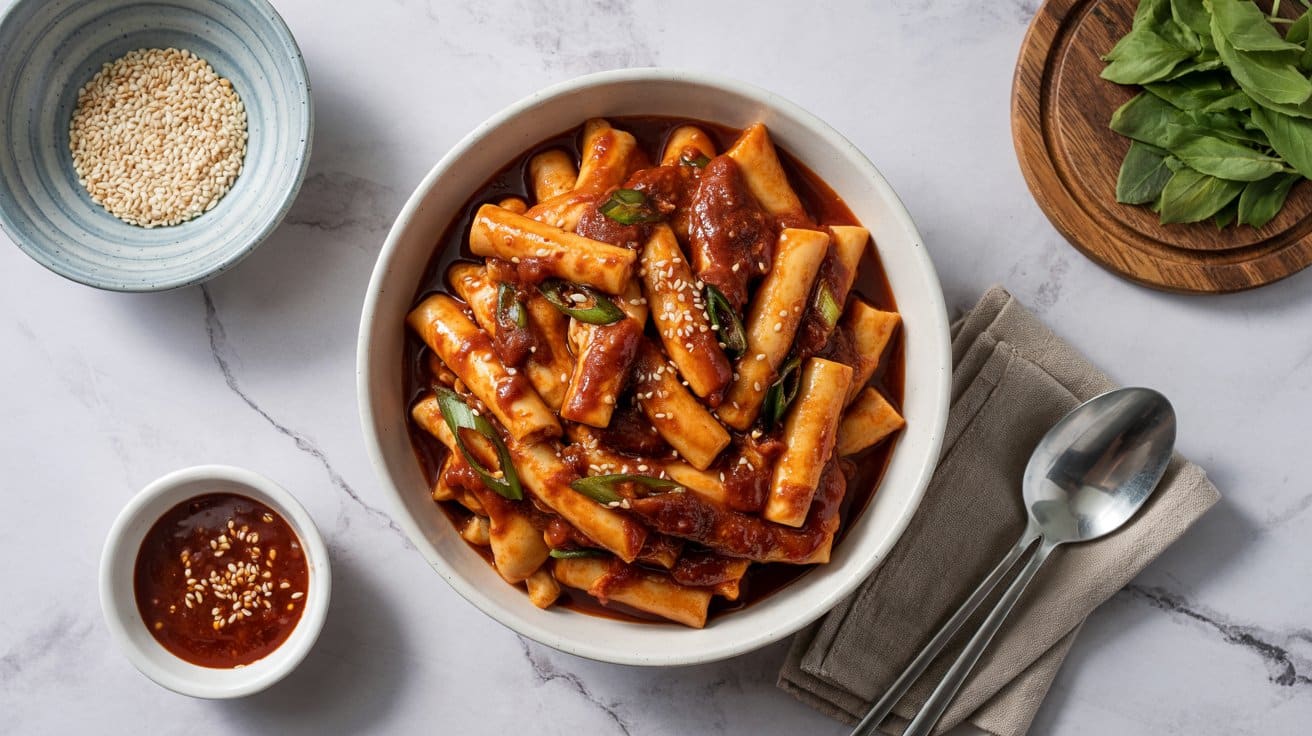
Spicy, chewy rice cakes simmered in a sticky sweet-and-spicy chili sauce make a quick, satisfying street-food style meal. This dish shines when served hot as a snack, light dinner, or shared plate at casual gatherings.
Why This Recipe Works
These short steps keep the rice cakes tender while building a glossy, balanced sauce. It cooks mostly in one pan so timing stays simple.
- Chewy rice cake texture - The rice cakes soften to a bouncy, satisfying chew that contrasts with the sauce.
- Sweet-and-spicy glaze - Gochujang plus sugar browns slightly to create a sticky coating that clings to each piece.
- Simple simmer method - Cooking rice cakes directly in the sauce ensures even heating and avoids a separate boiling step.
- Quick stovetop finish - The whole dish is ready in about 20 minutes, making it great for weeknights or casual entertaining.
Ingredient Swap Ideas
Swaps help adapt the recipe for dietary needs or pantry limits while keeping the same method and flavor.
- Rice cakes - Use sliced mochi or thick udon for a similar chew if rice cakes are unavailable.
- Fish cakes - Replace with firm tofu or king oyster mushrooms for a vegetarian option that soaks up the sauce.
- Sugar - Swap with corn syrup or honey to keep the sauce glossy and sweet.
- Water/anchovy stock - Use low-sodium chicken or vegetable broth for extra savory depth without changing technique.
Ingredients
- 1 lb Korean rice cakes - soaked or thawed if frozen.
- 2 cups water - or anchovy stock for deeper flavor.
- 3 tablespoon gochujang - Korean red pepper paste.
- 2 tablespoon sugar - to balance heat.
- 1 tablespoon soy sauce - low-sodium if preferred.
- 2 cloves garlic - minced.
- 4 oz fish cakes - sliced into bite-sized pieces.
- 2 green onions - sliced on the diagonal.
- 1 teaspoon sesame oil - for finishing.
- 1 teaspoon toasted sesame seeds - for garnish.
Instructions
- Soak the rice cakes in warm water for 10 minutes if they are refrigerated or firm, then drain.
- Whisk water, gochujang, sugar, soy sauce, and minced garlic in a wide skillet and bring to a gentle simmer over medium heat.
- Add the rice cakes and fish cakes, then simmer uncovered 8-12 minutes, stirring occasionally until the rice cakes are tender and the sauce has thickened to a glossy coating.
- Stir in sesame oil and most of the green onions, then simmer 1 minute to meld flavors.
- Transfer to a serving plate, scatter sesame seeds and remaining green onions on top, and serve hot.
8. Korean Spiced Lentil Soup for Healthy Comfort
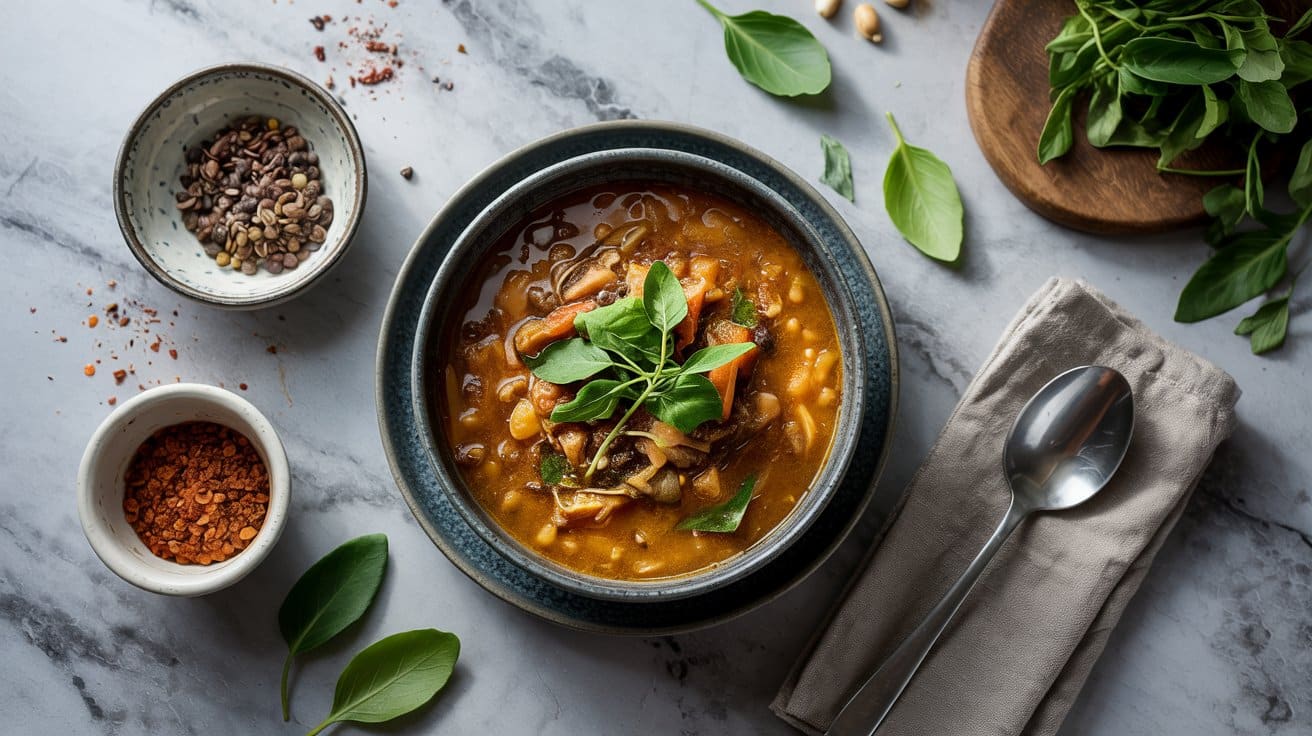
It finishes with sesame and scallions for a clean, savory note and works well for lunches or light dinners - pair the bowl style with Vietnamese-inspired vegan soup bowls for noodle-forward comfort.
Why This Recipe Works
These flavors and textures give you comfort without heaviness. The method keeps the soup quick and forgiving on busy nights.
- Creamy red-lentil body - Red lentils break down for a silky texture that feels indulgent while staying healthy.
- Layered Korean spice - Gochujang and gochugaru provide sweet heat and depth without overwhelming the lentils.
- Aromatic base - Onion, garlic, and ginger build savory complexity that carries through the soup.
- Finish with sesame and scallion - A small amount of sesame oil and fresh scallions brighten each bowl and add classic Korean notes.
Ingredient Swap Ideas
Swaps help you tailor the soup to what you have or dietary needs. Use these to keep the flavor while changing texture or heat.
- Red lentils - Use brown lentils for firmer texture and a nuttier bite, adjusting simmer time to 25-30 minutes.
- Gochujang - Swap for 1 tablespoon tomato paste plus ½ teaspoon chili flakes for color and mild heat if you lack the paste.
- Vegetable broth - Use chicken broth for a richer, nonvegetarian base that goes with the spices.
- Soy sauce - Replace with tamari for a gluten-free option without changing saltiness.
Ingredients
- 1 cup red lentils - rinsed and drained.
- 1 tablespoon neutral oil - vegetable or canola oil for sautéing.
- 1 medium yellow onion - finely chopped.
- 2 medium carrots - diced.
- 3 cloves garlic - minced.
- 1 tablespoon fresh ginger - grated.
- 1 tablespoon gochujang - Korean chili paste.
- 1 teaspoon gochugaru - Korean chili flakes.
- 4 cups vegetable broth - low-sodium preferred.
- 2 cups water - to adjust consistency if needed.
- 1 tablespoon soy sauce - or tamari for gluten-free.
- 1 teaspoon sesame oil - for finishing.
- 2 scallions - thinly sliced.
- ½ teaspoon salt - adjust to taste.
- ¼ teaspoon black pepper - freshly ground.
Instructions
- Heat the oil in a large pot over medium heat and sauté the onion and carrots until softened, about 6-8 minutes.
- Add the garlic and ginger and cook 1 minute until fragrant, then stir in the gochujang and gochugaru and cook 30 seconds to bloom the spices.
- Add the lentils, vegetable broth, water, and soy sauce and bring to a boil; reduce to a simmer and cook uncovered until lentils are tender and starting to break down, about 18-22 minutes.
- Use an immersion blender to pulse the soup until slightly creamy while leaving some texture, then stir in sesame oil, salt, and pepper and taste for seasoning.
- Serve hot topped with sliced scallions and a squeeze of lime or a splash of rice vinegar if you want extra brightness.
9. Vegan Japchae Sweet Potato Noodle Stir-Fry
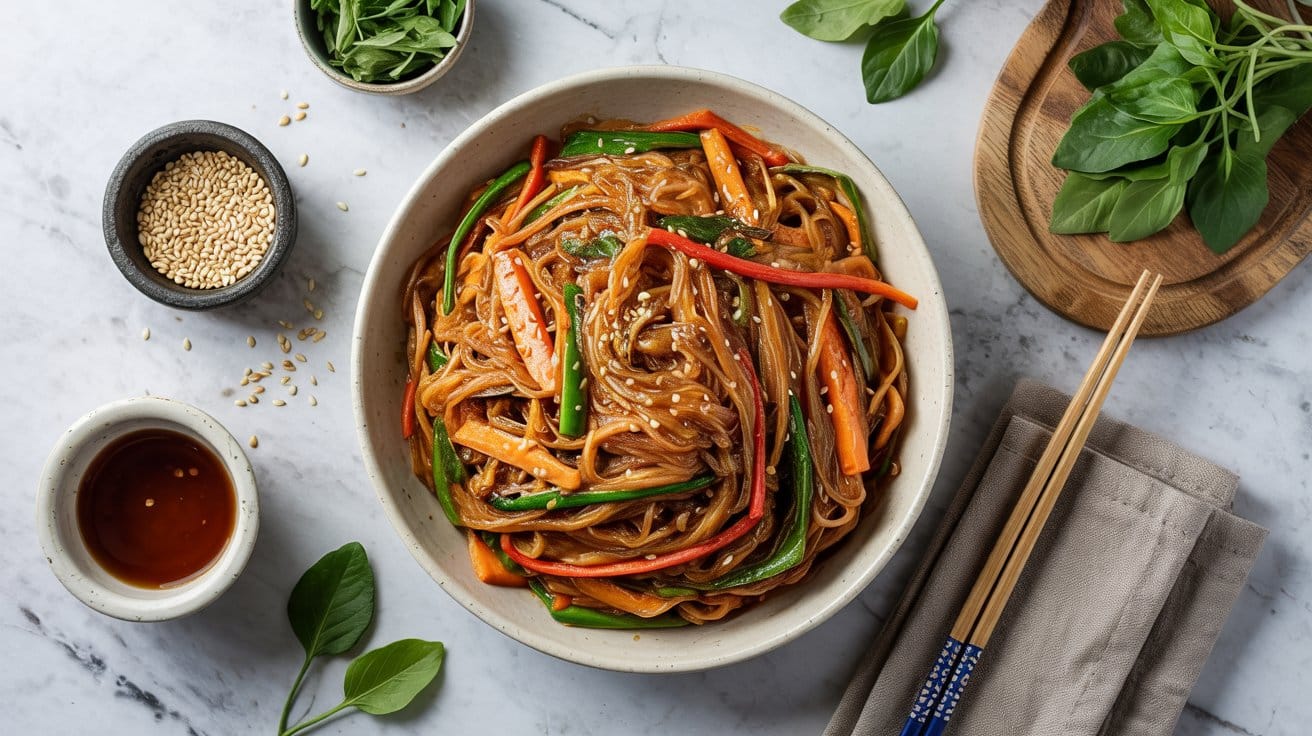
It's quick enough for weeknight dinners and holds up well for lunches or potluck serving - other make-ahead options like vegan gnocchi recipes with silky flavor travel well too.
The mix of tender noodles, crunchy carrots, and earthy mushrooms gives a satisfying contrast in every bite.
Why This Recipe Works
This recipe balances chewy noodles with crisp vegetables for texture contrast. The soy-maple seasoning soaks into the noodles for consistent savory-sweet flavor.
- Silky sweet potato noodles - The glass noodles stay chewy and absorb sauce, so each bite is well seasoned.
- Layered soy-maple glaze - A simple soy, maple, and sesame blend gives sticky, savory-sweet coating that clings to noodles.
- High-heat vegetable toss - Quick stir-frying keeps vegetables bright and slightly crisp for contrast.
- Make-ahead friendly finish - The dish holds its texture after cooling, so you can pack leftovers without sogginess.
Ingredient Swap Ideas
Swaps help adjust availability, diet, or pantry items while keeping the technique and flavor intact.
- Sweet potato glass noodles - Swap with thick rice vermicelli if you can't find dangmyeon; the texture will be softer but the method is the same.
- Shiitake mushrooms - Use cremini or button mushrooms for an easier option that sautés well.
- Maple syrup - Replace with brown sugar or coconut sugar to maintain sweetness and slight caramel notes.
- Baby spinach - Use blanched bok choy or thinly sliced kale for sturdier greens that won't wilt into mush.
Ingredients
- 8 oz sweet potato glass noodles - dried.
- 2 tablespoons soy sauce - or tamari for gluten-free.
- 1 tablespoon maple syrup - or brown sugar.
- 1 tablespoon toasted sesame oil - for finishing flavor.
- 1 tablespoon vegetable oil - for stir-frying.
- 2 cloves garlic - minced.
- 1 small yellow onion - thinly sliced.
- 1 medium carrot - julienned.
- 1 red bell pepper - thinly sliced.
- 4 oz shiitake mushrooms - stems removed and sliced.
- 4 cups baby spinach - roughly chopped if large.
- 2 green onions - sliced on a diagonal.
- 1 tablespoon sesame seeds - toasted for garnish.
- Salt - to taste.
Instructions
- Boil the noodles in a large pot of salted water for 6-8 minutes until tender, then drain and rinse under cold water to stop cooking; cut into shorter lengths if desired.
- Whisk soy sauce, maple syrup, minced garlic, and toasted sesame oil in a bowl; set the sauce aside.
- Heat vegetable oil in a large skillet or wok over medium-high heat and sauté onion for 2 minutes until translucent, then add carrot and mushrooms and cook 3-4 minutes until just softened.
- Add red pepper and spinach and cook 1-2 minutes until spinach wilts but remains bright.
- Add drained noodles and the sauce to the pan, toss over medium heat for 1-2 minutes until noodles absorb the sauce; finish with green onions and sesame seeds, and season with salt if needed.
10. Stuffed Kimchi Pancakes with Crispy Delight
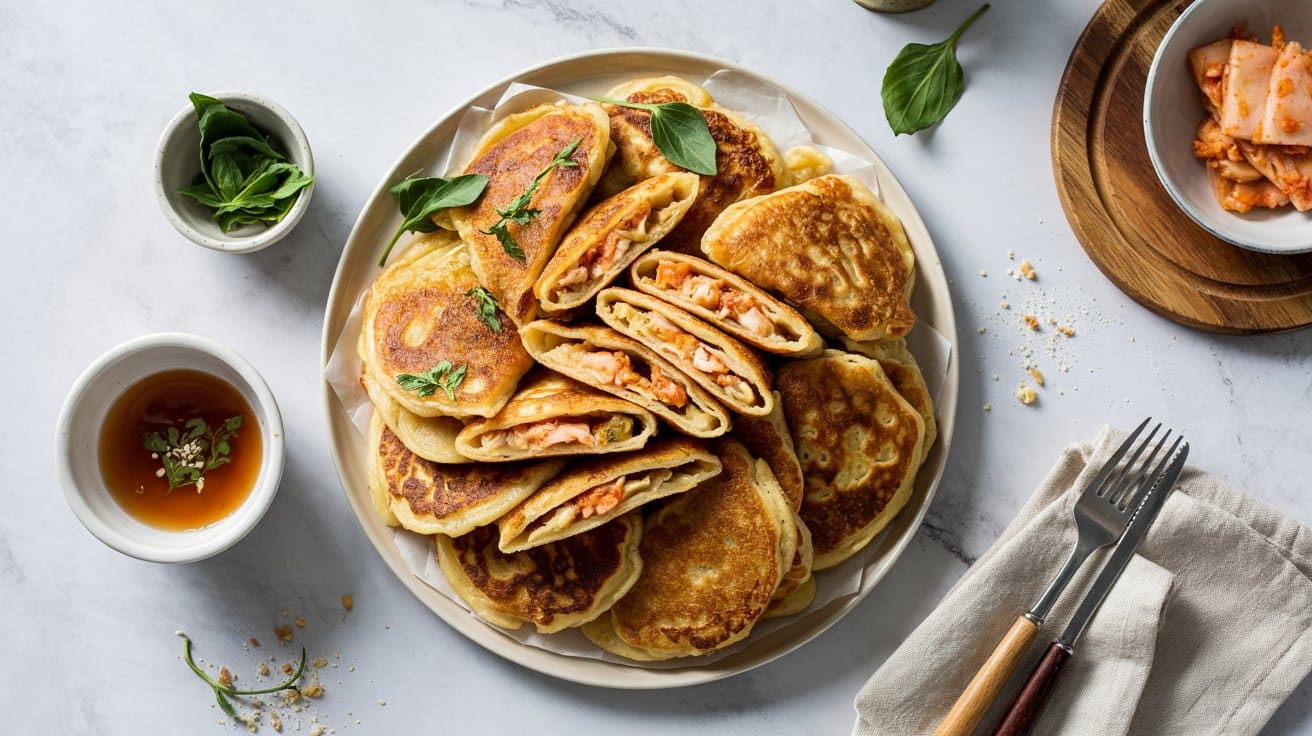
These stuffed kimchi pancakes pair tangy, fermented kimchi with a golden, crisp exterior for a lively contrast of textures. They come together quickly on the stovetop and work well as a snack, appetizer, or light dinner.
Why This Recipe Works
The filling concentrates kimchi flavor while the batter crisps on the pan. That contrast makes each bite bright and satisfying.
- Crispy stuffed rim - Frying creates a thin, crunchy edge that frames the soft interior.
- Tangy kimchi pockets - Chopped kimchi and a touch of its juice give intense fermented brightness.
- Green onion lift - Fresh scallions add a clean, sharp note that balances the kimchi.
- Fast pan-fry finish - Each pancake cooks in about 6-8 minutes for quick serving.
Ingredient Swap Ideas
Swaps let you adjust heat, texture, or use what you have on hand while keeping the same method. Choose swaps that preserve the pancake's wet filling and quick frying.
- Kimchi - Use well-drained sauerkraut for a milder, tangy substitute that still provides fermented sourness.
- All-purpose flour - Replace with rice flour for a lighter, crispier batter that browns faster.
- Vegetable oil - Use light sesame oil for a nutty aroma while maintaining frying performance.
- Green onions - Swap with thinly sliced leeks or chives for a gentler onion note that blends well.
Ingredients
- 1 cup chopped kimchi - drained and chopped.
- 1 cup all-purpose flour - for the pancake batter.
- 1 cup cold water - to make a loose batter.
- 1 large egg - beaten.
- 4 green onions - thinly sliced.
- 2 tablespoons vegetable oil - for frying.
- 1 teaspoon sugar - to balance kimchi acidity.
- ¼ cup soy sauce - for dipping sauce.
- 1 tablespoon rice vinegar - for dipping sauce.
- 1 teaspoon sesame oil - for dipping sauce.
Instructions
- Whisk the flour, water, egg, and sugar until smooth; the batter should be pourable like heavy cream.
- Combine the chopped kimchi and green onions in a bowl for the filling.
- Heat 1 tablespoon oil in a nonstick skillet over medium heat and pour a thin round of batter to form a base.
- Spoon 2-3 tablespoons of the kimchi mixture onto the center, then pour a little more batter over to seal; cook until edges set and underside is golden, about 3-4 minutes.
- Flip the pancake and cook 2-3 minutes more until crisp and browned; repeat and keep pancakes warm.
- Stir the soy sauce, rice vinegar, and sesame oil for the dipping sauce, then cut pancakes into wedges and serve.
11. Korean-Style Cauliflower Fried Rice Low-Carb
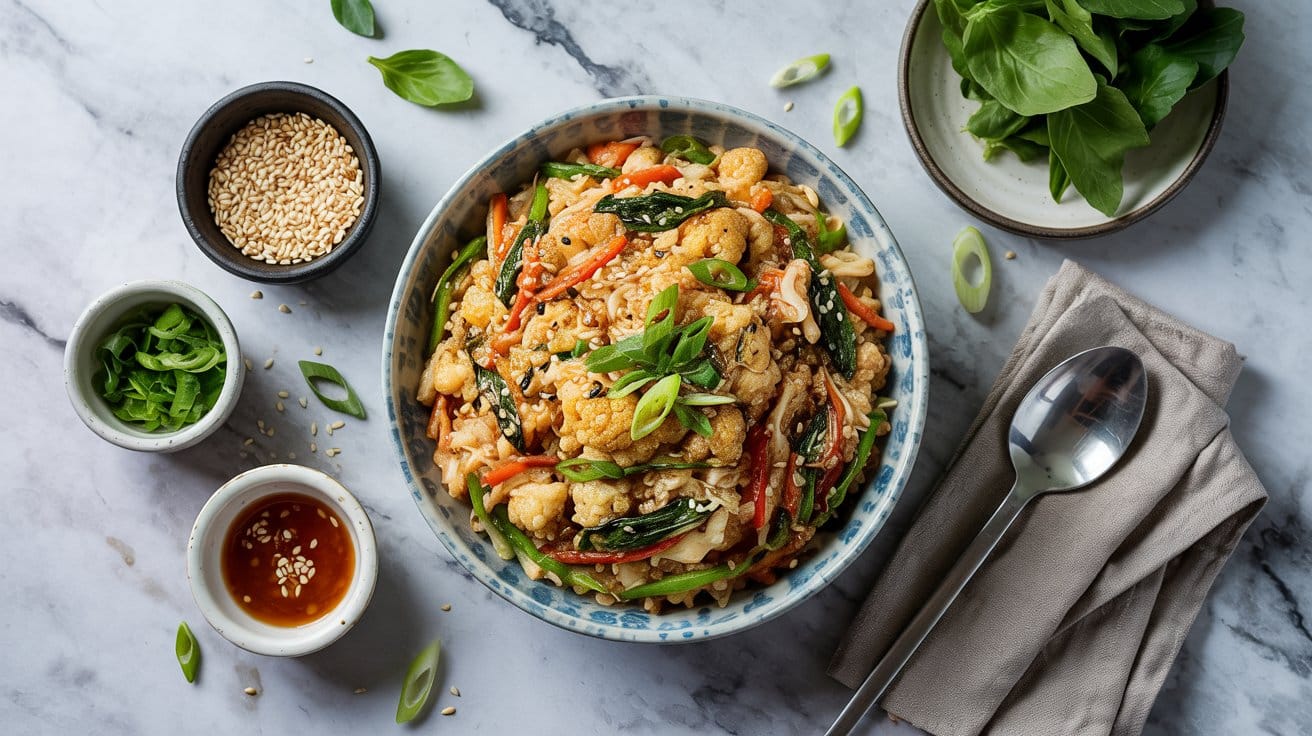
This low-carb take on kimchi fried rice uses riced cauliflower to keep the stir-fry texture while cutting carbs. Bold, tangy kimchi and a touch of gochujang give spicy-sour depth, making it a great weeknight meal or quick lunch you can meal-prep.
Why This Recipe Works
Low-carb cauliflower holds up like rice when you remove excess moisture and cook it over high heat. Fermented kimchi and gochujang supply the savory, spicy character so the dish still feels richly seasoned.
- Kimchi-forward tang - Fermented kimchi adds bright acidity and depth that lifts the mild cauliflower.
- Toasted sesame finish - A small amount of sesame oil adds the nutty aroma associated with Korean fried rice.
- Egg ribbon texture - Lightly scrambled eggs create the familiar bite and protein of traditional fried rice.
- High-heat browning - Quick, hot cooking dries and lightly caramelizes the cauliflower for better texture.
Ingredient Swap Ideas
Simple swaps help you match pantry staples or dietary needs without changing the method or core flavor.
- Kimchi - Swap with ¾ cup finely chopped sauerkraut plus ¼-1/2 teaspoon chili flakes for a similar tang and mild heat.
- Gochujang - Swap with 1 teaspoon gochugaru mixed with ½ teaspoon low-sodium soy sauce to approximate the sweet-spicy-savory note.
- Riced cauliflower - Swap with 2 cups very finely shredded cabbage for a low-carb alternative that still browns and holds texture.
- Eggs - Swap with ½ cup firm tofu crumbles sautéed until golden for an egg-free protein option.
Ingredients
- 4 cups riced cauliflower - fresh or frozen, thawed and well drained.
- 2 tablespoons neutral oil - canola or vegetable.
- 1 tablespoon sesame oil - for finishing and flavor.
- 2 large eggs - beaten.
- 1 cup napa cabbage kimchi - chopped and squeezed of excess liquid.
- 1 tablespoon gochujang - Korean chili paste; reduce for less heat.
- 2 tablespoons low-sodium soy sauce - or tamari.
- 3 cloves garlic - minced.
- 3 green onions - sliced; separate whites and greens.
- ¼ teaspoon kosher salt - adjust to taste.
- ⅛ teaspoon black pepper - fresh ground.
- 1 teaspoon toasted sesame seeds - for garnish.
Instructions
- Heat a large nonstick skillet over medium-high and add neutral oil and the white parts of the green onions; sauté garlic 30 seconds until fragrant.
- Add chopped kimchi and gochujang and cook 2-3 minutes until kimchi softens and releases some liquid.
- Stir in riced cauliflower and soy sauce and cook 5-7 minutes, stirring often, until cauliflower is tender and starting to brown; press gently to release and evaporate moisture.
- Push cauliflower mixture to one side of the pan, add beaten eggs to the empty side, scramble until just set, then mix eggs through the cauliflower.
- Remove from heat, drizzle with sesame oil, stir in green onion tops, season with salt and pepper, and sprinkle with toasted sesame seeds before serving.
12. Vegan Kimbap Korean Sushi Rolls with Tofu
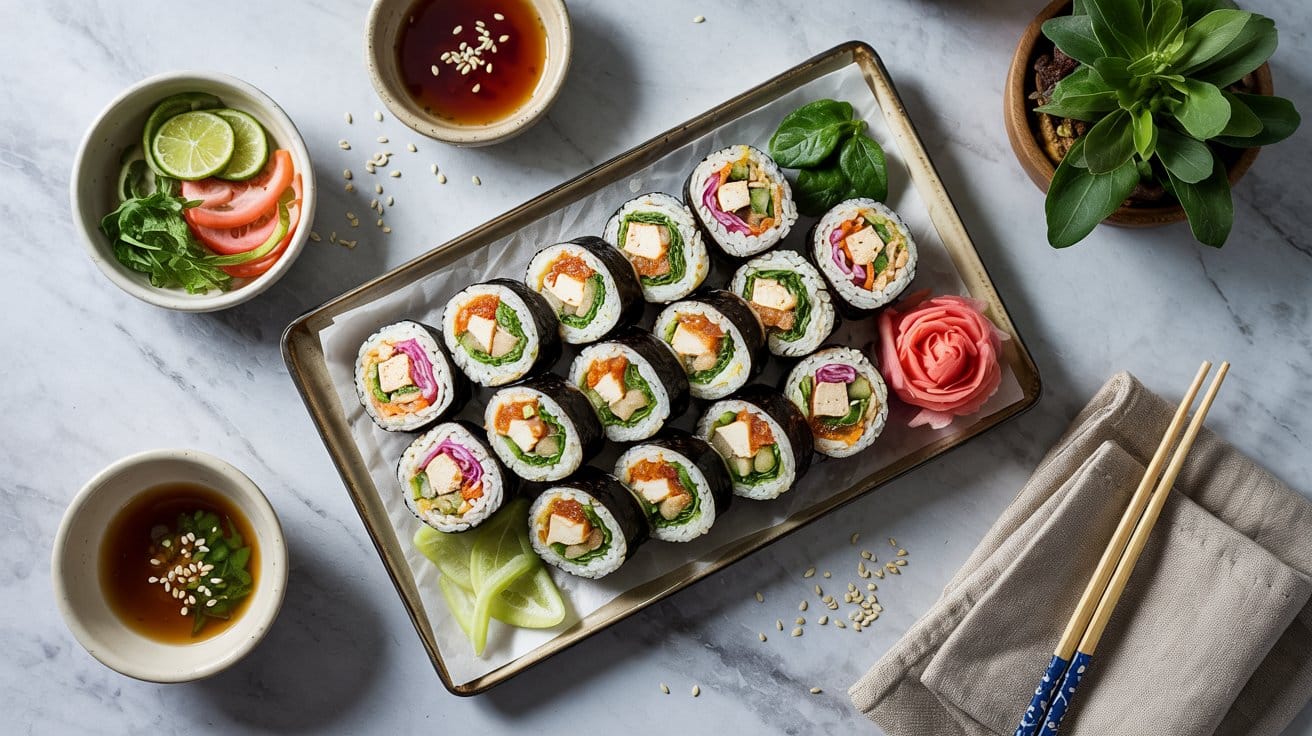
These vegan kimbap rolls combine seasoned tofu and crisp, lightly pickled vegetables for a satisfying meal you can pack or serve at a gathering. The rice is seasoned with rice vinegar for brightness, and the layered textures make each slice interesting.
You can make most components ahead and assemble just before serving.
Why This Recipe Works
This recipe balances savory, nutty, and bright elements for lively bites. It stores well and travels without losing texture.
- Savory marinated tofu - Tofu soaks up soy and sesame for a firm, flavorful filling that holds up when sliced.
- Seasoned rice that binds - Vinegar, sugar, and salt create sticky rice that keeps the roll compact and easy to slice.
- Crisp pickled radish contrast - Sweet-tangy pickled radish adds crunch and a clean counterpoint to the rich tofu.
- Versatile make-ahead elements - Rice, tofu, and prepared vegetables can be chilled separately and rolled just before serving.
Ingredient Swap Ideas
Swaps help you adjust flavor, texture, or what's in your pantry while keeping the roll structure intact.
- Firm tofu - Swap with extra-firm tempeh slices for a chewier texture that browns well.
- Pickled yellow radish - Use quick-pickled carrot strips for similar sweet-tang and crunch.
- Short-grain sushi rice - Use medium-grain rice with slightly less water for comparable stickiness.
- Soy sauce - Use tamari to keep the filling gluten-free while preserving the savory profile.
Ingredients
- 2 cups short-grain sushi rice (uncooked) - rinsed until water runs clear.
- 2 ½ cups water - for cooking rice.
- 3 tablespoons rice vinegar - for seasoning rice.
- 1 tablespoon sugar - for seasoning rice.
- 1 teaspoon salt - for seasoning rice.
- 6-8 sheets roasted seaweed (nori) - full-size sheets.
- 14 ounces firm tofu - pressed and sliced into ¼-inch strips.
- 2 tablespoons soy sauce - for marinating tofu.
- 1 tablespoon sesame oil - for marinating and seasoning.
- 2 tablespoons neutral oil - for frying tofu.
- 1 medium carrot - julienned into matchsticks.
- 1 small cucumber - julienned with seeds removed.
- 1 cup pickled yellow radish (danmuji) - sliced into strips.
- 4 ounces fresh spinach - blanched and squeezed dry.
- 1 tablespoon toasted sesame seeds - for garnish.
Instructions
- Rinse the rice until water runs clear, then cook with 2 ½ cups water until tender, about 15-18 minutes.
- While rice cooks, press the tofu 20 minutes, slice, toss with soy sauce and 1 teaspoon sesame oil, and pan-fry in 2 tablespoons neutral oil until golden, about 3-4 minutes per side.
- Blanch the spinach 20-30 seconds, drain and squeeze dry, then toss with a pinch of salt and 1 teaspoon sesame oil; sauté carrot matchsticks briefly in 1 tablespoon oil for 2-3 minutes if you prefer them softened.
- Spread a nori sheet shiny side down on a mat, press a thin, even layer of rice over the sheet leaving a 1-inch top border, arrange tofu, spinach, carrot, cucumber, and pickled radish in a line across the rice, then roll firmly and seal the edge with a little water.
- Slice the roll with a sharp, slightly wet knife into 8-10 pieces, sprinkle with toasted sesame seeds, and serve chilled or at room temperature.
13. Bulgogi-Style Jackfruit Tacos in Trendy Remix
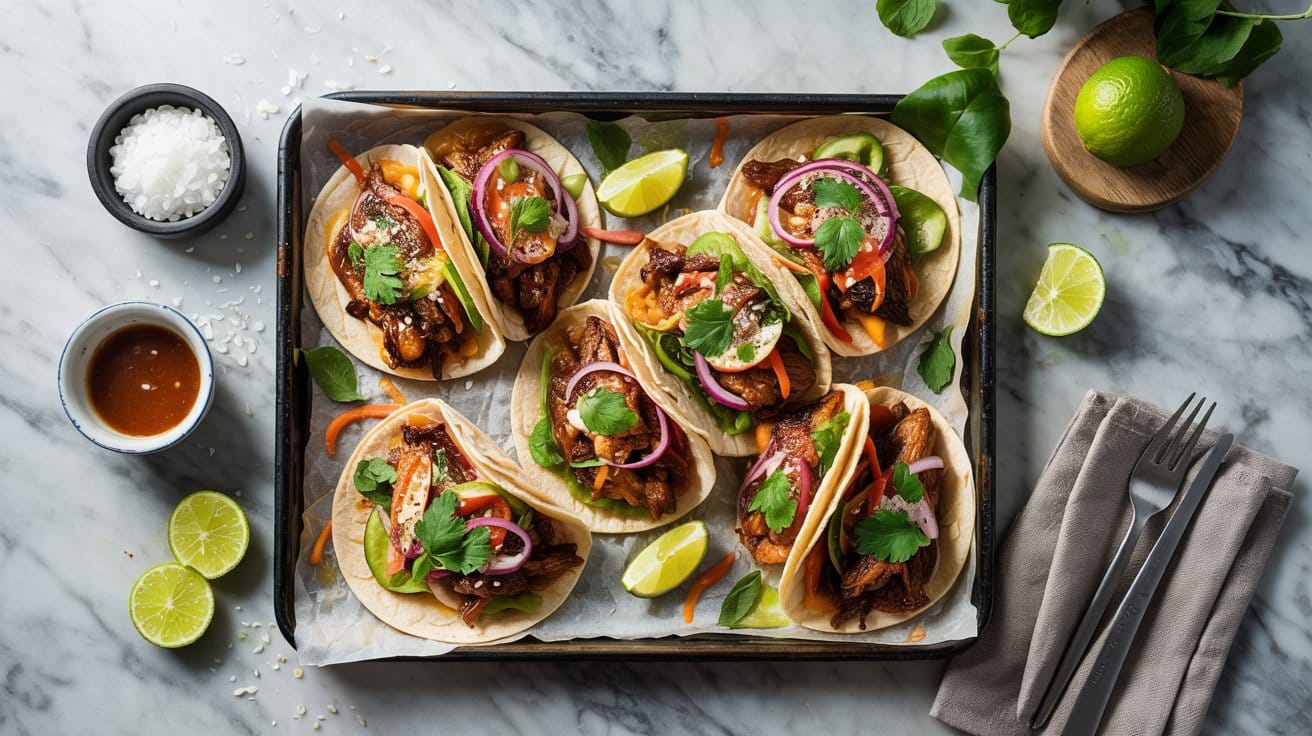
This recipe turns canned young jackfruit into richly seasoned, slightly sweet tacos that are quick enough for weeknights and sturdy enough for casual gatherings. You'll get deep savory-sweet bulgogi notes from a simple marinade and caramelized edges from a fast sauté.
Serve with crisp cabbage, fresh cilantro, green onion, and lime for bright contrast.
Why This Recipe Works
You get bold Korean-inspired seasoning without long prep. The technique uses pantry ingredients and quick cooking so you can serve tacos fast.
- Bulgogi-seasoned jackfruit - The soy, sesame, garlic, ginger, and gochujang marinade gives the jackfruit the signature sweet-savory profile associated with bulgogi.
- Caramelized texture - High-heat sauté develops browned edges that mimic shredded meat for pleasing chew and contrast.
- Fast marinate and cook - A short soak and an 8-10 minute sauté deliver big flavor with a small time commitment.
- Taco-ready toppings - Crisp cabbage, lime, and cilantro add brightness and balance to the rich jackfruit filling.
Ingredient Swap Ideas
Swaps let you adjust heat, pantry supplies, or dietary needs while keeping the same method and final taco format.
- Gochujang - Substitute 1 teaspoon sriracha plus 1 teaspoon brown sugar to reproduce heat and sweetness if gochujang is unavailable.
- Soy sauce - Use tamari or coconut aminos for a gluten-free option while preserving salty umami.
- Young jackfruit - Replace with shredded king oyster mushrooms cooked the same way to keep a meaty texture and absorb the marinade.
- Corn or flour tortillas - Use sturdy lettuce leaves for low-carb tacos; they still hold the filling and keep the bright toppings crisp.
Ingredients
- 2 (20-ounce) cans young green jackfruit - drained and rinsed.
- ⅓ cup soy sauce - low-sodium preferred.
- 2 tablespoons brown sugar - packed.
- 1 tablespoon sesame oil - toasted.
- 2 cloves garlic - minced.
- 1 tablespoon fresh ginger - grated.
- 1 tablespoon gochujang - Korean chili paste.
- 1 tablespoon rice vinegar - for brightness.
- 2 tablespoons vegetable oil - for sautéing.
- 8 small corn or flour tortillas - warmed before serving.
- 2 cups shredded red cabbage - for slaw.
- ¼ cup chopped cilantro - stems removed.
- 2 green onions - thinly sliced.
- 1 lime - cut into wedges.
- 1 tablespoon sesame seeds - toasted.
Instructions
- Shred the drained jackfruit with your hands or two forks to pull apart the pieces into a shredded texture.
- Whisk soy sauce, brown sugar, sesame oil, garlic, ginger, gochujang, and rice vinegar in a bowl, then toss with the shredded jackfruit and let sit 10-15 minutes.
- Heat vegetable oil in a large skillet over medium-high heat until shimmering.
- Add the marinated jackfruit and cook 8-10 minutes, stirring and pressing with a spatula so edges brown and sauce reduces.
- Warm tortillas, divide the jackfruit among them, and top with shredded cabbage, cilantro, green onion, sesame seeds, and a squeeze of lime before serving.
14. Korean BBQ Vegetable Skewers Sweet and Spicy
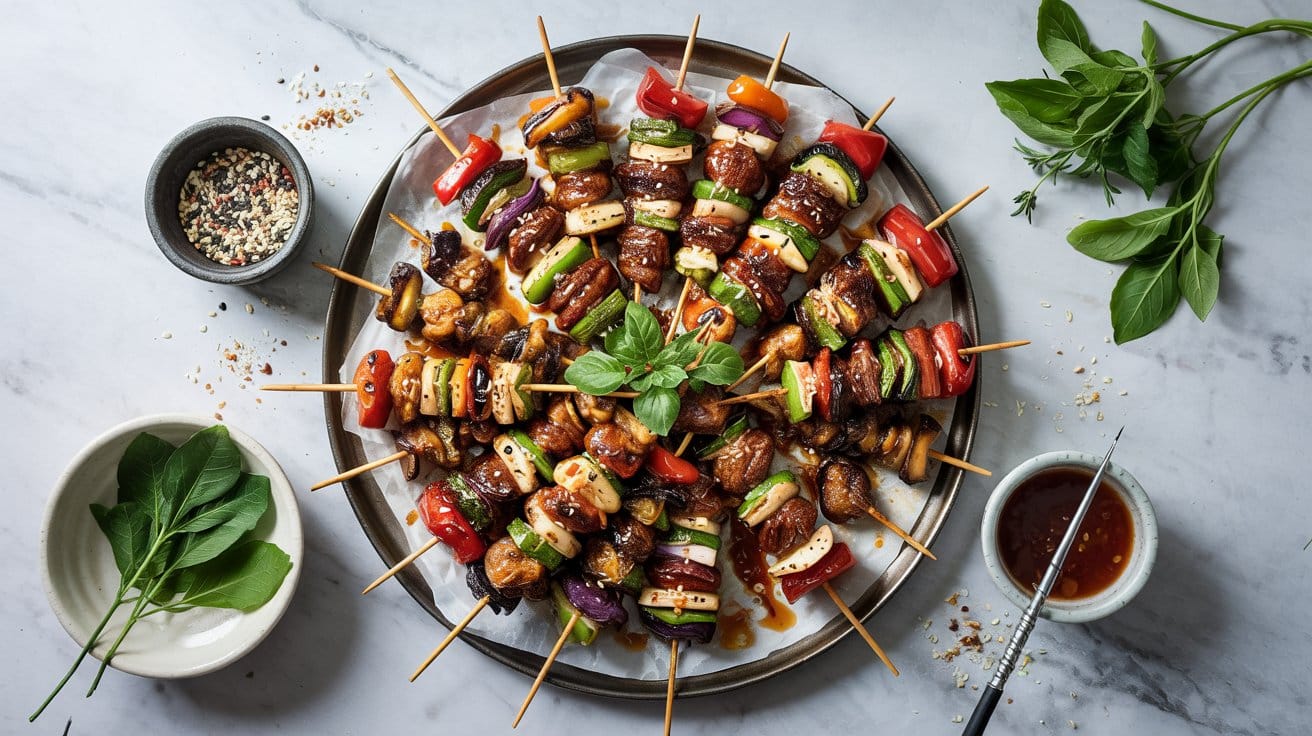
Bright, charred vegetables are coated in a sticky sweet-and-spicy Korean-style glaze that caramelizes on the grill. This recipe is quick to assemble, grills in about 10-12 minutes, and works well for summer cookouts or a simple weeknight dinner.
Why This Recipe Works
You get smoky-charred vegetables with a glossy, sticky glaze that adds heat and sweetness. The skewers grill quickly and hold together for easy serving.
- Sweet-spicy glaze - A gochujang-based sauce caramelizes on the vegetables for glossy, layered heat and sweetness.
- Quick high-heat cooking - Direct grilling gives fast char and tender-crisp texture without long cook times.
- Contrasting vegetable textures - Firm zucchini, bell peppers, and mushrooms provide bite and soak up the glaze differently.
- Glaze doubles as marinade - You can marinate briefly to deepen flavor and finish with extra brushings while grilling.
Ingredient Swap Ideas
Simple swaps let you adapt to what you have while preserving the sticky, grilled finish.
- Gochujang - Substitute with a mix of chili paste and brown sugar (equal parts) to recreate sweet-umami heat.
- Cremini mushrooms - Swap with shiitake or button mushrooms for a similar absorbent texture.
- Zucchini - Use yellow squash instead for the same grill-ready bite and mild taste.
- Soy sauce - Replace with tamari or coconut aminos for gluten-free or lower-sodium needs.
Ingredients
- 8 wooden skewers - soaked in water 30 minutes.
- 2 medium zucchini - cut into ½-inch rounds or half-moons.
- 1 large red bell pepper - cut into 1 ½-inch pieces.
- 1 large yellow bell pepper - cut into 1 ½-inch pieces.
- 8 ounces cremini mushrooms - stems trimmed.
- 1 large red onion - cut into 1 ½-inch wedges.
- 3 tablespoons gochujang - Korean chili paste.
- 3 tablespoons soy sauce - low-sodium recommended.
- 2 tablespoons brown sugar - packed.
- 1 tablespoon rice vinegar - for brightness.
- 1 tablespoon sesame oil - toasted if available.
- 2 cloves garlic - minced.
- 1 teaspoon fresh ginger - grated.
- 2 tablespoons neutral oil - for brushing vegetables.
- 1 tablespoon sesame seeds - toasted for garnish.
- 2 green onions - thinly sliced for garnish.
- Salt and black pepper - to season.
Instructions
- Soak skewers in water for 30 minutes and preheat your grill to medium-high (about 400°F).
- Whisk gochujang, soy sauce, brown sugar, rice vinegar, sesame oil, garlic, ginger, and 1 tablespoon water until smooth to make the glaze.
- Thread zucchini, bell peppers, mushrooms, and onion onto skewers, brush with neutral oil, and season lightly with salt and black pepper.
- Grill skewers over direct medium-high heat for 10-12 minutes, turning every 2-3 minutes; brush glaze on during the last 4 minutes in two coatings to caramelize.
- Remove skewers, brush with any remaining glaze, sprinkle with sesame seeds and green onions, let rest 2 minutes, then serve warm.
15. Savory Korean Steamed Buns Mantou with Flavor
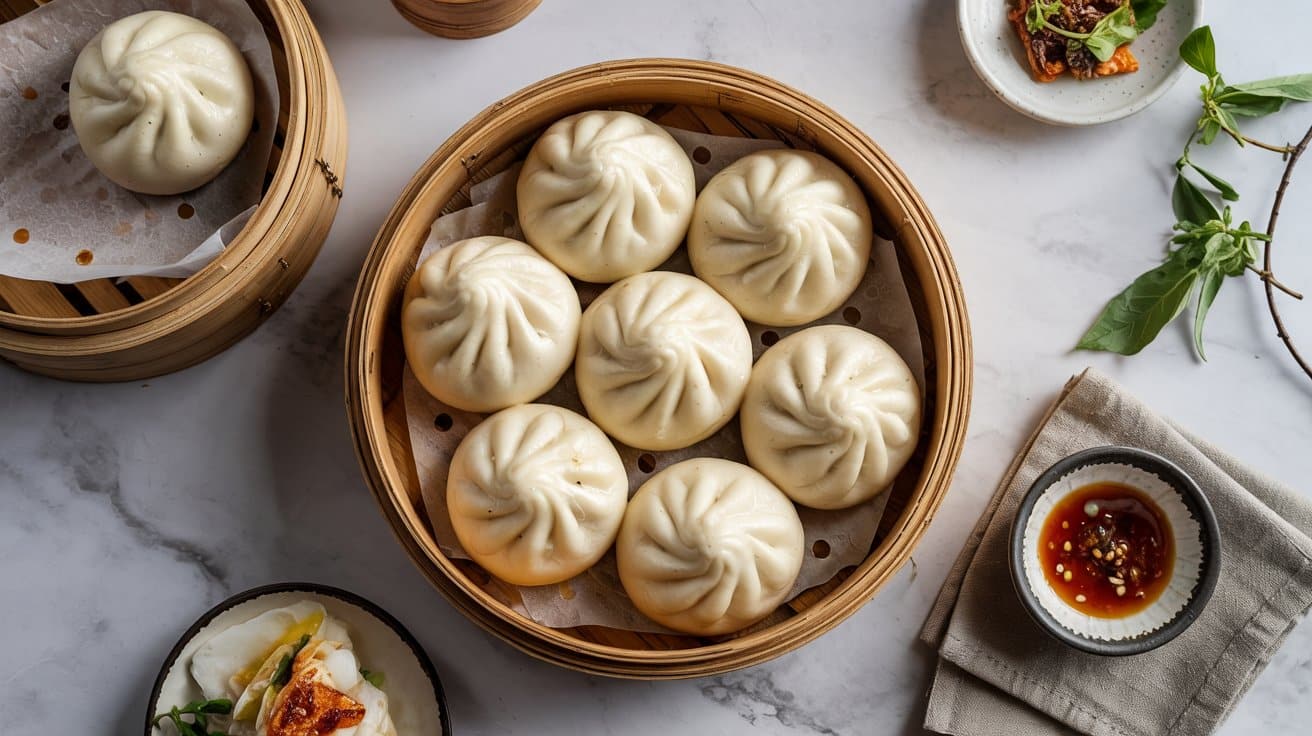
These steamed buns combine soft, pillowy dough with a savory, slightly tangy vegetable and pork filling that tastes like street food at home. You'll get warm, slightly spicy buns that work well for lunch, casual dinners, or a party platter.
Why This Recipe Works
These buns balance soft steamed dough with a bold, savory filling you can prepare ahead. The method uses simple steps so you can make them on a weeknight or for guests.
- Pillowy steamed dough - A milk-and-water dough yields a tender, bouncy bun after a gentle steam.
- Tangy kimchi-pork filling - Kimchi and ground pork provide savory, slightly sour notes that brighten each bite.
- Controlled spicy warmth - A small amount of gochujang provides heat and umami without overpowering the filling.
- Proof-and-steam timing - Short proofing and a brief steam keep total hands-on time manageable.
Ingredient Swap Ideas
Swaps help you adapt the recipe for dietary needs or pantry limits while keeping the same method. Use these to keep texture and seasonings consistent.
- Ground pork - Use ground chicken or crumbled firm tofu to keep the filling texture and absorb the seasonings.
- Kimchi - Substitute sauerkraut or finely shredded napa cabbage quick-pickled with 1 teaspoon rice vinegar to mimic tang.
- Gochujang - Swap with 1 tablespoon chili paste plus 1 teaspoon miso for similar heat and savory depth.
- All-purpose flour - Use bread flour for more chew or 00 flour for a silkier dough surface.
Ingredients
- 3 cups all-purpose flour - plus extra for dusting.
- 2 teaspoons instant yeast - active and fresh.
- 2 tablespoons granulated sugar - for yeast activation and mild sweetness.
- 1 teaspoon fine salt - for dough seasoning.
- ¾ cup warm water (105-115°F) - for activating yeast.
- ¼ cup warm milk - for a softer dough.
- 2 tablespoons vegetable oil - for kneading and smooth dough.
- 8 ounces ground pork - or plant-based ground substitute.
- 1 cup kimchi - drained and chopped.
- 1 small yellow onion - finely chopped.
- 2 scallions - thinly sliced.
- 1 tablespoon gochujang - Korean chili paste.
- 1 tablespoon soy sauce - for seasoning.
- 1 teaspoon sesame oil - for finishing.
- 1 clove garlic - minced.
Instructions
- Mix flour, yeast, sugar, and salt in a bowl, add warm water, warm milk, and oil, then knead until smooth about 8-10 minutes; place in a lightly oiled bowl, cover, and let rise 60-75 minutes until doubled.
- Sauté onion in 1 tablespoon oil over medium heat until soft, add ground pork and garlic, cook 4-5 minutes until no pink remains, then stir in kimchi, gochujang, and soy sauce and cook 3-4 minutes until most liquid has evaporated; finish with scallions and sesame oil, then cool.
- Punch down the dough, divide into 10-12 equal pieces, flatten each into a 3-4 inch circle, place 1-2 tablespoons filling in the center, and fold edges to seal into buns; set each bun on a small parchment square.
- Arrange buns in a steamer with space between, cover, and proof 20-30 minutes until slightly puffy.
- Steam over simmering water, covered, for 12-15 minutes; remove from heat and rest 2 minutes before opening the lid.
- Serve warm with soy sauce or extra chili paste for dipping.
16. Easy Vegan Kimchi Ramen Authentic Heartiness
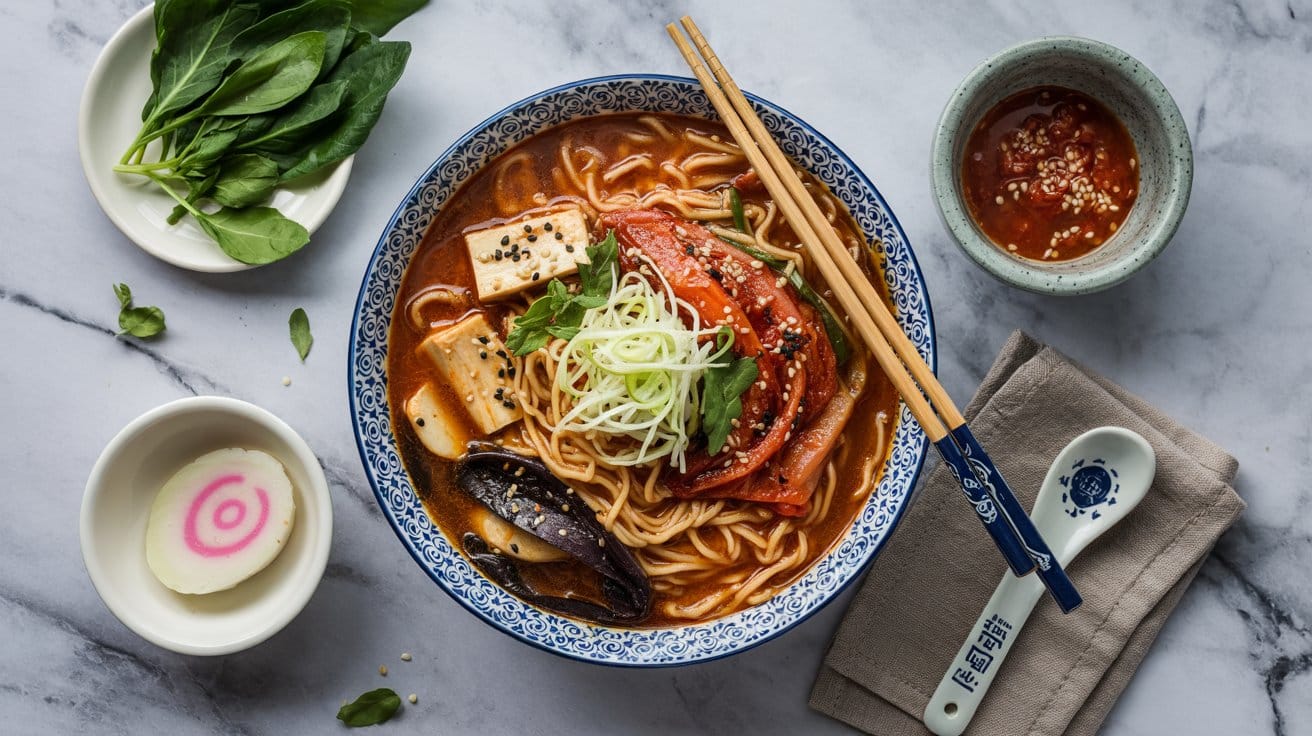
This ramen pairs tangy kimchi with a savory, umami-rich broth for a satisfying bowl that comes together quickly. It's hearty enough for dinner and bright enough to lift a busy weeknight.
Serve hot with fresh scallions and tofu for contrast in texture and flavor.
Why This Recipe Works
It balances spicy, sour kimchi with a deep vegetable broth for layered taste. The method cooks everything in one pot for a fast finish.
- Kimchi-forward broth - The fermented kimchi adds acidity and heat that define the soup's character.
- Umami mushroom base - Sautéed mushrooms deepen the savory notes without animal products.
- Crisp-pan tofu contrast - Pan-fried tofu gives a golden exterior that contrasts the silky broth.
- Quick one-pot finish - The noodles cook right in the simmering broth so the meal is ready fast.
Ingredient Swap Ideas
Swaps let you adjust texture and heat while keeping the core method the same. Use these to suit dietary needs or what you have on hand.
- Firm tofu - Use extra-firm tofu or tempeh if you prefer a chewier texture, since both hold up in the broth.
- Shiitake mushrooms - Replace with cremini mushrooms to keep the savory depth at a lower cost.
- Soy sauce - Use tamari for gluten-free cooking while keeping the salty umami.
- Ramen noodles - Swap for udon or soba for a different bite, noting cooking times may vary.
Ingredients
- 8 oz ramen noodles - fresh or dried; see package for exact cooking time.
- 4 cups vegetable broth - low-sodium preferred.
- 1 cup kimchi - chopped; use a vegan kimchi.
- 7-8 oz firm tofu - pressed and cut into 1-inch cubes.
- 4 oz shiitake mushrooms - sliced.
- 2 tablespoon soy sauce - or tamari for gluten-free.
- 1 tablespoon gochujang - optional for extra heat.
- 1 tablespoon neutral oil - for frying tofu and mushrooms.
- 2 cloves garlic - minced.
- 1-inch piece fresh ginger - minced.
- 2 green onions - sliced.
- 1 teaspoon sesame oil - for finishing.
- 1 teaspoon sesame seeds - for garnish.
Instructions
- Press and cube the tofu, then pan-fry in neutral oil over medium-high heat until golden on all sides, about 6-8 minutes; transfer to a plate.
- Sauté mushrooms in the same pan until browned, about 4 minutes, then add garlic and ginger and cook 30 seconds until fragrant.
- Add chopped kimchi and gochujang, and stir for 1-2 minutes to warm and release flavors.
- Pour in vegetable broth and soy sauce, bring to a simmer, and cook 5 minutes to meld flavors.
- Add ramen noodles and cook until tender, 2-4 minutes depending on the noodle type.
- Return tofu to the pot, stir in sesame oil, divide into bowls, and top with green onions and sesame seeds before serving.
17. Miso-Glazed Korean Sweet Potatoes Umami Rich
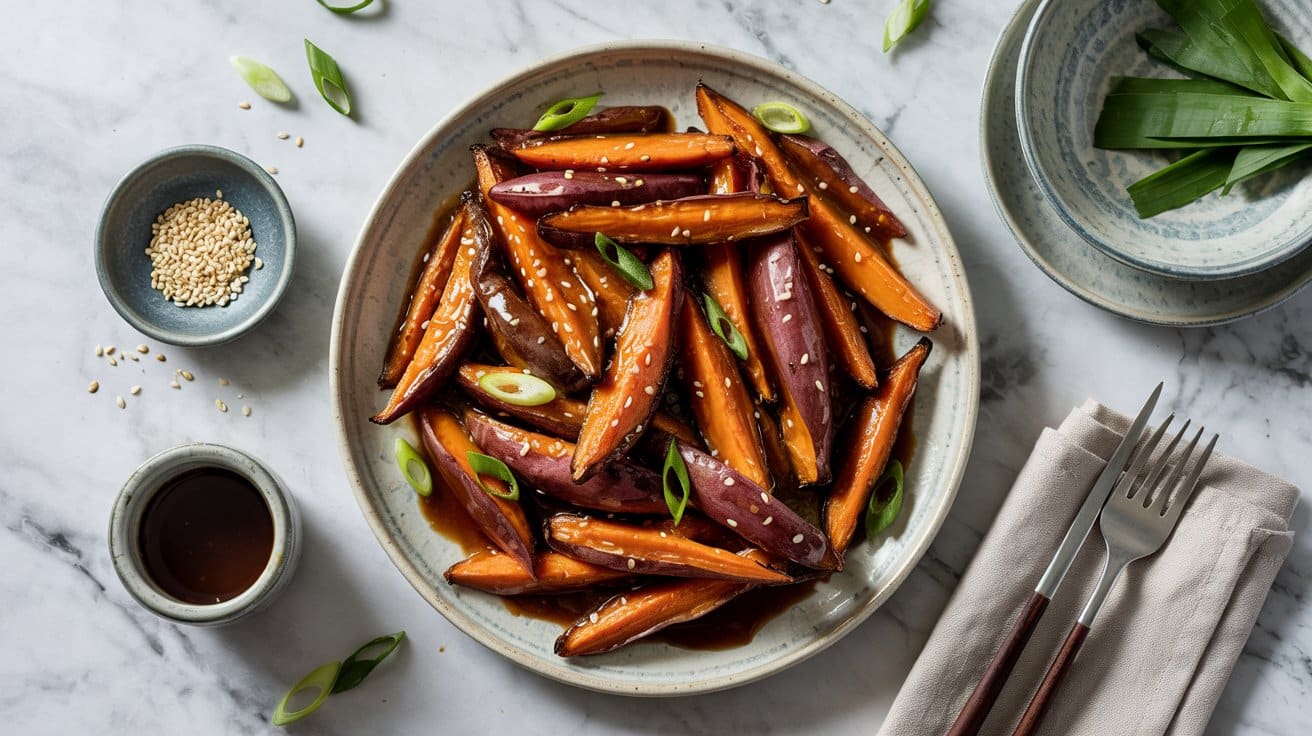
These roasted sweet potatoes are glossy, savory-sweet, and full of umami from a simple miso glaze. They come together with pantry-friendly ingredients and make a great side for weeknight meals or a holiday spread.
Why This Recipe Works
These potatoes combine crisp, caramelized edges with a sticky, savory glaze for contrast. The glaze uses a few flavorful ingredients to make a big impact without extra steps.
- Browned edges with sticky glaze - Roasting concentrates the potato's natural sweetness and the glaze caramelizes into a shiny coating.
- Deep umami from miso - Miso adds savory depth so a little goes a long way in balancing sweetness.
- Quick stovetop glaze - You whisk the glaze in minutes while the potatoes roast, so timing is simple.
- Versatile serving options - They pair well with grilled proteins, salads, or grain bowls for easy meal planning.
Ingredient Swap Ideas
Swaps help you adapt to pantry limits or dietary needs while keeping the core flavors balanced. Choose substitutes that preserve sweetness, salt, and umami.
- White miso - Use yellow miso for a milder, slightly sweeter result; it keeps the glaze's savory base.
- Sweet potatoes - Substitute Japanese sweet potatoes for a firmer texture and chestnut-like flavor.
- Honey - Use brown sugar or maple syrup as a vegan option; they add caramel notes similar to honey.
- Soy sauce - Use tamari for a gluten-free swap; it provides the same salty-umami lift.
Ingredients
- 2 pounds sweet potatoes - scrubbed and cut into 1-inch wedges.
- 2 tablespoons neutral oil - for tossing the potatoes.
- 1 tablespoon kosher salt - divided.
- 2 tablespoons white miso paste - for the glaze.
- 2 tablespoons honey - or maple syrup.
- 1 tablespoon mirin - or dry sherry.
- 1 tablespoon soy sauce - or tamari.
- 1 teaspoon toasted sesame oil - for finishing the glaze.
- 1 teaspoon fresh ginger - grated.
- 1 clove garlic - minced.
- 1 tablespoon sesame seeds - toasted for garnish.
- 2 scallions - thinly sliced for garnish.
Instructions
- Preheat the oven to 425°F and line a baking sheet with foil or parchment for easier cleanup.
- Toss the sweet potato wedges with neutral oil and ¾ teaspoon kosher salt, spread in a single layer, and roast 25-30 minutes until fork-tender and browned at the edges, flipping once halfway.
- While the potatoes roast, whisk miso, honey, mirin, soy sauce, sesame oil, grated ginger, minced garlic, and the remaining ¼ teaspoon salt in a small bowl until smooth.
- When the potatoes are almost done, brush them with half the glaze, return to the oven, and roast 5-8 minutes until the glaze is sticky and slightly caramelized.
- Transfer to a serving dish, drizzle remaining glaze if desired, sprinkle with toasted sesame seeds and sliced scallions, and serve warm.
18. Sriracha and Soy Glazed Brussels Sprouts Spicy
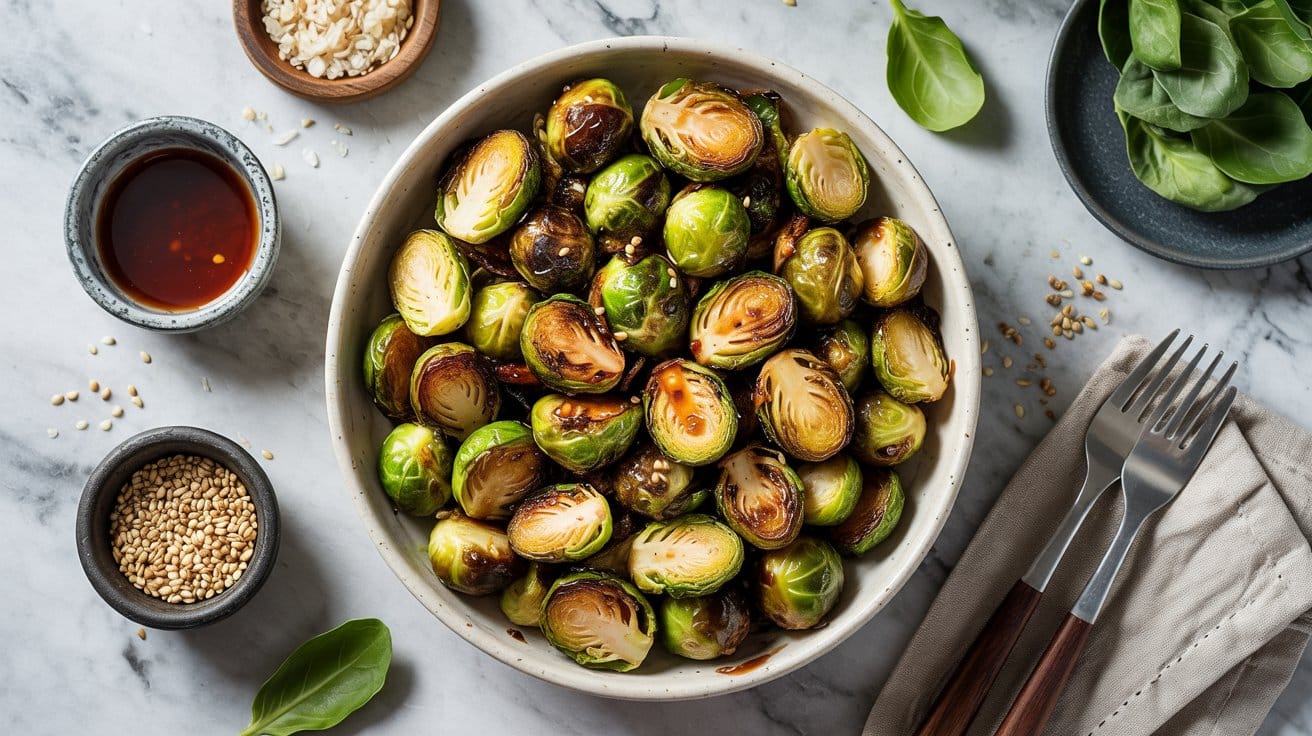
These Brussels sprouts roast until caramelized, then get a sticky, spicy-sweet glaze that clings to each bite. You can make them as a weeknight side or bring them to a potluck for a crowd-pleasing, bold-flavored dish.
Why This Recipe Works
This recipe balances crispy roasted edges with a glossy, spicy-sweet coating. It finishes quickly, so the sprouts stay tender inside while gaining color outside.
- Spicy-sweet glaze - Sriracha, soy, and honey create a glossy coating that adds heat and depth to each sprout.
- High-heat roasting - Roasting at 425°F browns and crisps the cut edges while keeping centers tender.
- Thickened finish - A small cornstarch slurry turns the glaze syrupy so it sticks without becoming runny.
- Quick make-ahead step - You can prepare the glaze ahead and warm it to finish the dish within minutes.
Ingredient Swap Ideas
Swaps help you adapt heat, sweetness, or pantry limits while keeping the same method and texture. Try these practical substitutions to match your taste.
- Sriracha - Use sambal oelek for a fresher chili flavor and similar heat level.
- Honey - Substitute maple syrup for a plant-based sweetener with a mild caramel note.
- Low-sodium soy sauce - Use tamari to make the glaze gluten-free while keeping the savory backbone.
- Cornstarch - Swap with potato starch for a clear, glossy finish that thickens at similar temperatures.
Ingredients
- 1 ½ pounds Brussels sprouts - trimmed and halved.
- 2 tablespoons vegetable oil - for tossing and roasting.
- ½ teaspoon kosher salt - adjust to taste.
- ¼ teaspoon black pepper - freshly ground.
- 2 tablespoons low-sodium soy sauce - for the glaze.
- 2 tablespoons sriracha - for heat.
- 2 tablespoons honey - for sweetness and shine.
- 1 tablespoon rice vinegar - to brighten the glaze.
- 2 garlic cloves - minced.
- 1 teaspoon sesame oil - for toasty aroma.
- 1 teaspoon cornstarch - to thicken the glaze.
- 2 tablespoons water - to make the cornstarch slurry.
- 1 teaspoon toasted sesame seeds - for garnish.
- 2 tablespoons sliced scallions - for garnish.
Instructions
- Preheat your oven to 425°F and toss the halved sprouts with vegetable oil, salt, and pepper on a rimmed baking sheet. Roast for 20-25 minutes until browned and crisp at the edges, shaking the pan halfway through.
- While sprouts roast, whisk soy sauce, sriracha, honey, rice vinegar, minced garlic, and sesame oil in a small bowl. Combine cornstarch and water in a separate cup to make a smooth slurry.
- Pour the glaze mixture into a small saucepan and bring to a gentle simmer over medium heat, then whisk in the cornstarch slurry and cook 1-2 minutes until the glaze thickens to a syrupy consistency. Remove from heat.
- Transfer roasted sprouts to a large bowl, pour the warm glaze over them, and toss until evenly coated. Spread glazed sprouts back on the baking sheet and roast 3-4 minutes to set the glaze and intensify caramelization.
- Remove from oven, sprinkle with toasted sesame seeds and sliced scallions, and serve warm.
19. Korean Spiced Vegetable Stew Kimchi Jjigae Comfort
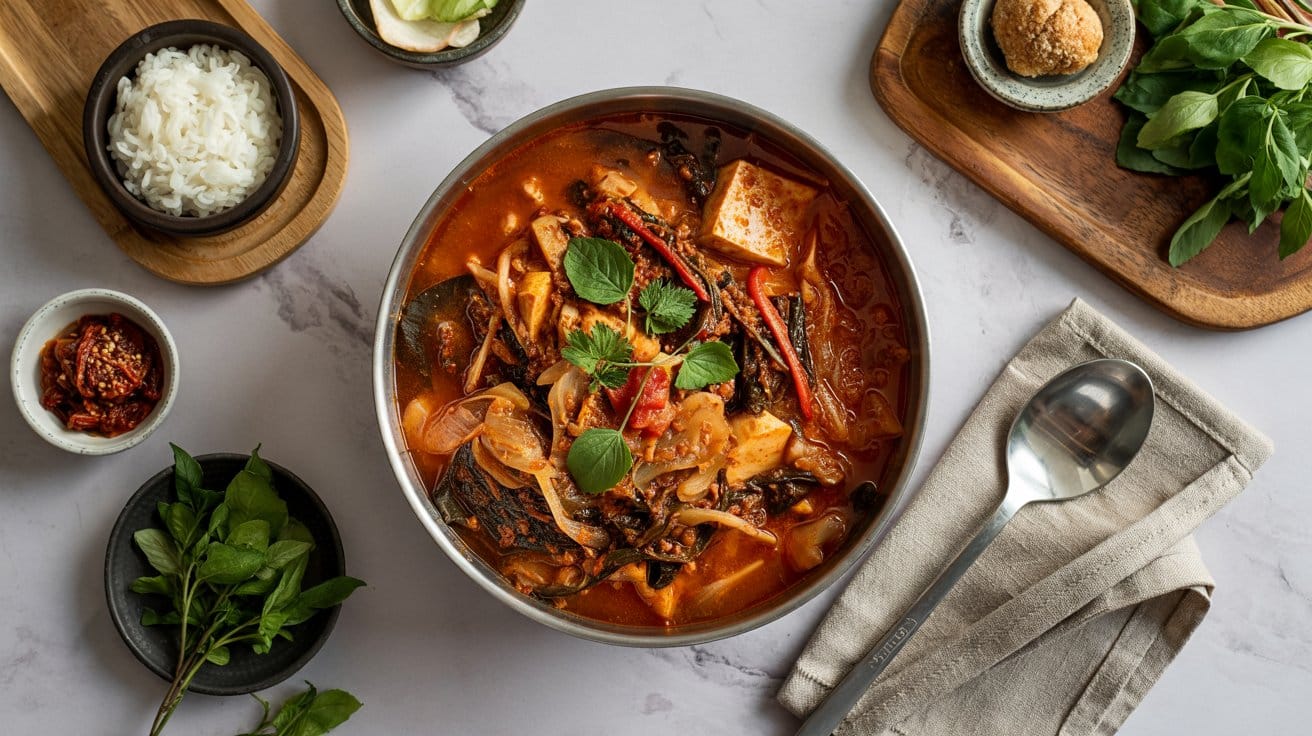
This hearty stew highlights tangy, well-fermented kimchi and warming Korean spices for a bright, savory bowl. You can make it on a weeknight and serve it with rice or steamed greens for a filling meal.
The flavors deepen if you let it sit for a short rest before serving.
Why This Recipe Works
The tangy kimchi and spicy elements create a lively, balanced broth. Vegetables and tofu add substance while keeping the stew fresh and approachable.
- Tangy fermented backbone - The well-aged kimchi gives the broth bright acidity that cuts through the richness.
- Layered spicy notes - Gochugaru and gochujang combine for warm heat and rounded umami.
- Hearty vegetable pieces - Potatoes and mushrooms hold up during simmering so each spoonful feels substantial.
- Silky tofu finish - Firm tofu soaks up the broth and adds a soft, comforting texture to contrast the vegetables.
Ingredient Swap Ideas
Swaps help you adapt to dietary needs or pantry limits while keeping the stew's character. Choose swaps that preserve acidity, heat, and body.
- Firm tofu - Use tempeh for a nuttier chew and extra protein that still absorbs the stew flavors.
- Potatoes - Swap with sweet potato for a sweeter finish or daikon for a crisper, milder texture.
- Gochugaru - Use a mix of crushed red pepper and smoked paprika to reproduce color and gentle heat if gochugaru is unavailable.
- Vegetable broth - Use water with a strip of kombu and a splash of soy sauce for an easy umami-rich substitute.
Ingredients
- 4 cups vegan kimchi - chopped; include about ½ cup kimchi juice.
- 1 tablespoon vegetable oil - for sautéing.
- 1 medium yellow onion - sliced.
- 3 cloves garlic - minced.
- 1 tablespoon gochugaru - Korean red pepper flakes.
- 1 tablespoon gochujang - Korean chili paste.
- 6 cups vegetable broth - low-sodium preferred.
- 8 ounces firm tofu - cut into 1-inch cubes.
- 1 cup shiitake mushrooms - sliced.
- 2 medium potatoes - peeled and cut into ½-inch cubes.
- 2 green onions - sliced on the diagonal.
- 1 tablespoon soy sauce - or tamari.
- 1 teaspoon sugar - to balance acidity.
- 1 teaspoon toasted sesame oil - for finishing.
- Salt - to taste.
Instructions
- Heat the oil in a large pot over medium heat and sauté the sliced onion for 4-5 minutes until softened.
- Add the minced garlic, chopped kimchi, gochugaru, and gochujang and cook for 3-4 minutes, stirring so the kimchi softens and releases its juices.
- Pour in the vegetable broth and kimchi juice, then add the potatoes and mushrooms; bring to a boil and reduce to a simmer for 12-15 minutes until the potatoes are tender.
- Gently stir in the tofu cubes and soy sauce, then simmer for 4-5 minutes until the tofu is heated through and has absorbed some broth.
- Stir in the sugar and sesame oil, taste and adjust salt as needed, then scatter the sliced green onions on top and serve hot.
20. Vegan Korean Meatballs with Tangy Dipping Sauce
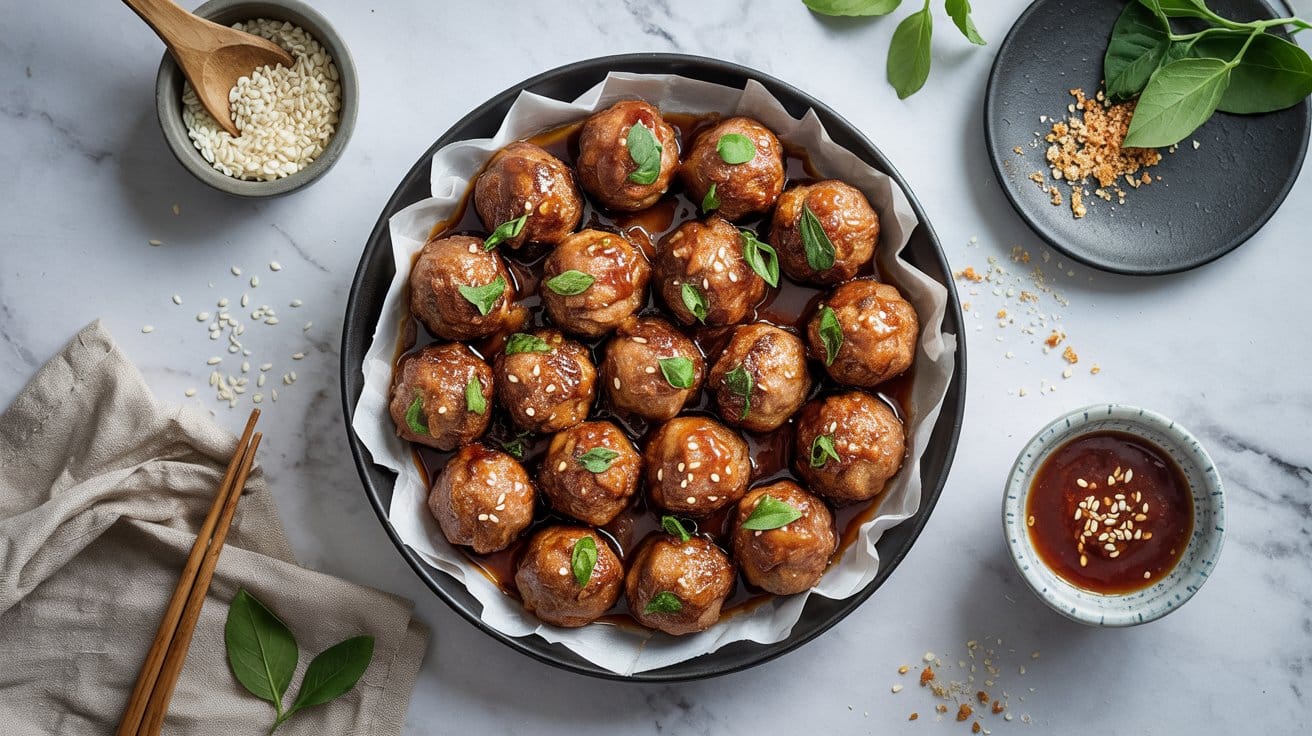
These chewy, savory plant-based meatballs carry classic Korean flavors in a form that's easy to cook and share. You'll get umami from mushrooms and gochujang heat balanced with a bright, tangy dipping sauce.
Serve them as an appetizer, weeknight main with rice, or on lettuce wraps for a casual meal.
Why This Recipe Works
These meatballs combine familiar textures and bold Korean seasonings for an approachable vegan dish. The dipping sauce adds acidity and sweetness that keeps the bites lively.
- Umami mushroom base - Finely chopped mushrooms provide a meaty texture and deep savory flavor that anchors the meatballs.
- Gochujang seasoning - The fermented chili paste adds spicy-sweet depth that mimics classic Korean sauces and holds up after cooking.
- Tofu binder for chew - Pressed firm tofu gives structure and chew without heaviness, so the balls stay tender inside.
- Pan-sear finish - Browning in a skillet creates a crisp exterior while keeping the center moist for great contrast.
Ingredient Swap Ideas
Swaps let you adapt to pantry items or dietary needs without changing the method or overall flavor.
20 Latin-Inspired Salad Recipes to Brighten Your Table pairs bright flavors with greens. 20 Latin-inspired salad recipes to brighten the table provides many fresh pairing ideas. 20 easy Asian-inspired beef stir-fry quick meals lists quick mains that match many of these sides.
- Firm tofu - Use firm tempeh crumbled and lightly mashed for a nuttier texture that still binds well.
- Shiitake mushrooms - Replace with cremini mushrooms chopped fine for a milder umami boost and similar moisture.
- Panko breadcrumbs - Swap with gluten-free breadcrumbs or quick oats ground slightly for a similar binder and structure.
- Gochujang - Mix 1 tablespoon miso, 1 tablespoon chili paste, and 1 teaspoon maple syrup as a fermented, spicy-sweet substitute.
Ingredients
- 14 oz firm tofu - pressed and crumbled.
- 8 oz shiitake mushrooms - finely chopped; stems removed.
- 1 cup panko breadcrumbs - for binding.
- 3 tablespoons cornstarch - for extra hold.
- 3 tablespoons soy sauce - or tamari.
- 2 tablespoons gochujang - Korean chili paste.
- 1 tablespoon sesame oil - toasted.
- 3 garlic cloves - minced.
- 1 tablespoon fresh ginger - grated.
- 3 green onions - thinly sliced.
- 2 tablespoons neutral oil - for frying.
- 3 tablespoons soy sauce - for dipping sauce.
- 1.5 tablespoons rice vinegar - for tang in sauce.
- 1 tablespoon maple syrup - to balance heat in sauce.
- 1 teaspoon sesame oil - for finishing the sauce.
- 1 teaspoon toasted sesame seeds - for garnish.
Instructions
- Press the tofu for 15-20 minutes to remove excess water, then crumble by hand into a bowl so it resembles coarse crumbs.
- Sauté the chopped mushrooms with garlic and ginger in 1 tablespoon neutral oil over medium heat until most moisture evaporates and they brown, about 6-8 minutes.
- Mix the cooked mushrooms with the crumbled tofu, panko, cornstarch, 3 tablespoons soy sauce, 2 tablespoons gochujang, sesame oil, and green onions until evenly combined, then chill 10-15 minutes to firm up.
- Shape the mixture into 1-inch meatballs and pan-fry in the remaining oil over medium heat, turning every 3-4 minutes, until golden and set, about 10-12 minutes total.
- Whisk together 3 tablespoons soy sauce, rice vinegar, 1 tablespoon gochujang, maple syrup, and 1 teaspoon sesame oil for the dipping sauce, then serve with the warm meatballs topped with sesame seeds.
Frequently Asked Questions
A good 20 Flavor-Packed Korean-Inspired Vegan recipe balances flavor, texture, and ease of preparation. Look for clear instructions, manageable ingredient lists, and options you can adapt to what is already in your kitchen.
Yes. Many 20 Flavor-Packed Korean-Inspired Vegan recipes are beginner-friendly and require only basic cooking skills.
Start with shorter ingredient lists and simple techniques before working up to more complex versions.
Olive oil, garlic, salt, basic spices, and an acid like lemon juice or vinegar cover most recipes. Stocking these reduces the need for special shopping trips for most variations.
Can these recipes be scaled up for meal prep?
Yes.
Most recipes in this style scale well for batch cooking.
Double or triple the base and store in portions. Sauces, grains, and roasted proteins are the easiest components to prep in advance.

Andrew Gray is a passionate food writer and recipe creator who built Gusto Meadow to celebrate delicious, approachable cooking. With years of experience in restaurants and catering, he brings a grounded, real-world understanding of flavors, technique, and what truly works in a home kitchen.
At Gusto Meadow, Andrew focuses on fresh, seasonal ingredients and simple methods that anyone can follow. His goal is to make cooking feel fun, doable, and rewarding — whether you’re preparing a quick weeknight dinner or exploring something new.