Short answer: A sealed bottle of vinegar-based hot sauce stays good for years, and the date to trust is the Best By date on the bottle. After you open it, plan to finish it within about six months for the best flavor, and know that the fridge stretches that window. Throw it out if you see mold, smell something yeasty or rotten, or the bottle fizzes or bulges. Creamy and fresh-pepper sauces are a different case and belong in the fridge from the start.
Hot sauce is one of the longest-keeping bottles in the shelf life guides we cover, because vinegar, salt and chili make it hard for bacteria to grow. South Dakota State University Extension says a hot sauce needs a pH below 4.6 to be safe, and vinegar is the usual way to get there. What changes from bottle to bottle is how much of that protection the recipe has, which is why a Louisiana-style sauce and a creamy sriracha mayo need different handling.
How Long Does Hot Sauce Last?
It depends on the style, and the manufacturers say it more clearly than most websites do. Louisiana Hot Sauce gives its sauce five years from when it is made, while its wing sauce gets two years, according to the brand's own FAQ. Frank's RedHot gives 24 months from the date of manufacture if the bottle is unopened, as its FAQ explains.
| Style | Examples | After opening | What sets its clock |
|---|---|---|---|
| Vinegar-based | Tabasco, Louisiana, Frank's RedHot, Cholula | Pantry is fine, fridge keeps flavor and color longer | The Best By date, then about 6 months once open |
| Sriracha and chili-garlic | Huy Fong sriracha, chili garlic sauce | Cool, dry pantry is fine, fridge keeps the color bright | The best-before date near the neck of the bottle |
| Fermented | Live, unpasteurized craft sauces, homemade batches | Fridge, usually | The label, or a tested recipe with a measured pH |
| Creamy or fresh | Sriracha mayo, aioli-style sauces, fruit or fresh-pepper sauces | Fridge from day one | Days to a few weeks, not months |
Once you open a bottle, oxygen starts changing the color and flavor. Cholula tells you to finish a bottle within six months of opening and says that using it after that, while it is still inside its Best By date, carries no health risk even though the flavor will not be the same. The USDA's FoodKeeper app lists hot sauce at six months in the pantry and notes that it stays fresher longer in the fridge.
Single brands follow the same vinegar-and-salt logic. A sealed bottle of Tabasco keeps for years because its vinegar and salt leave bacteria little to work with, and Huy Fong says its sriracha needs no fridge, even after opening, as long as it sits in a cool, dry place.
Does Hot Sauce Need to Be Refrigerated?
For vinegar-based bottles, no, refrigeration is a quality choice and not a safety rule. Louisiana Hot Sauce says refrigerating is "simply just a personal preference," Cholula says its sauce "does not need to be kept cool," and Frank's says the fridge helps keep flavor but is not necessary. Huy Fong Foods told Simply Recipes that sriracha does not have to be refrigerated, even after opening, as long as it sits in a cool, dry place.
- Vinegar-based sauces such as Tabasco, Louisiana-style and Frank's
- Sriracha, according to its maker
- Any bottle that is still sealed
- Anything creamy, with mayo, egg or dairy
- Sauces with fruit or tomato, which may not be acidic enough
- Live fermented sauces and homemade batches
- Any label that says "refrigerate after opening"
If you use a bottle slowly, the fridge is still the easy choice. Cold slows the browning that comes from air getting into the bottle, so a bottle that lasts you a year will look and taste closer to the day you opened it. Keep it away from the stove and from a sunny windowsill either way, because heat does the same damage faster.
Vinegar does most of the protecting here, and white vinegar ages slowly in the pantry. Other salty, acidic condiments such as Worcestershire sauce in the cupboard follow similar habits. Fish sauce is another bottle that sits half-used in many pantries, and opened fish sauce also depends on the bottle.
How Can You Tell If Hot Sauce Went Bad?
Check the sauce with your eyes and nose before you taste it. These are the signs that mean the bottle goes in the trash:
- Mold on the surface, around the cap or on the neck, or fuzzy specks floating in the sauce.
- A yeasty, rotten or sour smell that does not match the normal vinegar and pepper tang.
- Fizzing, a bulging lid, or a spurt when you open it, which means gas is building up inside.
- A flat or off taste that you can still notice after you stir it.
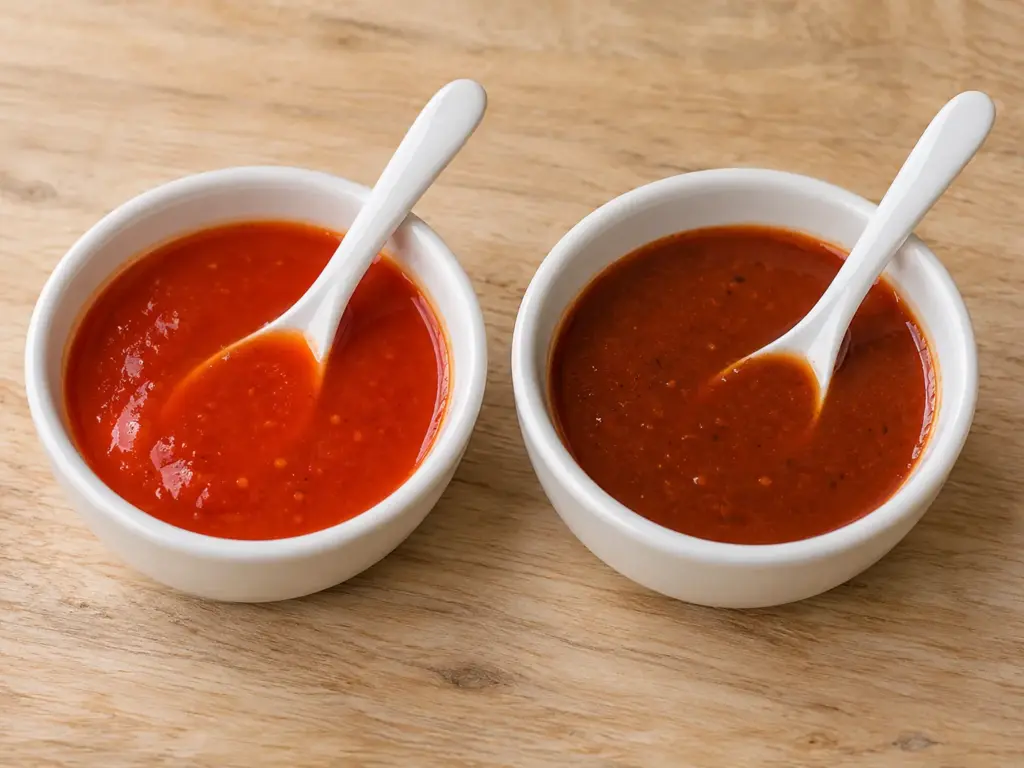
If the sauce looks normal but you are unsure, remember that the smell test works better on vinegar-based sauces than on fermented ones. A fermented sauce can smell funky when it is perfectly fine, so you need the label, the pH, or a clear memory of when you opened it. When none of those are available, the bottle is not worth the risk.
Is Hot Sauce Safe After the Best By Date?
The USDA treats a "Best if Used By" date as a quality marker and not a safety date, so a shelf-stable product with no signs of spoilage can still be eaten after it. The makers see it more strictly. Louisiana Hot Sauce advises discarding a bottle past its date, and Cholula does not recommend eating it past the date or at all if the bottle has no date.
Your call depends on the bottle. A sealed vinegar-based sauce that is a few months past its date, kept in a cool cupboard and smelling normal, is a reasonable one to use, and Frank's even says a refrigerated bottle holds good flavor for a few weeks beyond its date. A bottle that is years past the date, has no date at all, or contains cream or fresh ingredients is one we would throw out.
How Long Do Fermented Hot Sauces Last?
Fermented sauces follow different rules because the acid comes from bacteria rather than from a splash of vinegar. Utah State University Extension says that nearly all fermented foods need canning or refrigeration and that fermentation alone cannot make a shelf-stable food. If the bottle you found says "keep refrigerated," treat that as a real instruction.
Some commercial fermented sauces are heat-treated and finished with vinegar, and those can behave more like a regular vinegar-based bottle. Only the label can tell you which kind you have. For a homemade batch, the same extension page says the pH has to drop below 4.6 and you should check it with a pH meter or test strip, because food that looks fine can still carry harmful bacteria.
SDSU Extension adds that boiling a sauce kills active bacteria but not their spores, and that a bottled sauce can be low in oxygen, so a home cook should rely on a tested recipe and not on guesswork. A tested recipe will also tell you how long to keep the finished sauce, and that is a better number than any general rule on a blog.
What About Creamy or Fresh-Ingredient Hot Sauces?
These are the ones to handle like leftovers. A sauce with mayonnaise, cream or egg has far less acid protecting it, and a sauce made with fresh peppers, garlic, mango or tomato may not be acidic enough to sit in the cupboard either. Refrigerate them right away, and do not leave them out for more than two hours, or one hour when the room is above 90°F, which is the USDA's danger zone limit.
A homemade creamy sauce falls under the USDA's general advice that leftovers keep 3 to 4 days in the fridge. A store-bought creamy bottle should carry its own use-by instructions, and you should follow them over any rule of thumb. A sriracha-style sauce you have mixed into a dip gets the same treatment, and an empty bottle of chili garlic sauce in a recipe can be replaced with a chili garlic sauce substitute from your pantry.
How Do You Make Hot Sauce Last Longer?
Because air is what dulls color and flavor after opening, most of the gain comes from keeping less air and less heat around the sauce:
- Screw the cap on tightly every time, and wipe the neck so dried sauce does not harden under the lid.
- Store it away from the stove, the toaster and the window, where heat and light break down color first.
- Move bottles you use slowly to the fridge, because a bottle that lasts a year spends far more time exposed to air.
- Write the open date on the label with a marker, so you are not guessing six months later.
- Buy the smaller bottle if you only use a few drops at a time.
If you throw out a bottle of Louisiana hot sauce in the middle of a recipe, another vinegar-based sauce can usually serve as a substitute for Louisiana hot sauce.
Sources
- Louisiana Hot Sauce FAQ: five-year shelf life, refrigeration optional, discard past Best By.
- Frank's RedHot FAQ: 24 months unopened, date on the bottle, refrigeration optional.
- Cholula FAQ: no refrigeration needed, six months after opening, Best By date.
- Simply Recipes on Huy Fong sriracha storage (via AOL, August 2025).
- Do You Really Need to Refrigerate Hot Sauce?: USDA FoodKeeper six-month pantry figure, fruit-based sauces, spoilage signs.
- SDSU Extension, How to Make a Safe Hot Sauce: pH below 4.6, thermal step, spores.
- Utah State University Extension, Tips to Safely Ferment at Home.
- USDA FSIS, Food Product Dating.
- USDA FSIS, Danger Zone (40°F to 140°F).
- USDA FSIS, Leftovers and Food Safety.

Andrew Gray is a passionate food writer and recipe creator who built Gusto Meadow to celebrate delicious, approachable cooking. With years of experience in restaurants and catering, he brings a grounded, real-world understanding of flavors, technique, and what truly works in a home kitchen.
At Gusto Meadow, Andrew focuses on fresh, seasonal ingredients and simple methods that anyone can follow. His goal is to make cooking feel fun, doable, and rewarding — whether you’re preparing a quick weeknight dinner or exploring something new.