It depends which jackfruit you mean.
- Ripe jackfruit is a sweet fruit with 95 calories per 100 g.
- Young canned jackfruit copies the texture of pulled pork, not its protein: about 1 g per 100 g, against about 25 g in braised pork.
- The brine adds roughly 170 to 430 mg of sodium per 100 g, so check the can.
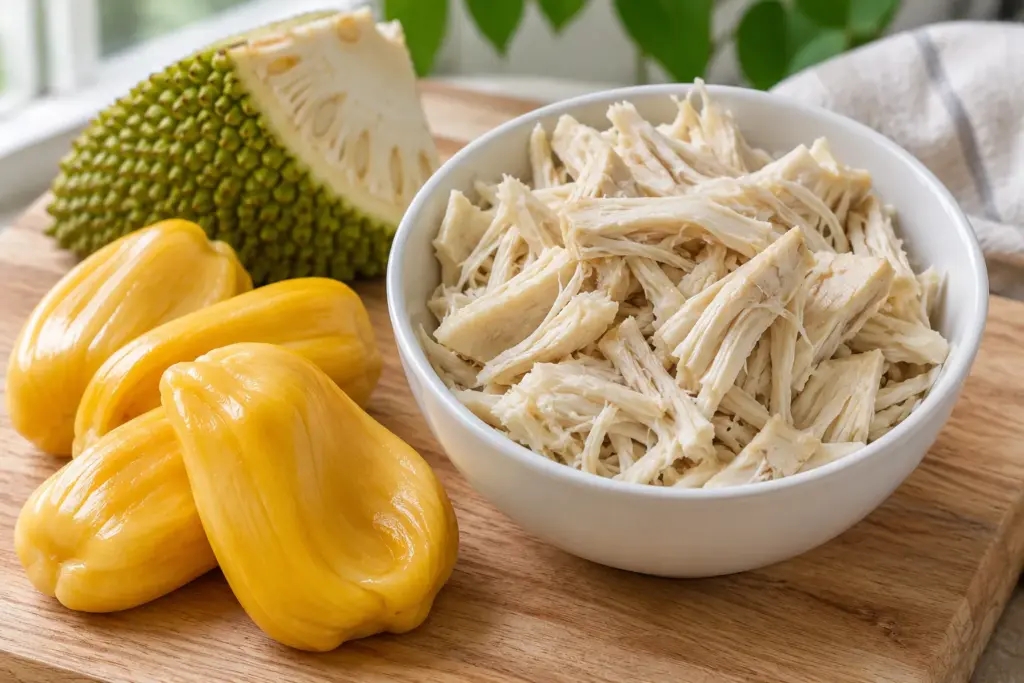
Jackfruit confuses shoppers more than most foods, because one tree gives you a sweet fruit, a stringy vegetable and a pile of seeds, and each one has its own taste and nutrition. Recipes that use jackfruit as a meat swap are calling for the young, unripe kind, which has almost nothing in common with the golden pods in produce photos.
1. What Are the Three Kinds of Jackfruit?
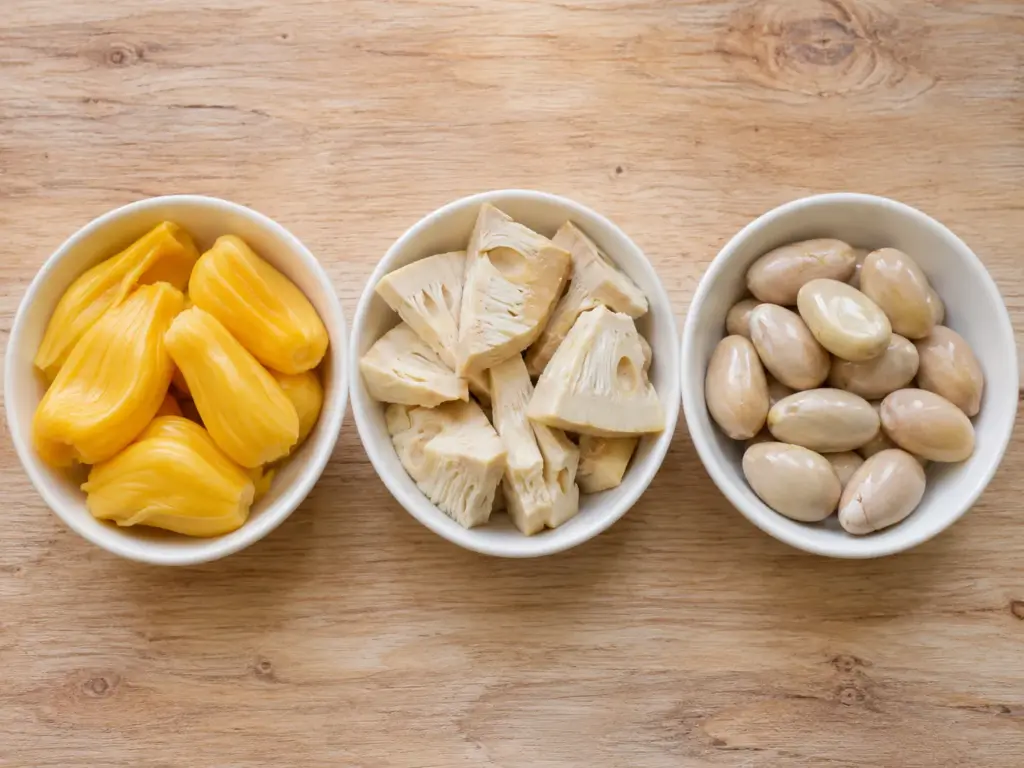
The same fruit gets sold in three very different forms, and the label on the can or the bag is what tells you which one you hold:
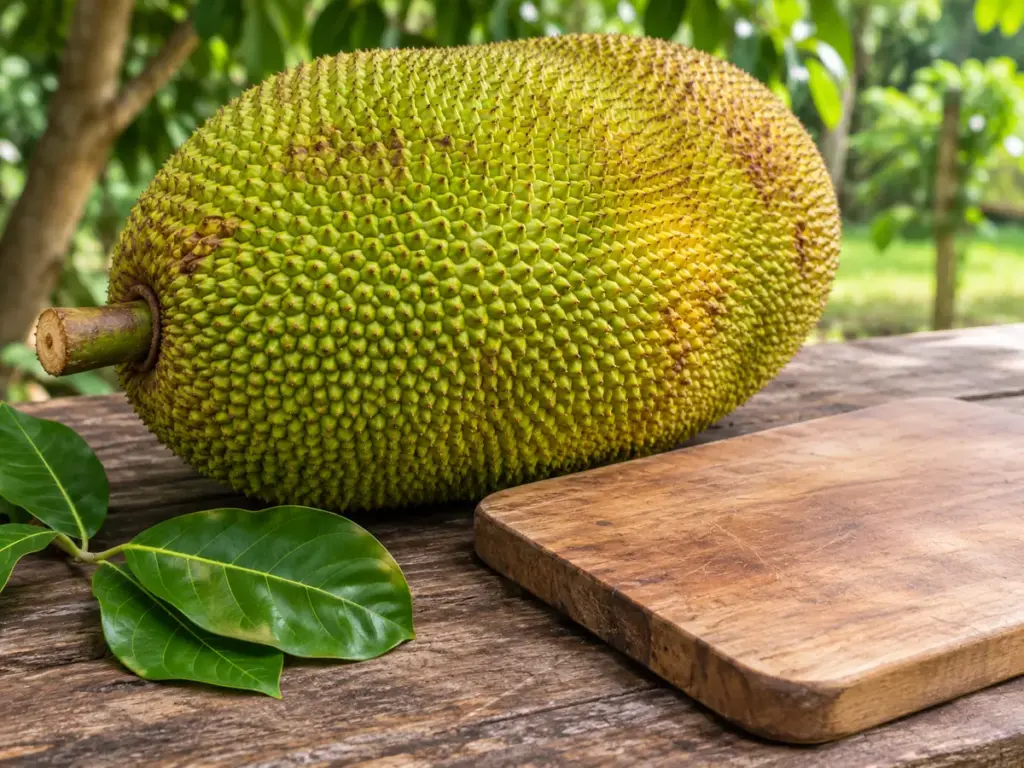
- Ripe jackfruit is the soft, golden, sweet flesh you eat like fruit. It is sold fresh, frozen, or canned in syrup, which is a dessert product and not a meat swap.
- Young (green) jackfruit is picked unripe and sold peeled and cut, usually in cans or pouches packed in brine or water. This is the one used for pulled-pork-style tacos and sandwiches, and it is mild until you season it.
- The seeds sit inside the ripe fruit. They are usually eaten boiled or roasted, and they are starchy.
2. How Does Jackfruit Compare With Pork and Chicken Per 100 g?
All numbers below are per 100 g (about 3.5 oz) of the food as eaten. The ripe, syrup-packed, pork, chicken, tofu and bean rows come from USDA FoodData Central. USDA's reference entries have no plain brine-packed young jackfruit, so that row shows the range on three US cans' nutrition labels, such as Roland's and Sprouts' cans.
| Food (per 100 g) | Calories | Protein | Fat | Fiber | Sodium |
|---|---|---|---|---|---|
| Ripe jackfruit, raw | 95 | 1.7 g | 0.6 g | 1.5 g | 2 mg |
| Jackfruit, canned in syrup | 92 | 0.4 g | 0.1 g | 0.9 g | 11 mg |
| Young jackfruit in brine (three US labels) | 27 to 40 | 0.9 to 1.8 g | 0 to 2.1 g | up to 4.5 g | 173 to 431 mg |
For comparison, here are two meats per 100 g.
- Pork shoulder, braised, lean and fat, has 235 calories, 24.9 g protein, 14.3 g fat, 0 g fiber and 96 mg sodium.
- Chicken breast, roasted, has 165 calories, 31.0 g protein, 3.6 g fat, 0 g fiber and 74 mg sodium.
Two plant foods come next, also per 100 g.
- Tofu, raw, firm, has 144 calories, 17.3 g protein, 8.7 g fat, 2.3 g fiber and 14 mg sodium.
- Kidney beans, boiled, no salt, have 127 calories, 8.7 g protein, 0.5 g fat, 7.4 g fiber and 2 mg sodium.
The protein column is the one that matters for a meat swap. Pork and chicken carry roughly 14 to 35 times as much protein as young jackfruit, and tofu and kidney beans are the plant foods that actually come close. The pork and chicken here are cooked without added salt, so a seasoned or sauced version will have more sodium than these figures.
3. Does Young Jackfruit Replace the Protein in Pulled Pork?
No. Pulled pork starts as braised shoulder, and a 100 g portion has about 24.9 g of protein. To match that from the highest-protein can in the table you would need to eat about 1.4 kg (3 pounds) of young jackfruit. What the jackfruit gives you is the shredded, saucy texture of pulled pork dinners.

Jackfruit does win on calories and fat. Young jackfruit has 27 to 40 calories and up to 2 g of fat per 100 g, while braised pork shoulder has 235 calories and 14.3 g of fat. Your sauce changes that fast, because a ready-seasoned barbecue jackfruit product in USDA's branded database lists 60 calories, 1.3 g of protein and 333 mg of sodium per 100 g.
If protein is what you want from the swap, build it into the plate:
- Firm tofu has 17.3 g per 100 g, far above jackfruit, though still lower than pork or chicken.
- Tempeh is another firm soy option you can crumble into the same sauce.
- Beans and lentils fit a saucy filling too, and they are common meatless ground beef swaps.
The same gap shows up if you swap jackfruit for chicken, since roasted breast has 31 g of protein per 100 g. Plant-based meat substitutes built on tofu or beans carry far more protein than jackfruit does.
4. How Much Sodium Is in Canned Young Jackfruit?
It varies by brand more than you might expect. The three US labels we checked list 173 to 431 mg of sodium per 100 g, which is about 8 to 19 percent of the 2,300 mg Daily Value the FDA uses on labels.
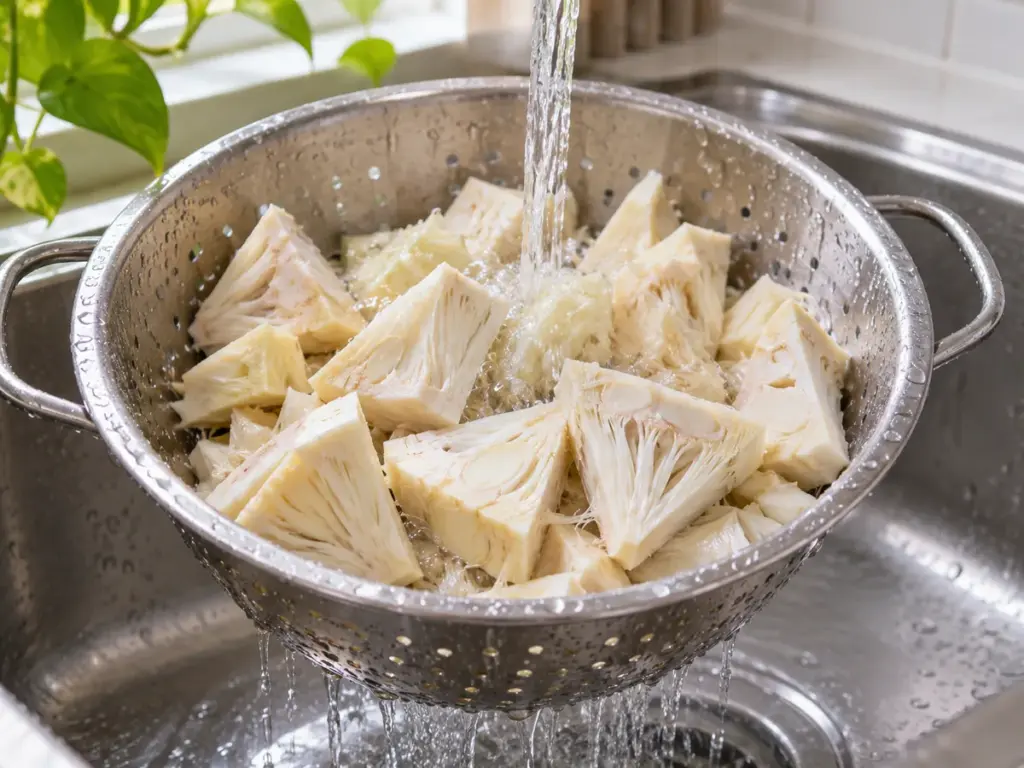
The ripe fruit has 2 mg, so nearly all of that sodium comes from the brine. A jackfruit sandwich also gets salt from the sauce and the bun, so the can is only the first piece of the total.
- Read the ingredient list. You want young jackfruit, water and salt, sometimes with citric acid or lime. A can packed in syrup is the sweet fruit, not a meat swap.
- Compare sodium per serving. Brands differ by about 2.5 times, so the lowest-sodium can is an easy win.
- Drain and rinse. Studies on canned beans found that draining cut sodium by 36 percent and draining plus rinsing cut it by 41 percent. We found no jackfruit-specific test, but the chunks sit in the same kind of brine.
- Season it yourself. Add the salt and sauce after rinsing, so you control how much goes in.
5. Is Ripe Jackfruit a Healthy Fruit?
It is an ordinary fruit with a few numbers worth knowing. Per 100 g, raw jackfruit has 95 calories, 19.1 g of sugars, 1.5 g of fiber and 448 mg of potassium. That is more calories and sugar than mango, which has 60 calories and 13.7 g of sugars, and a bit more potassium than a banana at 358 mg. Banana has more fiber, at 2.6 g.
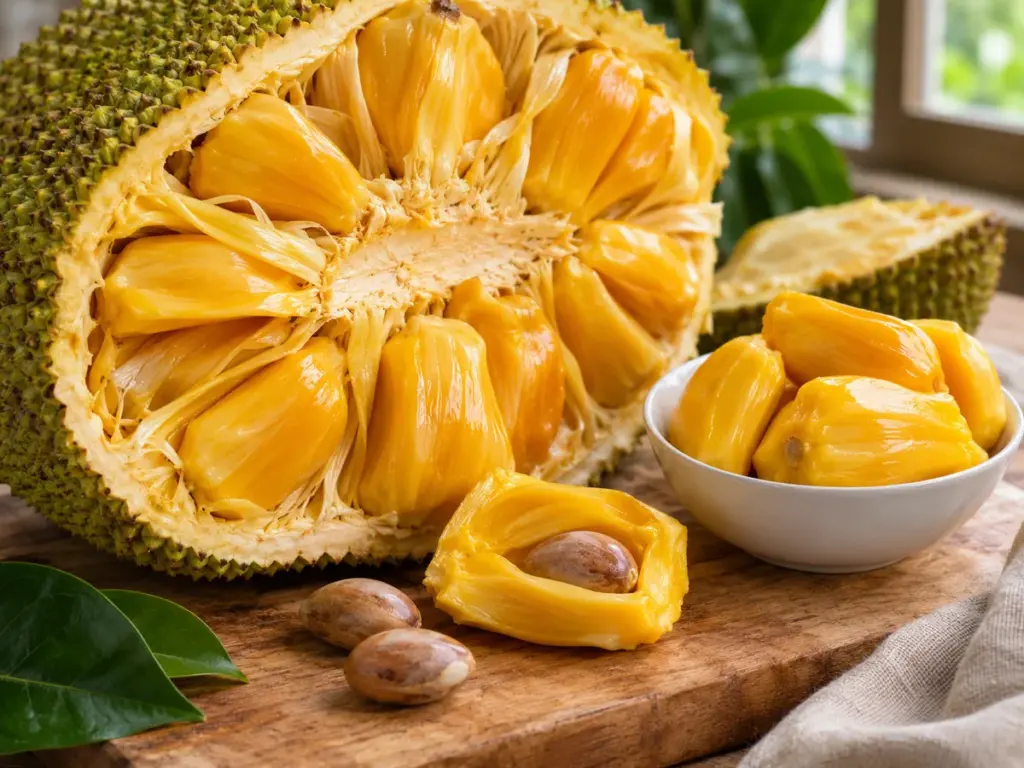
So a handful of ripe pods is a fine snack, and a big bowl adds up in sugar and calories the way any sweet fruit does. It is not a protein food at 1.7 g per 100 g.
6. What About the Seeds?
The USDA reference data we checked lists jackfruit pulp but no jackfruit seeds, so the numbers come from published food tables and reviews and they vary. A review of the research describes the seeds as starchy, at around 20 percent starch on a dry basis, and says they are usually eaten boiled or roasted.
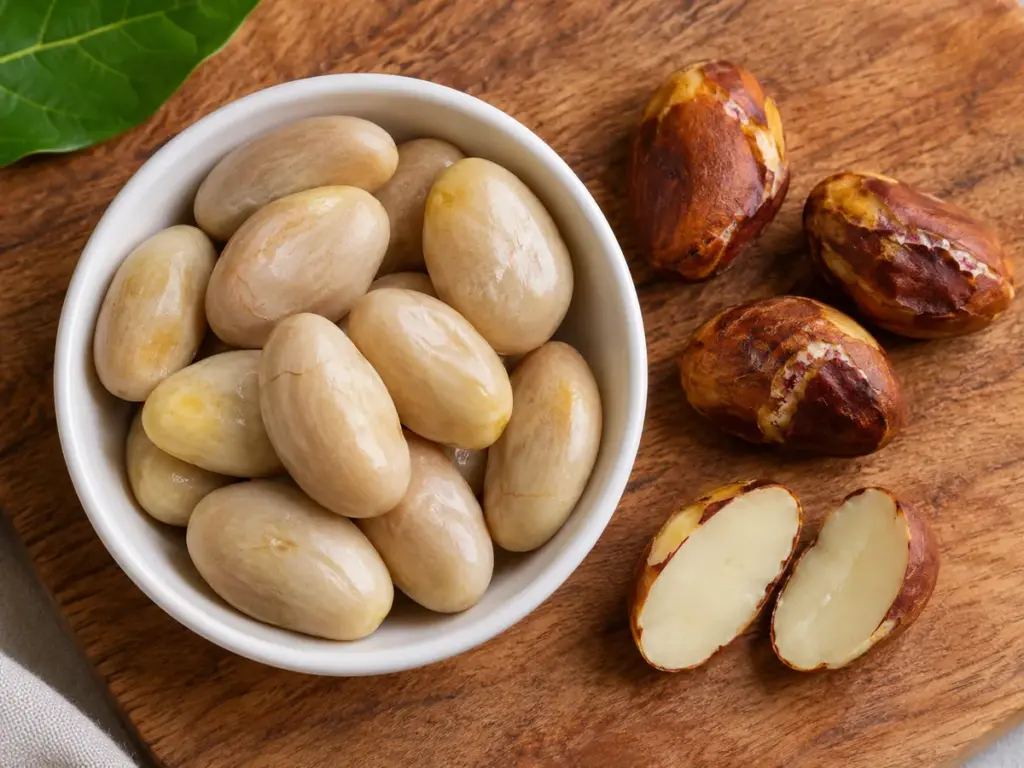
Treat any single seed number as a rough guide, because it changes with the variety and with how dry the seeds were when they were tested.
7. Which Jackfruit Should You Buy?
- You want a sweet snack or dessert topping
- You accept 95 calories and 19 g sugars per 100 g
- Protein is not the goal (1.7 g per 100 g)
- You want pulled-pork texture in tacos
- You want fewer calories than pork: 27 to 40 per 100 g
- You will rinse the can and add beans or tofu
Whichever you pick, serve young jackfruit with something that carries protein. Beans on the side do that job well, and whatever sides you would pair with pulled pork sandwiches sit just as well next to a jackfruit one. If you are cooking for someone who needs a high-protein meal, jackfruit alone will not meet that need and pork, chicken or tofu will.
Sources
- USDA FoodData Central, SR Legacy: Jackfruit, raw, Jackfruit, canned, syrup pack, Pork, fresh, shoulder, arm picnic, lean and fat, cooked, braised, Chicken breast, meat only, roasted, Tofu, raw, firm, Kidney beans, boiled, without salt, Mangos, raw and Bananas, raw
- USDA FoodData Central, Branded Foods: Upton's Naturals Bar-b-que Jackfruit
- Open Food Facts, label data for young jackfruit in brine: Roland, Sprouts Organic and Thai Agri Foods
- FDA, Daily Value on the Nutrition and Supplement Facts Labels
- Duyff, Mount and Jones (2011), Sodium Reduction in Canned Beans After Draining, Rinsing
- Ranasinghe et al., Nutritional and Health Benefits of Jackfruit: A Review (PMC)

Andrew Gray is the founder of Gusto Meadow, a food site for home cooks. He writes ingredient substitutes, food comparisons, taste guides, storage guides and dinner ideas, with numbers drawn from sources such as USDA, FDA and university extension services.
At Gusto Meadow, Andrew focuses on fresh, seasonal ingredients and simple methods that anyone can follow. His goal is to make cooking feel fun, doable, and rewarding — whether you’re preparing a quick weeknight dinner or exploring something new.
Storage and food-safety numbers follow USDA, FDA and university extension guidance.