Oolong tea tastes between green tea and black tea, from fresh and floral to toasty and nutty.
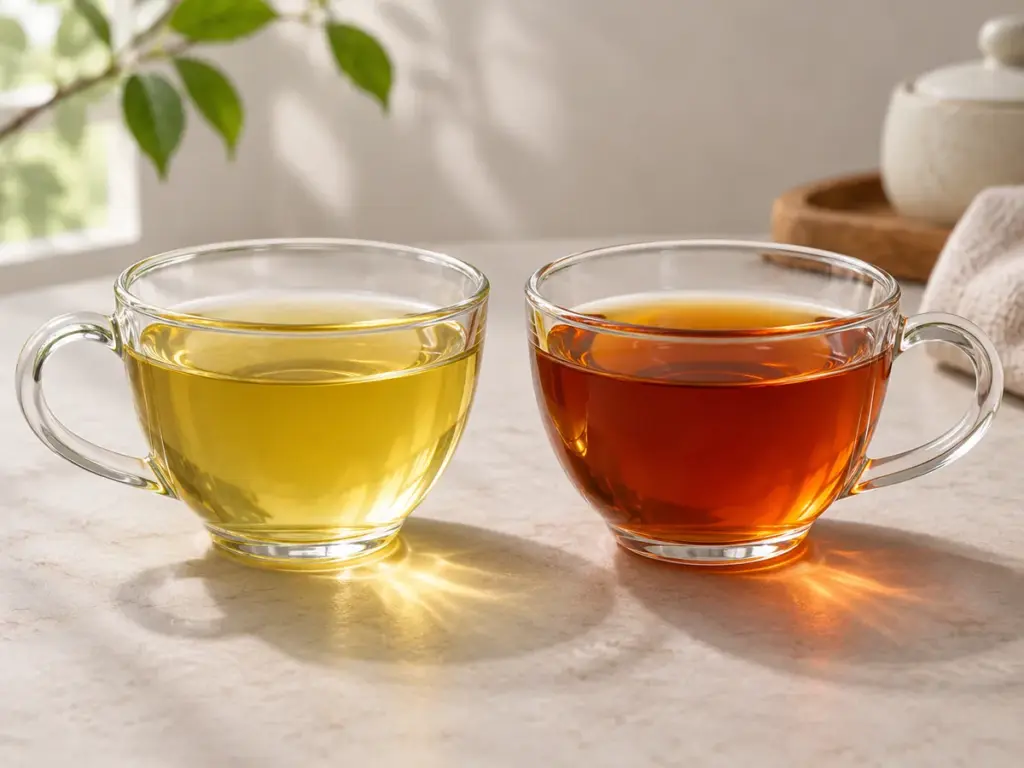
- A lightly oxidized oolong such as Anxi Tieguanyin smells flowery and fresh and brews golden yellow.
- A roasted or heavily oxidized oolong tastes nutty or toasty and brews reddish brown.
- Brew it around 190°F for 3 to 5 minutes, because hotter water and longer steeps bring out bitterness.
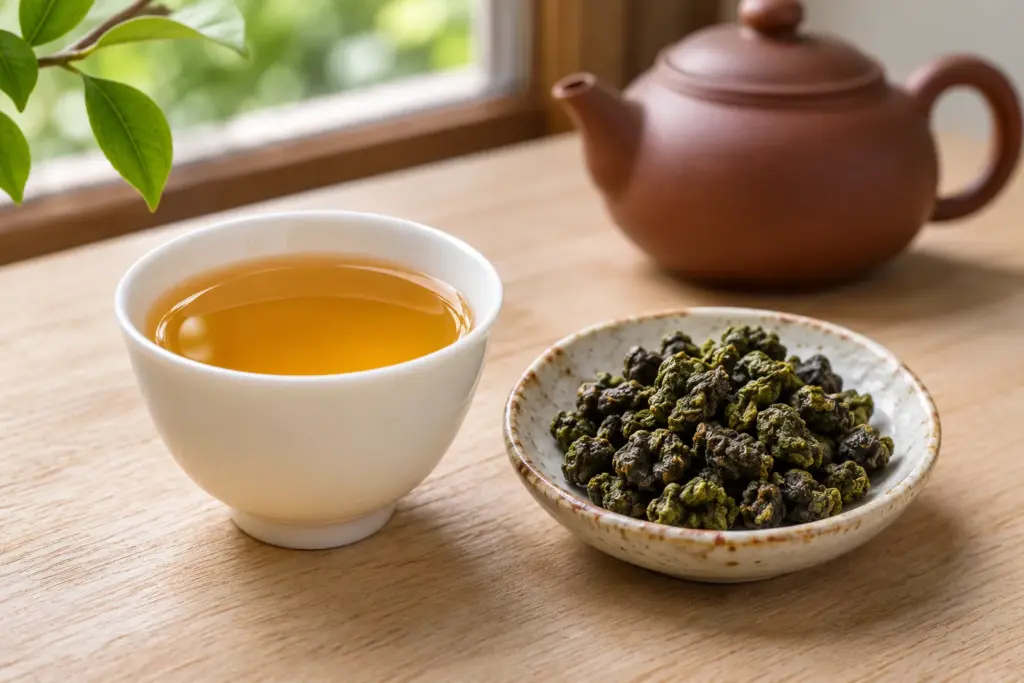
Oolong is a partly oxidized Chinese tea, so one cup can taste green and fresh and the next thick and roasted, which makes it one of the harder drinks to pin down among what foods and drinks taste like. Two things decide where your cup lands: how far the leaf oxidized and how heavily it was roasted.
1. What Does Oolong Tea Taste Like?
Wikipedia describes the range as green and fresh, sweet and fruity with honey aromas, or woody and thick with roasted aromas. The cause is oxidation, which can run from about 8 percent to 85 percent depending on the style. A leaf at the low end stays close to green tea, and a leaf at the high end gets close to black tea.
- Very flowery, fresh and delicate aroma, as in Anxi Tieguanyin
- Golden yellow tea
- Close to green tea, with only a little oxidation
- Tightly rolled green pellets
- Roasted, nutty character, as in Muzha Tieguanyin
- Reddish-brown tea
- Stronger taste than the light style
- Wuyi rock teas such as Da Hong Pao read as minerally and toasty
Most oolongs sit between these two cards, so you may taste floral, fruity and toasty notes together in a single cup. Tea Source describes Dan Cong oolong as sweet, fruity and fragrant and Taiwanese Bao Zhong as distinctly green and floral. Read the style name on the label, because "oolong" alone tells you very little about what you will taste.
Your cup turns bitter and sharp mostly when the leaf steeps too long or the water is too hot, so a tea you dislike may only need a shorter brew. The brewing steps below show you how to adjust it.
2. What Makes Oolong Different From Green or Black Tea?
Oolong, written wulong in Chinese, literally means dark dragon tea, and Wikipedia notes that nobody agrees on where the name came from. The green, oolong and black tea you buy all come from the tea plant. What you taste depends on how far the leaf oxidizes before heat stops it: green barely oxidizes, black goes almost all the way, and oolong stops anywhere in between.
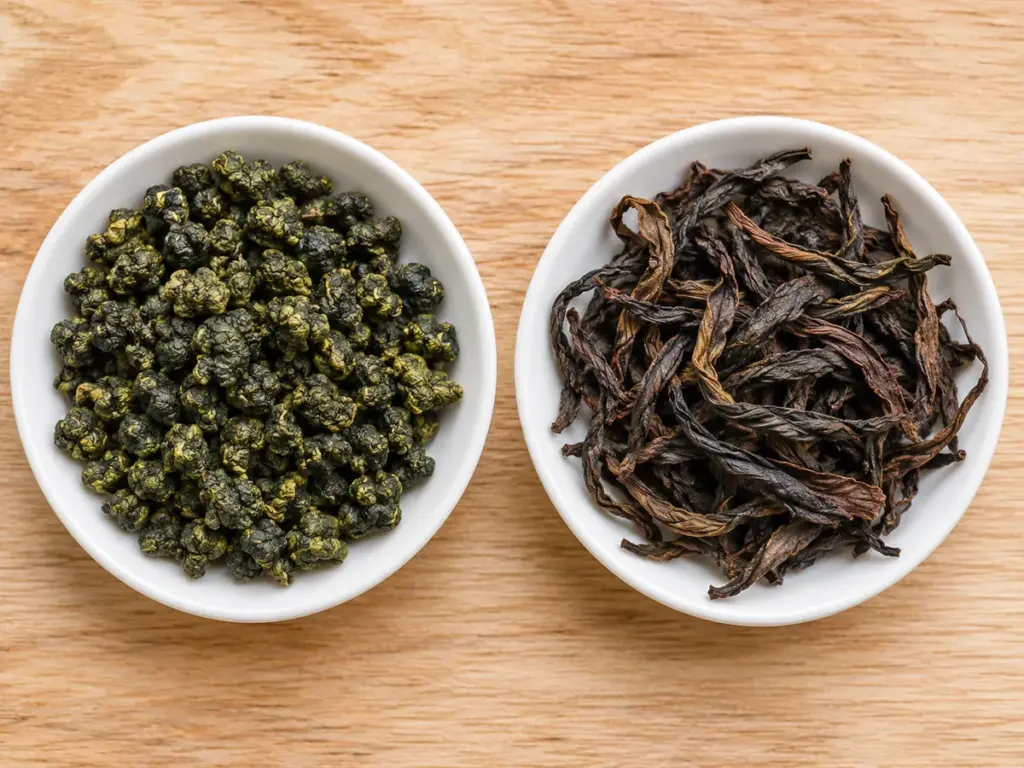
Here is the path from leaf to cup, with the step that changes flavor the most in bold:
- Wither. The picked leaves wilt, and some oxidation already starts here.
- Shake and bruise. Makers shake and roll the leaves in a bamboo sieve, which Wikipedia calls the most crucial step for the fragrance and taste of Da Hong Pao.
- Stop the oxidation. Heat halts it at a chosen point, and that point sets whether the tea tastes green or dark.
- Shape. The leaf is rolled into tight balls, as in Dong Ding, or twisted into long strips, as in Da Hong Pao.
- Roast. Some teas are baked for hours at different temperatures, which adds the nutty, toasty notes.
Oxidation decides green versus dark, and roast decides how toasty, so you can taste two oolongs with the same oxidation and still find them different. Oolong is also a true tea, unlike a herbal tisane, and Pu Erh is a separate fermented Chinese tea with its own flavor.
3. How Do the Famous Oolongs Taste?
Four styles cover most oolong labels you will see, two from Fujian, China and two from Taiwan. Each has its own oxidation and roast, which is why they taste so different from one another.
Tieguanyin
Tieguanyin, "Iron Goddess of Mercy," began in the 19th century in Anxi, Fujian, and you will find it sold in two very different styles.
- Close to green tea, with only a little oxidation
- Very flowery, fresh and delicate aroma
- Golden yellow tea
- Roasted, with a stronger taste
- Nutty character
- Reddish-brown tea
Spring and autumn harvests are the most prized for a fruity, sometimes berry-like taste, and Wikipedia lists 194 to 203°F as its brewing range.
Da Hong Pao
Da Hong Pao, "Big Red Robe," is a Wuyi rock tea grown in the Wuyi Mountains of Fujian. Wikipedia credits it with a unique orchid fragrance and a long-lasting sweet aftertaste, and Tea Source calls Wuyi rock oolongs minerally, toasty and citrusy.
The long, dark, twisted leaves can be steeped about nine times, and some drinkers rate the third and fourth steeps as the best.
Dong Ding
Dong Ding, "Frozen Summit," comes from a mountain in Nantou County, Taiwan, where plants from the Wuyi Mountains arrived about 150 years ago. The leaf is tightly rolled with a light, distinctive fragrance.
Oriental Beauty
Oriental Beauty (Dongfang Meiren) comes from Hsinchu County, Taiwan. It is heavily oxidized, around 70 percent, and not roasted, which brings it close to black tea.
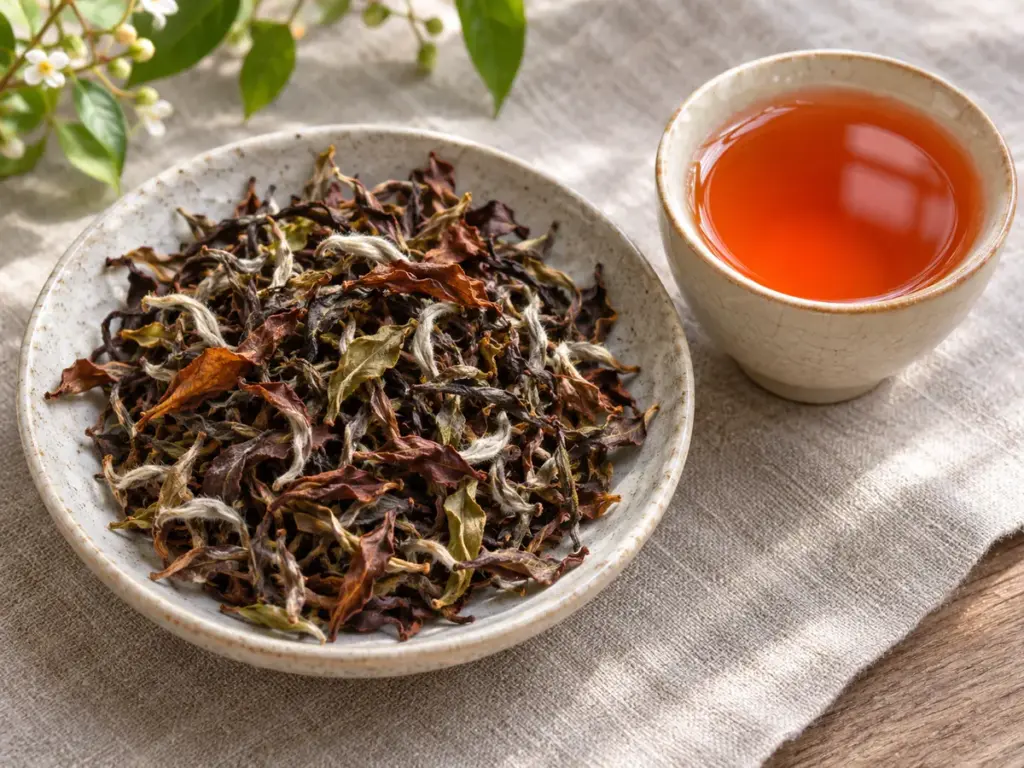
Leafhoppers called tea jassids bite the leaves before picking, and the plant's reaction creates the compounds behind its fruity, honey-like aroma. Wikipedia describes a sweet cup without bitterness, brewed at a lower 176 to 185°F for 1 to 2 minutes on the first pot.
4. Which Oolong Should You Try First?
Start from the tea you already drink. This table matches each habit to the nearest oolong:
| If You Like | Try | What to Expect |
|---|---|---|
| Green tea | Light Anxi Tieguanyin | Flowery, fresh aroma and golden yellow tea, with little oxidation |
| Black tea | Oriental Beauty | Fruity, honey-like aroma and a sweet cup, about 70% oxidized |
| Toasty, nutty flavors | Muzha Tieguanyin or a charcoal-roasted Dong Ding | Roasted, nutty taste and reddish-brown tea |
| Mineral depth | Da Hong Pao | Orchid fragrance, long sweet aftertaste, toasty and minerally notes |
A light Tieguanyin sits closest to green tea, so if your usual cup is jasmine green tea, it is the easiest first step. Buy a small bag first, since the same style name can taste different from one grower to the next.
5. How Much Caffeine Does Oolong Have?
USDA FoodData Central lists brewed oolong at 16 mg of caffeine per 100 g, which works out to about 38 mg in an 8-ounce cup. Brewed green tea (12 mg) and brewed black tea (20 mg) sit on either side of it. The cup column below scales each record by its gram weight.
| Brewed Tea | Caffeine per 100 g | About Per Cup | Calories per 100 g |
|---|---|---|---|
| Green (FDC 171917) | 12 mg | 29 mg (245 g cup) | 1 |
| Oolong (FDC 174120) | 16 mg | 38 mg (237 g cup) | 1 |
| Black (FDC 173227) | 20 mg | 47 mg (237 g cup) | 1 |
These are averages for one prepared drink. Your cup can land above or below them, because Wikipedia notes that caffeine in tea varies with the growing area, harvest and processing, and a heavier scoop or longer steep adds more. USDA's oolong record also shows 0 g of fat, 1 mg of calcium and 12 mg of potassium per 100 g before any milk or sugar.
6. How Do You Brew Oolong So It Tastes Its Best?
Oolong accepts a wide temperature range. Wikipedia lists 180 to 205°F, and Tea Source says water around 190°F is frequently suggested but that oolong is not too fussy. Tightly rolled leaves also need room to unfurl, so you will usually find them sold as loose leaf instead of tea bags.
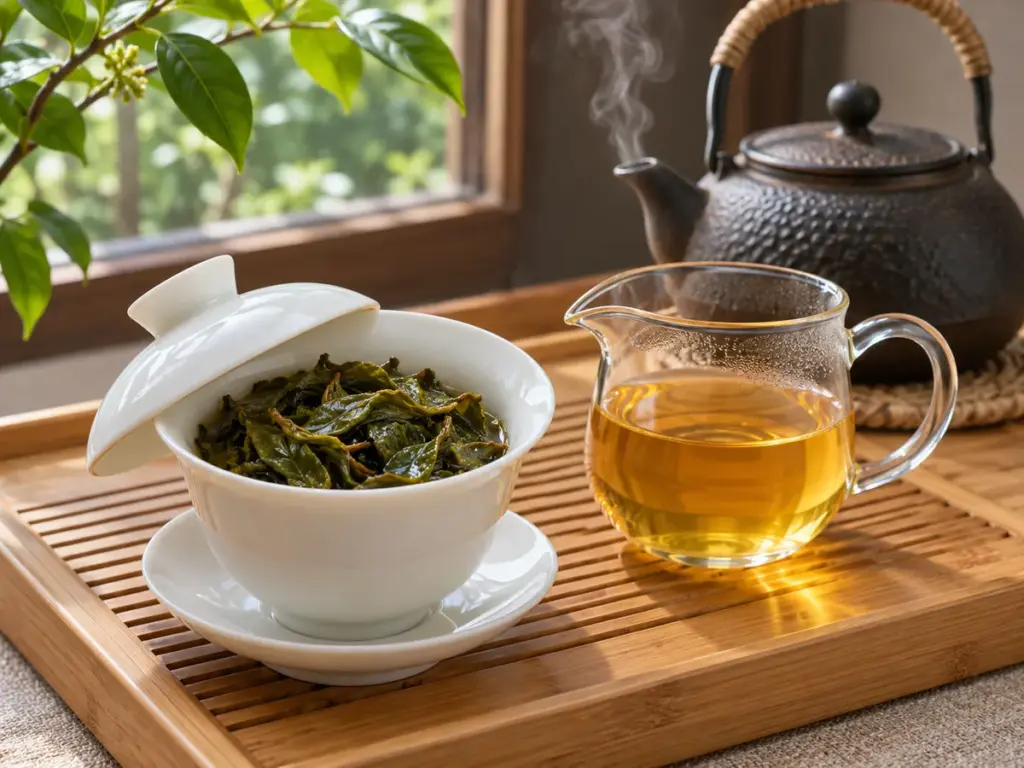
- Measure the leaf. Tea Source suggests 3 to 4 grams of tea per 8 to 12 ounces of water for a Western cup.
- Heat the water. Aim for about 190°F, a little hotter for Tieguanyin and cooler (176 to 185°F) for Oriental Beauty.
- Steep 3 to 5 minutes. Taste yours at 3 minutes, since Wikipedia lists anything from 1 to 5 minutes depending on preference.
- Or brew gongfu style. Tea Source uses 6 to 8 grams in a 150 ml gaiwan, pours off the first steep, then steeps 10 to 20 seconds per round.
- Re-steep the leaves. Good oolong leaves keep their flavor through several rounds, up to nine for Da Hong Pao.
7. Can You Cook With Oolong Tea?
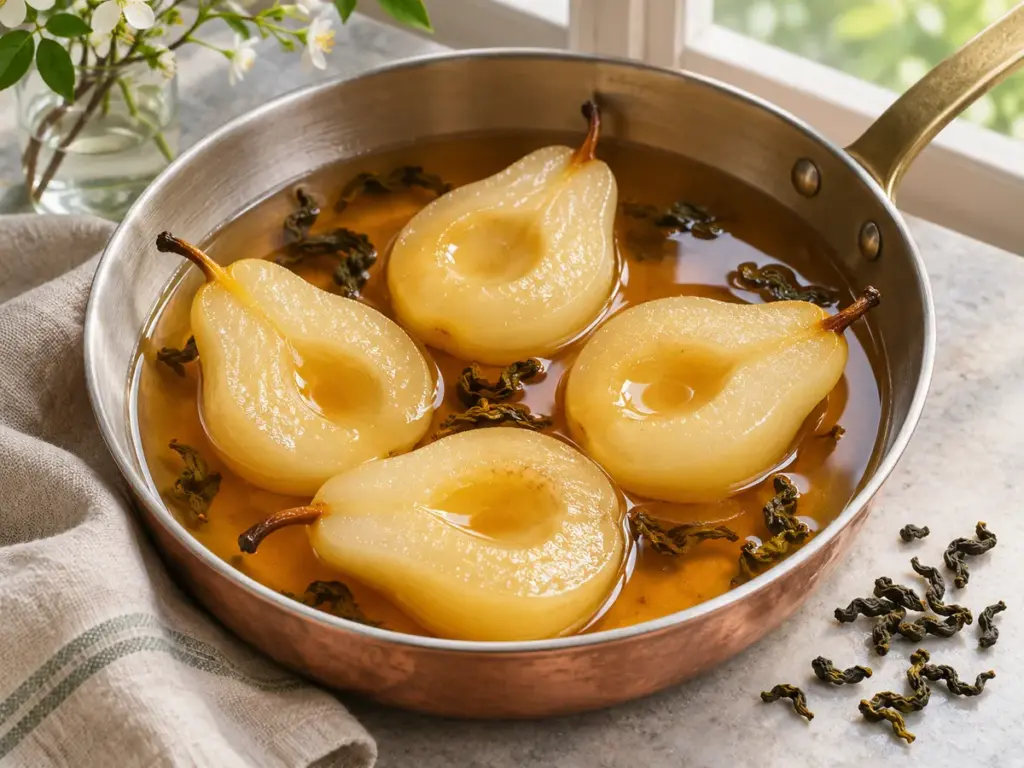
You can. Brewed oolong works as a liquid anywhere you would use water or stock for flavor, and we'd reach for a roasted style when your dish needs a nutty note.
- Poach fruit. Simmer peeled pear halves in strong, lightly sweetened oolong until tender.
- Marinate. Use strong, cooled tea as part of a marinade for chicken or pork.
- Steep in milk. Warm milk with a spoonful of leaves, strain, and sweeten for a tea latte or milk tea.
Sources
- USDA FoodData Central, SR Legacy, FDC 174120: Beverages, tea, Oolong, brewed, with FDC 171917 (green) and 173227 (black)
- FDA: Spilling the Beans, How Much Caffeine Is Too Much?
- Tea Source: About Oolong Tea
- Wikipedia: Oolong, Tieguanyin, Da Hong Pao, Oriental Beauty, Dong Ding tea
- Harney & Sons: Dong Ding Traditional

Food writer at GustoMeadow. Writes ingredient substitutes, food comparisons, taste guides and storage guides for home cooks.
Storage and food-safety numbers follow USDA, FDA and university extension guidance.