
Absinthe is considered a strong and strong drink that holds characteristics that reckon it one of the best.
Since the 19th century, it's been a famous alcoholic beverage, but it became legal only a few decades after.
It's a liquor that contains substances such as thujone and others that build its unique flavor properties.
It's somehow made a comeback into the world of culinary wine and liquor.
Although we expect a lot from Absinthe when having it neat, it actually pulls out a lot of surprise punches.
What does Absinthe taste like? Let's discuss and figure out what's so great about it.
What is Absinthe?
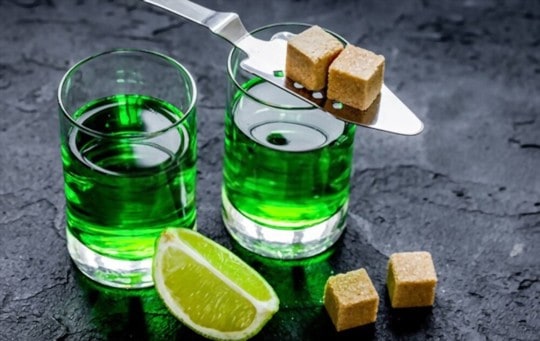
Absinthe is a type of liquor that is commonly known as the 'Green Fairy' because of its green hue.
It originates from Switzerland, wherein it was created in the early years of the 1800s.
Soon, it traveled through the French regions and slowly became a hot and popular accompaniment to food.
Although the color of this liquor is green, when mixed with water, it changes and becomes milkier to a certain degree.
It's quite a strong and powerful distilled spirit, and it's derived from botanical ingredients such as fennel, wormwood, anise, etc.
Once distillation has taken place, herbs, and plants are added to the spirit with a little chlorophyll to bring out the radiant green shade that makes it so popular.
With 45%-85% alcohol volume, it's usually found in bottles with labels reading '90 - 170 proof'.
In the traditional manner, Absinthe is mixed with a bit of water and sugar, but it slowly traveled throughout the globe and landed in New Orleans.
That's how the sazerac cocktail came to life, and it became a huge sensation to the point that people were abusing its availability.
Because absinthe carries bright herbal and anise notes, it can pair nicely with citrus desserts - see lemon dessert pairings that work well for compatible flavors.
For a contrast to absinthe's botanical bitterness, consider the acai berry flavor guide for fruit taste notes to see how a sweet, tart fruit compares.
What Does Absinthe Taste Like?
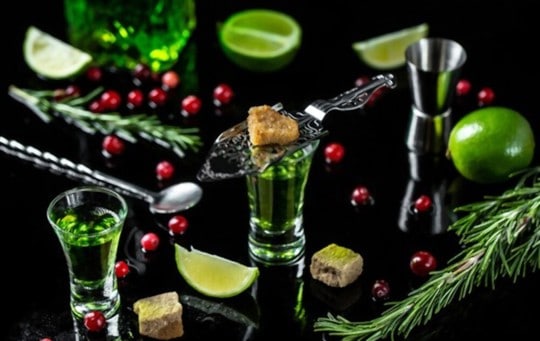
Absinthe is a type of spirit drink that is most familiar with the flavor of licorice, in particular black licorice.
Due to the extraction of special herbs such as fennel and anise, the flavor becomes a little sweet and smooth.
However, if you're looking for great quality Absinthe, you might not taste the licorice flavoring at all.
It's hard to specify the flavor palette of Absinthe because it is super complex.
Nonetheless, you can make a Swiss drink by mixing the spirit with a little sugar and water to smoothen the Absinthe.
You can even use an actual fruit juice such as mango or orange so you can get rid of the complex flavoring.
Some liquors that contain some similarities on the basis of flavor can include Pernod, Mastika, Sambuca, Pastis, Raki, Ouzo, Arak, as well as Chinchonouzo.
These liquors taste almost the same as Absinthe and can be employed in the kitchen.
You can cook up some dishes like steak, pasta, and so on with the help of these beverages to give the meal an enhanced taste.
The herbal sweetness that comes from the induced flavors makes it taste like mellow wormwood.
Even though it tastes like black jelly beans, there is no licorice root added to the process of making the Absinthe.
Owing to its base being made of herbs, it's not that potent, with its alcohol level being stronger than half of what vodka holds.
So, if you are out of vodka but require some for cooking or drink mixing, you can easily replace it with Absinthe.
It can be used as a medical treatment to deal with various diseases and ailments such as cramps, stomach aches, tuberculosis, and so on.
How to Serve Absinthe?
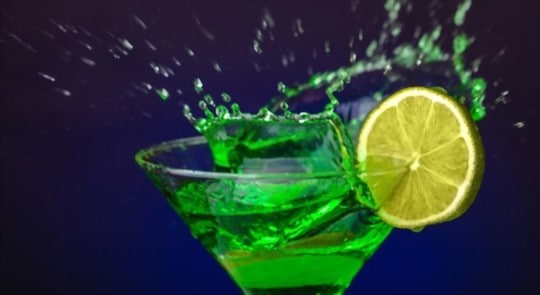
Originally employed as a medicine to help bowel issues, cramps, and more, Absinthe is quite strong and contains high alcohol content.
Hence, the beverage is often diluted with sugar, ice & water before drinking.
The traditional method of serving and drinking Absinthe is pouring the drink into a glass and then placing some sugar cubes along with water.
Stir the drink until the sugar dissolves, and it's ready to serve.
You can also try it the French way, which is simply mixing water and Absinthe via a 1:1 ratio method.
Or you can mix it with soda water to enjoy the refreshing taste of absinthe.
If you're a beginner, you can follow this simple method of preparing and serving Absinthe.
Prepare a glass of ice and water, and add one teaspoon of sugar for every one liter of Absinthe.
The final result will be a slightly diluted and sweet drink that can be drunk without much difficulty.
If you want the drink to be more potent, you can add more absinthe according to your preference.
But make sure it's not too strong to fully experience the glass without burning your throat.
But, if you can handle your alcohol, you can add as you wish.
For a tidy after-drink option, serve absinthe with small sweets; single-serve desserts for an after-dinner treat pair well without overwhelming the palate.
Flavor Profile of Absinthe Explained
Absinthe, contrary to what people believe, did not lead to the demise of Van Gogh's mental state.
It's actually a drink with a high dose of Thujone, and this can cause lots of mental discrepancies, such as seizures and hallucinations.
This is why it was condemned and banned in the United States as well as Europe during the early years.
One's happiness or sadness is only enhanced with a small drink.
So, do not feel discouraged from trying out this incredible drink.
Enjoy it at home with utmost responsibility, and get creative with how you serve it.
For a side-by-side look at similar spirits, see Chartreuse vs Absinthe: flavor comparison. For technical flavor context, also read extract vs flavor comparison explained for clarity.
Frequently Asked Questions
It's a liquor that contains substances such as thujone and others that build its unique flavor properties. Absinthe is a type of spirit drink that is most familiar with the flavor of licorice, in particular black licorice.
Due to the extraction of special herbs such as fennel and anise, the flavor becomes a little sweet and smooth.
Freshness matters. Absinthe tends to have a brighter, more pronounced taste when fresh.
Stored or aged versions may develop mellower or slightly different flavor notes.
Significantly. Younger or less ripe versions are often sharper, more astringent, or more bitter.
As it matures, flavors typically mellow and deepen into something more complex and approachable.
Texture and taste are inseparable. A pleasant texture encourages slower eating and better flavor perception.
Off-putting textures - too mushy, too fibrous, or unexpectedly gritty - can make even good flavors less enjoyable.