
In our epic kitchen showdown, cordials and liqueurs battle for the crown. T4One's sweet.
The other, strong. What's the real deal?
Cordials are your dessert in a glass, folks. Think fruity, floral, and fabulously sweet.
Liqueurs, on the other hand, pack a punch. They're the secret sauce in your favorite cocktails.
Now, I'll admit, we've had our moments of mix-up. I remember grabbing a bottle of what I thought was a chill cordial, only to find out it was a liqueur with enough kick to start a party in my mouth.
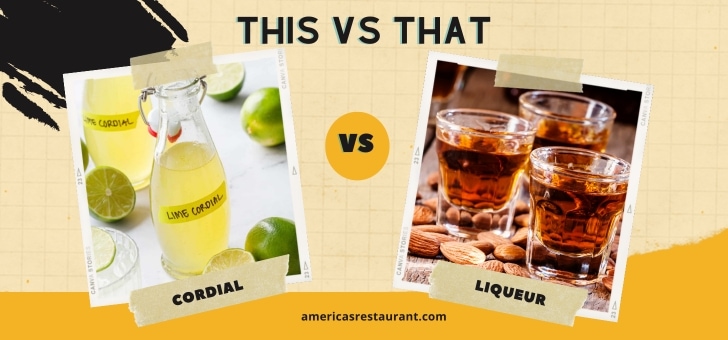
What is Cordial?

Cordial is a sweet non-alcoholic syrup made from fruits, flowers, or herbs mixed with sugar and water.
It is used to flavor cocktails, carbonated drinks, desserts, and baked foods - try lemon dessert pairing ideas when matching cordials with citrus desserts.
Cordials are known for their unique flavors that vary significantly depending on the ingredients used during production - see extract vs flavor comparison explained for how flavor sources differ.
Cordials do not contain any alcohol content while liqueurs are alcoholic beverages.
While liqueurs are typically used in mixology for their richness and sweetness, cordials add a fruity or floral essence to a drink.
In summary, while there be overlap in the flavors available in both cordials and liqueurs, understanding the different uses and strengths of each will lead to better choices when mixing your next drink.
What is Liqueur?

A liqueur is a type of sweet alcoholic beverage that is flavored with various herbs, fruits, flowers or nuts and often contains added sugar.
Unlike cordials which can be made at home with any combination of fruit, water, and sugar; liqueurs are commercially produced and have specific recipes to ensure consistency.
These beverages are typically enjoyed as an after-dinner drink or added to cocktails for a unique flavor.
For savory snack ideas that contrast sweet liqueurs, consider pairings like those in what to eat with guacamole pairing ideas to balance flavors.
Differences Between Cordial and Liqueur

Cordials and liqueurs are two alcoholic beverages that are similar but have distinctive characteristics.
A cordial is a sweetened fruit-based syrup, while liqueur is a combination of alcohol, flavoring, and sugar.
These drinks differ in their ingredients, preparation methods, and flavors - for examples and swaps, view maraschino liqueur alternatives guide.
While cordial is made from steeping fruits in sugar or honey, liqueur combines a distilled spirit with fruit extracts, herbs, and spices.
Cordial is usually non-alcoholic or has a negligible amount of alcohol.
In contrast, the alcohol content in liqueurs varies significantly but typically ranges between 20-40% ABV.
Cordial flavors are usually derived from the fruit they're made from, while liqueurs can offer more complex flavors like coffee or nuts.
Cordials can be enjoyed as stand-alone drinks or mixed with water to create refreshing beverages.
On the other hand, liqueurs' complex flavors add depth to cocktails and desserts.
Both cordials and liqueurs have their unique characteristics that make them desirable for different purposes.
Understanding these differences helps you choose the better option based on your preferences or purpose.
Ingredients Used
The article covers the comparative analysis of cordial and liqueur.
The ingredients used in both are responsible for their distinct flavors and textures.
Cordials are prepared by mixing fruit extracts, flowers and sugar syrup, while liqueurs are created by blending spirits with natural or artificial flavorings, sweeteners and other additives.
Cordials have a sweeter taste due to higher sugar content than Liqueurs.
flavor
There are distinct differences that set them apart.
Cordials usually have a sweeter flavor, with a focus on fruit-based flavors such as cherry, raspberry, or apricot.
On the other hand, liqueurs have a more complex flavor, often incorporating herbs and spices alongside more traditional fruity notes.
This makes them ideal for improving cocktails and mixed drinks.
In addition to their flavors, the alcohol content of cordials and liqueurs can also vary.
Cordials typically have a lower alcohol content than liqueurs, often hovering around 20% ABV.
Liqueurs, meanwhile, can range from around 15% ABV to over 40%, depending on the specific brand and recipe.
Ultimately, whether you choose cordials or liqueurs will depend on your personal preferences and what you plan to use them for.
If you're looking to sweeten up a cocktail or add an extra layer of fruity flavor, then a cordial may be your best bet.
However, if you want to experiment with more complex mixed drinks that incorporate herbs and spices alongside fruity notes, then liqueurs could be the way to go.
The key is to experiment with different ingredients until you find the perfect balance for your needs.
Production Method
The production process of cordials and liqueurs differs significantly.
Cordials are typically made by mixing spirits with natural or artificial flavorings and sweeteners, while liqueurs are made by steeping or infusing fruits, herbs, spices or flowers in spirits.
The resulting mixture is then strained and combined with sugar to create a sweet, flavorful syrup.
This distinction in production method impacts the taste and serving options of each beverage.
Cordials are usually lighter in alcohol content due to their simpler production process, making them a popular choice for mixing into cocktails or using as a base for non-alcoholic drinks.
Liqueurs, on the other hand, have a more complex flavor and higher alcohol content, often enjoyed neat or on the rocks as an after-dinner digestif.
One unique aspect of liqueur production is the use of 'maceration', in which ingredients are soaked in alcohol for weeks or even months to extract their flavors fully.
This technique results in bold flavors that can be unique to each brand and type of liqueur.
While both cordials and liqueurs have their advantages depending on personal preference and intended use, understanding their production methods can help guide the decision-making process when choosing which one to enjoy.
Alcohol Content
The alcohol content in cordials and liqueurs varies widely.
Cordials have a lower alcohol content, typically ranging from 15-30%, while liqueurs contain more alcohol, ranging from 20-60%.
This difference is due to the different production methods used; cordials are infusions of fruits, flowers or herbs in a base liquor and sweetened with sugar syrup, while liqueurs are made from distilled spirits flavored with fruits, herbs or nuts - see grain alcohol vs vodka comparison to understand common spirit bases.
When deciding between cordials and liqueurs, it's important to consider the occasion and individual preferences.
If you're looking for a lightly sweet drink with a low alcohol content that can be sipped on its own or used as an ingredient in cocktails, then cordials might be the way to go.
However, if you're looking for a stronger drink that packs a punch and adds depth of flavor to cocktails, liqueurs may be the better option.
Some liqueurs have a higher sugar content than cordials due to added syrups and flavors.
This can make them more suitable for dessert-style cocktails and after-dinner drinks.
It's always important to read labels carefully and consider personal preference when making choices about alcoholic beverages.
Ultimately, both cordials and liqueurs offer unique flavors that can enhance cocktails or be enjoyed on their own.
The decision between the two ultimately depends on the desired alcohol content and flavor one is seeking.
Similarities Between Cordial and Liqueur

Cordial and Liqueur share many similarities being alcoholic beverages made with fruits, herbs or nuts.
Both are sweetened, concentrated syrups used as a base for various cocktails - consider St-Germain substitute ideas for cocktails when a floral note is needed.
They can be consumed alone as an after-dinner drink or mixed with other beverages.
These drinks are commonly created by mixing fruit extracts into alcohol and then adding sugar to sweeten the flavor.
Some cordials do contain small amounts of alcohol, which is often added during the final stages of production.
Both cordial and liqueur bring sweetness and flavor to cocktails while reducing the bite of stronger spirits.
In terms of ingredients, they are both made using fruits, nuts, and herbs that lend taste to different cocktails such as Margaritas, Martinis amongst others.
Even though cordials are more popularly known to be non-alcoholic versions of liqueurs due to their high sugar content; some brands have been gaining market shares strategically maneuvering within this space.
It can be argued to declare the differences between Cordial and Liqueur that determines their suitability towards certain preferences rather than declaring a 'better' option based on inherent properties of either drink.
Culinary Uses and Pairings
Cordial and liqueur possess unique flavors that enhance dishes.
Understanding their uses and pairings can improve your culinary skills.
Each ingredient has distinct applications, but cordial is often used to add sweetness to desserts or cocktails while liqueur is used to deepen the flavor of drinks or sauces.
Matching cordial with fruits and chocolates creates decadent treats, whereas liqueurs like vermouth can balance bitter and sour flavors in savory entrees - for fruit-forward pairings, see watermelon smoothie pairing ideas.
Experimentation will lead to excellent dishes that guests will surely rave about.
Distinguishing Cordial and Liqueur Types
After comparing the various aspects of cordials and liqueurs, it can be concluded that both have their individual preferences and uses.
While cordial is non-alcoholic, sweet and used in cocktails, liqueur is alcoholic, sweet and consumed straight or with ice.
Also, cordials are available in a wide range of flavors whereas liqueurs are limited to a few popular flavors like coffee, almond and orange.
Also, cordials can be easily made at home by infusing fruits or herbs into syrups whereas making quality liqueurs would require more expertise.
However, it ultimately depends on an individual's taste preference and intended use as to which one they consider a better option.
In general, cordials may be preferred for casual social drinking while liqueurs may be chosen for formal occasions or after-dinner drinks.
Frequently Asked Questions
While liqueurs are typically used in mixology for their richness and sweetness, cordials add a fruity or floral essence to a drink. They share some similarities but each has qualities that make it better suited for certain recipes.
Sometimes. Cordial works where Liqueur is called for in certain dishes, but not all.
Check whether the recipe relies on a specific quality before substituting.
Cold preparations like salads and dressings often favor the option with a sharper, more defined flavor. Heat can mellow both, so the distinction matters more in uncooked dishes.
Do professional cooks prefer one over the other?
Professional preference depends heavily on the dish and cuisine style.
Each has its context where it outperforms the other, so most experienced cooks keep both on hand.
cherry liqueur substitute options can replace sweeter cordials in cocktails. Midori substitute ideas for cocktails work when melon notes are required.