
Coffee is king in our books. Grinding beans is where the magic starts.
There are two contenders in the ring: burr and blade grinders.
Burr grinders crush beans with precision. We get a uniform grind, essential for perfect brews.
Blade grinders? They chop.
It's like comparing a gourmet chef to chopping veggies with a sword.
We've had mornings ruined by bad coffee. Ever had a cup that screamed "bitter"?
Probably a blade grinder's fault. Our quest for the perfect cup led us here.
Now, we're spilling the beans on these grinders.
What is a Burr Grinder?
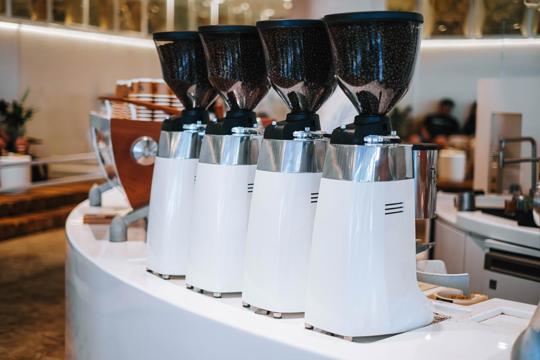
A burr grinder is a special type of grinder.
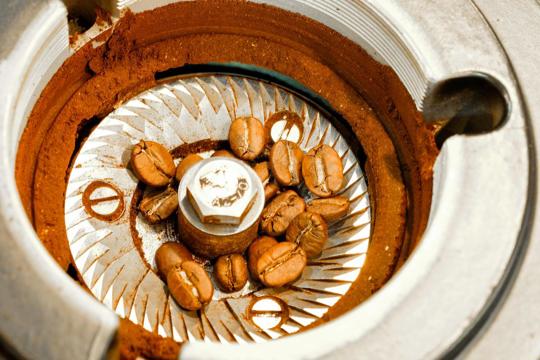
It has two abrasive surfaces, called burrs.
These crush coffee beans into uniform particles.
This process preserves the flavor better than blade grinders.
Burrs can be made of steel or ceramic.
Steel burrs are durable and efficient.
Ceramic burrs generate less heat, protecting the aroma and taste.
Using a burr grinder lets you adjust the grind size.
This is great for making different types of coffee like pour-over, French press, or espresso.
Burr grinders usually have a hopper for the beans and a container for the grounds.
Some also include a timer or scale.
This makes it easier to make the same great cup of coffee every time.
When experimenting with flavor profiles, consider dessert pairings that highlight bright notes - lemon dessert flavor pairings suggest complementary options.
What is a Blade Grinder?

A blade grinder is a type of coffee grinder that uses sharp blades to grind beans.
It's compact and affordable, making it popular with home coffee drinkers.
Unlike burr grinders which crush beans between two surfaces, blade grinders chop them.
This leads to an inconsistent grind size.
Brewing with blade grinders may mean uneven extraction and flavor inconsistencies.
Using blade grinders is simple.
Load beans into the chamber, put on the lid, press a button.
The length of grinding determines the fineness.
Yet, it's hard to get a consistent grind size.
Blade grinders are cheaper than burr grinders.
They're also small and easy to store.
However, if you want precise control and a better flavor, a burr grinder is the way to go.
It lets you adjust the distance between grinding surfaces for different coarseness levels.
Blade grinders are convenient and affordable.
Yet, they may not deliver the same consistent results as burr grinders.
Consider your preferences and desired control before investing in a grinder.
If coffee time turns into snack time, consider savory pairings - guacamole serving ideas and combos offer tasty matchups for casual bites.
Differences Between Burr and Blade Grinders

Burr and blade grinders differ in many ways - and for other grinding needs, see 5 best weed grinder substitutes that work as alternatives.
Knowing the differences is key for choosing the right grinder for your coffee needs.
Grinding Mechanism
Grinding Mechanism: the heart of any coffee grinder.
It determines how beans turn into fine particles.
Burr Grinder is a favorite for coffee lovers.
It crushes beans between two abrasive surfaces.
This method gives consistent grind size and preserves flavor due to less heat.
Blade Grinder employs a blade spinning rapidly.
It chops beans into uneven pieces.
It's convenient but the grind can affect extraction and taste.
Burr Grinders come in two types: Flat and Conical.
Each has distinct advantages for particle shape, consistency and heat.
Flat Burrs excel in precision.
Conical Burrs offer uniform particle size.
Both grinders have merits depending on personal needs and brewing methods.
Understand their mechanisms to decide which grinder is best for that perfect cup of coffee.
Grind Consistency
Grind consistency is essential when deciding between a burr and blade grinder.
Burr grinders provide more uniform particles, resulting in a consistent grind size - perfect for brewing coffee.
The blades of a burr grinder are made to crush and grind beans evenly, making sure each particle is the same size.
This consistency promotes optimal extraction, increasing flavor and aroma.
Burr grinders let you adjust grind size based on your brewing method.
This means you can achieve the preferred level of extraction for any type of coffee.
Plus, burr grinders prevent excessive heat buildup during the grinding process because they usually operate at lower speeds.
This protects the flavors and aromas of the beans.
Certain burr grinders include a timer mechanism that allows you to set grinding time precisely.
This feature ensures consistent results every time you use it, without having to manually monitor the duration of each grind.
To sum up, investing in a burr grinder can improve your coffee experience by delivering consistent grind sizes, and allowing you to customize based on your preferred brewing method.
So, why not have complete control over your grind size and savor every sip of your delicious brew?
Control and Customization
Burr grinders offer precise control and customization, unlike blade grinders.
You can adjust grind size for best flavor extraction from beans.
Burr grinders give you the freedom to tailor the process as you like.
On the contrary, blade grinders lack this control and often produce inconsistent grind sizes.
Uneven extraction can affect taste and quality.
Burr grinders have various customization options.
Some models let you choose between fine or coarse grinds.
This flexibility enables you to find optimal results with different brewing methods.
Plus, settings let you control grinding time for more customization.
Burr grinders also guarantee consistent grind size.
Sharp blades grind each particle evenly, leading to even extraction and better flavor.
Blade grinders chop beans into irregular pieces, causing inconsistent grind and uneven flavors.
Burr grinders offer superior control and customization than blade grinders.
This precision lets you adjust grind size and extraction variables for a personalized coffee experience.
So, if you want full control over your coffee's taste and explore different flavors, a burr grinder is the best option.
Heat and Friction
Heat and friction are key points when choosing between burr and blade grinders.
They play a big role in coffee taste and grind quality.
In the world of coffee grinding, high temperatures can spoil flavor.
Burr grinders generate less heat than blade grinders.
This is because they crush beans between two abrasive surfaces, whereas blade grinders chop them with spinning blades.
This reduces friction, and preserves bean essence.
Blade grinders generate more heat because of their fast-spinning blades.
The oils and flavors in the beans are exposed to higher temps for longer, and can lose delicate aromas.
Both types of grinders make heat, but burr grinders are better at minimizing it.
This lets you enjoy your coffee with all its original flavors and aromas.
So, if you're after a perfect cup of joe, pay attention to heat and friction.
Get a high-quality burr grinder and let its gentle grind transport you on a flavorful journey without sacrificing the beans.
Similarities Between Burr and Blade Grinders
Burr and blade grinders have some similarities.
Both are made for grinding coffee beans into the desired size for brewing.
They both have a hopper to store the beans and a receptacle to collect the ground coffee.
And, users can adjust the grind size on both.
But, they also have distinct differences.
These will be looked at in the next few lines.
Factors to Consider When Choosing Between Burr and Blade Grinders
Burr vs. blade grinders: what to choose? Considerations include grind consistency, control, durability, noise level and price.
Burr grinders offer a uniform grind size, precision and control in adjusting the grind size, and high-quality materials for durability.
Blade grinders, however, produce an uneven grind, have limited control over the grind size, are less durable, and noisier.
Plus, burr grinders tend to be pricier.
But if you're seeking the best flavor, burr grinders may be the way to go.
If countertop space or recipe needs extend beyond coffee-like breading without eggs-check eggless breading substitutes for crispy goodness that work in many kitchens.
Maintenance and Durability
Burr and blade grinders both need maintenance and durability.
Cleaning, to get optimal performance and a longer life, is essential.
Coffee residue affects taste, so care is key.
Burr grinders win in the maintenance department.
They have removable grinding discs and sturdy burrs, like ceramic or stainless steel.
Blade grinders are simpler, with a spinning blade chopping beans.
But they're more prone to wear and tear, plus coffee residue builds up on blades, affecting performance.
Heat from the spinning blades can alter flavor and reduce shelf life.
Burr grinders spin slower, generating less heat, preserving coffee beans.
Both need maintenance, but burr grinders are more durable and easier to maintain.
Investing in a high-quality burr grinder will bring you better grind quality and a better overall coffee experience.
Grinding Quality: Burr vs Blade Grinder
After comparing and contrasting the two famous grinding methods, it's clear that the burr vs blade grinder is a contentious issue.
No single grinder outperforms the other in all categories, however each has advantages over the other in certain areas.
This creates difficulty for coffee lovers trying to discern which method of grinding will best serve their needs.
So how do you decide? Think about your lifestyle, daily routine, budget and coffee requirements when selecting between a burr or blade grinder.
Those that want to break relatively big sums of beans into smaller chunks with minimum effort may find the blade grinder more suitable for their purposes.
Ultimately, what kind of grinder you buy is up to you but having read this article, armed with targeted knowledge regarding the differences between these two alternatives -- you can trust yourself to make an informed decision.
Coffee grinders overlap with other kitchen tools in function. coffee grinder vs food processor comparison clarifies those differences. KitchenAid metal vs plastic comparison shows how material choices affect performance in similar appliances.
Frequently Asked Questions
This is great for making different types of coffee like pour-over, French press, or espresso. They share some similarities but each has qualities that make it better suited for certain recipes.
It depends on the dish. Burr and Blade Grinder share some overlap, but each shines in different preparations.
Swapping works best in forgiving recipes like soups or stews.
Pricing varies by brand and region, but one is typically more accessible at everyday price points. The other may cost more due to specialization or limited supply.
Is there a best time to use each one?
One shines in applications requiring subtlety and background support.
The other is better when it is meant to be a center.
Matching the right one to its role makes a noticeable difference.