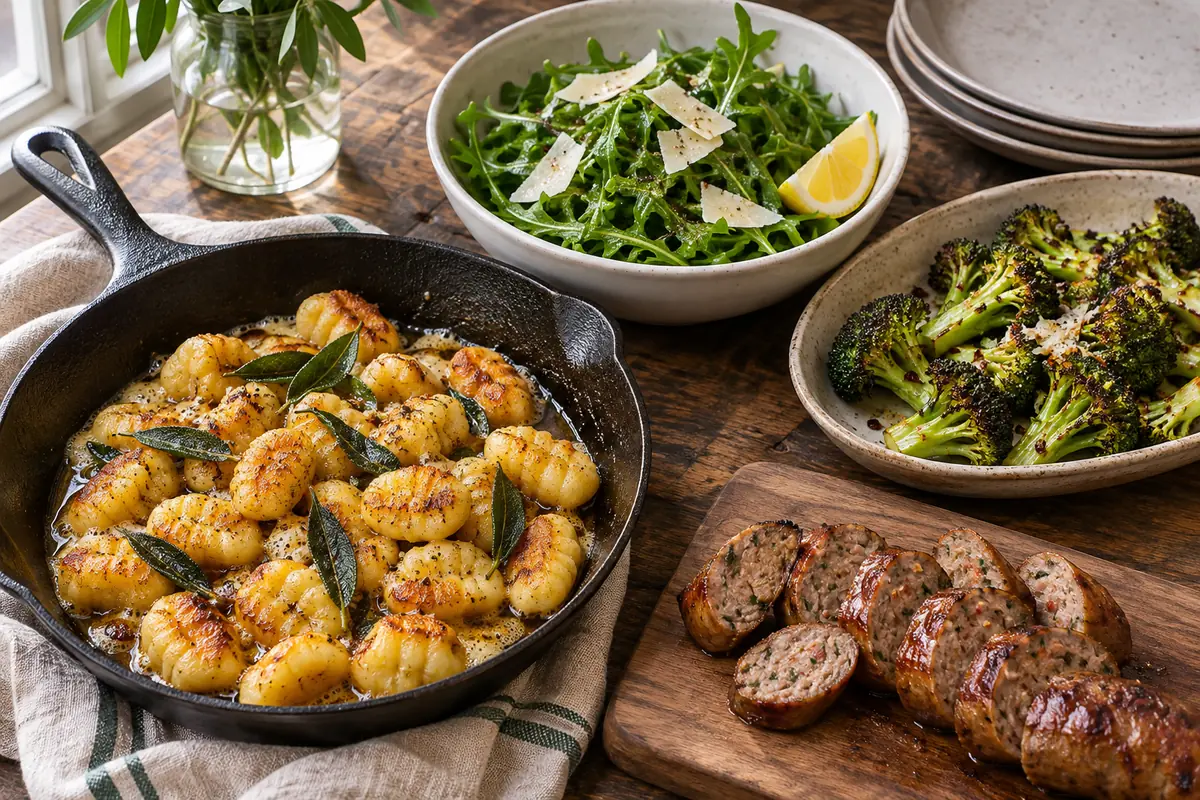
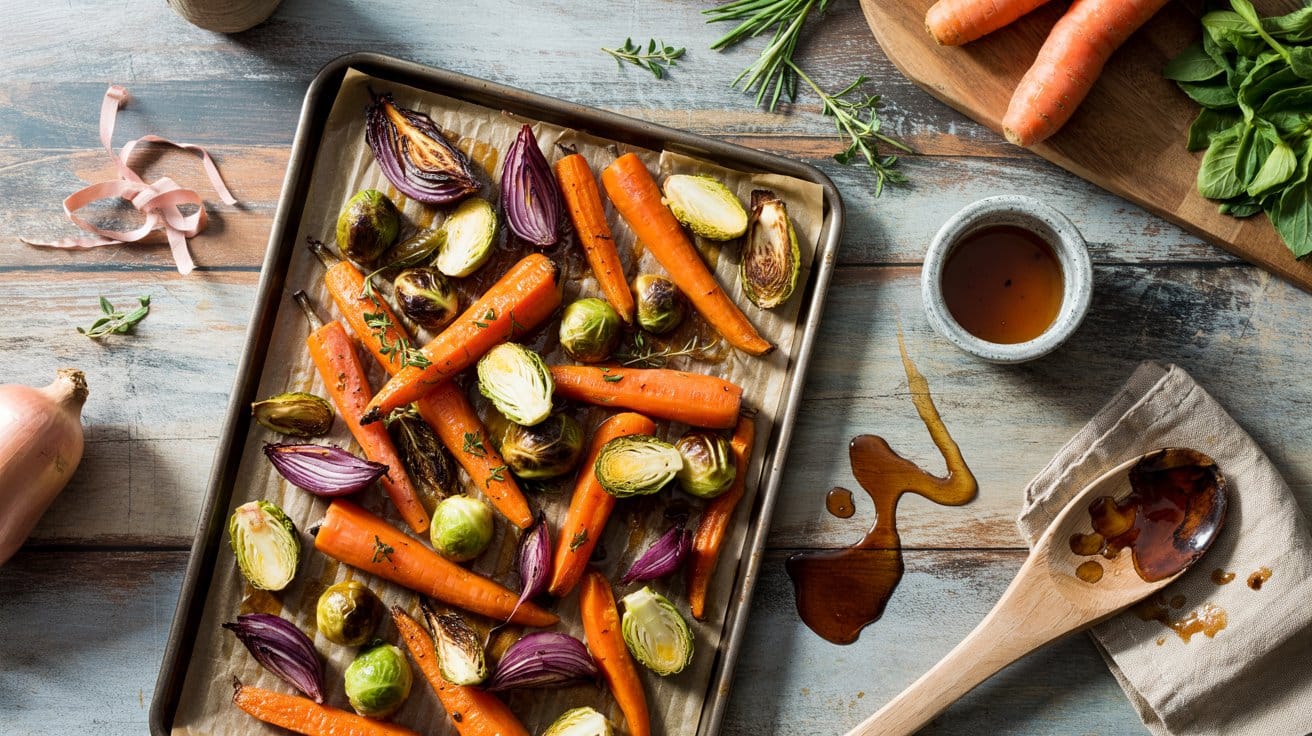
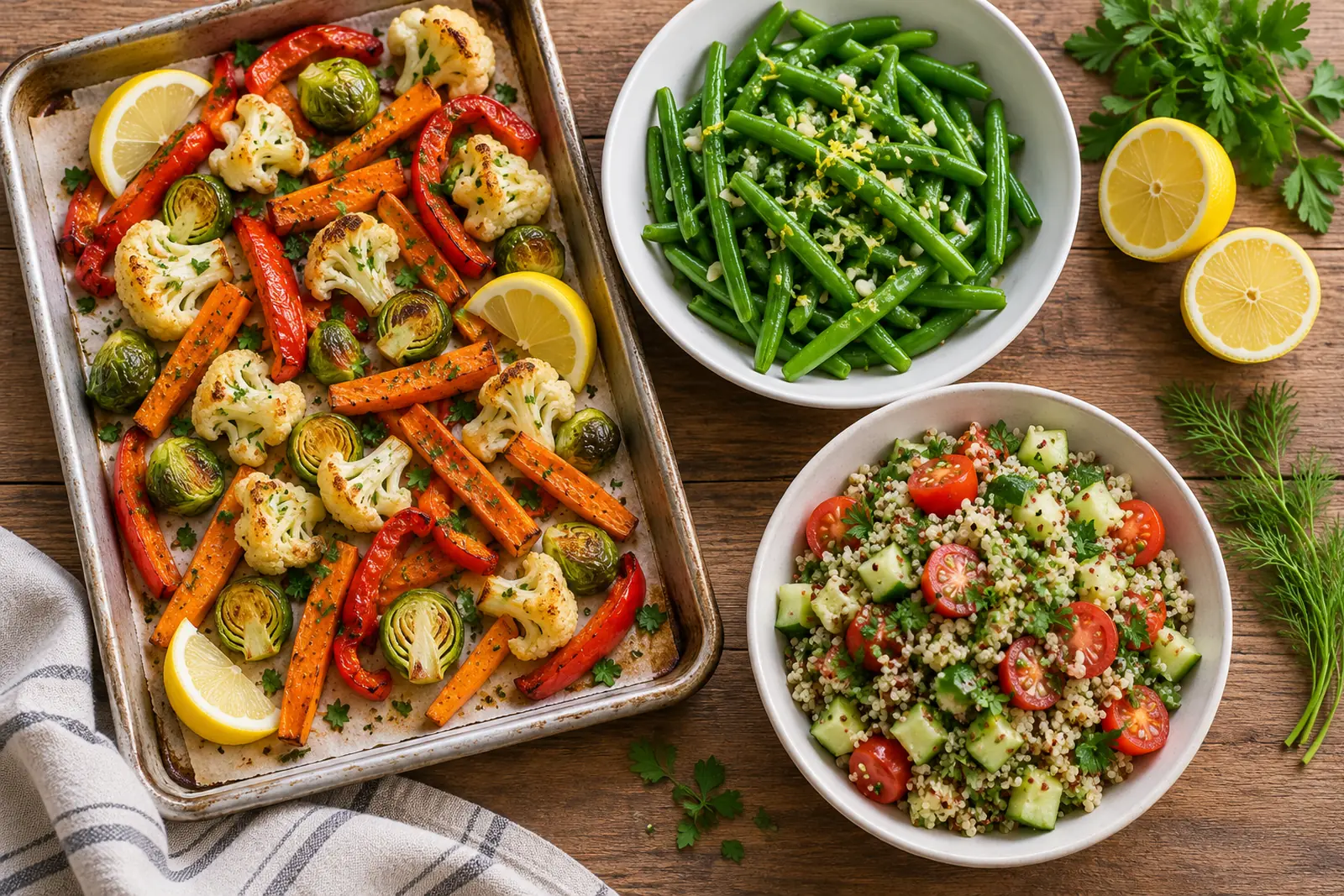
Rice pilaf or buttered noodles soak up the sauce, and lemon roasted broccoli or garlic green beans give you a clean green bite beside them.
- Jarred artichoke hearts, capers and lemon already make the chicken salty and tangy, so plain starches and simply cooked vegetables fit best.
- With a lemon-caper sauce, you lean on the starch.
- A creamy, cheesy sauce sends you toward the sharp green sides.
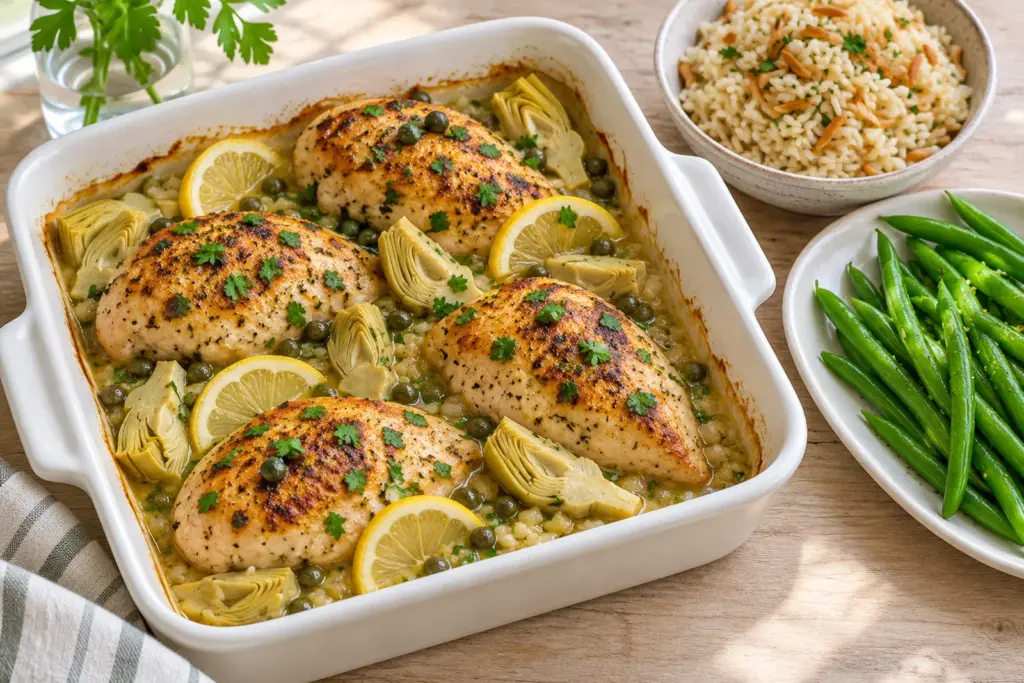
Whether you bake chicken breasts with artichoke hearts and lemon or finish them in a creamy Parmesan sauce, you want mild side dishes that give the main dish room. For each side, you'll see which style of artichoke chicken it suits and how to cook it so it stays out of the way.
What Goes Well with Artichoke Chicken?
Recipes for artichoke chicken share chicken breasts, artichoke hearts, garlic and lemon and then split on the sauce. The Baked by Bree recipe bakes boneless breasts with quartered canned hearts in garlic, lemon juice and a little chicken broth, with no cream.
America's Test Kitchen goes the other way: its creamy Parmesan chicken simmers frozen hearts in heavy cream and chicken broth, then stirs in Parmesan and cherry tomatoes. Each sauce asks for a different plate, so the sauce you make decides what you cook beside it.
- What it is: chicken seared with artichoke hearts, lemon, garlic and capers
- The plate needs: a starch that catches the thin sauce
- Off the plate: extra lemon, vinegar or olives
- What it is: chicken and artichoke hearts in cream, Parmesan or mozzarella
- The plate needs: acid and crunch to cut the richness
- Off the plate: a second cheesy or creamy side
Both styles carry a lot of salt, because jarred artichoke hearts sit in brine or marinade and capers are cured in salt. A rice pilaf that tastes fine alone can taste too salty next to that sauce, so we'd season the sides lightly and let the sauce carry the salt.
Artichoke hearts themselves are soft, buttery and slightly nutty, so a rich, buttery side would crowd them on the plate.
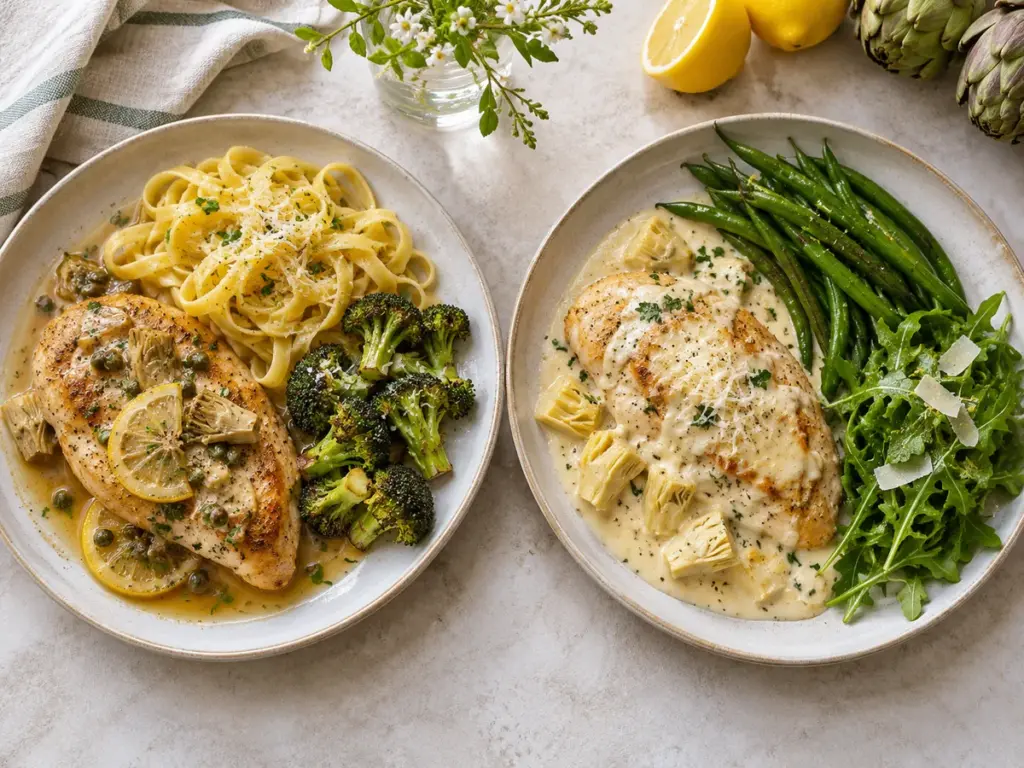
If you have no artichoke hearts in the pantry, asparagus tips are the closest artichoke heart stand-in, and the sides below suit that version too.
Which Sides Go with Which Style?
Most of these six sides suit one sauce better than the other. Green beans work with both styles, so they are the side we'd make when you haven't settled on the sauce yet.
| Side | Lemon-caper | Creamy |
|---|---|---|
| Rice pilaf | Best | Good |
| Buttered noodles | Best | No extra Parmesan |
| Roasted potatoes | Good | Best starch |
| Lemon broccoli | Less lemon | Best |
| Garlic green beans | Best | Best |
| Mixed veggie salad | Good | Best |
10 Best Side Dishes for Artichoke Chicken
1. Rice Pilaf
Long-grain white rice browned briefly in butter and simmered in chicken stock makes a simple rice pilaf. The grains cook up separate, so the lemon sauce coats each one instead of pooling underneath.
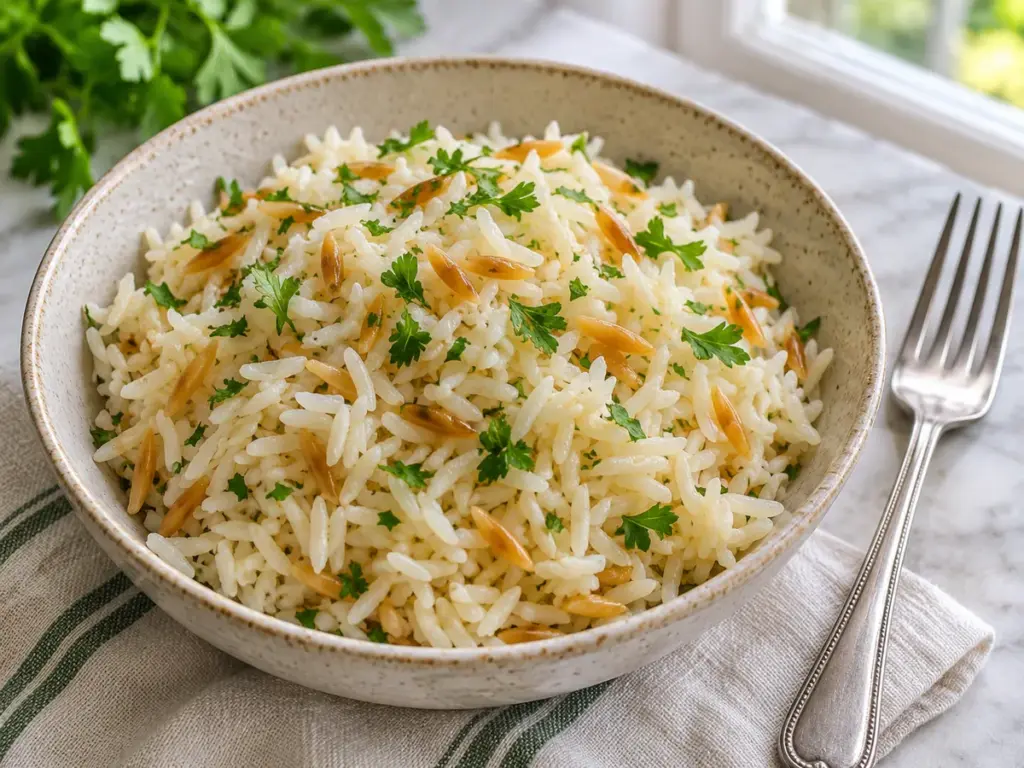
Brown rice or wild rice can stand in for the white rice if you prefer, and chopped parsley goes in at the end. With chicken this salty, we'd cook the pilaf in low-sodium stock.
We'd call pilaf the safest starch for the lemon style, and it still works with the creamy one when you leave the cheese off the top.
2. Buttered Noodles
For the lemon-caper style, we'd pick fettuccine tossed with butter, a little Parmesan, salt and pepper. If you pull the noodles at al dente, they finish softening under the sauce instead of going mushy.
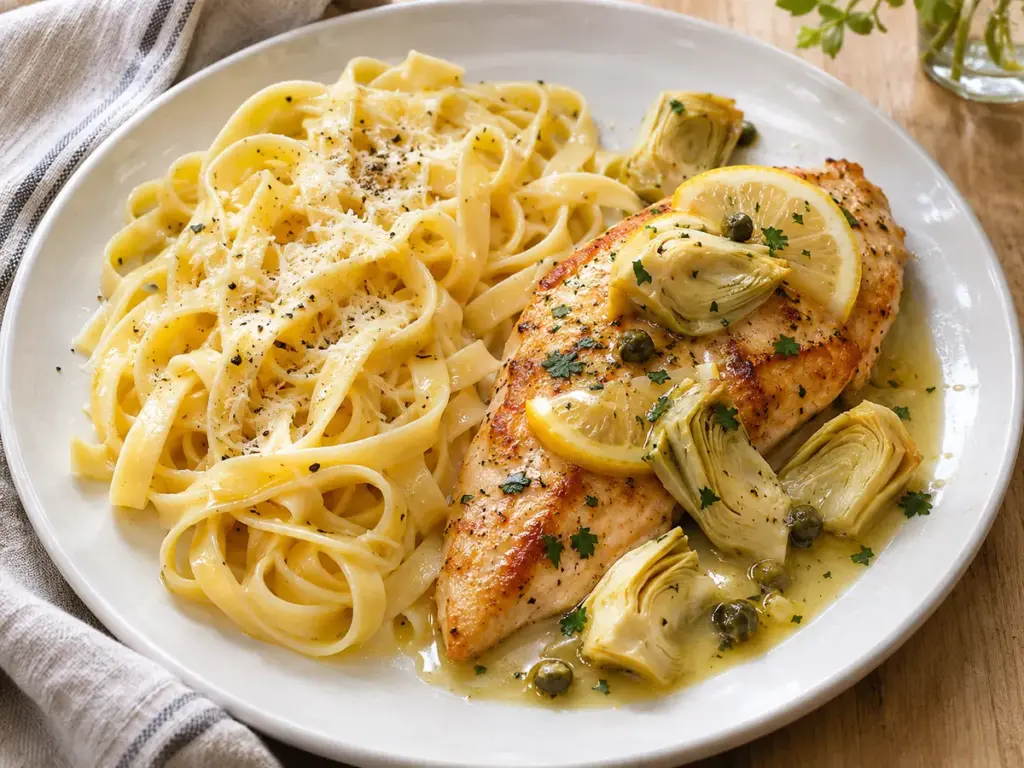
A splash of the pasta water loosens the butter into a light coating, and you can spoon the chicken's pan juices over the top. With the creamy style, the Parmesan stays out, because cream sauce plus cheesy noodles makes a heavy plate and plain buttered noodles keep it lighter.
3. Roasted Potatoes
If the sauce is creamy, small potatoes halved and roasted until the cut sides brown give you the crunch it is missing. Olive oil, salt and a little rosemary are all they need, with no cheese.
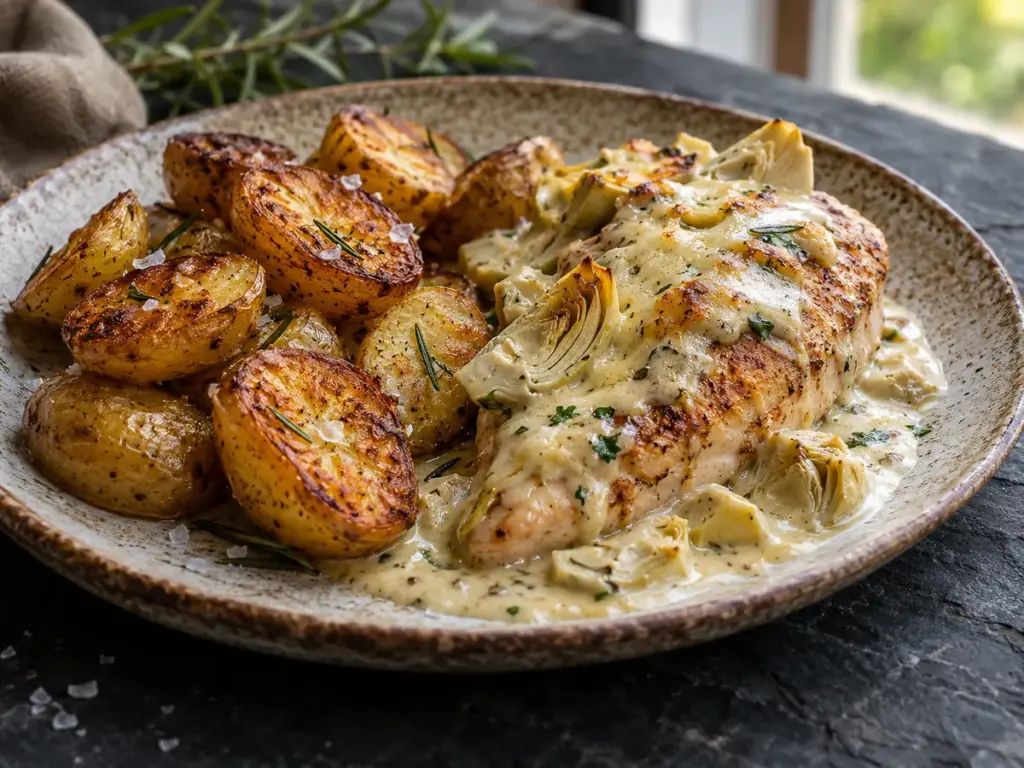
Crisp roasted potatoes also work with the lemon style. On Baked by Bree, the lemon-broth version goes over garlic mashed potatoes, so a softer mash works too, much as mashed potatoes pair with artichokes on their own.
4. French Bread
A sliced baguette or crusty French bread mops up the pan sauce when you do not want rice or noodles. With the creamy style, plain warm bread is all it needs.
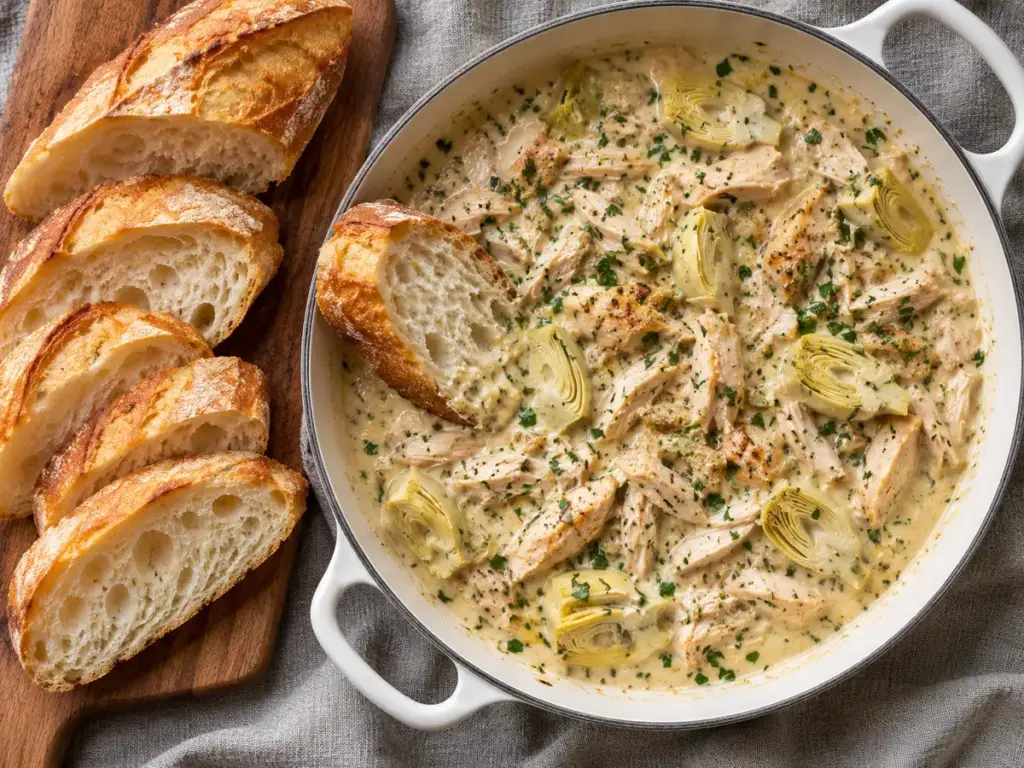
If you cut the slices on the diagonal, about a finger thick, each one holds a spoonful of sauce. With the lemon style, you can brush them with garlic butter and warm them into garlic bread, though we'd skip the cheese topping, since the chicken already brings salt and fat.
5. Savory Cornbread
Cornbread gives you a starchy side with no rice or noodles to cook. We'd bake a recipe with little or no sugar, since sweetness clashes with the lemon, and black pepper or chopped herbs in the batter make it taste savory next to the capers.
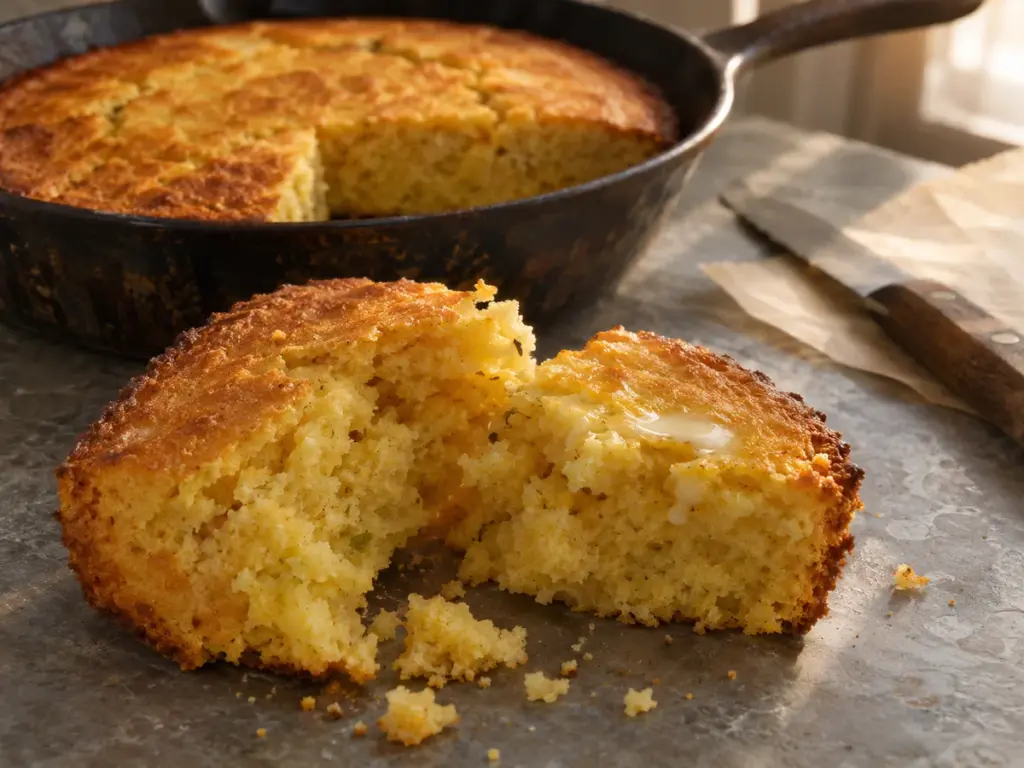
If you bake it in a skillet and cut wedges, each person can break one open into the sauce. Crumbly cornbread wedges suit the lemon style best, where the thin sauce needs something to soak into.
6. Lemon Roasted Broccoli
Broccoli florets roast in a hot oven with olive oil, garlic, salt and pepper until the tips brown, and you finish them with a squeeze of lemon. Heads with tight, dark green clusters are the ones to buy, since yellowing florets turn bitter when roasted.
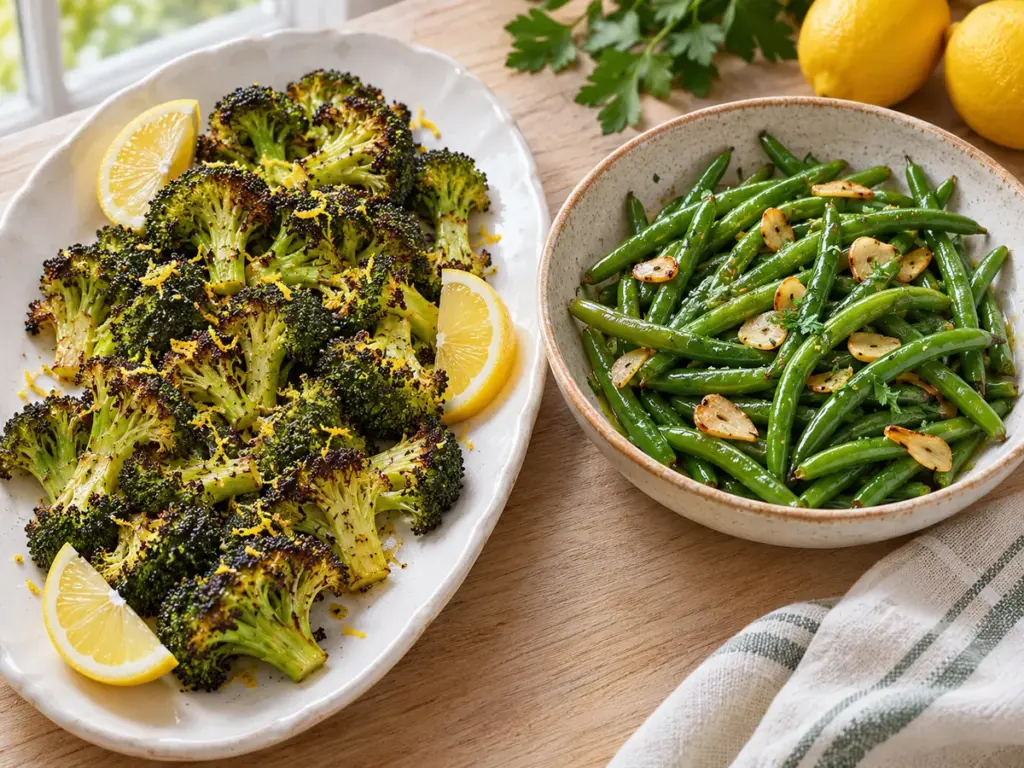
Next to creamy chicken, you'd squeeze on plenty of lemon to cut the cream. Lemon-caper chicken already brings its own acid, so a small squeeze is enough there.
7. Garlic Green Beans
Fresh green beans sautéed in butter until they are crisp-tender get their sliced garlic only in the last minute, so it turns golden instead of bitter. Salt and pepper finish them.
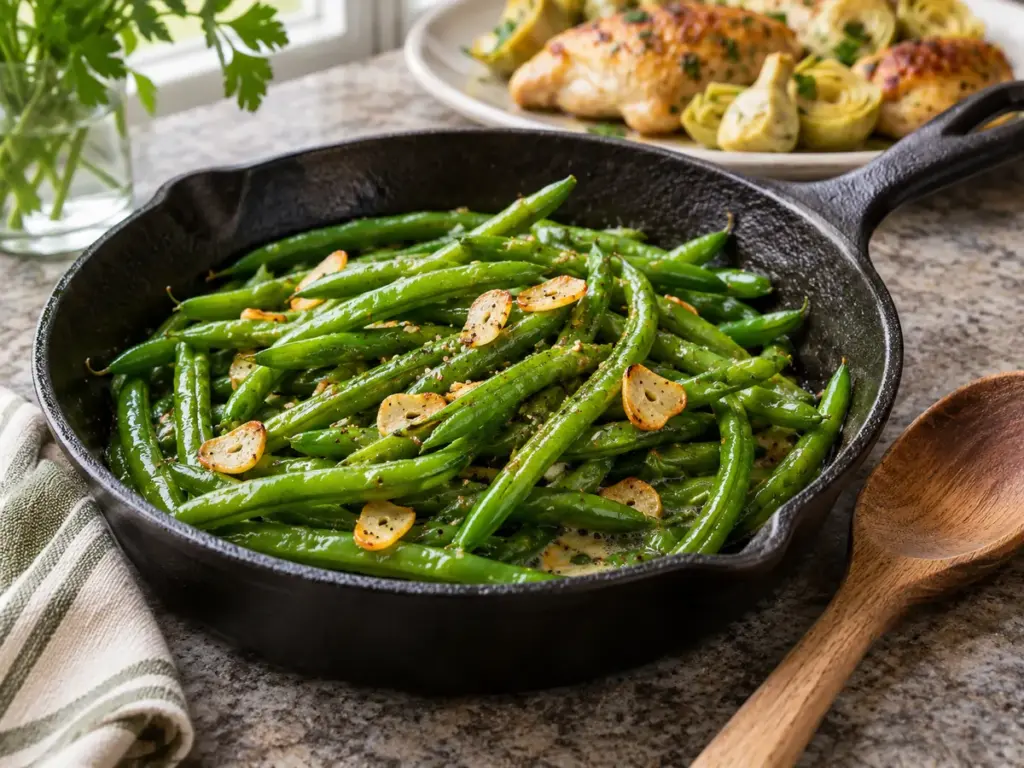
Their mild flavor suits both sauces, and they stay firm while the chicken rests. At the store, you're looking for firm, bright pods that snap when bent, and you trim the stem ends before the beans go in the pan.
8. Roasted Asparagus
You toss thin spears with olive oil and a pinch of salt, spread them in a single layer on a pan, and roast them in a hot oven until the tips brown and a spear bends slightly when you lift it.
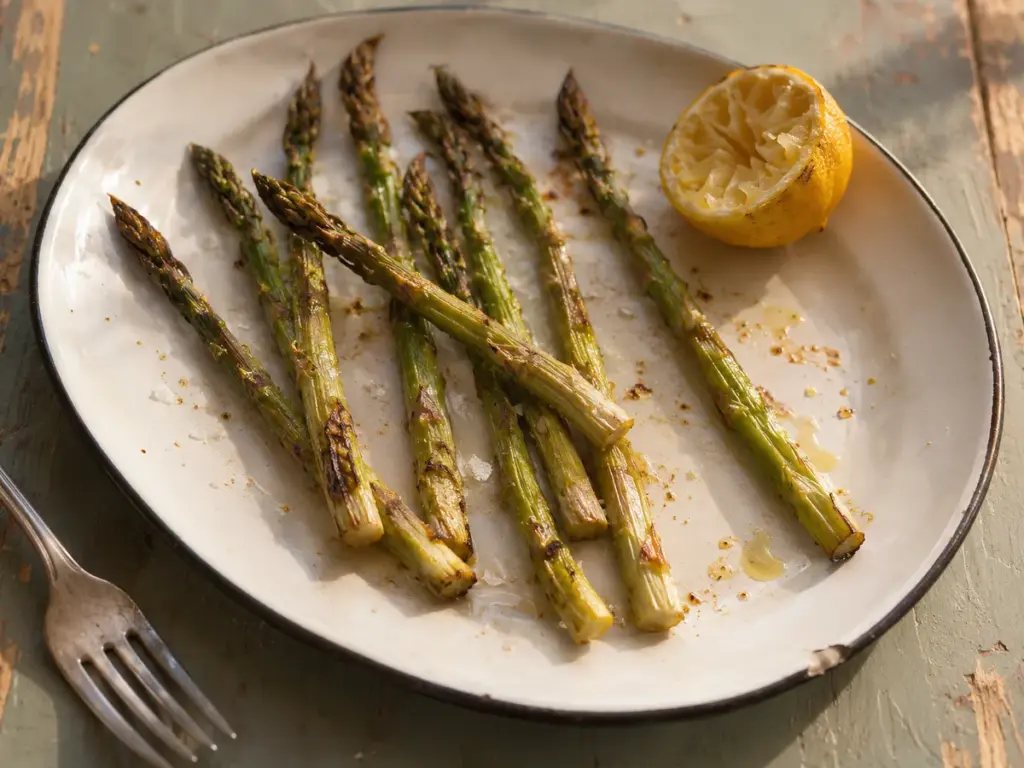
Asparagus gets a squeeze of lemon only beside the creamy style, since the lemon-caper sauce already covers the spears with enough acid. For a dinner party, Baked by Bree pairs its artichoke chicken with baked rice and grilled asparagus.
9. Mixed Veggie Salad
Next to a creamy sauce, a raw salad is the side we'd make first, and you can build it from crunchy vegetables such as cucumber, carrot, tomato, cabbage and radish. Lemon juice, olive oil, salt and pepper make the dressing.
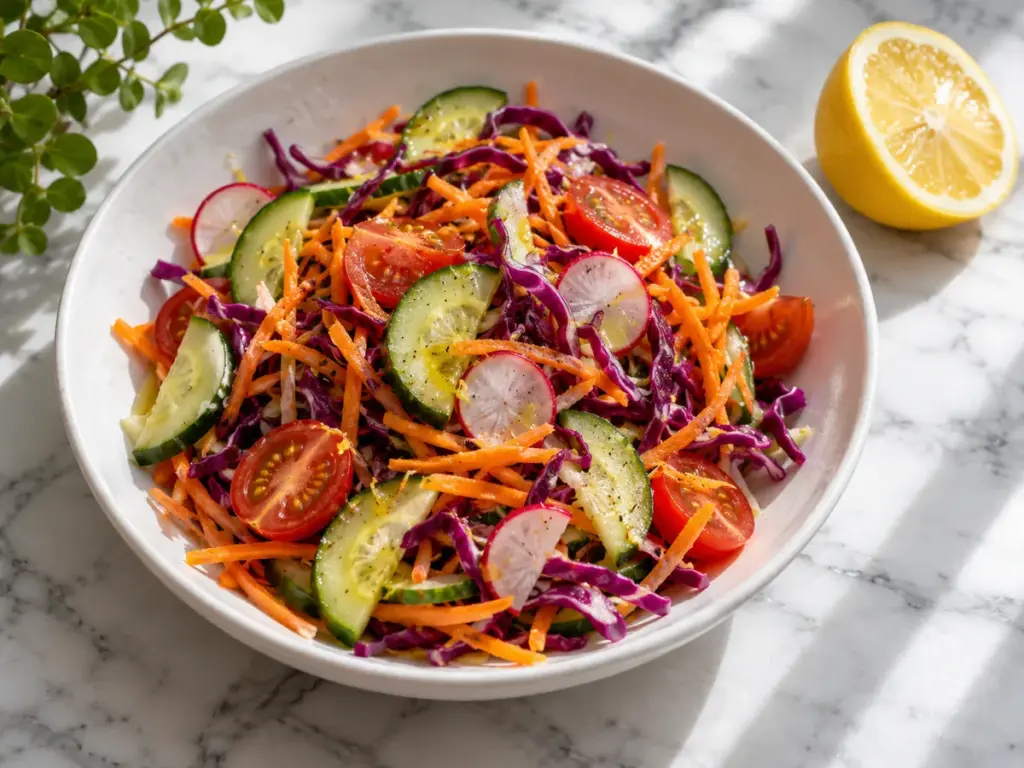
If you add radish, the small spring varieties taste milder than large ones, so they are the better pick. The dressing goes on just before serving, because salt pulls water out of cucumber and tomato within minutes.
10. Cauliflower Rice
If you want to skip grains, riced cauliflower stands in for pilaf. It cooks in a few minutes in a hot skillet with olive oil, salt, pepper and sliced scallions.
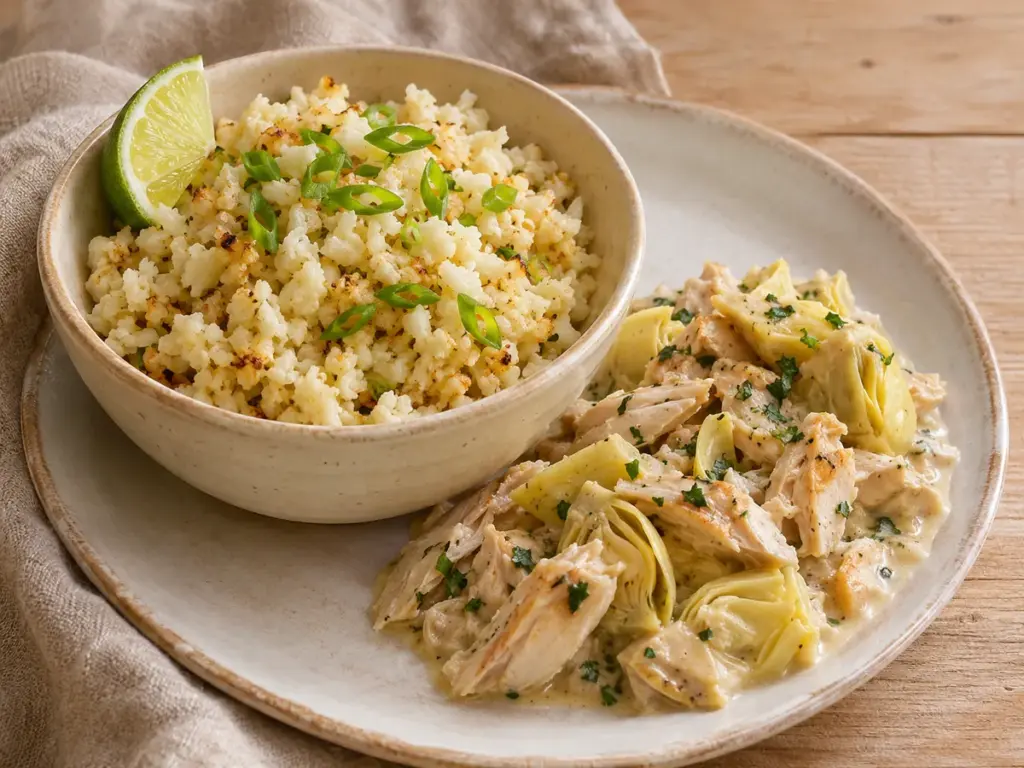
A squeeze of lime at the end adds the acid. You can keep raw cauliflower in the fridge for 3 to 5 days (USDA FoodKeeper), so it is easy to buy ahead.
What Should You Skip with Artichoke Chicken?
A few popular chicken sides clash with the salty, tangy sauce, so you leave them off this plate:
- Cowboy baked beans. Ketchup, brown sugar and molasses make them sweet and heavy, and the bacon and ground beef put a second rich meat next to the chicken.
- Fruit salad. Sweet fruit with a honey-lime dressing tastes odd after briny artichokes and capers.
- Sweet cornbread. Honey or a lot of sugar in the batter clashes with the lemon and capers, so the savory version in item 5 fits better.
- A second creamy side. Mac and cheese or scalloped potatoes beside creamy artichoke chicken leave you with a plate that is all richness and no relief.
Sources
- USDA FSIS, Safe Minimum Internal Temperature Chart (165°F for all poultry)
- USDA FoodKeeper (raw cauliflower, 3 to 5 days in the refrigerator)
- Baked by Bree, Artichoke Chicken (canned hearts, garlic, lemon juice and chicken broth, plus serving suggestions)
- America's Test Kitchen, Chicken in Creamy Parmesan Sauce with Artichokes and Tomatoes (frozen hearts, heavy cream, chicken broth, Parmesan)

Food writer at GustoMeadow. Writes ingredient substitutes, food comparisons, taste guides and storage guides for home cooks.
Storage and food-safety numbers follow USDA, FDA and university extension guidance.