A ripe Hass avocado tastes mild, buttery and lightly nutty, with a faint grassy edge.
- The creamy texture stands out more than the flavor, because the flesh is about 15% fat.
- A firm, underripe avocado tastes grassy instead of buttery.
- A large Florida avocado tastes lighter and wetter than a Hass.
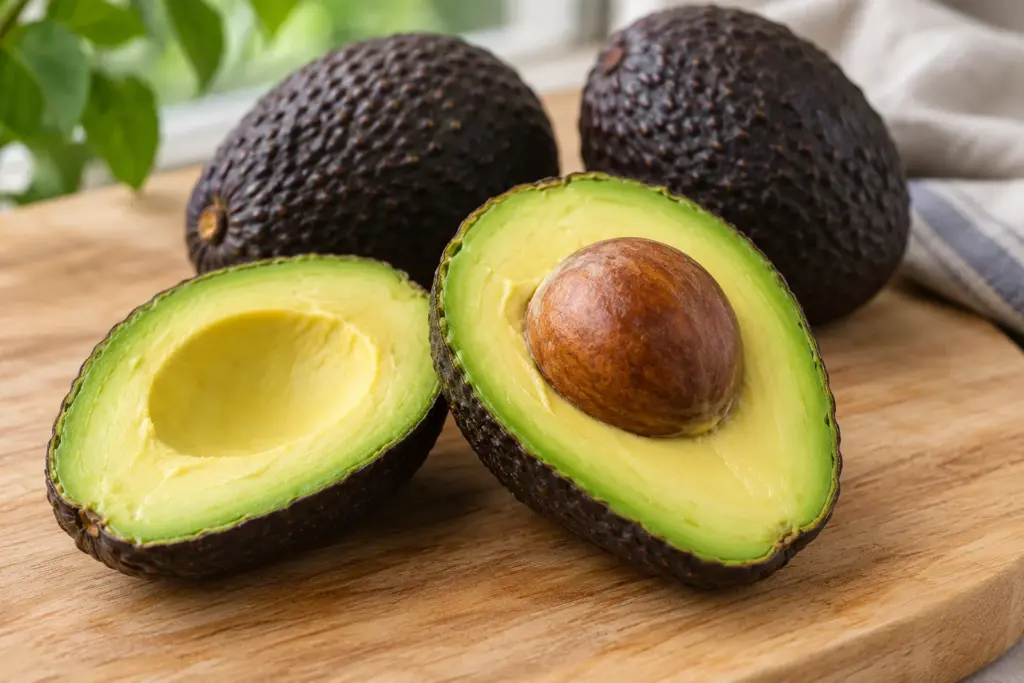
Avocado is one of the mildest foods among everyday ingredients described by flavor, so the variety and the ripeness decide most of what you taste. A Hass picked at the right moment tastes rich and nutty. A hard one tastes like cut grass, and a big green Florida avocado tastes lighter and more watery.
1. What Does Avocado Taste Like?
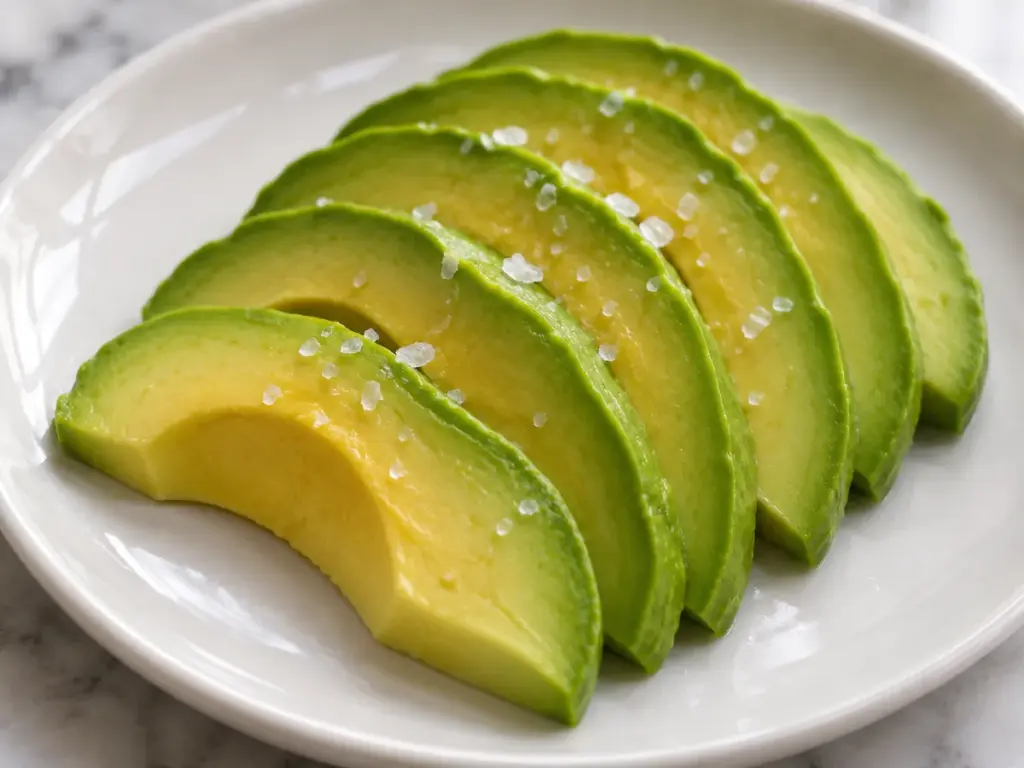
Taste a ripe Hass on its own and you notice, in order, a soft buttery richness, a faint nuttiness, a trace of grass or earth and almost no sweetness. Botanically it is a fruit, yet it eats like a mild vegetable. Its fat earned it the nickname butter fruit, and its bumpy skin earned the name alligator pear.
Each note has its own cause:
- The buttery feel comes from fat. California avocado flesh holds 15.41 g of fat per 100 g, so each spoonful coats your tongue the way soft butter does.
- The nutty note is faint. USDA Agricultural Research Service scientists who studied Hass aroma suspect a compound called pentanal is behind it, but they say the data do not yet confirm that.
- The grassy note fades with ripeness. It is strong in firm fruit and only a light edge in a ripe one.
Texture does more of the talking than flavor. Mashed avocado is thick and smooth like a paste, so it carries whatever you add and lets lime, salt, chili and tomato show through. That mildness is why a plain avocado can seem to taste like very little until you eat it beside something sharp.
The same mild, nutty character shows up in foods made from the fruit. Nutty avocado mayo has none of regular mayo's tang. The oil pressed from the fruit tastes buttery and slightly nutty, with a hint of grassiness.
2. How Do Hass and Florida Avocados Taste Different?
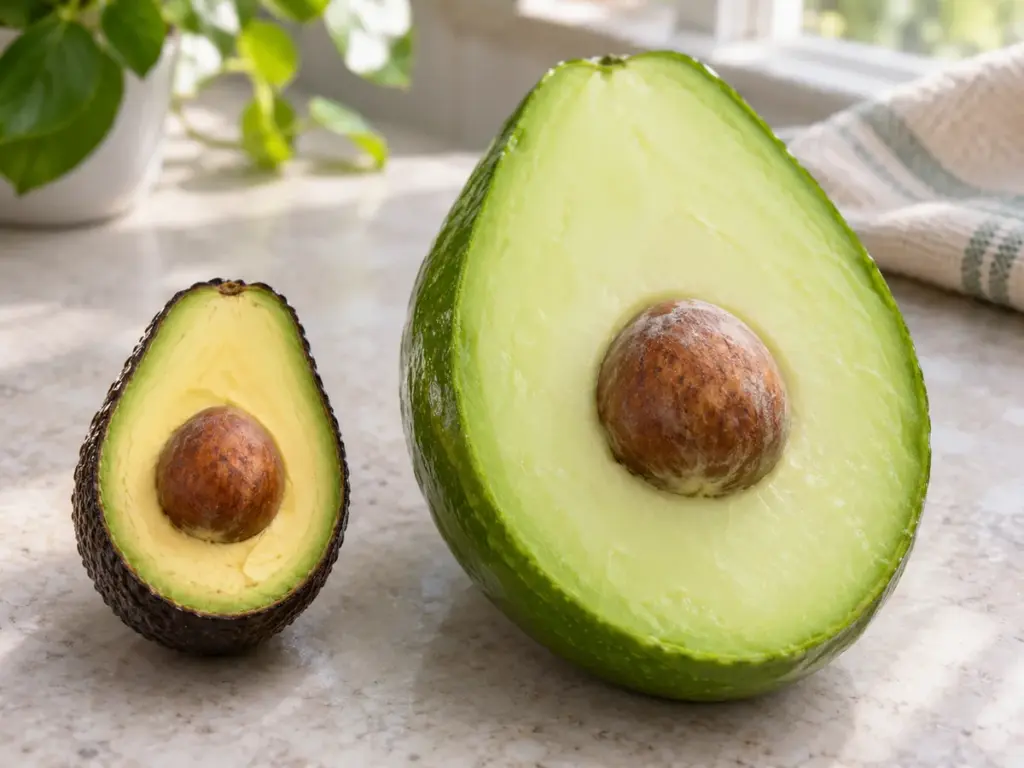
The avocado in most US stores is the Hass: a small fruit with pebbly skin that darkens from green to purple-black as it ripens. The big fruit with smooth, bright green skin that grows in Florida is a different type, and the two taste different enough to change how you cook with them.
| Trait | Hass (USDA California record) | Florida |
|---|---|---|
| Skin | Pebbly, green turning purple-black | Smooth, bright green |
| Flesh in an average fruit | 136 g | 304 g |
| Fat per 100 g | 15.41 g | 10.06 g |
| Calories per 100 g | 167 | 120 |
| Mouthfeel | Creamy, dense, nutty | Lighter, in some types almost watery |
| Best use | Mashing, toast, guacamole | Cubes and slices in salads and tacos |
The fat row explains the rest. Florida avocado has about a third less fat per 100 g, and that gap is what you taste: the flesh is lighter and holds more water. The University of Florida's extension service adds that Florida types vary, with some creamy and nutty like Hass and others less oily and almost watery.
That lower fat also lets Florida pieces keep their shape when cut. We'd reach for Hass whenever you mash, and for Florida avocado in a chunky avocado salsa, where firm cubes matter more than creaminess. The table figures are raw flesh from USDA FoodData Central, FDC 171706 (California) and FDC 171707 (Florida).
3. Why Does Unripe Avocado Taste Grassy?
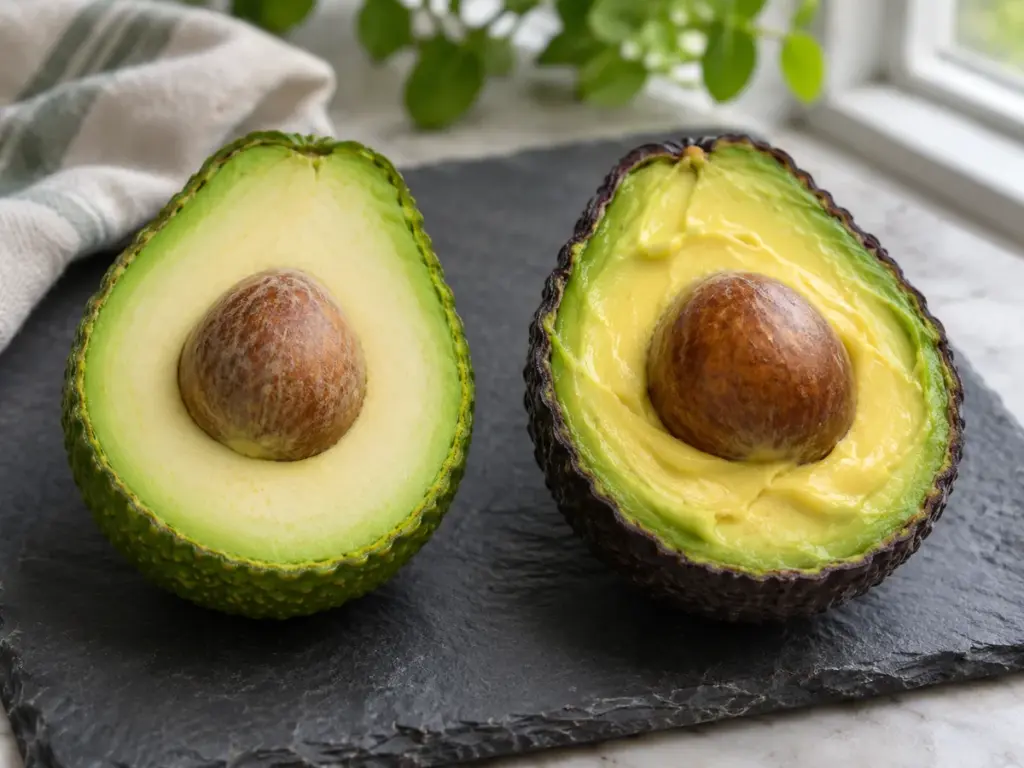
Avocados mature on the tree and ripen only after harvest, and the flavor changes along the way. USDA Agricultural Research Service researchers tracked Hass aroma and found three compounds, hexanal, (E)-2-hexenal and 2,4-hexadienal, that are high early in the fruit's growth and probably cause the grassy flavor.
Those levels fell as the fruit matured, and the taste testers liked the fruit more as they fell. A hard avocado from the bin therefore tastes more like cut grass than butter, and its flesh is firm and waxy to chew.
4. How Do You Pick a Ripe Avocado?
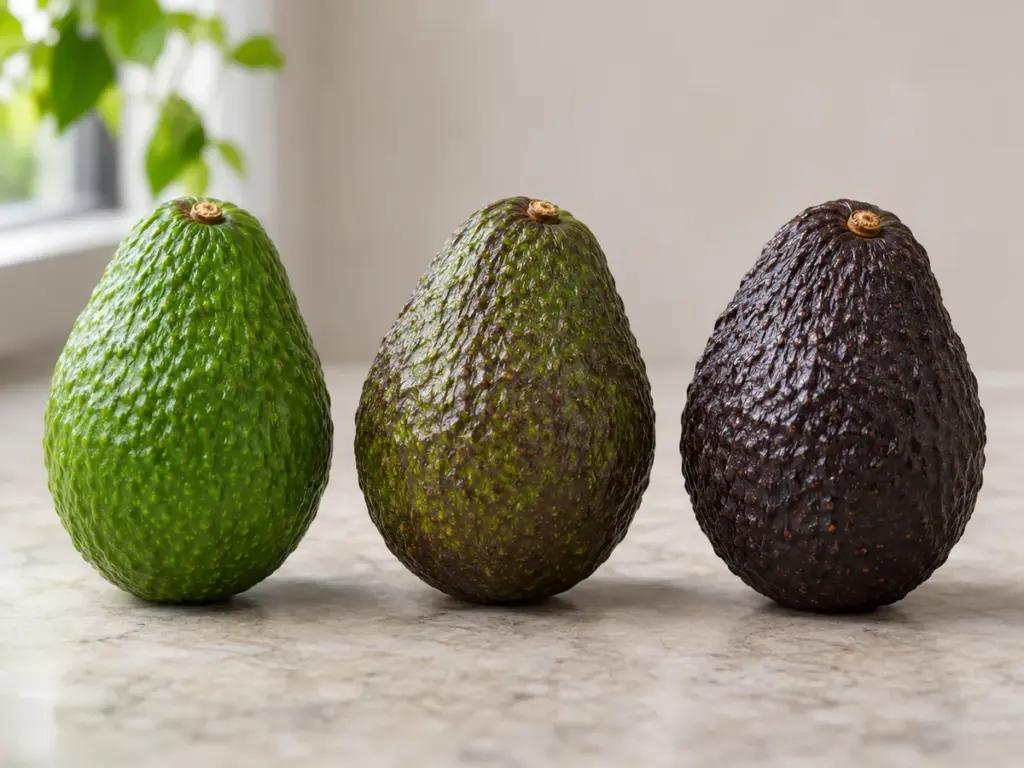
Skin color is only a first guess, because the California Avocado Commission notes that some varieties stay light green even when ripe. Use these checks in order:
- Look at the skin. A Hass that has turned dark purple-black is a candidate, and a bright green one is not ready yet.
- Squeeze gently in your palm. Ripe fruit is firm but yields to gentle pressure. Use your whole palm, because fingertips bruise the flesh.
- Check the stem end. Many cooks flick off the small stem cap at home: green underneath means the flesh is likely good and brown means it is likely overripe. No extension or industry guide we found backs this, so use it only as a tiebreaker after the squeeze.
- Ripen at home when needed. A firm avocado in a paper bag at 65 to 75°F usually ripens in two to five days, and an apple or kiwi in the bag speeds it up.
Avoid fruit that feels mushy or has dark blemishes. Once an avocado is ripe, USDA FoodKeeper gives it 3 to 4 days in the refrigerator and does not recommend freezing it whole. If you freeze it anyway, thawed frozen avocado comes out soft, so mash it into a dip or a smoothie.
5. What Foods Bring Out Avocado's Flavor?
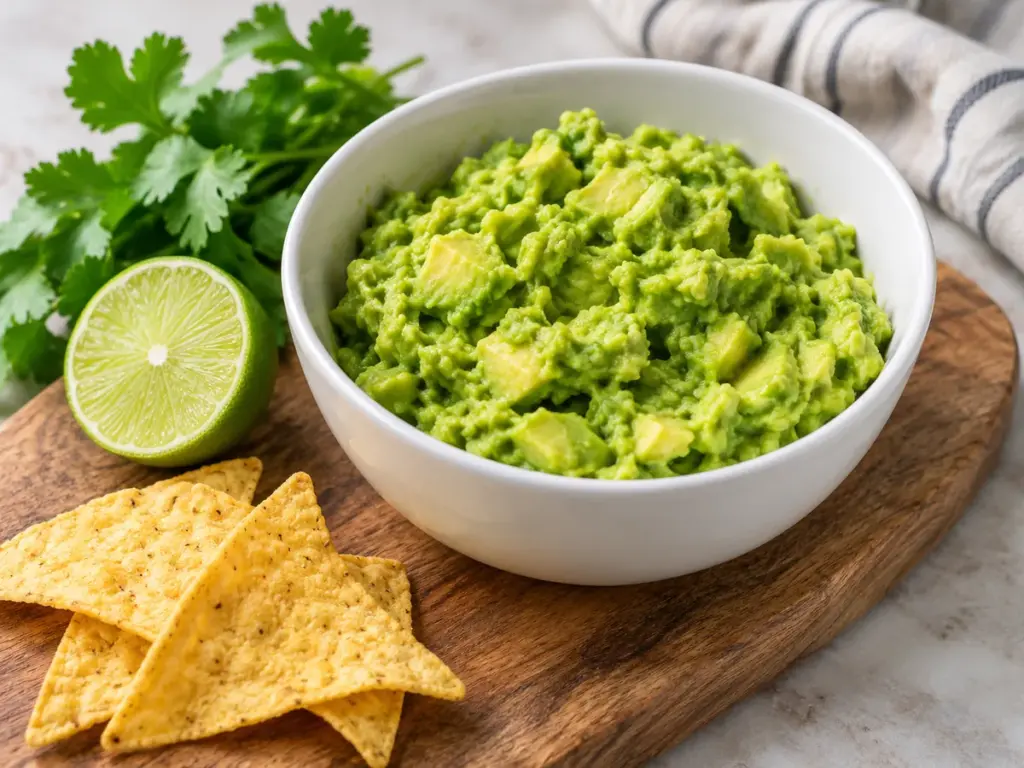
Avocado is mild and rich, so it needs a partner that supplies what it lacks:
- Acid. A squeeze of lime or a few tomato cubes cuts through the fat and makes the nutty note easier to notice.
- Salt. A pinch of flaky salt on a slice goes a long way, because the fruit has only about 8 mg of sodium per 100 g (FDC 171706).
- Heat. Chili flakes or hot sauce taste sharper against the creamy flesh, which also calms spicy food, so avocado sits beside tacos so often.
In a salad, avocado balances watery vegetables, and an avocado salad with cucumber and tomato is the simplest version, with the fat softening the juicy cubes.
On toast, you only need the mashed fruit, a pinch of salt and a squeeze of lime, and eggs are the usual partner in avocado toast recipes that make a full breakfast.
Avocado has about 2 g of protein per 100 g (FDC 171705), while a large egg has about 6 g, so an egg adds more protein to the plate and the avocado adds the creaminess.
Sources
- California Avocado Commission: How to Choose and Ripen an Avocado
- USDA Agricultural Research Service, AgResearch Magazine (March 2014): Hass avocado aroma and flavor
- UF/IFAS Gardening Solutions: Avocado
- UF/IFAS Citrus Research and Education Center: Avocado
- UF/IFAS: Florida avocados are larger and lower in fat than Hass
- USDA FoodData Central: FDC 171706 (California), FDC 171707 (Florida), FDC 171705 (all commercial varieties)
- USDA FoodKeeper: avocados

Food writer at GustoMeadow. Writes ingredient substitutes, food comparisons, taste guides and storage guides for home cooks.
Storage and food-safety numbers follow USDA, FDA and university extension guidance.