
Crème de Violette may sound like a delicious sweet treat you haven't tried yet.
But that's not quite it. It's a type of liqueur known for its violet flavor and coloring.
If this liqueur is as foreign to you as the name, you're probably wondering what this drink is.
Worry not. We've done our research and are here to enlighten you on the mystery of crème de violette.
From questions like, "what does crème de violette taste like?" To how you can serve and enjoy the drink, we're here to give you all the deeds.
But first, let's understand what exactly crème de violette is.
What is Crème De Violette?
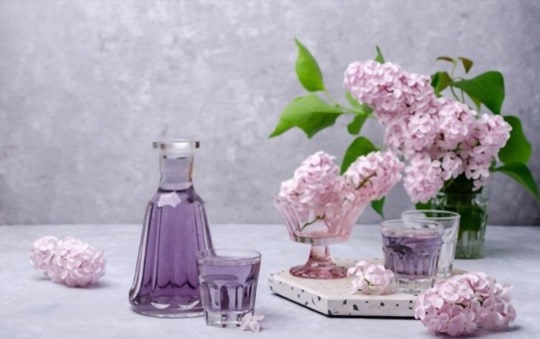
Crème de Violette, which emerged in Europe in the early 19th century, is a type of liqueur created by steeping violets in brandy and adding sugars.
This was a time when people had a strong desire for candies and sweets that had a scent of violet, leading to its creation and use.
It has a rich history, but Crème de Violette was not widely known and neglected for several decades.
As a result, it was no longer fashionable and was excluded from recipe books.
Since the drink is a sweetened spirit, it was popularly mixed with other drinks.
However, as it faded out in history, cocktails that previously used this liqueur began to remove it entirely.
However, it's not as forgotten as it used to be, courtesy of importer Haus Alpenz.
Back in 2007, the importer introduced the Rothman & Winter brand to the world.
This revived the classic Crème de Violette recipe, and began producing it in the United States.
For dessert pairings that complement floral liqueurs, lemon dessert pairing ideas offer nine options that balance citrus and sweet flavors.
Crème De Violette Flavor Notes

Creme de Violette delivers a sweet and floral aroma that's reminiscent of something familiar.
Its flavor is often compared to that of violet candy or a floral perfume by many - see extract vs flavor differences to better understand how scent and flavor descriptions vary.
The fragrance of the liqueur is gentle yet distinct and leaves a lasting impression.
It contains a subtle hint of earthiness that's quite difficult to put into words other than "earthy".
The drink's aftertaste is also mild and floral, with a gentle sweetness that doesn't feel oily or heavy on the tongue.
You don't need to have an acquired taste to enjoy it, as it's pretty enjoyable from the first sip.
While crème de violette may not be for everyone, it undoubtedly offers a delicious taste profile.
Colour-wise, it typically ranges from a deep blue to purple, which usually depends on the ingredients and brand of the particular liqueur.
Similarly, the color of crème de violette from the classic Aviation cocktail offers the same color range.
But the color also depends on whether you're shaking or stirring the drink.
As creme de Violette is a sweetening agent in drink recipes, it also delivers a unique floral flavor with the potential to alter the overall taste of a cocktail.
The typical pairing for Creme de Violette is with gin, as its the liqueur's sweetness goes with the citrus and herbal flavors of the gin quite well.
Also, it pairs nicely with other sweet liqueurs like maraschino in the Aviation Cocktail.
Creme de Violette also is a significant contrasting element for citrus juices, particularly lime, and lemon.
How to Serve Crème De Violette?
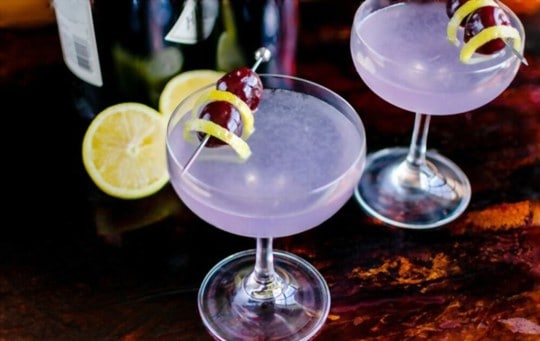
Although challenging to work with at times, Creme de Violette is a fun flavor to experiment with.
If you can manage to tone down the floral notes, the outcome can be quite unexpected and pleasant.
But even without the alteration, if you know how to incorporate it with other drinks, it's a great treat.
So, what can you serve it with? The Aviation cocktail is where Crème de Violette gained its fame.
But with the liqueur's reappearance during the mid-2000s, it has since become a common ingredient in many other drinks and cocktails.
Undoubtedly, lemon and gin are a perfect combo for Crème de Violette, as the liqueur's floral elements harmonize beautifully with the citrusy and herbal flavors.
In addition, you can serve it with tequila, with the likes of the Adelita cocktail, which is bitter and bold.
YOu can also blend it with rhum agricole.
Blend it with vermouth and lemon to create a smooth yet potent Crème de Canne Collins.
Another more straightforward cocktail that can be easily made is the Violette Royale, which combines the floral Crème de Violette with Champagne and finishes the drink with a twist of lemon peel.
If serving cocktails alongside sweets, consider small plated treats from single-serve desserts for when you deserve a treat that match floral and citrus notes.
Conclusion
Creme de Violette comes with a rich and exciting history that's undeniably hard to resist, similar to its taste.
Hence it's new found comeback is a definite win for all liqueur lovers.
It's an incredibly versatile liqueur that can suit and adjust with just about any drink, so why not make the best use of it? We've provided our recommendations on serving the drink, and now it's up to you to make the final move.
So, if you're looking for a sweet and rich mixer for your next cocktail party, this is a great pick to introduce to your loved ones.
For similar liqueur tasting notes, see crème de cassis flavor guide. For dessert-inspired custard flavors, read crème brûlée taste notes.
Frequently Asked Questions
Crème de Violette may sound like a delicious sweet treat you haven't tried yet. It's a type of liqueur known for its violet flavor and coloring.
From questions like, "what does crème de violette taste like?" To how you can serve and enjoy the drink, we're here to give you all the deeds.
Freshness matters. Crème De Violette tends to have a brighter, more pronounced taste when fresh.
Stored or aged versions may develop mellower or slightly different flavor notes.
Significantly. Younger or less ripe versions are often sharper, more astringent, or more bitter.
As it matures, flavors typically mellow and deepen into something more complex and approachable.
Texture and taste are inseparable. A pleasant texture encourages slower eating and better flavor perception.
Off-putting textures - too mushy, too fibrous, or unexpectedly gritty - can make even good flavors less enjoyable.