
Gorgonzola cheese often gets a bad rap. It's blue, it's bold, and it smells like. well, like something you've never sniffed before.
Yet, here we are, about to take the plunge into what makes this cheese a must-try for anyone looking to shake up their cheese game.
Forget the myths you've heard; it's time to get up close and personal with Gorgonzola.
Ready to have your mind blown and your cheese perceptions challenged?
What is Gorgonzola?
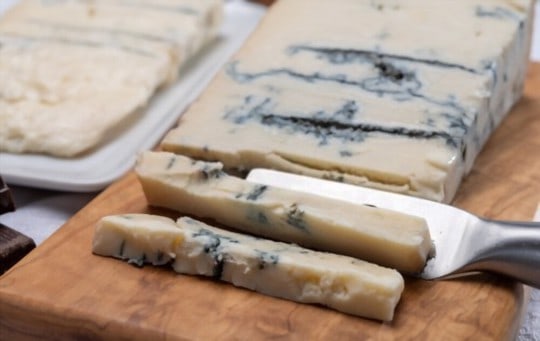
The cheese of Italian origin, Gorgonzola, is made from pasteurized cow milk.
It was named after the Italian town from which it originated many centuries ago.
The cheese has blue veins that stretch out elegantly, giving it a marble appearance.
Legend has it that the cheese got its look because its creator was a cheese maker in his youth whose lover distracted him so much that he left his curds of cheese overnight.
This resulted in spores of mold, which he then attempted to cover up by pressing old and new curd together.
As a result, a promising new type of cheese with beautiful blue-tinted markings was unearthed.
The majority of blue cheese is produced in northern Italy, including Piedmont & Lombardy.
It contains a unique element called Penicillium glaucum, which is a mold commonly used in the fermentation process of cheese.
Gorgonzola tastes best after 3-4 months of aging, but what does Gorgonzola taste like?
For citrus-friendly dessert ideas that might pair well after a cheese course, lemon dessert pairing ideas lists nine complementary options.
What Does Gorgonzola Taste Like?
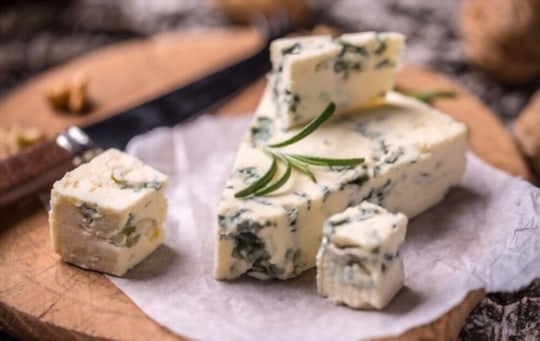
Gorgonzola cheese is the holy union of pasteurized (or unpasteurized) milk and starter mold.
This gives the cheese its signature creamy texture, accompanied by its milky & nutty aroma.
As the cheese is a pure product of cow's milk, Gorgonzola often has a flavor that's slightly milder than other blue cheeses - for a contrasting fruit profile, see acai berry taste guide.
Still, it shares many traits with similar cheeses of other culinary cultures like Fourme d'Ambert or Danish blue.
However, differences can be found in terms of sharpness and intensity.
Although a traditionally rich creamy cheese, its blue-green ripples contribute to a sharp & spicy flavor, providing a great contrast to its natural richness.
Known for its salty, full-flavored, and earthy taste, its taste can range from mild to sharp, which generally depends on the aging period of the cheese.
The younger Gorgonzola Dolce comes with a much mild & gentle flavor, while the mature Gorgonzola Piccante, which goes through a longer aging period, contains a more rustic and stronger flavor.
As dairy products are already known for several health benefits, the cheese also carries a few health benefits up its sleeve.
It is carb-free and is extremely rich in minerals & vitamins, including vitamin A, folate, magnesium, selenium, potassium, and phosphorous.
Now, due to its nutritional make-up of minerals, vitamins, protein, and fat, Gorgonzola provides excellent support for bone health, it also promotes heart health and aids in vitamin absorption.
How to Cook Gorgonzola?
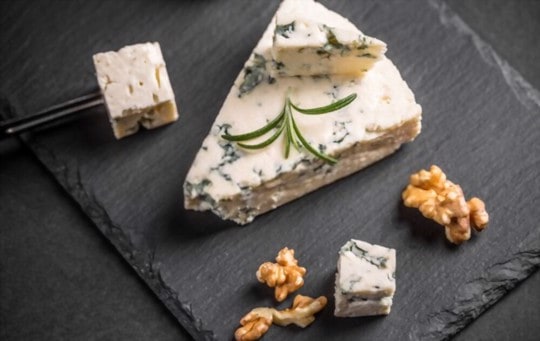
A traditional two-method process can be used to make the famous blue cheese from northern Italy.
It is known as 'del Nonno' (Grandfather's cheese) and also 'Antico' (old fashioned).
Due to its intense flavor, the method is now commonly known as 'Piccante'.
Simply curdle the milk, add some heat, and your cheese is ready to slice and kept away for the aging process.
It takes only three or four months for the Gorgonzola to mature properly; after that, it can be blended into a variety of dishes.
Gorgonzola is a versatile cheese that can be used in a variety of dishes - try it melted over quick veggie sides under 12 minutes for an easy weeknight pairing.
Although it is particularly delicious on its own, it goes well with a glass of fine red wine such as Barolo or Cabernet.
If you want a heavier meal and want to add some Gorgonzola cheese to it, combine it with some pasta.
A sauce made with the bluish cheese can be united with dishes like Ravioli, Risotto, Gnocchi, and so on.
Gorgonzola cheese can be paired with any meal because of its distinct and adaptable flavor.
You can even combine it with citrus jams and onion sauce.
When you want to have a light and healthy meal, try sprinkling it on salads.
Final Thought
To summarise, Gorgonzola is a premium blue cheese with texture veins and a creamy, buttery mouthfeel.
The European Union protects top-quality cheese under the "Protected Designation of Origin" scheme.
This brandishes the cheese as "Gorgonzola," and each product is held to a high standard of quality.
Wrapped in a signature foil, the mild and slightly sweet flavors of the by-product of cow milk dresses to impress.
Get yourself the award-winning Gorgonzola cheese and savor its milky and nutty flavor.
When you incorporate blue-tinted cheese into the meals you serve your guests, they will love your incorporation.
Frequently Asked Questions
Gorgonzola tastes best after 3-4 months of aging, but what does Gorgonzola taste like? This gives the cheese its signature creamy texture, accompanied by its milky & nutty aroma.
As the cheese is a pure product of cow's milk, Gorgonzola often has a flavor that's slightly milder than other blue cheeses.
Several foods share flavor notes with Gorgonzola Cheese. Tasting similar items side by side is the easiest way to map out what you enjoy and find new favorites.
Can you adjust the intensity of the flavor?
Yes.
Pairing it with acidic, sweet, or fatty components shifts the perceived intensity.
A squeeze of citrus brightens mild flavors, while fats like butter or oil mellow sharper ones.
Avoid pairings that clash with its dominant flavor note. Competing intensities - very sweet with very sour, or heavy with delicate - tend to obscure rather than go with the taste.
Gorgonzola gnocchi can be matched with classic sides. Gorgonzola gnocchi side dishes suggests seven complementary options. For cheese comparison context, Gorgonzola vs Roquefort comparison explains the main differences.