
If you're a health-conscious foodie, you've probably heard about monk fruit.
It's getting much attention because of its benefits, especially among those who prefer sugar-free products.
It might not have an attractive color to attract your attention, what it provides is more than enough to pique your curiosity.
This fruit has been used for medicinal purposes for decades and is finally getting the spotlight it deserves.
So, what does monk fruit taste like? Are you curious? You're not alone.
This article will tell you what monk fruit is, its taste, and its various benefits.
What is Monk Fruit?

Monk fruit comes from Southern China and is known for its sweetness containing about 25 to 38 percent of carbohydrates, like glucose.
It was often used as a remedy for fever and cooling inflammation.
This small and round fruit has a hard thin cover and contains edible juice vesicles that turn to light brown when dried.
Monk fruit has been cultivated for hundreds of years and is mainly used after drying.
Despite its sweetness, it doesn't affect the glucose level.
So, most manufacturers are now using this fruit to produce zero-calorie sweeteners as it's said to be sweeter than regular sugar, which comes from a compound known as mogrosides.
Also, the FDA (Food and Drug Administration) has marked monk fruit as safe for consumers, including children and even pregnant women.
Hence, it's often used in drinks and edibles.
Also, monk fruit is highly sought after because it contains no known side effects.
To imagine flavor pairings in desserts, review lemon dessert pairings list and compatible flavors, which can inspire monk fruit combinations.
For a comparable citrus reference, explore pomelo fruit tasting notes and profile to see how another mild, sweet fruit compares.
What Does Monk Fruit Taste Like?
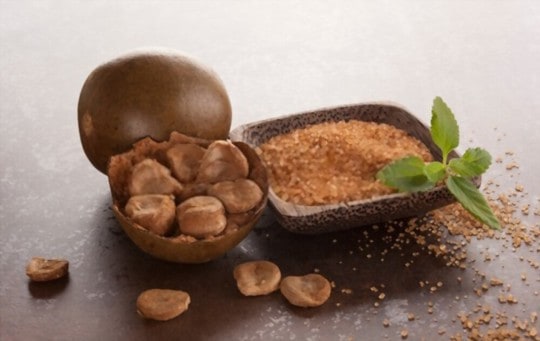
Monk fruit, also known as luo han guo, is shaped like a lemon and has a yellow or greenish-brown color.
It belongs to the gourd family and is famous for its sweetness.
Often, you'll see monk fruit sold in dried form, as it's hard to preserve them when fresh, and they spoil quickly.
Also, given its sweetness, this fruit was traditionally used to suppress sugar cravings.
Did you know that monk fruit is 250 times sweeter than regular sugar? This is why its pulp is used to produce sweeteners.
The plus point is that it doesn't contain calories.
But they're often used in small quantities.
Typically, it's sold in liquid form as a dropper for beverages or as a powdered form mixed with other natural products from sugar alcohol like erythritol to cut down its sweetness.
Monk fruit is sweet, it doesn't taste like sugar and has a bitter aftertaste.
Also, it's not grown to be consumed but for processing to extract mogrosides and use as a sweetener.
Aside from using it as a sweetener agent, monk fruit has several health benefits.
It promotes weight loss, contains anti-inflammatory properties, and is entirely safe for people with diabetes.
However, since monk fruit is not easy to harvest and processing is expensive, they're priced higher.
In addition, although monk fruit allergy is rare if you're allergic to gourds, it can cause symptoms like rash, dizziness, swollen tongue, or wheezing.
How to Cook and Serve Monk Fruit?

Monk fruit is not meant to be cooked but is used as a sweetener in coffee, lemonade, smoothies, yogurt, tea, or almost anything.
But remember that it's sweeter than sugar, so adding a small amount is enough.
Or, if you want to use it as a dip, you can add monk fruit sweetener in butter, cheese, or vanilla to satisfy your sweet tooth.
You can also use monk fruit sweetener to sprinkle on top of desserts or salads.
Likewise, as a substitute for sugar, there are so many ways you can use this natural sweetener agent in your food.
Since it's heat-stable, monk fruit is also used for baking, like chocolate cookies, cupcakes, or carrot cakes.
Also, it's used as a 1:1 ratio as a substitute for sugar in recipes.
But try experimenting first if you're aiming to replace table sugar with monk fruit sweetener.
You might have to spend some time learning and deciding on the amount you should use so that the food doesn't become too sweet.
Most importantly, if you're following a sugar-free diet, you can use this ingredient without worrying about your blood sugar level, as it's naturally processed and has no chemicals.
If serving monk fruit-sweetened dishes alongside quick vegetable sides, consider 22 veggie sides that cook under 12 minutes for easy, fast pairings.
Taste Profile of Monk Fruit Sweetener
There couldn't be a healthy alternative to sugar than monk fruit sweetener.
It's sweeter than sugar but has no calories and contains several health benefits.
Also, if you want to limit your sugar intake, it's a great option.
Especially for diabetic patients, monk fruit sweetener is a safe choice as it won't affect sugar levels.
So if you were curious about the taste and uses of monk fruit, we hope you have gained some knowledge.
Getting your hands on this monk fruit might not be easy, you always try the sweetener to know its taste.
Frequently Asked Questions
So, what does monk fruit taste like? This article will tell you what monk fruit is, its taste, and its various benefits.
Monk fruit comes from Southern China and is known for its sweetness containing about 25 to 38 percent of carbohydrates, like glucose.
Monk Fruit pairs well with ingredients that complement its natural flavor. Try it alongside contrasting textures and seasonings to find combinations you enjoy.
Does freshness affect how it tastes?
Yes, noticeably.
Fresh versions tend to have a brighter, more pronounced flavor.
Older or improperly stored versions can taste muted, sour, or slightly off - freshness matters here.
Start with a preparation that shows its natural flavor without overwhelming additions. Simple seasoning and a familiar context - alongside something they already enjoy - eases the introduction.
Exotic fruit textures work across many dishes. dragon fruit taste exploration and texture notes offers another mild, juicy profile. jujube fruit taste guide and uses highlights a sweet, apple-like alternative.