
They're most likely whiskey, and if you're lucky, they could be rye.
In the world of alcoholic beverages, rye whiskey has always stood firm and withstood the challenges that new varieties bring.
Why? Because they never lose.
What does rye taste like, and why are whiskey drinkers so excited about it?
There's the taste, and there's another thing, and we'll look at the reasons why.
What is Rye?
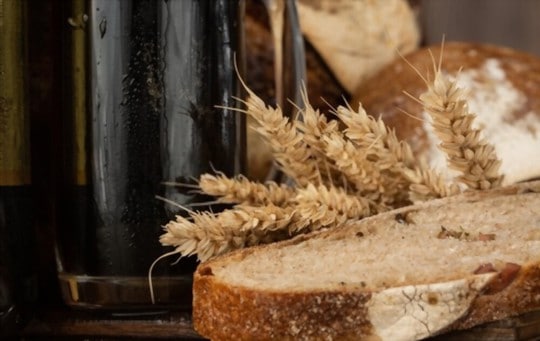
Rye is a shortened term for 'rye whiskey' simply because the whiskey uses a rye mash - for a different take on the grain, see rye bread flavor guide.
There can be two main categories when considering rye whiskey: the American version and the Canadian one.
The latter is mostly referred to when we say 'rye whiskey' while the former is famously called 'straight rye' whiskey.
The American rye whiskey uses and contains at least 51% rye grain mixed with mash.
The whiskey is labeled as 'straight' rye when it is aged for at least 2 years without mixing with other spirits.
Canadian rye whiskey is a different story altogether.
The ones manufactured in recent years may or may not contain any rye, and the labels cannot determine their composition.
The Canadian version doesn't use any malted mash; hence, it is more suitable for the term 'rye whiskey' since they consist of a wheat/corn base with little or no rye.
If planning a dessert after a rye-forward meal, consider bright citrus pairings like those in lemon dessert pairings for balance to offset the whiskey's spice.
What Does Rye Taste Like?
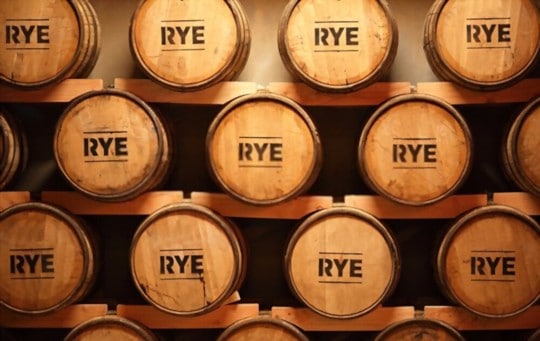
Two words describing rye are 'sour' and 'dry.' But it's not that simple when you have a taste of it.
Because of the distillation and long charring in oak wood, rye whiskey always features a spicy and fruity taste.
However, this doesn't quite describe rye whiskey well; the flavor varies depending on how it is prepared.
Straight rye whiskey tastes smoky, peppery, and has a spicy aftertaste.
Its overall taste aligns with sharp and strong.
But it also has sweeter elements of vanilla and caramel which mostly get extinguished during the maturation.
On the other hand, Canadian rye may sometimes feel more tasty, especially when the whiskey has been left to mature in old barrels that have been used for a long time.
Some of these old barrels were used to make whiskey with rye, so the flavor develops with age.
Together with the sourness of rye, the corn mash evolves during maturation, giving a buttery, sweet, and sour taste altogether.
The most common comparison that is brought up with rye is that it tastes similar to bourbon whiskey, and it is true.
Despite their many similarities, these two are slightly different in taste.
Even with all the claims about the taste and differences, there's nothing more significant than the maturation time in deciding how a rye whiskey will taste.
-aged rye is more flavorful, but this taste will not change once it's bottled and distributed.
So, let your rye sit in the barrel for a little longer if you want it to taste amazing.
After you've bottled your rye, the taste stays constant, and it'll never go bad.
Most whiskey (and other alcohol) have an indefinite shelf life, and you can preserve the acquired taste for ages.
How to Use Rye?
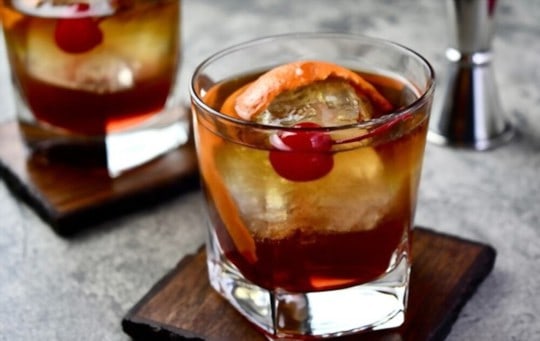
You can use rye as a fall/winter drink to warm you up or even stock up on the health benefits of whiskey by drinking it in moderation.
It's impressive how this drink can help you and your health if you drink it right.
Many will find rye whiskey dry and bitter, preventing you from enjoying it if you're sensitive on the palate.
Apart from drinking it neat and on the rocks, many fun cocktails use rye, and here are a few:
For serving suggestions that complement rye-based cocktails or a hearty pour, try high-protein sides without meat that hold up to bold flavors.
- Boulevardier: If you're familiar with Negroni, the Boulevardier is a more palatable variant that instantly bursts with a bittersweet taste. A mixture of rye, Campari, and vermouth brings out this flavor.
- Vieux Carré: A cocktail with a complex taste, Vieux Carré has everything from sweet to bitter. It uses rye whiskey, cognac, sweet vermouth, bitters, and a very distinct botanical liqueur- Bénédictine.
- Sazerac: Another signature cocktail that exclusively calls for rye is the Sazerac. It uses rye, absinthe, sugars, and Peychaud's Bitters. So, it tastes herby, bitter, and sweet altogether. .
Rye Vs. Bourbon

Rye and bourbon- this is one of the most debated topics among whisky drinkers.
You cannot tell them apart just by looking since they're both brown and smell similar.
So, the only way is to taste the differences and see which flavor the connoisseur in you will pick.
The similarities are that rye and bourbon are manufactured in almost the same way.
They're both distilled to the extent of 160 U.S.proof and matured in oak barrels.
The minimum ABV (alcohol by volume) is 40%. You can observe the difference in their ingredients and taste.
As mentioned, rye whiskey is made using rye with a minimum of 51% rye, and bourbon uses fermented mash consisting of 51% corn at a minimum.
When comparing flavors, rye is more astringent, while bourbon is all about warm, sweet notes - or explore bourbon sauce flavor profile for a concentrated example of those sweeter notes.
The spicy undertones of rye don't diminish even after being matured for a long time.
Meanwhile, bourbon is on the mellow end of the spectrum.
This stark dissimilarity makes them both suitable for different purposes.
For instance, rye is better suited for cocktails, while bourbon pairs well with other drinks to make great shooters.
But another condition determines their taste; a standard 51% rye whiskey will taste almost similar to bourbon, while a 100% rye (Monongahela-style) tastes extremely spicy with a strong herbal aroma.
Final Thought
You've read about how rye has become a distinct, never-changing favorite among whiskey enthusiasts.
And if you're one among them but never tried rye, it's time for one.
Because who can believe your love for whiskey if you've never tried rye?
It can be quite at a competition with the much-similar bourbon, but there really isn't a reason to favor one over the other.
They're both great to drink as is and in cocktails.
Each can be used for different occasions, and it does good to acknowledge their differences.
Angel's Envy releases show clear differences between barrel treatments - see Angel's Envy bourbon vs rye comparison for a direct comparison. For baking alternatives related to rye, rye flour substitute options lists practical swaps.
Frequently Asked Questions
Ever wondered what some of the rich charred drinks in fancy bottles taste like? There's the taste, and there's another thing, and we'll look at the reasons why.
Two words describing rye are 'sour' and 'dry.' But it's not that simple when you have a taste of it.
Rye has a character that is hard to compare directly. The closest description combines its dominant flavor note with its finish - whether dry, sweet, tart, or smooth.
Does it taste different depending on how it is prepared?
Preparation makes a significant difference.
Raw, roasted, fried, and steamed versions each bring out different qualities - sweetness, bitterness, earthiness, or richness - in the same ingredient.
Yes. Different cultivars, origins, or processing methods produce meaningful flavor differences.
If one version did not appeal to you, trying a different variety is worth the effort.