
Swap hominy 1:1 with cooked chickpeas or white beans in pozole, sweet corn in a casserole, and grits or polenta for hominy grits.
- Samp has the closest chew, but needs a 4-hour soak and a 1-hour simmer.
- No swap tastes exactly like hominy, because only hominy is soaked in lime.
- Stir canned beans or corn in near the end.
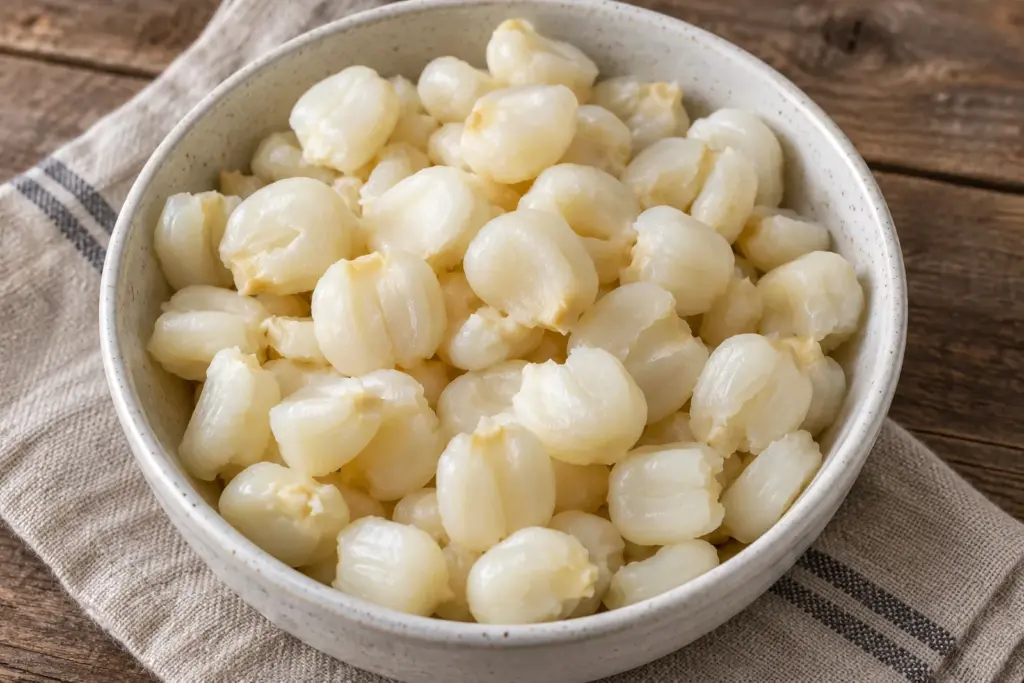
Hominy is harder to replace than most pantry substitutes, because it is dried field corn soaked in an alkaline solution, usually lime (calcium hydroxide) or lye. That soak removes the hull and swells the kernel, so hominy ends up large, chewy and mild. No bean or grain copies all three traits, so the best swap depends on which one your recipe needs.
What Does Hominy Do in a Recipe?
In a pot of pozole or posole, hominy supplies bulk and chew. Each kernel stays whole through a long simmer. The process is called nixtamalization, and University of Nebraska Extension describes it as cooking corn in lime, which removes the outer skin (the pericarp) and softens the inside of the kernel.
The soak also changes the flavor. Hominy tastes like masa and fresh tortillas, a toasty, earthy corn note that plain sweet corn and beans do not have. That is why every swap changes the dish a little: you can match the size, the chew or the corn flavor, but rarely all three at once.
- Chew in soups and stews: chickpeas, white beans or samp hold up best.
- Mild corn flavor in a casserole: sweet corn is the easiest stand-in.
- Starchy body in grits: only grits or polenta can take over that job.
How Do Canned and Dried Hominy Differ?
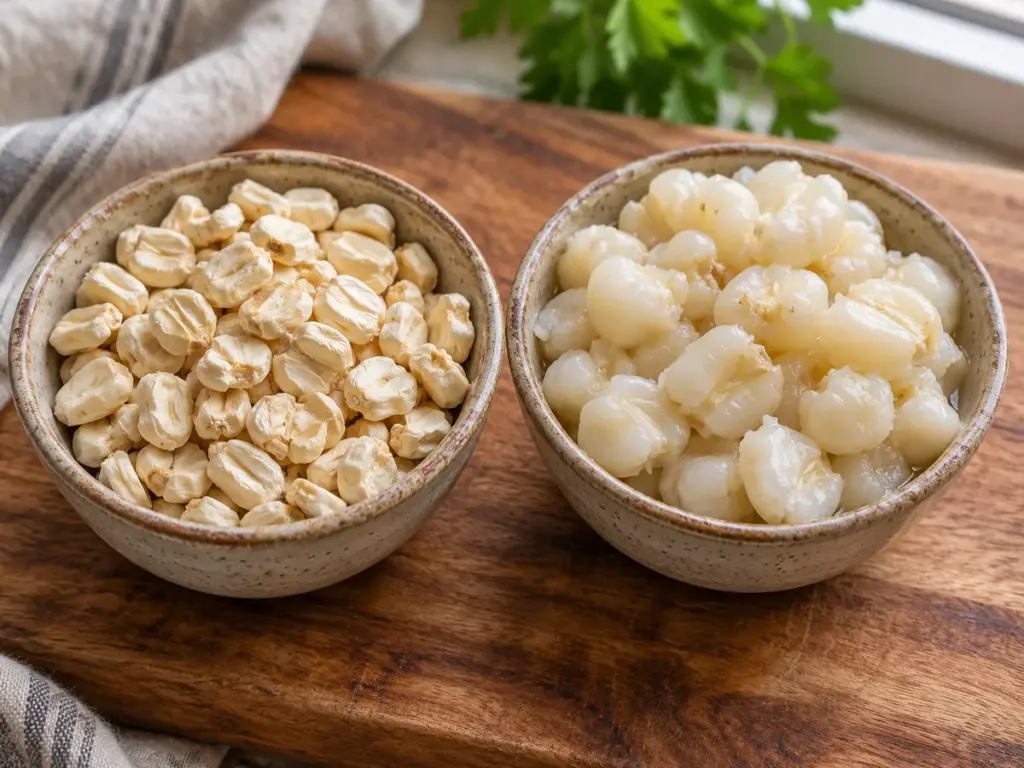
Canned hominy is already cooked, so you drain it and heat it through. Dried hominy is firmer and chewier but needs an overnight soak and a long simmer. Whichever you have, the swaps below match canned hominy, which is the form most recipes assume.
| Form | Prep | Time | Result |
|---|---|---|---|
| Canned hominy | Drain it. It is already cooked. | A few minutes to heat through in soup, or 30 minutes at 350°F in a casserole | Softer and mildly salty |
| Dried hominy | Soak 6 to 8 hours, then drain and discard the water | About 2 hours of simmering | Firm, chewy and clearly corn-flavored |
The casserole time comes from a Taste of Home recipe that bakes three 15-ounce cans of drained hominy with sour cream, cheddar and green chiles. Rancho Gordo, which sells dried hominy, gives the soak and simmer times and says it is done when the kernels are chewy and tender but not chalky.
- Soak. Cover the kernels with plenty of water for 6 to 8 hours, then drain and throw out that water.
- Simmer. Cook them gently in fresh water with a cut onion for about 2 hours.
- Taste. Pull one out and bite it. It should be chewy and tender, with no chalky center.
- Store. Keep cooked hominy in its liquid in the fridge for 3 to 4 days, or freeze it.
Rancho Gordo says 2 cups (1 pound) of dried hominy make about 7 cups cooked. The 3 to 4 day fridge limit is the USDA's general guidance for cooked leftovers.
What Are the Best Substitutes for Hominy?
Use this table to find the swap for your dish. Ratios assume canned or already-cooked hominy in the recipe, and each swap is measured by cooked volume.
- Samp or dried field corn swaps 1:1 and is best for pozole and stews when you have time. The pieces are smaller, and it needs soaking and 1+ hour of simmering.
- Sweet corn, frozen or canned swaps 1:1 and is best for casseroles and quick soups. It is sweeter and softer, with no chew.
| Substitute | Ratio | Best for | What changes |
|---|---|---|---|
| Chickpeas | 1:1 | Pozole and brothy soups | Nutty flavor, more protein |
| White beans | 1:1 | Pozole and stews | Creamier, breaks down in a long simmer |
| Grits or polenta | Same dry amount | Only hominy grits or ground hominy | Less lime flavor, cooks faster |
Only the first swap keeps the whole-kernel chew of hominy. The other four trade that chew for convenience, flavor or thickness, so read the item that matches your dish before you shop.
1. Samp or Dried Field Corn
Samp is the closest swap in texture, so use it 1:1 by cooked volume where a recipe wants a chewy corn kernel, as in pozole. Samp is dried corn that has been hulled and cracked into coarse pieces. Brands differ, since some are lye-treated like hominy and others are plain dried corn, so read the bag before you buy.
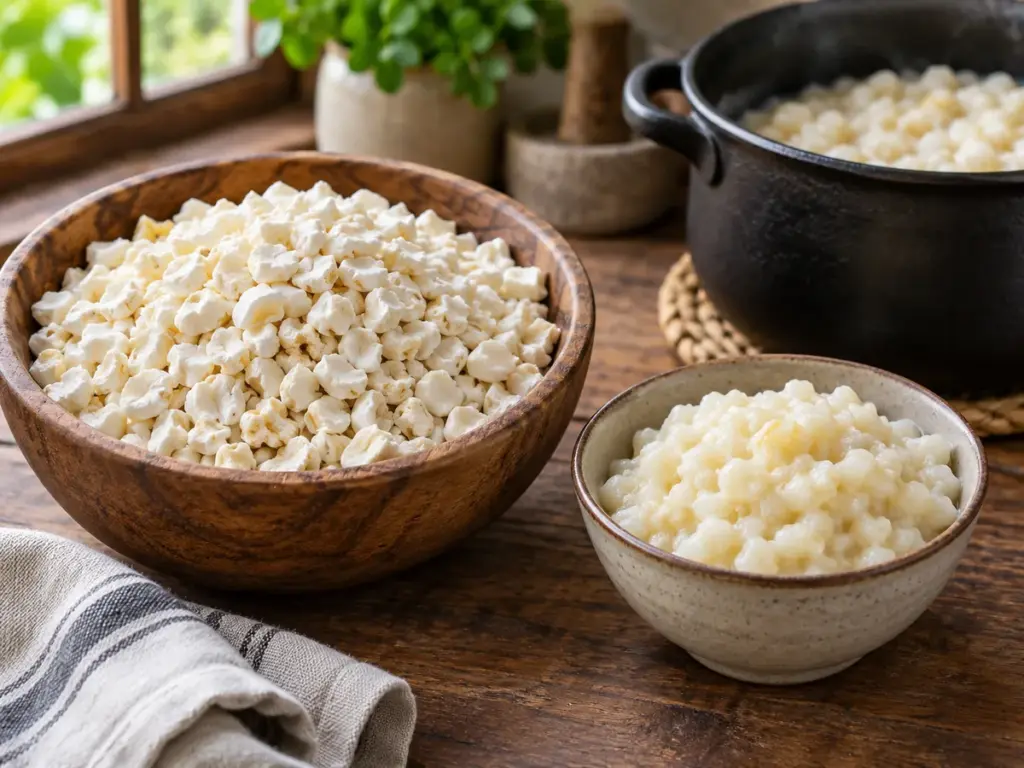
You need to soak samp for at least 4 hours or overnight, then simmer it for at least an hour, tasting until it is tender. Because the pieces are cracked, they cook to a softer grain than whole hominy and thicken the broth slightly. Samp fails on a weeknight and in a dish that depends on whole, plump kernels, since the soak and simmer take longer than the rest of the recipe.
2. Frozen or Canned Sweet Corn
Sweet corn is the easiest swap to find, and it works 1:1. It is sweeter, crisper and less starchy than hominy because it is a different corn that was never soaked in lime. In a casserole that difference is welcome, but sweet corn's taste shows up clearly in a savory, chile-based soup.
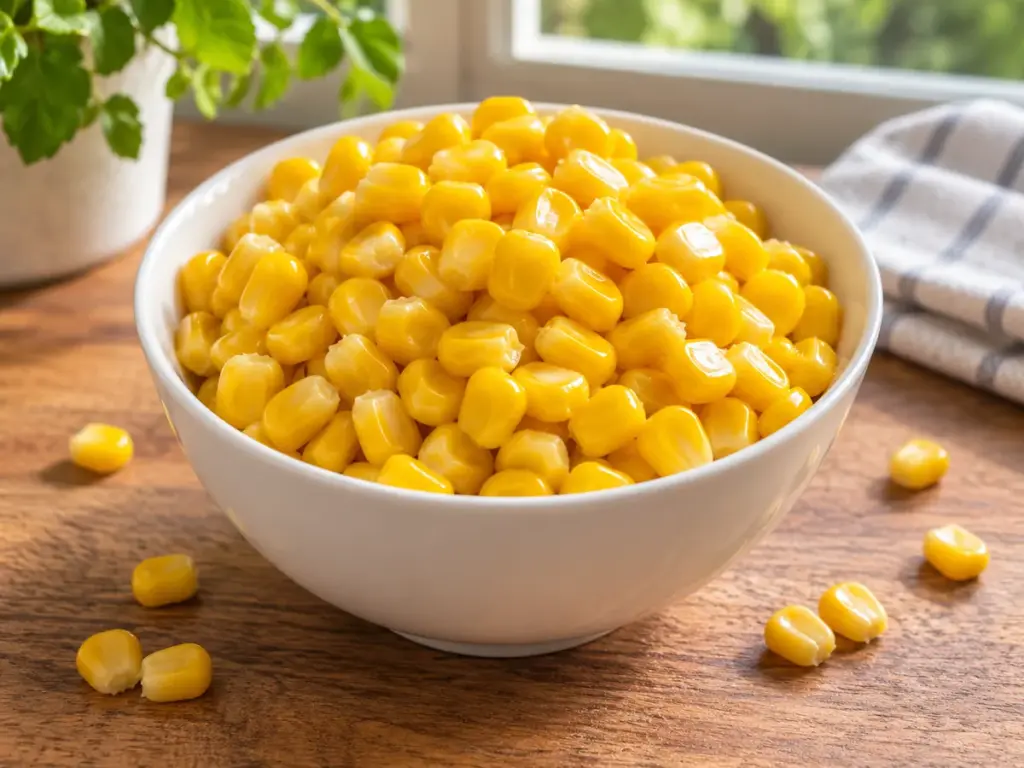
Frozen kernels need no soaking. Stir them into soup for the last 15 minutes, or for the last few minutes if you use canned corn, which is already cooked. In a baked dish, drain canned corn well or pat thawed frozen corn dry, so the extra water does not thin the sour cream and cheese sauce.
3. Chickpeas
Chickpeas are roughly the same size and firmness as hominy, and both taste mild, so drained canned chickpeas work 1:1 in brothy soups and stews. They keep their shape through a simmer, which is why they are the most common swap for pozole.
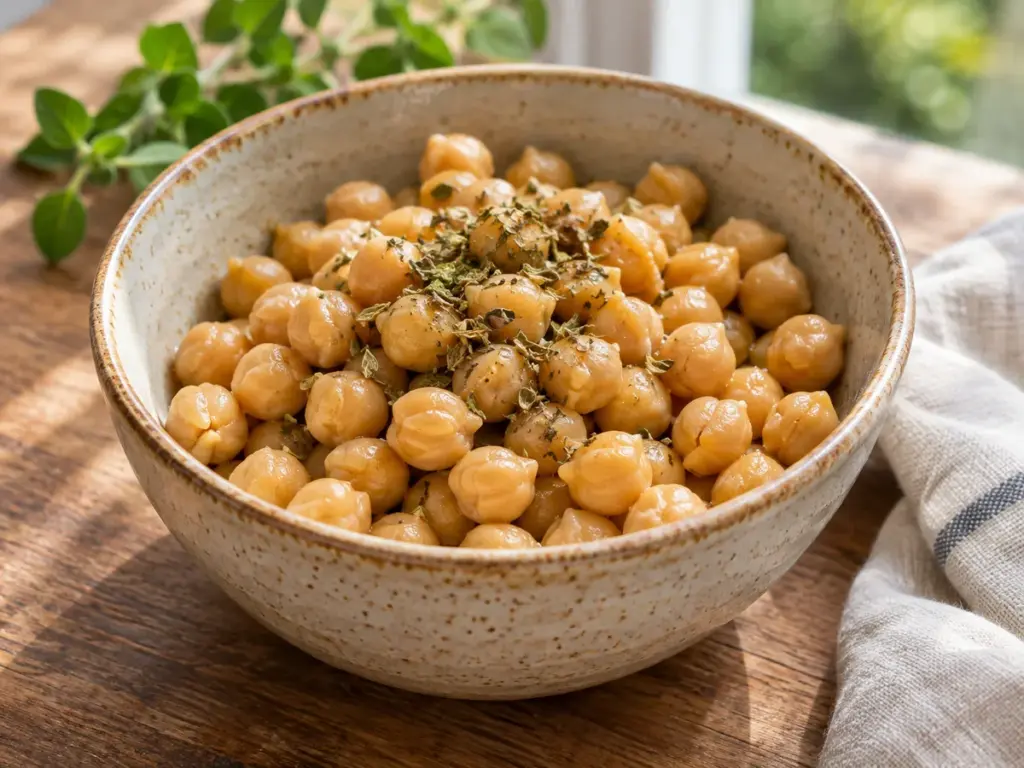
Dried chickpeas need longer to soften than hominy does, so use canned unless you can soak overnight. The pot gets more protein and fiber and tastes less of corn, because chickpeas are nutty and a little earthy. Do not use whole chickpeas where a recipe wants ground hominy, because they cannot thicken a dish.
4. White Beans
Great northern, navy and cannellini beans are white beans for stews with a mild, creamy bite that sits quietly under chile and spices. Use them 1:1 by cooked volume in pozole or stew.
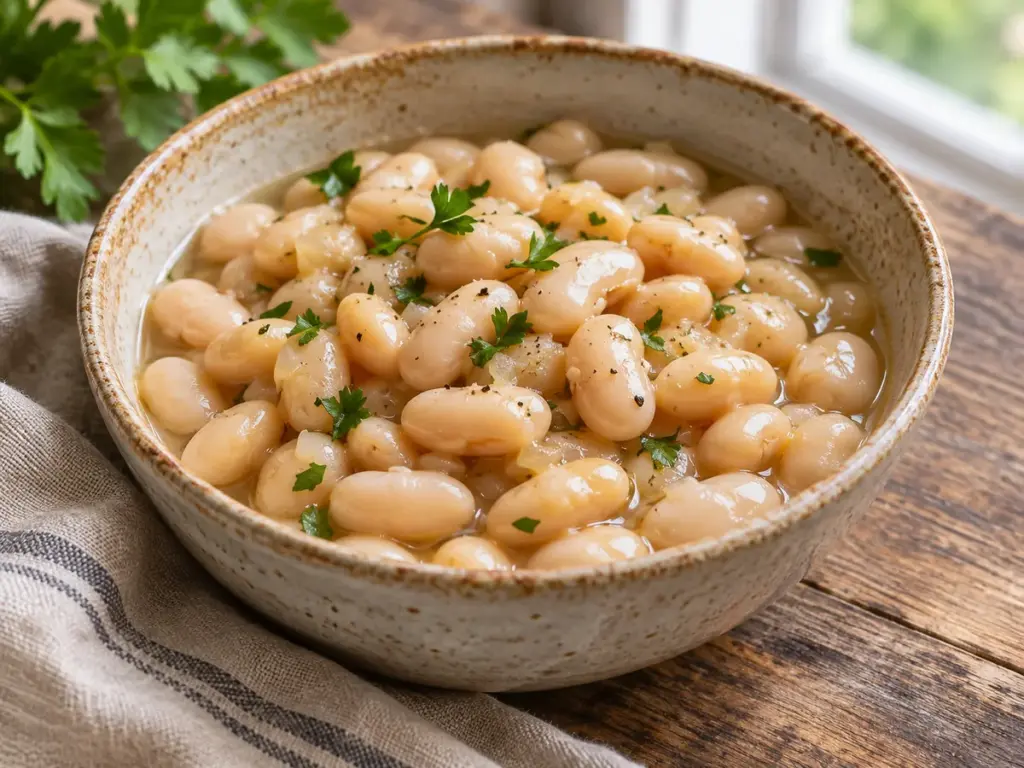
Canned beans are already cooked, so add them in the last 15 to 20 minutes or they split and cloud the broth. Beans are softer than hominy, so they suit a quick pozole or white chili better than a pot that simmers all afternoon.
5. Grits or Polenta (Hominy Grits Only)
When the recipe says hominy grits or ground hominy, regular grits or polenta take its place. Whole kernels cannot do that job, because ground hominy is starchy and binds the dish, and cornmeal-based products bind it the same way. Hominy grits are dried, coarsely ground hominy, so they carry the lime flavor, while stone-ground grits come from whole corn that was never soaked in lime and taste plainly of corn.
Use the same dry amount the recipe lists and watch the pot, because grits cook faster than hominy. Stir polenta in gradually until the dish is as thick as you want. Check the label on any grits sold as hominy, since some are not nixtamalized. If you are out of regular grits too, other grits stand-ins include cornmeal and polenta.
Which Substitute Fits Pozole, Casserole or Grits?
- Chickpeas or white beans give a firm bite with no soaking.
- Samp gives the closest chew after an overnight soak.
- Add canned beans in the last 15 to 20 minutes.
- Drained sweet corn replaces hominy 1:1 in a casserole.
- Grits or polenta replace hominy grits, never whole kernels.
- Corn makes a sweeter dish.
Whichever pot you make, guacamole, tortilla chips and garlic bread still work as sides for pozole.
How Do the Swaps Compare on Nutrition?
Beans and chickpeas bring more protein and fiber than hominy, but they also bring about 1.6 to 1.9 times the calories per 100 grams. Sweet corn lands closest to hominy. These are USDA FoodData Central figures for typical canned products, so a brand with a different brine will differ, especially in sodium.
| Per 100 g | Calories | Protein | Fiber | Sodium |
|---|---|---|---|---|
| Canned white hominy (FDC 169701) | 72 | 1.48 g | 2.5 g | 267 mg |
| Canned sweet corn, drained (FDC 169214) | 67 | 2.29 g | 2.0 g | 205 mg |
| Canned chickpeas, drained (FDC 173800) | 139 | 7.05 g | 6.4 g | 246 mg |
| Canned white beans (FDC 175204) | 114 | 7.26 g | 4.8 g | 340 mg |
| Corn grits, cooked, no salt (FDC 171655) | 71 | 1.71 g | 0.8 g | 2 mg |
Cooked grits contain almost no sodium because the USDA entry has no added salt, while the canned items carry brine. If sodium matters to you, rinse canned beans, chickpeas and hominy before they go in the pot.
Which Swaps Do Not Work?
- Masa harina is hominy that has been dried and ground, so it brings the lime-corn flavor but no kernels to bite. It can thicken a broth, and it cannot replace the chew.
- Buckwheat grits are not corn. They have a nutty, robust flavor and cook into a porridge, so they change a soup far more than they replace hominy.
Sources
- University of Nebraska Extension, G2329: nixtamalization, lime cooking, pericarp removal.
- Rancho Gordo, How to Cook Pozole (Prepared Hominy): soak and simmer times, yield, doneness.
- Tasting Table, Dried vs Canned Hominy for Pozole: dried versus canned texture and times.
- Taste of Home, Hominy Casserole: 3 cans of hominy, 350°F for 30 minutes.
- Texas Real Food, Hominy Substitutes: swap ratios for corn, chickpeas, samp, grits and polenta.
- Tasting Table, Substitute Hominy for Chickpeas: chickpea size, texture and when not to use them.
- CooksInfo, Samp: samp soak and simmer times.
- The Daily Meal, Hominy Grits vs Stone-Ground Grits: nixtamalized versus whole-corn grits.
- USDA FSIS, Leftovers and Food Safety: 3 to 4 days in the refrigerator.
- USDA FoodData Central: 169701, 169214, 173800, 175204, 171655.

Food writer at GustoMeadow. Writes ingredient substitutes, food comparisons, taste guides and storage guides for home cooks.
Storage and food-safety numbers follow USDA, FDA and university extension guidance.



