
Swap foil by job: parchment up to 425°F for baking, a lid for covering, cedar wraps for grilling, and never wax paper for anything hot.
- Reynolds rates parchment up to 425°F, but not for broilers or grills.
- Cedar wraps suit the grill, and freezer paper or bags suit the freezer.
- Wax paper melts in the oven, so keep it cold.
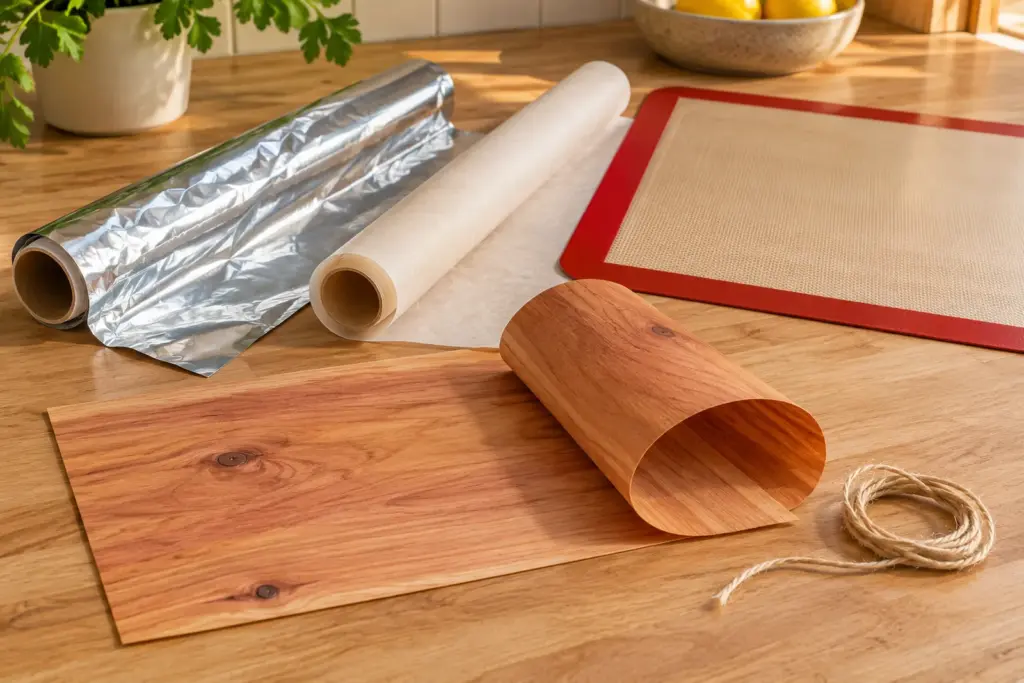
Aluminum foil, sold as aluminium foil in the UK, does five different jobs, and no single swap covers all of them. Pick from these six kitchen substitutes by the job in front of you: lining, roasting, covering, grilling or freezing.
Can You Use Wax Paper Instead of Aluminum Foil?
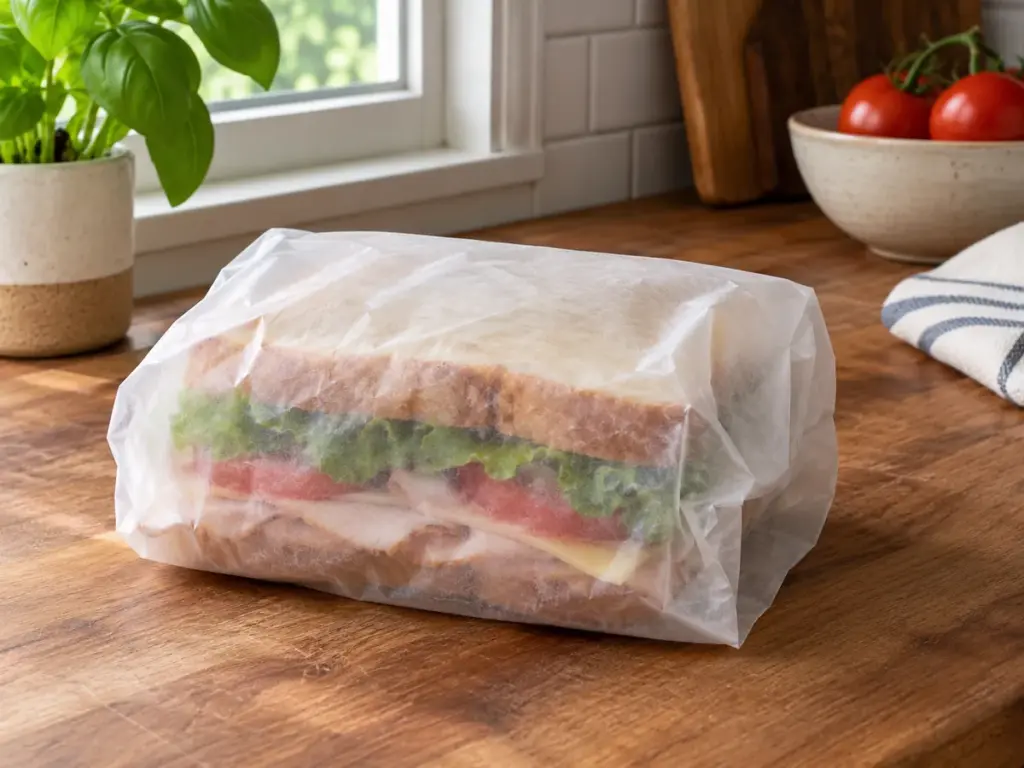
Not for anything that gets hot. Reynolds, which makes both wax paper and parchment, says wax paper cannot withstand high temperatures and will melt. Melted wax ends up on the pan and on your food, so wax paper is no swap for foil when you roast, bake, grill or broil.
What Does Aluminum Foil Do in a Recipe?
You can choose the right swap once you know which job the foil was doing. In most recipes it does one of these:
- It takes high heat. Reynolds says foil can handle the high heat of roasting, broiling and grilling, and it does not melt until 1220°F.
- It covers a dish. A loose foil cover keeps food from drying out or burning and holds in heat and moisture.
- It wraps a packet. The sealed pouch traps moisture and flavor, and Reynolds says foil pack meals typically cook at 450°F.
- It wraps cold food and blocks light, air and microbes that cause spoilage.
Only foil survives a broiler or grill, so those two jobs have the fewest swaps. One job needs no swap at all, because Reynolds says not to line the bottom of your oven with foil, and its foil is not microwave safe either.
What Is the Best Swap for Each Foil Job?
This table matches each job to a swap with its heat limit. Where the limit says "maker," read the number printed on your own product.
| Foil job | Best swap | Heat limit | Skip |
|---|---|---|---|
| Lining a baking sheet | Parchment or a silicone mat | 425°F parchment; mat per maker | Wax paper |
| Roasting, uncovered | Bare pan with oil, or parchment | 425°F for parchment | Wax paper |
| Covering a baking dish | Oven-safe lid or a baking sheet on top | The lid's own rating | Parchment (breathable) |
- Packets in the oven work with a parchment packet at 425°F, and you should skip wax paper.
- Grilling works with a cedar wrap or oiled grates, within the maker's grill range, and you should skip parchment and wax paper.
1. Parchment Paper
Parchment is the closest oven swap for lining a pan or wrapping a packet. Reynolds says its parchment is oven safe up to 425°F and must never touch the sides of the oven or an open flame. Set the sheet on a pan so its edges stay clear of the walls.
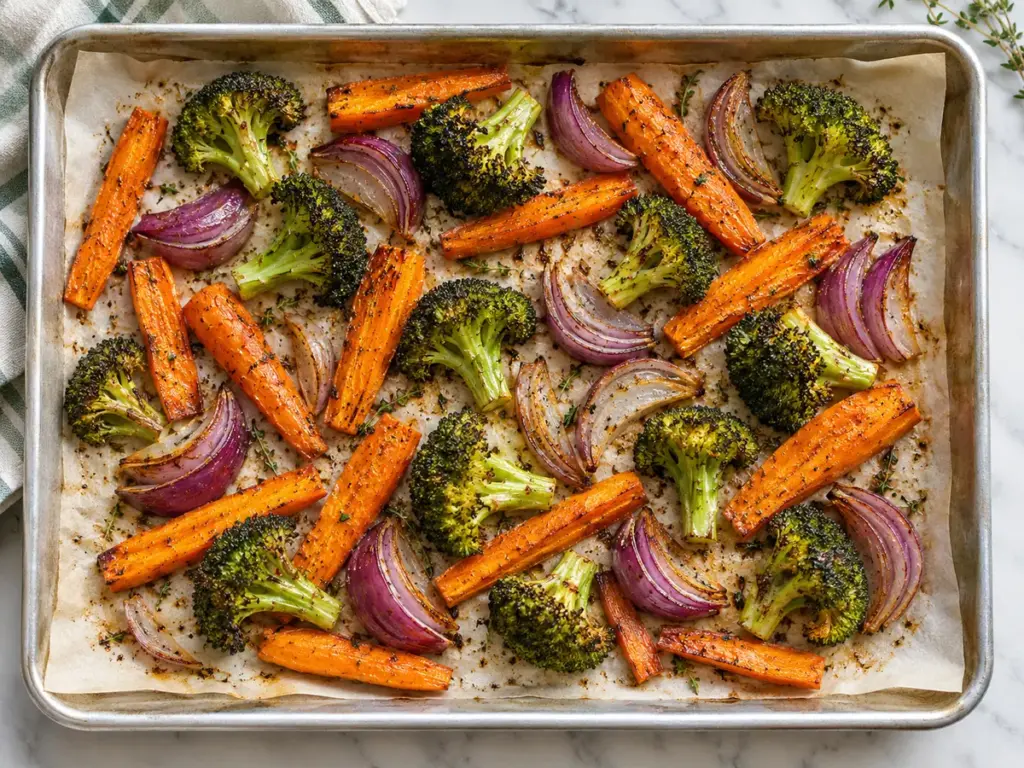
Parchment is not a broiler or grill swap. The Reynolds label says not to use it with a broiling unit or toaster oven, and Reynolds points to foil for the high heat of broiling and grilling, two methods that heat food from different directions. Roast above 425°F on a bare pan with a little oil instead.
If you are out of parchment as well, a greased pan handles most baking, and parchment stand-ins cover the rest. In an air fryer basket, parchment must be cut to fit and weighed down by food.
2. Silicone Baking Mat
A reusable silicone mat replaces foil under cookies, roasted vegetables and anything sticky. It is non-stick, so you need little or no oil. Lay it flat on a baking sheet, and read the heat rating printed on your mat, because ratings differ by brand.
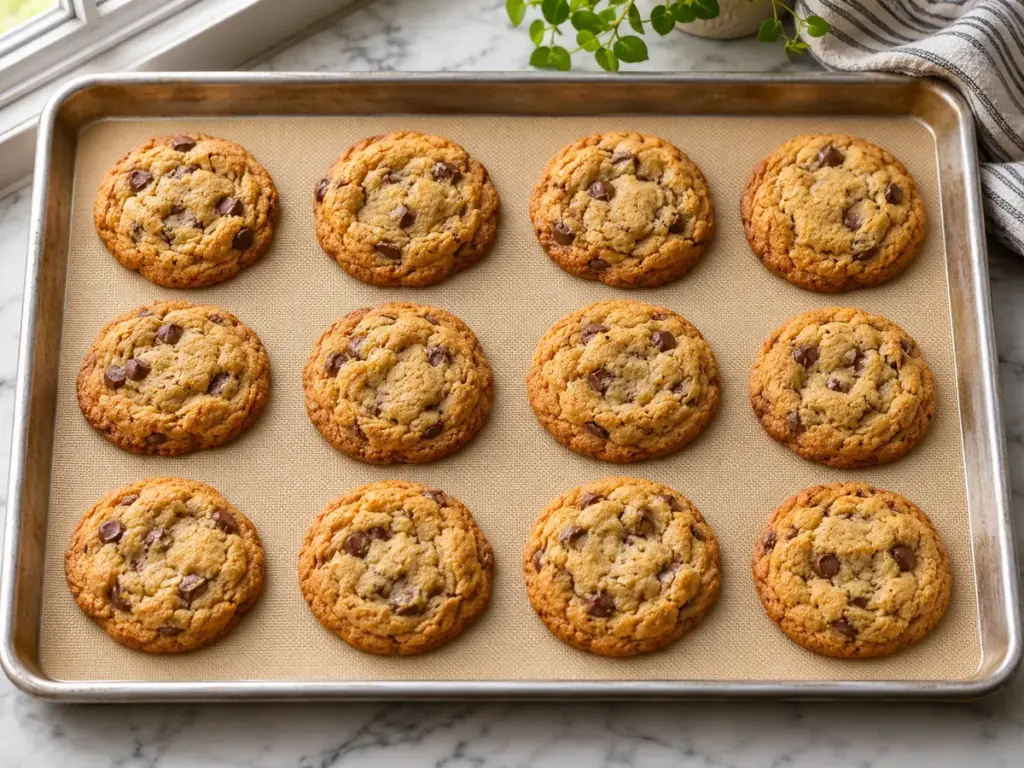
Keep the oven below the rating on your mat, and skip the broiler and the grill unless the maker says they are allowed. A mat lies flat under the food and does not fold into a sealed pouch, so it works for lining but not for wrapping.
3. Oven-Safe Lid or Baking Sheet
To cover a casserole or a roast, put an oven-safe lid on the dish. A dish without a lid can take a second baking sheet set on top, which shields the food from the heat above the way a foil tent does. Reynolds says parchment is breathable, so it does not seal in moisture and makes a poor cover for a roast.
Check that the lid is rated for your oven temperature. A dutch oven or a covered pan works the same way, and you can find stand-ins for a roasting pan when you own neither.
4. Cedar Grilling Wraps
Cedar wraps are thin wood sheets that you soak, wrap around fish or chicken and tie with twine. Soak them for about 5 to 7 minutes and submerge them fully so they do not catch fire, then grill at about 350 to 400°F, according to one maker's instructions.
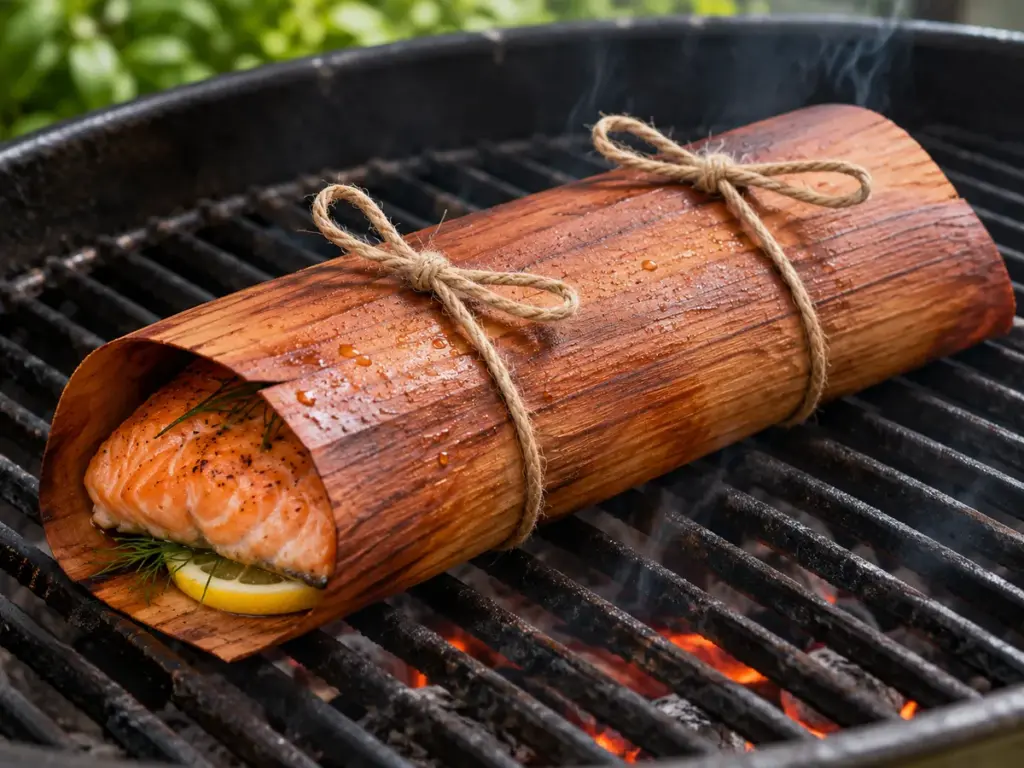
Use natural string only, never plastic, and use a fresh wrap each time, because the wraps are single use. A wrapped fillet pairs with the same sides as cedar plank salmon. With no wraps, oil the food and cook it directly on the grates.
5. Freezer Paper or Freezer Bags
USDA says to overwrap packages with airtight heavy-duty foil or freezer wrap for longer storage, and it lists freezer paper, freezer plastic wrap and freezer bags as the wrapping options. Without foil, freezer paper or a freezer bag does the same work.
- Press out the air and seal the edges tight before the package goes in.
- Buy plastic wrap labeled for the freezer, because USDA says to use only freezer-rated plastic wrap.
- Do not throw out freezer-burned food for safety reasons, because USDA says freezer burn leaves food dry in spots but does not make it unsafe.
You will also see freezer paper and butcher paper sold side by side, but freezer paper differs from butcher paper in what it is made for.
6. Lidded Containers and Beeswax Wraps
For leftovers, a shallow lidded container beats foil. USDA says to refrigerate leftovers within 2 hours of cooking, or within 1 hour above 90°F, and to use shallow containers so the food cools fast. Cooked leftovers keep 3 to 4 days in the fridge.
A beeswax wrap covers a bowl or half a lemon, with limits. Bee's Wrap says not to use its wraps on raw meat or fish, or on hot food before it cools, and to avoid ovens, microwaves and hot water. Treat it as a cold-food cover only.
How Do You Cook a Packet Without Foil?
Oven packets work in parchment, with a lower oven than foil packs need. Follow this order:
- Tear a sheet about twice the size of the food. Place the food in the center with a little oil or liquid.
- Fold the sides over and crimp the edges tight. Reynolds says parchment is breathable, so loose folds let steam escape.
- Set the oven to 425°F or lower. Foil packs cook at 450°F, which is above parchment's rating.
- Bake on a sheet pan so the packet never touches the oven's walls, racks or top.
If you have fresh corn husks or lotus leaf, they also hold a packet together, the way banana leaf wrappers do for steamed food.
Which Swaps Are Safe for Heat?
- Parchment up to 425°F in an oven, away from the walls
- Silicone mat below its printed rating
- Oven-safe lid within its own rating
- Cedar wrap on a grill, soaked first
- Wax paper for sandwiches and counter lining
- Beeswax wrap on cooled food, never raw meat
- Freezer paper and bags for the freezer
- Lidded containers for fridge leftovers
Sources
- Reynolds: Wax Paper vs. Parchment Paper
- Reynolds: Unbleached Parchment Paper Rolls
- Reynolds: Parchment Paper vs. Aluminum Foil for Baking
- Reynolds: Cooking with Aluminum Foil
- USDA FSIS: Freezing and Food Safety
- USDA FSIS: Leftovers and Food Safety
- Lakeside Smokers: How to Use a Grilling Wrap
- Bee's Wrap: Frequently Asked Questions

Food writer at GustoMeadow. Writes ingredient substitutes, food comparisons, taste guides and storage guides for home cooks.
Storage and food-safety numbers follow USDA, FDA and university extension guidance.



