
The closest swap for petimezi is another cooked-down grape syrup such as saba, vincotto, pekmez or dibs, used cup for cup.
- With none of those, date syrup at 1:1 is the best pantry swap, darker and earthier.
- Pomegranate molasses plus a little sugar adds a fruity tang, so keep it for glazes.
- Maple syrup, honey and molasses give sweetness but not grape flavor.
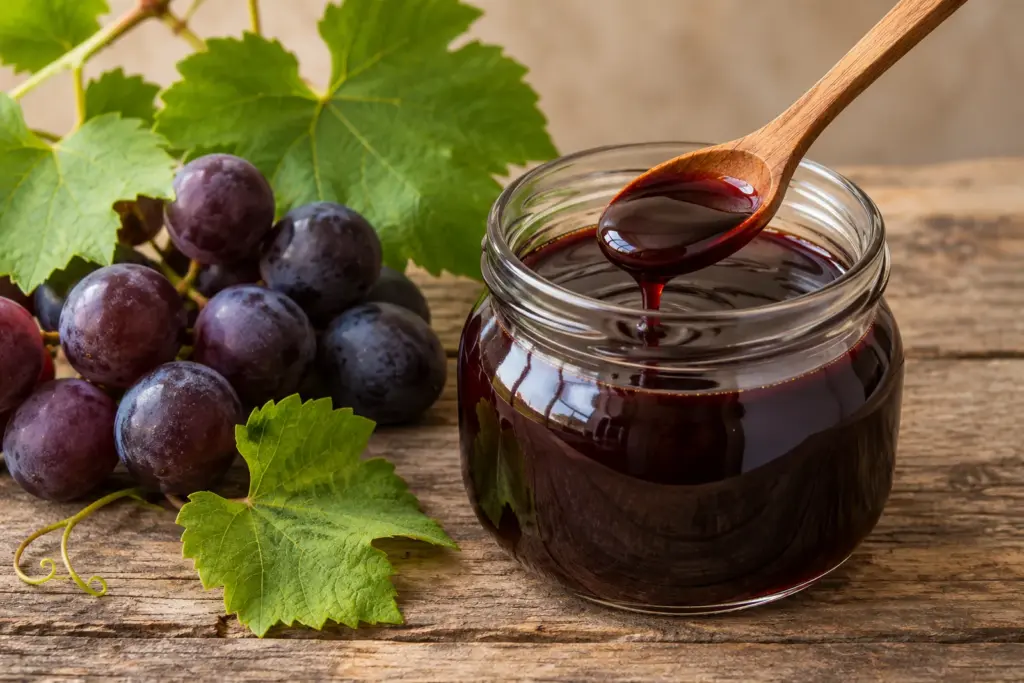
Petimezi is Greek grape syrup: pressed grape juice (called must) simmered until it turns dark and thick. Few supermarkets stock it, so the swaps below start with the closest match and then move through pantry stand-ins for cookies, puddings and glazes. The right pick depends on your dish: cookies need the grape sweetness, while a glaze can take a little tang.
What Does Petimezi Do in a Recipe?
It does three jobs in your recipe, and every swap below covers them in a different way:
- It sweetens strongly, at about 81 g of carbohydrate per 100 g (Wikipedia), which is close to honey's 82.4 g (USDA FoodData Central, FDC 169640).
- It adds a dark, fruity grape flavor that plain sugar syrup does not have.
- It gives dough and puddings body and a deep brown color.
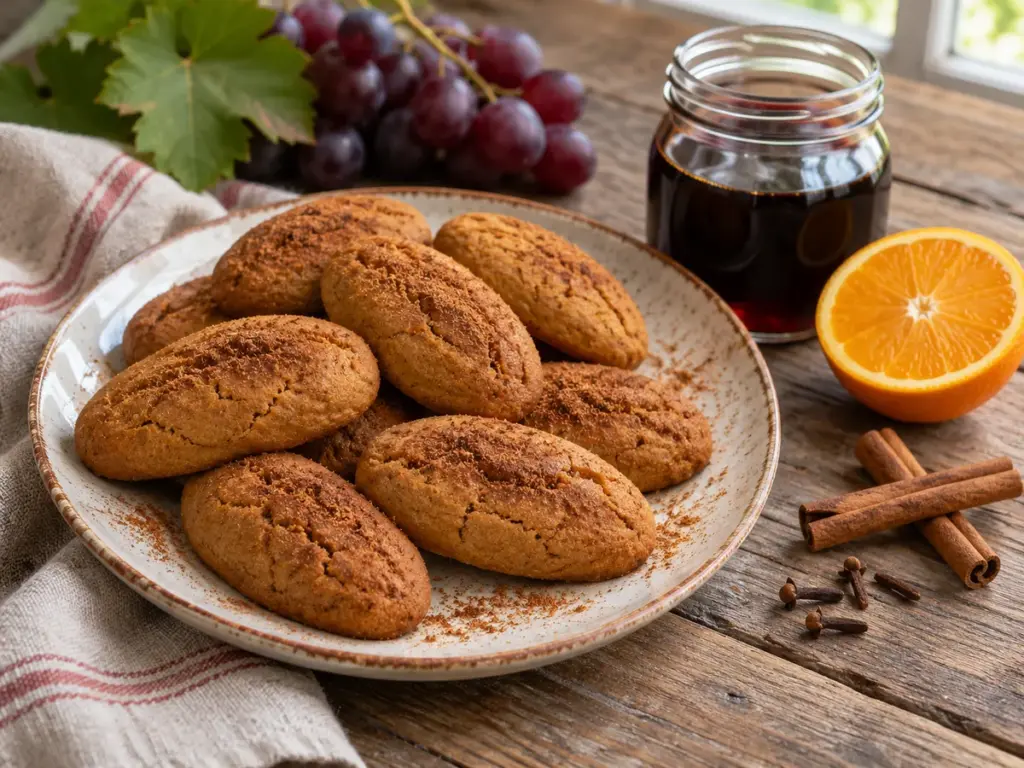
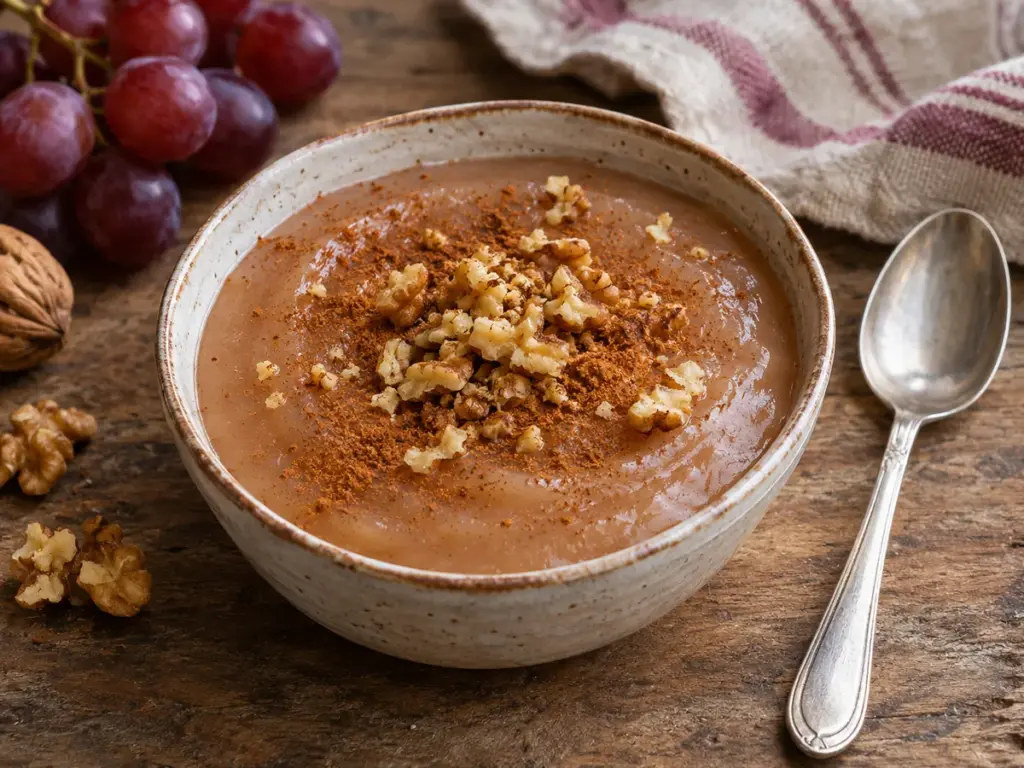
Greek cooks stir it into moustokouloura, spiced cookies. One recipe uses ¾ cup petimezi with ¾ cup orange or mandarin juice and warns that petimezi is very sweet (Kopiaste). They also cook it into moustalevria, a cold autumn pudding (Oliveology). You can also spoon it over tangy Greek yogurt or fresh cheese.
6 Best Substitutes for Petimezi
The sources name these swaps but give no swap amounts, so the cup measures below are starting points, not source figures. They replace 1 cup of petimezi, so taste before you add more.
| Swap | For 1 cup | What changes |
|---|---|---|
| Saba, vincotto, pekmez, dibs | 1 cup | Almost nothing |
| Date syrup | 1 cup | Earthier, no grape taste |
| Pomegranate molasses | ⅔ cup plus ⅓ cup sugar | Tarter, fruitier |
| Molasses | ¾ cup | Stronger, bittersweet |
| Maple syrup | 1 cup | Lighter, milder |
| Honey | 1 cup | Honey flavor, not fruity |
Only the first row keeps the grape flavor, so the five rows below it each trade some of it for something already in your pantry.
1. Saba, Vincotto, Pekmez or Dibs
Each of these is cooked-down grape juice under a local name: saba or vincotto in Italy, pekmez in Turkey, dibs in the Levant and arrope in Spain (Wikipedia, "Grape syrup"). Start with 1 cup for 1 cup, because they are the same kind of syrup as petimezi.
Read the label before you buy. Earth to Veg advises a bottle that is 100% fruit with as few other ingredients as possible, and describes grape pekmez as very sweet with a little smoke in the flavor, so taste a spoonful before it goes into a delicate pudding.
2. Date Syrup
Real Greek Recipes suggests date syrup for moustokouloura and calls it an earthy fruit sweetener with a deep color. Use 1 cup for 1 cup.
Your cookies will taste of dates instead of grapes. Its moustokouloura recipe also says the flour amount depends on how thick your syrup is, so add the last of the flour slowly when you change syrups. If you run out of date syrup too, maple syrup and honey are the usual swaps for date syrup as well.
3. Pomegranate Molasses Plus Sugar
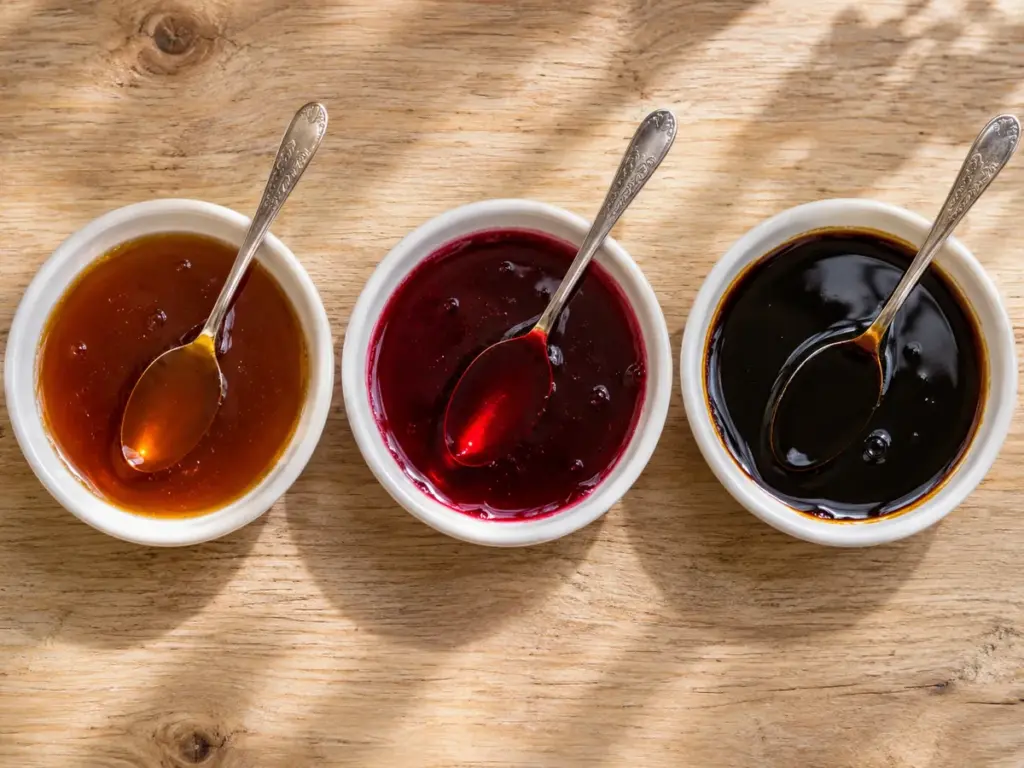
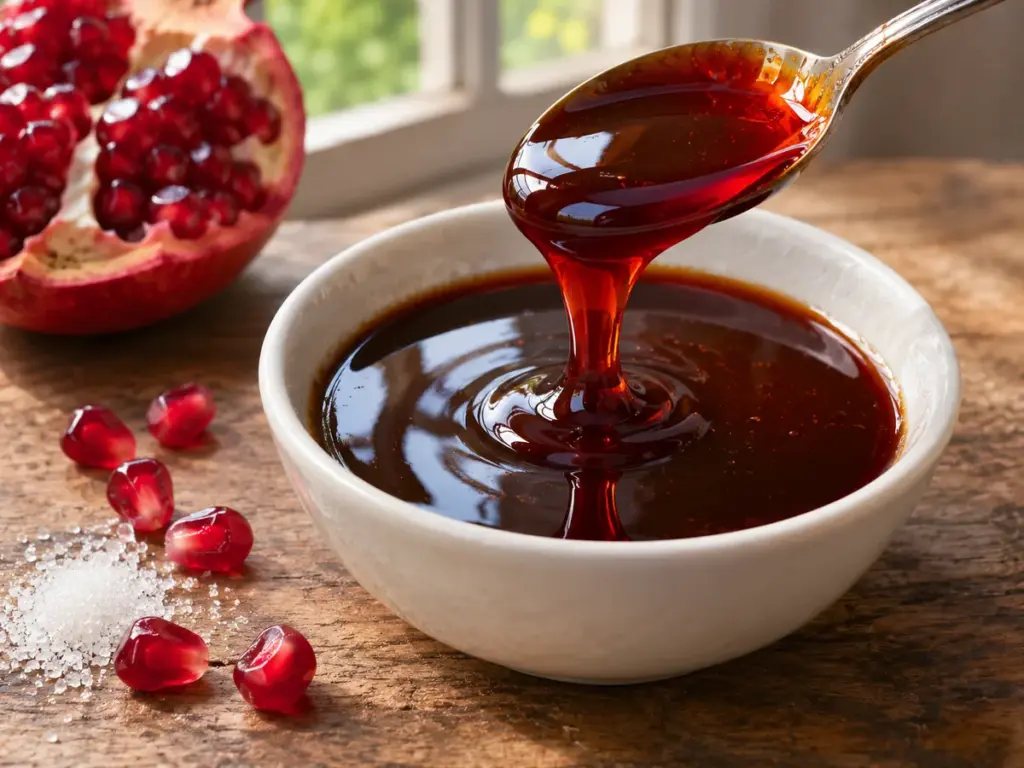
Pomegranate molasses is much more sour than petimezi, because grape molasses is much less acidic (Tasting Table). For each cup of petimezi, mix ⅔ cup pomegranate molasses with ⅓ cup sugar and warm the blend until the sugar dissolves and the syrup turns smooth and glossy.
Keep this swap for glazes, dressings and sauces, where you want the tang, because a sweet cookie tastes too sharp with it. If your pantry has no pomegranate molasses either, a balsamic vinegar and sugar mix is the usual stand-in for it.
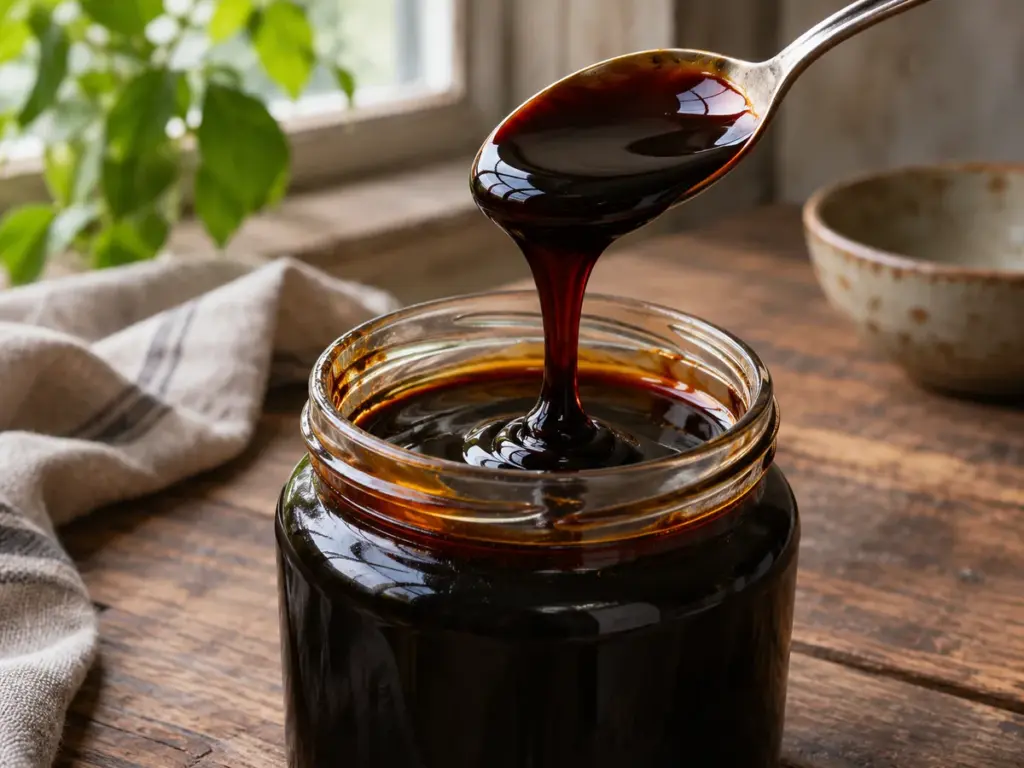
4. Molasses
Molasses is the dark, bittersweet syrup left from sugar making, and Real Greek Recipes lists plain molasses as a workable swap in moustokouloura. It has 74.7 g of carbohydrate per 100 g (USDA FDC 168820), a little less than petimezi, yet its flavor is stronger, so start with ¾ cup and taste.
The same site says to leave out the honey that its cookie recipe normally adds when you use molasses. Molasses also tastes darker and more bittersweet than maple syrup, which matters if your dish is a delicate one.
5. Maple Syrup
Maple syrup holds only 67 g of carbohydrate per 100 g (USDA FDC 169661), a lower carbohydrate load than petimezi, so by that measure it is the less sweet of the two. It is the easiest swap to find. Use 1 cup for 1 cup and expect a lighter color and a milder flavor in your dish.
For a drizzle that should cling to yogurt, simmer the maple syrup a few minutes until it coats a spoon. In cookie dough the syrup is thinner than petimezi, so add the flour a little at a time and stop when the dough feels as soft as the original recipe describes.
6. Honey
Honey has almost the same carbohydrate load as petimezi, with 82.4 g of carbohydrate per 100 g (USDA FDC 169640), and it is thick enough to drizzle. Swap 1 cup for 1 cup, and you will taste honey where the grape flavor used to be.
One moustalevria recipe already adds 100 g of honey to 125 ml of petimezi (Oliveology), so cut that honey back when honey also replaces the petimezi, and taste as you go. Otherwise the pudding comes out sweeter than the recipe intends.
Which Syrups Do Not Work Well?
Mild syrups such as corn syrup, agave nectar and brown rice syrup add sweetness and thickness, but they bring none of the grape or dark flavor that petimezi gives a cookie or pudding. Keep them for recipes where only the texture matters.
Sources
- USDA FoodData Central: Honey, FDC 169640, Syrups, maple, FDC 169661 and Molasses, FDC 168820.
- Wikipedia: Grape syrup (names in each country and the 80.9 g carbohydrate figure for petimezi).
- CDC: Preventing botulism (no honey for children under 1 year).
- Kopiaste, moustokouloura with petimezi and Oliveology, moustalevria.
- Real Greek Recipes, grape molasses cookies (date syrup and molasses swaps, flour note).
- Tasting Table, what is grape molasses and Earth to Veg, pekmez.

Food writer at GustoMeadow. Writes ingredient substitutes, food comparisons, taste guides and storage guides for home cooks.
Storage and food-safety numbers follow USDA, FDA and university extension guidance.



