
All-purpose flour works in place of 00 flour at the same weight as a starting point.
- The 00 label names how refined the flour is, and protein varies by brand.
- Bread flour is the better pick if you are making pizza, and semolina gives fresh pasta more chew.
- Self-rising flour is the one to leave out, since it already holds baking powder and salt.
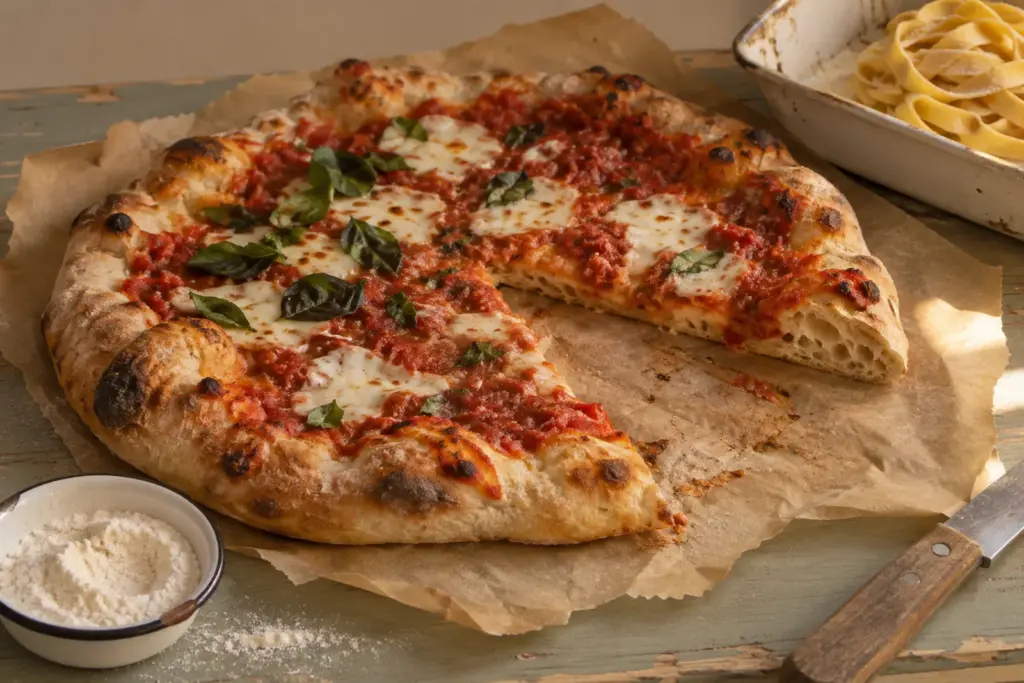
A recipe that asks for 00 flour (tipo 00 in Italian shops) wants a very finely milled white flour, and as with most common ingredient swaps, the right stand-in depends on the dish. Pizza dough and fresh pasta ask different things from the same flour, so you pick the swap by what you are making.
What Does 00 Flour Do in a Recipe?
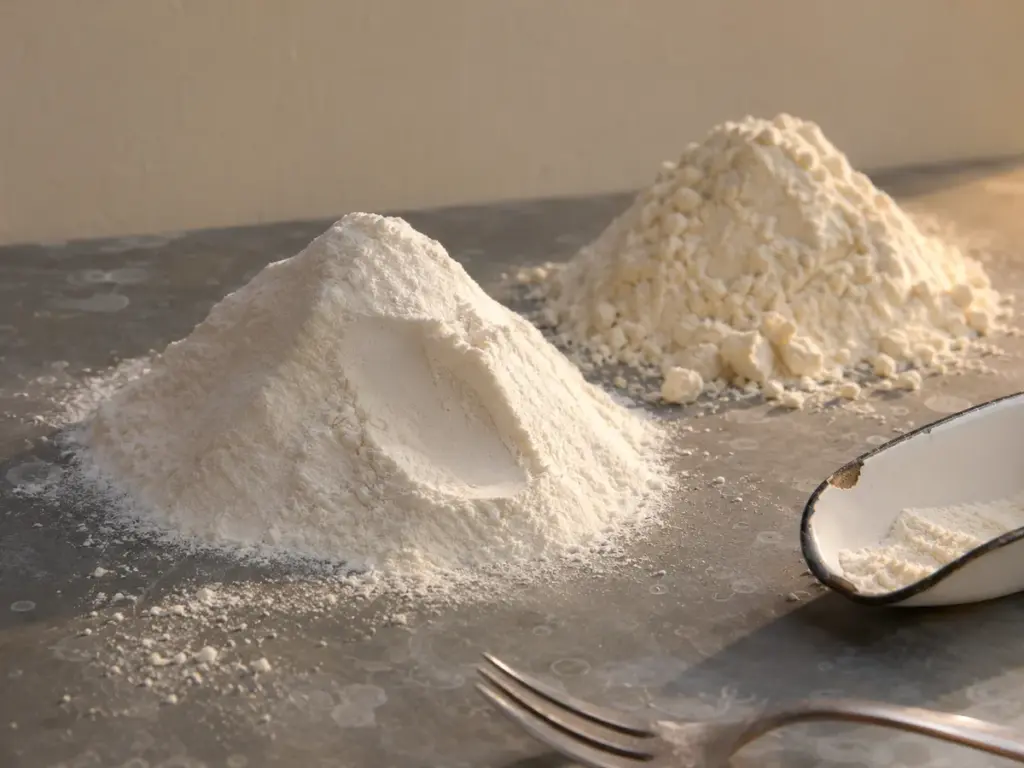
The two zeros grade how refined the flour is and say nothing about protein: Italy sorts flour by ash, the mineral left from the bran, and 00 is the most sifted grade, made only from the endosperm.
Under Italian law a 00 has at most 0.55% ash and at least 9% protein (Cook's Info), so the bags you find in a store vary widely above that floor.
| Flour | Protein | Made for |
|---|---|---|
| King Arthur Type 00 (professional) | 11% | Neapolitan pizza |
| Caputo 00 Pizzeria | 12.5% | Neapolitan pizza |
| King Arthur Italian-Style (00-style) | 8.5% | Thin-crust pizza, focaccia |
| King Arthur all-purpose, for comparison | 11.7% | General baking |
America's Test Kitchen calls King Arthur's Italian-Style flour only similar to the tipo 00 sold in Italy, and at 8.5% it sits below the legal 9% floor, so it counts as a 00-style flour.
On King Arthur's protein chart all-purpose and bread flour sit at 11.7% and 12.7%, so a 00 flour can be softer than all-purpose or as strong as bread flour, and what you are making decides which kind you need.
Neapolitan dough needs the strength and stretch that King Arthur's Type 00 gives, while fresh pasta wants a slightly lower-gluten flour than pizza, according to Fine Dining Lovers. Caputo also sells a low-protein 00 Baking Flour for cakes and pastries, and a panettone recipe that wants Manitoba flour needs a stronger flour than any of these.
5 Best Substitutes for 00 Flour
A cup of flour is not a fixed amount, so a kitchen scale gives you a truer swap than a measuring cup. King Arthur's weight chart puts a cup of all-purpose at 120 g, its 00 Pizza Flour at 116 g and its Italian-Style flour at 106 g, so measuring by cup can leave you with more flour than the recipe meant.
Equal weight is the usual starting point, since no source publishes a ratio for these swaps, and you adjust the water as described below.
| Substitute | Starting ratio | Best for | What changes |
|---|---|---|---|
| All-purpose flour | 1:1 by weight | Pizza, focaccia, pasta | Softer crust |
| Bread flour | 1:1 by weight | Pizza | Stronger dough |
| Cake or pastry flour | 1:1 by weight | Cakes, pastries | Softer dough |
| All-purpose plus semolina | About 3:1 | Fresh pasta | Chewier noodles |
| Pasta flour blend | 1:1 by weight | Fresh pasta | Durum added |
1. All-Purpose Flour
All-purpose flour replaces 00 gram for gram, so 500 g of all-purpose stands in for 500 g of 00. In fresh pasta you get noodles that are chewy but still easy to roll, closer to boxed dried pasta, and King Arthur recommends all-purpose flour for ravioli that must not fall apart (its pasta flour guide).
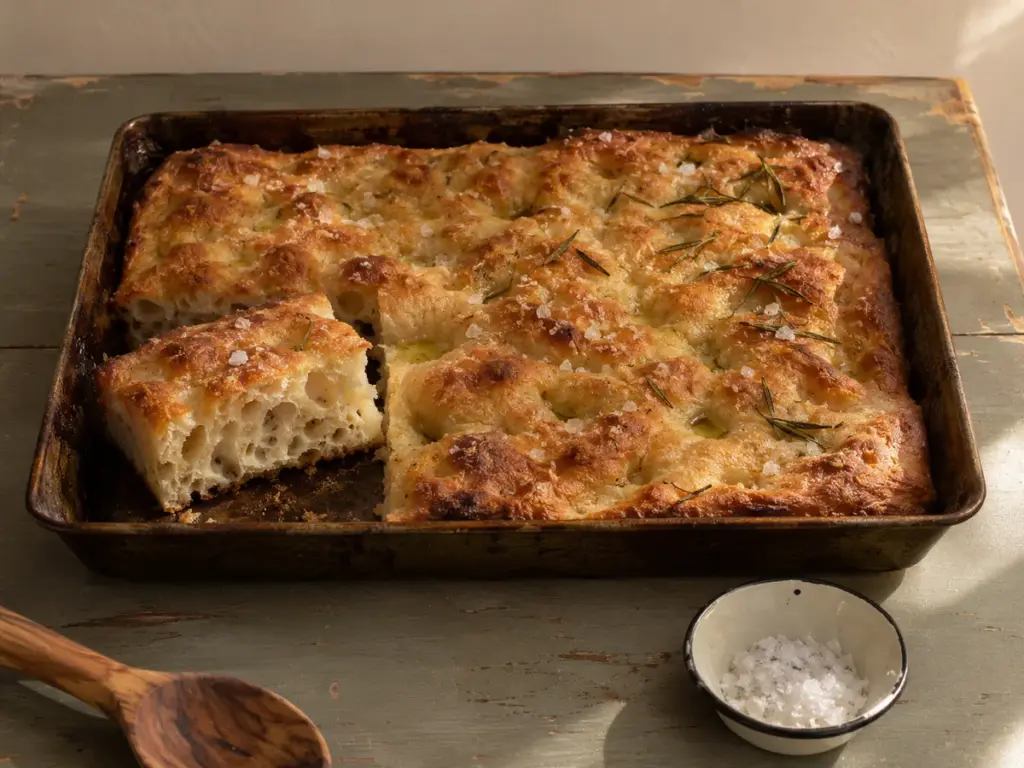
In pizza and focaccia the crust comes out softer and more tender than with bread flour (Baking Steel), and Fine Dining Lovers says the softer base tears more easily, so you stretch it gently.
2. Bread Flour
Bread flour at the same weight is the closest match for pizza, because its 12.7% protein sits almost level with Caputo's 12.5% Pizzeria flour. Baking Steel says bread flour outperforms 00 in a home oven at 500 to 550°F and suggests saving 00 for an outdoor pizza oven, and it also prefers bread flour over all-purpose for cold ferments of 48 to 72 hours.
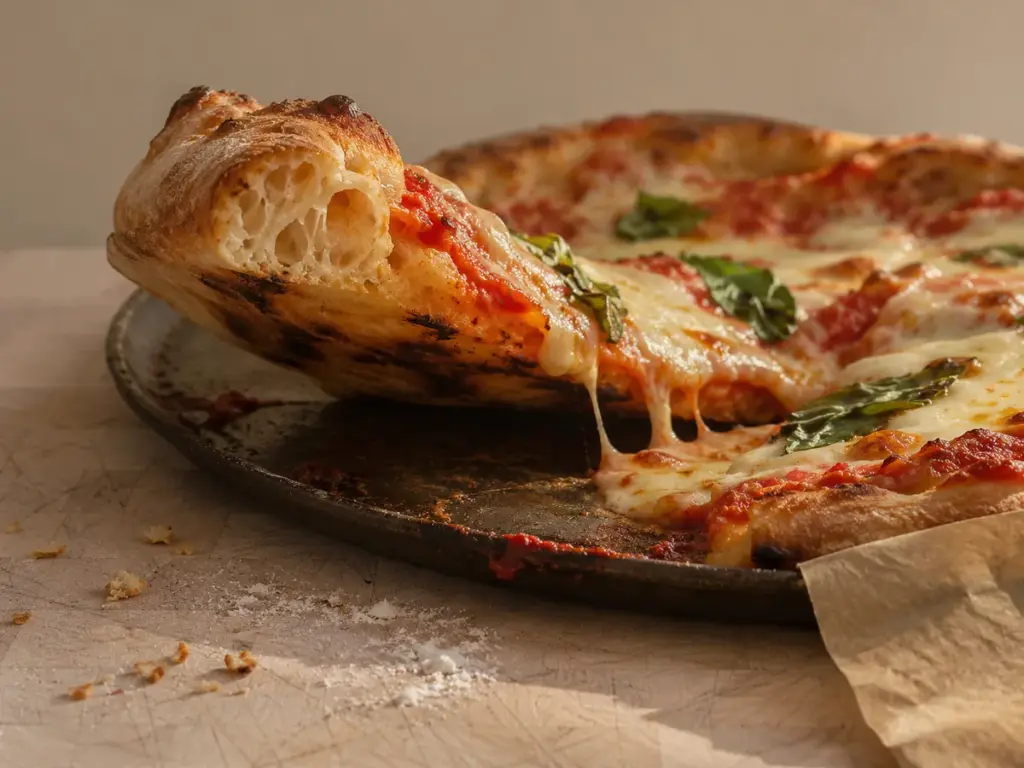
A home oven tops out near 500°F and cannot reach the heat 00 is made for, so a preheated surface such as one of these pizza stone alternatives gets your crust closer. The stronger dough may spring back when you shape it, and a short rest lets it relax before you stretch or roll the dough.
For pasta, all-purpose flour is the better pick, since bread flour is built for strength and fresh noodles need a softer dough.
3. Cake Flour or Pastry Flour
For soft, tender bakes, cake flour or pastry flour at the same weight takes the place of a soft 00. According to Cook's Info, regular flour or cake flour are the North American stand-ins for Italian soft flour, and cake and pastry flour both carry less protein than all-purpose.
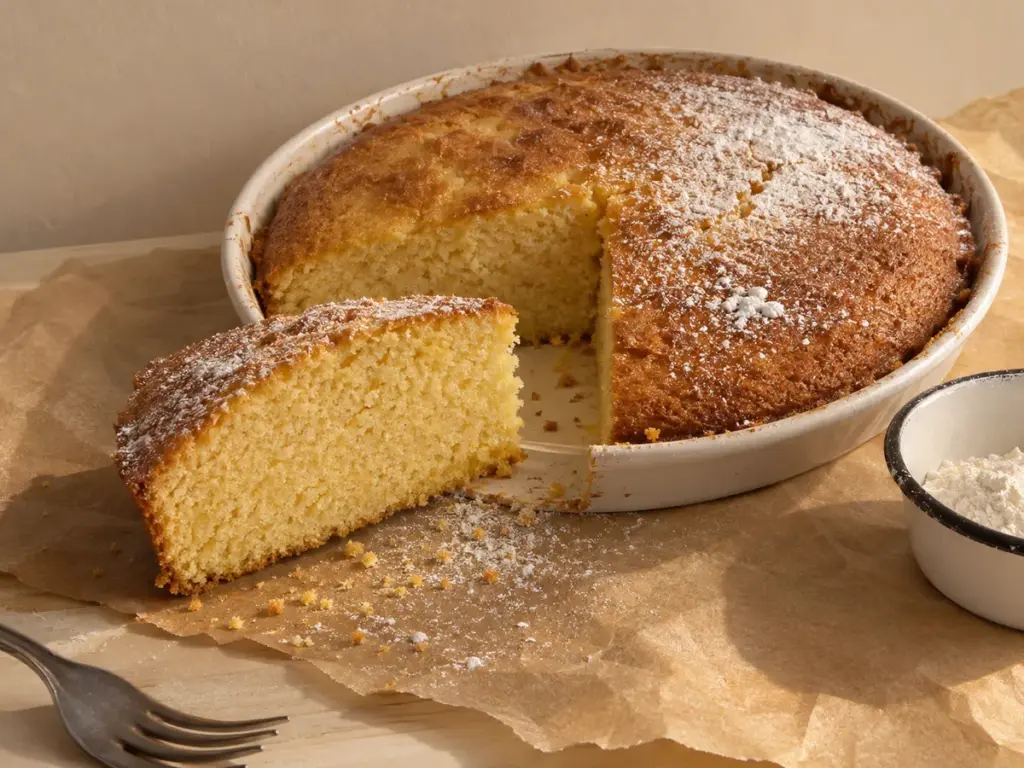
Both are the closest match for sponge cakes and pastries, the jobs of Caputo's Baking Flour, and in cakes the how cake flour differs from 00 matters little. They do not belong in pizza dough or pasta, though, where Fine Dining Lovers advises against low-protein flours.
Without cake flour, you can whisk 105 g all-purpose flour with 14 g cornstarch (about ¾ cup plus 2 tablespoons all-purpose flour and 2 tablespoons cornstarch), King Arthur's homemade cake flour, which lowers the protein and gives a finer crumb.
4. All-Purpose Flour Plus Semolina
Fresh pasta gets more chew when you mix all-purpose flour with semolina, which is coarsely ground durum wheat with more protein than all-purpose flour.
King Arthur says semolina makes chewy, hearty noodles with a nutty, sweet taste, a golden color and a slightly coarser surface that holds sauce, and Caputo pairs its 00 Pasta Fresca flour with semolina for long cuts.
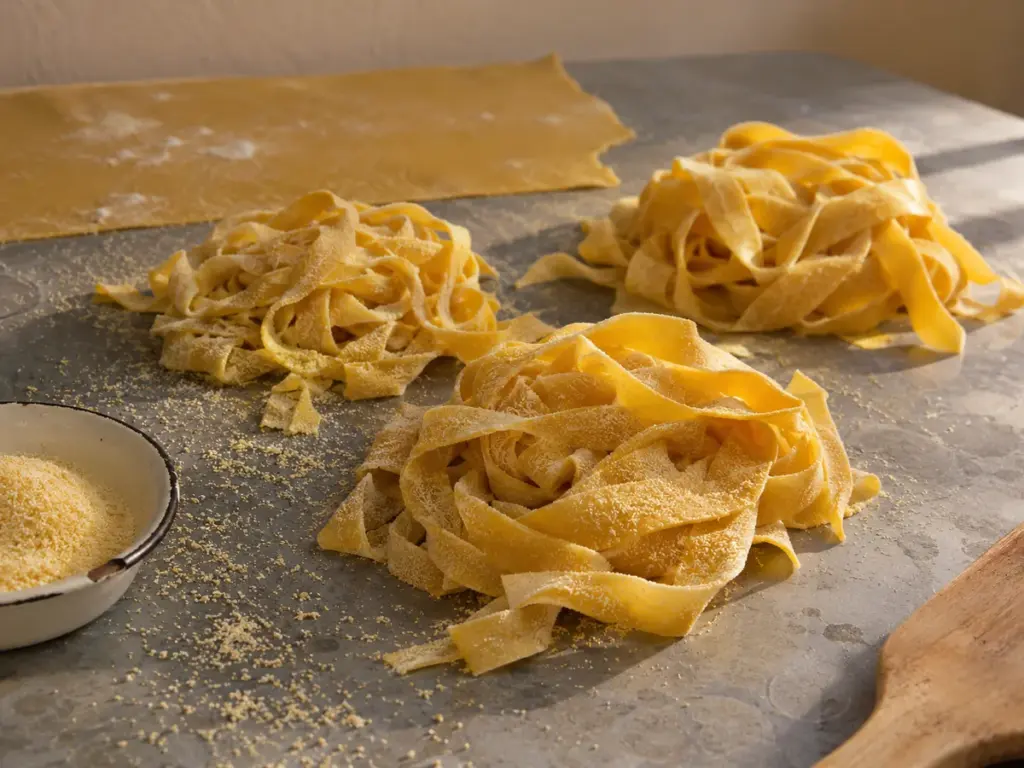
King Arthur's semolina pasta runs the other way round, mostly semolina (285 g) with 87 g of 00 flour for 3 eggs. For a recipe that lists only 00 flour, you can start with all-purpose as the base and replace about one quarter of it with semolina by weight, since no source gives a ratio, and if you have no semolina, the semolina flour swaps fill that gap.
5. Pasta Flour Blend
King Arthur describes a pasta flour blend as durum, semolina and all-purpose flour in one bag. Its fresh pasta recipe calls for 2 cups (290 g) of the blend or 2 ⅓ cups (280 g) of all-purpose with 3 large eggs and ½ teaspoon of salt, so the two weigh about the same in egg pasta.
Because the semolina is already in the bag, you do not need to add more to the dough.
Which Flours Do Not Replace 00 Flour?
- It already holds baking powder and salt, so a plain-flour dough picks up leavening it was never meant to have.
- It suits pancakes, biscuits, scones, cake and muffins, according to King Arthur.
- Its sharp-edged bran cuts gluten strands, so King Arthur notes recipes using it add a long rest or a second flour.
- You can mix a share into all-purpose flour instead.
How Do You Adjust the Dough After the Swap?
The sources disagree on water, because America's Test Kitchen says King Arthur's 8.5% flour is likely to need about 20 percent less water to reach the right dough, while Fine Dining Lovers says 00 flours absorb more.
Whichever way your swap moves the protein, you can mix in most of the water, then add the rest a spoonful at a time until the dough feels as the recipe describes. Even the brand matters, because King Arthur and Gold Medal flour differ in how much liquid they absorb.
When you make fresh pasta, King Arthur's recipe gives three handling cues:
- Knead until smooth and firm. King Arthur puts this at 1 to 2 minutes by hand.
- Rest at least 30 minutes. Wrap the dough at room temperature, or chill it overnight and let it warm for 30 minutes.
- Rest 5 minutes more if it springs back while you roll it.
Sources
- Caputo, The Different Types of Flour (ash classification, 12.5% Pizzeria protein)
- Cook's Info, Italian flours (Italian law limits, North American stand-ins)
- King Arthur, protein percentage in flour
- King Arthur, ingredient weight chart
- King Arthur Pro, Type 00 flour (11% protein)
- America's Test Kitchen, Italian-style flour (8.5% protein, water)
- King Arthur, best flour for pasta
- King Arthur, fresh pasta recipe
- King Arthur, semolina pasta recipe
- King Arthur, cake flour vs. all-purpose flour
- King Arthur, self-rising flour
- Fine Dining Lovers, what is double zero flour
- Baking Steel, best flour for pizza dough
- FDA, handling flour safely

Food writer at GustoMeadow. Writes ingredient substitutes, food comparisons, taste guides and storage guides for home cooks.
Storage and food-safety numbers follow USDA, FDA and university extension guidance.



