
Jellyfish might not be the most well-known seafood among the masses.
Looking at the umbrella-shaped creature, one may wonder if it's edible or how to eat it.
Surprisingly, it's a delicacy in most Asian countries and is made into a variety of dishes.
Some even have it raw with dipping sauce as a side.
You're on this page to find out what it tastes or how to prepare it.
What is Jellyfish?
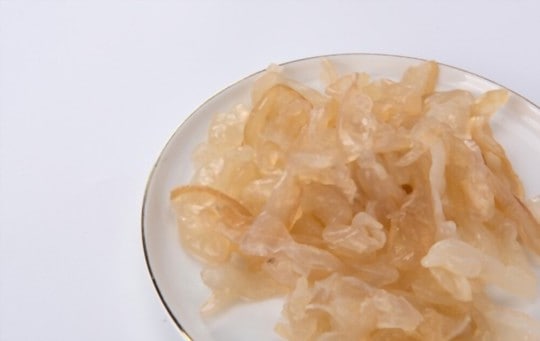
Jellyfish are found in coastal waters of the world, but only a few are present in freshwater.
This marine invertebrate feeds on small sea creatures and is mainly found in the algae community.
It is a plankton that has been in existence for more than 500 million years and is the oldest multicellular organism known today.
Unlike fish which breath through gills, it uses membranes to breathe.
Officially, this sea creature is known as medusa-phase, while Jellyfish is informal and commonly known.
It has a translucent body with a bell-shaped appearance and long tiny tentacles.
Their long arms are rather poisonous and are used to catch their prey.
Humans, when they get stung by it, may lead to mild sickness or, in some cases, death.
Different species of Jellyfish are found, and only a few are edible among the lot.
Only eleven species are deemed consumable, and Rhopilema esculentum is the most popular one, especially in Southeast Asia.
For complementary dessert pairings, look at lemon dessert pairings and best options.
For a contrast in tropical flavors, see acai berry taste guide revealing flavor.
What Does Jellyfish Taste Like?

The taste profile of a Jellyfish is likely to vary due to the availability of various species.
Regarding texture, the closest similarity would be squid or cucumber.
It's slightly salty and has a mild flavor, while large-sized Jellyfish may have a note of bitterness.
It has a bland taste but tastes good when mixed with spices and condiments.
The taste may also vary on how you eat it.
For instance, raw Jellyfish have a refreshing and delicate taste similar to oysters, while raw ones are slightly firm with a pleasant taste.
Overall, it largely depends on how you prepare it.
Some people find its texture similar to squid or calamari.
Overcooking may lead to a rubbery texture, but it is tender when cooked correctly.
Jellyfish may not be conventional seafood, and it might be everyone's cup of tea.
It's pretty understandable because of its acquired taste.
Nonetheless, it's nutritious and packed with minerals, proteins, and antioxidants.
Some of the important nutrients in Jellyfish are sodium, iron, manganese, copper, and choline.
Choline aids in reducing the risk of cancer, heart disease, and problems related to the thyroid.
It's also a good source of collagen, which helps in improving your skin.
You may give it a shot if Jellyfish is found near your local fish market.
If you love to try new cuisines, this one is worth trying.
Besides, if you love squid or octopus, Jellyfish taste more or less the same.
We recommend having cooked Jellyfish instead of raw ones for beginners to avoid getting overwhelmed.
Once you get used to its taste, proceed to the raw Jellyfish.
How to Cook and Serve Jellyfish?

In Asian cuisines, Jellyfish are usually served as a side dish or an appetizer.
It may be served cooked, raw or pickled.
Some popular ways include stirring or deep-frying, grilling, and salads.
You may also find it in some sushi dishes.
You may prepare Jellyfish at home, too, without having to splurge on fancy ingredients.
Some common ingredients are soy sauce, sesame oil, vinegar, and sugar.
Since it has a bland taste, these ingredients make it flavorful.
You may also add vegetables or meat for more flavors.
One of the popular Jellyfish recipes that you'll find in an Asian restaurant is Jellyfish salad.
Variants of Jellyfish salads are available, but the common ingredients are soy sauce, chili oil, rice vinegar, and sesame oil.
Before cooking, Jellyfish are cleansed in cold water and submerged in water for an hour to eliminate strands and dirt.
Once clean, all you need is a sauté or wok to cook this Jellyfish with the rest of the ingredients.
It's best served chilled to get the fresh taste of this seafood.
You may keep the cooked jellies in the refrigerator for three days.
Try to get fresh Jellyfish from the market.
If it looks slimy or has an odor, avoids getting it.
We recommend getting it from an Asian market or reputed online stores.
Quick vegetable sides pair well with seafood; try 22 veggie sides that cook fast for ideas.
Jellyfish Flavor and Culinary Uses
Jellyfish are packed with nutrients and a delight to have if cooked properly.
Now that you know its taste profile and texture, you might as well give it a shot if you plan to have it.
You may visit an Asian restaurant nearby to try or prepare one yourself.
It's pretty simple and doesn't take much time to prepare.
Frequently Asked Questions
You're on this page to find out what it tastes or how to prepare it. Keep reading as we reveal what does Jellyfish taste like, their taste profile, and the best way to have it.
Humans, when they get stung by it, may lead to mild sickness or, in some cases, death.
Several foods share flavor notes with Jellyfish. Tasting similar items side by side is the easiest way to map out what you enjoy and find new favorites.
Can you adjust the intensity of the flavor?
Yes.
Pairing it with acidic, sweet, or fatty components shifts the perceived intensity.
A squeeze of citrus brightens mild flavors, while fats like butter or oil mellow sharper ones.
Avoid pairings that clash with its dominant flavor note. Competing intensities - very sweet with very sour, or heavy with delicate - tend to obscure rather than go with the taste.
Jellyfish's mild profile pairs with bright, tart fruits; acai berry taste guide revealing flavor offers a contrast. 22 veggie sides that cook fast lists quick vegetable accompaniments that suit light seafood.