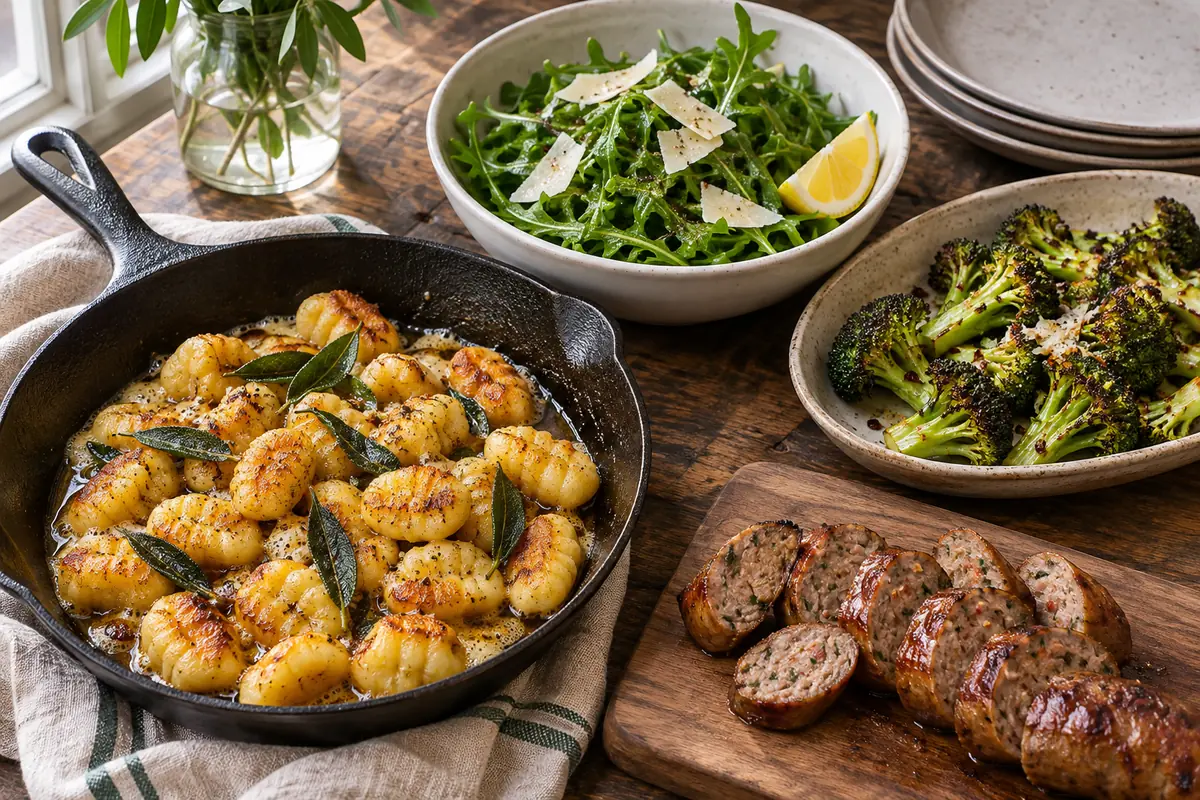
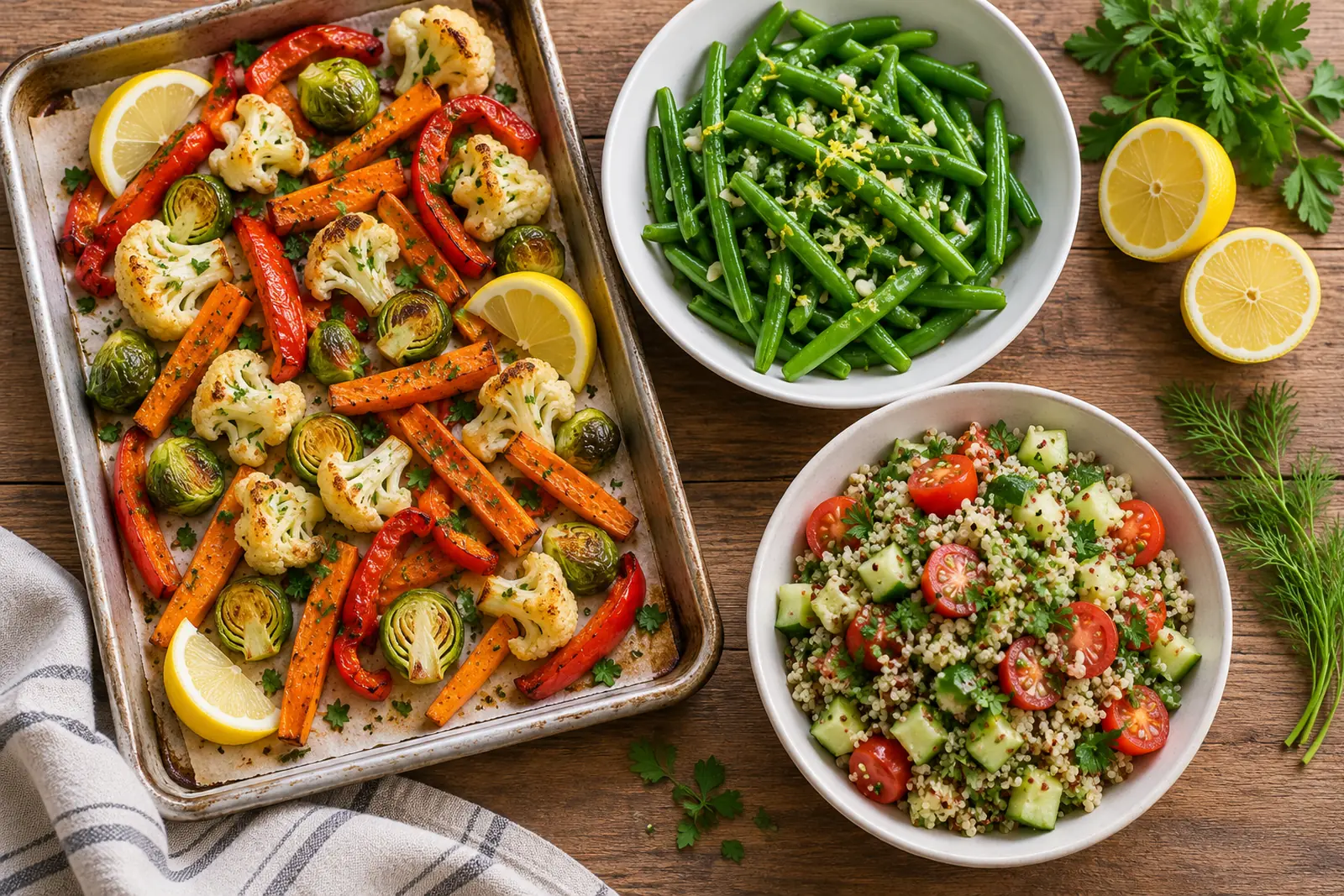
Serve chicken scallopini with mashed potatoes or lemon parmesan orzo to catch the pan sauce, then add roasted asparagus or a crisp salad for something green.
- A thin, mild cutlet needs a starch that soaks up the sauce.
- Asparagus, spinach or salad adds acid and crunch against the butter.
- Cook the chicken to 165°F and keep finished cutlets above 140°F.
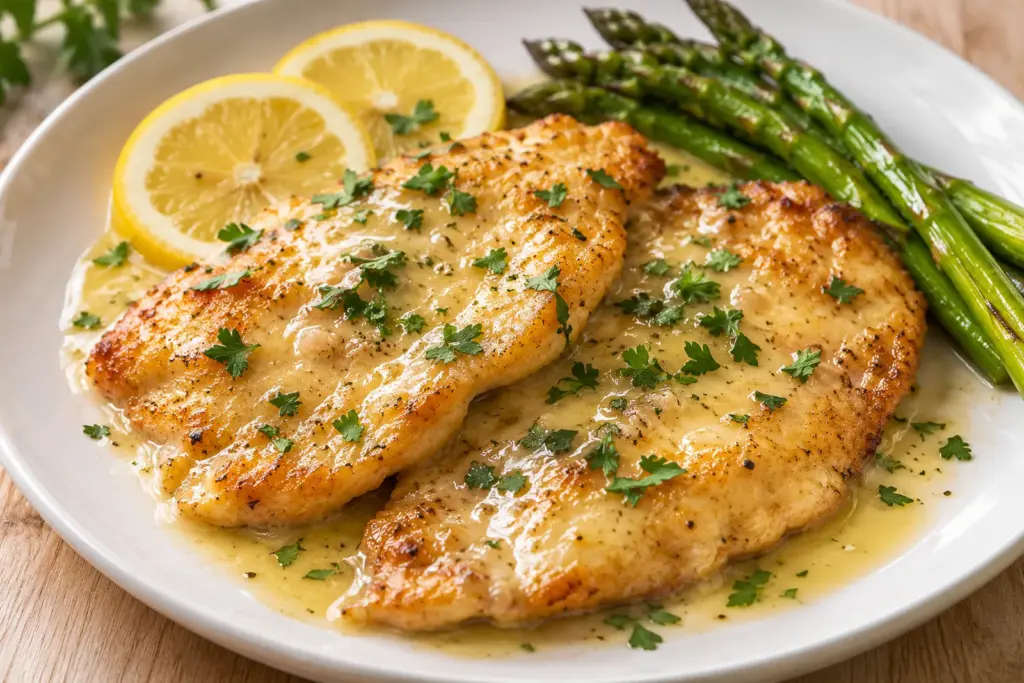
Chicken scallopini is the American spelling of the Italian scaloppine: thin slices of meat, pounded flat, dusted with flour and sautéed quickly. The cutlets cook fast and the pan sauce takes a few minutes, so the best sides for a pan-sauced cutlet are the ones that soak up the sauce or cut through its butter.
Veal is the classic meat, and the same sides suit veal scallopini too. If you finish the same cutlets with lemon and capers, the dish is called lemon-caper piccata, and it takes the same starch plus green vegetable plate.
What Goes Well with Chicken Scallopini?
A light flour coating browns the chicken without adding much flavor, so the cutlet itself tastes mild. Most of the flavor sits in the pan sauce of wine, butter and usually lemon, which gives the sides you choose three jobs:
- Soak up the sauce. Mashed potatoes, orzo and garlic bread all hold liquid, so you leave none of the wine and butter behind on the plate.
- Add something green. Asparagus, spinach or a salad brings the bitterness and crunch that a soft cutlet lacks.
- Bring acid to a rich sauce. A lemon dressing or balsamic-roasted vegetables keep a butter sauce from tasting heavy.
Your sauce changes how much of each job you need. The sauce you cook decides the sides, as the two common versions show:
- Thin and bright, so it runs into mashed potatoes or orzo
- Garlic bread mops up whatever is left in the pan
- Spinach or roasted vegetables give relief from the lemon
- Sweet, dark and earthy, so asparagus or a vinaigrette salad gives contrast
- Mashed potatoes hold the sauce well
- Go easy on lemon zest in the orzo, which clashes with marsala's sweetness
If you have no dry white wine, simmer chicken broth until it reduces by half and use that in place of the wine. A marsala sauce takes dry sherry or Madeira when the bottle is missing, since both are fortified wines like marsala.
7 Best Side Dishes for Chicken Scallopini
The seven sides run in the order you would plate them: three starches that catch the sauce, three vegetables, then a raw salad. Pick one starch and one or two vegetables from the list.
1. Creamy Mashed Potatoes
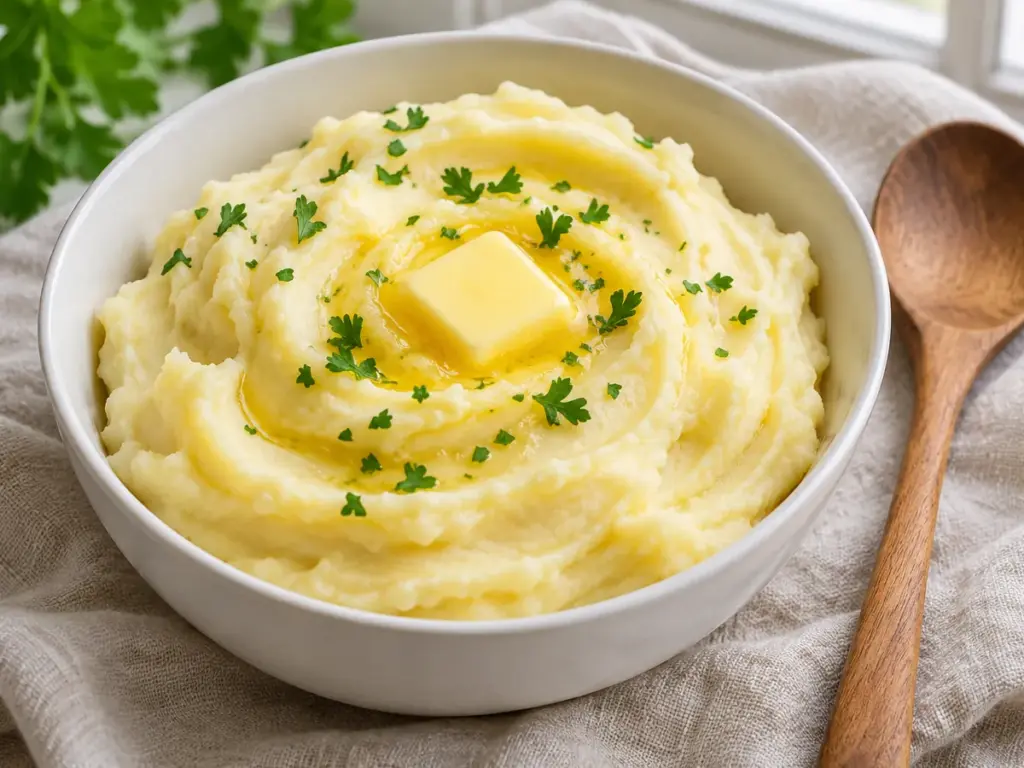
Yukon Gold potatoes mash into a creamy, buttery pile, while russets give a fluffier one. Mash them with warm milk and butter, then press a shallow well into the center, because a lemon-wine sauce pools in the dip instead of running across the plate.
Keep the seasoning to salt, butter and a little parsley. The cutlet's sauce already carries wine and lemon, so garlic or cheese in the mash competes with it. For a lighter plate, cauliflower or parsnip mash takes the same spot.
2. Lemon Parmesan Orzo
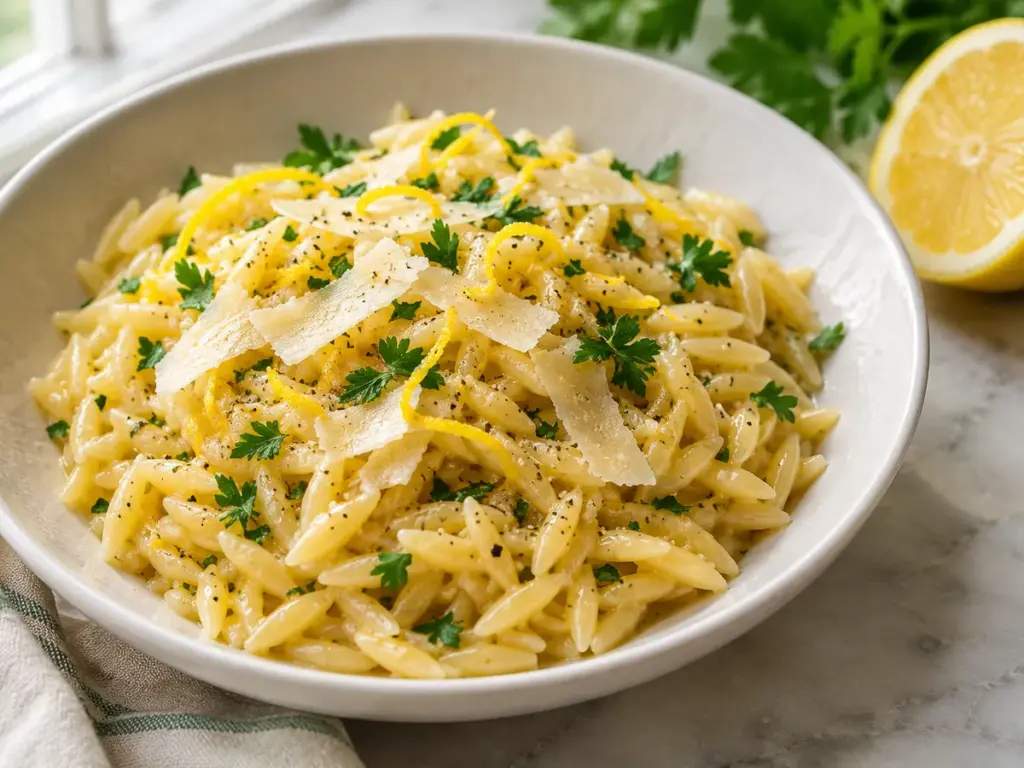
Orzo is pasta made from durum wheat semolina, and it only looks like rice. It boils in salted water like any pasta instead of absorbing broth slowly the way Arborio rice does. Check the box if you want whole wheat, because regular orzo is not a whole grain.
Drain the orzo and stir in olive oil, grated parmesan, lemon zest and chopped parsley while it is hot, so the cheese melts into a loose coating. Zest adds lemon aroma without extra sourness, which suits cutlets in a lemon sauce. Supermarket parmesan and real Parmigiano-Reggiano both work, since the two swap by weight in cooked dishes.
3. Garlic Bread
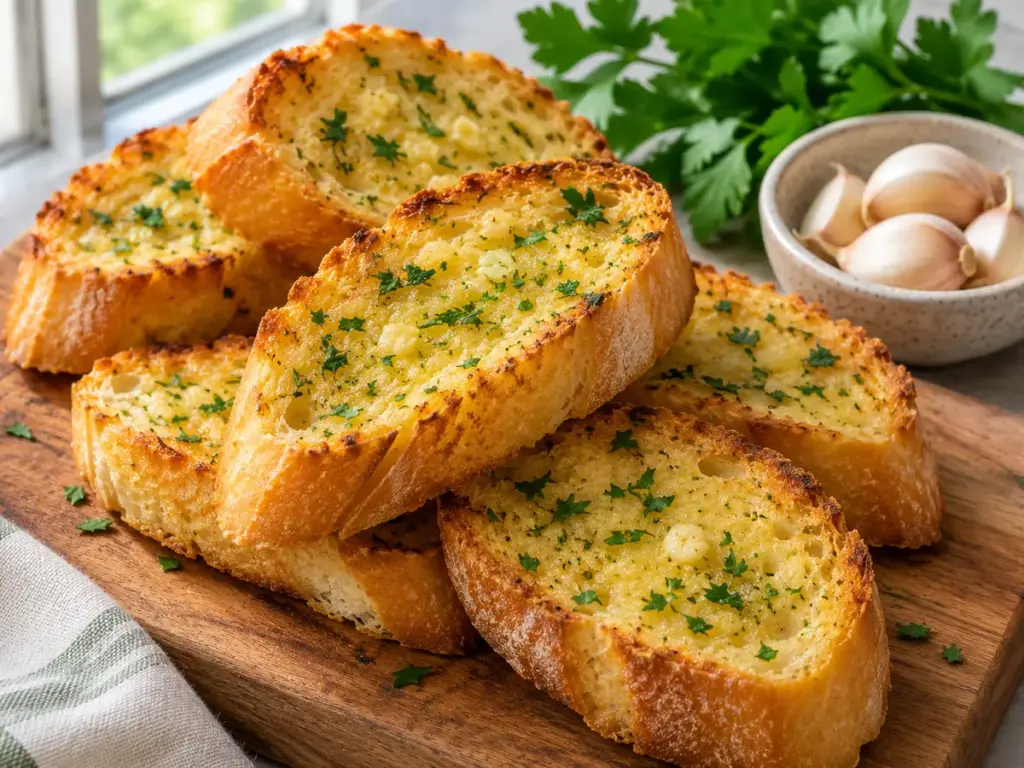
Garlic bread is the easiest way for you to mop up the pan sauce, and it gives you a starch without any boiling or mashing. Split a baguette or Italian loaf, spread it with softened butter mixed with minced garlic and parsley, and toast it until the edges are crisp.
Raw garlic stays sharp through a short toast, so for a mellower garlic bread, warm the garlic gently in the butter first. A crisp crust matters more than the topping, because soft bread goes soggy as soon as it touches the sauce. A fresh loaf from the bakery works as well as one you make.
4. Roasted Lemon Garlic Asparagus
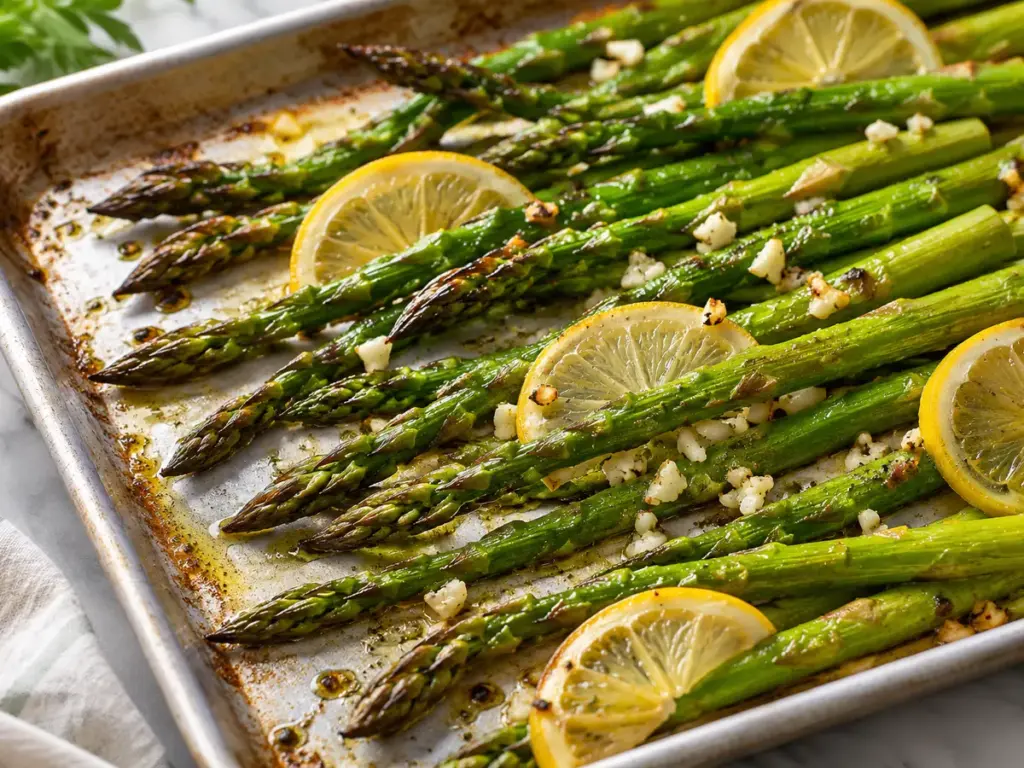
Asparagus brings the bitterness and snap that a soft cutlet lacks. UNH Cooperative Extension roasts it in a single layer at 425°F for 12 to 15 minutes until tender. Food Hero, an Oregon nutrition education program, lists thin pieces such as asparagus at as little as 5 minutes, so check thin spears early.
Toss the spears with olive oil and salt, then add the minced garlic for the last few minutes, because minced garlic tends to scorch in a 425°F oven. Squeeze the lemon over the spears after roasting, since juice in the pan steams them instead of browning them.
5. Sauteed Spinach
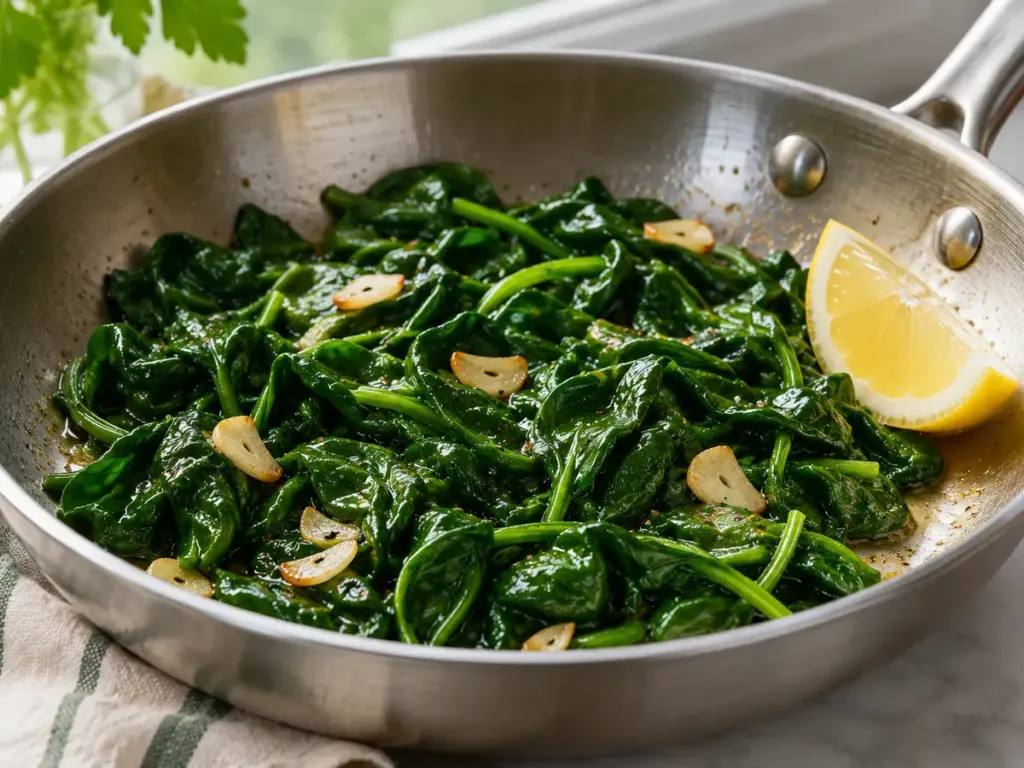
Spinach cooks down to almost nothing. USDA FoodData Central lists a cup of raw spinach at 30 grams and a cup of cooked spinach at 180 grams, so you need about 6 cups raw for each cup cooked. By the same math, a 10-ounce bag (about 283 grams) cooks down to roughly 1½ cups, enough for two or three plates.
Warm olive oil with thinly sliced garlic until it turns pale gold, add the spinach in handfuls, and stir until it wilts. Take the pan off the heat while the spinach is still bright green, then season with salt and a squeeze of lemon. If the store has no spinach, Swiss chard or kale cooks the same way; chop kale a little finer and cook until the leaves wilt.
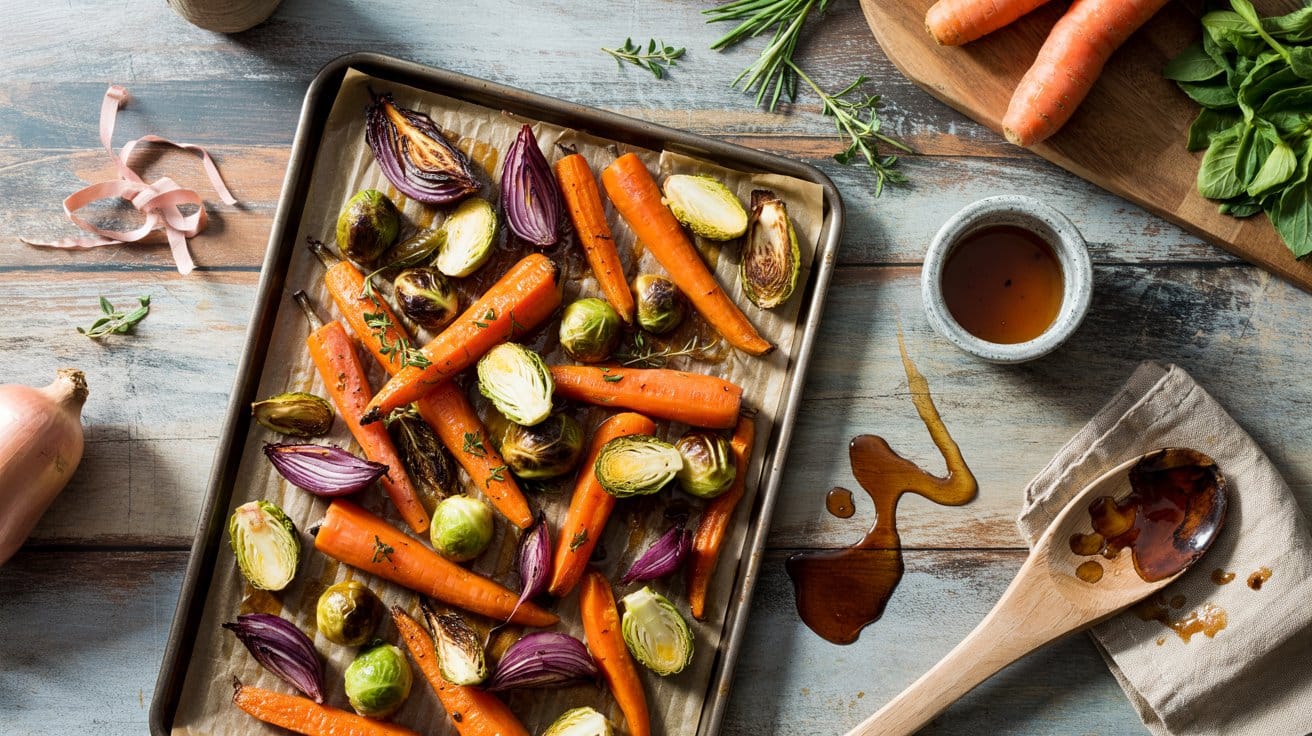
6. Roasted Vegetables with Balsamic Vinegar
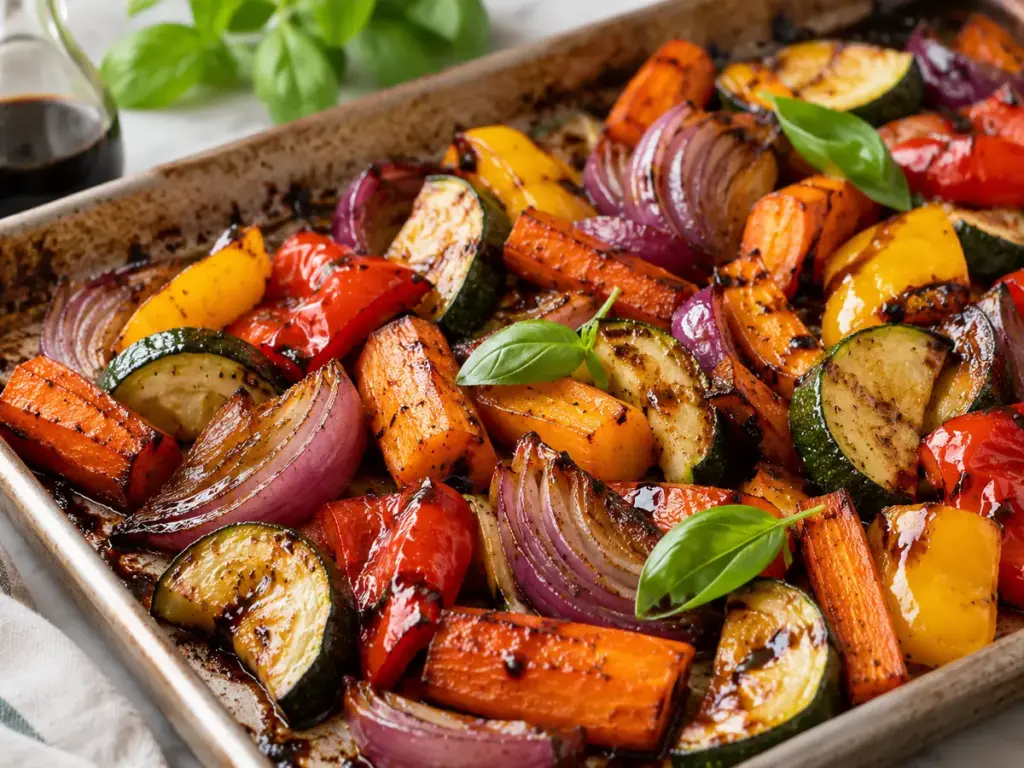
Carrots, bell peppers, red onions and zucchini turn sweet and browned at the edges in a hot oven, and balsamic vinegar adds the acid that a butter sauce likes. Cut everything into similar half-inch pieces, spread them in one layer, and stir halfway through.
Food Hero gives 425°F for roasted vegetables, with half-inch pieces taking about 15 minutes and one stir or turn halfway through. Larger chunks of potato or beet need longer than that. Add the balsamic near the end or after roasting, because its sugars burn in a hot oven, and finish with shredded basil.
7. Mixed Vegetable Salad
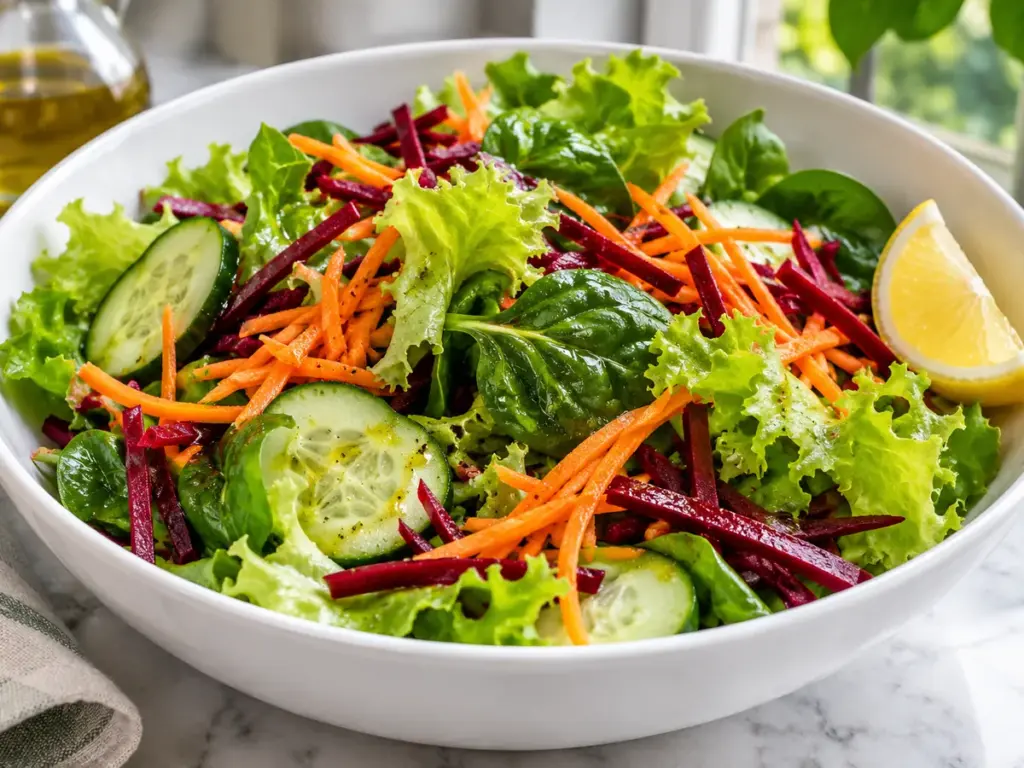
A salad is the one side that needs no oven or stove, which leaves your burners free for the cutlets. You can build it from crisp lettuce, shredded carrot, cucumber, spinach leaves and thin slices of raw beet, then dress it with olive oil, lemon juice, salt and pepper.
Toss the dressing in right before serving, because lemon juice wilts the leaves quickly. You want the crunch of raw carrot and cucumber against the soft cutlet and the buttery sauce.
Which Sides Should You Skip with Chicken Scallopini?
Pasta in cream sauce, mac and cheese and cheesy potato gratin put butter on top of butter, because your cutlets already come with a pan sauce. A second lemony side is also a poor fit when your sauce is lemon, since the plate ends up too sour.
How Do You Get the Cutlets and Sides on the Table Together?
Cutlets cook in minutes and cool just as fast, so you start the sides that take longest first:
- Heat the oven to 425°F and put in the asparagus or vegetables, which roast while you work on the rest.
- Boil the potatoes or orzo, then drain and mash or dress them while the chicken finishes.
- Flour the cutlets and brown them in batches, so the pan stays hot and the coating browns instead of steaming.
- Hold the finished cutlets above 140°F in a low oven while the rest cook.
- Make the sauce in the same pan by adding wine or broth, scraping up the browned bits, and finishing with butter and lemon.
Sources
- FoodSafety.gov, Safe Minimum Cooking Temperatures (chicken, 165°F)
- USDA FSIS, "Danger Zone" (40°F to 140°F)
- UNH Cooperative Extension, Roasted Asparagus Fresh From Farmers Market (425°F, 12 to 15 minutes)
- Food Hero, Roasted Vegetables (425°F, half-inch pieces, stir halfway)
- USDA FoodData Central, FDC 168462 (spinach, raw) and FDC 168463 (spinach, cooked)
- Dictionary.com, scaloppine (definition)

Food writer at GustoMeadow. Writes ingredient substitutes, food comparisons, taste guides and storage guides for home cooks.
Storage and food-safety numbers follow USDA, FDA and university extension guidance.