
The closest stand-in for sulguni is low-moisture mozzarella mixed with feta, which gives the stretch and brine in khachapuri.
- Use 2 parts shredded mozzarella to 1 part crumbled feta, at the same total weight.
- For frying or grilling, use halloumi, which holds its shape in a hot pan.
- Skip cottage cheese and ricotta in baked dishes, because they have no stretch.
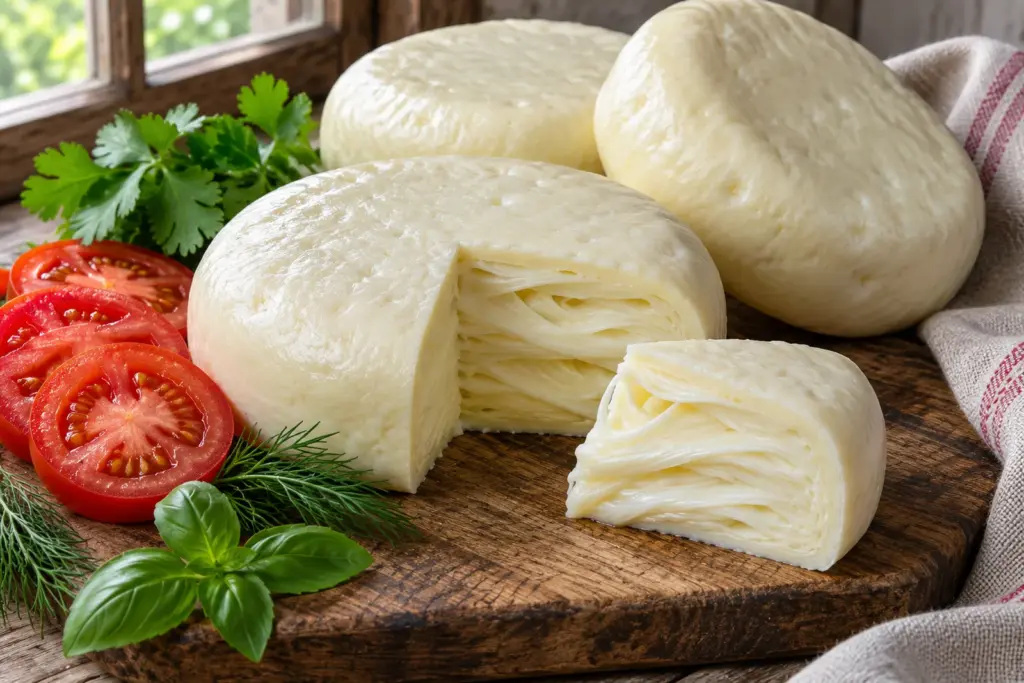
Sulguni can be hard to find in US stores, so a good set of cheese substitutes saves a khachapuri night. The swap has to do three jobs: add salt, stretch when hot and melt smoothly into a bread filling. No single cheese does all three as well as a blend, and the five options below cover those jobs in different amounts.
What Is Sulguni Cheese, and What Does It Do in a Recipe?
Sulguni, also spelled suluguni, is a brined Georgian cheese made from cow's milk, buffalo milk or a mix of both. Makers work the curd in whey, heat it in a rotating mixer and shape it by hand, then cure it in cold brine for 6 to 48 hours, according to Wikipedia's entry on the cheese.

The finished cheese is about 50% water, holds 1% to 5% salt and carries about 45% fat in its dry matter, so it is firm and springy. Wikipedia describes the taste as sour and moderately salty, and the Cheese Professor calls it semi-firm and salty, and most closely related to mozzarella. In Georgia, fresh herbs and tomatoes soften its sourness on the plate.
Cooks use it three ways, and your swap should match the way your recipe uses it:
- Baked in khachapuri: the Cheese Professor says almost every khachapuri style uses a sulguni filling.
- Fried: Wikipedia notes that sulguni is often deep-fried and served in wedges.
- Smoked or fresh: it is also sold smoked, and the Cheese Professor calls the smoked kind just as good as the original.
5 Best Substitutes for Sulguni Cheese
Match the swap to the job first. This table shows which cheese stretches, which one fries and which one only adds salt:
| Substitute | Ratio | Best for | What changes |
|---|---|---|---|
| Low-moisture mozzarella plus feta | 2 parts to 1 part (1:1 also works) | Khachapuri, filled breads | Close stretch and tang |
| Low-moisture mozzarella alone | 1:1 | Baking, melting | Milder, less brine |
| Halloumi | 1:1 | Frying, grilling | Holds its shape, no stretch |
| Havarti plus feta | 2 parts to 1 part | Melting in pastries | Buttery, no stretch |
| Feta | 1:1, crumbled | Salads, toppings | Saltier, crumbly |
The blends win for baking because each cheese covers what the other lacks. Mozzarella brings the pull and feta brings the brine.
1. Low-Moisture Mozzarella Plus Feta
Cook's Country mixes 6 ounces of shredded whole-milk block mozzarella with 6 ounces of crumbled feta and says the pair approximates the briny, salty tang and stringy texture of sulguni and imeruli. Culture magazine uses less feta, with 1½ cups of grated mozzarella to ¾ cup of feta for two loaves.
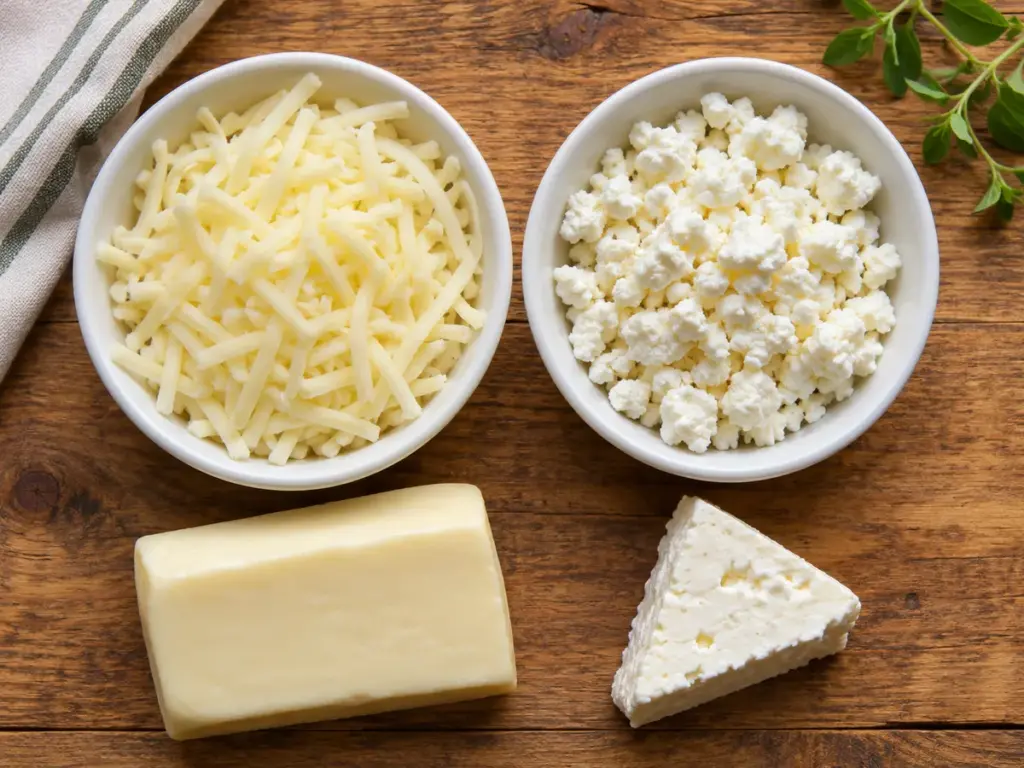
Cook's Country calls for block mozzarella, not fresh, and the liquid in fresh balls would add water to the filling.
- Weigh the sulguni your recipe calls for, for example 12 ounces.
- Split it 2 to 1: 8 ounces of shredded mozzarella, 4 ounces of crumbled feta.
- Taste a pinch and add a little more feta if it lacks tang.
2. Low-Moisture Mozzarella Alone
Mozzarella is the same stretched-curd style as sulguni, so a 1:1 swap gives you the pull and the melt. The part you lose is the sour, brined edge, and mozzarella has less salt than feta, so a handful of feta or a pinch more salt brings the filling closer. Taste the filling before you salt the dough, because the dough may already carry enough.
Mozzarella is easy to buy, but if your store is out, a few mozzarella alternatives melt in a similar way.
3. Halloumi for Frying and Grilling
Wikipedia says halloumi has a high melting point, so it fries or grills until brown without melting. That fits recipes that treat sulguni as a fried wedge, and you can swap it 1:1 by weight.
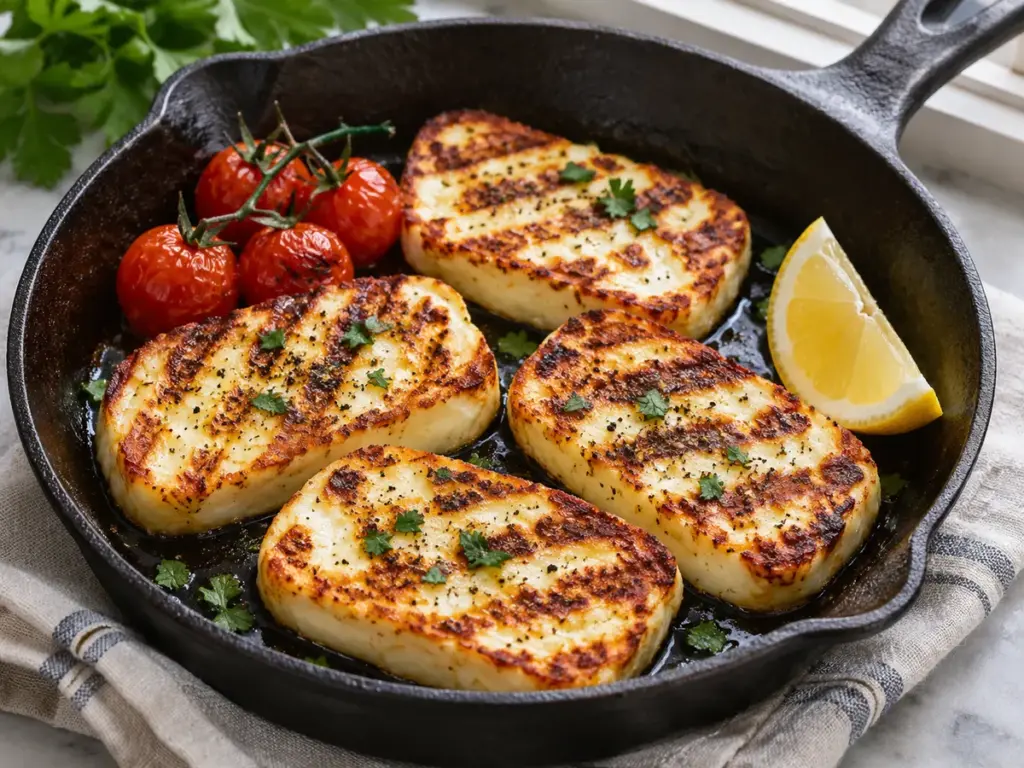
Halloumi will not stretch in a baked filling, and aged halloumi stored in brine is harder and saltier, so taste it before you season. It sits in the specialty case, and other firm frying cheeses can take its place in the pan.
4. Havarti Plus Feta
Culture magazine says that in the United States, mozzarella or Havarti mixed with feta makes an excellent substitute, and its recipe uses 1½ cups of Havarti or mozzarella to ¾ cup of feta. Havarti is a creamy, semi-soft Danish cow's milk cheese that Wikipedia says can be sliced, grilled or melted.
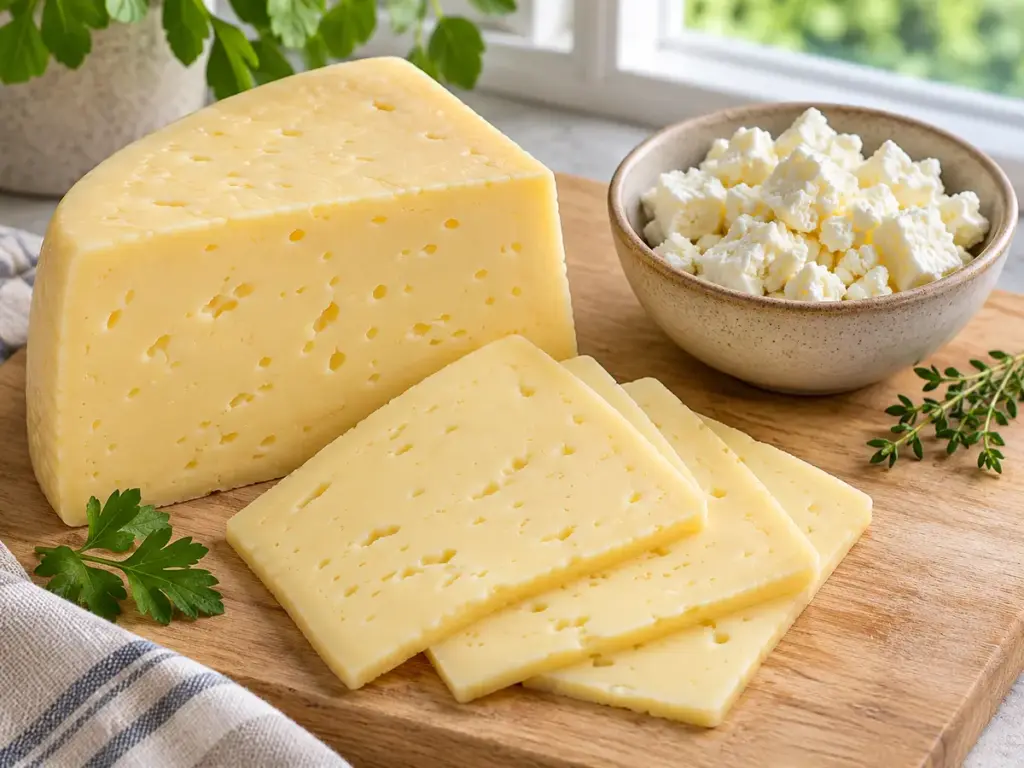
Expect buttery and mildly sweet instead of sour, with no stringy pull, so the feta must carry the brine. A young wheel works best, because Wikipedia says Havarti turns saltier and hazelnut-like as it ages. If your store is out, other mild, semi-soft melting cheeses work the same way.
5. Feta Alone for Salads and Toppings
When sulguni is only a salty topping or a cube in a salad, crumbled feta swaps in at 1:1. It brings the brine and the tang, but it crumbles instead of pulling, and at 1,139 mg of sodium per 100 g it is the saltiest option here, so cut back on other salt.
For a salad, add sliced tomatoes and chopped fresh herbs, the pairing the Cheese Professor says is often served with sulguni. If you can't find it, feta alternatives cover the same salty role.
Which Substitute Should You Use for Khachapuri, Frying, or Salads?
Your dish decides the cheese. If the cheese gets baked and melted, you need stretch, and if it gets fried or crumbled, you need a cheese that holds together:
- Mozzarella plus feta at 2 to 1, the closest match
- Mozzarella alone with a pinch more salt
- Havarti plus feta when you want a buttery, non-stretchy melt
- Halloumi for wedges in a hot pan or on the grill
- Feta for salads and toppings
- Smoked scamorza if you want a smoky cheese (see below)
In khachapuri, the sources add egg to the cheese. Culture mixes one beaten egg into the filling before baking, and Cook's Country stirs an egg yolk and butter into the baked cheese until it is smooth and stretchy. That yolk stays raw or lightly cooked, so children, older adults, pregnant people and anyone with a weakened immune system should use pasteurized eggs, as the FDA egg safety page advises for dishes served raw or undercooked.
Can Other Stretched-Curd Cheeses Replace Sulguni?
Yes. Wikipedia lists sulguni among the stretched-curd cheeses, the group mozzarella belongs to. Two cousins show up in US stores, and both need a taste before you add salt:
- Italian scamorza is an elastic, stringy pasta filata cheese that Wikipedia says can replace mozzarella in most dishes. Because sulguni is also sold smoked, smoked scamorza is the better pick for a smoky recipe.
- Mexican quesadilla cheese from Oaxaca is pulled into strands and has a texture similar to mozzarella or string cheese, and cooks melt it in quesadillas. It is a low-fat, semihard cheese, so add feta if you want brine.
Which Cheeses Do Not Work as a Sulguni Substitute?
Cottage cheese and ricotta are soft, fresh curd cheeses with no stretch. USDA lists 4.3 g of fat per 100 g in creamed cottage cheese and 10.18 g in whole-milk ricotta, against 24.64 g in whole-milk low-moisture mozzarella (FDC 172179, 170851 and 170846).
With that little fat, a baked filling turns lumpy and wet instead of gooey, and neither cheese carries sulguni's salt. Skip both in khachapuri, and use them only when a recipe calls for a soft filling.
Sources
- Wikipedia, Sulguni: milk, method, 6 to 48 hours in brine, about 50% water, 1% to 5% salt, deep-frying.
- Cheese Professor, 6 Georgian Cheeses You Need to Know: sulguni's flavor, smoked version and use in khachapuri.
- Culture magazine, Wheys Less Traveled: Khachapuri: sulguni in the United States, mozzarella or Havarti with feta.
- Cook's Country, Adjaruli Khachapuri: 6 ounces each of mozzarella and feta.
- FDA, What You Need to Know About Egg Safety: pasteurized eggs for dishes served raw or undercooked, higher-risk groups.
- Wikipedia, Halloumi: high melting point, brine, texture.
- Wikipedia, Havarti: texture, melting, aging.
- Wikipedia, Scamorza and Oaxaca cheese: pasta filata method, texture, uses.
- USDA FoodData Central: FDC 170846 (mozzarella, whole milk, low moisture), FDC 173420 (feta), FDC 172179 (cottage cheese, creamed), FDC 170851 (ricotta, whole milk).

Food writer at GustoMeadow. Writes ingredient substitutes, food comparisons, taste guides and storage guides for home cooks.
Storage and food-safety numbers follow USDA, FDA and university extension guidance.



