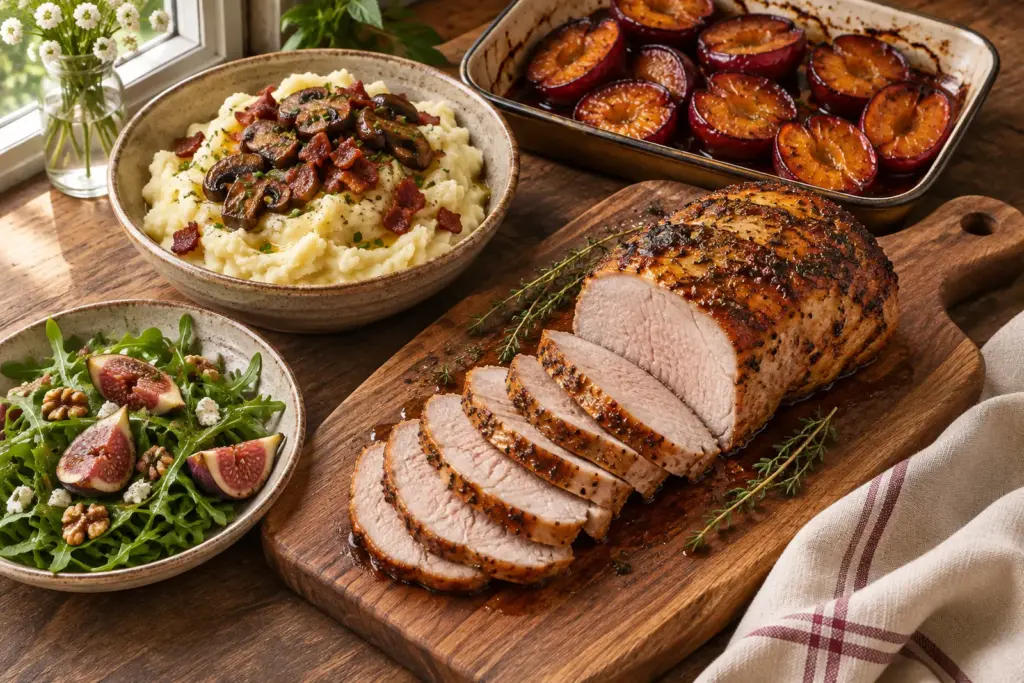
A pork loin roast goes well with mashed potatoes with bacon and mushroom, oven-roasted plums and arugula and fig salad, which give you something creamy, something sweet-tart and something crisp.
- Because a loin is lean and mild, you want sides with moisture, sweetness or crunch.
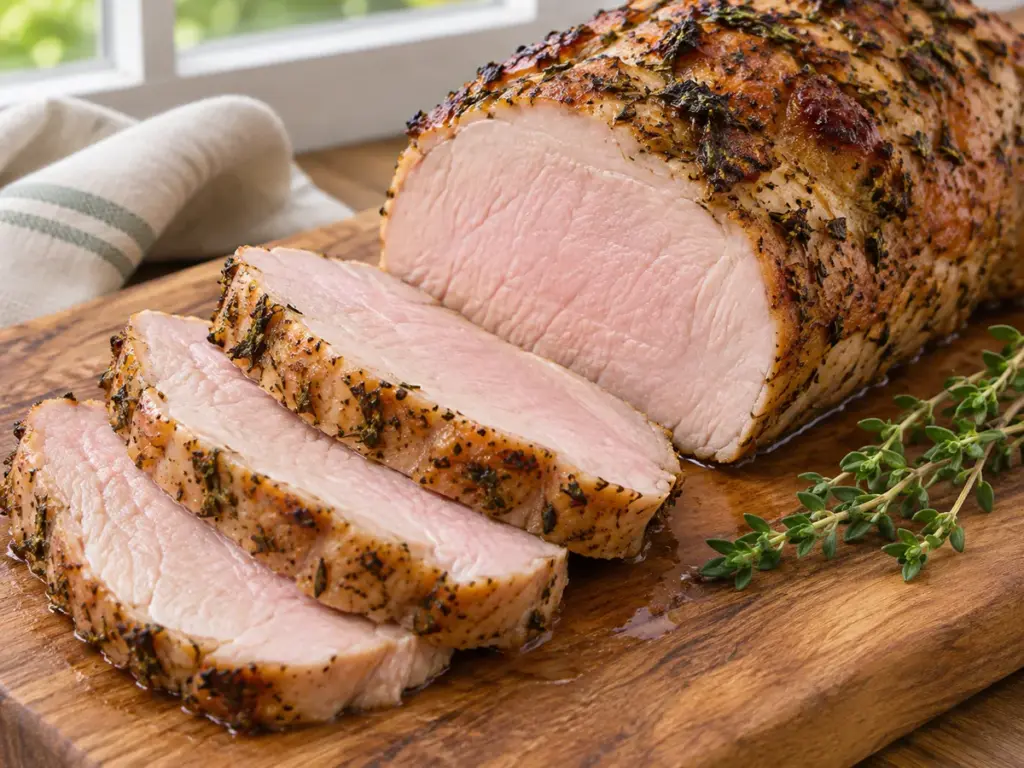
- The roast is done at 145°F with a 3-minute rest, the USDA target for fresh pork.
A lean, mild roast needs help from the plate, so good side dishes for a main course fill three gaps: something creamy to make up for the missing fat, something sweet or tart to wake up the flavor, and something crisp for contrast.
What Goes Well with Roast Pork Loin?
A loin roast comes from the area between the shoulder and the start of the leg, and the National Pork Board puts a typical roast at 2 to 4 pounds, bone-in or boneless.
Because a loin is much leaner than pork butt, it slices cleanly, but it dries out fast once you cook it past doneness.
That leanness decides your menu. A fattier roast makes its own rich juices, but a loin needs the sides to bring richness, acidity and crunch.
You can sort the sides by the job each one does on the plate:
| Side | Job on the plate | Good to know |
|---|---|---|
| Mashed potatoes with bacon and mushroom | Creamy starch that catches the juices | Cooks on the stove while the roast is in |
| Cheesy grits casserole | Creamy, make-ahead starch | Can be assembled in advance |
| Baked polenta with parmesan and tomatoes | Firmer starch with tomato acidity | Bakes in the oven |
- Butternut squash gratin gives you a cheesy, sweet fall vegetable.
- Oven-roasted plums give you a sweet-tart fruit that bakes while the roast cooks.
- Cherry chipotle salad brings sweet heat in a grain salad, so it fills the starch slot too.
- Brussels sprouts salad with cranberries and hazelnuts gives you a crunchy, tart salad for winter and holiday meals.
- Its greens taste peppery and its figs taste sweet.
- You dress it just before serving.
- Its greens are sturdy and quick to prepare.
- It needs no cooking at all.
If you want the starch to be a soup, carrot, red lentil, apple and sweet potato soup is thick enough to do that job, and it suits cold weather best.
The job a side does comes first, but half of these sides depend on figs, plums, squash or tomatoes, so the time of year narrows your list.
10 Best Side Dishes for Roast Pork Loin
A lean loin gives less sauce than a fattier roast, so the juices on the cutting board are worth spooning over whichever starch you choose.
1. Mashed Potatoes with Bacon and Mushroom
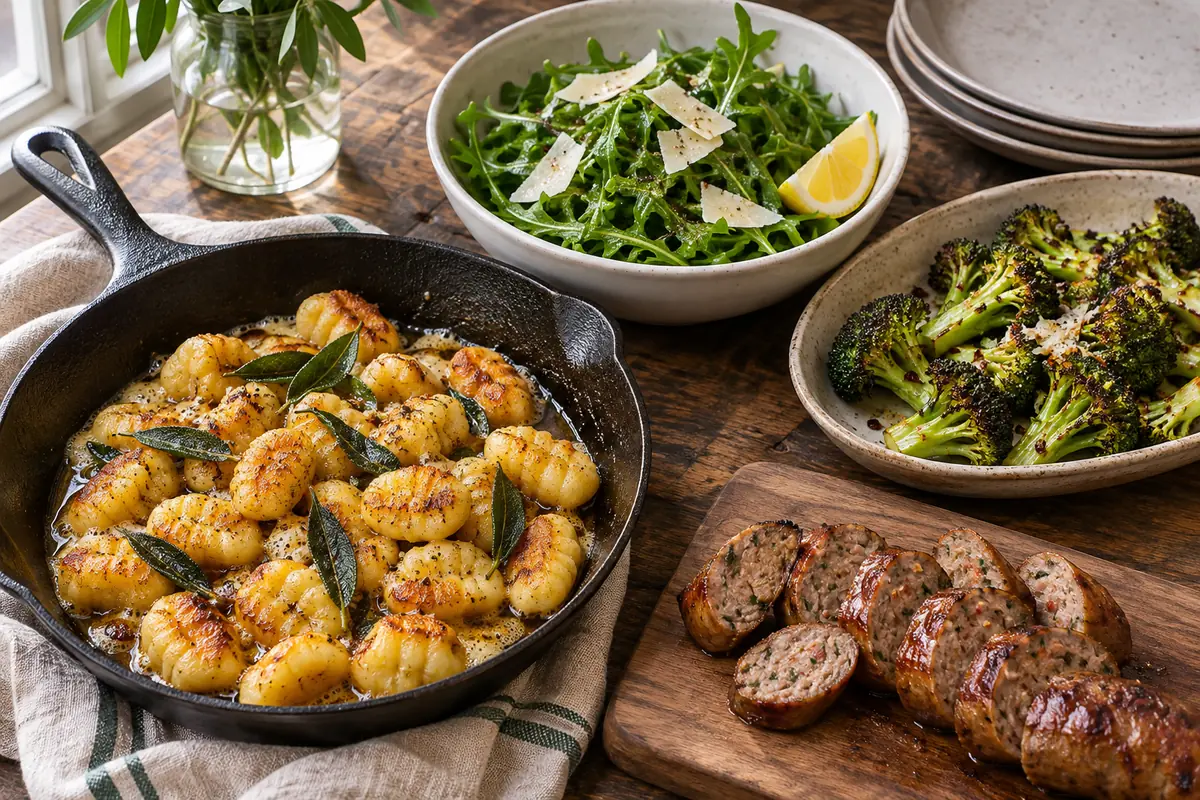
This version of mashed potatoes carries fried onions, mushrooms and bacon, which add the salt, smoke and savory depth a plain loin lacks.
Since the bacon already salts the potatoes, you may need little or no extra salt.
Leftover mash reheats well with a splash of milk, so a bigger batch is worth cooking.
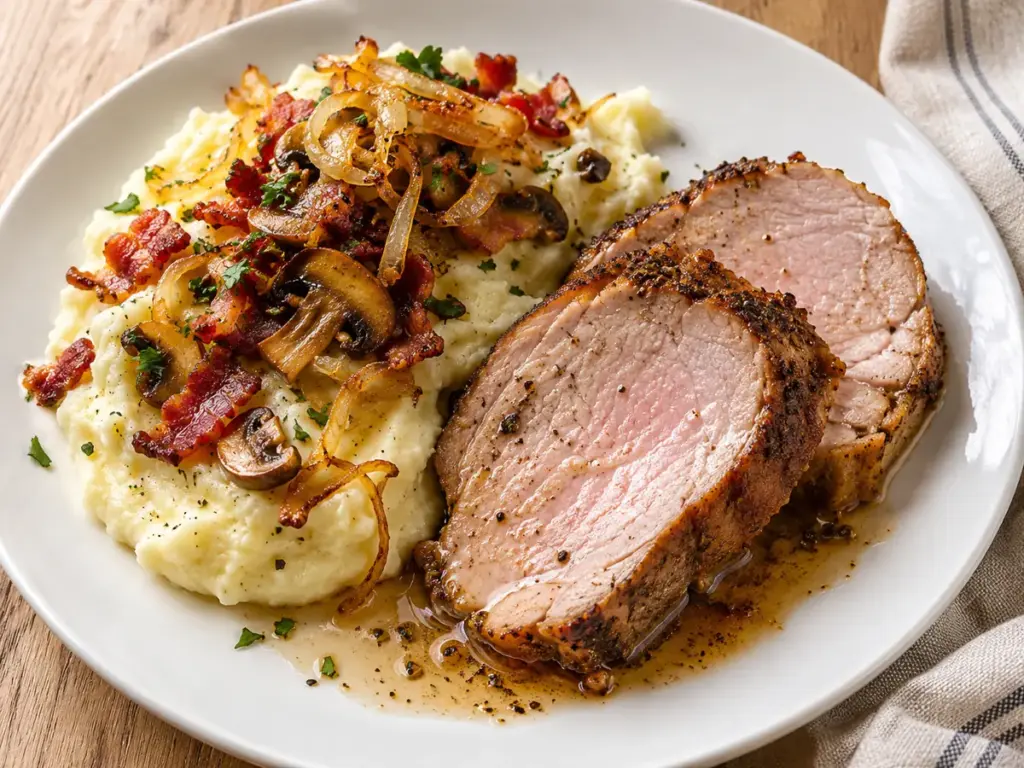
Cauliflower and other mashed potato alternatives still soak up the juices when you want a lighter bowl. If a picky eater is at the table, you can leave the mushrooms out and keep the bacon.
2. Cheesy Grits Casserole
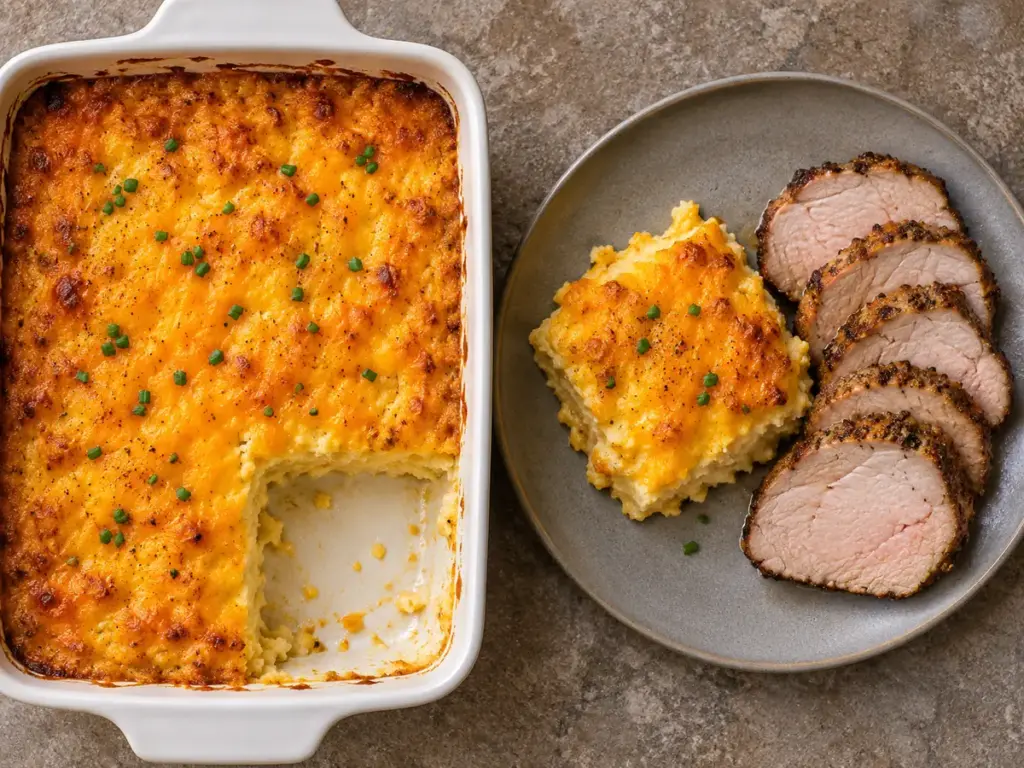
This casserole is rich enough to hold its own beside sliced pork, and the eggs set it so it spoons out in clean portions. You combine these ingredients:
- Regular or quick-cooking grits
- Cheddar, heavy cream and eggs
- Pantry staples: butter, salt and pepper
Because the casserole can be made in advance, it suits guests, and you finish the work before the roast goes in.
Grits and mashed potatoes fill the same creamy slot, so one of them is enough, and how grits differ from mashed potatoes in texture can settle which one your table gets.
3. Baked Polenta with Parmesan and Tomatoes
This polenta bakes firmer than the grits casserole, and the tomatoes add the acidity a creamy side leaves out. Beyond the tomatoes, you need only polenta, butter, parmesan, basil and black pepper.
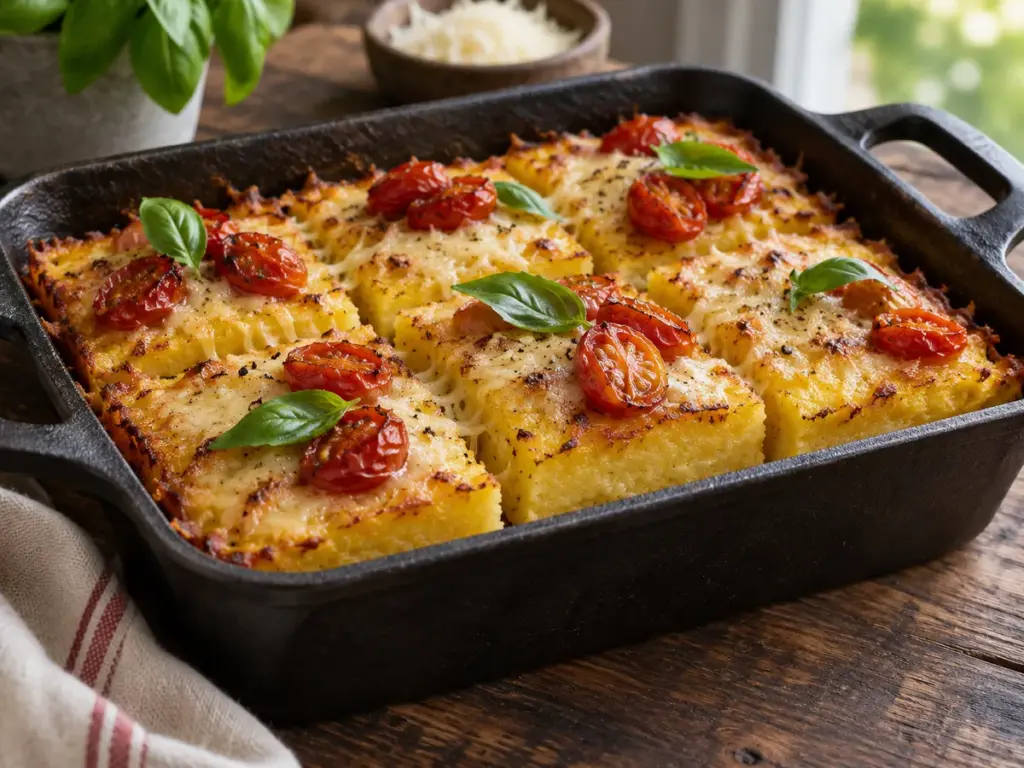
Once it sets, it cuts into squares that hold their shape when you drag a slice of pork through the juices.
The tomatoes are the only sour ingredient in the dish, so ripe summer tomatoes make the biggest difference here.
4. Butternut Squash Gratin
If you like potato au gratin, tender butternut squash under a cheesy sauce with fresh herbs and parmesan gives you the same richness with a sweeter, fall flavor that suits pork.
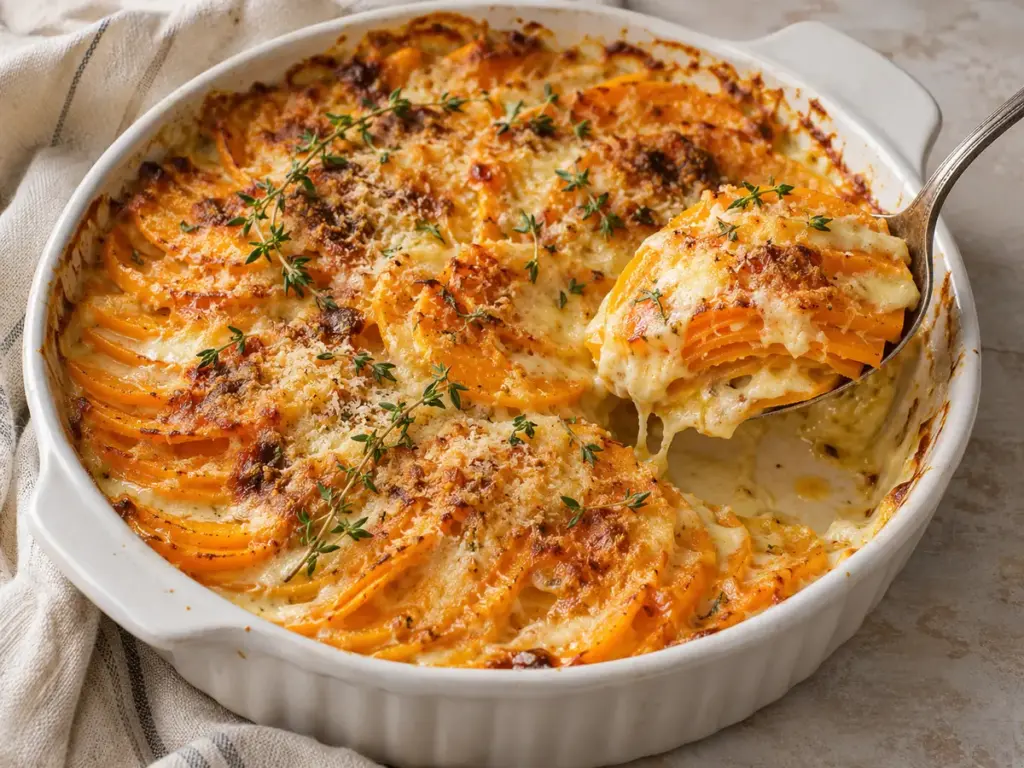
Thin, even slices of squash cook through in the time the cheese needs to brown.
You can slice the squash and mix the cheese sauce earlier in the day, then layer the dish shortly before it goes in the oven. When your store has no butternut, stand-ins for butternut squash such as acorn squash can fill the dish instead.
5. Oven-Roasted Plums
We'd pick roasted plums when the plate needs a sweet-tart contrast to the mild roast. If you bake pitted prune plums with orange or lemon slices, white wine and a vanilla bean or a spoonful of vanilla paste, they turn into a syrupy, tart-sweet side.
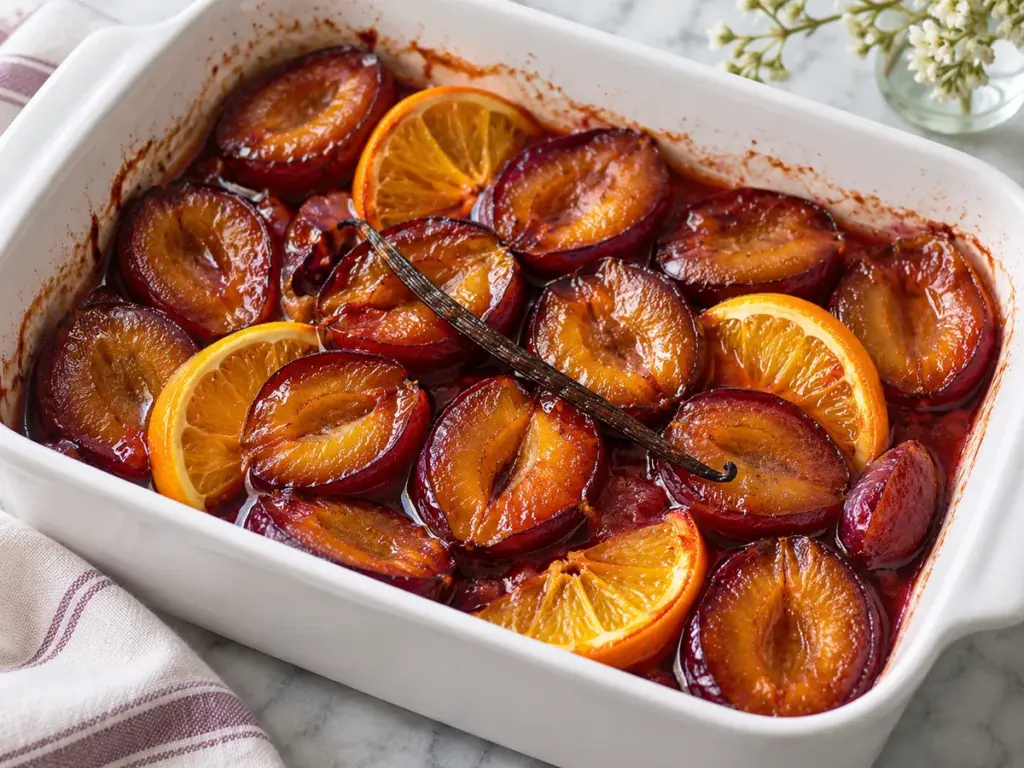
The plums bake until soft, and a stir now and then lets you catch them before they turn mushy. Fruit that is ripe but still firm holds its shape the longest.
The syrup doubles as a sauce you can spoon over the sliced pork.
6. Cherry Chipotle Salad
This hearty grain salad starts with bulgur wheat, corn, black beans, celery, cilantro and lime juice, and whole dried cherries add the fruit.
In the dressing, chipotle paste brings smoky heat, and a little honey keeps that heat from overpowering the pork.
Its heat changes from brand to brand, so you can hold back the last spoonful until you have tasted the salad.
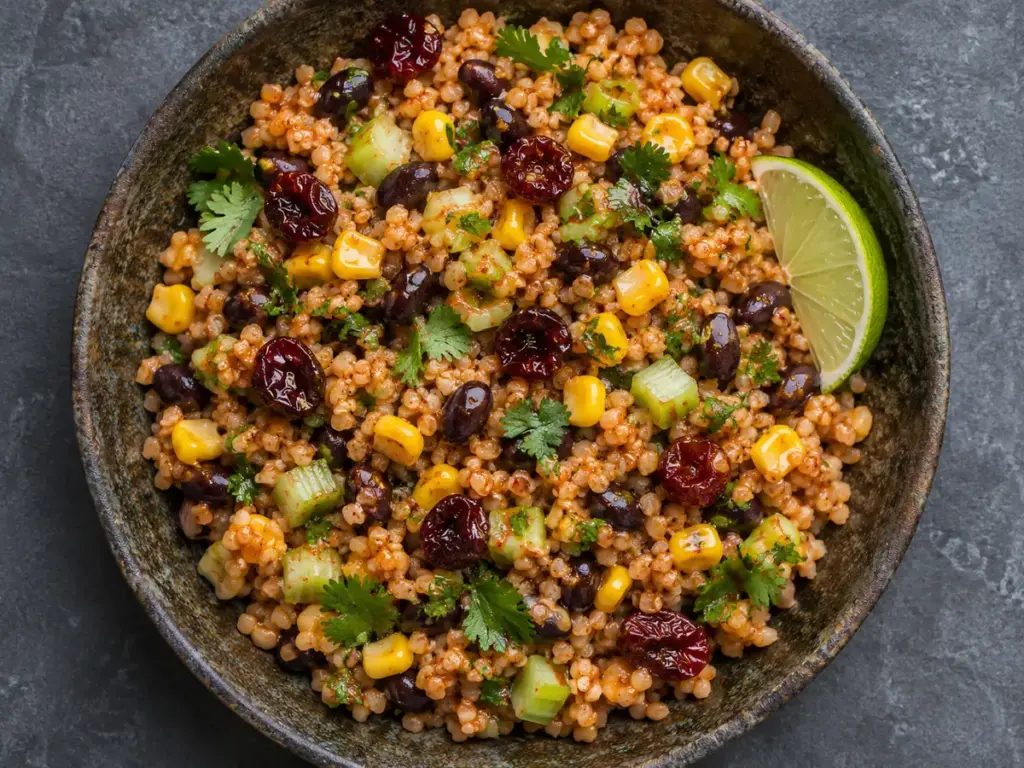
Because bulgur is a grain, this salad covers the starch slot, and the potatoes can go. The cherries and honey make it a sweet side, so it pairs best with something creamy or fresh instead of the roasted plums.
7. Brussels Sprouts Salad with Cranberries and Hazelnuts
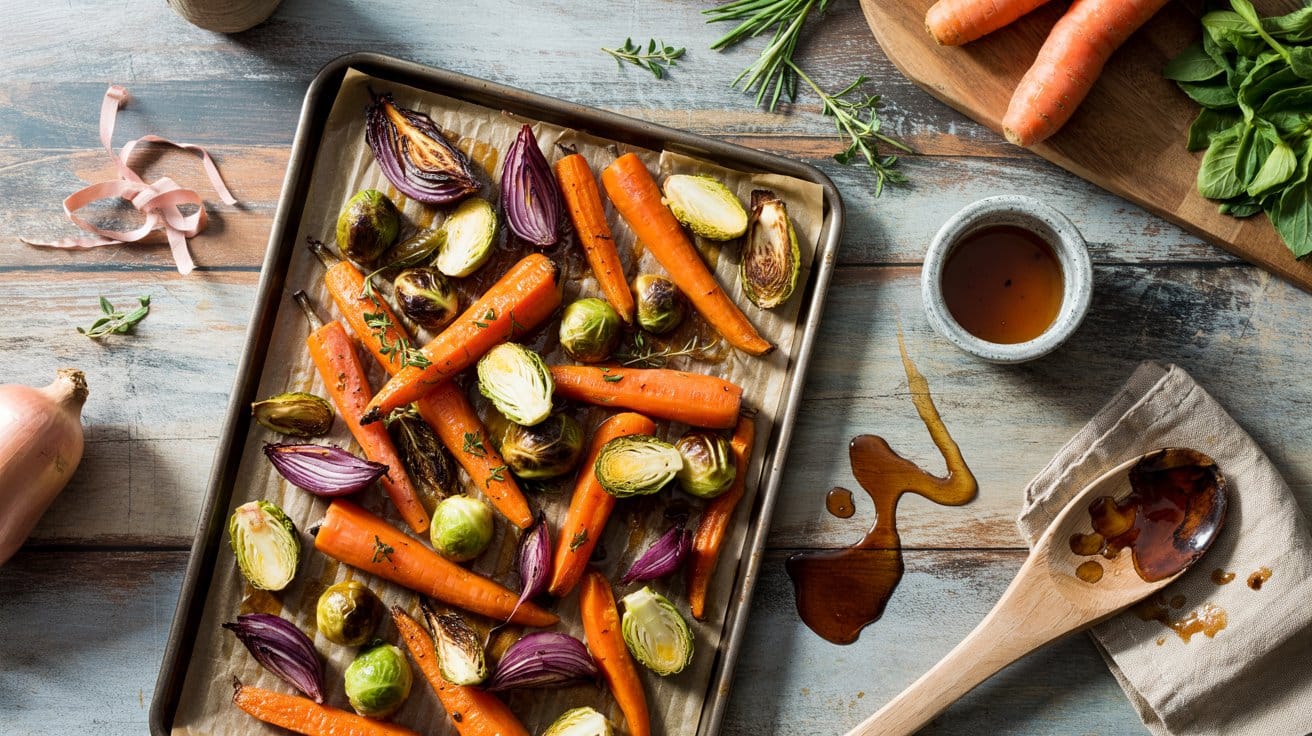
Brussels sprouts, cranberries and hazelnuts give you crunch and tartness once you dress them with maple syrup, olive oil, black pepper and rosemary.
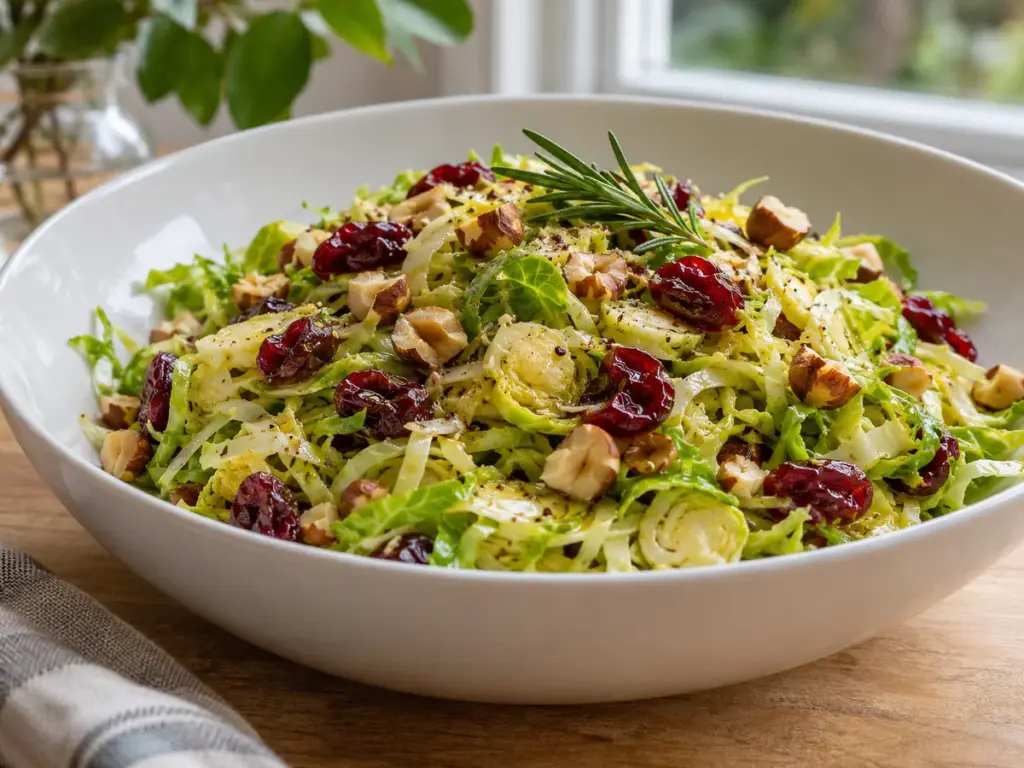
When you shave the sprouts thin, the raw leaves eat like slaw instead of cabbage chunks. You can shave them and mix the dressing earlier in the day, then toss the two together at the table.
Bacon strips and Pecorino-Romano make the salad richer, so they can stay out when your mashed potatoes already have bacon.
8. Arugula and Fig Salad
Peppery arugula, sweet fresh figs, toasted pecans and goat cheese give sliced pork the sharp, fresh bite it needs, and a balsamic vanilla vinaigrette ties the sweet and sharp together.
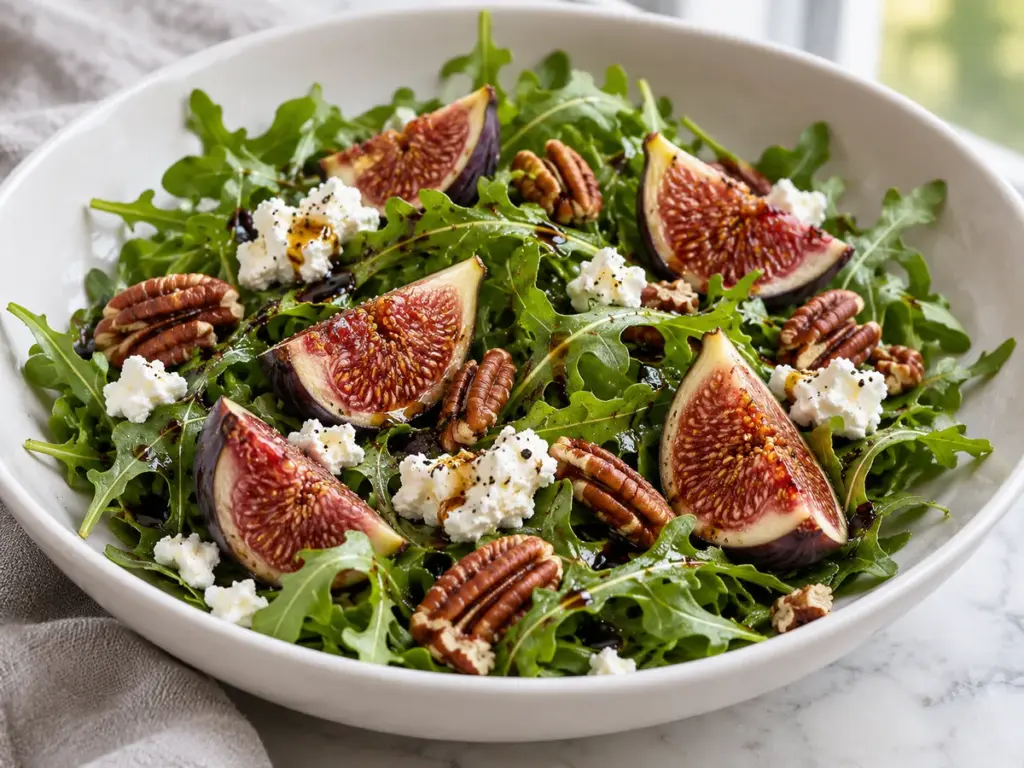
Any cheese you like can stand in if goat cheese is not your favorite.
The pecans can be toasted earlier in the day, and the figs and cheese go in last so they stay whole. Arugula wilts quickly under vinaigrette, so the salad gets its dressing right before serving.
9. Kale and Fig Salad
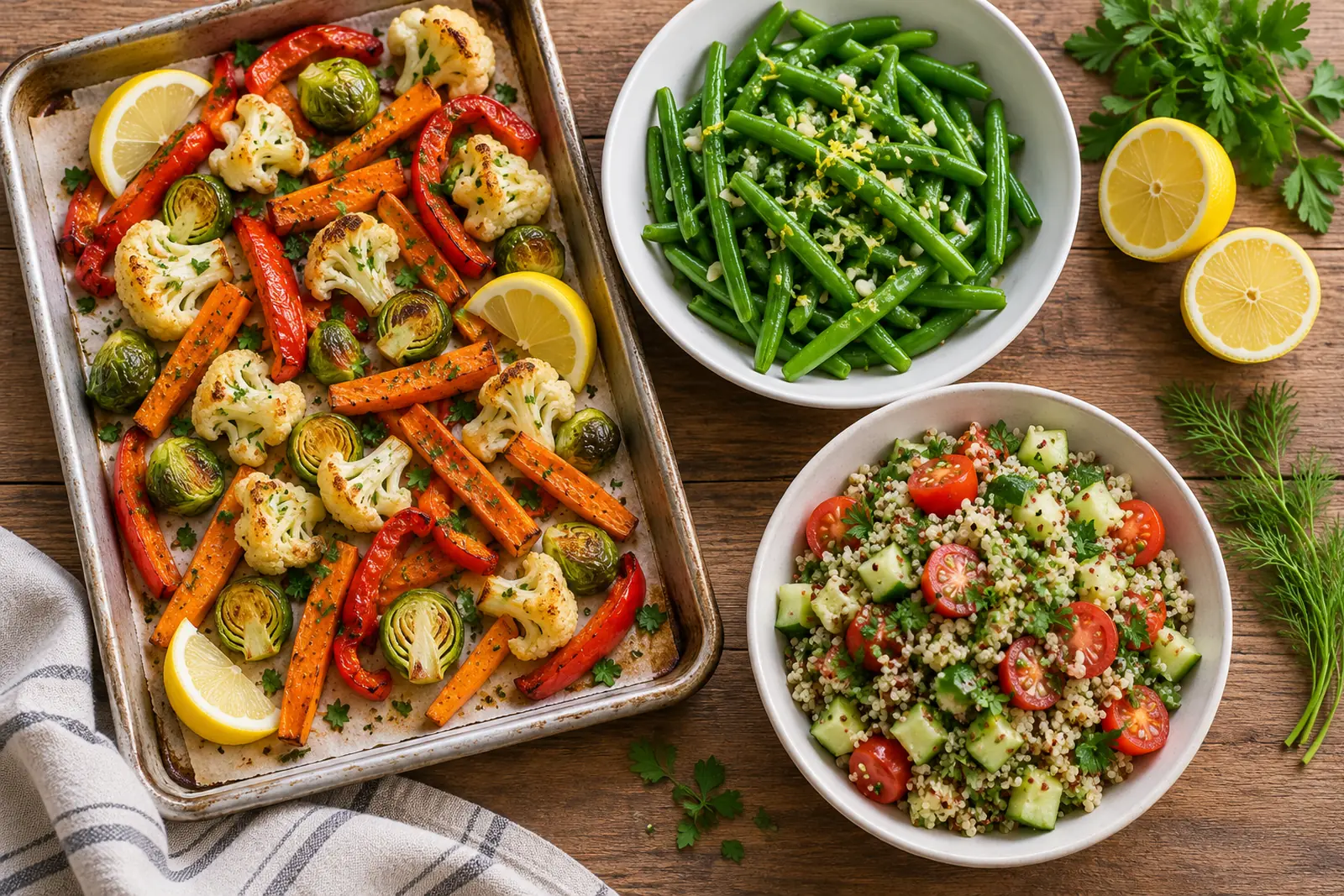
When time is short, figs, kale, carrot, zucchini and flaxseeds come together with no cooking, and ripe avocado mashed with lemon juice gives you a creamy dressing that coats the sturdy kale.
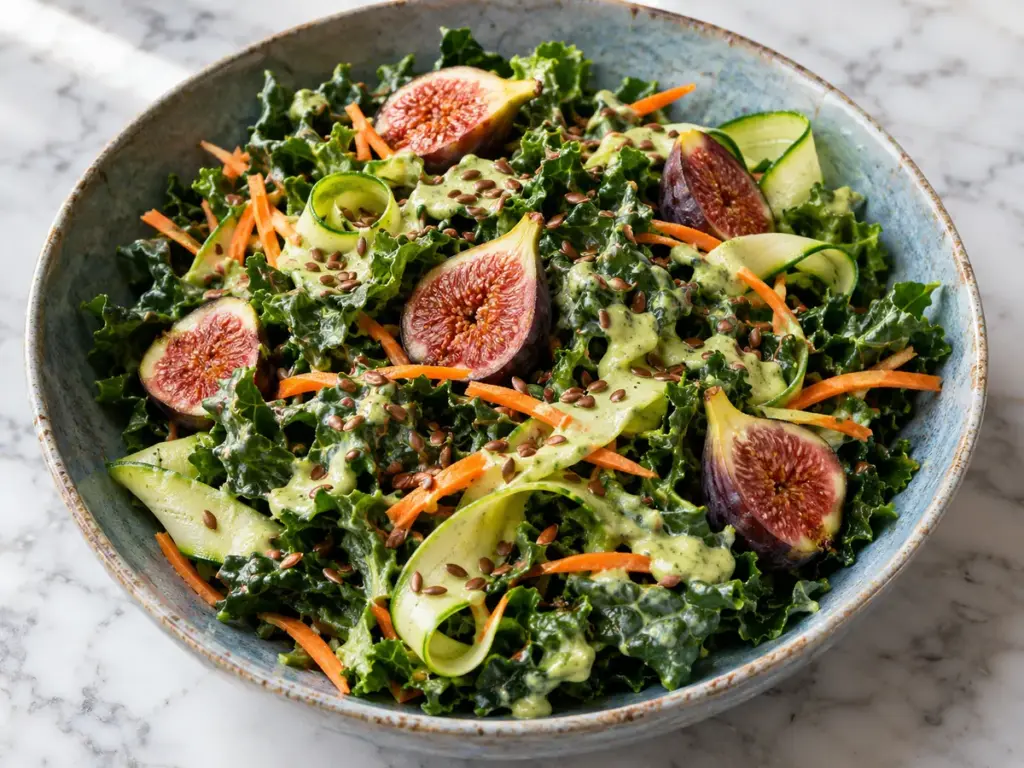
Kale leaves are thicker and sturdier than arugula, which is why a thick avocado dressing suits them.
UC Cooperative Extension in Sonoma County puts the fig harvest at June to November, depending on the variety and the summer heat.
10. Carrot, Red Lentil, Apple and Sweet Potato Soup
On a cold night, you can serve a soup of carrot, red lentils, apple and sweet potato as the starch, and the apple and sweet potato bring the sweet note the plums bring in item 5. A topping of feta or yogurt adds salt and tang.
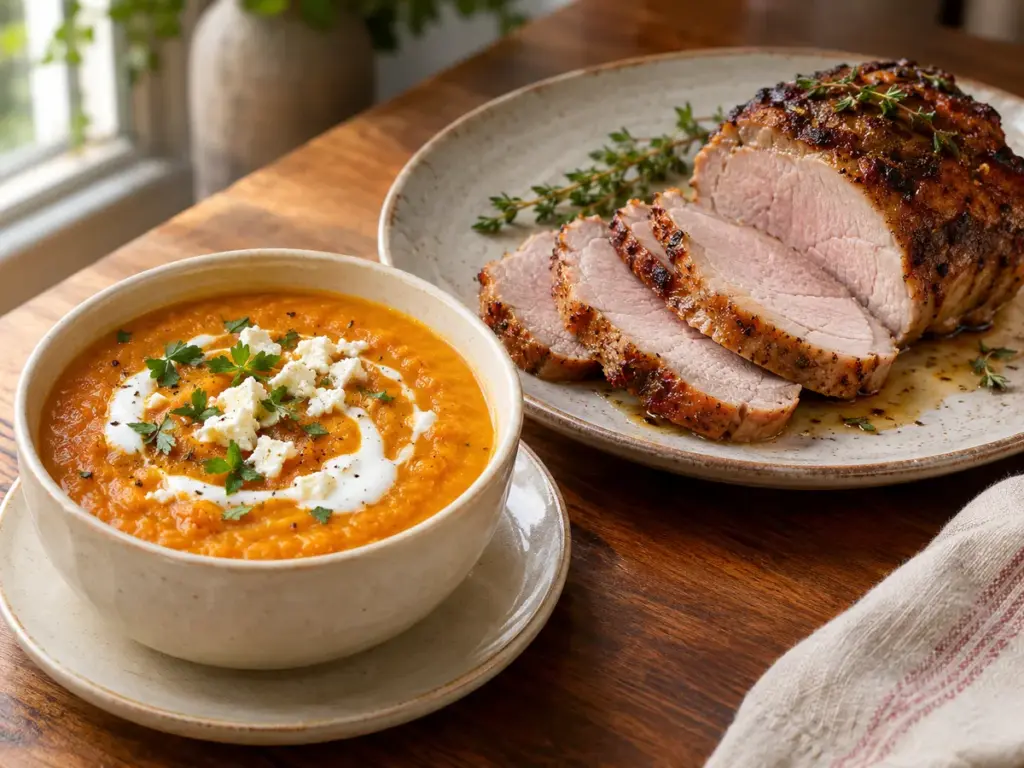
Red lentils break down as the soup cooks, which thickens it without cream. USDA gives cooked leftovers 3 to 4 days in the fridge, so you can make the soup the day before and reheat it while the roast rests.
A small bowl beside the roast is enough, and the soup can drop off the menu when a creamy starch is already on the table.
Which Sides Fit Your Dinner?
The right side depends on the kind of dinner you are cooking:
| Dinner | Pick | Why it works |
|---|---|---|
| A weeknight | Kale and fig salad | No cooking, so it is ready while the roast rests |
| Make ahead | Cheesy grits casserole | Assembled before the roast goes in |
| Kids at the table | Mashed potatoes | Soft and mild, with the mushrooms left out |
- When you host guests, oven-roasted plums are syrupy and tart, and they look the part.
- If you want a lighter meal, arugula and fig salad is fresh and peppery with no heavy starch.
- On a cold night, butternut squash gratin is warm, cheesy and sweet.
How Many Sides Should You Serve?
Three sides cover a family dinner: one creamy, one sweet or tart, and one fresh. If you stack sides that do the same job, such as two or three cheesy casseroles, the plate gets heavy and nothing cuts the richness.
- Mashed potatoes or grits casserole give you the creamy starch.
- Roasted plums or cherry chipotle salad give the sweet-tart side.
- Arugula and fig or Brussels sprouts give you the crisp salad.
- Gratin, grits casserole and mashed potatoes together are all creamy.
- Plums plus cherry chipotle salad double up on sweet-tart.
- Soup beside a creamy starch doubles up on soft textures.
Do These Sides Work for Pork Chops, Tenderloin or a Crown Roast?
Yes, because these cuts share the same problem: they are lean and mild, so you need the same three jobs done on the plate. A pork tenderloin is a separate, smaller muscle that usually weighs about a pound, while a loin roast is sold in 2 to 4 pound pieces, according to the National Pork Board.
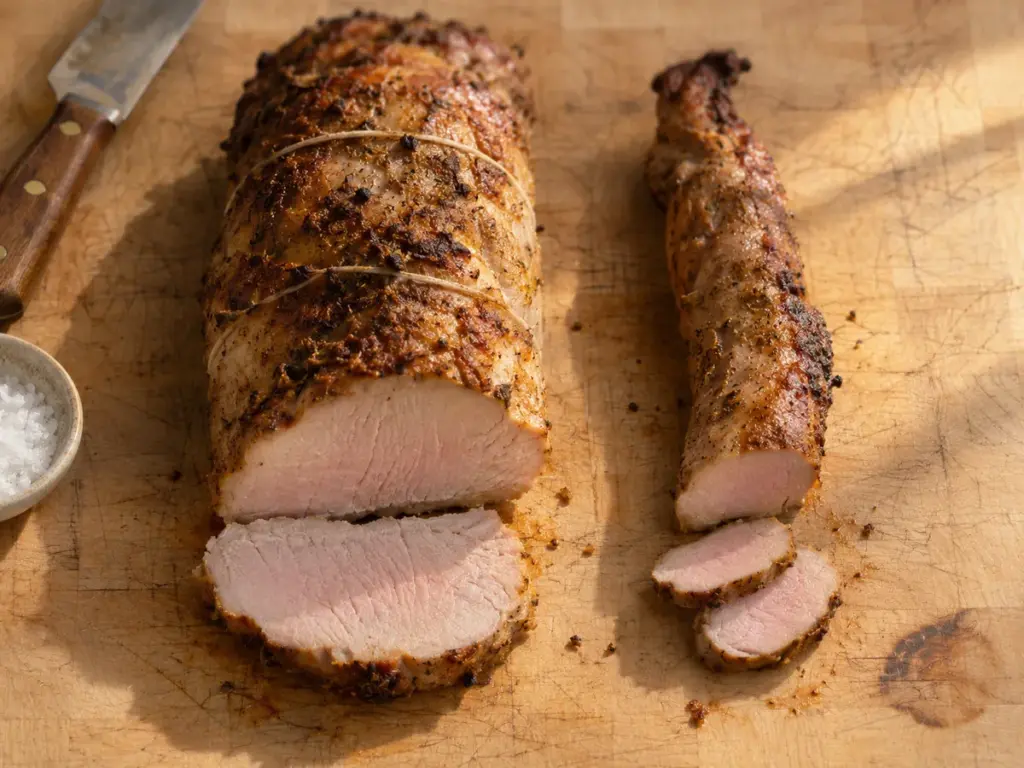
USDA applies the same 145°F with a 3-minute rest to fresh pork chops, steaks and roasts, so the doneness rule does not change. The cooking time does change, because a tenderloin or a thin chop finishes long before a 3-pound roast, so you start the sides first or pick a quick one, such as the kale and fig salad.
A tenderloin dinner has its own menu in sides for balsamic pork tenderloin, where the sides are built around a tangy glaze.
If you are cooking a crown roast, which is the same loin tied into a ring for a holiday table, sides for a crown pork roast give you more options sized for a crowd.
How Do You Time the Roast and the Sides?
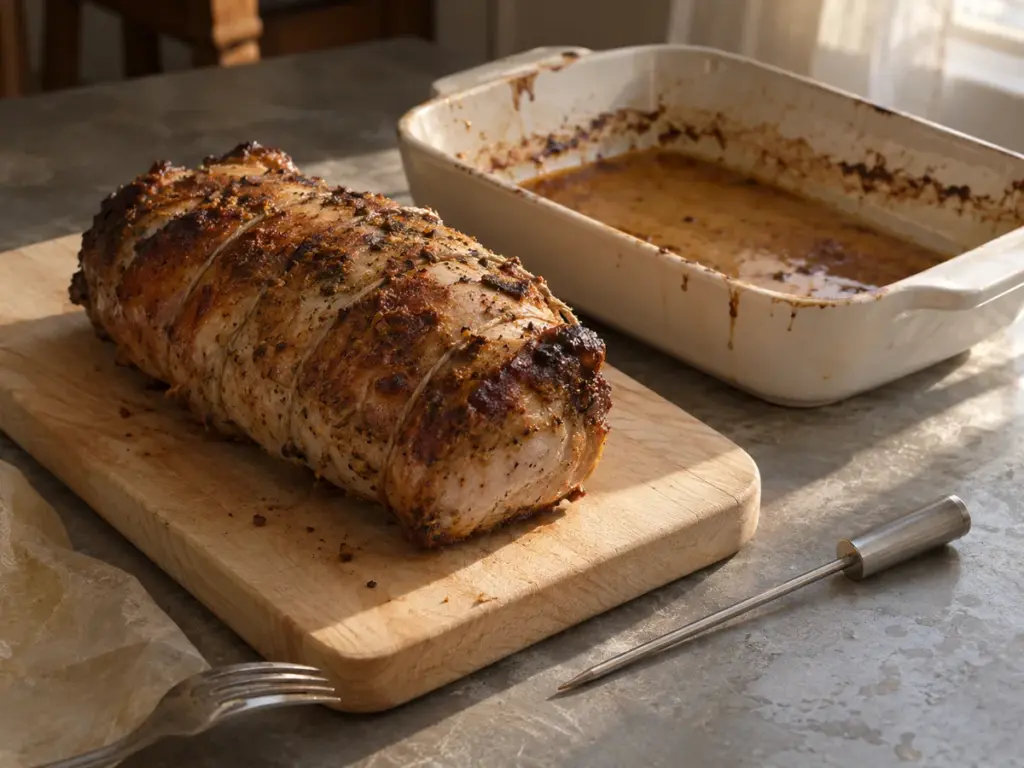
USDA FSIS lists about 20 minutes per pound at 350°F for a 2 to 5 pound loin roast, so a 3-pound roast takes about an hour, but your thermometer decides when it is done. Whichever pork loin roast recipe you follow, you can work backward from that:
- Earlier in the day. Assemble the grits casserole and chop the salad ingredients, keeping the dressing separate.
- Preheat fully. The National Pork Board says a fully preheated oven and an uncovered roast give the best crust.
- Roast goes in. Start the mashed potatoes now so they finish with the roast.
- Halfway through. Slide in the plums, the polenta or the gratin if their recipes bake at a similar heat.
- At 145°F, pull the roast. Rest it at least 3 minutes. A longer rest gives the oven time to finish the sides.
- While it rests. Dress the salads and slice the meat.
How Do You Store and Reheat the Leftovers?
Cooked roast and cooked sides belong in the fridge within 2 hours, and USDA says they keep 3 to 4 days.
USDA's reheating target is 165°F, and a lid or foil over the dish keeps the lean meat from drying out. Dressed salads do not keep, so it pays to dress only the portion you will eat that night.
Frequently Asked Questions
Can You Serve Sweet Potato Casserole with Roast Pork Loin?
Yes, and because sweet potato casserole is sweet and rich, it fills the sweet and the creamy slots at once.
Beside it, the arugula and fig or the Brussels sprouts salad adds something crisp and sharp, and the plums and the cherry chipotle salad can sit out so the plate does not turn sweet from end to end.
Which Sides Suit a Pork Loin Cooked on the Grill or Smoker?
The National Pork Board lists indirect-heat barbecue as a good method for a loin roast, and the same 145°F doneness rule applies.
If you want a side that echoes the smoke, the cherry chipotle salad does it, and with the grill busy, your oven is free for the grits casserole or the gratin.
Sources
- National Pork Board: Pork loin roast (cut sizes, tenderloin, uncovered roasting, barbecue)
- USDA: Cooking meat, check the new recommended temperatures (145°F compared with 160°F)
- USDA FSIS: Fresh pork from farm to table (loin roast chart, chops and steaks)
- USDA FSIS: Leftovers and food safety (3 to 4 days, reheat to 165°F)
- UC Cooperative Extension, Sonoma Master Gardeners: Figs (season, ripening, storage)

Food writer at GustoMeadow. Writes ingredient substitutes, food comparisons, taste guides and storage guides for home cooks.
Storage and food-safety numbers follow USDA, FDA and university extension guidance.