
Golden syrup is your closest swap, and Healthline lists it 1:1 for light corn syrup in candy and caramel.
- Honey also keeps crystals down, and King Arthur's baking rule for swapping it in is a third less honey.
- You can use cream of tartar or lemon juice with no syrup at all.
- Maple syrup adds flavor but does not stop crystals, so it needs added acid.
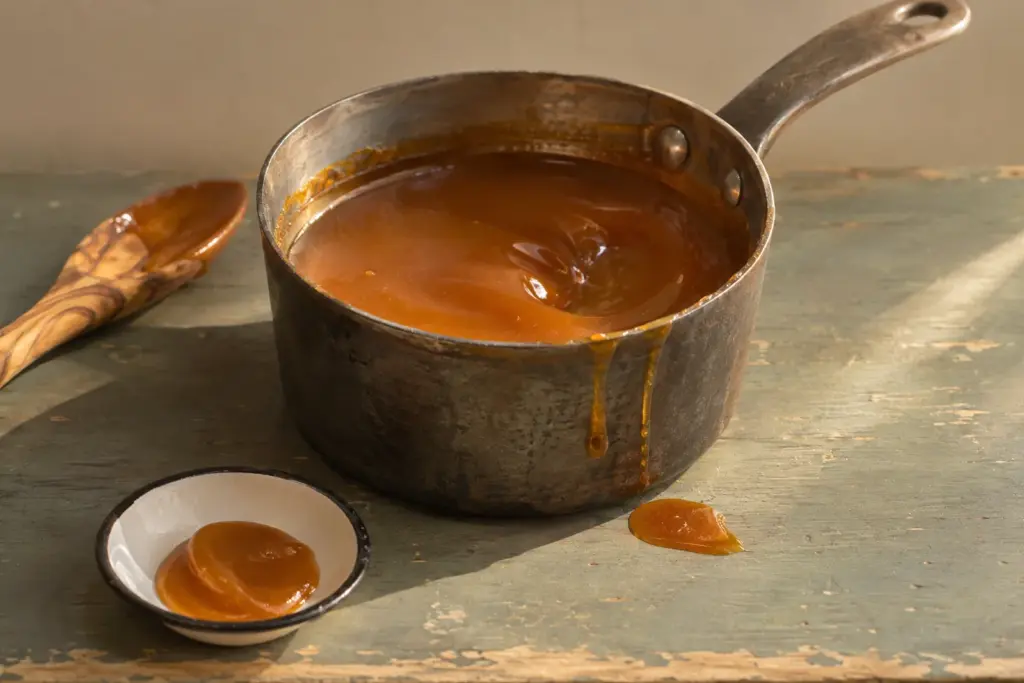
In caramel, corn syrup has one job: keeping the sugar from turning grainy. The best pantry ingredient swaps do that job too, and most of them also change the color, flavor or set of your caramel, so your pick depends on the dish.
A pie, glaze or frosting forgives more than caramel does, so for those you have a wider range of swaps to pick from.
What Does Corn Syrup Do in Caramel?
When you melt sugar, it wants to turn back into crystals, and a single crystal on the pan wall can seed the whole batch into grainy, sandy caramel. America's Test Kitchen explains that corn syrup's glucose dilutes the sucrose molecules and helps prevent crystal formation.
King Arthur names corn syrup and honey as inverted sugars that keep sugar from recrystallizing, and any swap you choose has to cover that job.
You need only a spoonful or two of whatever replaces it, since a baker answering readers at Bake School suggests 1 tablespoon per cup (200 g) of sugar as a starting point.
Corn syrup is also less sweet than white sugar, so a sweeter syrup in its place can make your caramel taste sweeter.
7 Best Substitutes for Corn Syrup in Caramel
Golden syrup and honey are inverted sugars like corn syrup, so they hold crystals back on their own, while maple and sorghum syrup need a little acid added. Every swap also leaves its own flavor in your caramel, as the last column shows.
| Swap | Amount | What changes |
|---|---|---|
| Golden syrup | Equal amount | Buttery flavor |
| Honey | A third less (baking rule) | Honey flavor |
| Brown rice syrup | Equal amount | Faint cereal note |
| Agave nectar | ⅔ to ¾ as much | Browns faster |
| Maple syrup | Equal, plus acid | Maple flavor |
| Sorghum syrup | Equal, plus acid | Molasses-like flavor |
| Cream of tartar | ⅛ teaspoon per cup of sugar | No syrup added |
Only three amounts come from a source: Healthline for golden syrup, KitchPrep for agave and King Arthur for cream of tartar. For honey, brown rice syrup, maple and sorghum syrup, no source publishes a caramel ratio, so you treat those amounts as starting points and adjust by taste.
1. Golden Syrup
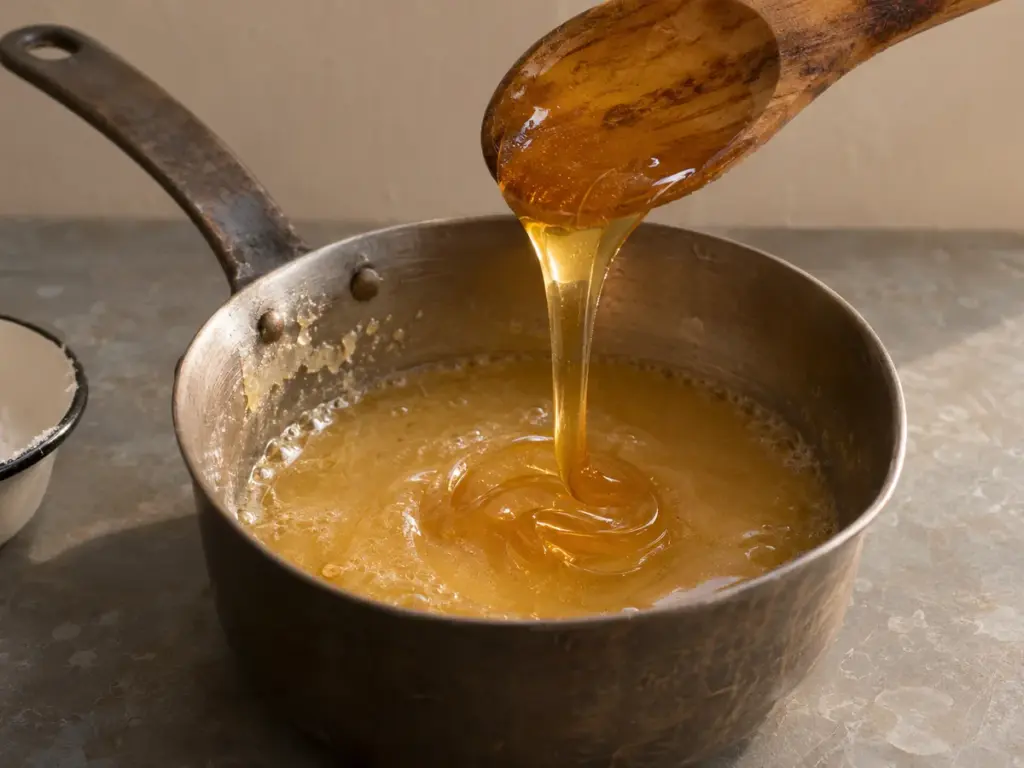
Golden syrup is a thick, amber inverted sugar syrup made from refined cane or beet juice, so it already holds the free glucose and fructose that make sugar less likely to crystallize. Healthline lists a 1:1 ratio when you swap it for light corn syrup, and says it works especially well for candy and caramel.
You will see a slightly thicker pour and taste a buttery note, which America's Test Kitchen's tasters describe as butterscotch and toffee. Golden syrup also fits other recipes calling for light corn syrup whenever butterscotch suits the dish.
2. Honey
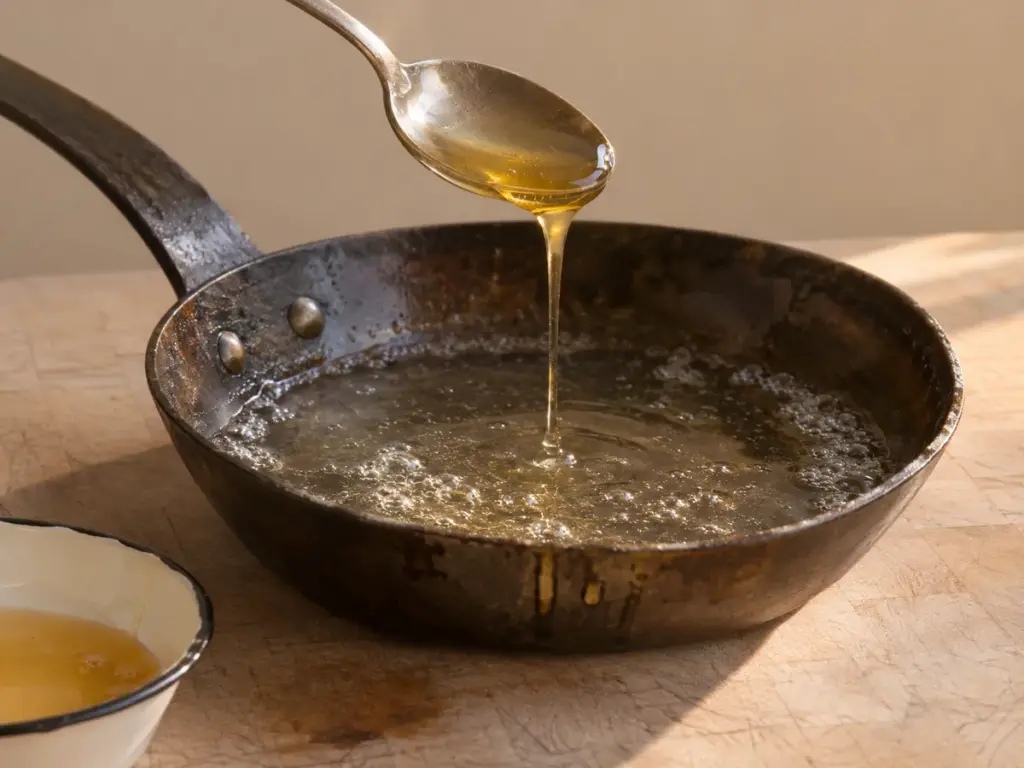
King Arthur and Bake School both name honey beside corn syrup as a way to keep caramel smooth. Honey is sweeter, and King Arthur's rule for swapping it for corn syrup in baking is about a third less honey, so you start there for caramel.
Honey brings its own taste, anything from mild clover to the molasses-like buckwheat honey, and Healthline warns that it may crystallize in candy and caramel. Because of that risk, you add only the spoonful a sauce needs and swirl the pan, since stray crystals spread quickly.
The CDC says you should never give honey, or anything made with it, to a child younger than 1 year.
3. Brown Rice Syrup
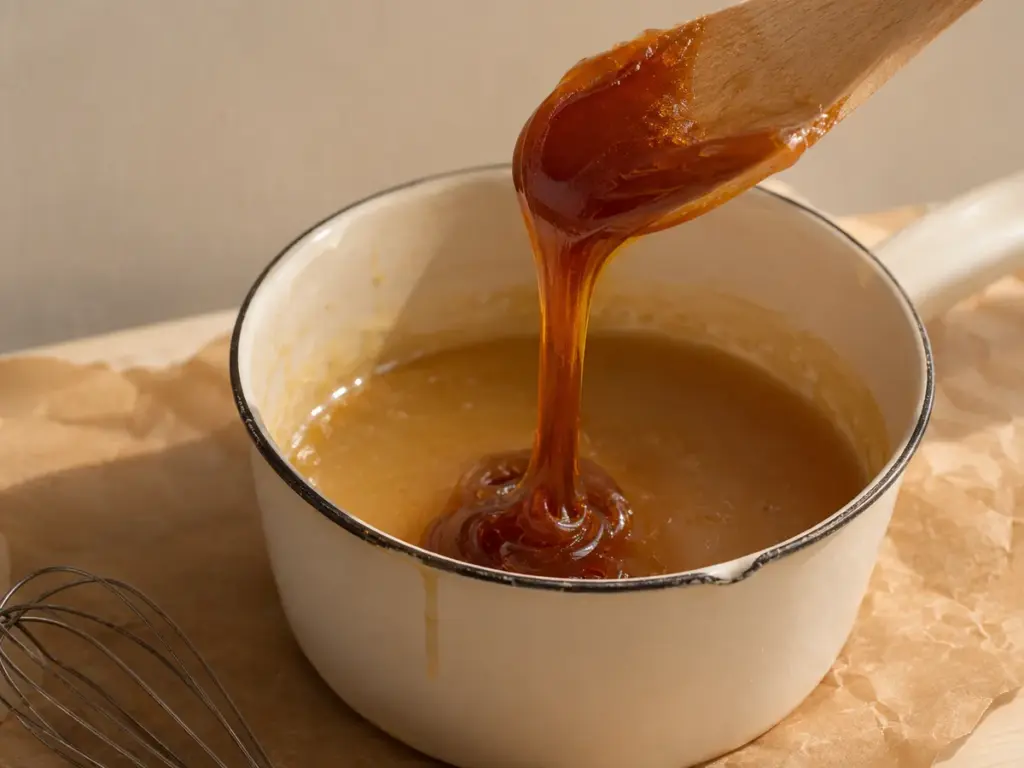
America's Test Kitchen replaced corn syrup with brown rice syrup in a chocolate frosting and a glazed chicken, and the results were very similar. The plain syrup has a strong cereal smell and a thick pour, but other ingredients hid the toasty note in the finished dishes.
That test did not include caramel, so you start with an equal amount and taste as you go. Butter, cream and vanilla may hide the cereal note better than a plain sugar caramel does, though that is only a guess drawn from the test.
4. Agave Nectar
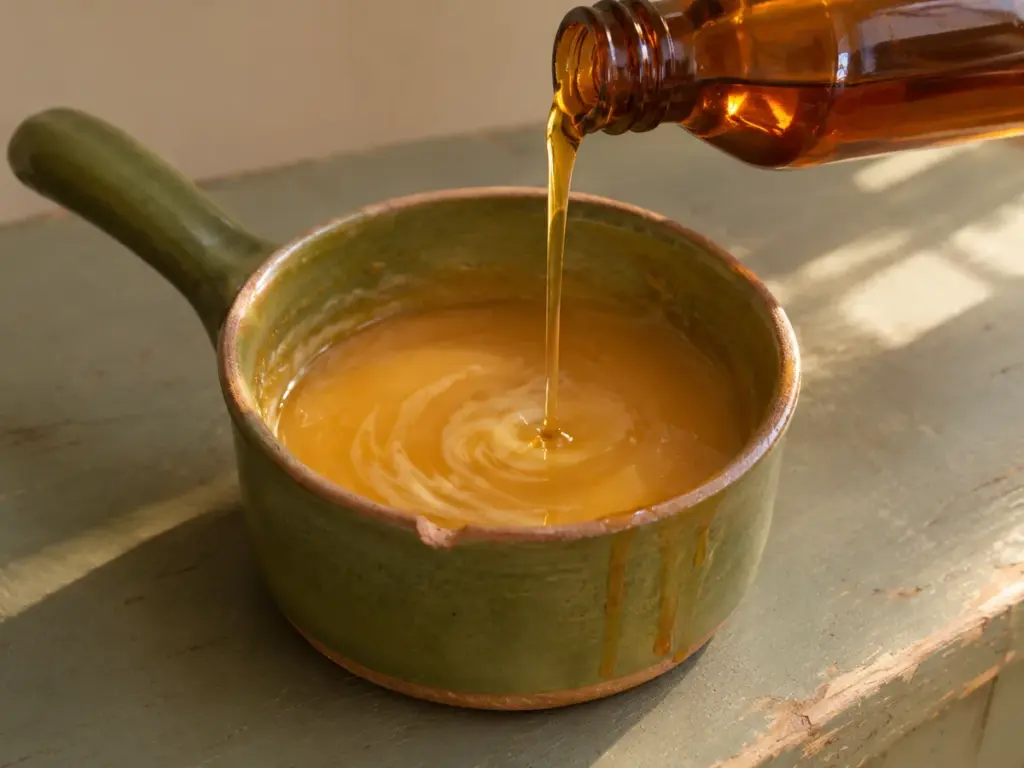
America's Test Kitchen notes that agave is sweeter than sugar and holds more water, and that amber agave, with more fructose than light, browns more quickly. KitchPrep suggests you start with two-thirds to three-quarters as much agave as the corn syrup in the recipe, though none of these sources tested agave in caramel.
According to KitchPrep, agave's thin body can also leave candy softer and stickier, so it suits a gooey sauce better than brittle or firm caramels.
Because agave is sweeter than sugar and corn syrup is less sweet, the agave versus corn syrup swap changes your caramel's sweetness as well as its color. You can keep the color in check with light agave and a thermometer.
5. Maple Syrup
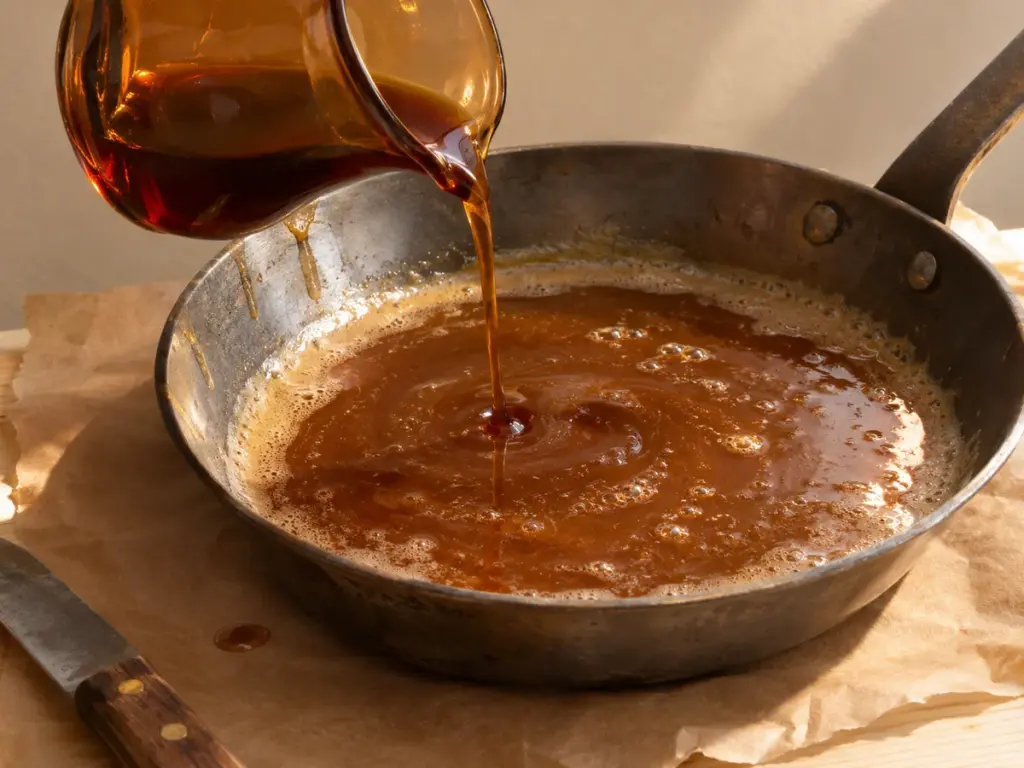
Maple syrup earns its place for flavor, since America's Test Kitchen says the sap caramelizes as it boils. Bake School points out that it is mostly sucrose, so it does not count as an inverted sugar and will not stop a caramel from crystallizing.
Healthline gives an equal amount for most recipes but warns that pure maple syrup can crystallize in candy and caramel. If you want maple flavor in a sauce, you can start with an equal amount and add the cream of tartar or lemon juice from item 7 as insurance.
6. Sorghum Syrup
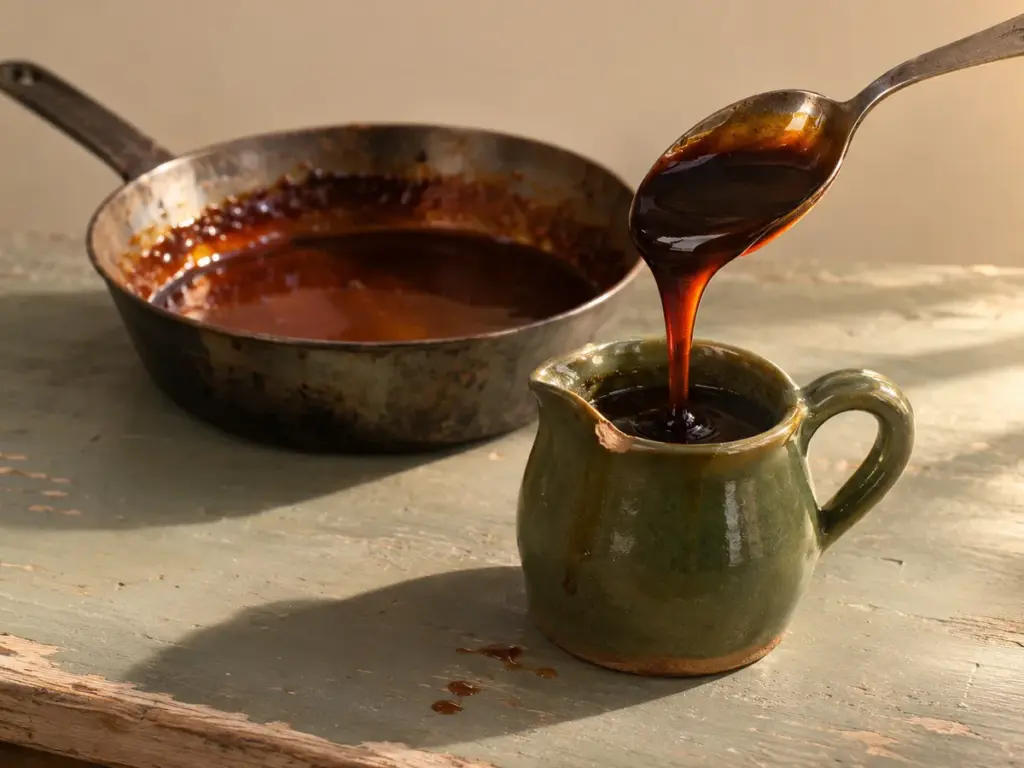
Sorghum syrup is the concentrated juice of the sorghum cane. The University of Kentucky says it holds sucrose, glucose and fructose, and that a bottle crystallizes when sucrose outweighs the other two.
Because sorghum syrup can crystallize on its own, you can handle it like maple, starting with an equal amount plus a pinch of acid.
America's Test Kitchen's tasters found brands ranging from lemony to tar-like and molasses-y, so it helps to know what sorghum syrup tastes like before you pour it into a pale sauce.
If your bottle has gone grainy, you can warm it until the crystals dissolve before you measure, because crystals in the pan can trigger more.
7. Cream of Tartar or Lemon Juice
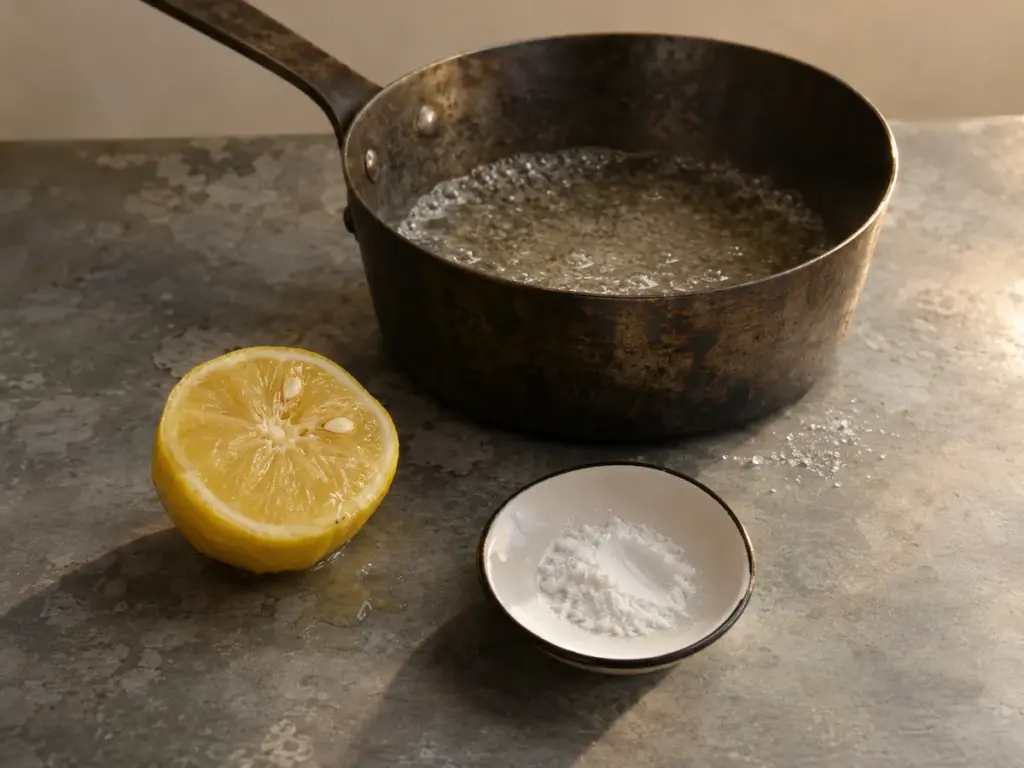
When you add acid, the pan makes its own inverted sugar: America's Test Kitchen says lemon juice breaks some sucrose into fructose and glucose, which interfere with crystals. King Arthur's caramel sauce uses ⅛ teaspoon cream of tartar for 1 cup (198 g) of sugar and calls it optional insurance.
You can stir the acid into the sugar and water before the pan goes on the heat. Bake School says a squeeze of lemon juice works as a fallback, though your sauce may turn a little more citrusy.
Do You Need Corn Syrup to Make Caramel?
No, you can make caramel without it. America's Test Kitchen prefers corn syrup but also gives acid as an alternative, and King Arthur describes how to keep stray sugar off the pan wall, which is where crystals start.
- Start wet. Dissolve the sugar in a little water first, which forgives more than dry sugar.
- Clear the wall. Brush the sides with a wet pastry brush or cover the pan so steam rinses them.
- Swirl, do not stir. Swirl the pan once it boils, because stirring can set off crystals.
- Pull early. Take the pan off the heat a shade lighter than you want, since it keeps cooking.
Which Temperature Should Caramel Reach?
A swapped syrup can change how fast your pan comes to temperature, so a candy thermometer or the Exploratorium's cold-water test tells you more than the clock does. For the cold-water test, you drop a little syrup into cold water, and the shape it forms shows the stage.
| Stage | Temperature | In cold water |
|---|---|---|
| Soft-ball | 235 to 240°F | Soft ball that flattens |
| Firm-ball | 245 to 250°F | Firm ball, flattens when squeezed |
| Hard-crack | 300 to 310°F | Brittle threads that snap |
| Brown liquid | 338°F | Sugar browns (caramelizes) |
The Exploratorium says caramels are cooked to the firm-ball stage, 245 to 250°F, and King Arthur puts brittle and toffee at hard-crack. Those numbers are for sea level, so you subtract 1°F for every 500 feet above it.
Can You Make Caramel Corn Without Corn Syrup?
Yes, you can skip it. A recipe from Three Olives Branch uses no syrup: you simmer ¾ cup brown sugar and ¾ cup butter for 7 minutes without stirring until amber, add 1 teaspoon baking soda off the heat, and bake the popcorn at 250°F for 15 minutes.
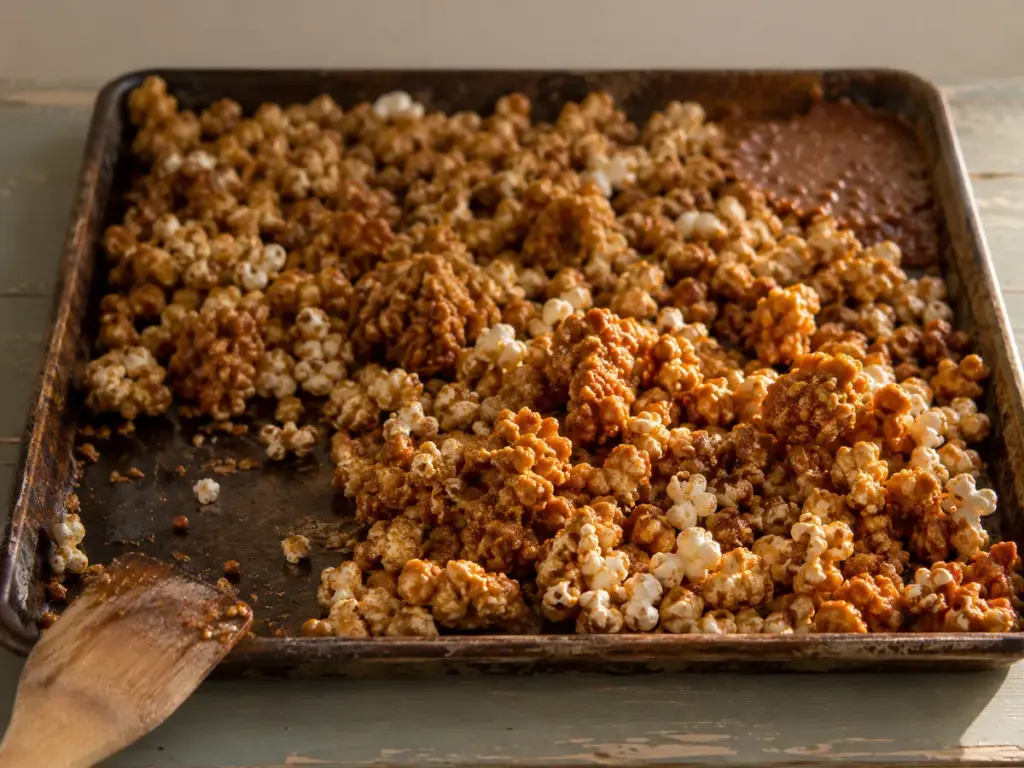
For comparison, Karo's classic recipe uses ½ cup corn syrup with 1 cup brown sugar, ½ cup butter and ½ teaspoon baking soda for 4 quarts of popcorn, and you boil it 5 minutes without stirring and bake at 250°F for 45 minutes.
If you would rather keep a syrup, golden syrup or brown rice syrup replaces the ½ cup in equal amounts. Honey, agave and maple syrup follow the amounts and cautions in items 2, 4 and 5.
Sources
- America's Test Kitchen, How to Make Caramel: corn syrup's glucose, acid, wet caramel.
- Bake School, Focus on Crystallization: 1 tablespoon per cup, honey, lemon juice, maple.
- King Arthur Baking, How to Make Caramel: inverted sugars, swirling, burn safety.
- King Arthur, Caramel Sauce: the ⅛ teaspoon cream of tartar.
- King Arthur, Corn Syrup Question: honey rule, molasses.
- Exploratorium, Sugar Stages: stage temperatures, altitude.
- Healthline, Corn Syrup Substitutes: golden syrup, honey, maple.
- Wikipedia, Golden Syrup: inverted sugar syrup.
- America's Test Kitchen, Brown Rice Syrup for Corn Syrup: tasting results.
- America's Test Kitchen, Agave in Place of Honey: browning, water.
- America's Test Kitchen, Sugars and Syrups: golden syrup, maple, sorghum flavors.
- KitchPrep, Can Agave Substitute for Corn Syrup?: agave amount, softer set.
- University of Kentucky, Sorghum Syrup Crystallization: sorghum sugars.
- CDC, Botulism Prevention: no honey under 1 year.
- Shriners Children's, scald burn warning: melted sugar burns, first aid.
- Karo, Classic Caramel Corn: caramel corn with corn syrup.
- Three Olives Branch, Caramel Popcorn Without Corn Syrup: caramel corn without it.
Frequently Asked Questions
Can You Use Molasses Instead of Corn Syrup in Caramel?
King Arthur lists molasses as a possible stand-in but says it is less sweet and has a strong flavor, so it suits spiced recipes better than a delicate sauce. The molasses will show in your caramel, since molasses and caramel taste quite different.
Is Karo Syrup the Same as Corn Syrup?
Karo is a brand of corn syrup, and its caramel corn recipe calls for Karo light or dark corn syrup. The swaps above work for either one, but light and dark corn syrup differ, so it pays to check which one your recipe names.

Food writer at GustoMeadow. Writes ingredient substitutes, food comparisons, taste guides and storage guides for home cooks.
Storage and food-safety numbers follow USDA, FDA and university extension guidance.



