
The closest US swap for chipolatas is raw breakfast sausage links, and precooked cocktail franks work for pigs in blankets.
- Match the total weight of the chipolatas, because links differ in length.
- Raw pork links need 160°F inside, raw poultry links 165°F, and franks only need heating.
- Skip bologna, mortadella and salami, which are deli meats made for slicing.
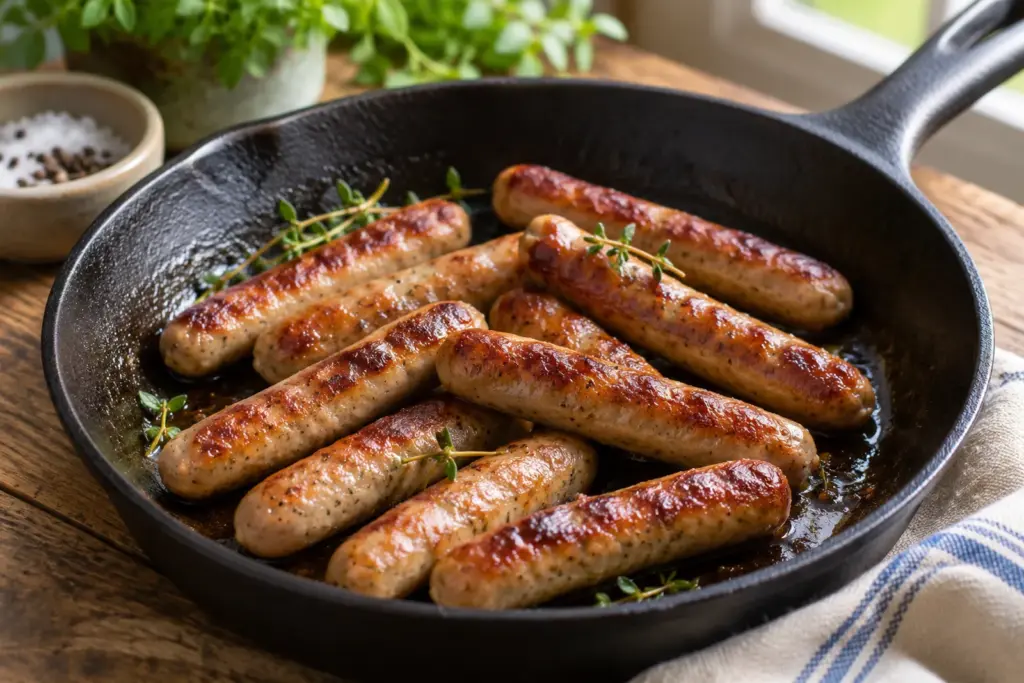
Chipolatas are thin, mild pork sausages common in Britain, and most US stores do not carry them. You will need an ingredient substitute from the regular meat or freezer aisle, and the five below are marked raw or precooked, because that decides how you cook them.
What Is a Chipolata, and What Does It Do in a Recipe?
A chipolata is a thin, short, fresh sausage, usually minced pork with salt, herbs and spices, and it is sold raw so you cook it at home. One UK butcher lists them at roughly 35 to 55 grams (about 1 to 2 ounces) each, which makes one chipolata little more than a finger.
In Britain the classic use is pigs in blankets, a chipolata wrapped in streaky bacon and roasted for the Christmas table. The American dish with the same name wraps a small sausage in pastry, so read your recipe's method before you pick a swap.
- Breakfast links, mild Italian links, fresh bratwurst
- Cook pork to 160°F and chicken to 165°F
- Brown in a pan or roast, the same way as chipolatas
- Cocktail franks, little smokies
- Heat until steaming hot, about 165°F
- Cured and salty, so go easy on added salt
A chipolata does three jobs in a dish. It cooks through quickly, its seasoning is gentle enough that bacon, gravy or stuffing leads the flavor, and its casing browns without drying out the inside. A good swap is thin, mild and fast to cook, so any candidate that fails two of those three is out.
5 Best Substitutes for Chipolata Sausages
Every swap goes in at the same total weight as the chipolatas. Breakfast links and franks are shorter, so a pound of them is more pieces than a pound of chipolatas. You need a thermometer for the raw swaps, while the precooked ones only need heating through.
| Swap | Matches | What Changes |
|---|---|---|
| Breakfast links | Size, mild pork | Sage, pepper, sometimes maple |
| Cocktail franks | Size, speed | Smoother, saltier, cured |
| Mild Italian links | Pork base | Fennel, thicker, cut up |
| Chicken links | Mild taste | Leaner, 165°F |
| Plant-based links | Shape | Less fat, pack directions |
1. Breakfast Sausage Links
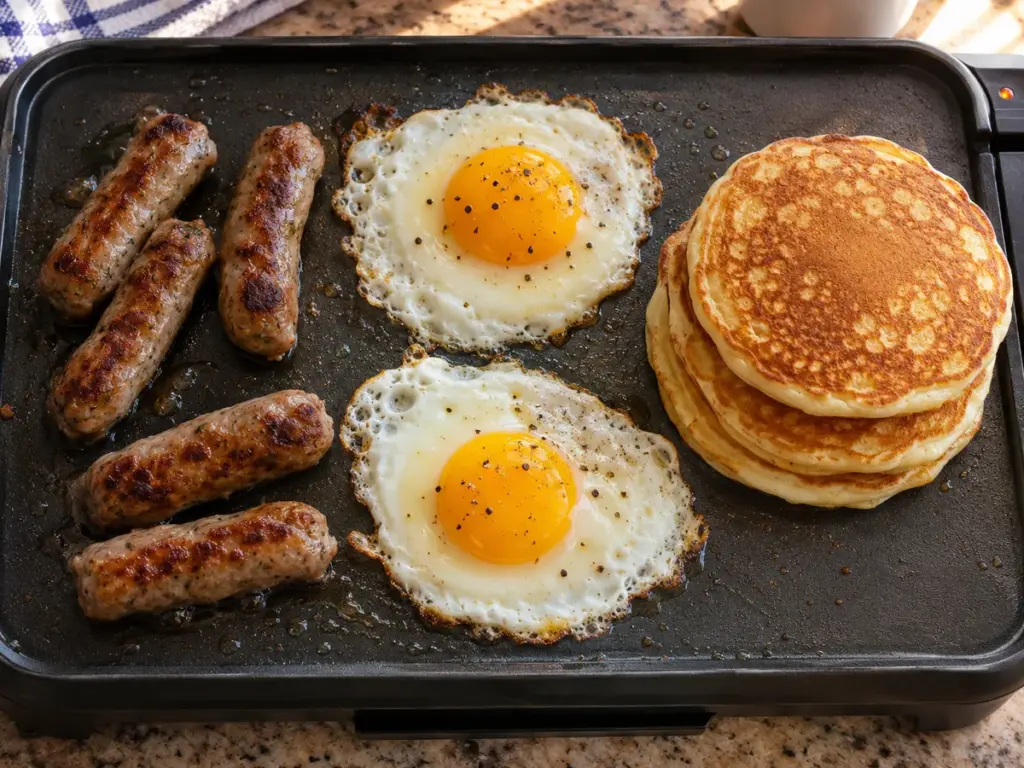
Raw pork breakfast links are the closest match in size and seasoning. They are thin, short and mild, so check the label for sage and pepper, the seasonings that UK butchers such as The Village Butchers use in chipolatas alongside thyme and nutmeg.
Buy the raw kind, since packs of precooked links say "fully cooked", and cook them like chipolatas until a thermometer reads 160°F. For pigs in blankets, wrap each raw link in thin-cut bacon and judge doneness by the thermometer, because bacon can look crisp while the link inside is still under 160°F.
Pick an original or sage flavor, because maple versions taste sweeter than a chipolata and clash in savory dishes. A plate of them goes well with mashed potatoes and sides for pork sausages.
2. Cocktail Franks or Little Smokies
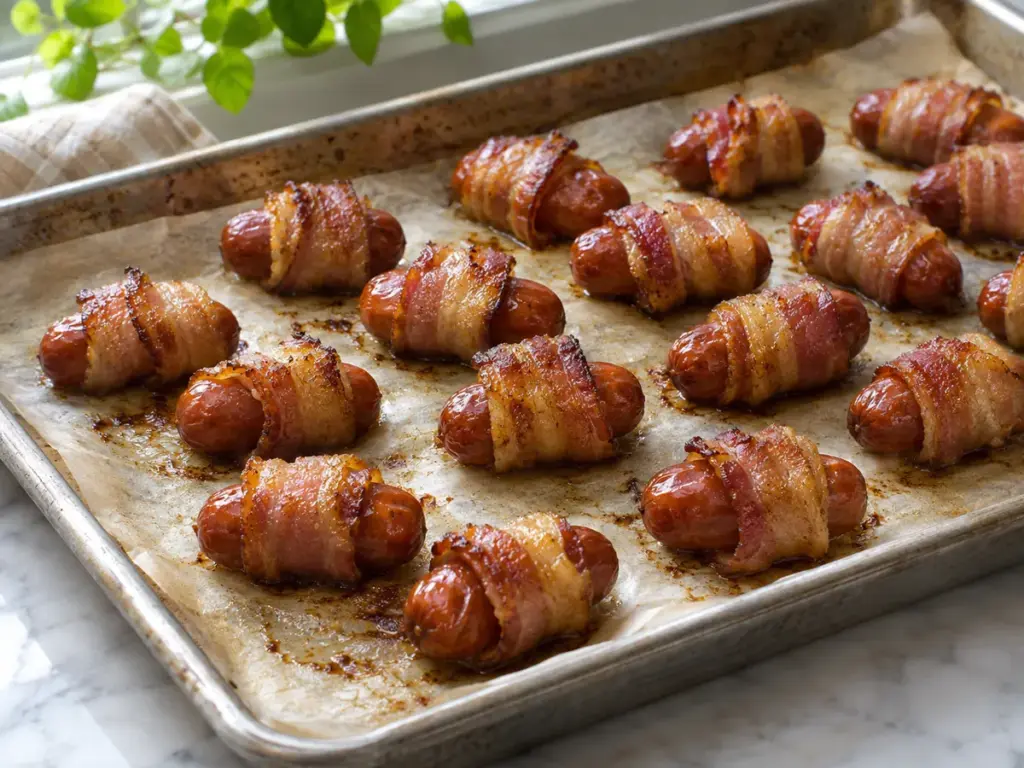
Cocktail franks are miniature hot dogs and little smokies are their smoked cousins. Both are sold precooked, so they are the easiest swap when you are making pigs in blankets for a crowd and want no raw meat on your counter.
Wrap each one in a half slice of bacon and roast in a hot oven until the bacon is crisp, which also warms the franks through. The USDA Food Safety and Inspection Service (FSIS) says people at higher risk of listeriosis (pregnant people, adults 65 and older, and people with weakened immune systems) should eat hot dogs only after they are heated to 165°F or steaming hot.
You will taste a smoother, saltier sausage than a chipolata, with a cured, smoky flavor in place of a coarse meaty bite. A tray of them also pairs with the sides people serve with little smokies.
3. Mild Italian Sausage Links
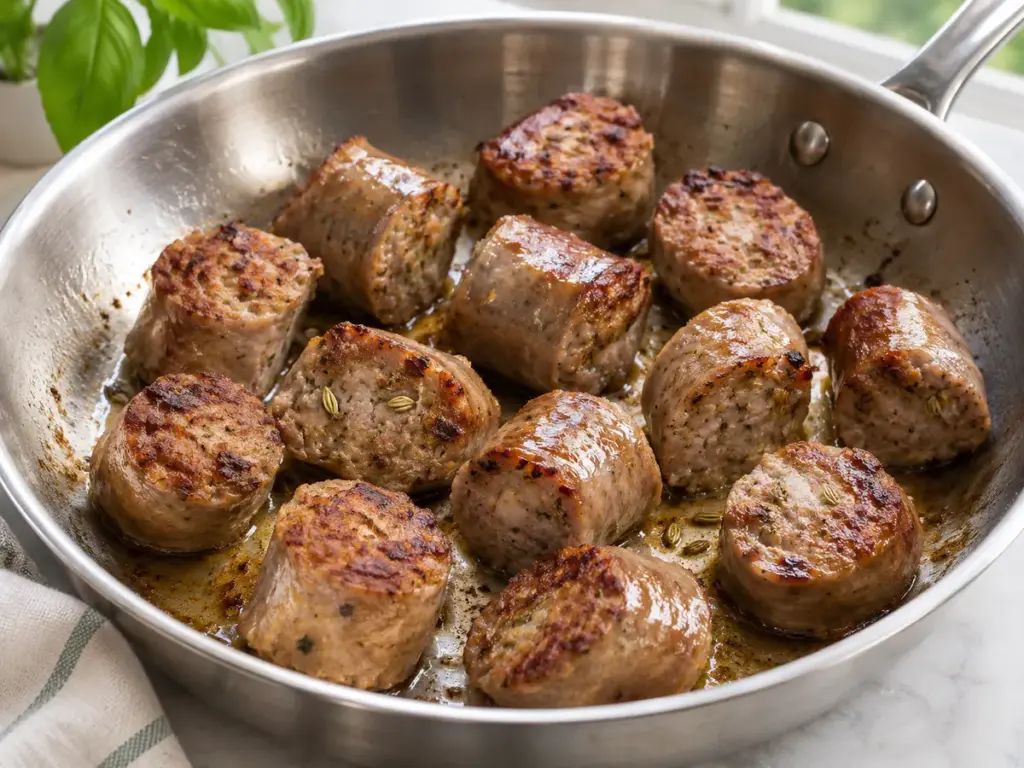
Raw mild or sweet Italian sausage is the best swap for casseroles, stews and pasta, where the sausage flavors the sauce around it. Fennel and garlic give it a stronger taste than a chipolata, so your sauce will taste more Italian, though the pork base is the same.
Choose mild, not hot, because hot Italian sausage carries red pepper heat that a chipolata never had. Links are also thicker, so cut them crosswise into 2-inch pieces and cook to 160°F. If the store is out of Italian sausage itself, pork sausage or bratwurst fills in for it.
Fresh bratwurst is a German sausage seasoned with spices such as nutmeg, ginger and coriander, and it tastes stronger and more savory than a chipolata, so use it only when the other links are gone. It needs cooking through to 160°F like any raw pork sausage.
4. Chicken Sausage Links
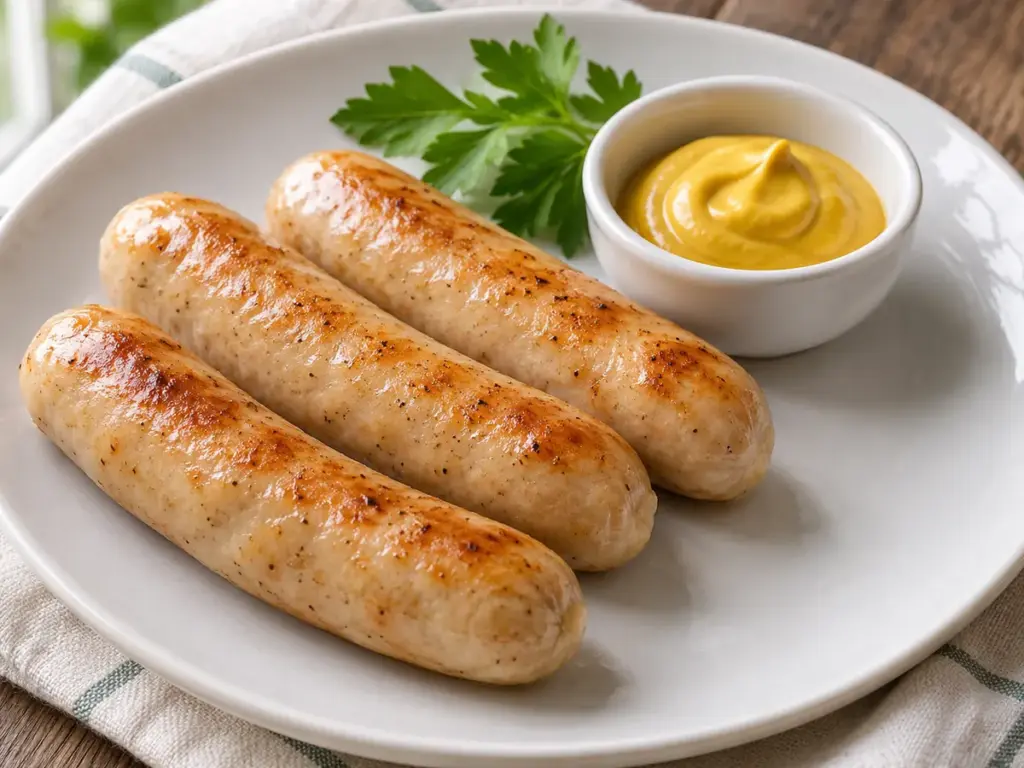
Chicken sausage suits a table where pork is off the menu or the plate needs to be lighter. Some packs are sold raw and many are fully cooked, so look for the cooking line on the label before you start.
If your chicken links are raw, cook them to 165°F, which is 5 degrees higher than pork. Chicken links have less fat, so brown them over medium heat and wrap them in bacon if you want the richness of a pork chipolata.
Choose plain or herb flavors. Apple, mango and spinach-feta versions change your dish, while a plain link has a milder flavor than pork sausage that lets the bacon or gravy lead.
5. Plant-Based Sausage Links
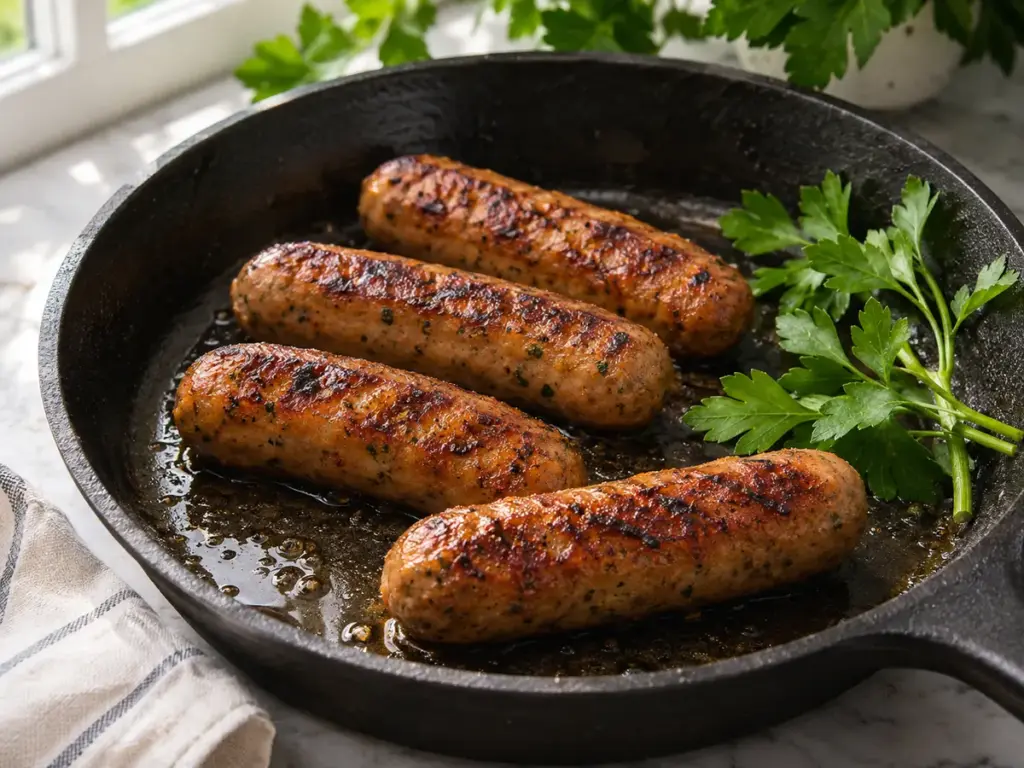
Plant-based links, made from soy, pea or wheat protein and seasoned like pork sausage, are the swap for vegetarian guests. Some packs are sold ready to heat and others need full cooking, so follow the pack's temperature and not the pork or poultry numbers.
Many hold less fat than pork links, so you can brown them in a pan with a little oil and turn them often. A bacon wrap would defeat the purpose.
Which Substitute Should You Use for Your Dish?
Match the swap to your dish first and the store shelf second. Each line below names the swap that behaves most like a chipolata in that recipe.
- Pigs in blankets: cocktail franks for speed, or raw breakfast links in thin bacon for a meatier bite, served with sides for pigs in a blanket.
- Toad in the hole or sausage and mash: raw breakfast links, browned first so they are cooked through before they go in the batter or on the plate, with sides for toad in the hole.
- Breakfast fry-up: raw breakfast links, cooked to 160°F.
- Sausage and potato bake or stew: mild Italian pieces, which pair well with the sides for sausage and potatoes.
- Pork-free table: chicken links, cooked to 165°F.
- Vegetarian guests: plant-based links, cooked to the pack's directions.
Which Swaps Do Not Work, and Why?
Bologna and mortadella are fully cooked deli meats made for slicing, so they stay pale and flat in a pan and never plump and brown like a raw link. Salami and Spanish chorizo are dry-cured, firm and salty, and they overpower a dish built around a mild sausage.
Mexican chorizo is raw, but it crumbles out of its casing and brings strong chili and vinegar. If you want that flavor, cook a different dish, because it is no chipolata swap.
Sources
- FoodSafety.gov, Safe Minimum Cooking Temperature chart (ground meat and sausage 160°F, poultry 165°F)
- USDA FSIS, Hot Dogs and Food Safety (precooked hot dogs reheated to 165°F or steaming hot)
- Wikipedia, Chipolata (thin fresh sausage sold raw, pigs in blankets in Britain)
- The Village Butchers, chipolata sausages (per-sausage weights)

Food writer at GustoMeadow. Writes ingredient substitutes, food comparisons, taste guides and storage guides for home cooks.
Storage and food-safety numbers follow USDA, FDA and university extension guidance.



