
You can mix toasted nori, sesame seeds, salt and a pinch of sugar for a close stand-in.
- About 1 teaspoon per cup of cooked rice is a good start, and you add more after tasting.
- If you have only one, gomashio (sesame plus salt) or plain nori flakes each cover half of what furikake does.
- Blends often hold bonito, egg, wheat or sesame, and swap 6 is sesame-free.
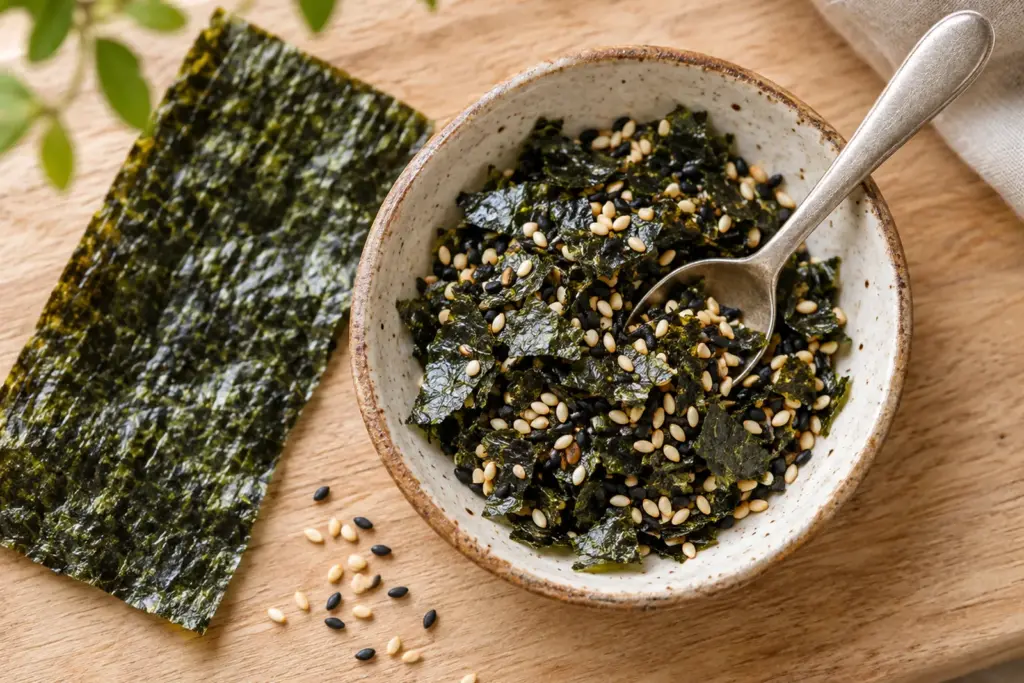
Furikake is a dry Japanese rice seasoning of crumbled nori, sesame seeds, salt and sugar, and some blends add dried fish or egg. When your recipe calls for it and the jar is empty, swaps from your own pantry cover most of what it does.
What Does Furikake Do in a Dish?
Furikake gives your rice three things at once: salt, toasted sesame crunch, and a sweet, savory seaweed taste that plain salt cannot supply.
No single pantry item supplies all three, so you will mix most of the swaps below, with sesame and nori for the crunch and the sea taste and salt with a little sugar for the seasoning.
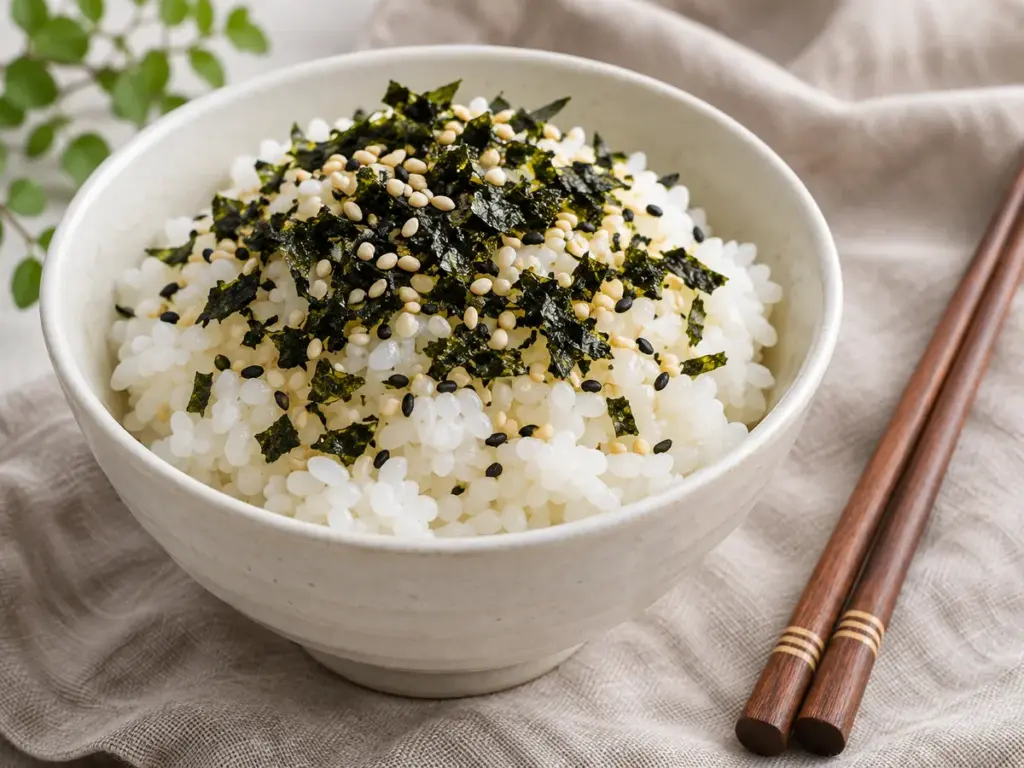
You will most often shake it over steamed rice or fold it into rice for onigiri, so a swap has to be dry and finely crushed to sprinkle evenly.
Which Store-Bought Furikake Blends Contain Fish, Egg, Wheat or Sesame?
Brands make furikake in many recipes, and the labels often list bonito (sold dried as katsuobushi), egg yolk powder or soy sauce powder.
| Blend style | Animal ingredient | Wheat |
|---|---|---|
| Nori-fumi (Ajishima listing: sesame, salt, sugar, seaweed) | None listed | None listed |
| Egg blend, noritama (Ajishima listing: adds yolk powder, bonito, wheat) | Egg and fish | Yes |
| Soy sauce blend (Mishima Spicy Garlic listing) | None listed | Yes, in the soy sauce powder |
| Katsuo (bonito) blend | Fish | Read the label |
The swaps below use only the ingredients named in each recipe, so each one stays vegetarian until you add bonito.
6 Best Substitutes for Furikake
| Swap | Per 1 teaspoon furikake | What it lacks |
|---|---|---|
| 1. Homemade blend | 1 tsp | Fish or egg taste |
| 2. Nori flakes | 1 teaspoon plus a pinch of salt | Crunch, sweetness |
| 3. Gomashio | 1 tsp | Seaweed, sweetness |
| 4. Shichimi mix | ¼ teaspoon plus ¾ teaspoon sesame | Sweetness; adds heat |
| 5. Everything bagel | ½ teaspoon plus a pinch of nori | Sweetness; adds garlic |
| 6. Sunflower blend | 1 tsp, then taste | Sesame itself |
Every amount is a starting point, so you taste the dish before you add more. The list runs from the closest match down to a sesame-free blend for an allergy.
On plain rice, the homemade blend or gomashio fits best, while shichimi and bagel seasoning suit a dish that can take heat or garlic.
1. Homemade Nori and Sesame Blend
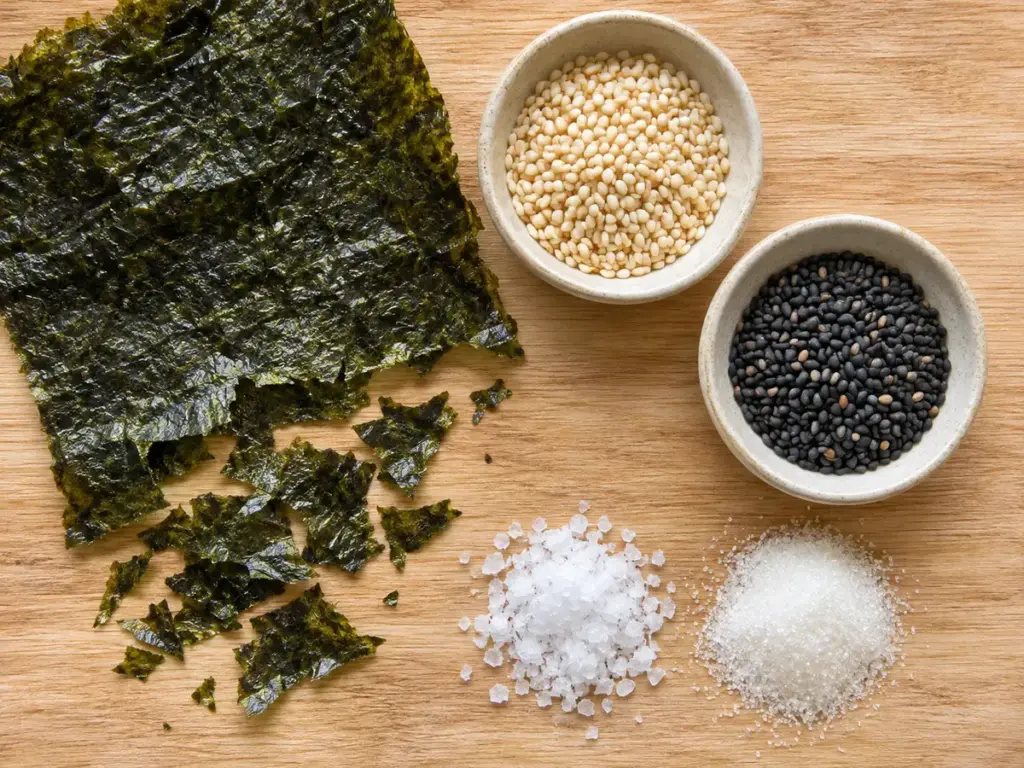
The closest match rebuilds the jar from the same four parts: 2 tablespoons toasted sesame seeds, 2 tablespoons crushed toasted nori, ½ teaspoon salt and ½ teaspoon sugar. No published recipe backs these amounts, so you taste as you go.
- Toast the sesame in a dry pan over medium-low heat until the seeds pop and smell nutty.
- Crush the nori into small flakes.
- Mix once the seeds are cool, because warm seeds steam and soften the nori.
Black seeds give the speckled look of store blends, though black or white sesame seeds both work.
For the fish note of katsuo blends, you can add 1 tablespoon finely crumbled bonito flakes, though the blend is then not vegetarian.
A small batch in an airtight jar stays crisp longest, and its salt adds about 1,160 mg of sodium to the whole batch (calculated from USDA FDC 173468).
2. Nori Flakes or Crushed Seaweed Snacks
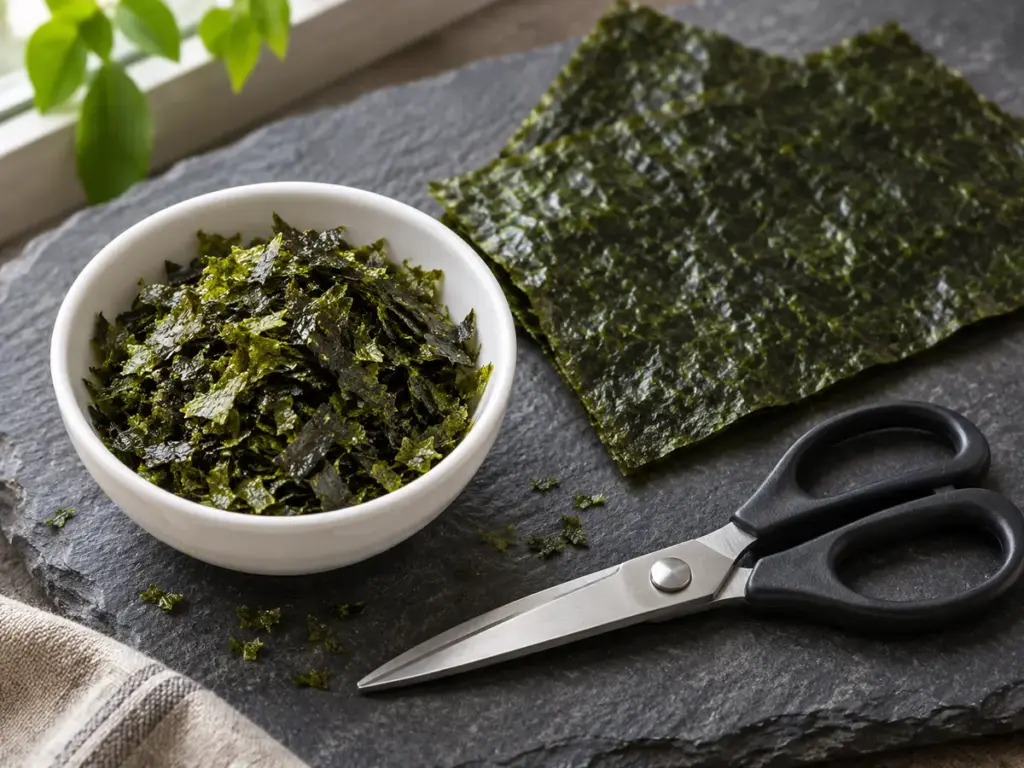
Nori is the main flavor in most furikake, so a few crushed sheets get you partway there: 1 teaspoon of crushed nori and a small pinch of salt replace 1 teaspoon of furikake.
Seasoned seaweed snack sheets usually carry salt and oil already, so you taste before you add any salt, because the dish may need none.
Nori adds no crunch or sweetness, so ¼ teaspoon of toasted sesame seeds brings back the crunch, and a pinch of sugar covers the rest. With no nori at all, the usual nori stand-ins such as rice paper or soy wraps will not help, because they are wrappers and do not crumble into a topping.
3. Gomashio (Sesame Salt)
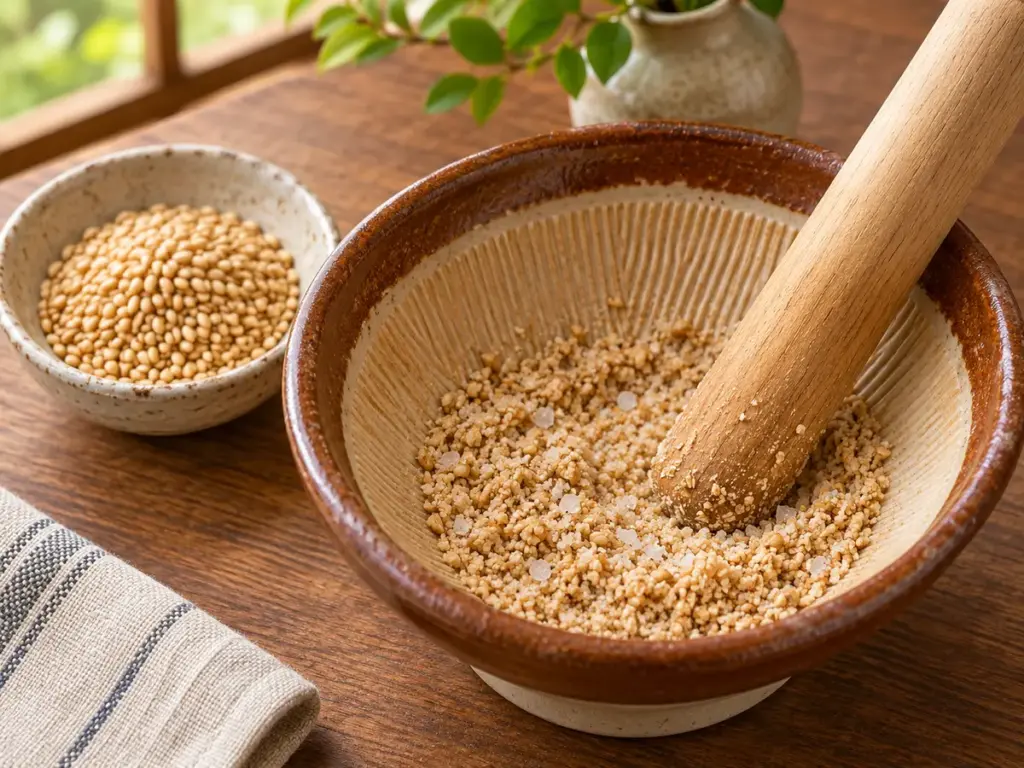
Gomashio is toasted sesame seeds crushed with salt, a Japanese condiment you sprinkle over plain rice or onigiri, which is the same job furikake does. A mix of 10 parts sesame to 1 part salt by weight works, for example 100 g of seeds and 10 g of salt.
Recipes range from 5:1 to 15:1, and commercial gomashio is often closer to 8:1, which tastes saltier.
You toast the seeds until they pop, mix in the salt and crush only lightly, because fine grinding releases oils that turn rancid quickly. A small batch stored airtight in a cool, dry place keeps for about a month.
Gomashio swaps in at 1 teaspoon for 1 teaspoon, and since it has no seaweed and no sugar, a pinch of crushed nori moves it closer to the original.
4. Shichimi Togarashi
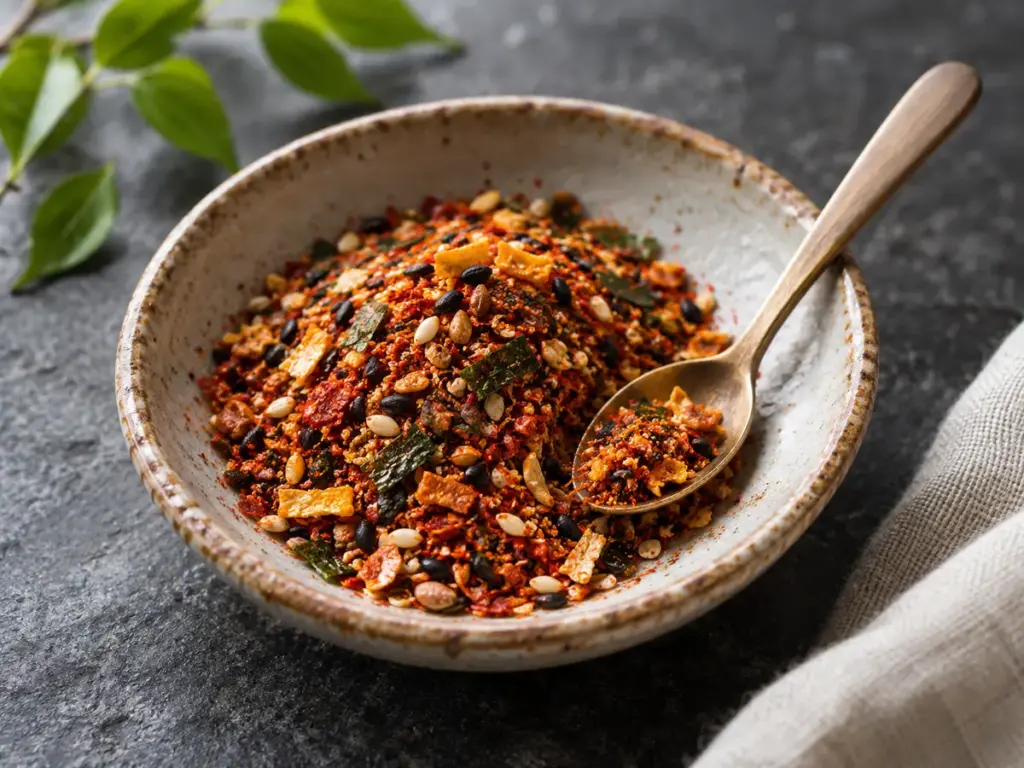
Shichimi togarashi, a Japanese seven-spice blend, usually includes chili, sesame, citrus peel and ginger, and many makers add sansho pepper and nori. That shared sesame and seaweed make it a fair stand-in when you want heat on rice or noodles.
Because togarashi and furikake differ in heat and sugar, this swap changes your dish more than the others. For each teaspoon of furikake, you can use ¼ teaspoon shichimi plus ¾ teaspoon toasted sesame seeds, plus a pinch of sugar if you want a sweeter finish.
If you are out of shichimi too, chili flakes mixed with sesame seeds and salt can stand in for shichimi itself.
5. Everything Bagel Seasoning
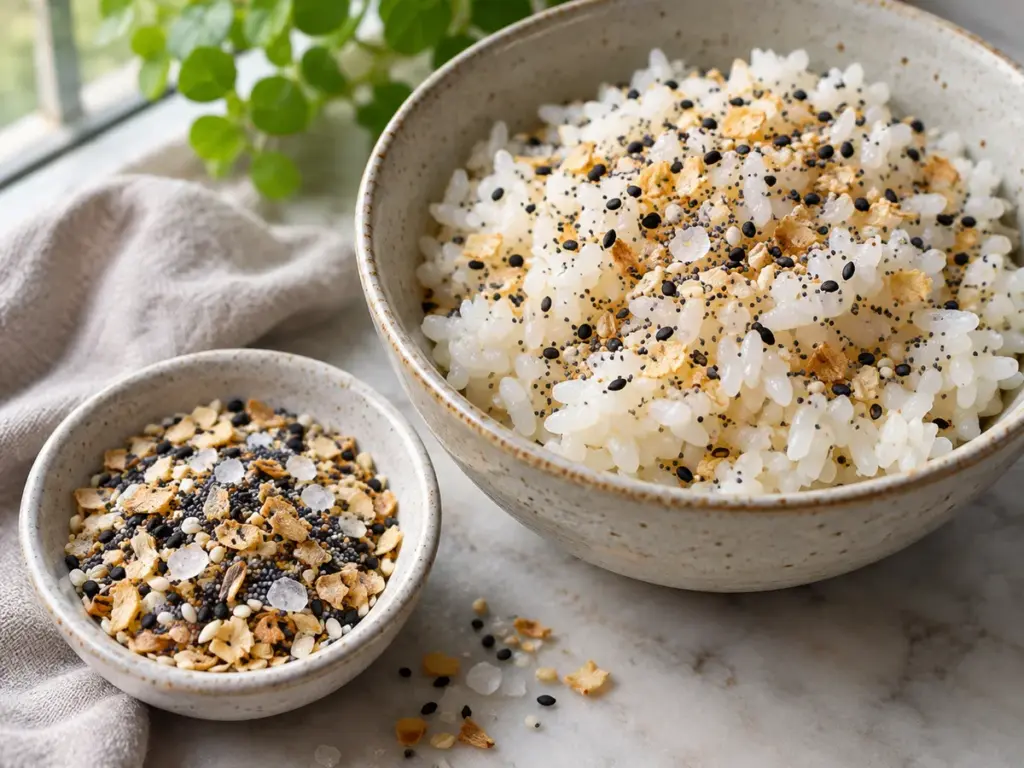
Everything bagel seasoning shares the sesame and salt but adds garlic, onion and poppy seeds. A common supermarket blend lists white and black sesame seeds, sea salt flakes, dried minced garlic, dried minced onion and poppy seeds, with no seaweed and no sugar.
Because garlic and onion dominate, ½ teaspoon per 1 teaspoon of furikake is enough, and a pinch of crushed nori brings back some sea taste. On rice topped with eggs or avocado, that garlic and onion taste fits better than it does on plain rice.
6. Nori and Sunflower Seed Blend (Sesame-Free)
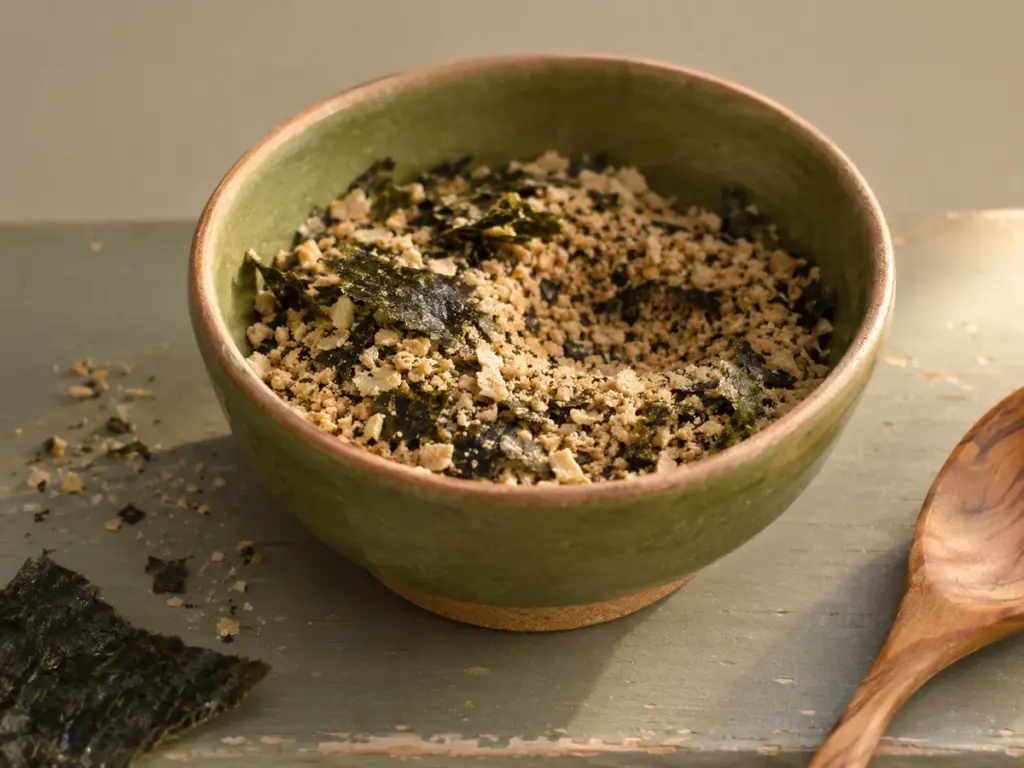
The homemade blend, gomashio, shichimi and bagel seasoning all contain sesame, so this is the swap you want for a sesame allergy. One published sesame-free recipe (Little Northern Bakehouse) has you mix ½ cup lightly ground sunflower seeds, 2 to 3 crumbled nori sheets, ½ teaspoon salt and ½ teaspoon sugar, plus 1 tablespoon of dulse flakes.
- Toast the ground seeds and dulse over low heat, stirring often, until fragrant and lightly browned, about 6 to 9 minutes.
- Stir in the salt and sugar, then the crumbled nori.
As a first try, you can use 1 teaspoon in place of 1 teaspoon of furikake and taste, because no published swap ratio exists for this blend.
Do Za'atar or Soy Sauce Work as Furikake Substitutes?
Za'atar blends sesame and salt with thyme and sumac, which gives a lemony herb taste with no seaweed, so you'd use it on roasted vegetables and flatbread more than on rice. Sumac alone adds only the sourness, which is the main thing separating sumac and za'atar.
If you put soy sauce on plain rice, it adds salt and savory taste but no crunch and no seaweed, and it is brewed with wheat, so it is not a gluten-free swap.
Sources
- USDA FoodData Central, Salt, table (FDC 173468)
- FDA: Food Allergies (sesame as the ninth major allergen)
- Little Northern Bakehouse: No Sesame Homemade Vegan Furikake
- Wikipedia: Furikake
- Wikipedia: Gomashio
- JustBento: Homemade furikake no. 6, gomashio
- Open Food Facts: Ajishima Nori Fumi Furikake
- ChompThis: Ajishima Noritamago Furikake
- PS in Foodservice: Mishima Spicy Garlic Furikake
- Chowhound: Trader Joe's Everything But the Bagel ingredients

Food writer at GustoMeadow. Writes ingredient substitutes, food comparisons, taste guides and storage guides for home cooks.
Storage and food-safety numbers follow USDA, FDA and university extension guidance.



