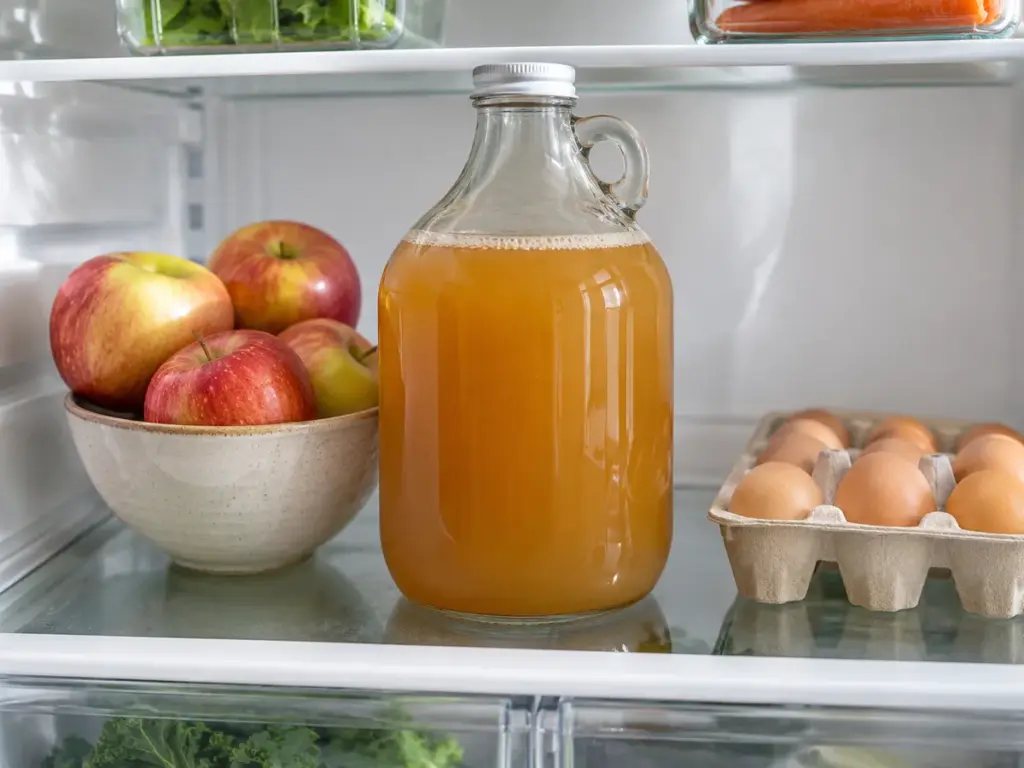
Fresh apple cider keeps about a week in the fridge and has gone bad once it turns fizzy, sour or moldy.
- To keep it longer, freeze it with at least 2 inches of space at the top.
- Children, older adults, pregnant women and people with weak immune systems should skip unpasteurized cider.
- Apple cider vinegar is a different product and keeps for years.
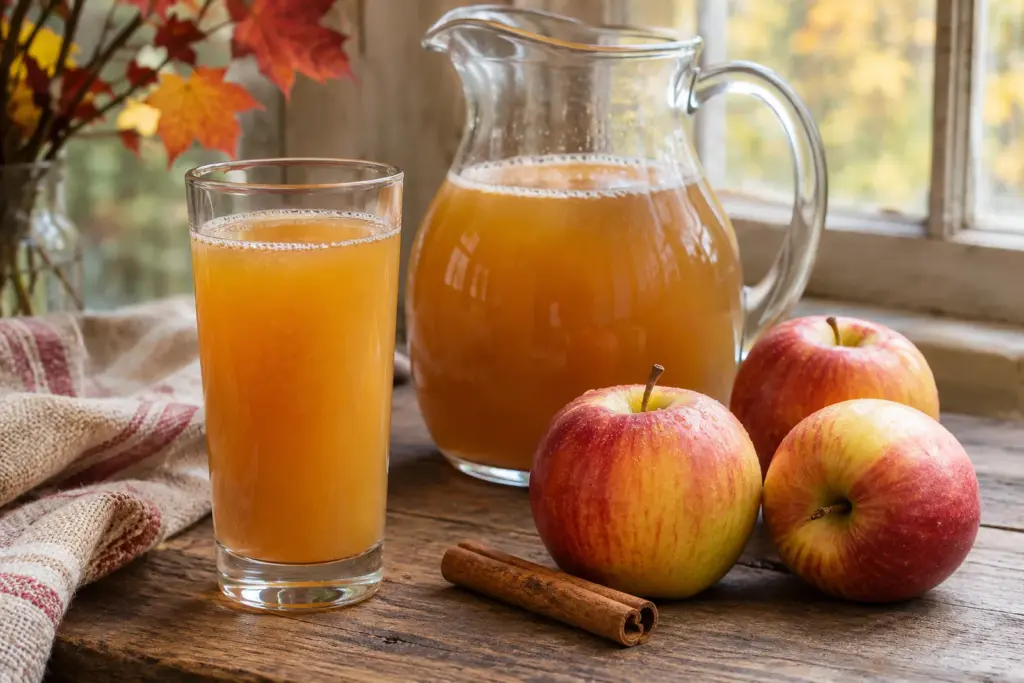
Cider is pressed apple juice, usually cloudy, and unlike the bottles in our shelf life guides that last for years, a jug of it starts to ferment within days. Wild yeast turns the apple sugar into alcohol, so cider that sits too long goes fizzy, then sour. How long you get depends on whether the cider was heat-treated and whether you have opened it.
1. How Long Does Apple Cider Last?
You will find that the sources do not agree to the day. The USDA FoodKeeper lists fresh cider at 2 to 3 weeks in the refrigerator, while Oregon State Extension says pasteurized cider keeps about a week. Illinois Extension gives cider you heat-treated yourself 5 days.
| Form | Where to keep it | How long | Source |
|---|---|---|---|
| Fresh cider, refrigerated | Fridge at 40°F or lower | About 1 week, with 2 to 3 weeks as the outer limit | Oregon State Extension, USDA FoodKeeper |
| Fresh-squeezed apple juice | Fridge | 6 days | USDA FoodKeeper |
| Cider you heat-treated at home | Fridge | 5 days | Illinois Extension |
- Unopened shelf-stable cider in a box or bottle keeps in the pantry until the date on the package (USDA FoodKeeper).
- Opened shelf-stable cider keeps in the fridge for 8 to 12 days (USDA FoodKeeper).
- Frozen cider in the freezer is safe indefinitely and best within about 12 months (USDA FoodKeeper).
We would plan on the short end, about a week, because yeast keeps working in the cold and an opened jug picks up more air and germs each time you pour from it. Treat the 2 to 3 weeks as the outer limit for a jug you never opened, and not as a target. FoodKeeper lists fresh-squeezed apple juice at only 6 days, which is closer to how a jug from a cider mill behaves.
2. Is It Sweet Cider, Hard Cider or Vinegar?
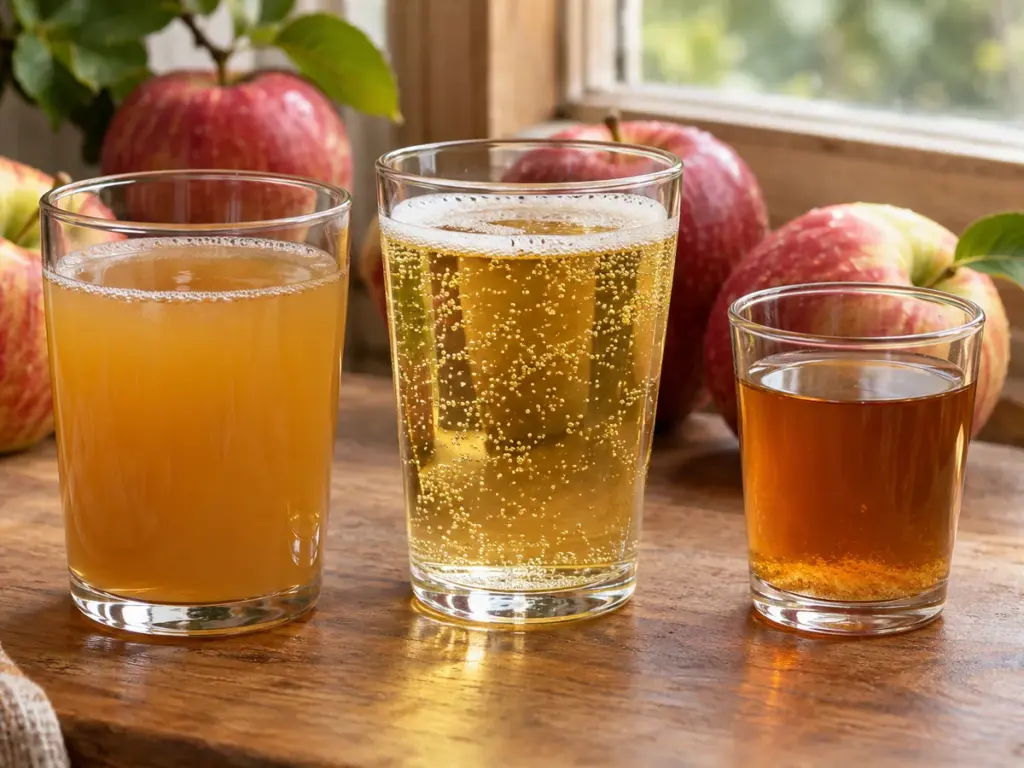
Three different bottles carry the word cider in US stores, and they follow completely different storage rules. If you mix them up, you may assume cider never goes bad.
| Product | What it is | Storage |
|---|---|---|
| Sweet apple cider | Pressed apple juice, no alcohol, usually cloudy | Fridge, days to about a week |
| Hard cider | Apple juice fermented into an alcoholic drink | Longer, and covered on its own page |
| Apple cider vinegar | Cider fermented a step further into acid | Pantry, listed by FoodKeeper as indefinite |
One jug can move through all three stages. Oregon State Extension notes that fermented cider becomes "hard" cider, an alcoholic drink, and a cider that keeps fermenting past that point turns to vinegar. Details on the middle stage are in how long hard cider lasts. Vinegar is already acid, so a sealed bottle sits in the cupboard for years, the same way white vinegar keeps.
3. Is Unpasteurized Apple Cider Safe to Drink?
Pasteurized cider is the safe choice for everyone, because unpasteurized cider can carry harmful bacteria. FDA names children, older adults, pregnant women and people with weakened immune systems as the groups most at risk. Its list includes transplant patients and people with HIV/AIDS, cancer or diabetes. If you are in one of those groups, buy pasteurized cider.
FDA requires packaged juice that was not treated to carry a boxed warning under 21 CFR 101.17(g). It reads that the product "has not been pasteurized and, therefore, may contain harmful bacteria that can cause serious illness". Cider you buy by the glass is a gap in that rule.
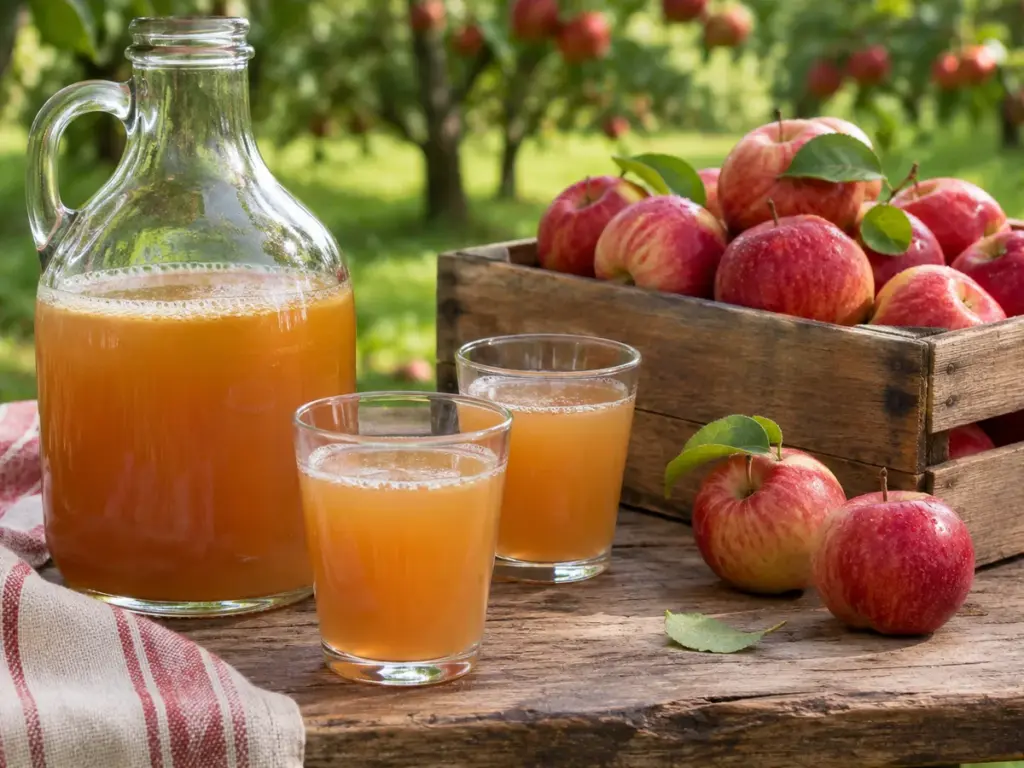
Check a jug before you buy it with these four steps:
- Look for the warning box on the front or the information panel. If it is there, the cider was not pasteurized.
- Notice where it sits. FDA says untreated juice is most likely in the refrigerated section of a grocery store, while treated juice also comes in frozen cases and shelf-stable boxes, bottles and cans.
- Ask the seller when there is no label or the cider is poured by the glass.
- Keep it cold at 40°F or lower once you are home, and put it away within 2 hours.
You can also heat cider yourself. University of Maine Extension says to heat it to 155°F for 10 seconds, and adds that this step does not kill every microorganism that might be present. That makes buying pasteurized the safer choice for anyone at higher risk.
4. How Should You Store Apple Cider?
Your cider stays best in the refrigerator at 40°F or lower, in a clean, sanitized container, as University of Maine Extension advises. Cold slows the yeast without stopping it, which is why a fridge jug still ferments, only more slowly.
A few habits shorten a jug's life quickly:
- Leaving it on the table after you pour. Extension guidance says to avoid keeping cider at room temperature for 2 hours or longer.
- Drinking from the jug, which puts new yeast and bacteria into a drink that already has plenty of sugar for them.
- Storing it in the door, where the temperature swings every time you open the fridge.
- Ignoring the date because the cider still smells fine, which says little when it was never pasteurized.
Shelf-stable cider in a box or bottle works differently, because you can leave it in the pantry until the date on the package. After you open it, it goes in the fridge, where FoodKeeper gives opened fruit juice cartons 8 to 12 days. Other opened juices follow the same window, including opened cranberry juice.
5. How Can You Tell If Apple Cider Has Gone Bad?
Check the cider with your eyes and nose first, and pour a little into a glass in good light. Fresh cider tastes sweet and tangy, so you will notice a sharp turn against how fresh cider tastes.
| What you notice | What it usually means |
|---|---|
| Fizz, bubbles or a hiss when you open it | Yeast is fermenting the sugar |
| Sharp, sour or vinegary taste | Fermentation has moved toward vinegar |
| Yeasty or boozy smell | Fermentation, started by wild yeast |
| Bulging cap or lid | Gas is building up in the container |
| Fuzzy spots or a film on top | Mold |
- Cloudiness and pulp settling at the bottom are normal in unfiltered cider, so shake it and judge by smell and taste.
- A slightly darker color comes from air exposure, so decide by smell and taste.
Is Fizzy Cider Normal Fermentation or Spoilage?
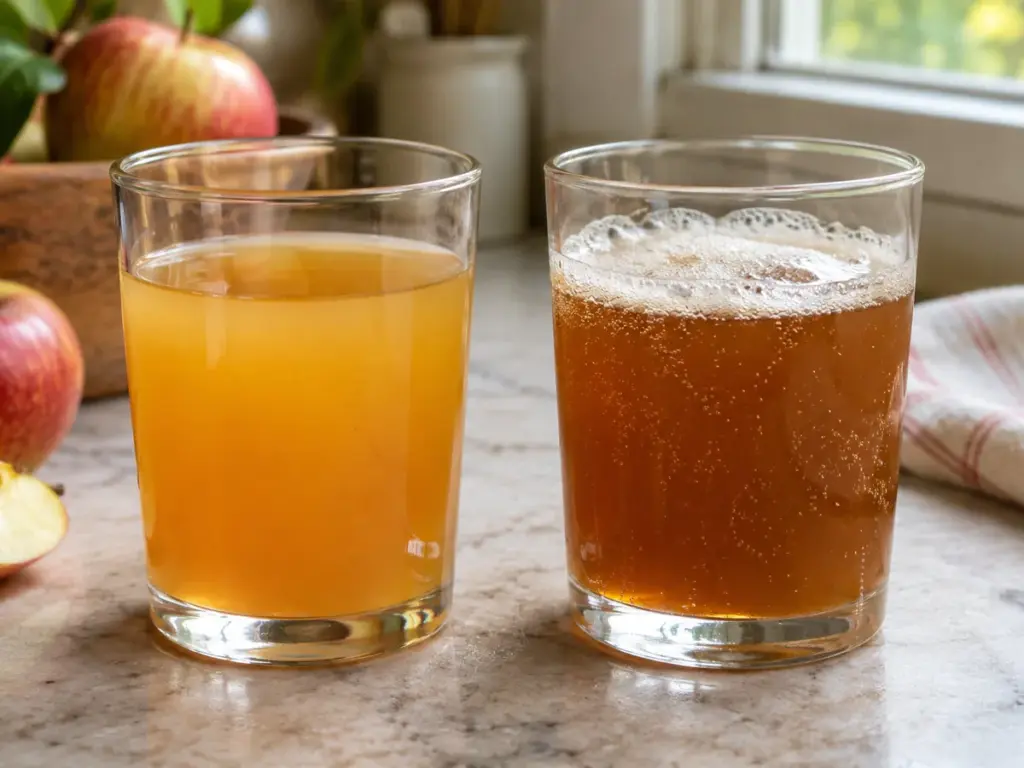
If you bought it as still cider, it is both. Fermentation is a natural process, and it is also how a sweet jug spoils, so plan to throw out a still cider that fizzes. Cider sold as sparkling is a different case, because its bubbles are added on purpose and you will see "carbonated" or "sparkling" on the label.
6. Can You Freeze Apple Cider?
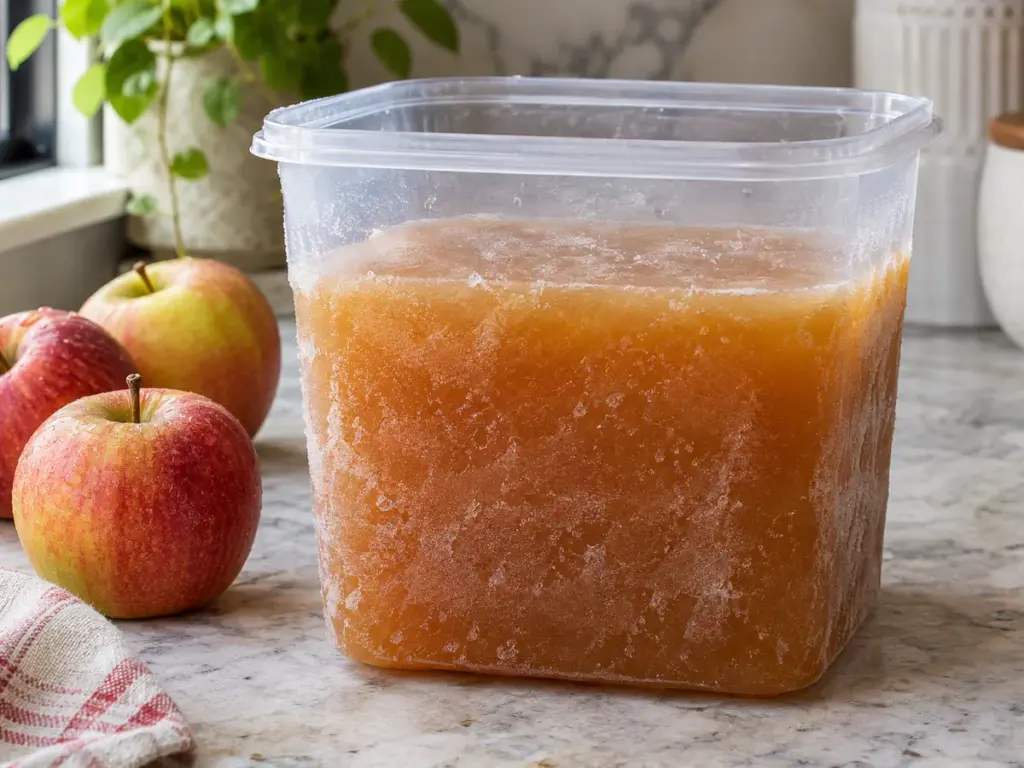
Yes, and freezing is the best way to keep it longer. Oregon State Extension recommends freezing for longer storage, and FoodKeeper lists frozen cider as safe indefinitely. You will get the best taste if you use it within about 12 months, the figure FoodKeeper gives for fresh-squeezed apple juice.
- Pour it into a freezer-safe container sized to what you will drink within a few days of thawing.
- Leave at least 2 inches of space at the top. Oregon State Extension warns that cider expands as it freezes and can rupture the container.
- Write the date on the container so you know when the 12 months run out.
- Thaw it in the fridge, then treat it like opened cider. We would finish it within about a week.
7. How Do You Make Apple Cider Last Longer?
- Buy the smaller jug if you drink a glass or two a day, so you finish it within the week.
- Freeze half of a big jug the day you buy it, while the cider is at its freshest.
- Pour into a glass and return the jug to the fridge right away.
- Choose shelf-stable cider if you sip slowly, because it waits in the pantry until you open it.
Cider follows the same pattern as other opened apple and juice products. FoodKeeper gives opened cartons of orange juice 7 to 10 days in the fridge. Commercial applesauce also gets 7 to 10 days once opened, as opened applesauce shows.
Sources
- USDA FoodKeeper: fresh cider, fresh-squeezed apple juice, boxed juice, apple cider vinegar.
- FDA, What You Need to Know About Juice Safety: warning label, at-risk groups, juice sold by the glass.
- FDA, Fruits, Veggies and Juices (Food Safety for Moms-to-Be).
- 21 CFR 101.17(g): juice warning statement.
- Oregon State Extension, Preserving Foods: Fruit Juice and Apple Cider: refrigerator week, freezing, 2-inch headspace, hard cider.
- University of Illinois Extension, Apples: 5 days for heat-treated cider.
- University of Maine Extension, Safe Cider Know-How: 40°F, 2 hours, 155°F for 10 seconds.

Food writer at GustoMeadow. Writes ingredient substitutes, food comparisons, taste guides and storage guides for home cooks.
Storage and food-safety numbers follow USDA, FDA and university extension guidance.