A cilantro-lime vinaigrette (2 parts olive oil to 1 part lime juice) fits most Mexican salads.
- Chipotle suits a beef taco salad, and avocado gives you a creamy dressing without dairy.
- Broiled tomatillo goes with grilled shrimp, and honey-lime works when you are serving corn, mango or jicama.
- Each recipe gives you 4 to 8 servings, and the dressing keeps in the fridge from 3 days to 3 weeks.
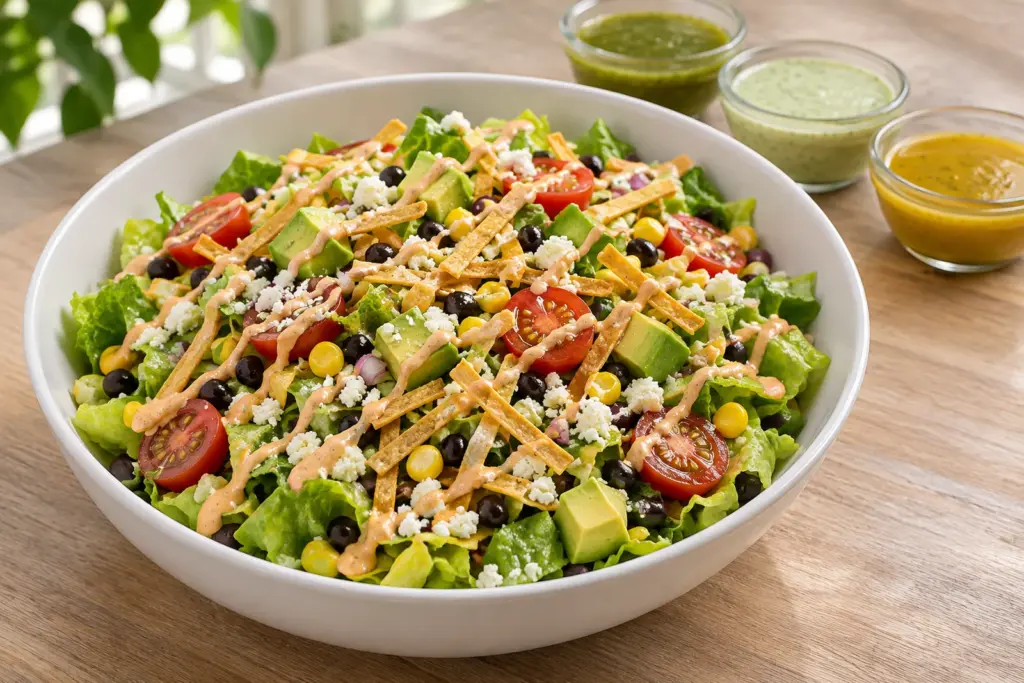
A Mexican salad usually starts with crisp romaine or cabbage and piles on black beans, corn, tomato, avocado, cheese and tortilla strips, so it can stand as a main dish or as a lighter side next to tacos and enchiladas.
Without a dressing those toppings taste flat and starchy, so you need a dressing that brings the acid and the heat. Each of the five below uses lime for the acid and cilantro, chile or smoke for the rest.
What Makes a Good Dressing for a Mexican Salad?
Beans, corn, cheese, avocado and fried tortilla strips are heavy toppings, so a good dressing has to cut richness, stand up to cumin and jalapeño, and cling to the beans and leaves.
A mild bottled ranch tends to disappear under that seasoning, and too much acid flattens the avocado. Three choices decide whether you end up with a dressing that holds up:
- Fresh limes give the best flavor. One juicy lime yields about 2 tablespoons, and fresh lime juice tastes brighter than bottled.
- You can begin at 2 parts oil to 1 part lime juice. Mild beans, corn and avocado can take more acid than a 3-to-1 vinaigrette.
- You want it a little strong off the spoon. Beans and lettuce soak up salt and acid, so it mellows once tossed.
| Dressing | Base | Heat | Best on | Makes |
|---|---|---|---|---|
| Cilantro-lime vinaigrette | Olive oil, lime, cilantro | None | Any green salad, grilled chicken or steak | About ⅔ cup |
| Chipotle sour cream | Mayonnaise, sour cream | Medium, smoky | Taco salad with ground beef and cheddar | About ⅔ cup |
| Avocado-lime | Avocado, olive oil, water | None | Black bean and corn salads | About ¾ cup |
- Broiled tomatillos and olive oil form the base.
- The heat is mild, and it climbs if you add jalapeño.
- It suits grilled shrimp and fajita bowls.
- A batch makes about 1 cup.
- Olive oil, lime and honey make up the dressing.
- It has no heat at all.
- You can use it on corn, mango, jicama or sweet peppers.
- A batch makes about ½ cup.
Only the chipotle dressing brings real heat by default, so it is the one you scale back first when you are serving kids.
You need about 2 tablespoons per serving, so the ½ cup batches dress 4 servings and the 1 cup batch dresses 8.
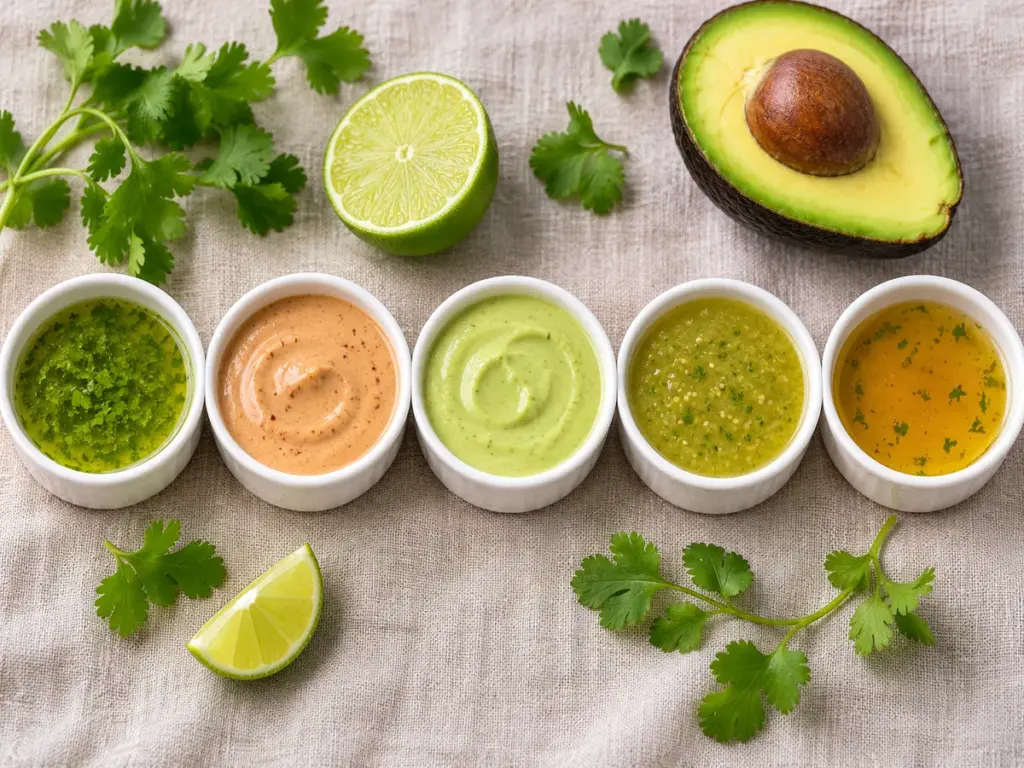
5 Best Dressings for Mexican Salad, With Ratios
1. Cilantro-Lime Vinaigrette for Any Green Salad
This all-rounder keeps the 2-to-1 ratio, ¼ cup olive oil to 2 tablespoons lime juice, and the cilantro turns it pale green and slightly thick.
A blender takes 15 to 20 seconds, and if you chop the cilantro very fine you can shake it in a jar instead.
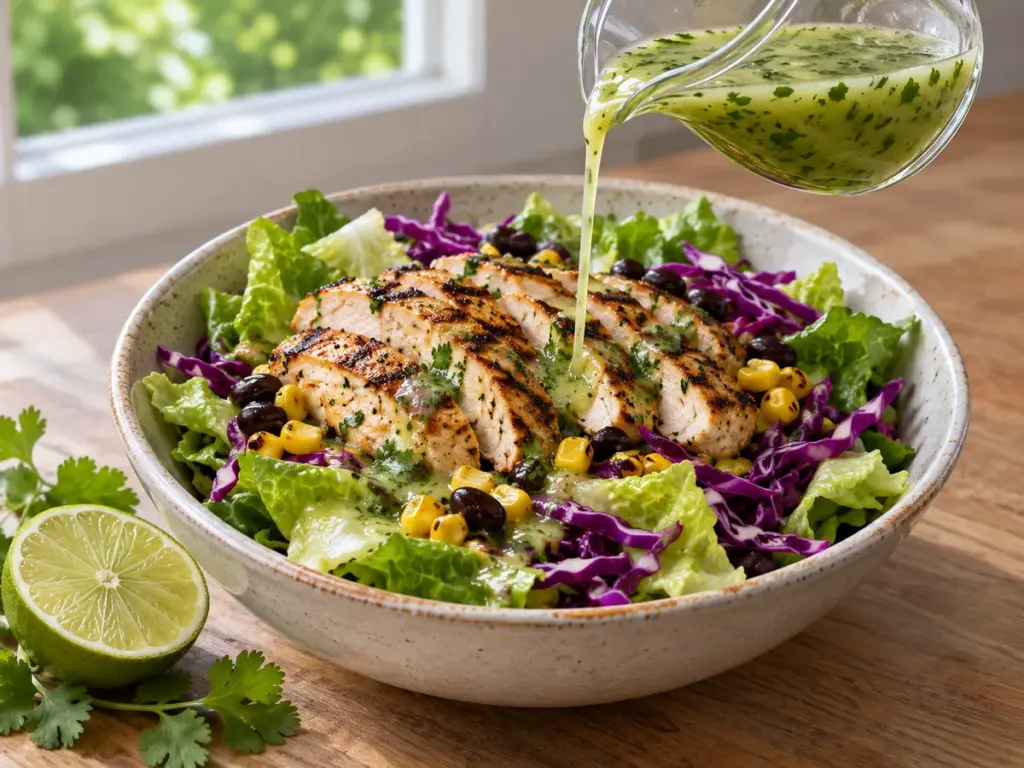
- ¼ cup olive oil and 2 tablespoons fresh lime juice (about 1 lime).
- ¼ cup packed cilantro leaves and tender stems, which carry as much flavor as the leaves.
- 1 small garlic clove, 1 teaspoon honey or agave, ¼ teaspoon each of salt and cumin.
A thin vinaigrette does not weigh down romaine and shredded cabbage, which makes it a good match for grilled chicken or steak.
Chilled olive oil turns cloudy and thick, so you will want to take the jar out 15 to 20 minutes before serving and shake it.
2. Chipotle Sour Cream Dressing for Taco Salad
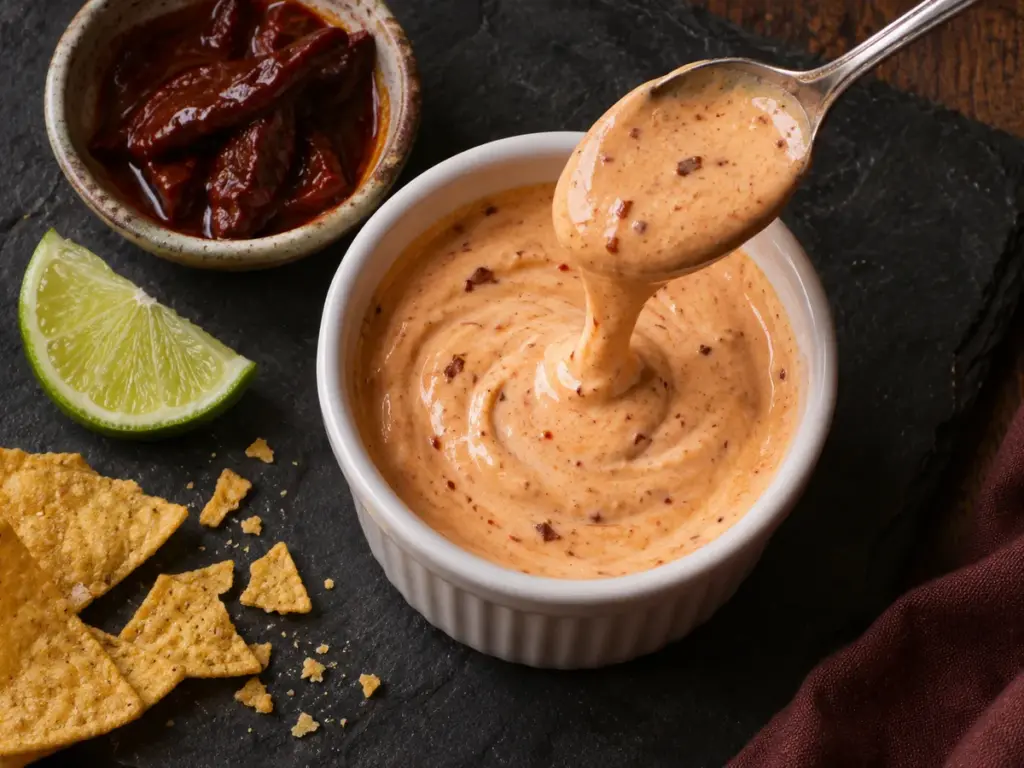
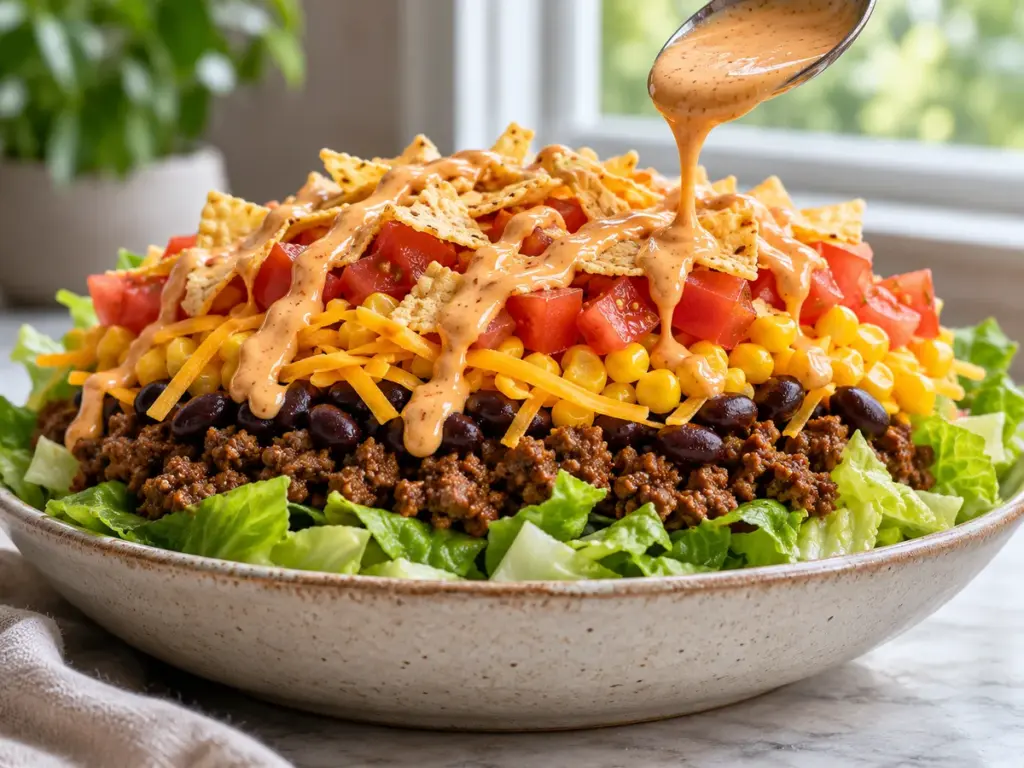
Equal parts mayonnaise and sour cream make a thick dressing that coats ground beef, shredded cheddar and crushed tortilla chips. A stir and a splash of water are all it needs:
- ¼ cup mayonnaise and ¼ cup sour cream (plain Greek yogurt swaps 1:1 for the sour cream).
- ½ to 1 minced chipotle from a can, plus 1 teaspoon of the adobo sauce.
- 1 tablespoon lime juice, ¼ teaspoon salt and 1 to 2 tablespoons water.
The adobo sauce carries a lot of the heat, so it is safest to start with half a pepper.
If you have no canned chipotles, stand-ins for chipotle in adobo such as smoked paprika give smoke with less heat.
Mayonnaise and sour cream fall under the USDA 2-hour rule below, so this dressing stays cold until you pour it.
You can also spoon it on tacos and burritos in place of plain sour cream.
3. Avocado-Lime Dressing, Creamy Without Dairy
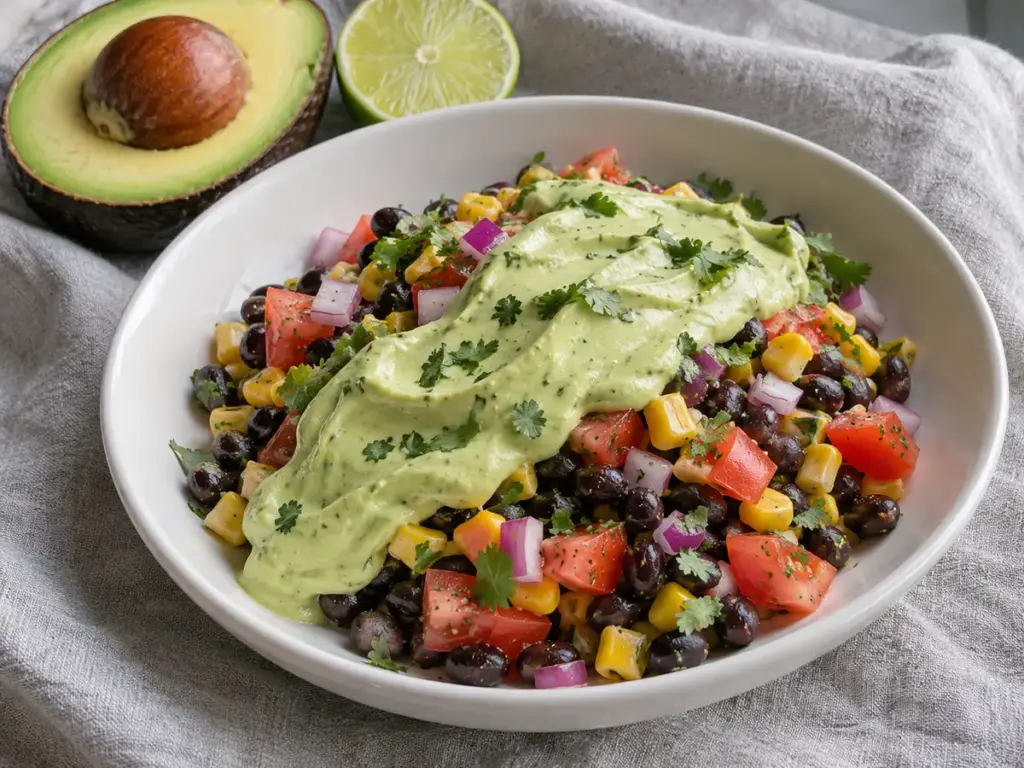
One ripe avocado blended with oil, lime and water gives you a smooth dressing for black bean and corn salads and for grilled chicken. You add the water a spoonful at a time until the dressing pours like heavy cream:
- 1 ripe avocado, pitted and scooped.
- 2 tablespoons olive oil, 2 tablespoons lime juice and 3 to 4 tablespoons water.
- ¼ cup cilantro leaves, 1 small garlic clove and ¼ teaspoon salt.
A ripe avocado gives slightly when you press the stem end, and a Hass skin darkens as it ripens, so feel is a more reliable cue than color.
You will want to pour this one on just before serving, because avocado browns (see the storage section below).
4. Broiled Tomatillo Dressing for Grilled Shrimp and Fajita Bowls
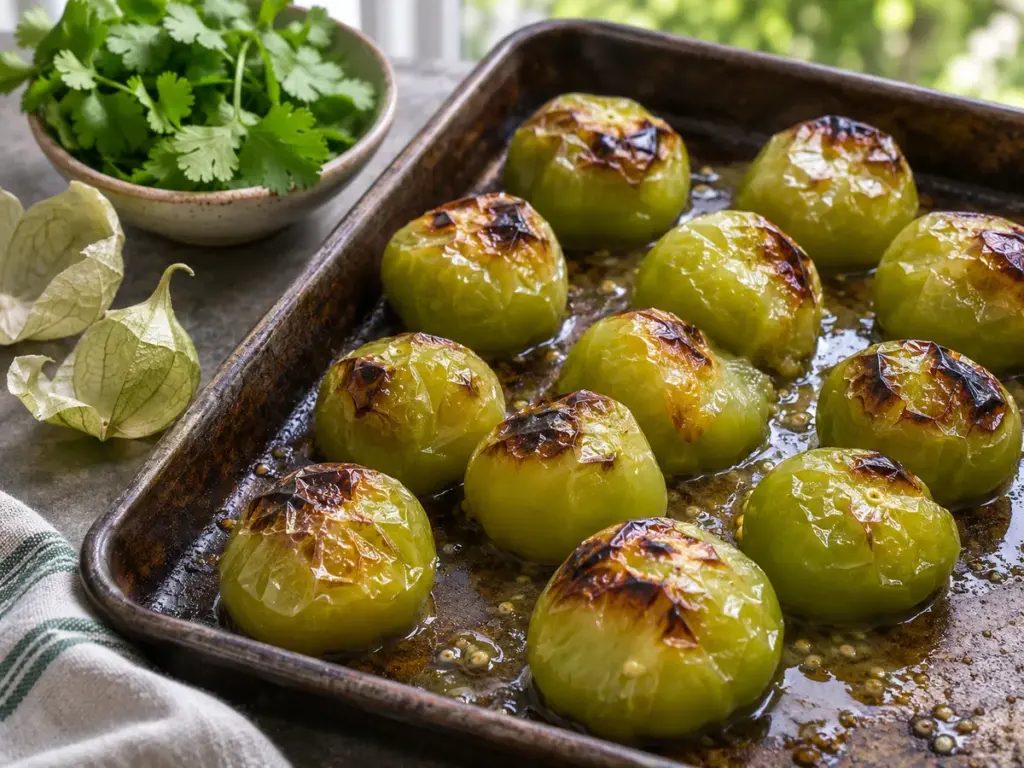
Tomatillos are a different fruit from tomatoes, wrapped in a papery husk, and they taste tart and lightly citrusy raw. If you broil them, that tartness softens and the dressing gets the body it needs to cut through grilled shrimp, fajita peppers and onions.
The recipe uses 4 tomatillos that you broil and blend with olive oil, lime, cilantro, onion and garlic (steps below).
For more body you can stir in 2 tablespoons sour cream or ¼ avocado, and a seeded jalapeño adds heat. The batch makes about 1 cup, so you have extra for nachos, tacos or grilled chicken.
5. Honey-Lime Vinaigrette for Sweet and Crunchy Salads
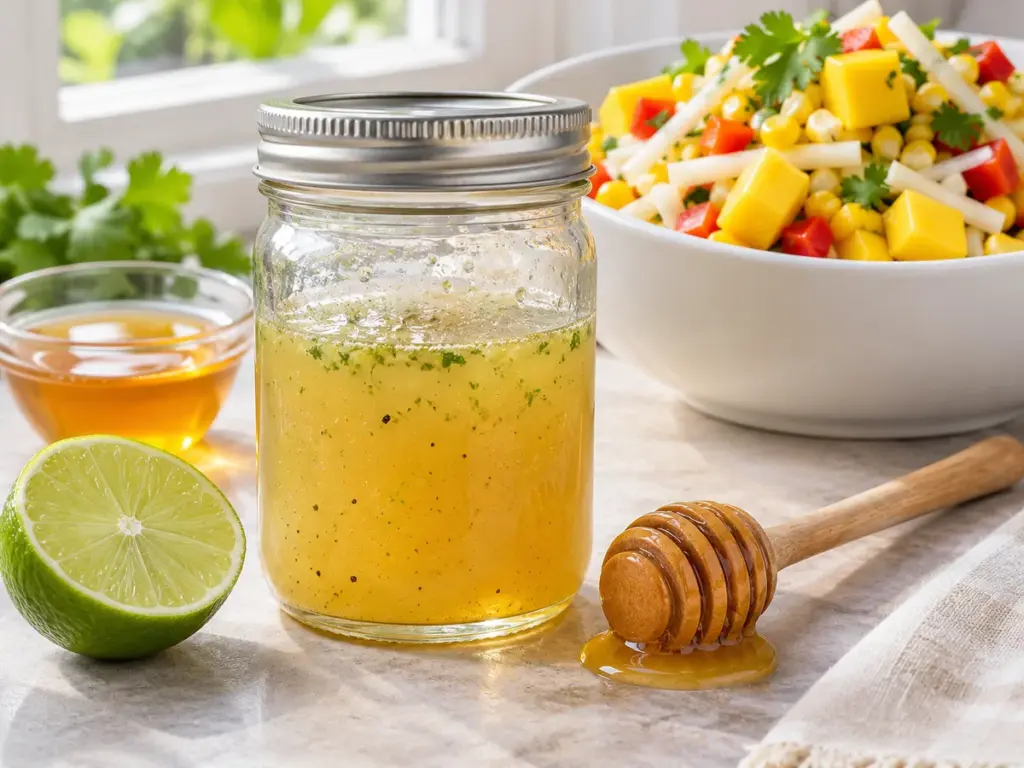
Honey rounds off the lime, so this dressing suits salads that already have something sweet in them, such as corn, mango, pineapple or crisp jicama. The ratio is about 4 parts oil to 3 parts lime juice to 1 part honey, and it stays tangy enough to cut through beans.
- 3 tablespoons lime juice stirred with 1 tablespoon honey first, so the honey dissolves.
- ¼ cup olive oil, whisked in slowly, plus 1 teaspoon Dijon mustard (optional) to keep it from separating.
- ¼ teaspoon salt and a pinch of pepper or chili powder.
After 10 seconds of shaking in a jar, it turns cloudy and thick. With no chile in it, this is the dressing you set next to something spicy.
How Do You Broil Tomatillos for the Dressing?
Only the broiled tomatillo dressing needs a cooking step, and you need about 10 minutes under the broiler:
- Husk and wash. Peel the husks off 4 medium tomatillos (about 8 ounces) and rub off the sticky film under cold water.
- Broil. Set them 4 inches under the broiler, turning once, until the skins blister and a few spots char.
- Cool a few minutes. Hot liquid can push the lid off a blender.
- Blend. Puree the tomatillos and pan juices with ¼ cup olive oil, 2 tablespoons lime juice, ¼ cup cilantro, 2 tablespoons white onion, 1 garlic clove and ½ teaspoon each of cumin and salt.
- Adjust. Stir in any add-ins from recipe 4, then taste.
You know the tomatillos are ready to blend when you see blistered skins, a few charred spots and juice pooling on the pan.
Which Dressing Fits Your Salad?
The deciding question is how heavy your salad is: heavy toppings take a creamy dressing, and light ones take a thinner dressing.
- Ground beef, cheddar or tortilla chips on top call for chipotle.
- If you want a dairy-free dressing, avocado is the one.
- A cabbage salad, or one that sits 20 minutes, suits cilantro-lime.
- Corn, jicama or a mango salad suits honey-lime.
- Grilled shrimp goes with broiled tomatillo.
- A grilled chicken salad also takes a thinner one.
How Do You Dress a Mexican Salad Without Wilting It?
Tortilla strips and avocado go soft or brown first, so the order you add things in matters as much as the dressing:
- Dry the greens. Wet leaves repel oil, so spin or pat them dry.
- Marinate the sturdy toppings. Toss beans, corn and red onion with 2 tablespoons of vinaigrette 10 minutes ahead.
- Toss the lettuce last. Add half the dressing, taste, and add the rest only if the leaves look dry.
- Top with soft and crunchy parts. Avocado, cheese and tortilla strips go on after tossing.
- Drizzle creamy dressings at the table. Chipotle and avocado spread unevenly if tossed.
How Do You Make a Lighter Mexican Salad Dressing?
Oil and mayonnaise carry most of the calories. USDA FoodData Central lists about 119 calories in a tablespoon of olive oil, 94 in mayonnaise and 24 in sour cream, so you can make small cuts:
- Chipotle: plain nonfat Greek yogurt replaces the sour cream (59 calories per 100 grams against 198), and you can use less mayonnaise.
- Avocado: water loosens it, so you do not need more oil.
- Vinaigrettes: a measured amount of oil with strong lime and cilantro means you need less dressing on the leaves.
How Do You Make a Mexican Dressing Hotter or Milder?
All the heat in these dressings comes from the chile and its adobo sauce, so those are the only ingredients you adjust:
- Hotter: you can add the second chipotle, a seeded serrano (hotter than a jalapeño, so you start with half) or a pinch of chili powder.
- Milder: you can skip the adobo sauce and cut the seeds and white ribs from fresh chiles.
How Long Do Homemade Mexican Salad Dressings Keep?
Each dressing goes in a covered jar in the fridge, with the date written on the lid so you know when it was made.
The USDA FoodKeeper gives homemade salad dressing 2 weeks and homemade vinaigrette 2 to 3 weeks, but MSU Extension says garlic in oil keeps no more than seven days in the fridge, so the garlic dressings get a shorter window:
- It keeps up to 1 week in the fridge.
- The raw garlic in oil sets that 1-week cap, which follows MSU Extension's seven-day limit for garlic in oil.
- This one keeps 2 to 3 weeks in the fridge.
- FoodKeeper lists homemade vinaigrette at 2 to 3 weeks.
| Dressing | In the fridge | Basis |
|---|---|---|
| Chipotle sour cream | Up to 2 weeks | FoodKeeper: sour cream dips, 2 weeks |
| Avocado-lime | 3 to 4 days | FoodKeeper: guacamole, 3 to 4 days |
| Broiled tomatillo | 3 to 4 days | Same short window as guacamole and other fresh blended dressings |
Lime juice slows avocado browning without stopping it, so you also want plastic wrap pressed onto the surface of the dressing.
That 3 to 4 day window matches how long guacamole keeps under USDA FoodKeeper.
If a dressing smells sour or yeasty or shows fuzzy spots, or the avocado one has turned gray-brown all the way through, throw it out.
Oil and lime separating in the jar is normal for a vinaigrette, and a quick shake brings them back together.
Sources
- USDA FoodKeeper: homemade salad dressing and vinaigrette, sour cream dips, guacamole.
- MSU Extension on Ask Extension, Refrigerating salad dressing: garlic in oil kept at 40°F or lower for no more than seven days.
- USDA FSIS, Danger Zone (40°F to 140°F): the 2-hour and 1-hour limits.
- USDA FoodData Central: FDC 171413 olive oil, 171009 mayonnaise, 171257 sour cream, 170894 nonfat Greek yogurt.
- Oregon State University Extension, Preserving Tomatillos: husking and washing the sticky film.
- America's Test Kitchen, How to Keep Avocado From Turning Brown: citrus slows browning, plastic wrap on the surface.
Frequently Asked Questions
Which Dressing Is Easiest to Make?
You will find the honey-lime vinaigrette easiest, because you shake a few pantry ingredients in a jar for 10 seconds with no blender and no chopping. The cilantro-lime vinaigrette comes next, since you only need a blender and about a minute.
Can You Use Store-Bought Dressing on a Mexican Salad?
Yes, and you can brighten it by stirring 1 tablespoon of lime juice and a handful of chopped cilantro into each half cup, then checking the label for sodium and sugar.
How Much Dressing Do You Need for a Crowd?
You need 2 tablespoons per person, so 12 people take 1½ cups. That equals three of the ½ cup batches, or one and a half of the 1 cup tomatillo batch.
At a buffet, you can keep the creamy dressing cold by setting the bowl in ice.

Food writer at GustoMeadow. Writes ingredient substitutes, food comparisons, taste guides and storage guides for home cooks.
Storage and food-safety numbers follow USDA, FDA and university extension guidance.