The most common Mediterranean dressings are olive oil with lemon juice or red wine vinegar, mixed at about 2 parts oil to 1 part acid.
- Tahini and yogurt-cucumber dressings are the creamy choices for beans, grains and grilled meat.
- A sumac and pomegranate molasses dressing is the pick for fattoush.
- The bowl decides the acid: vinegar for feta and olives, lemon for greens and fish.
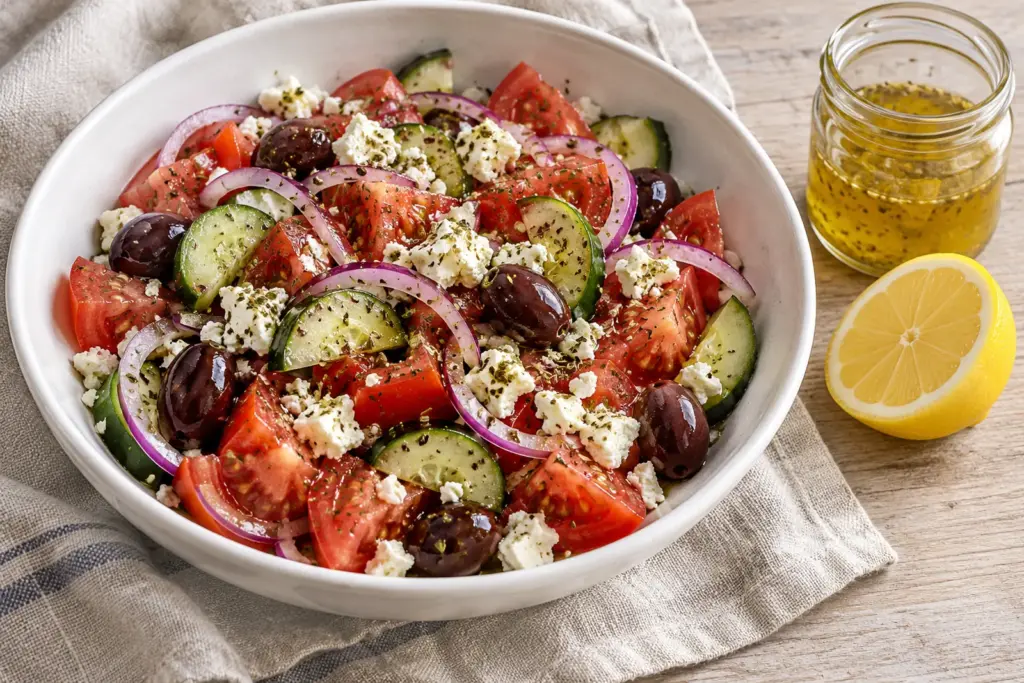
A Mediterranean salad usually sits beside grilled fish, chicken or lamb, so the dressing you pick has to leave room for the main and the other side dishes on the plate.
What Dressings Are Common in Mediterranean Cuisine?
Olive oil sits under nearly every one of them. Oldways describes extra virgin olive oil as the primary cooking oil of the traditional Mediterranean diet, where it takes the place of butter and lard, so these dressings start with oil and then take an acid, a creamy base or both.
Three of the five dressings in the table are oil and acid mixes at about 2 parts oil to 1 part acid, which is sharper than the 3:1 ratio many cooks use as the default for a basic vinaigrette. Tomatoes, feta and olives can stand up to that extra acid, so we'd save the sharper mix for salads built on them.
| Dressing | Ratio | Best on |
|---|---|---|
| Lemon and olive oil | 2 oil : 1 lemon | Greens, fish |
| Red wine vinaigrette | 2 oil : 1 vinegar | Feta, olives, tomato |
| Lemon tahini | 1 tahini : 1 water | Chickpeas, grains |
| Yogurt and cucumber | 1 cup : 3 tablespoon lemon | Falafel, grilled meat |
| Sumac and molasses | 2 oil : 1 lemon | Fattoush |
Since the three oil-based dressings share one ratio, you only need to remember 2:1 and swap the acid. The tahini and yogurt dressings follow their own ratios, as they start from a thick base.
5 Best Mediterranean Salad Dressings, With Ratios
1. Lemon and Olive Oil (Ladolemono)
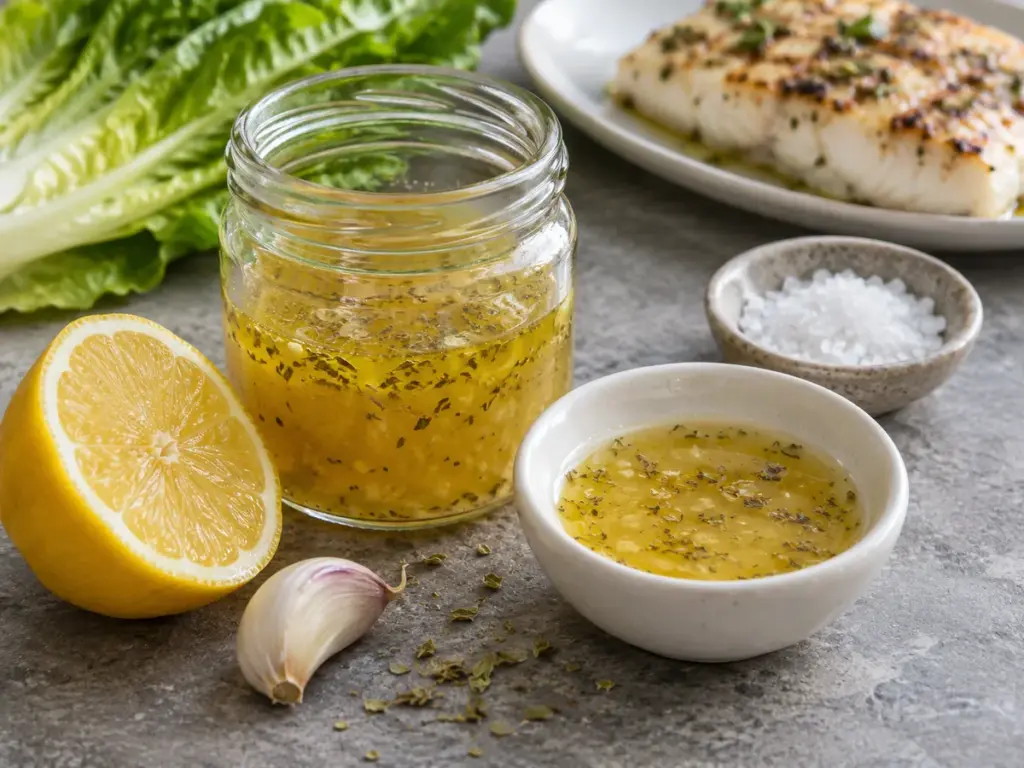
Ladolemono is the plainest Greek dressing, and Dimitra's Dishes' recipe uses ½ cup extra virgin olive oil to ¼ cup fresh lemon juice, with 1 teaspoon dried oregano, 1 minced garlic clove, salt and pepper.
The oil and lemon separate as the jar sits, so you shake it right before you pour.
It goes on leafy greens, grilled fish and steamed vegetables without hiding them, because nothing in it competes with the food.
The ratio can move with the dish, and Kvali Food suggests 3:1 for salads and steamed vegetables, 2:1 as the all-purpose middle, and up to 1:1 for oily fish such as sardines and mackerel.
If you are making a salad built around fish, the lemon-heavy end of that range works better, because the extra acid cuts through the fat.
2. Greek Red Wine Vinaigrette
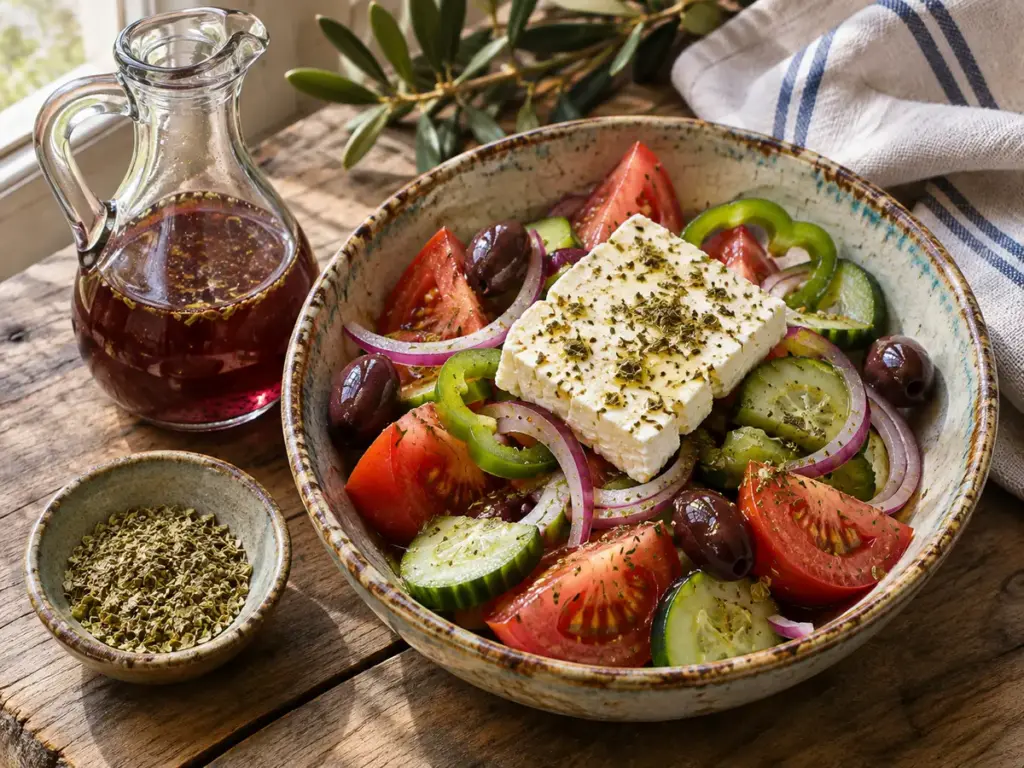
A jar of Greek vinaigrette follows the same 2:1 rule, and Hellenion's recipe uses 1 cup olive oil and ½ cup red wine vinegar, with 2 teaspoons oregano, 3 minced garlic cloves, 1½ teaspoons Dijon mustard, 1½ teaspoons kosher salt and 1 teaspoon pepper.
If you are dressing one salad bowl, ¼ cup oil with 2 tablespoons vinegar keeps the same 2:1, scaled down from the Hellenion amounts with the seasonings reduced to match.
On the chopped tomato, cucumber, olive and feta mix of a Greek salad, the sharp vinegar balances the salt. The Dijon has a job too, since Flavor the Moments notes that it acts as an emulsifier and keeps the oil and vinegar blended longer.
3. Lemon Tahini Dressing
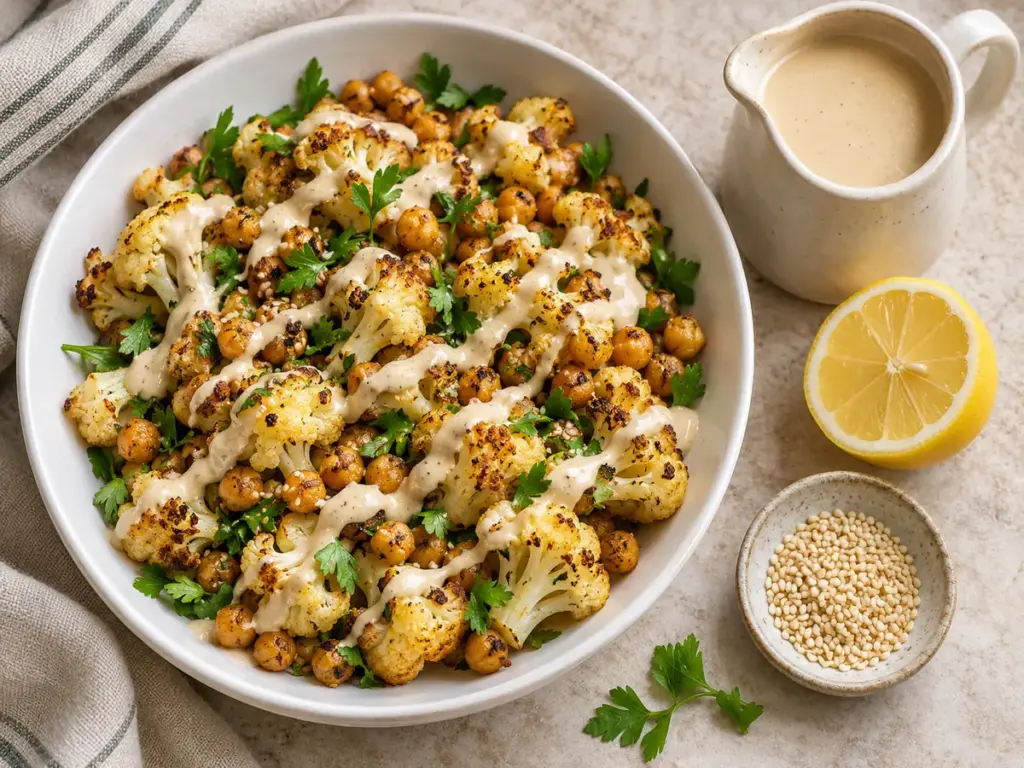
This dressing starts at 1 part tahini to 1 part water, plus lemon, since tahini is a thick sesame paste. Fuss Free Flavours uses ½ cup tahini, ½ cup water, the juice of 1 lemon, 2 teaspoons maple syrup, ¼ teaspoon garlic granules and ½ teaspoon salt.
The lemon first turns the tahini into a thick paste, which is normal, so you add the water a spoonful at a time until it thins back into a pourable sauce.
Well Seasoned Studio sweetens its version with just 1 teaspoon of honey, and Fuss Free Flavours lists chopped herbs or natural yogurt as optional additions.
Its thick texture coats roasted vegetables, grain bowls and beans, so when you spoon it over a chickpea salad every bite gets some.
4. Yogurt and Cucumber Dressing
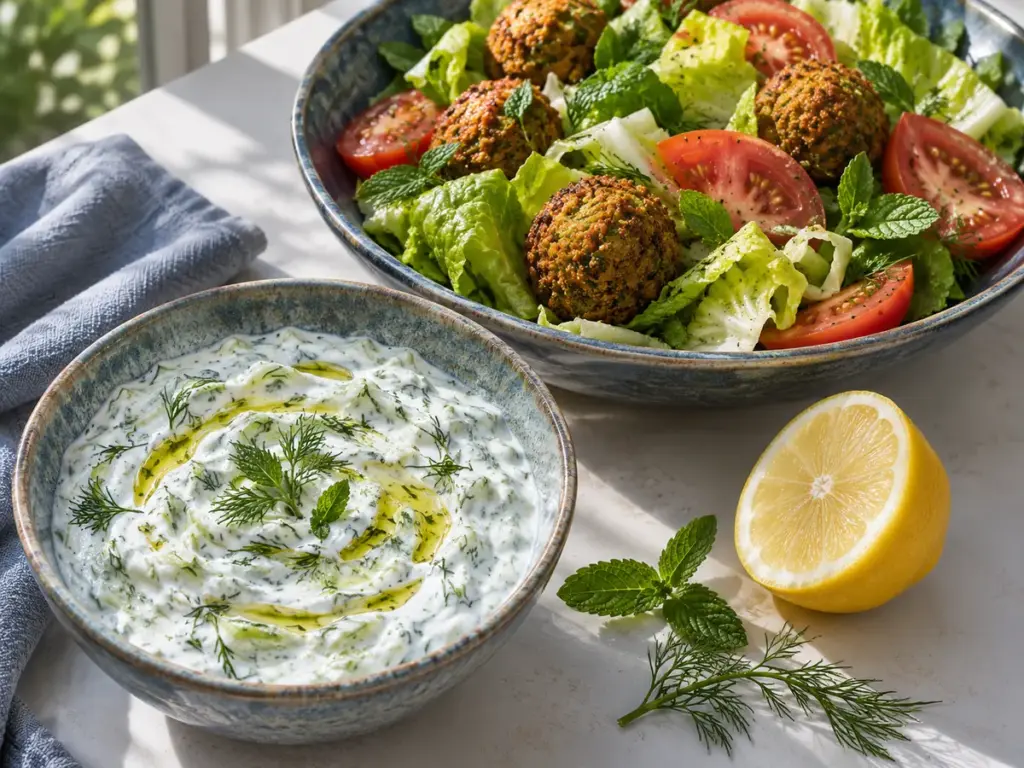
This is tzatziki thinned for salad, and the Food Network Kitchen version uses 1 cup whole milk Greek yogurt, the juice of 1 lemon (about 3 tablespoons), 1 tablespoon olive oil, 2 grated garlic cloves, ¼ cup chopped dill, 2 tablespoons chopped mint and 1 grated English cucumber.
The grated cucumber gets 1 teaspoon of salt and 10 minutes in a towel-lined strainer before you squeeze it dry, which keeps the dressing from turning watery.
You can spoon the cool, tangy sauce over romaine, falafel and lamb salads, or over anything hot or charred.
Full-fat tangy Greek yogurt gives you the thickest result, and Recipe Tin Eats lets a yogurt dressing rest 20 minutes before tossing so the flavors blend.
5. Sumac and Pomegranate Molasses Dressing
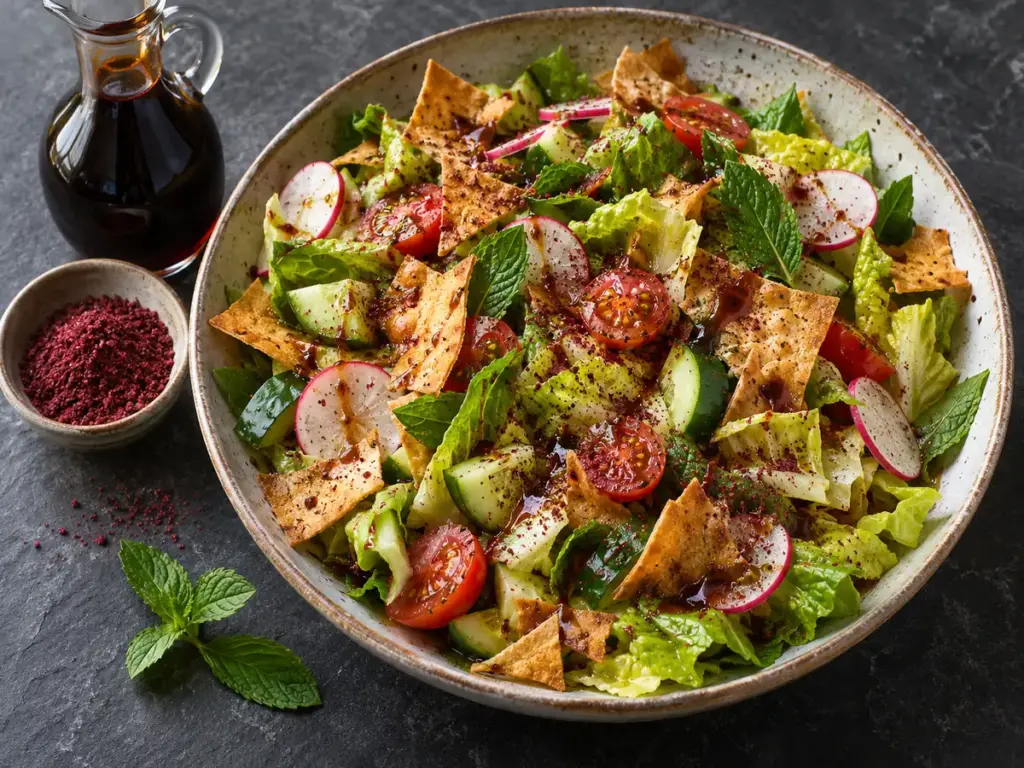
Fattoush is the salad for this dressing, and Recipe Tin Eats' version mixes ¼ cup olive oil with 2 tablespoons lemon juice, which is 2:1, plus 2 teaspoons pomegranate molasses, 1 grated garlic clove, 1 teaspoon sumac and ½ teaspoon kosher salt.
Sumac is a lemony red spice powder from Lebanese cooking, and together with the molasses, which adds a sweet-sour depth, it seasons the romaine, cucumber, radish, mint and pita pieces baked crisp in olive oil that make up the salad.
You dress the salad just before serving, and if you have no molasses, the same recipe uses slightly more lemon juice and a touch of honey. Other pomegranate molasses swaps can also bring back the tart-sweet flavor.
Should You Pick a Sharp or a Creamy Dressing?
What is in your bowl decides it: salty, juicy ingredients such as feta, olives and tomatoes call for a sharp dressing, while beans, grains and roasted vegetables need a creamy one that coats them.
Grain and pasta bases take the same families of dressing, so an orzo salad or a farro salad suits the 2:1 lemon dressing or the red wine vinaigrette.
For a make-ahead Mediterranean salad, you can mix the oil and acid versions ahead, within the storage limits below.
Is Mediterranean Dressing the Same as Greek Dressing?
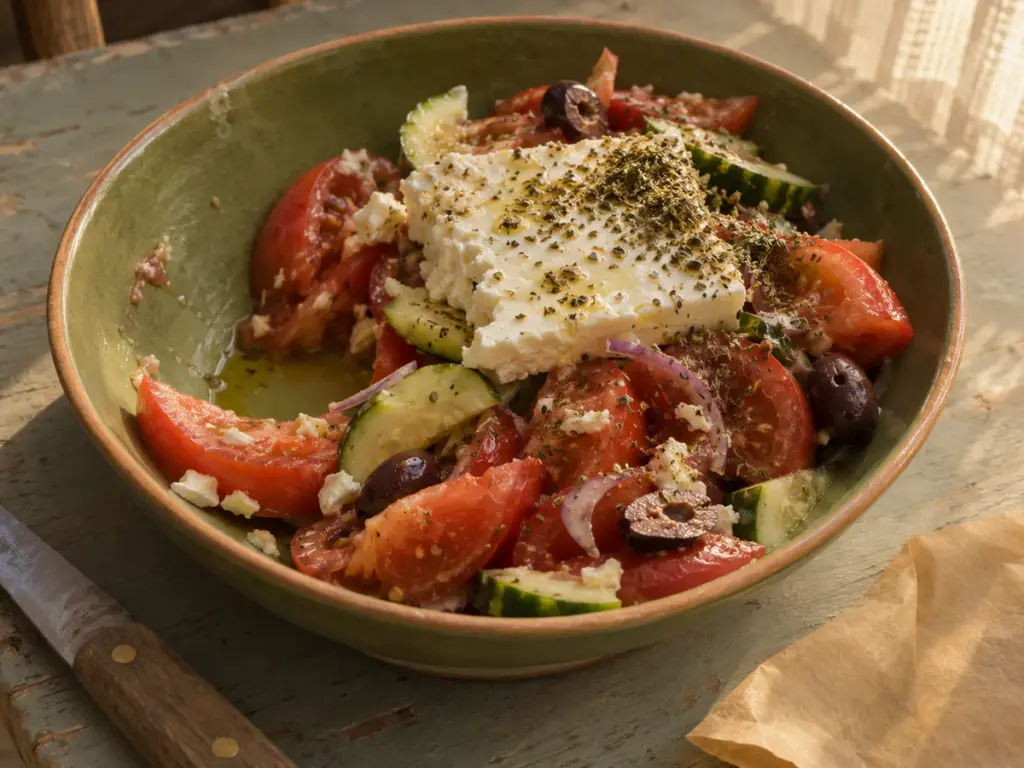
Mediterranean dressing is a family of recipes built on extra virgin olive oil and an acid, with local additions such as oregano on a Greek salad, sumac in Lebanese fattoush and tahini or yogurt on bean and grain salads. The Greek version is one branch of that family.
If you want a dressing without lemon, the red wine vinaigrette takes all its acid from vinegar, as Hellenion's recipe lists it. The yogurt, tahini, lemon-oil and sumac versions all use lemon juice.
Do These Dressings Fit Your Diet?
For a bottled dressing, three things on the label tell you the most:
- The first oil listed: olive oil fits this style better than another vegetable oil.
- The sodium: the FDA calls 5% of the Daily Value or less per serving low and 20% or more high.
- The serving size: the FDA label page says it is not a recommendation of how much to eat.
In its guide to cutting sodium, the FDA suggests adding oil and vinegar to salads instead of bottled dressings and asking for dressings on the side at a restaurant. A small pour of olive oil with lemon or vinegar is that swap, and it is also where every dressing on this list starts.
What Do You Do When a Dressing Tastes Off?
If the dressing tastes too sharp, you can whisk in more oil until the ratio nears 3:1, which a food blogger quoted by Food Republic calls ideal for a dressing that clings to greens.
If it tastes bitter, the blender may be the cause, since America's Test Kitchen explains that extra-virgin olive oil contains bitter polyphenols and a food processor breaks the oil into much smaller droplets than whisking does.
For that reason, we'd shake the dressing in a jar or whisk it by hand instead of blending it.
How Long Do Homemade Mediterranean Dressings Keep?
- Plain lemon, oil and salt: you can use it immediately or keep it up to 1 week in the fridge, as Kvali Food does.
- Any dressing with garlic or herbs in the oil: it keeps 4 days in the fridge, the extension limit above.
- Tahini dressing: Fuss Free Flavours keeps its water, lemon and dried garlic version up to 1 week. Well Seasoned Studio's version has fresh garlic and olive oil, so it keeps 4 days and needs a good stir before serving.
- Yogurt and cucumber: we'd mix it the day you serve it.
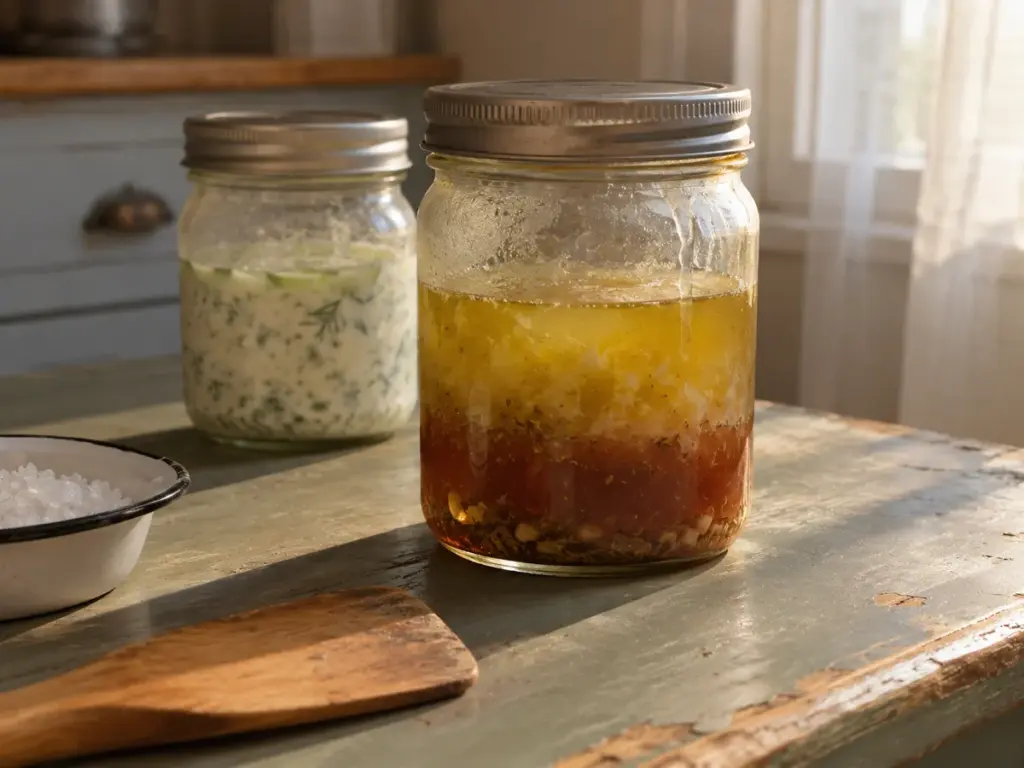
Cold olive oil turns solid, so Dimitra's Dishes advises that you let the jar stand 15 to 20 minutes at room temperature, then shake or whisk it again before you pour.
A yogurt dressing on a buffet follows the USDA rule for perishable food, so you throw it out after 2 hours at room temperature, or after 1 hour when the air is above 90°F. For a picnic, the FDA suggests setting cold dishes in a shallow container inside a deep pan of ice, and replacing the ice as it melts.
Sources
- Oldways: extra virgin olive oil as the primary cooking oil of the traditional Mediterranean diet.
- Hellenion, Greek Salad Dressing: 1 cup oil to ½ cup red wine vinegar.
- Flavor the Moments, Easy Greek Salad Dressing: Dijon as an emulsifier.
- Dimitra's Dishes, Ladolemono: 2:1 oil to lemon, 15 to 20 minutes at room temperature when chilled.
- Kvali Food, Ladolemono: 3:1, 2:1 and 1:1 ratios by dish, 1 week storage.
- Fuss Free Flavours, Tahini Lemon Dressing: 1:1 tahini to water, optional additions, 1 week storage.
- Well Seasoned Studio, Lemon Tahini Dressing: tahini seizing, honey, fresh garlic and olive oil in the recipe.
- Food Network Kitchen, Tzatziki: yogurt, lemon, oil and cucumber quantities.
- RecipeTin Eats, Creamy Cucumber Salad: resting time.
- RecipeTin Eats, Lebanese Fattoush: dressing, sumac, no-molasses tip.
- Food Republic: the 3:1 vinaigrette default.
- Cornell Cooperative Extension, Herbs and Vegetables in Oil: 4 day limit.
- Oregon State Extension, Herbs and Vegetables in Oil: fresh or dried garlic or herbs in oil, 4 days.
- FDA, Sodium in Your Diet: Daily Value levels, oil and vinegar, dressing on the side.
- FDA, Food Allergies: milk and sesame as major allergens.
- America's Test Kitchen, Olive Oil's Bitter End: polyphenols and droplet size.
- FDA, What's on the Nutrition Facts Label: serving size is not a recommendation of how much to eat.
- USDA FSIS, Leftovers and Food Safety: 2 hours, or 1 hour above 90°F.
- FDA, Handling Food Safely While Eating Outdoors: cold dishes in a shallow container set in a pan of ice, ice replaced as it melts.

Food writer at GustoMeadow. Writes ingredient substitutes, food comparisons, taste guides and storage guides for home cooks.
Storage and food-safety numbers follow USDA, FDA and university extension guidance.