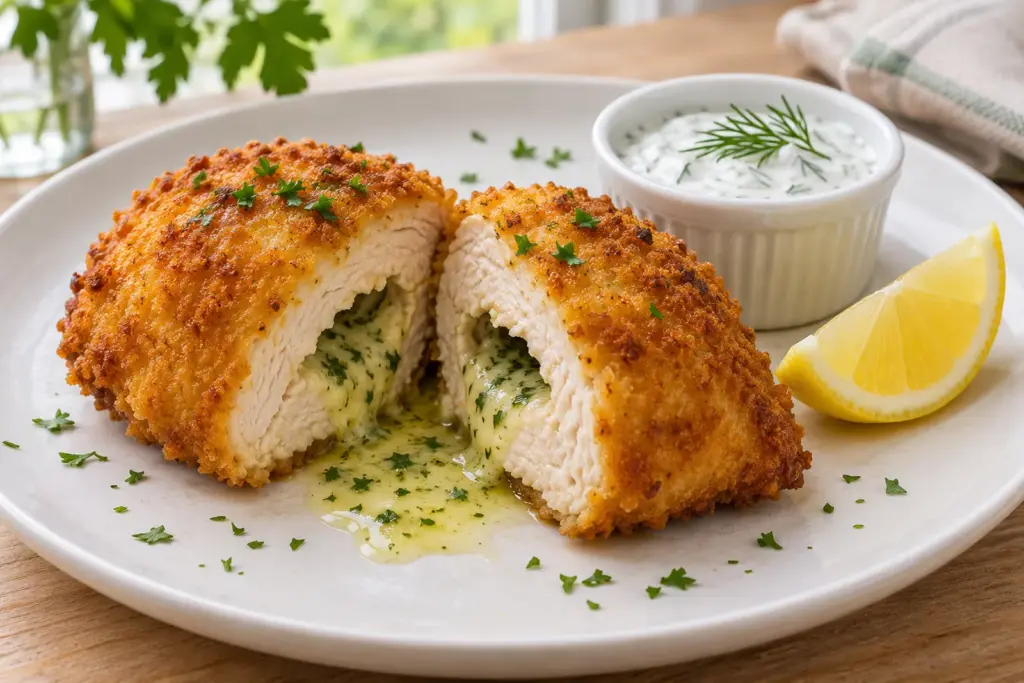
Serve Chicken Kiev with a lemon pan sauce, dill sour cream or a simple tomato sauce.
- The chicken already hides garlic-herb butter in the center, so a bright, light sauce balances it.
- A second butter or cheese sauce makes the plate heavy, so keep any butter-based sauce to one spoonful.
- Cook it to 165°F in the thickest part, and let it rest before cutting.
Pick the sauce first and the rest of the plate gets easy, because a light sauce works with almost any of the side dishes for a chicken dinner.
Why Does Chicken Kiev Need a Light Sauce?
A Kiev is a chicken breast pounded flat, rolled around cold garlic-herb butter, then breaded and fried or baked. When you cut it, the butter runs out and becomes the sauce, so the plate is already rich and garlicky before any extra sauce arrives.
A good extra sauce does the opposite job, and it needs three things:
- Acid from lemon, vinegar or tomato, which cuts through butter and keeps each bite from tasting the same.
- Fresh green herbs such as dill and parsley, which match the herbs in the filling without adding more fat.
- Little or no extra butter, so the sauce does not compete with the butter inside.
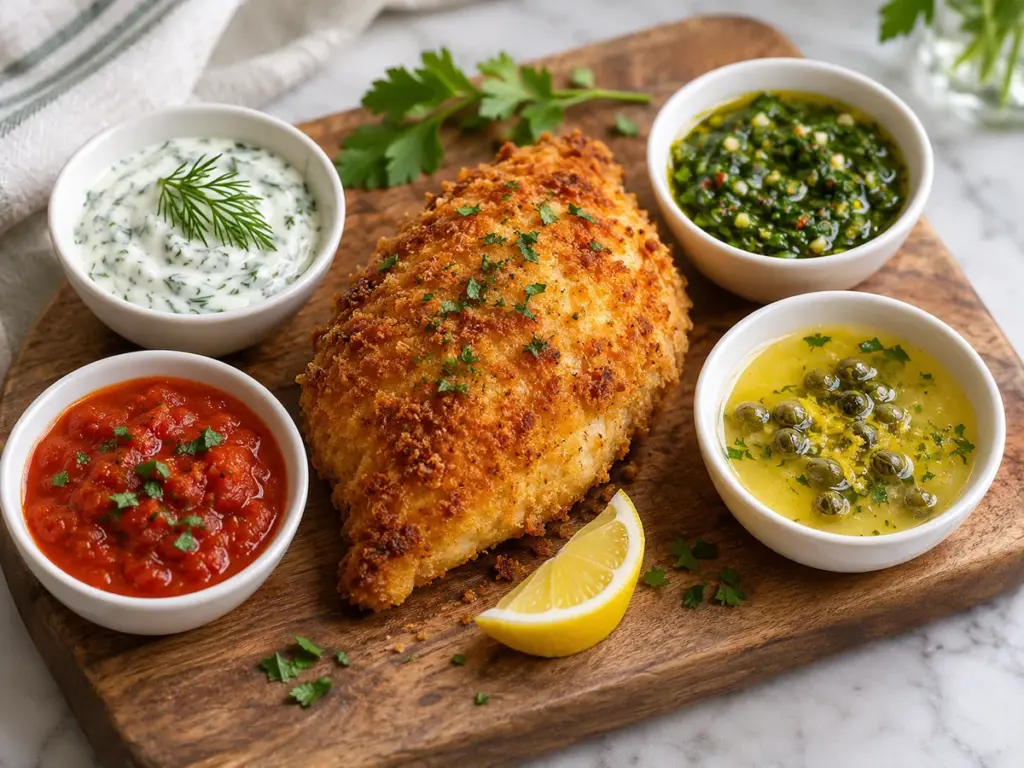
Garlic is the other thing to watch. The filling already carries it, so the sauces below hold the garlic back, and you can taste the sauce first and add more only if you want it.
12 Best Sauces for Chicken Kiev
The first three are the safest picks when you are not sure. Each recipe makes enough for four plates. Pick by the plate you want:
- Cool and creamy: dill sour cream (2), horseradish cream (4).
- Light and sharp: lemon pan sauce (1), tomato (3), chimichurri (5).
- Dips for cut pieces or wedges: lemon-Dijon mayo (7), tartar sauce (8).
- Sweet and tart, no butterfat: mango chutney (9), sweet and sour (10).
- Warm and savory: mushroom cream (6), chicken gravy (11), béarnaise (12).
1. Lemon Pan Sauce with Capers
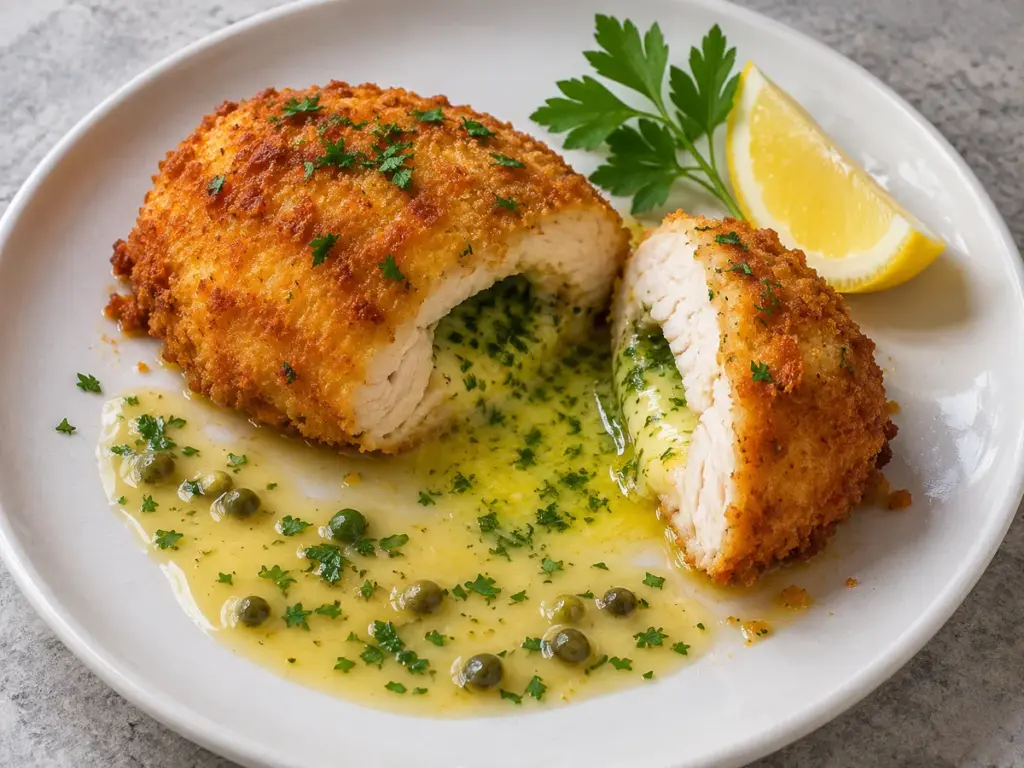
Make this one first, because it gives you the lemon of a lemon butter sauce with a single tablespoon of butter.
- Soften the shallot. Cook 1 minced shallot in 1 teaspoon of olive oil until it turns soft and translucent.
- Reduce the broth. Add ½ cup chicken broth and simmer until it reduces by half.
- Finish off the heat. Stir in 1 ½ tablespoons lemon juice, 1 tablespoon rinsed capers, 1 tablespoon chopped parsley and 1 tablespoon cold butter, and taste for salt.
The capers bring salt and a sour bite, so you may not need extra salt at all. If the sauce tastes sharp, a pinch of sugar rounds it off without making it sweet.
2. Dill Sour Cream Sauce
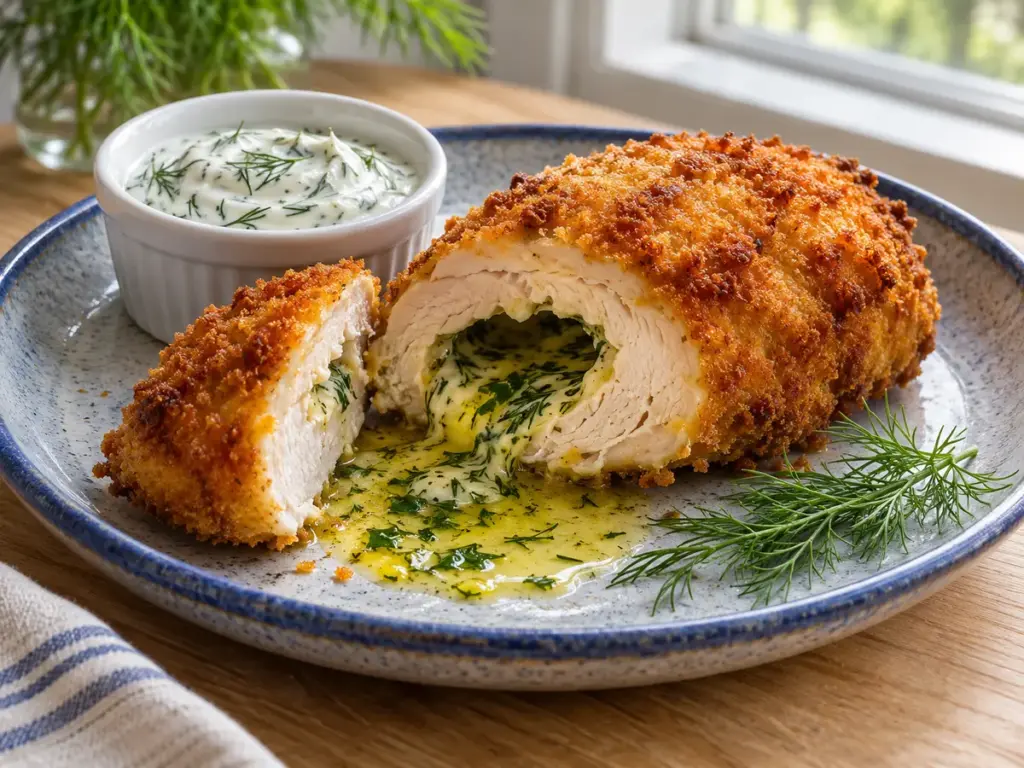
- ½ cup sour cream
- 1 tablespoon chopped fresh dill
- 1 tablespoon lemon juice
- a pinch of salt
Stir everything together and leave it in the fridge while the Kiev cooks, so the dill has time to flavor the cream.
The cold sauce against a hot, crisp crust is part of why it works, and the dill echoes the herbs in the butter. Fresh dill matters here, because dried dill tastes much weaker and needs a smaller pinch if it is all you have.
3. Simple Tomato Sauce
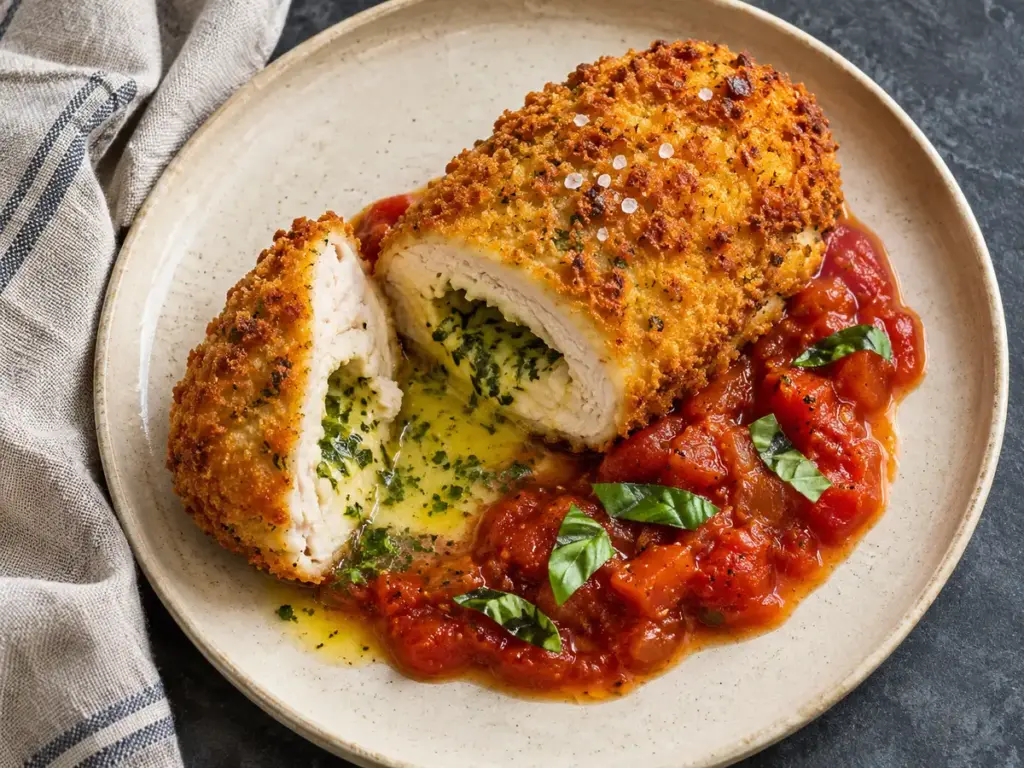
Soften ¼ of a small onion, finely diced, in 1 tablespoon of olive oil until it turns soft. Add 1 cup crushed tomatoes, ½ teaspoon sugar if the tomatoes taste harsh, and a pinch of salt, then simmer until it thickens. Stir in a few torn basil leaves at the end.
The garlic stays out on purpose, because the filling supplies it. Tomato's acid cuts the butter well, and you can spoon it under the chicken instead of over it, so the breading stays crisp.
4. Horseradish Cream
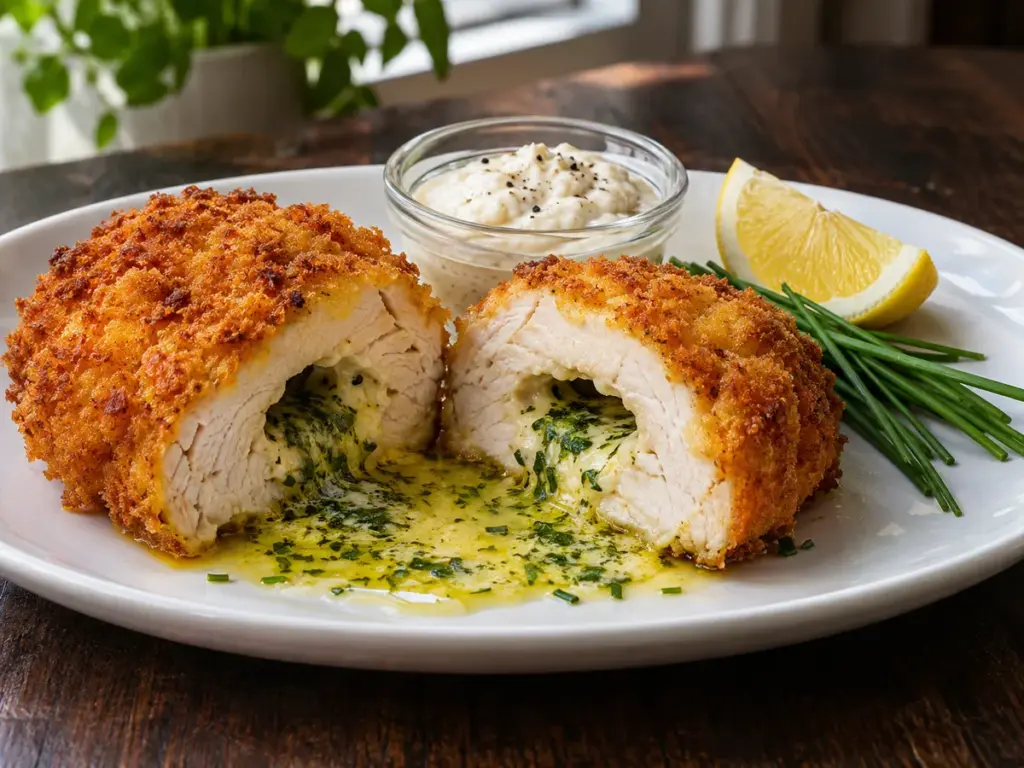
Mix ⅓ cup sour cream or crème fraîche with 1 tablespoon jarred prepared horseradish and 1 teaspoon lemon juice. Start with that single tablespoon, taste, then add more a teaspoon at a time, because prepared horseradish varies a lot between brands.
Horseradish heat fades quickly, so it clears the butter from your mouth between bites. A dill pickle on the side adds crunch and a little more acid, which makes this the best choice for a sharper plate.
5. Chimichurri
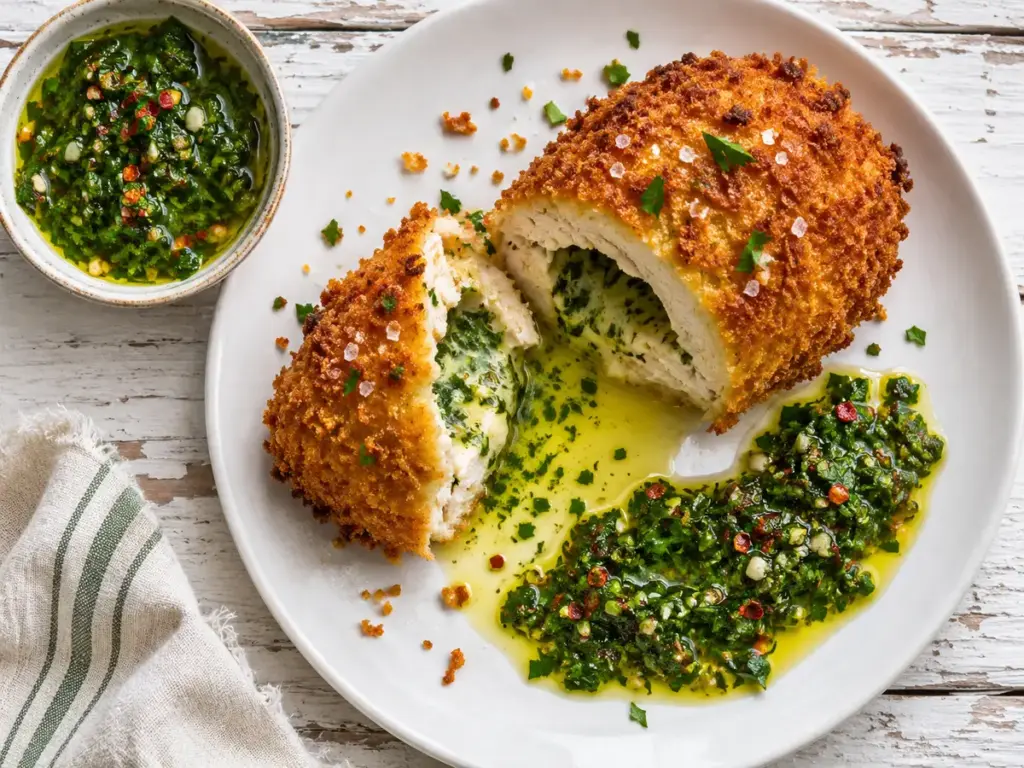
Stir these together in a bowl:
- 1 cup packed parsley, chopped fine
- ⅓ cup olive oil
- 2 tablespoons red wine vinegar
- ½ teaspoon dried oregano
- a pinch of red pepper flakes and salt
- just 1 small minced garlic clove, because the filling already carries garlic
It is oil-based, so you add fat, but it comes with vinegar and a lot of parsley. A spoonful beside the chicken is enough, and a few slices of fresh tomato on the plate suit it. The parsley echoes the herbs in the Kiev filling.
6. Light Mushroom Cream Sauce
- Brown the mushrooms. Cook 8 ounces sliced cremini mushrooms in 1 tablespoon of olive oil over medium-high heat until they brown and their liquid has cooked off.
- Add the aromatics and broth. Add 1 minced shallot and 1 teaspoon thyme leaves until fragrant, pour in ½ cup chicken broth and reduce it by half.
- Stir in the cream. Add ¼ cup heavy cream and simmer until the sauce lightly coats a spoon.
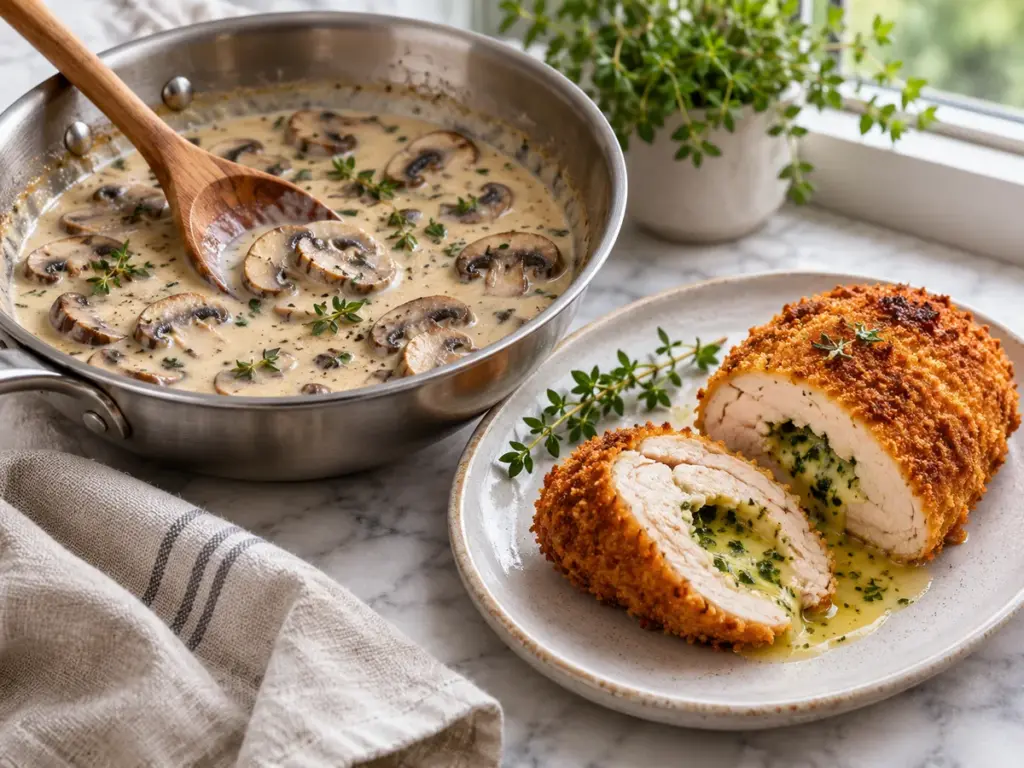
Cream is the part to keep small. A quarter cup for four plates gives you a savory sauce without a heavy cream-and-butter pool, and the shallot replaces the garlic that most mushroom sauces start with. Serve about 2 tablespoons per plate, off to the side.
7. Lemon-Dijon Mayo
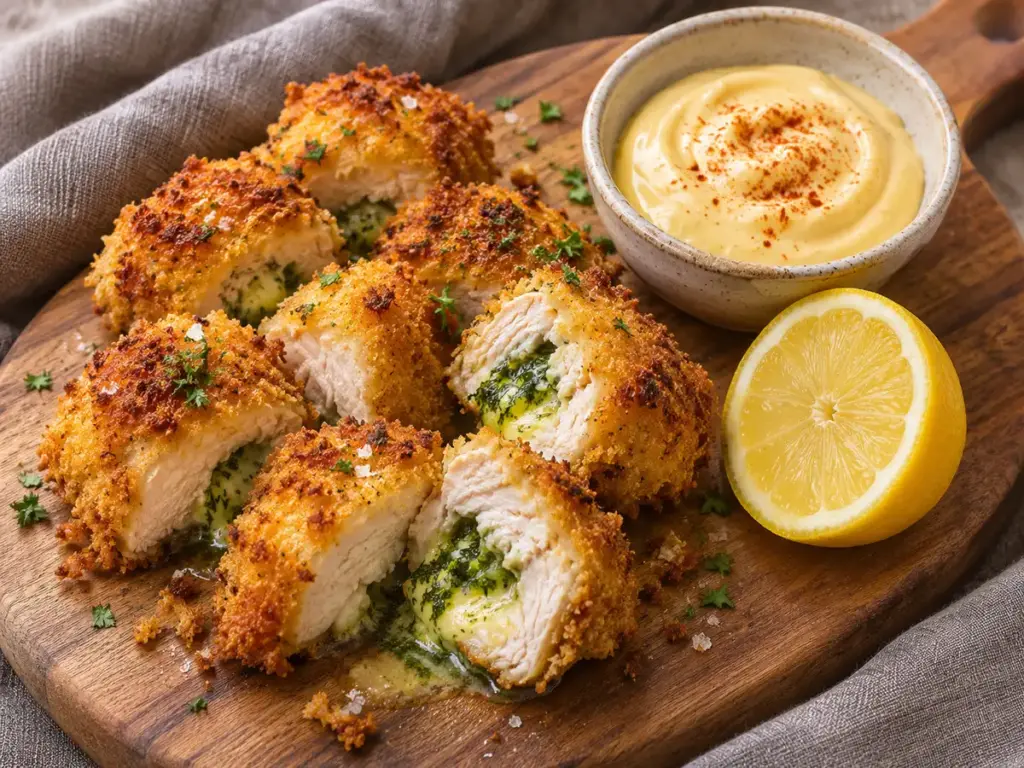
Whisk ½ cup mayonnaise, 2 tablespoons lemon juice and 1 tablespoon Dijon mustard with a pinch of cayenne. For more bite, use 1 teaspoon of prepared horseradish in place of the cayenne.
Mayonnaise is mostly oil, so use this as a thin dip, which works well when you cut the Kiev into pieces for a party. Homemade garlic aioli is a poor match, because it piles garlic on top of the garlic butter.
8. Tartar Sauce
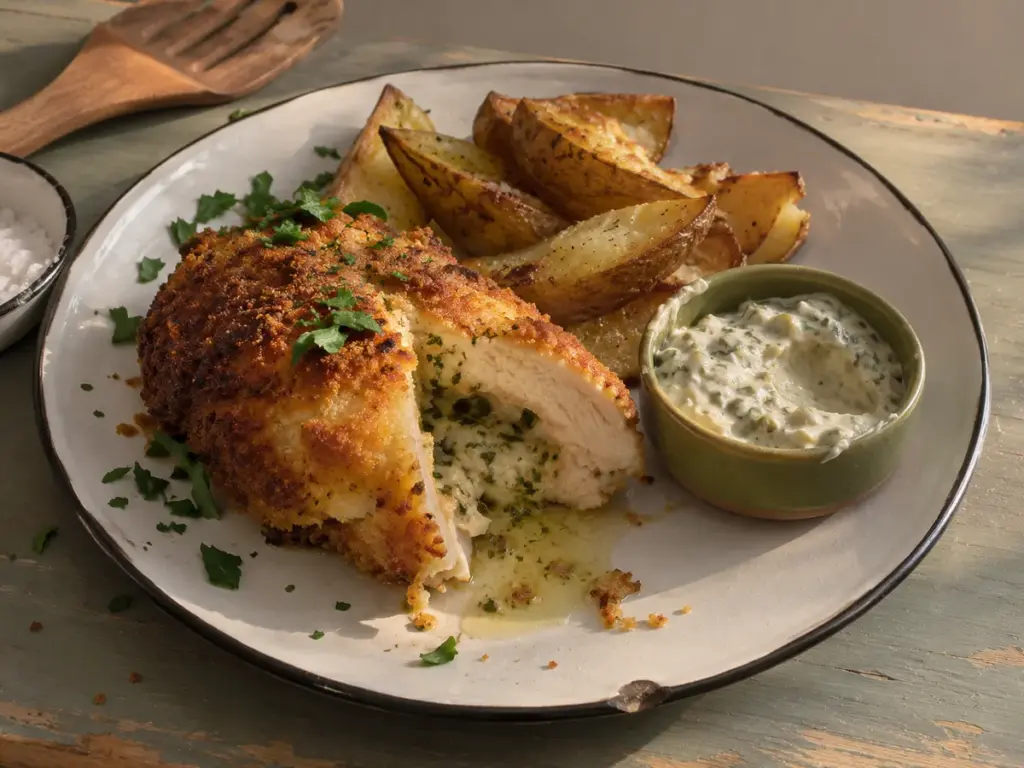
Tartar sauce is the natural dip when the Kiev comes with potato wedges or fries. Stir ½ cup mayonnaise with 2 tablespoons finely chopped dill pickle, 1 tablespoon chopped parsley, 2 teaspoons of the pickle brine and a squeeze of lemon.
The pickle adds crunch against the soft filling, and its brine gives a mayonnaise base the acid it lacks. Like the lemon-Dijon mayo above, it is mostly oil, so spoon it beside the chicken and pick one of the two, not both.
9. Mango Chutney
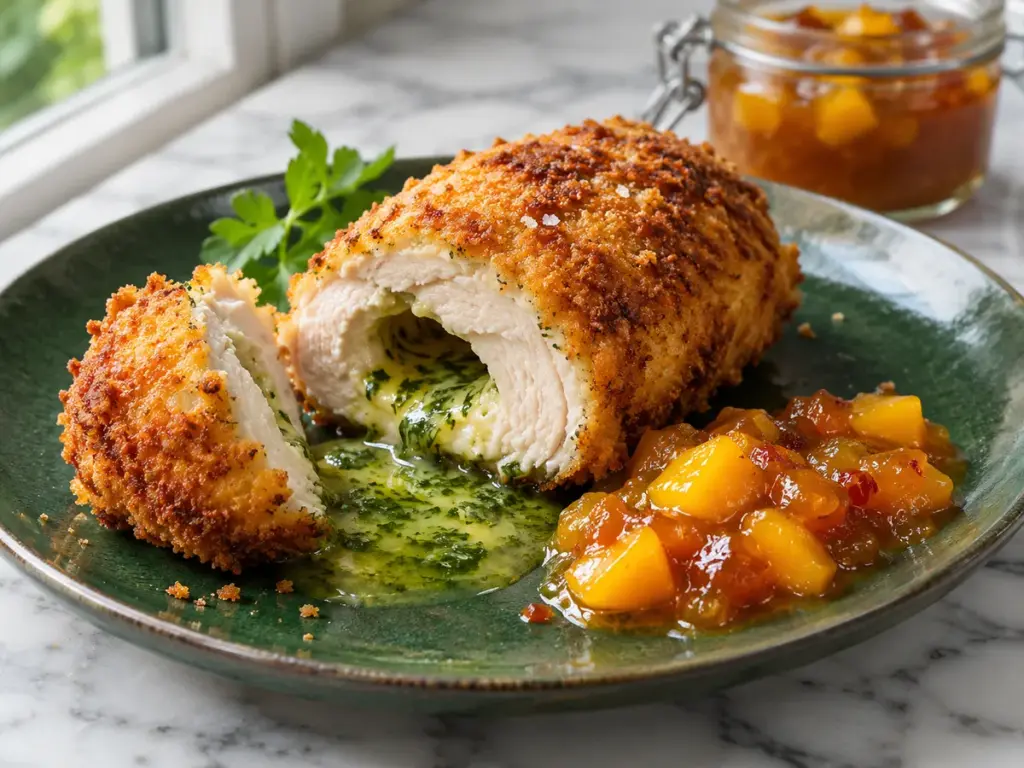
Spoon 1 to 2 tablespoons of jarred mango chutney on the side. It has no butterfat, and its sweet, sour and spiced flavor cuts the richness the way cranberry sauce does for turkey.
Brands differ in heat and sweetness, so taste a little before you serve it. If the jar is empty, other fruit chutneys such as peach fill the same role. Chutney is the pick for guests who already love sweet-and-savory plates.
10. Sweet and Sour Sauce
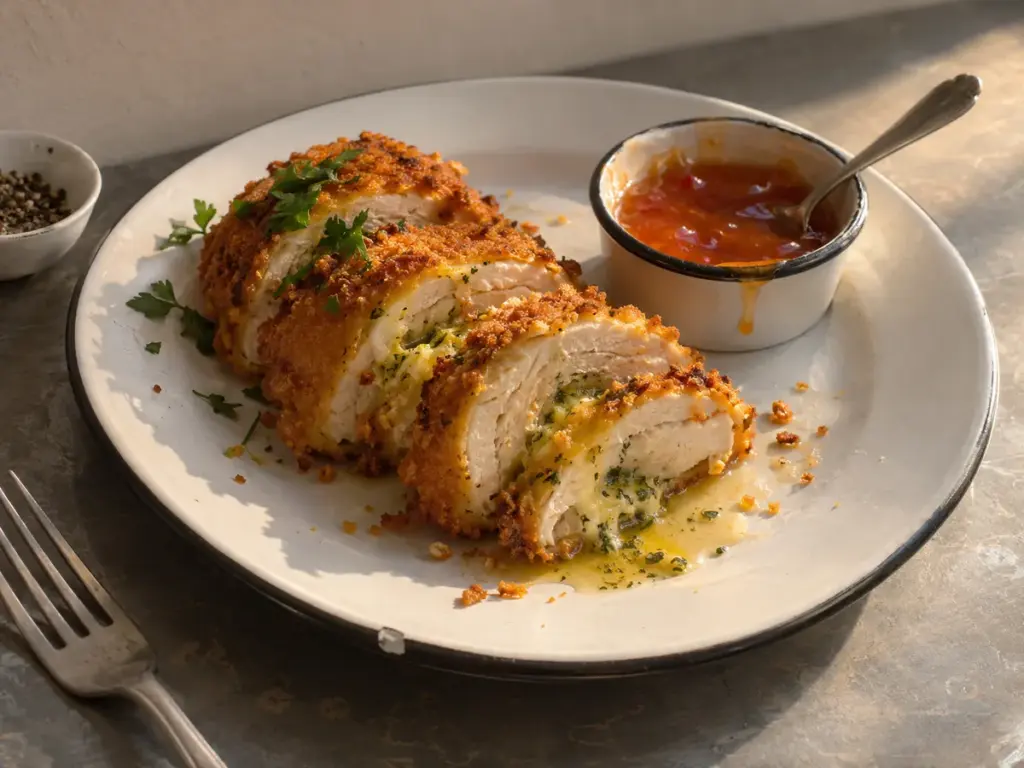
Sweet and sour has no butterfat and gets its tang from vinegar, which makes it a lighter dip for a crisp breaded chicken. Stir these into a small pan:
- ¼ cup pineapple juice
- 2 tablespoons rice vinegar
- 2 tablespoons sugar
- 1 tablespoon ketchup
- 1 teaspoon cornstarch mixed into 1 tablespoon cold water
Simmer, stirring, until the sauce turns glossy and coats the back of a spoon, then let it cool a little. This makes roughly ½ cup, about 2 tablespoons per plate for four, so serve it in a small dish for dipping, because poured over the crust it goes soft.
11. Light Chicken Gravy
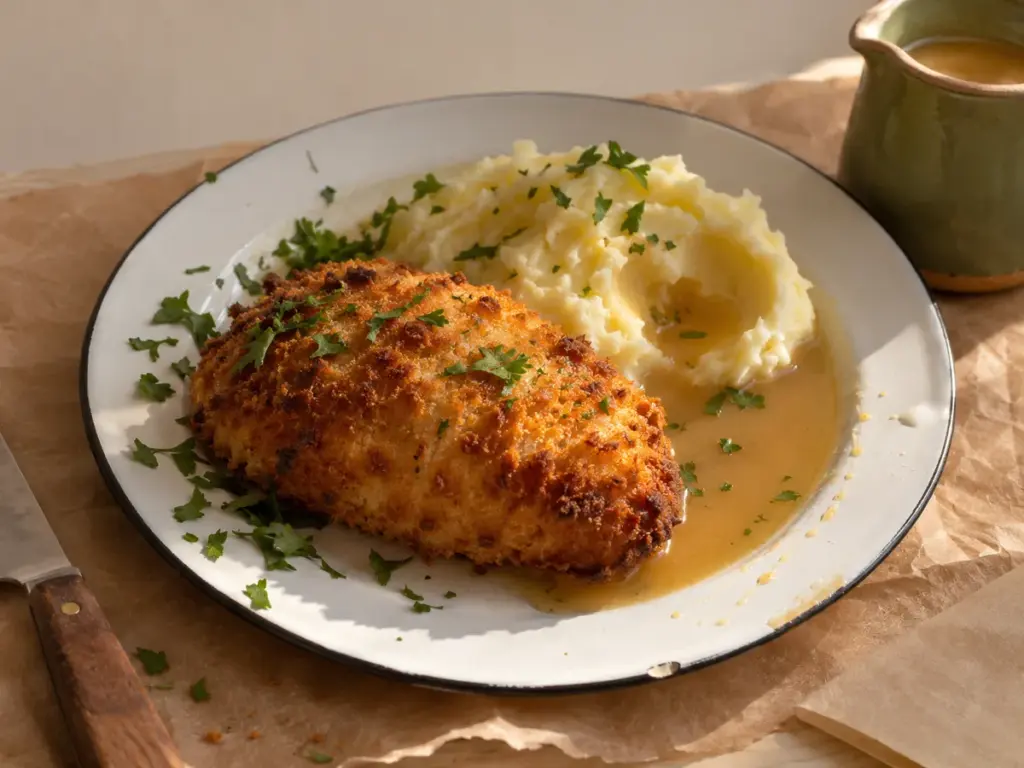
Gravy works with a Kiev when it is a thin one served beside the chicken. Whisk 1 tablespoon cornstarch into ¼ cup cold chicken broth, stir it into 1 cup of simmering broth with a pinch of black pepper and ½ teaspoon thyme leaves, and cook until it coats the back of a spoon.
Cornstarch thickens it without a butter-and-flour roux, so the gravy stays light. Thick white gravy, which starts from a roux and milk, adds a third layer of richness on top of the butter inside, and it hides the crust if you pour it over.
12. Béarnaise Sauce
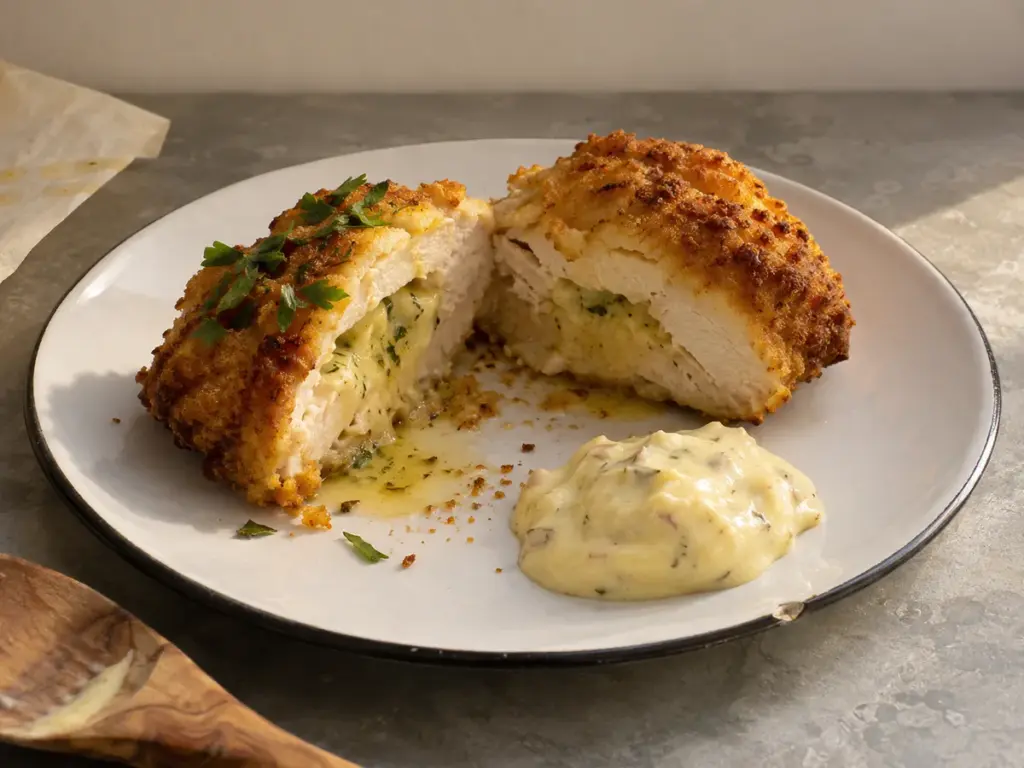
Of the butter-and-egg-yolk sauces, béarnaise is the one that earns a place, because its vinegar, shallot and tarragon add real sharpness and a faint licorice note.
It is still mostly butter, so serve a single spoonful beside the chicken and skip the lemon butter sauce that day. If you make it yourself, keep the heat low, because high heat scrambles the yolks and splits the sauce.
Which Sauces Should You Skip or Use Sparingly?
Many classic sauces for chicken Kiev are butter on butter. They taste good alone, but next to a Kiev you get three kinds of richness on one plate and nothing to refresh your mouth.
- Hollandaise: mostly butter and egg yolk on top of butter. Use the lemon pan sauce, or a spoonful of béarnaise.
- Lemon butter sauce: mostly melted butter. Use the lemon pan sauce, which has 1 tablespoon of butter and a base of broth.
- Cheese sauce: fat and salt on top of a breaded, buttered cutlet. Save it for steamed broccoli.
- Garlic cream sauce or aioli: doubles the garlic already in the filling. Use dill sour cream.
- Heavy cream gravy: soaks the crust and hides the filling. Use the light gravy or the mushroom cream, 2 tablespoons per plate.
- Mint sauce: built for lamb, and the mint competes with the herbs in the butter. Use chimichurri for a green sauce.
Chicken cordon bleu is also stuffed and breaded, and it takes the same kind of cordon bleu sauces in lighter versions: lemon, mustard and a little cream.
Can You Pour Sauce or Gravy over Chicken Kiev?
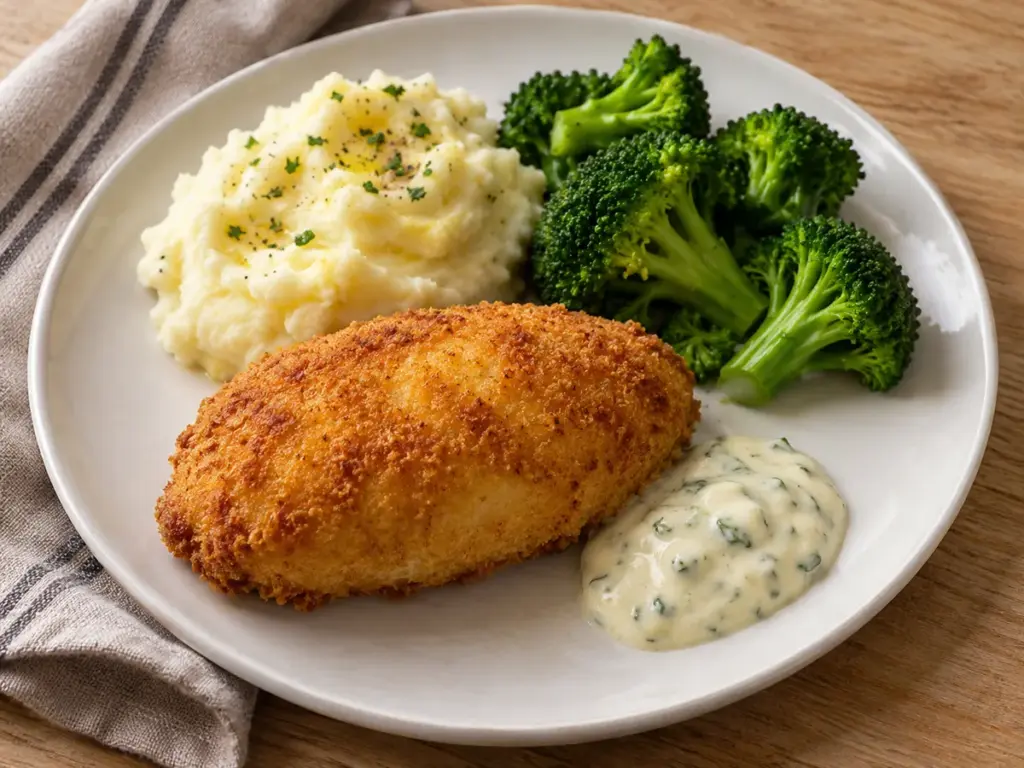
You can, but any wet sauce turns the breadcrumb crust soft once it sits, and the crust is half the reason to make a Kiev. Spoon 2 to 3 tablespoons per plate beside or under the chicken instead, and pour sauce over only the cut face after you open it.
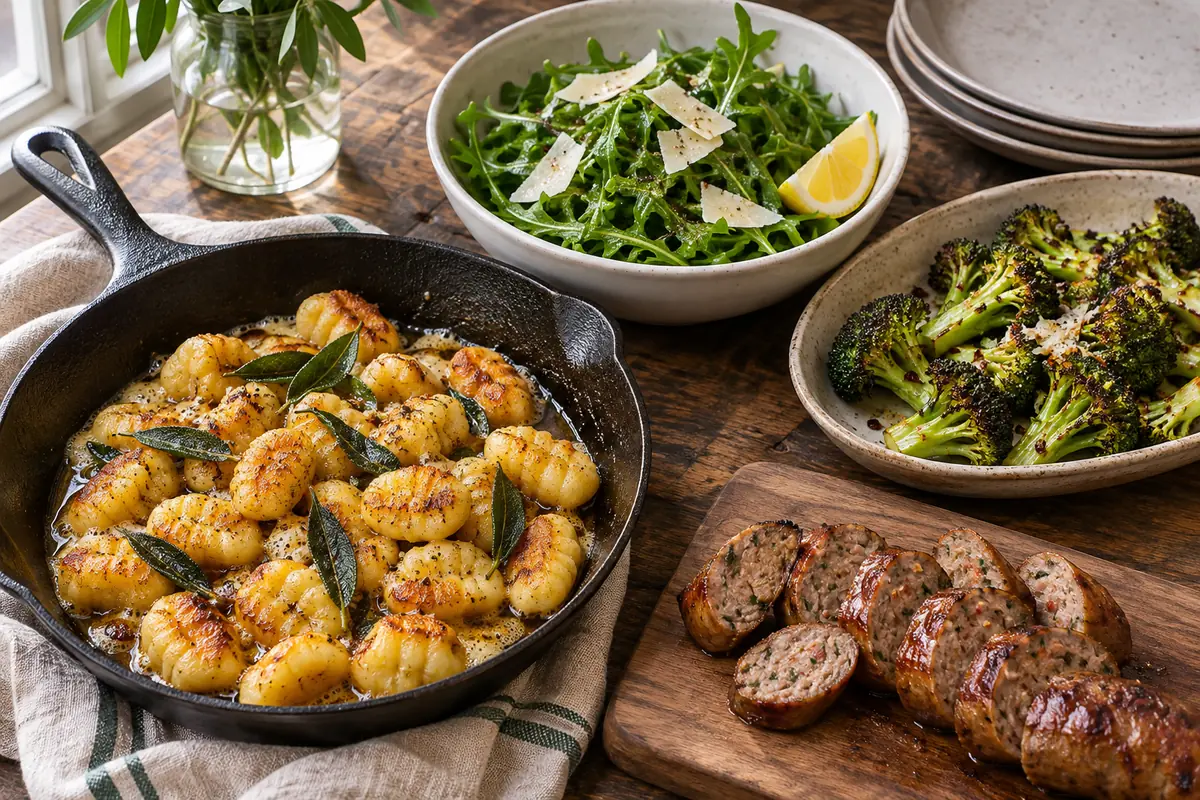
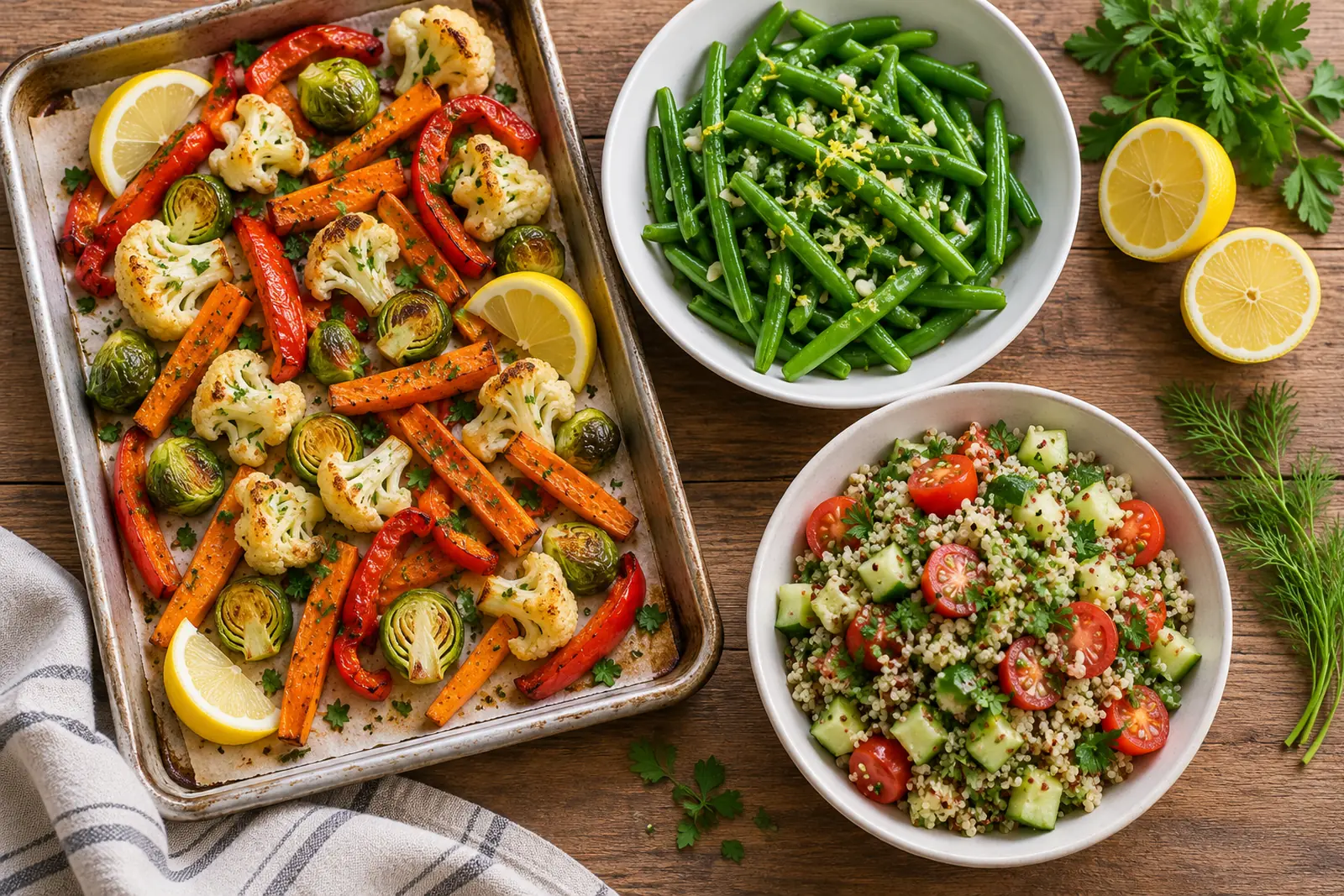
You can also let guests add the sauce to each bite. Rice and mashed potatoes take it up well, and a Kiev dinner with coleslaw and broccoli on the side stays light.
When Is Chicken Kiev Safe to Cut and Serve?
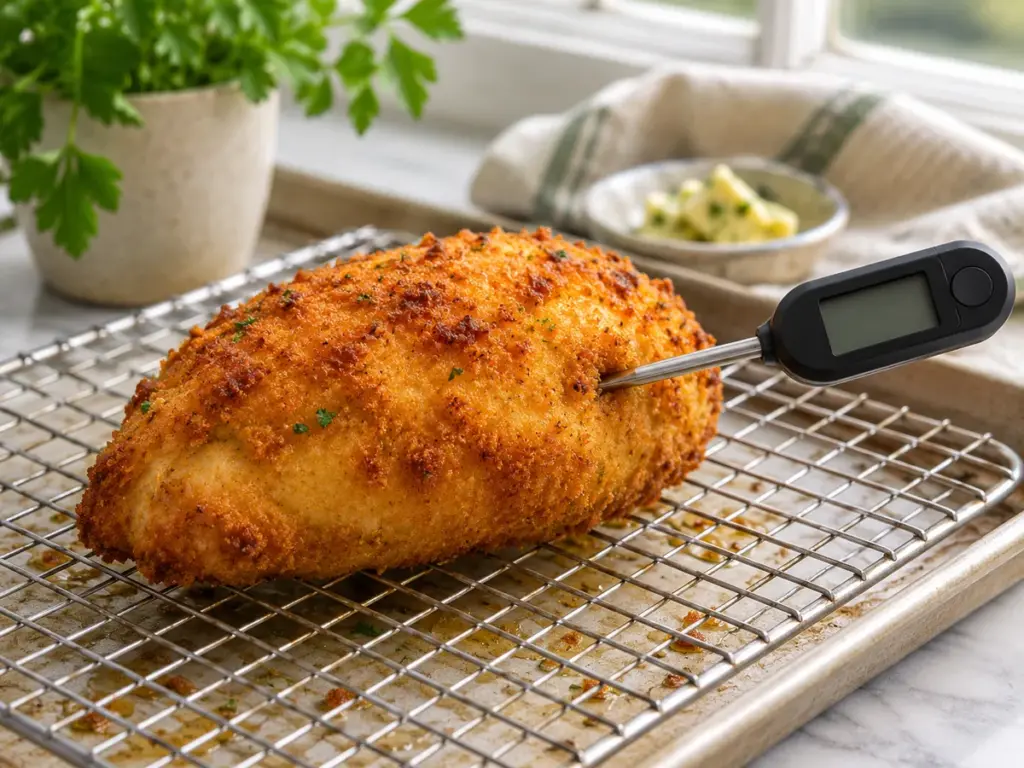
Chicken is safe at a minimum internal temperature of 165°F, and USDA says that when poultry is stuffed, the center of the stuffing must reach 165°F too. A Kiev's filling is butter, so measure the thickest part of the chicken, not just the crust. Browned breading does not tell you the chicken is done.
The butter in the center is as hot as the chicken around it. If you cut straight in, it can spurt onto your hand or shirt, so use these steps:
- Check the temperature. Push an instant-read thermometer in from the side into the thickest part, and keep cooking if it reads under 165°F.
- Rest it. Move the Kiev to a plate or rack until the crust stops sizzling, so the butter cools a little and the chicken juices settle.
- Cut slowly. Make a small cut in the middle with the plate tilted away from you and your hands clear.
- Add the sauce. Spoon it next to the chicken after you have cut it, so the crust stays crisp.
Sources
- USDA FSIS, Chicken from Farm to Table: 165°F minimum internal temperature for chicken.
- USDA FSIS, Stuffing and Food Safety: the center of stuffing must reach 165°F.
- USDA FSIS, public health alert on frozen raw breaded stuffed chicken products: such products can look ready to eat but are raw.

Food writer at GustoMeadow. Writes ingredient substitutes, food comparisons, taste guides and storage guides for home cooks.
Storage and food-safety numbers follow USDA, FDA and university extension guidance.