
Do you love the smoky, salty flavor of bacon in your favorite dishes?
Are you curious to try something new, yet similar?
Get ready to learn all about guanciale, a variety of pork that has a flavor similar to bacon.
You'll be amazed by the differences between these two delicious meats.
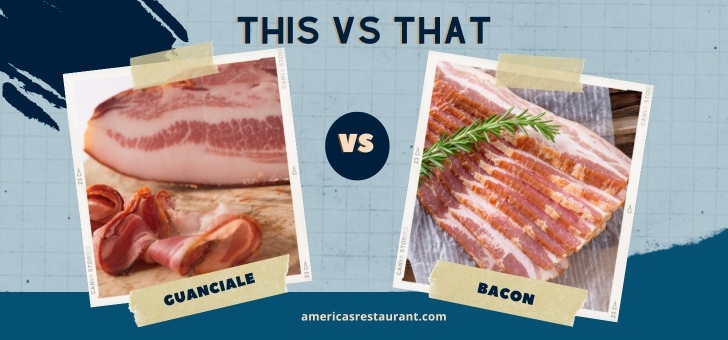
What is Guanciale?
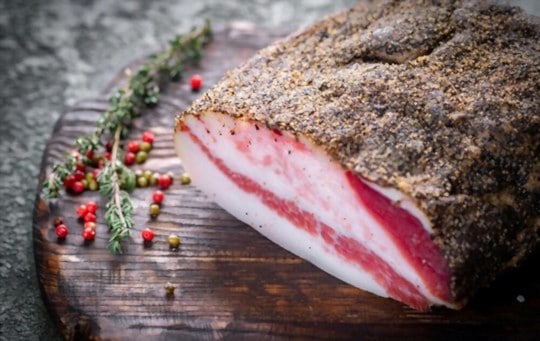
Guanciale is a type of cured meat that comes from the pork jowl or cheek.
It originates from Italy and is used in many traditional Italian dishes, such as spaghetti alla carbonara and Amatriciana sauce.
Guanciale has a distinct taste and texture due to its unique curing process, which involves drying the meat over an extended period.
This method causes the pork to lose moisture while simultaneously improving its flavor.
Guanciale is also not smoked like other types of bacon or cured pork.
When you bite into Guanciale, you'll notice it has a tender texture with streaks of fat throughout.
The flavor is salty with hints of sweetness, making it perfect for pairing with pasta sauces.
Guanciale's salty, slightly sweet profile is best matched with savory components; for ideas on pairing lemon in desserts see what goes with lemon in desserts.
What is Bacon?
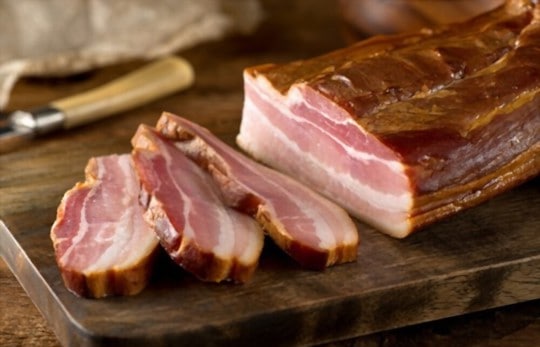
Bacon is a breakfast meat made from the belly or back of a pig.
It is typically cured with salt and either smoked, boiled, or baked.
Bacon is a popular ingredient in many dishes and often served on its own as a side dish.
There are many variations based on the type of meat used and how it's prepared.
Some bacon may be thicker or thinner than others, while some may be smoked for longer periods of time to achieve a stronger flavor.
The various types of bacon around the world differ in terms of their preparation and regional traditions.
Overall, bacon has become a beloved food item for many people around the world due to its versatility and delicious taste.
Whether you enjoy it with your eggs in the morning or as a topping on your burger at lunchtime, there's no question that bacon has made its mark on modern cuisine.
Differences Between Guanciale and Bacon

Guanciale and Bacon are two delicious pork products that have subtle differences that set them apart.
One of the key differences between Guanciale and Bacon is in the cut of meat used - see fatback vs bacon comparison guide.
Guanciale is made from the pork jowls or cheeks while bacon comes from the pork belly.
This difference in cut of meat results in varying textures when cooked- guanciale is usually chewy whereas bacon has a crispy texture.
The next difference lies in their curing method.
Guanciale gets its signature flavor from being dry-cured with salt, pepper, and other spices for several weeks.
Meanwhile, bacon is brined and smoked, sometimes flavored with maple or other ingredients.
This results in a smoky flavor that bacon is known for.
Lastly, Guanciale has a more intense pork flavor while improving sauces and soups when cooked.
Bacon is commonly used as breakfast meat or an ingredient in sandwiches or salads due to its texture and smoky flavor.
Origin and Culinary Uses
Guanciale and bacon are both popular cured pork products that are used to add flavor to various dishes.
However, they differ in their origin and culinary uses.
Guanciale is an Italian ingredient, which has been traditionally used for preparing pasta dishes like Amatriciana or Carbonara.
It is made from pork jowls or cheeks instead of belly or back like bacon.
It has gained popularity worldwide due to its unique flavor.
On the other hand, bacon originated from English and German cuisine but became famous thanks to American recipes.
Bacon is more commonly found compared to guanciale, especially in Western countries.
It's often used as a breakfast food, in sandwiches or as an addition to various types of cuisine, such as salads or pizza toppings.
The main difference between guanciale and bacon is that guanciale has a stronger taste because of the fat content present in the jowl meat whereas bacon tastes smoky because it's often smoked during production.
Also, guanciale also has a different texture compared to bacon because it's aged longer than bacon before being consumed.
Ingredients Used
Guanciale and bacon are both cured meat products, but they differ in the type of meat used for their preparation.
In this section, we will discuss the main ingredients used to make guanciale and bacon.
Guanciale is made from pork jowl or cheek that is rubbed with a mixture of salt, sugar, black pepper and sometimes nitrate or nitrite cure mix.
These ingredients are applied generously to the meat and left to cure for several weeks.
The curing process imparts a distinct flavor to the meat while also helping to preserve it.
On the other hand, bacon is made from pork belly or side that is also rubbed with a mixture of salt, sugar and nitrate or nitrite cure mix.
The curing ingredients prevent bacterial growth and give bacon its characteristic pink color.
Unlike guanciale which doesn't require smoking, bacon can be smoked after curing to add more depth of flavor.
Smoking infuses smoky flavors into the meat while adding an appealing aroma.
In summary, guanciale uses pork jowl or cheek while bacon uses pork belly or side.
Both meats are cured with similar ingredients such as salt and sugar but differ in terms of additional curing agents used.
While smoking isn't necessary for guanciale preparation, it's often added in preparing bacon for an added layer of smokiness.
Flavor and Texture Comparison
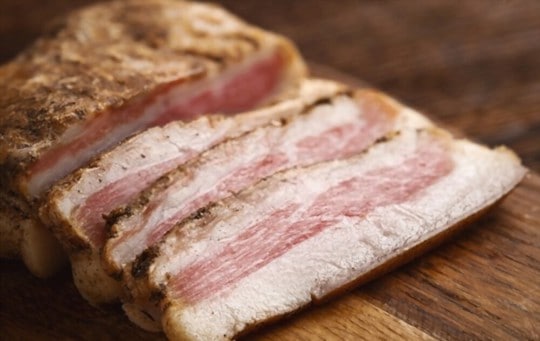
Guanciale and Bacon have some similarities but also many differences.
Guanciale has an intense flavor - compare extract vs flavor explanation for taste - while bacon has a smoky taste.
Also, Guanciale's texture is chewy while bacon is crispy.
The intense flavor of Guanciale comes from its high fat content which also gives it a rich mouthfeel.
On the other hand, bacon's smoky character comes from its curing process with wood smoke.
Finally, the chewy texture of Guanciale adds another layer to its already strong taste profile while the crispiness of bacon goes well with its smoky flavor.
Overall, whether you prefer the intense richness of Guanciale or the smokiness and crispness of bacon will depend on your personal preferences.
Curing and Smoking Process Differences
Curing and smoking are two significant processes that differentiate guanciale from bacon.
Guanciale undergoes a more natural curing process, whereas bacon goes through various artificial methods to produce the desired flavors and textures.
Guanciale is made from pork jowls as opposed to bacon, which uses pork belly.
Also, guanciale is cured using only salt with no added nitrates or nitrites while bacon requires these additional chemicals to preserve it - see curing salt vs regular salt uses.
The time taken for curing guanciale is longer than that of bacon because of its thickness.
Guanciale is typically unsmoked, although this can vary depending on the preference of the producer.
On the other hand, bacon is always smoked using wood chips such as Hickory or Maple to create distinct flavors.
In summary, while both guanciale and bacon primarily use pork as a raw material, their curing and smoking processes differ significantly when producing these unique types of meat.
Popular Brands of Guanciale and Bacon
There are many options available in the market - including beef bacon vs pork bacon comparison.
Some of the most well-known brands include La Querica, Columbus, Nduja Artisans, Molinari & Sons, De Lorenzo's and many more.
These brands are famous for their unique flavors, quality ingredients and traditional curing methods used in making both guanciale and bacon.
Each brand has its own unique selling points that appeal to different consumers.
For example, La Quercia is known for using heritage-breed pork to make their guanciale which gives it a distinct flavor.
Meanwhile, Molinari & Sons' bacon is famous for its smoky flavor that goes well with breakfast dishes.
The brand can also play an important role in your decision-making process.
It can be helpful to read reviews online or ask for recommendations from friends to determine which brand would best suit your taste preferences.
The popularity of different brands is one of the reasons why guanciale and bacon have become incredibly flexible ingredients that can be used in many different dishes.
Whether you prefer the spicy notes of guanciale or the sweet, smoky flavor of bacon, there is a brand out there for everyone to enjoy.
Next up, we will take a look at the health and nutritional differences between guanciale and bacon.
Health and Nutritional Comparison
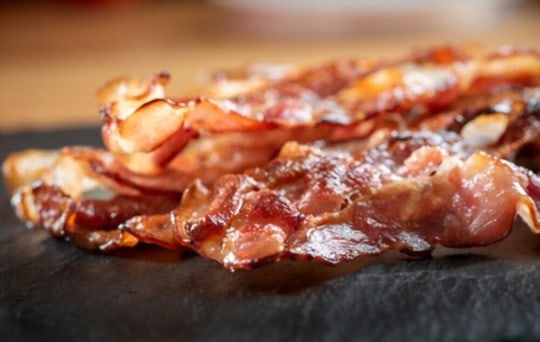
The health and nutritional differences are worth considering.
While both of these meats are flavorful and popular in many dishes, they differ in fat content, calories, and other important factors.
Guanciale has a much higher fat content compared to bacon.
This makes it a less healthy option for those who are watching their fat intake or trying to maintain a healthy diet overall.
Also, guanciale contains significantly more calories per serving than bacon.
In terms of sodium content, guanciale is much higher than bacon as well.
This means that it may not be the best option for people who need to limit their sodium intake due to health reasons.
However, when it comes to protein content and carbohydrate content, both guanciale and bacon are quite similar.
With all of this information in mind, it's important to consider your own dietary needs when choosing between guanciale and bacon for your meals.
For a savory, umami boost without meat, learn what nutritional yeast tastes like - yeasty wonders taste guide.
Cooking with Guanciale and Bacon
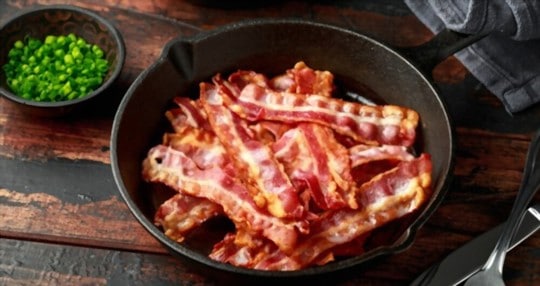
They are both flexible ingredients that can be used in a wide range of dishes.
While they share some similarities in terms of taste and texture, there are also some distinct differences between the two.
We can see that bacon contains significantly more fat than guanciale, which can affect both their taste and how they behave when being cooked.
In terms of protein content, guanciale has a slight edge over bacon.
Cooking with guanciale tends to produce a milder flavor than bacon due to its lower fat content.
It is commonly used in classic Italian dishes such as Carbonara or Amatriciana sauce for pasta.
Due to its unique flavor, it can also be used as a topping for pizza or in place of bacon in breakfast sandwiches.
On the other hand, cooking with bacon tends to produce a smokier and saltier flavor due to its higher fat content.
It is popularly used in breakfast meals such as BLT sandwiches or as a topping on burgers.
Bacon can also be used as an ingredient in dishes such as quiches, soups, or salads.
Both guanciale and bacon have their own distinctive flavors and textures that make them ideal for different types of recipes.
By understanding their differences and similarities, you can choose which one will work best for your next dish.
When recipes call for deglazing or brightening, choose between wine or vinegar - white cooking wine vs white wine vinegar usage tips.
Flavor and Use Differences: Guanciale vs Bacon
Guanciale comes from the pig's jowl or cheek, whereas bacon is typically made from the belly.
Both are used in similar ways in terms of cooking methods and dish applications, but they have subtle taste differences that can enhance certain recipes.
Ultimately, the choice is yours based on factors such as availability, price point, desired taste profile, and personal preferences.
Common substitutes and grease swaps help adapt recipes. 5 BEST Substitutes for Guanciale lists practical options. 5 BEST Substitutes for Bacon Grease covers replacements for rendered fat.
Frequently Asked Questions
You'll be amazed by the differences between these two delicious meats. They share some similarities but each has qualities that make it better suited for certain recipes.
In many recipes, yes. Guanciale and Bacon fill similar roles, though each brings its own character.
Try a small test batch before committing to a full swap.
Availability varies by region. One is usually a standard grocery store item while the other may require a specialty or international market depending on where you live.
Can a beginner tell the difference by taste?
In a side-by-side tasting, yes.
The difference becomes less obvious when mixed into a recipe with other ingredients.
Most people notice the distinction more clearly on its own.