
Demerara and turbinado are lightly processed raw cane sugars, and you can swap them cup for cup in most recipes.
- Sources disagree on which sugar is darker or stickier, and brands vary, so you learn more from the bag in your hand than from the name.
- Both are sugar, so you get about the same calories per spoon as white sugar.
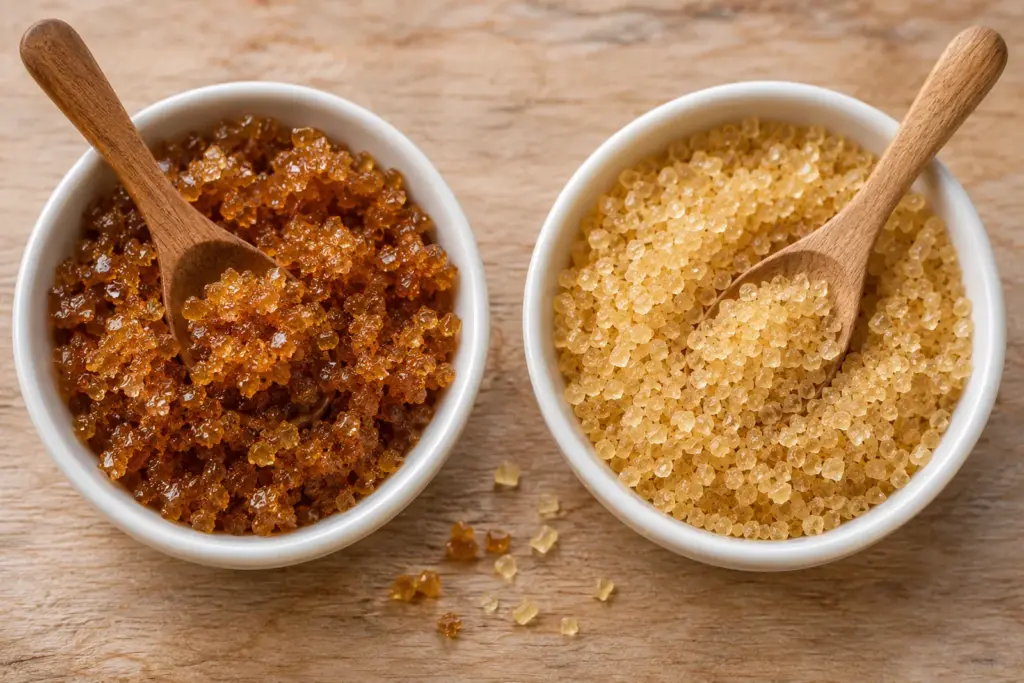
Of all the pantry food comparisons, this is one of the safest to get wrong, because both bags you might pick up hold sugarcane juice that was boiled into crystals and spun to shed most of its molasses.
What changes from bag to bag is how coarse, how damp and how dark the crystals are, and that depends as much on the brand as on the name printed on the front.
1. What Is the Difference Between Demerara and Turbinado Sugar?
Because the two overlap on almost every line, this table lists only what the sources agree on:
| Trait | Demerara sugar | Turbinado sugar |
|---|---|---|
| Crystals | Large; varies by brand | Large; varies by brand |
| Color | Golden to amber; varies by brand | Golden to amber; varies by brand |
| Flavor | Caramel; deeper in darker bags | Caramel; deeper in darker bags |
| Swap | 1:1 by volume | 1:1 by volume |
Healthline describes demerara crystals as larger and lighter than turbinado's, and its molasses table (below) puts demerara at 1 to 2% against under 3.5% for turbinado. America's Test Kitchen calls both light brown with large crystals.
The sources disagree on which one is darker, so a look at the bag itself will tell you more than the name does.
Brown sugar is made a different way, by adding molasses to white sugar.
America's Test Kitchen warns that some bags sold as turbinado may be refined sugar with molasses added back, so the ingredient list is worth a glance before you buy.
How Can You Tell Them Apart in the Pantry?
- Read the label. "Demerara" or "turbinado" is often on the front, and some US bags carry both words.
- Check the ingredient list. "Cane sugar" or "raw cane sugar" with large golden crystals is the right product, whichever name is on the front.
- Do not trust color or stickiness. Brands differ and the sources disagree on which sugar is darker, so a pinch of crystals will not tell you the name.
Because the swap is one to one, a wrong guess costs you very little.
2. Do Crystal Size and Stickiness Change How They Bake?
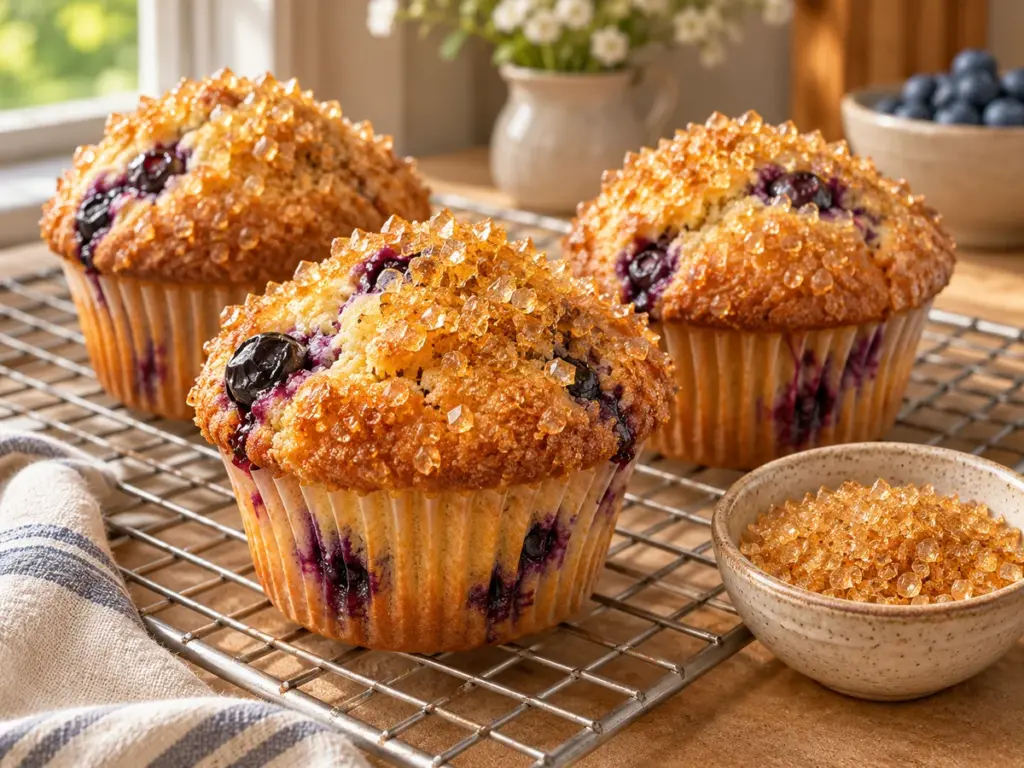
Both sugars have crystals far bigger than granulated sugar, and that is the difference you will feel in a recipe. America's Test Kitchen found the two interchangeable as a crunchy topping for muffins and cookies, but it warned against using either in batters and doughs because the crystals dissolve more slowly than granulated sugar.
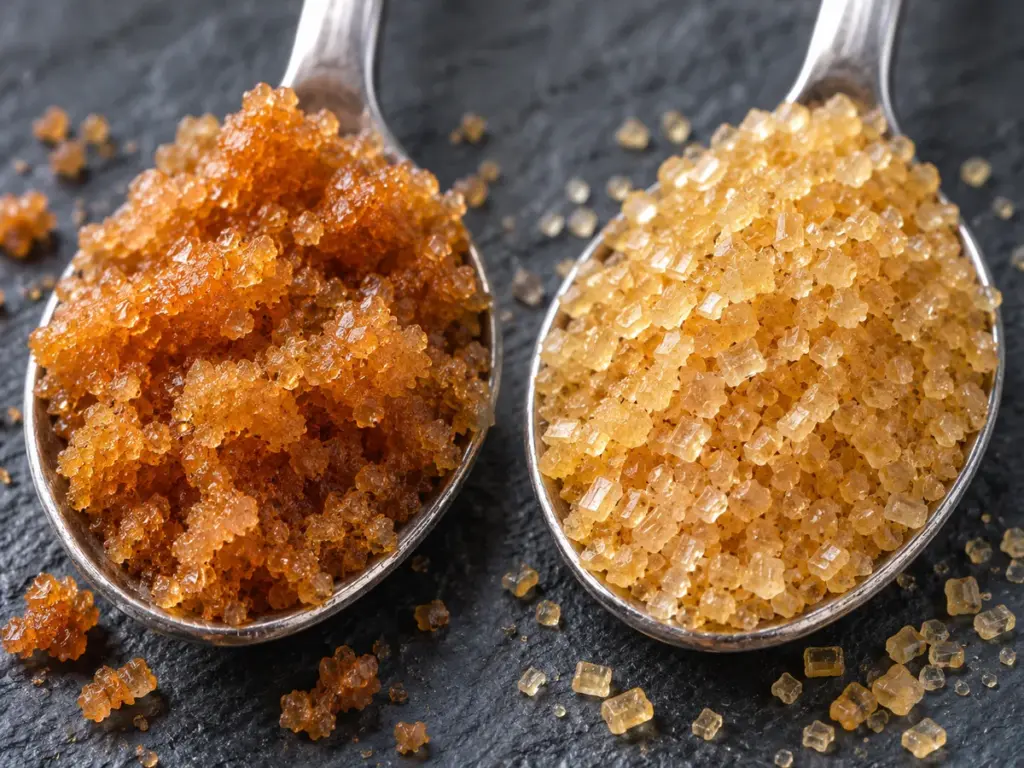
Those big crystals lead to a few habits you can put to use:
- Either sugar works as a finishing sugar. The crystals melt only partly in the oven, so they leave a crunchy, glassy crust on muffins, scones and cookie tops.
- A quick bake can come out speckled and slightly gritty. In a short bake like cookies the coarse sugar can stay visible, so if you want a smooth crumb, you can grind it for a few pulses in a blender or spice grinder.
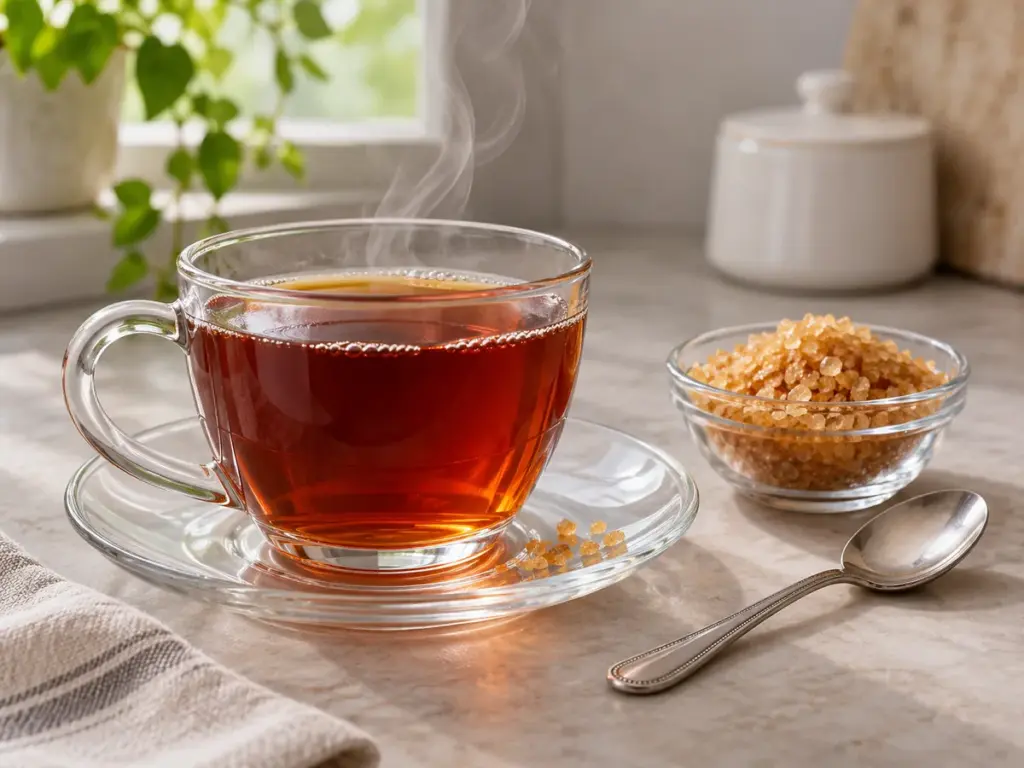
- Drinks need a longer stir. Hot tea or coffee dissolves either sugar after a good stir, but iced drinks leave crystals at the bottom. If you cook the sugar into demerara syrup first, you avoid that in cocktails and iced coffee.
Test kitchens do not fully agree on batters, since Healthline reports one that found turbinado easily replaced white sugar in cake, a moist, pourable batter, but worked less well in drier cookie dough, where the large crystals do not dissolve.
The safe reading is that moist batters tolerate big crystals better than dry doughs do, so for cookies and shortbread you will get a smoother result if you grind the sugar first or save it for the top.
3. What Else Can You Use Large Raw Sugar Crystals For?
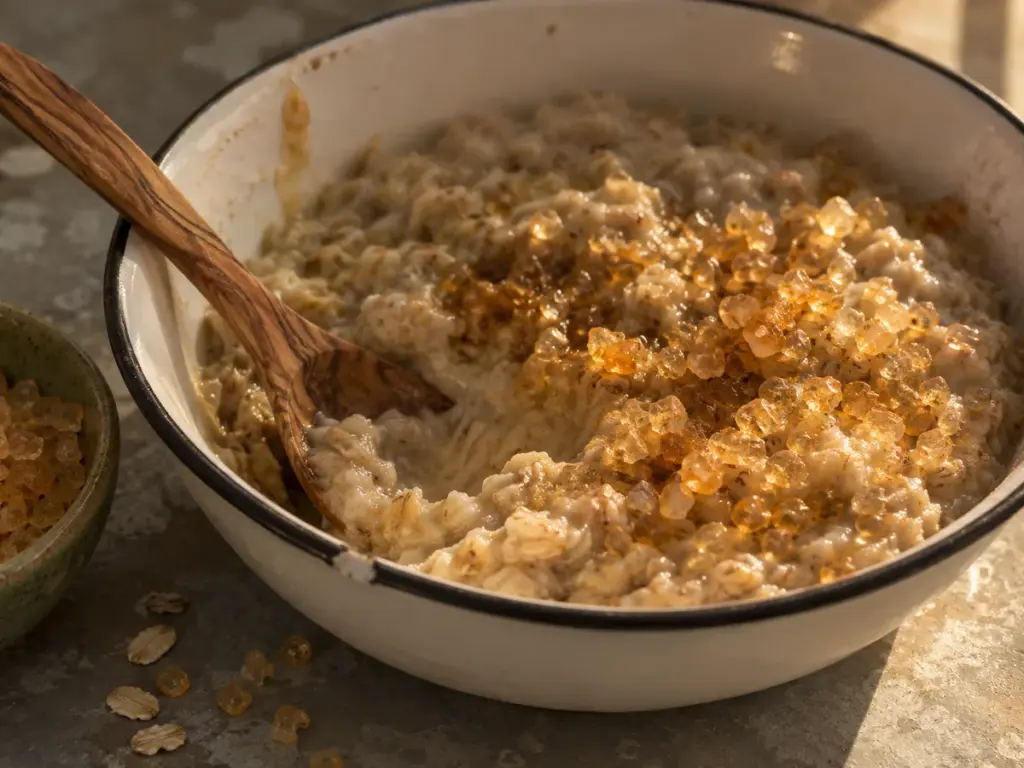
Outside the batter bowl, the large crystals work best where you can see or crunch them, and Healthline names oatmeal, muffins and crème brûlée as turbinado's best uses. Demerara does the same job, since America's Test Kitchen found the two interchangeable on top of baked goods.
- Oatmeal, cereal and yogurt get a crunchy, caramel-flavored top when you sprinkle a spoonful on at the table.
- Streusel and fruit crisps keep some coarse crystals if you scatter the sugar over a streusel topping before baking.
- Crème brûlée forms its crème brûlée crust when a thin layer of sugar on the custard melts.
4. Which One Has More Molasses, and Does It Change the Flavor?
Because the crystals are spun in a centrifuge, only a thin film of molasses stays on the surface, so both sugars sit at or below light brown sugar. Healthline's molasses breakdown shows where each one lands:
| Sugar | Molasses by weight (Healthline) |
|---|---|
| Demerara | 1 to 2% |
| Turbinado | Under 3.5% |
| Light brown sugar | About 3.5% |
| Dark brown sugar | About 6.5% |
| Muscovado | 8 to 10% |
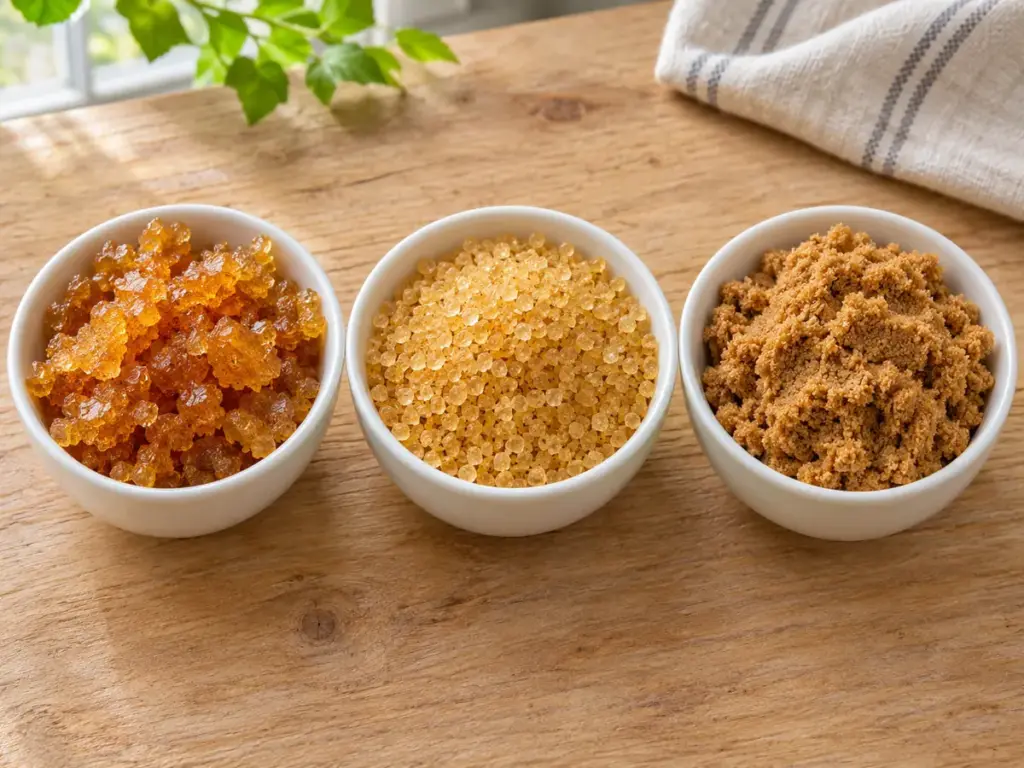
The two raw sugars overlap, and tasters do not line up neatly with the percentages, since America's Test Kitchen reported that some testers found demerara more molasses-y and caramel-like than turbinado. It also called the differences subtle and noted that color varies by brand.
Since color varies by brand, the shade of the bag in front of you is the best guide you have, although no source here ties a darker shade to more flavor.
If you want a flavor clearly deeper than either one, darker muscovado sugar keeps several times as much molasses, at 8 to 10% in Healthline's table. The dark syrup itself sells as molasses in the US and as black treacle in British recipes.
5. Where Do the Names Demerara and Turbinado Come From?
- Demerara is named for a former Dutch colony in what is now Guyana, where the sugar began, according to America's Test Kitchen.
- Turbinado takes its name from the turbine, the centrifuge that spins the crystals.
- Today, Healthline says most demerara sold comes from Mauritius, an island in the Indian Ocean, far from Guyana.
Wikipedia puts demerara at 97 to 99% pure sucrose with an amber color, so it sweetens like white sugar and brings flavor on top.
6. How Are They Made, and Are They Really "Raw"?
Both follow the same path from cane to bag, and the spin at step three is where turbinado got its name:
- Press the cane. Juice is squeezed from the stalks.
- Boil until crystals form. The juice is boiled down until sugar crystals grow in it.
- Spin off the syrup. A centrifuge (a "turbine") throws off most of the liquid molasses and leaves a thin film on each crystal.
- Dry and pack. The golden-to-amber crystals are dried and bagged, with no white-sugar refining step.
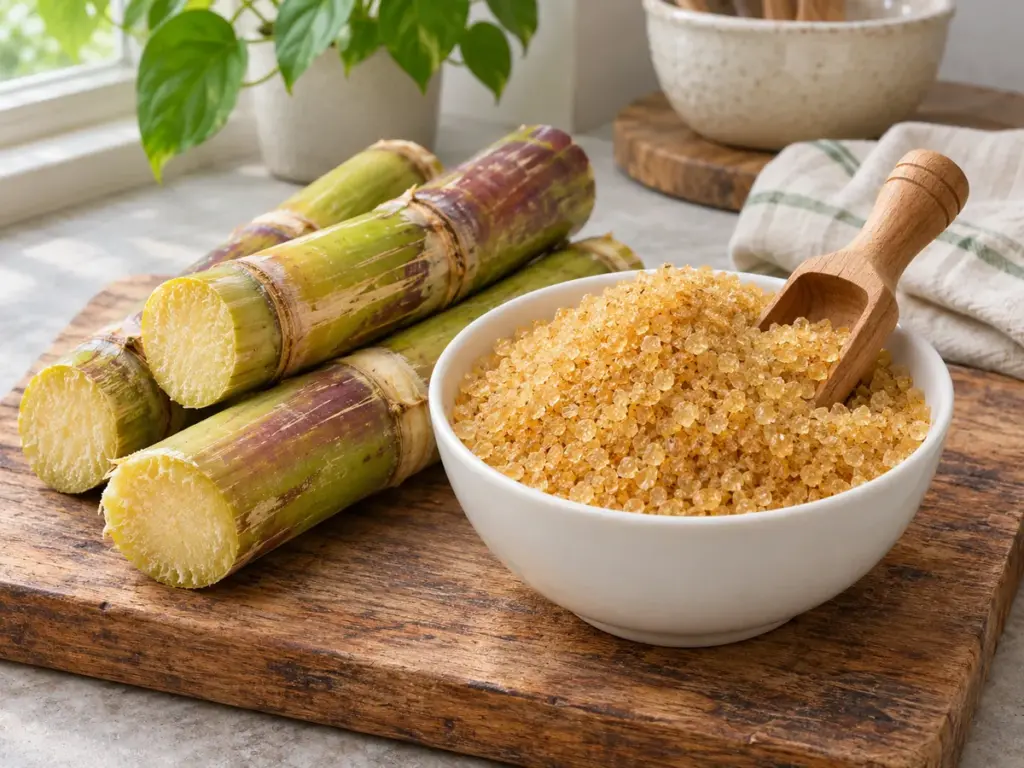
When you see "raw" on a bag, it suggests nothing was done to the sugar, and that overstates it. Healthline says true raw sugar holds soil and other impurities and is not suitable to eat, so turbinado is cleaned and processed further and "raw" works as a marketing word.
Wikipedia adds that natural brown sugars like demerara involve some refining.
Whole cane sugars that skip the spin, such as piloncillo, keep more molasses and belong to a separate category.
7. How Does Sucanat Compare With Demerara and Turbinado?
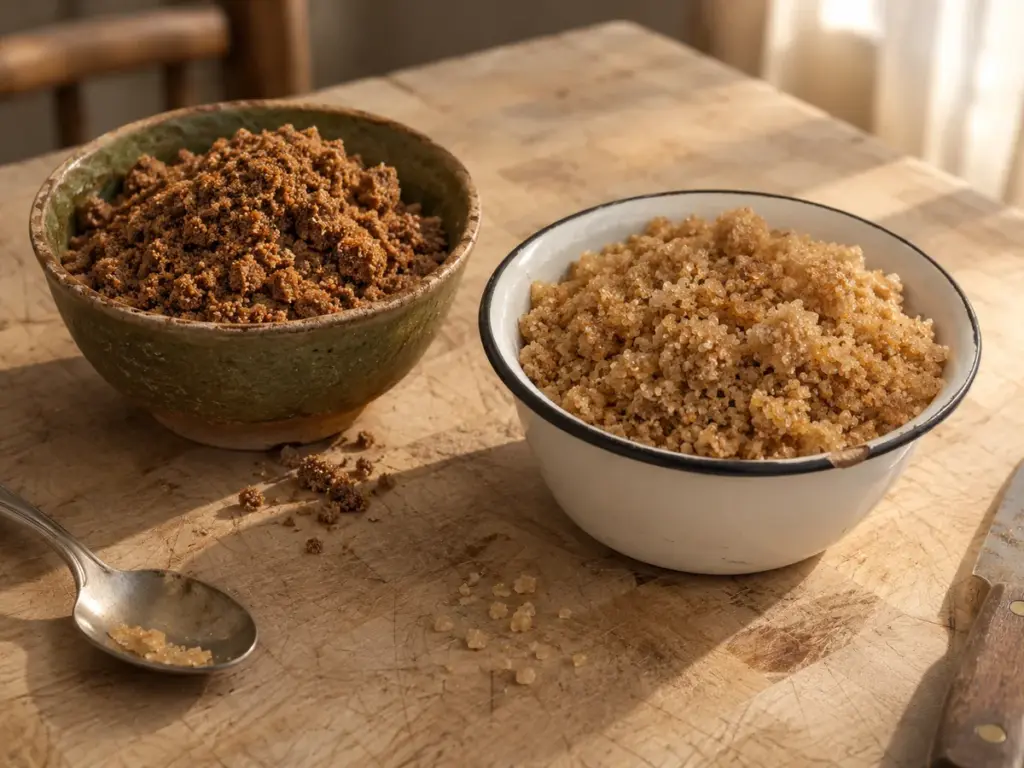
Sucanat, a third cane sugar, behaves differently from these two, since America's Test Kitchen describes it as minimally processed juice that is boiled, then beaten with paddles into irregular granules, with a tan-brown color and a molasses flavor.
8. Is Either One Healthier Than White Sugar?
Neither one is healthier, and the numbers show it, since USDA FoodData Central lists turbinado at 399 calories per 100 grams against 387 for plain granulated sugar. Per spoon, you get about the same calories as you do from white sugar.
The same USDA entry shows 0 g protein and 0 g fat and 99.8 g carbohydrate per 100 grams, and Healthline notes that turbinado has no fiber. It puts the trace calcium and iron at well under 1% of the daily value per teaspoon.
To match the antioxidants in ⅔ cup of blueberries, you would need 5 cups of turbinado, according to Healthline's math. The molasses film gives you flavor and almost no nutrition, and both sugars count as added sugar, so you can stick to the amount your recipe calls for.
9. Can You Use Demerara Instead of Turbinado, or the Other Way Around?
Yes, you can swap them in both directions at the same amount. USDA lists a cup of turbinado at 202 grams and a cup of granulated sugar at 200 grams, so a cup-for-cup swap adds nearly the same sugar either way.
Here is what you will notice with each direction:
- The amount stays the same.
- On a topping, you get just as much crunch.
- You measure out the same amount.
- In a batter, it dissolves as slowly as demerara does.
When a recipe calls for demerara, you can fall back on turbinado first and light brown sugar second, and more stand-ins for demerara sugar work when you have neither in the cupboard. With light brown sugar, you get baked goods that come out softer and moister, since it is damper and fine-grained.
For a recipe that wants turbinado, you can use demerara first and brown sugar second, and liquid turbinado sugar replacements such as honey or maple syrup only suit recipes that can absorb extra moisture.
10. Which Should You Buy or Use?
Because the two are so close, you can buy whichever is easier to find and cheaper per ounce.
Healthline says turbinado generally costs two to three times as much as white sugar, and prices vary by brand and store, so you will want to compare the unit price on the shelf tag. A small preference shows up in these situations:
- For a crunchy topping on muffins, scones or crisps, either one gives you the same crunchy crust.
- Hot tea or coffee takes either one, and a good stir dissolves it. If you like a caramel note in a plain black cup, you can choose the darker bag.
- For deep toffee flavor in sticky puddings, rum drinks or oatmeal, the darkest bag you find is the one we'd pick, whichever name it carries.
- Cookie or cake batter turns slightly gritty and speckled with either one unless you grind it first, so you will usually find light brown sugar easier to work with here.
You will most often see three names on the shelf:
- Sugar in the Raw is a turbinado brand, according to America's Test Kitchen.
- Wholesome Sweeteners sells an organic, Fair Trade turbinado.
- Florida Crystals sells a demerara sugar, listed under that brand name in USDA FoodData Central.
Sources
- Healthline: Turbinado Sugar (production, molasses percentages, nutrition, uses, price)
- Healthline: Demerara Sugar (origin, crystals, uses)
- Wikipedia: Brown sugar (natural brown sugars, centrifuging, demerara and turbinado)
- America's Test Kitchen (Cook's Country): Are Turbinado, Demerara and Sugar in the Raw Interchangeable?
- USDA FoodData Central: Sugars, granulated (FDC 169655)
- USDA FoodData Central: Demerara sugar, Florida Crystals (FDC 1937111)
- Wholesome Sweeteners: Organic Turbinado Raw Cane Sugar (product page)
Frequently Asked Questions
Can You Use Demerara or Turbinado Instead of Brown Sugar?
You cannot swap either one in cup for cup, because brown sugar is moister with smaller crystals, and the molasses table above shows it also holds more molasses than either raw sugar.
In cookies and cakes, you will want to grind the crystals first and expect a drier, less chewy result. When the recipe depends on moisture, you will find another brown sugar replacement fits better.

Food writer at GustoMeadow. Writes ingredient substitutes, food comparisons, taste guides and storage guides for home cooks.
Storage and food-safety numbers follow USDA, FDA and university extension guidance.



