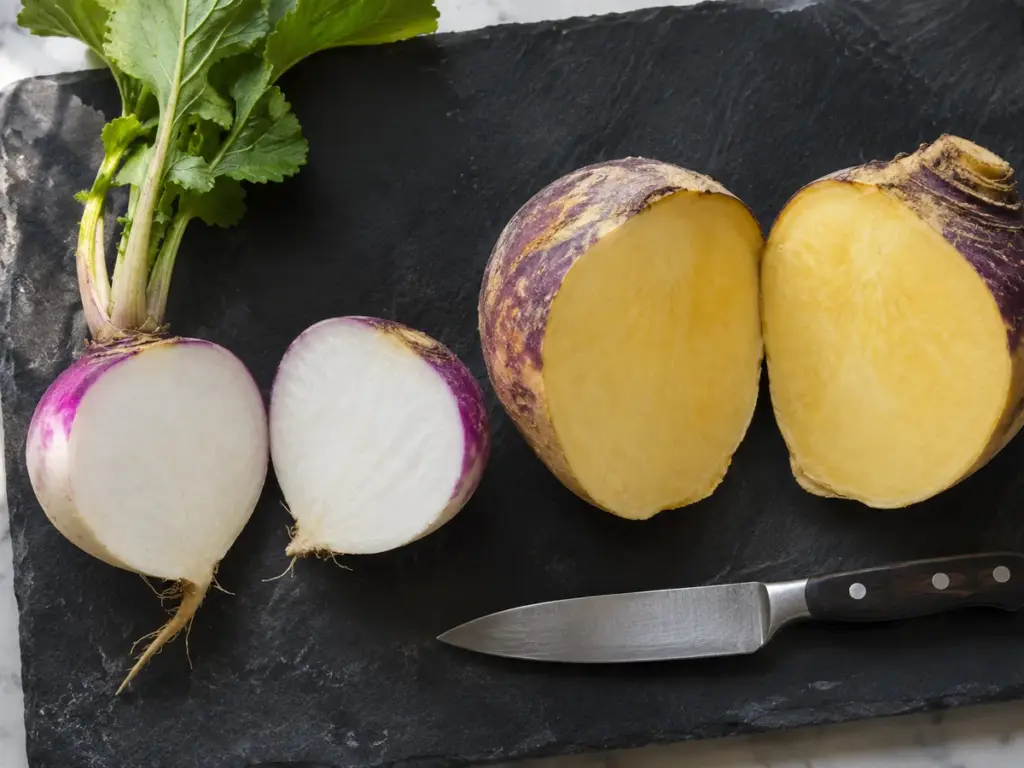
A turnip is small, white and peppery, and a rutabaga is bigger, yellow and sweeter, so cut one open and check the color.
- Rutabaga is a turnip and cabbage hybrid, a different species.
- You can swap them in cooked dishes, but rutabaga takes longer to boil.
- Use turnip for raw crunch and a sharp edge, and rutabaga for mash and roasting.
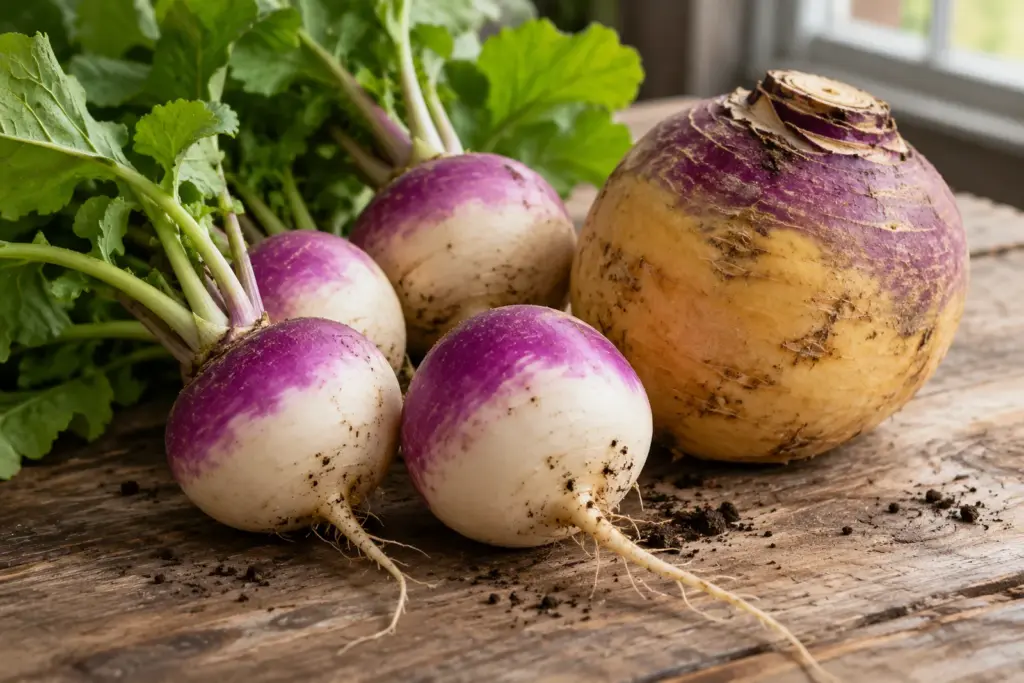
If you pick the wrong root, a sweet mash turns sharp. Among head-to-head food comparisons, this is a pair that looks alike and behaves differently once it is in the pot.
1. What Is the Difference Between Turnips and Rutabagas?
Line the two up on the traits below, which come from Clemson's extension service, and you will see that flesh color and taste are the two that change what you cook.
| Trait | Turnip | Rutabaga |
|---|---|---|
| Species | Brassica rapa | Brassica napus |
| Flesh | White | Yellow to cream |
| Flavor | Sharp, peppery | Mild, sweet |
| Harvest size | 2.5 to 2.75 inches wide | 3 to 4 inches wide |
Size shows up on the scale too. USDA lists a medium turnip at 122 grams and a medium rutabaga at 386 grams, so one rutabaga weighs about as much as three turnips.
2. Are Rutabagas Really a Cross Between a Turnip and a Cabbage?
Yes. NC State Extension calls rutabaga "a cross between turnips and cabbage", and Clemson gives the turnip as Brassica rapa and the rutabaga as Brassica napus. A Texas A&M plant history adds the chromosome count: turnip has 20 and rutabaga has 38, which equals a turnip's 20 plus a cabbage's 18.
That page also says nobody knows when or where the cross happened, so treat the Scandinavian link in the names "Swedish turnip" and "swede" as a guess. For you at the stove, the useful part is that the two are separate species with their own flavor and cooking time.
3. What Do Turnips and Rutabagas Have in Common?
Clemson places both in the Brassicaceae family, the group of cole crops and cruciferous vegetables, and the National Cancer Institute lists turnips and rutabaga among its cruciferous examples. That shared family is why you can cook them alike.
- Same methods: Illinois Extension lists roasting and boiling for both roots.
- Cool-weather crops: Clemson says fall is the time for both, and UF/IFAS says turnips handle frost.
4. How Can You Tell Them Apart at the Store?
Run through these checks in order, and stop as soon as one gives a clear answer.
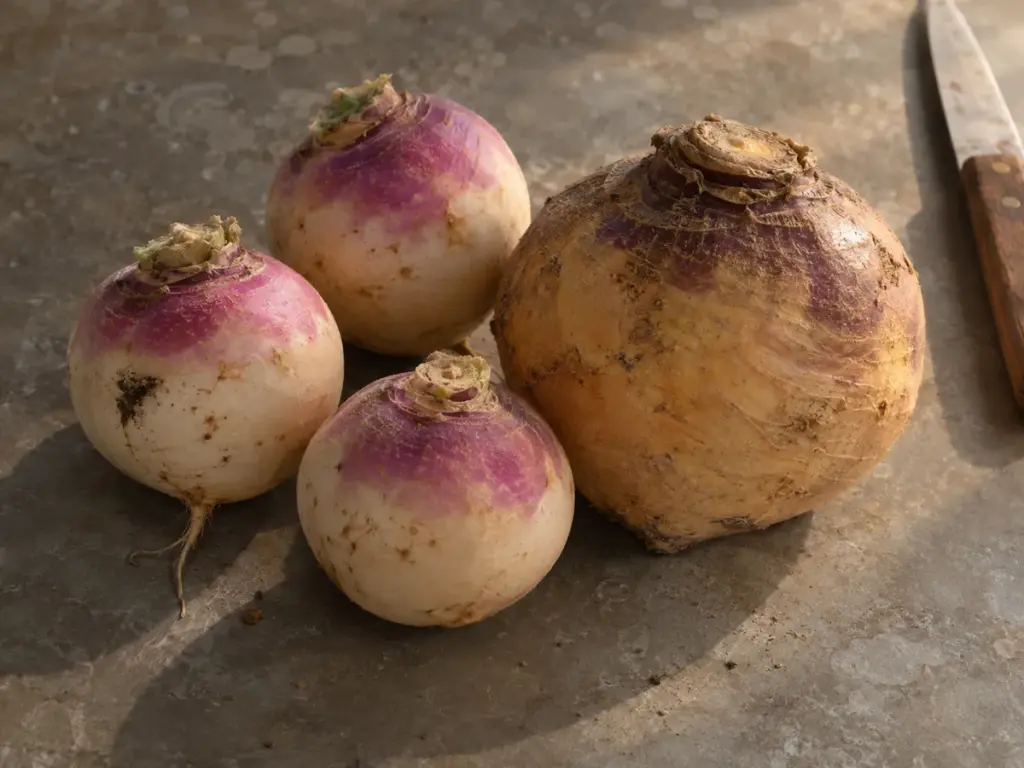
- Compare size. A root about 2.5 inches across (tennis-ball size) is usually a turnip, and one 3 to 4 inches across (softball size) is usually a rutabaga, going by Clemson's harvest sizes.
- Look at the skin. Illinois Extension says turnips are generally white with a light purple blush on top, so a small root with that blush is a turnip.
- Check for wax. Illinois Extension says most rutabagas are waxed before sale, so a shiny, slightly sticky skin is normal on a rutabaga, and a sharp vegetable peeler strips it.
- Read the leaves. If tops are attached, thin hairy dark green leaves mean turnip and thick smooth bluish-green leaves mean rutabaga.
- Cut a small slice. White flesh is a turnip, and yellow flesh is a rutabaga.
5. Which One Tastes Better Raw, and Which Cooks Sweeter?
Clemson describes turnip as sharp and peppery and rutabaga as mild and sweet. UF/IFAS adds that turnips taste more pungent once they grow wider than 3 inches, and both roots soften as they cook.
- You want a peppery bite in a salad.
- You braise beef or lamb and want a sharper edge.
- You need a root that boils sooner.
- You are mashing and want a sweet, buttery result.
- You roast wedges for caramelized edges.
- You want a mellow, sweet root in a stew.
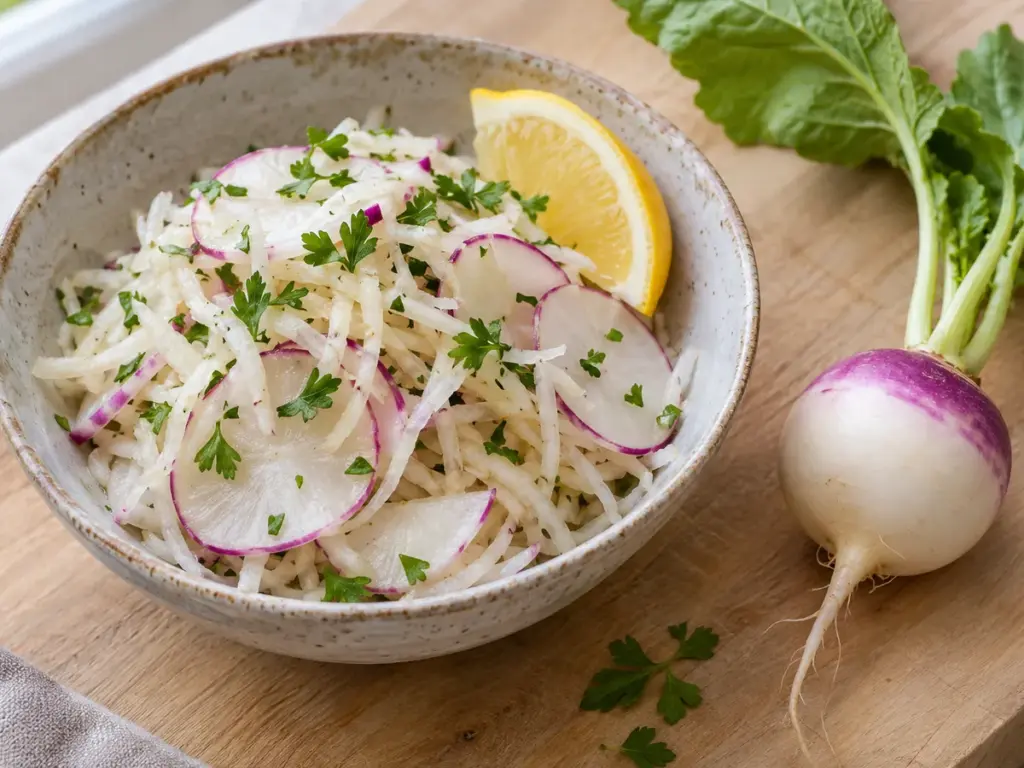
Illinois Extension says both roots can be served raw and grated in salads, and it adds that turnips also work as thin chips for dips. Montana State Extension says to cut small turnips into ¼ to ½ inch slices for a salad, slaw or vegetable tray. Raw turnip keeps its peppery edge, so squeeze lemon over it, while rutabaga, which Clemson calls mild and sweet, needs less.
6. Why Does a Turnip or Rutabaga Taste Bitter?
The National Cancer Institute says glucosinolates give cruciferous vegetables their sharp smell and bitter taste, so some bite is normal in both roots. A few causes make it stronger.
- Size: UF/IFAS says turnips wider than 3 inches turn pungent, pithy and stringy, so buy small to medium roots.
- Dry growing weather: NC State says drought can make rutabaga plants woody and bitter, and it says frost improves their flavor.
You can also tame the bite at the stove. Boil turnips uncovered so the bitter gases escape, says Montana State Extension, and add ½ teaspoon of sugar and 1 ½ teaspoons of lemon juice to 3 medium turnips, as Oregon State does.
7. How Do You Cook Turnips and Rutabagas?
Extension kitchens give these times. The clearest gap is in boiling: turnip pieces take about 15 to 20 minutes and rutabaga cubes 20 to 35. The roasting times below use different cut sizes, so do not compare them directly.
- Boil or steam: ½ to 1 inch pieces, about 15 to 20 minutes (Montana State Extension).
- Roast: quarters at 425°F for 20 to 30 minutes (Montana State Extension).
- Boil or steam: cubed, 20 to 35 minutes in boiling water (Illinois Extension).
- Roast: ¼ inch wedges at 425°F, 15 minutes, flip, then 10 to 15 more (University of Nebraska).
- Braise in a skillet: Oregon State Extension simmers diced turnips 30 to 40 minutes in broth until it evaporates. Cut rutabaga smaller for the same method.
- Bake whole: Illinois Extension says small turnips can be baked whole, like a potato.
- Mixed root pan: Illinois Extension says rutabaga roasted with other roots, such as potatoes or beets, loses its tangy edge.
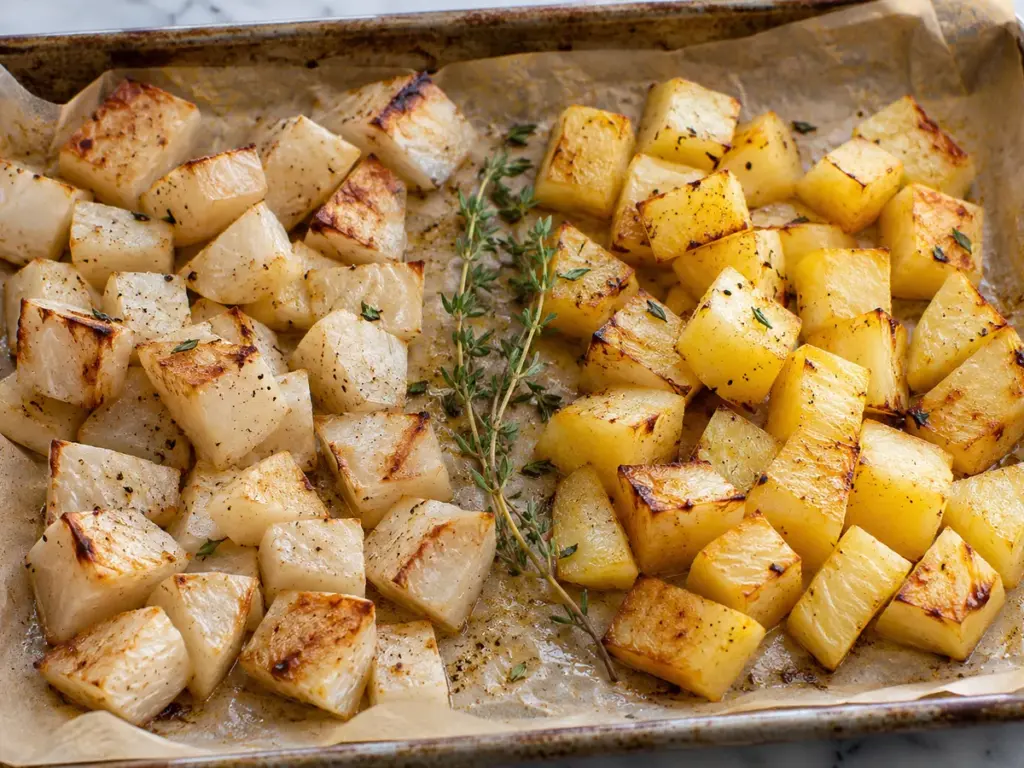
If you roast both on one pan, cut the rutabaga into smaller pieces than the turnip so they finish together, and test each with a fork instead of trusting the clock. Peel rutabaga first, because the skin is thick and may carry wax, and a vegetable brush under running water gets soil off both roots, as the Nebraska recipe does before peeling.
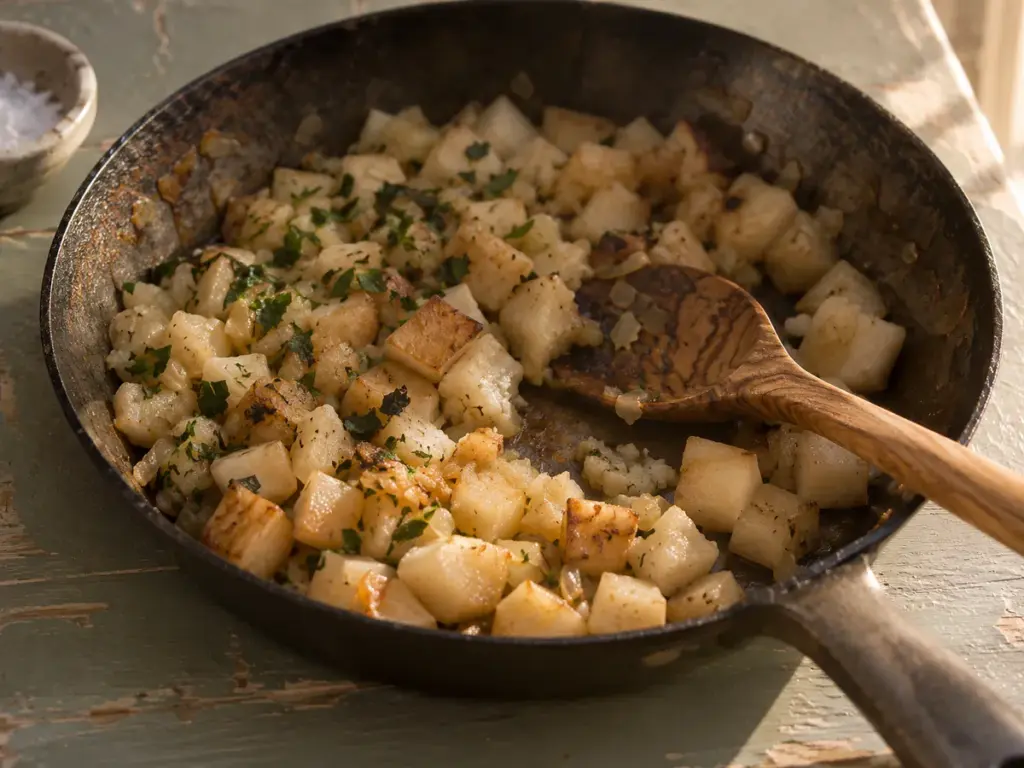
Skillet Turnips with Onion and Lemon
The Oregon State recipe makes 3 cups from 3 medium turnips and shows you how a sharp turnip softens in broth.
- Soften the base. Cook ¼ cup chopped onion and 1 garlic clove in 2 teaspoons butter for about 5 minutes.
- Brown the turnips. Add 3 diced medium turnips and ½ teaspoon sugar, and stir until lightly browned.
- Simmer in broth. Pour in 1 cup low-sodium broth and simmer 30 to 40 minutes, until the liquid evaporates and the turnips are tender.
- Finish. Off the heat, stir in 1 ½ teaspoons lemon juice, parsley, salt and pepper.
Parmesan Rutabaga Fries
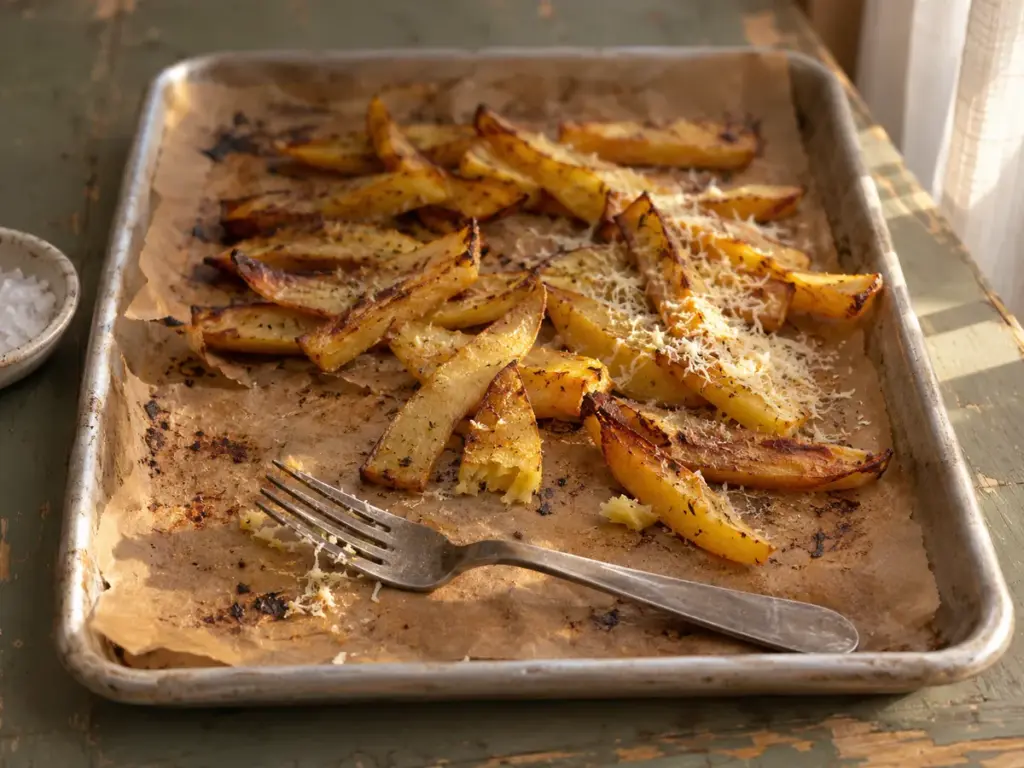
The University of Nebraska recipe turns 2 medium rutabagas into 4 servings and needs no deep fryer.
- Prep. Heat the oven to 425°F, scrub and peel the rutabagas, and cut them into wedges about ¼ inch thick.
- Season. Toss the wedges with 1 tablespoon oil, ½ teaspoon garlic powder and 1 tablespoon Italian seasoning, then spread them in one layer on a sprayed baking sheet.
- Bake. Roast 15 minutes, flip, and roast 10 to 15 minutes more, until soft inside, well browned and crisp outside.
- Finish. Sprinkle on 1 tablespoon grated Parmesan and serve at once. Leftovers keep up to 4 days in the fridge.
Rutabaga Mash
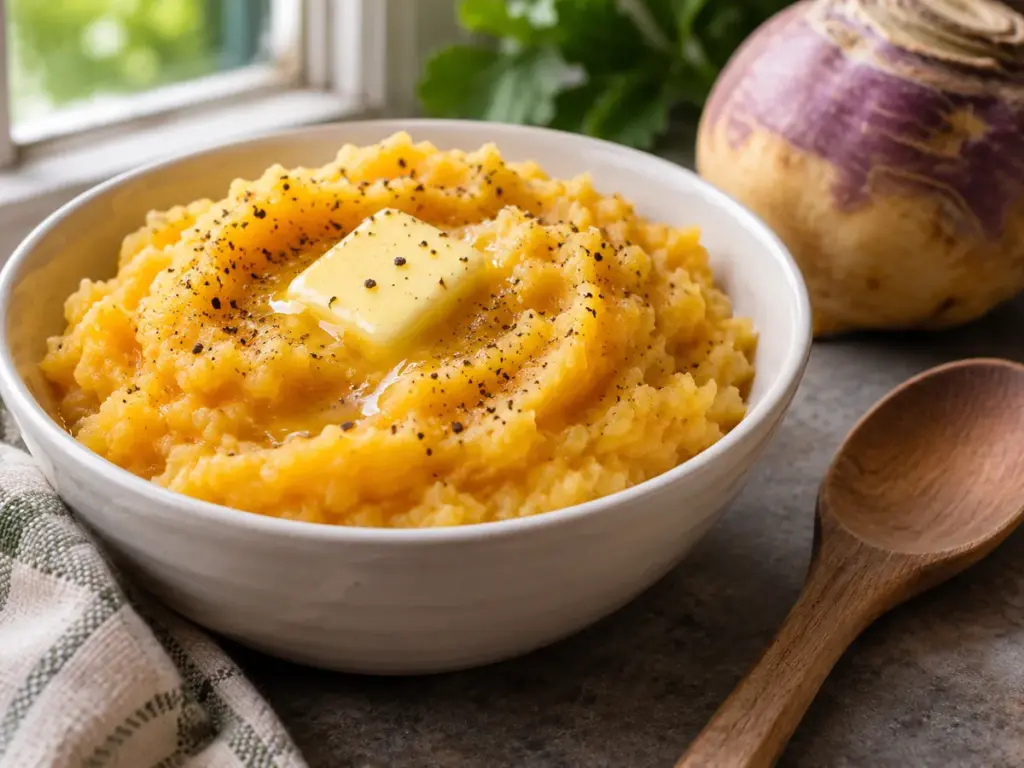
Simmer peeled rutabaga cubes until a fork slides through, which Illinois Extension puts at 20 to 35 minutes, then drain well and mash with butter and pepper. Mash it as you would potatoes, and expect a yellower bowl.
8. Can You Use a Turnip Instead of a Rutabaga?
In cooked dishes you can swap them by weight, and the changes are in flavor and time. Count by weight and not by root, because one medium rutabaga is about three medium turnips.
- Turnip in place of rutabaga: the dish turns sharper and a little less sweet, so a pinch of sugar helps. Oregon State's savory turnip recipe adds ½ teaspoon of sugar to 3 medium diced turnips. Shorten the cooking time and check early.
- Rutabaga in place of turnip: the dish turns sweeter and milder, so add lemon juice or black pepper if you want the sharpness back. Cut the pieces smaller or cook them longer.
- Raw dishes: grate rutabaga fine and add lemon, since it is milder than turnip and has no peppery bite.
If the store has neither root, you can try parsnips in place of turnips. Daikon and broccoli stems are two more ways to replace rutabaga. A beet is a poor stand-in for either root because its juice stains the dish red, which is one of several gaps between beets and turnips.
9. Which Has More Nutrition, Turnip or Rutabaga?
USDA FoodData Central lists these values for 100 grams of raw root, about a small half cup of cubes.
| Per 100 g, raw | Turnip | Rutabaga |
|---|---|---|
| Calories | 28 | 37 |
| Carbohydrate | 6.4 g | 8.6 g |
| Fiber | 1.8 g | 2.3 g |
| Vitamin C | 21 mg | 25 mg |
| Potassium | 191 mg | 305 mg |
| Calcium | 30 mg | 43 mg |
Rutabaga is higher in every row, so if you want fewer calories, turnip is the lighter pick at 28. Against the 90 mg daily value for vitamin C, turnip supplies about 23% and rutabaga about 28%, which makes either one a modest source.
- Protein: 0.9 g in turnip and 1.08 g in rutabaga.
- Iron: 0.3 mg and 0.44 mg.
- Magnesium: 11 mg and 20 mg.
- Folate: 15 micrograms and 21 micrograms.
Turnip is higher in sodium, 67 mg against 12 mg, and neither root has vitamin A, since USDA lists 0 micrograms for both.
Per root you get a bigger gap, because a medium rutabaga weighs about three times a medium turnip: about 143 calories against about 34, from the USDA portion weights and the per-100 g values above.
The National Cancer Institute says the sulfur compounds in cruciferous vegetables, glucosinolates, break down during food preparation, chewing and digestion into active compounds, and that human studies on cancer have shown mixed results. Eat either root because it tastes good and adds fiber, not as a cure.
10. Which Should You Buy, and How Do You Pick Good Roots?
- Long-simmered stew: either root works, with the rutabaga cut smaller.
Choose roots that feel heavy for their size, with firm skin and no soft spots. Illinois Extension adds that small to medium turnips are sweeter and more tender.
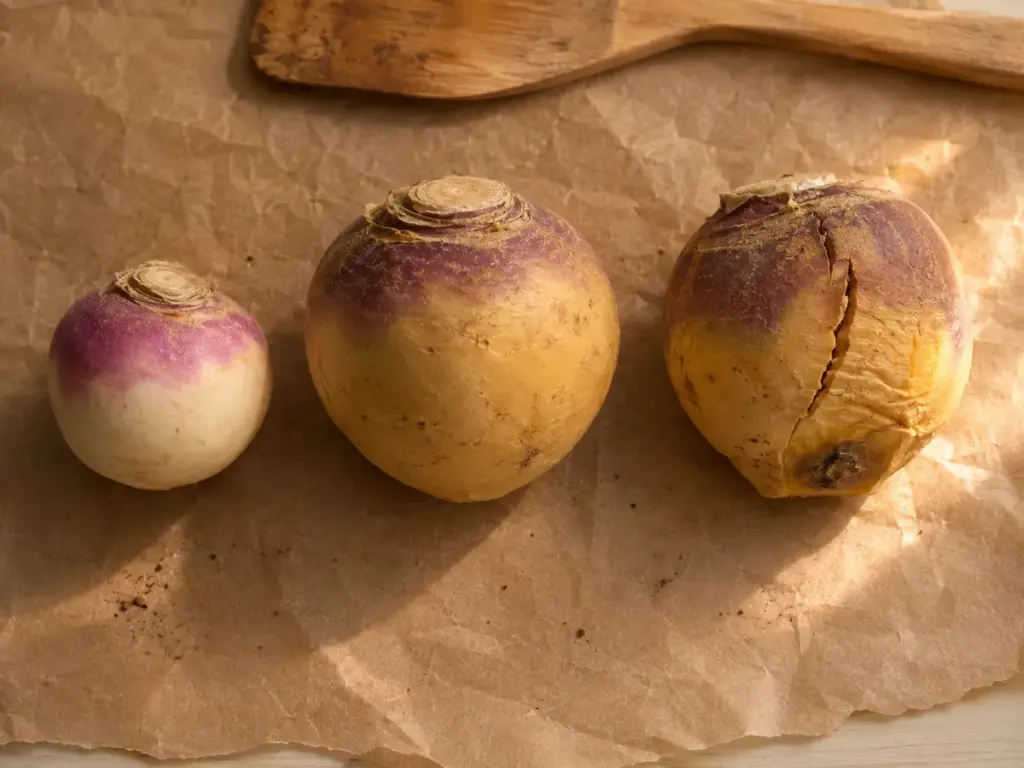
For rutabaga, Illinois Extension says to look for smooth, firm skin and a round shape, with no punctures, deep cuts or cracks. NC State says bulbs are best picked at about 3 to 5 inches wide, because larger ones can turn tough.
Shop in the right season: Clemson says fall is the time for both. A turnip matures in about 40 to 60 days (UF/IFAS), while a rutabaga takes roughly 3 to 4 months.
11. How Do You Store Turnips and Rutabagas?
Remove any green tops before you store the roots, as Illinois Extension advises. Illinois Extension gives you about 2 weeks in the fridge for turnips and up to 3 weeks for rutabagas.
- Fridge: Illinois Extension keeps turnips in the crisper or a plastic bag, and unwashed rutabagas in a plastic bag for up to 3 weeks.
- Root cellar: Oregon State quotes Missouri Extension at 32 to 40°F with 90 to 95 percent humidity, which keeps rutabagas up to 6 months.
Rutabaga can take a frost but must not freeze, so you can use a garage that stays above freezing in place of a cellar, per the same Oregon State page.
- Freeze turnips: ½ inch cubes, blanched 2 minutes, then cooled, packed with ½ inch of headspace and frozen for 8 to 10 months.
- Freeze rutabaga: cubes blanched 3 minutes, cooled and packed the same way.
Can You Eat the Greens?
Illinois Extension says you can eat turnip tops cooked or raw in salads. You can cook turnip greens like collards if you want a braised pot of them.
- Turnip greens, 1 cup cooked: 20 calories, 3.5 g fiber and 136 mg calcium.
- Turnip root, 1 cup cooked: 34 calories, 3.1 g fiber and 51.2 mg calcium.
Illinois Extension lists both numbers, so the greens give you more than twice the calcium of the root for fewer calories.
Sources
- Clemson HGIC: Rutabagas and Turnips, What's the Difference?
- NC State Extension: Brassica napus, Napobrassica Group
- Plant Answers (Texas A&M): Turnip and Its Hybrid Offspring
- Illinois Extension: Preparing Turnips and Preparing Rutabaga
- University of Nebraska: Roasted Parmesan Rutabaga Fries
- Oregon State Extension: Savory Turnips and Rutabagas harvest and storage
- Illinois Extension: Rutabaga Win
- Montana State University Extension: Turnips
- UF/IFAS Gardening Solutions: Turnips
- National Cancer Institute: Cruciferous Vegetables and Cancer Prevention
- USDA FoodData Central: Turnips, raw and Rutabagas, raw
- Illinois Extension: Turnip
Frequently Asked Questions
Can you eat rutabaga leaves?
Yes, you can eat them. NC State Extension says the roots and leaves are both edible, and you can pick the greens once they reach about 4 inches tall.
Can you freeze mashed rutabaga?
Yes. Illinois Extension tells you to cook chunks in boiling water until tender, drain, mash, cool, pack with headspace, seal and freeze.
Can you can turnips or rutabagas at home?
Illinois Extension says home canning is not recommended for rutabaga, and you can can turnips but they usually discolor and develop strong flavors. For both roots, freezing is the route you can trust.

Food writer at GustoMeadow. Writes ingredient substitutes, food comparisons, taste guides and storage guides for home cooks.
Storage and food-safety numbers follow USDA, FDA and university extension guidance.