
Red enchilada sauce is made from dried red chiles such as guajillo, ancho or New Mexico, and green from tomatillos and green chiles.
- Red tastes deep, earthy and a little smoky, and green tastes tangy, fresh and herbal.
- The chiles and the label set the heat, so color tells you little.
- Red suits beef, pork and beans, and green suits chicken, seafood and vegetables.
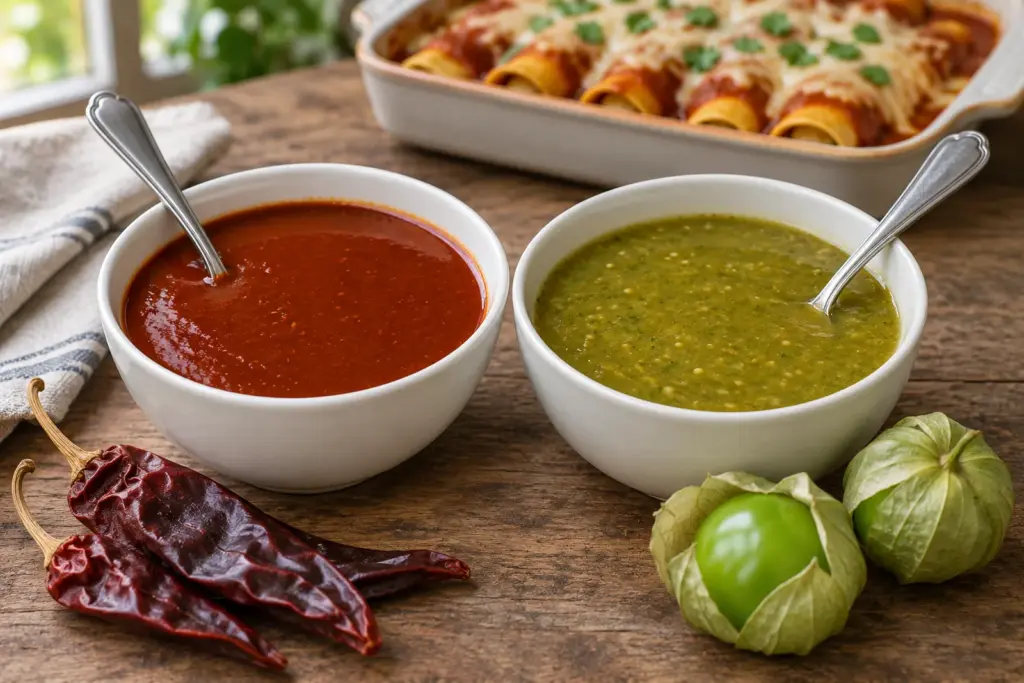
Red and green enchilada sauce make one of the simpler pantry food comparisons, because the base ingredient sets the color, the flavor and the fillings each sauce suits.
The base also tells you what happens when a recipe calls for one sauce and you only have the other.
1. What Is the Difference Between Red and Green Enchilada Sauce?
The first table covers what goes into each sauce and how it is cooked, and the second shows what that base does to flavor, color, heat and fillings.
| Trait | Red enchilada sauce | Green enchilada sauce |
|---|---|---|
| Base | Dried red chiles such as guajillo, ancho or New Mexico | Tomatillos plus green chiles such as jalapeño, serrano, poblano or Anaheim |
| How it is cooked | Chiles are toasted, soaked and blended, then simmered | Tomatillos and chiles are roasted or boiled, blended, then simmered |
Dried chiles turn sweet and concentrated as they dry, while tomatillos stay tart and juicy, so you taste one sauce as deep and the other as bright.
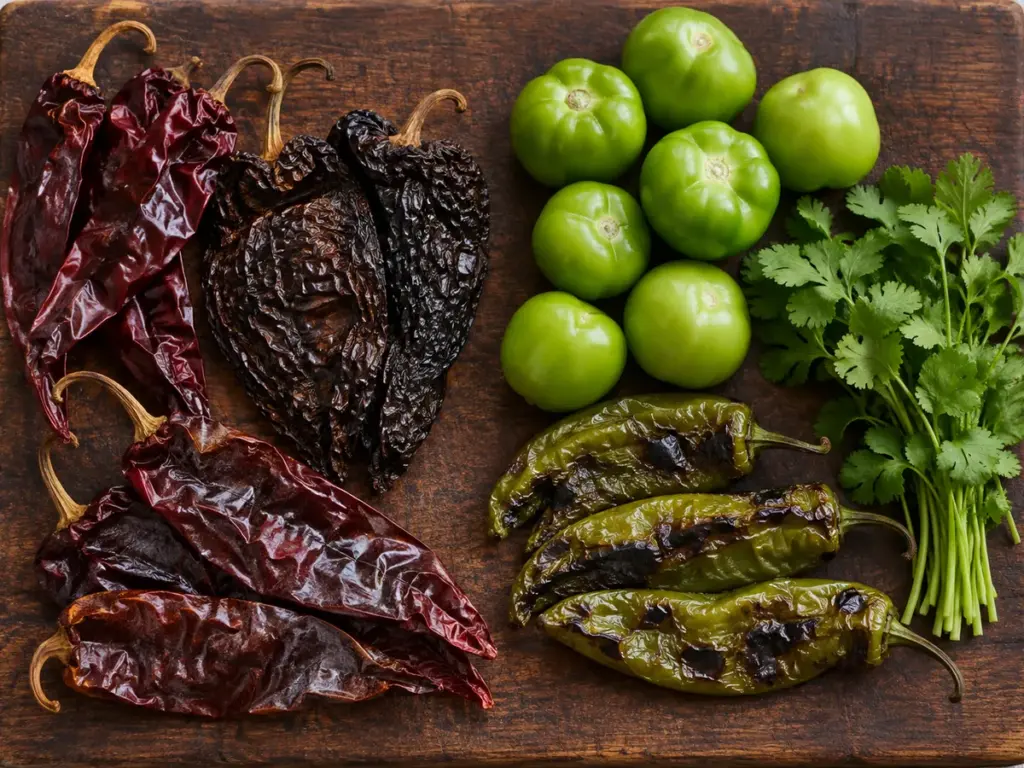
| Trait | Red enchilada sauce | Green enchilada sauce |
|---|---|---|
| Flavor | Deep, earthy, lightly sweet and smoky | Tangy, fresh and herbal |
| Color | Brick red to dark red-brown | Light green to olive |
| Heat | Set by the chiles and the label | Set by the chiles and the label |
| Best fillings | Beef, pork, beans, cheese | Chicken, seafood, vegetables, cheese |
The heat row reads the same for both sauces because the chiles decide the heat, so you get a clearer answer from the Scoville numbers further down.
2. What Goes Into Red Enchilada Sauce?
Red sauce starts with dried red chiles that you boil in broth with garlic and onion, then blend, and cumin and oregano round it out.
If you want a sturdier sauce, you cook flour with the sautéed onions and spices before any liquid goes in. The flour keeps the sauce from turning the tortillas soggy.
- Dried-chile style: you toast, soak and blend ancho, guajillo or New Mexico chiles.
- Flour-thickened style: you cook flour with onions and spices, then add broth.
- Tomato shortcut: you stir together tomato sauce, broth, garlic, cumin and chipotle chile powder.
The shortcut is how many canned and quick recipes work, and a Food Network red sauce for sweet potato enchiladas is built that way. That version tastes smokier and more like tomato than like chile.
3. What Goes Into Green Enchilada Sauce?
Green sauce is built on tomatillos, jalapeños, cilantro, garlic, onion, oil and lime juice. Some versions also add bell pepper or spinach, and some recipes add poblano or other green chiles to change the heat.
You roast the tomatillos and peppers, blend them with the rest, then thin the sauce with stock or water as it simmers on the stove.
Recipes for green sauce change a lot by region and cook. Whatever else goes in, the tomatillos give the sauce its color, and the lime and cilantro keep it bright.
4. How Do Red and Green Enchilada Sauce Taste?
Red sauce tastes deep, lightly sweet and a little smoky, because drying and toasting concentrate the flavor of the chiles. Ancho chiles are poblanos left to ripen, and they taste sweet and mild.
Guajillo tastes tangy and fruity, and New Mexico chiles taste earthy, so the mix you buy sets the character of your sauce.
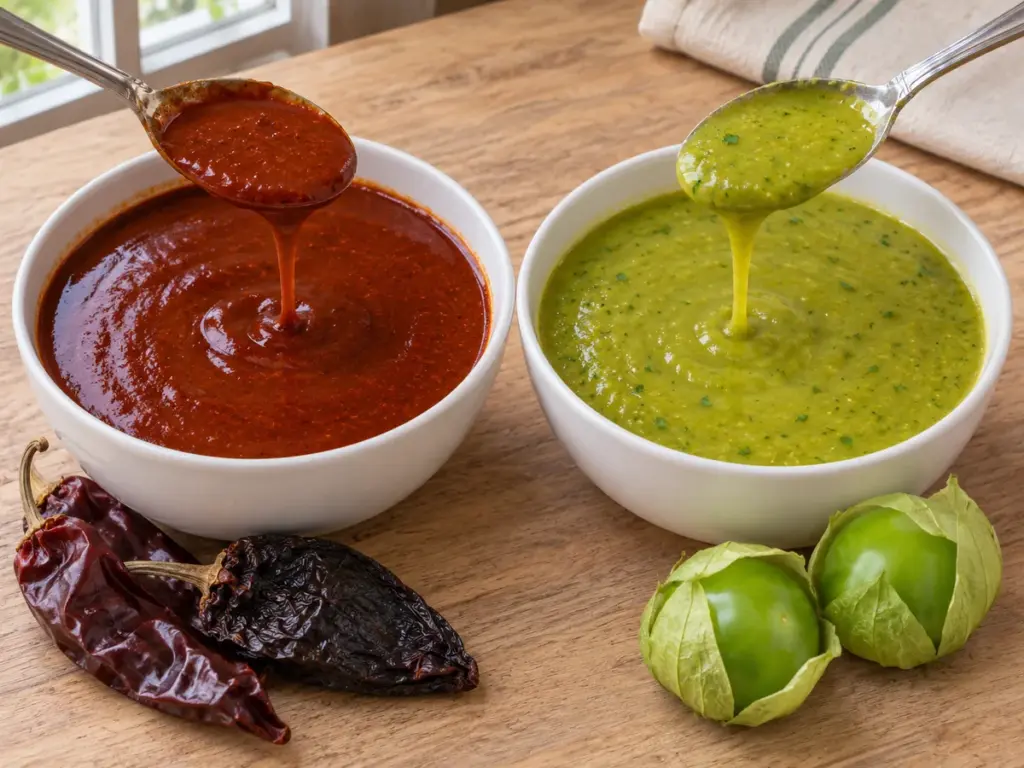
Green sauce starts with tomatillos and their tart, citrusy flavor. Fresh green chiles add a peppery, vegetal note, and cilantro, onion and lime push the whole sauce toward bright and herbal.
You taste that tartness as a lift, because green sauce cuts through the melted cheese and cream on enchiladas, while red sauce meets rich fillings with depth.
How Thick Is Each Sauce?
You can pour both sauces, and neither is thick like gravy. Green sauce stays thin and smooth, thinner than a jar of salsa verde, because the cook thins it with stock or water.
Red sauce is often a little thicker, since many versions use flour. If yours runs thin, you can simmer it longer or whisk in a cornstarch slurry to make it a good deal thicker.
You see the difference in the pan, because a sauce that coats a spoon clings to the tortillas, while a watery one pools and softens them.
5. Which Is Hotter, Red or Green Enchilada Sauce?
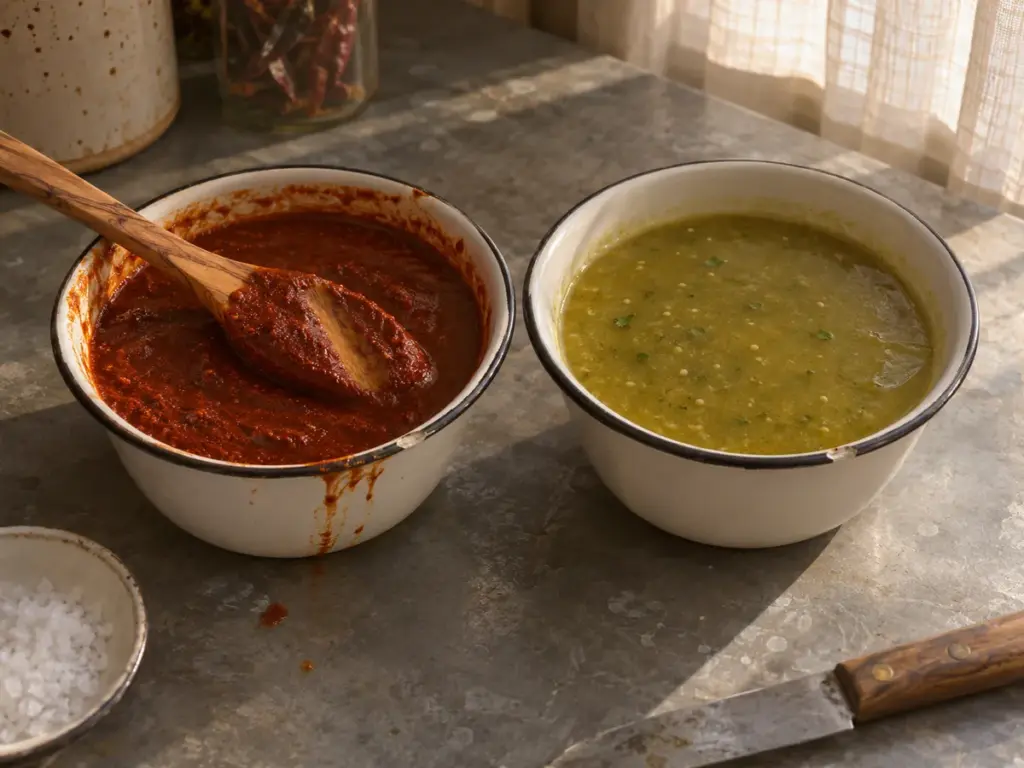
Neither color is reliably hotter, and green sauce is only sometimes milder than red.
The heat depends on which chiles go into the pot and whether their seeds do, and tomatillos add tartness but no heat of their own.
- Ancho: 1,000 to 1,500 SHU
- Guajillo: 2,500 to 5,000 SHU
- New Mexico or Anaheim: 500 to 2,500 SHU
- Poblano: 1,000 to 1,500 SHU
- Jalapeño: 2,500 to 8,000 SHU
- Serrano: 10,000 to 23,000 SHU
SHU means Scoville heat units, and a serrano can run several times hotter than a jalapeño. A green sauce made with serrano instead of jalapeño can beat a red sauce made with ancho, while a mild poblano green sauce stays gentler than one made with guajillo.
- In red sauce, ancho keeps things mild, and you can take the seeds out of dried chiles for a smoother, less spicy sauce.
- In green sauce, poblano or Anaheim stays gentle, and you push the heat up with jalapeño or serrano, seeds included.
Chile variety and growing conditions change the heat more than ripeness or color does, though ripeness changes how the heat feels, as the pod comparison in the next section shows.
Canned sauces print mild, medium or hot on the label, which gives you the heat before you buy. A homemade batch has no label, so a taste from the spoon before it goes over the tortillas tells you what your chiles did.
6. Why Does Green Enchilada Sauce Mean Two Different Sauces?
Mexican-style green sauce starts with tomatillos and fresh chiles such as jalapeño or serrano, with cilantro and lime. New Mexico-style green sauce uses roasted green chile pods such as Hatch or Anaheim, and many versions leave out the tomatillos.
The ingredient list tells you which one a recipe means: tomatillos point to the Mexican kind, and roasted Hatch or Anaheim pods with no tomatillos point to the New Mexico kind.
New Mexico also explains why red and green sit side by side on menus there. A chile pod picked early is green, and a pod left on the plant to ripen turns red and is usually dried, so green and red chile peppers differ mostly in ripeness and handling.
- Fresh, grassy and vegetal with a tart edge
- Sharp heat that arrives fast and fades
- Sweeter and earthier, with dried-fruit and smoky notes
- Slow heat that builds and lingers
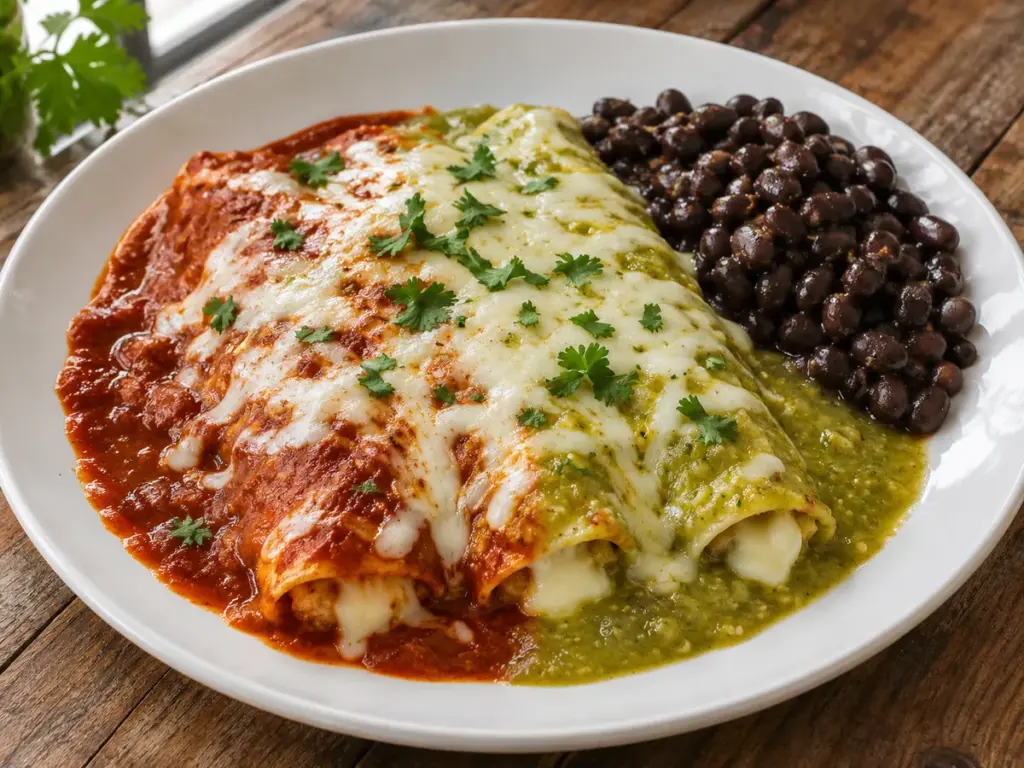
If you order a plate "Christmas," you get both sauces.
What Is Suiza Sauce?
Suiza sauce is a creamy green sauce made with tomatillos, onions, cilantro, green chiles and Mexican crema. Enchiladas suizas are usually filled with shredded chicken and topped with a melting cheese before baking.
If you have no crema, stand-ins for crema such as sour cream, or heavy cream with yogurt, give you the same rich, tangy finish. Plain green enchilada sauce has no cream.
Is Green Enchilada Sauce the Same as Salsa Verde?
Green enchilada sauce is a different product from salsa verde, because salsa verde is a table salsa of boiled or roasted, blended tomatillos with no stock added.
That makes it thicker and sharper than enchilada sauce, and you spoon it on at the table as a dip or a taco topping.
Enchilada sauce is cooked and thinned with stock or water, so if a jar of salsa verde is all you have, you simmer it with a few spoonfuls of broth for several minutes before you pour it over the tortillas.
What About the Red and Green Salsas on the Table?
Table salsas split the same way, and the two kinds differ in base, burn and smoke.
- Simmered, blended tomatillos with serrano chiles and garlic
- Usually the most burn, with a sharper, more acidic bite
- Mostly rehydrated red chiles, sometimes with tomatoes
- Smoky from charred chiles, as hot as verde or often milder
Salsa verde suits fish tacos, while roja suits most meats, and roja's smoke can overpower a light taco. Enchilada sauces break this pattern, because their heat depends on the chiles you choose.
7. Which Sauce Should You Use for Which Filling?
Tradition matches red with beef and pork and green with chicken, and you can break the match whenever your filling asks for it.
- You fill the tortillas with beef, pork or refried beans
- You want a deep, savory sauce with a smoky edge
- You want a savory cheese-only pan
- You fill the tortillas with chicken, turkey or shrimp
- You cook spinach, mushroom or squash enchiladas
- You want tartness to cut through heavy cheese or cream
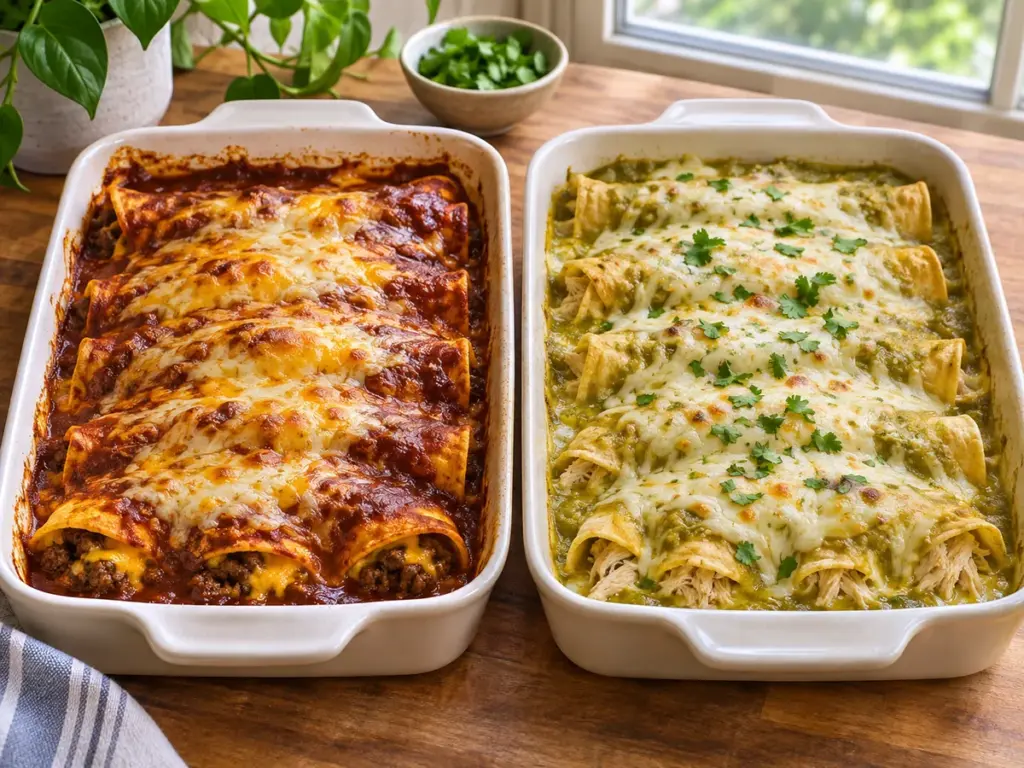
- Shredded chicken or turkey goes best under green sauce, because the tartness lifts a mild meat that red sauce would cover.
- Beef, pork or refried beans hold up under red sauce, because its deeper flavor matches theirs.
- Cheese-only or vegetable enchiladas work under either one, so you pick red for a savory pan and green for a tangy one.
Under either sauce, the usual sides for chicken enchiladas, such as black beans and rice or a tossed salad, work as well.
If your table is split, you can fill one half of the pan with red and the other half with green.
What About Pork, Beans and Casseroles?
Pork works under green sauce too, and in carnitas enchiladas verdes the tart sauce balances the rich meat.
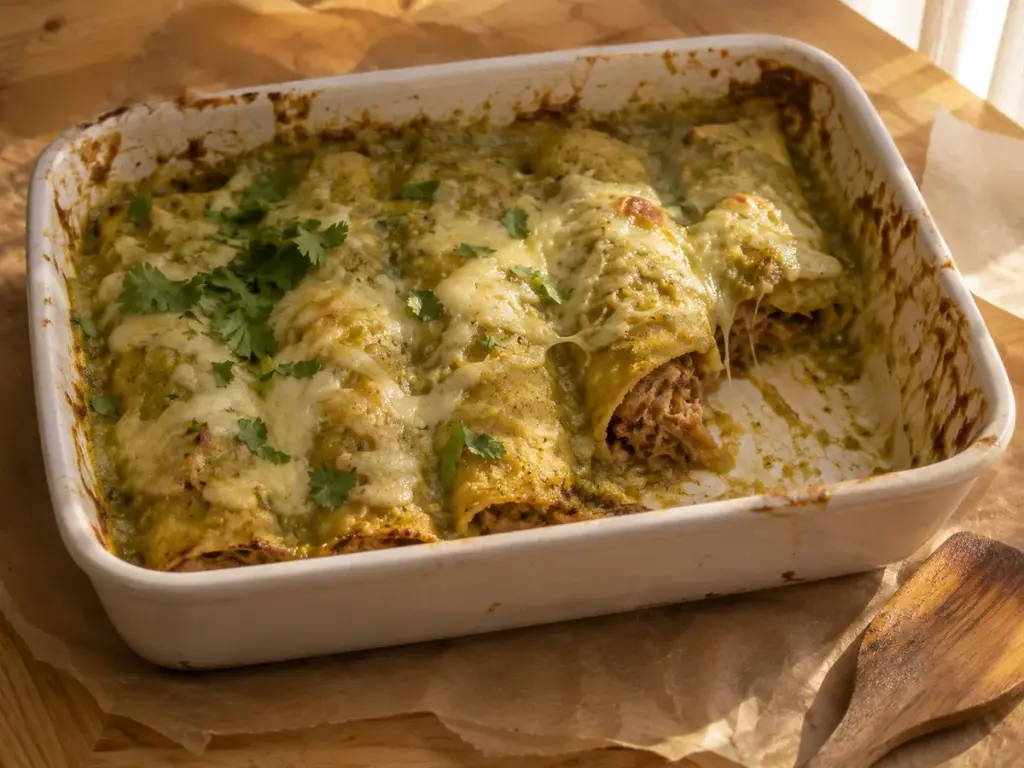
Vegetable fillings take either sauce. Food Network's sweet potato and black bean enchiladas use red sauce, and other cooks top the same filling with salsa verde for a tangier pan.
If you layer a casserole instead of rolling enchiladas, the same rule holds, with red for beef and green for chicken, though either sauce works in the layers.
8. How Much Sauce Does a Pan of Enchiladas Need?
You put a little sauce under the tortillas and the rest on top. One Food Network recipe for a 13-by-9-inch dish uses 1 cup in all, with ¼ cup on the bottom of the dish and ¾ cup over the rolled enchiladas and cheese.
The same split works with green sauce. Whichever you pour, you want the sauce to cover the tortilla ends, because bare edges dry out and crisp in the oven.
9. Can You Use Red Instead of Green Enchilada Sauce, or the Reverse?
Yes, and a 1:1 swap by volume works in baked enchiladas, because both sauces are cooked, seasoned with onion and garlic, and thin enough to pour. The pan will taste different, and each direction loses something you can partly put back.
- Red in place of green: the pan turns darker and sweeter and loses its tart edge, so a squeeze of lime juice over the baked enchiladas helps if you fill them with chicken or cheese.
- Green in place of red: the pan turns lighter and tangier, and beef or pork can taste thin underneath it, so you simmer the sauce a few minutes longer to thicken it first.
If you have no jar of either, taco sauce warmed with a little cumin and garlic is the closest of the stand-ins for enchilada sauce in the red style.
For the green style, you can reach for tomatillo avocado sauce or a simmered salsa verde from the green enchilada sauce replacements.
10. Is Red or Green Enchilada Sauce Healthier?
Neither color is healthier on its own. USDA lists a mild ready-to-serve red enchilada sauce at 30 calories and 547 mg of sodium per 100 g, which is about 306 mg in a ¼ cup.
USDA has no green enchilada sauce entry, and its jarred salsa verde carries 906 mg of sodium per 100 g. Sodium varies far more by brand than by color, so you learn more from the nutrition panels than from the color.
- Sodium: you can compare the milligrams per serving on the cans in front of you.
- Wheat flour: a sauce thickened with it is not gluten-free, so you check the ingredient list if you avoid gluten. A cornstarch or tapioca starch slurry can replace the flour in a homemade sauce.
- Acid: USDA puts raw tomatillos at pH 3.83, and that acid is the tang you taste in green sauce.
11. How Do You Make Red and Green Enchilada Sauce at Home?
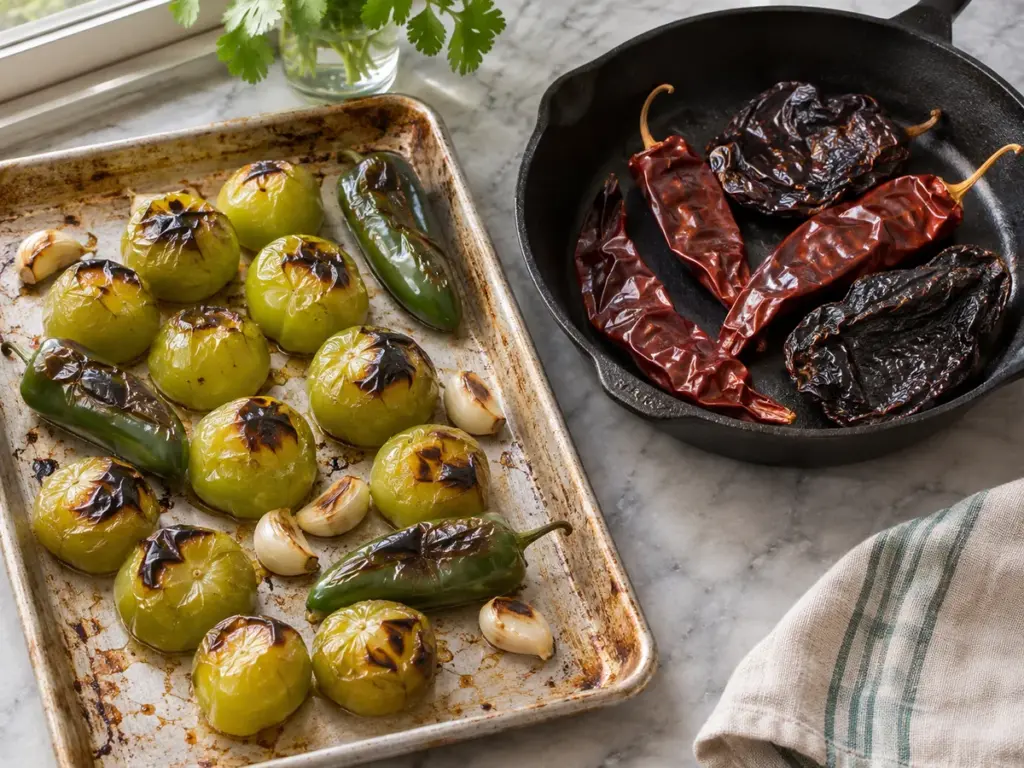
Both sauces take a few ingredients and one blender, and the browning step needs the most care. Tomatillos, jalapeños and garlic can stay under the broiler until they blister, while dried chiles turn bitter if they toast too long.
Red Sauce From Dried Chiles
- Toast the chiles. Stem and seed the dried chiles, then press them into a dry skillet over medium heat until they smell sweet and start to puff. Pull them off at once, because scorched chiles turn the sauce bitter.
- Soak them. Cover the chiles with hot water until they are soft.
- Blend. Move the chiles to a blender with garlic, onion, cumin, oregano and fresh broth.
Step 4. Simmer. Cook the puree in a saucepan until it coats a spoon, then salt it to taste.
If your store has no New Mexico chiles, guajillo is the nearest of the swaps for New Mexico chiles in a red sauce.
Green Sauce From Tomatillos
- Prep the tomatillos. Pull off the husks and rinse the sticky film from the skins.
- Roast or boil. Broil the tomatillos with jalapeños and garlic until they blister in spots and turn soft, or simmer them in water until soft.
- Blend. Blend everything with onion and a handful of cilantro, and add stock to thin it to a pourable sauce.
- Simmer and finish. Simmer briefly, then stir in lime juice at the end. A long simmer dulls the green toward olive.
When tomatillos are out of season where you live, green tomatoes bring a similar tartness among the tomatillo replacement ingredients.
Sources
- Tasting Table, green enchilada sauce versus salsa verde (ingredients, cooked versus raw, thickness)
- Tasting Table, flour in enchilada sauce (thickening, cornstarch and tapioca swaps)
- Hatch Green Chile, green versus red chile ripening, and New Mexico State University, New Mexican chile crop description (green and red as stages of the same fruit, how the heat feels)
- PepperScale, seven Mexican peppers (Scoville ranges)
- Mashed, green enchilada sauce and salsa verde (red with beef and green with chicken as tradition)
- Time Out Chicago, decoding taqueria salsas (salsa verde and salsa roja)
- Maricruz Avalos, enchiladas suizas verdes (suiza sauce, crema, cheeses)
- Healthy Canning, home canning whole tomatillos (USDA pH of 3.83 for tomatillos)
- USDA FoodData Central, red enchilada sauce, mild and salsa verde (calories and sodium)
- Food Network, sweet potato and black bean enchiladas (red sauce, tomato-based homemade version, how much sauce goes under and over the tortillas)
- USDA Food Safety and Inspection Service, leftovers and food safety (3 to 4 days refrigerated, 3 to 4 months frozen, 2 hours)
Frequently Asked Questions
How Long Does Enchilada Sauce Keep?
Homemade sauce keeps 3 to 4 days in the fridge in a covered container, if you refrigerate it within 2 hours of cooking.
If you need longer, you can freeze it for 3 to 4 months at best quality. USDA says frozen leftovers stay safe past that, but the quality drops.
Thawed sauce keeps 3 to 4 days, and you should reheat it to 165°F before it goes on the tortillas. Opened canned sauce follows the same timing once you move it into a covered container.
How Is Green Chile Different From Green Enchilada Sauce?
Green chile is the roasted pod itself, such as Hatch or Anaheim, while green enchilada sauce is a finished sauce, cooked, seasoned and thinned so you can pour it over tortillas.
If a recipe needs the pods and you have none, the swaps for green chile cover the gap.

Food writer at GustoMeadow. Writes ingredient substitutes, food comparisons, taste guides and storage guides for home cooks.
Storage and food-safety numbers follow USDA, FDA and university extension guidance.



