
A leg is a drumstick plus a thigh: thighs are richer and juicier, drumsticks leaner.
- Roasted without skin, a thigh has 8.2 g of fat per 100 g and a drumstick 5.7 g.
- Protein is nearly equal: 24.8 g and 24.2 g.
- Cook both to at least 165°F, though many take dark meat to 175°F.
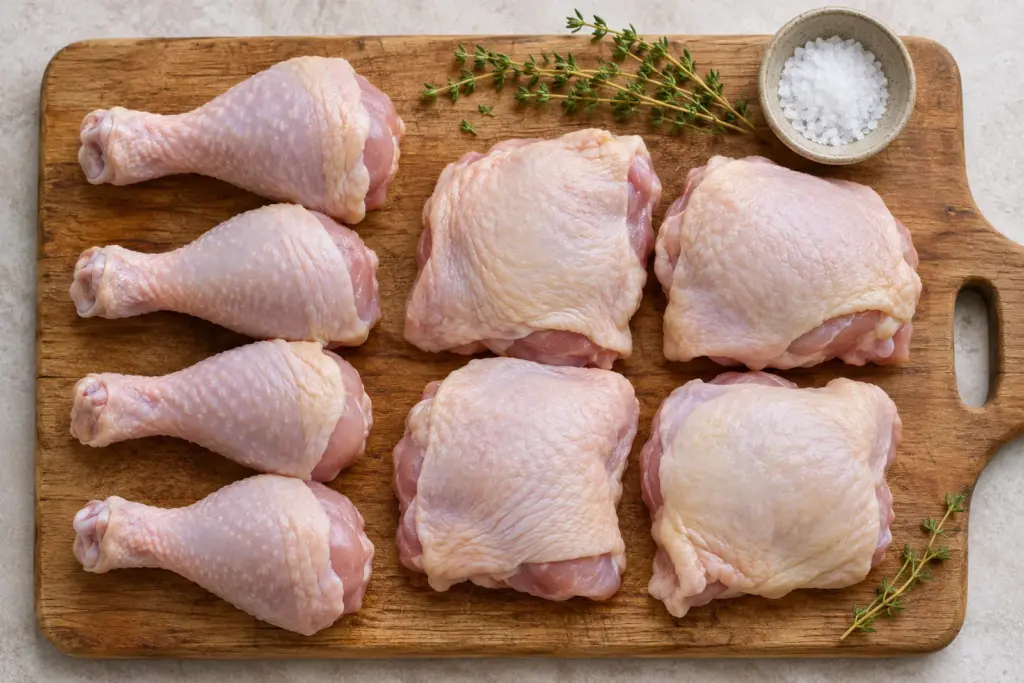
If you have stood at the meat case wondering whether a "chicken leg" is the same as a thigh, it is not: the leg is both pieces together. The two cuts sit in the same pack, so this is a smaller choice than most everyday food matchups, but it still decides how juicy dinner turns out and how long the oven stays on.
1. What Is a Chicken Leg, and Where Do Drumsticks and Thighs Fit?
The University of Kentucky's 4-H poultry parts guide defines the whole leg as the thigh and drumstick with the back portion removed. It calls the drumstick the lower part of the leg, cut at the hock and knee joints, and the thigh the upper part, cut at the knee and hip joints.
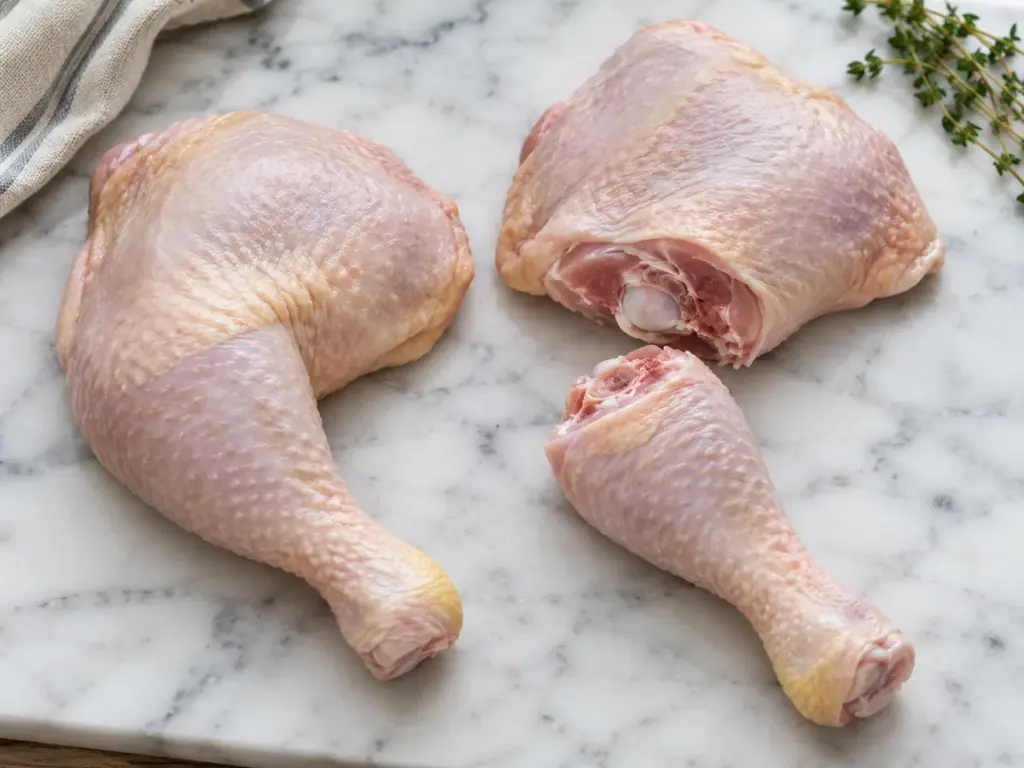
A leg quarter is the same pair with a piece of the back still attached, so quarters look bigger and cook a little longer. In everyday talk, some people also say "chicken leg" when they mean only the drumstick, so read the label for the word "thigh" before you assume what is in the tray.
Next to a wing, which is mostly skin and bone, a whole leg is mostly meat, so a chicken leg or wing decision comes down to how much meat you want per piece.
2. What Is the Difference Between Chicken Drumsticks and Thighs?
Both are dark meat, which means the muscles work all day and the meat has more fat and connective tissue than breast. The gaps show up in shape, bone and how much meat you get per piece, as this table shows. The gram weights come from USDA's portion data for cooked chicken, and the fat figures are USDA values for roasted meat without skin (FDC 172376 and 172388).
- It sits on the lower leg, between hock and knee.
- It has one long, thin bone with tendon at the narrow end.
- It sits on the upper leg, between knee and hip.
- It has one thigh bone, shorter and set in thicker meat.
| Trait | Drumstick | Thigh |
|---|---|---|
| Cooked meat per piece, no skin | 96 g | 116 g |
| Cooked meat per piece, with skin | 105 g | 137 g |
| Fat per 100 g, roasted, no skin | 5.7 g | 8.2 g |
| Texture | Firmer, more chew near the bone | Softer, very moist |
| Easiest to | Eat by hand, grill, fry | Braise, slow-cook, shred, bake |
The shape matters at the table. A drumstick has a built-in handle, so you can eat it without a fork, while a thigh is wider and flatter and is usually easier to cut, shred or serve over rice. Per piece, a thigh gives you about a fifth more cooked meat than a drumstick without skin, so a pan of thighs feeds people faster than the same count of drumsticks.
3. Which Has More Calories and Fat?
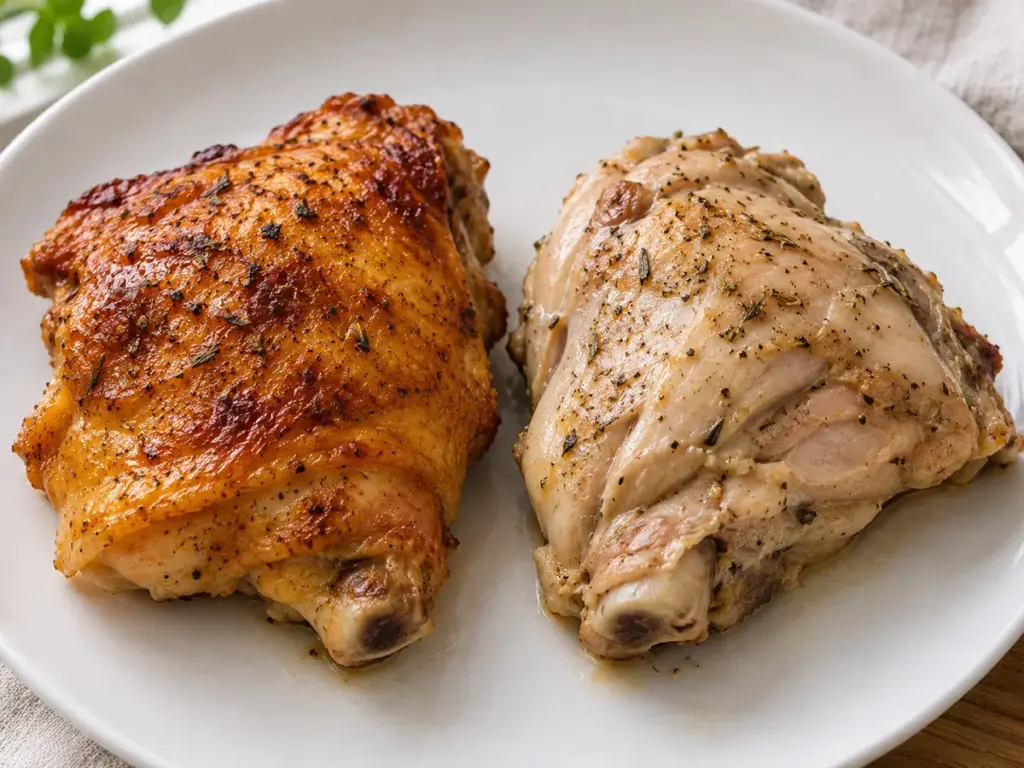
The thigh has more, but skin changes the numbers more than the cut does. All figures below are per 100 g from USDA FoodData Central for broiler or fryer chicken, with the FDC ID for each row.
| Form (per 100 g) | Drumstick | Thigh |
|---|---|---|
| Raw, meat only | 116 kcal, 19.4 g protein, 3.7 g fat (FDC 173614) | 121 kcal, 19.7 g protein, 4.1 g fat (FDC 173627) |
| Raw, meat and skin | 161 kcal, 18.1 g protein, 9.2 g fat (FDC 172373) | 221 kcal, 16.5 g protein, 16.6 g fat (FDC 172385) |
- Meat only has 155 kcal, 24.2 g protein, 5.7 g fat (FDC 172376).
- Meat and skin has 191 kcal, 23.4 g protein, 10.2 g fat (FDC 173612).
- Meat only has 179 kcal, 24.8 g protein, 8.2 g fat (FDC 172388).
- Meat and skin has 232 kcal, 23.3 g protein, 14.7 g fat (FDC 173625).
Multiply by the USDA's cooked portion weights and you get the number for one piece. A roasted drumstick without skin comes to about 149 kcal and 5.5 g of fat, and a roasted thigh without skin to about 208 kcal and 9.5 g of fat. With skin, a drumstick is about 200 kcal and a thigh about 318 kcal, so a skin-on thigh carries roughly twice the calories of a skinless drumstick.
4. Which Tastes Better, Drumsticks or Thighs?
Most cooks find the thigh richer and more forgiving, because it carries about 2.5 g more fat per 100 g and stays moist if you leave it in the oven a few minutes too long. A drumstick tastes just as much like chicken, but its leaner meat has more chew and dries faster when it overcooks.
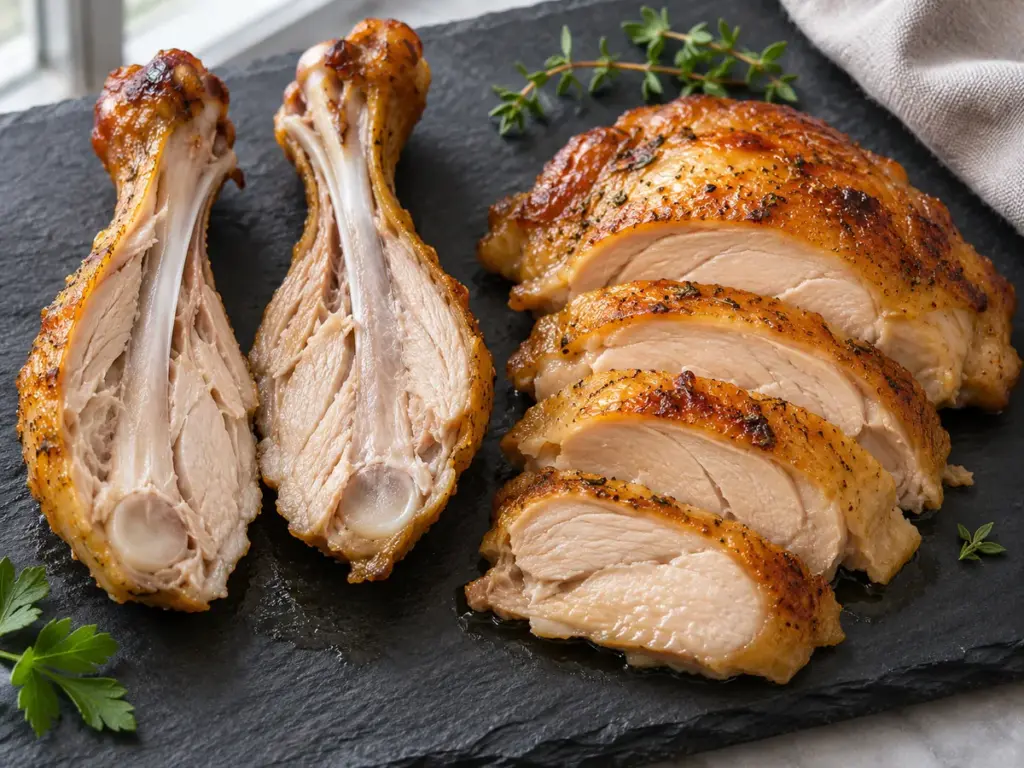
Connective tissue explains why dark meat needs a higher finish than the safety minimum. America's Test Kitchen says thighs and drumsticks are good at 175°F and even better at 190°F to 195°F, because the collagen in dark meat melts into gelatin as it heats. If you want a white-meat comparison for the same reason, the thigh against the breast shows how much more forgiving dark meat is.
5. How Long Do Drumsticks and Thighs Take to Cook?
Thighs are bigger, so they take about 5 minutes longer than drumsticks in the oven, and the two finish about together on the grill. Perdue lists these ranges for bone-in pieces, and the National Chicken Council gives the grill range:
| Method | Drumsticks | Thighs |
|---|---|---|
| Oven, 350°F to 375°F (Perdue) | 35 to 45 minutes | 40 to 50 minutes |
| Grill (National Chicken Council) | 25 to 30 minutes, to 170°F | 25 to 30 minutes, to 170°F |
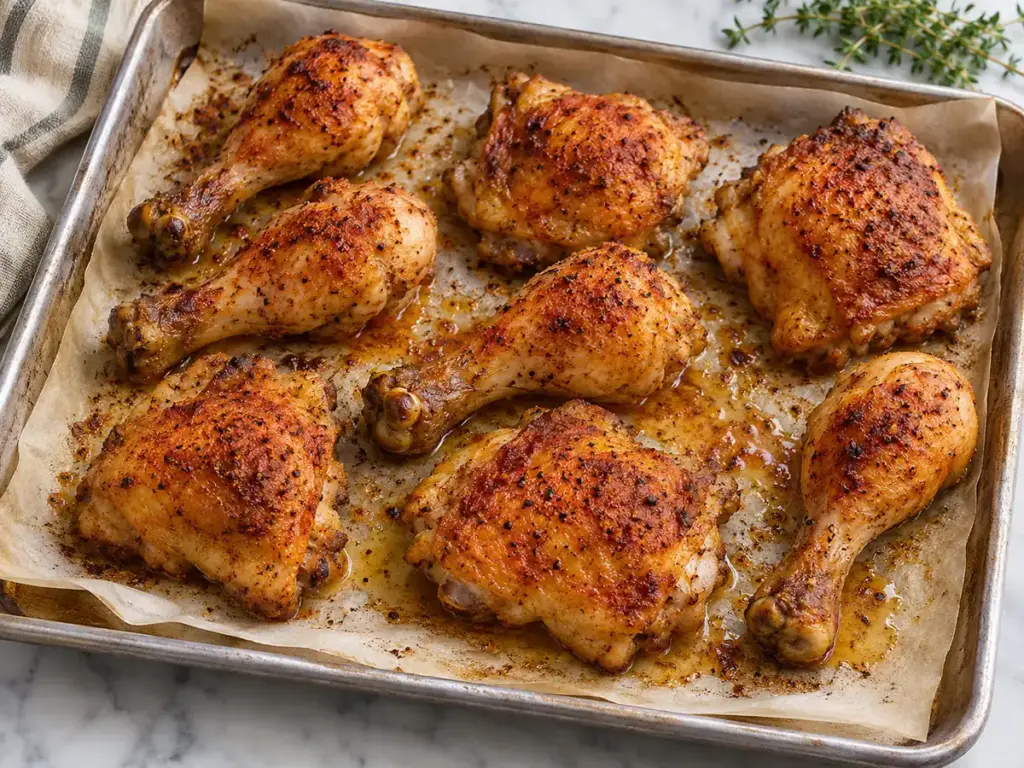
Times are a guide, because piece size, oven and starting temperature all move them, so the thermometer decides. Follow this order when you cook both on one pan:
- Sort by size. Put the largest thighs in the hottest part of the pan and the smallest drumsticks at the edge or at the back.
- Start the clock at the low end. Check drumsticks near 35 minutes and thighs near 40 when you bake at 350°F to 375°F.
- Probe the thickest part. Push the tip into the center of the meat, off the bone, and take two readings, as Penn State Extension advises.
- Pull at 175°F or more. Anything at or above 165°F is safe, and the extra 10 degrees softens the connective tissue.
- Rest 5 minutes. The juices settle, and the temperature rises a little more.
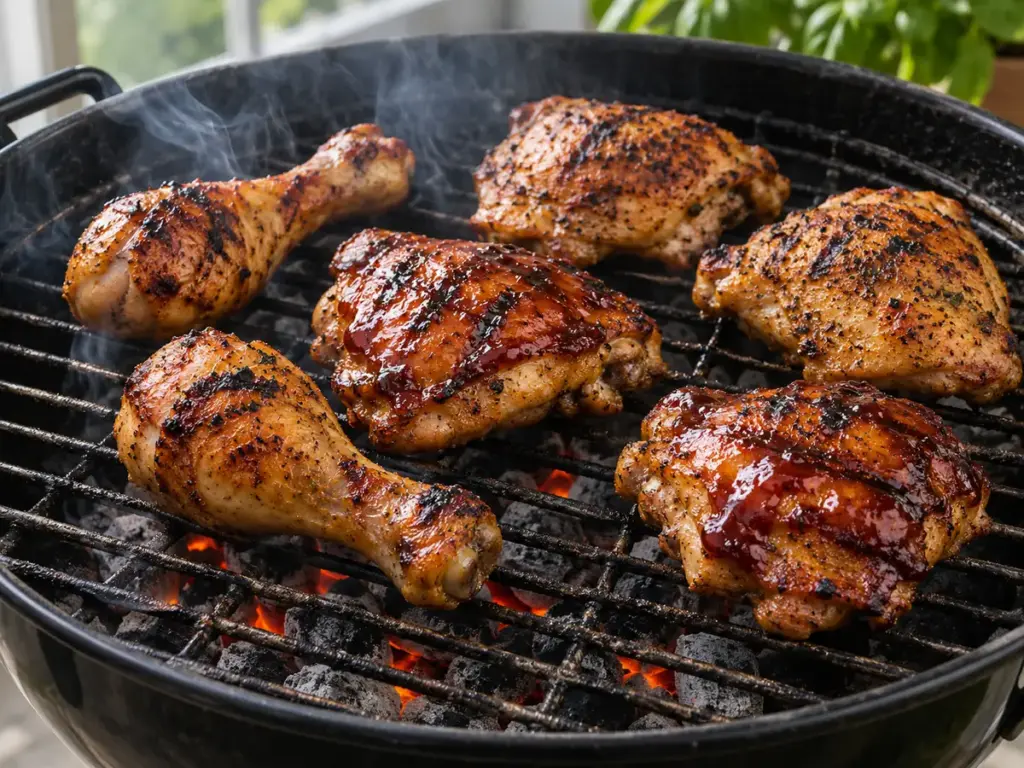
For a char-and-smoke finish, the National Chicken Council puts thighs and drumsticks at about 25 to 30 minutes on the grill, taken to 170°F. If grilling is the plan, the quick BBQ drumstick ideas give sauces and timing for the smaller piece.
6. Can You Swap Drumsticks for Thighs in a Recipe?
Yes, because both are bone-in dark meat with skin. Swap by weight, because a skin-on cooked thigh weighs about 137 g and a drumstick about 105 g, so 4 drumsticks equal about 3 thighs (420 g against 411 g of cooked meat and skin).
- Use 3 thighs for every 4 drumsticks
- Add 5 to 10 minutes in the oven
- Expect more rendered fat in the pan, so use a rimmed sheet
- Use 4 drumsticks for every 3 thighs
- Check the temperature 5 to 10 minutes earlier
- Expect a firmer bite, so braise longer for fall-off-the-bone meat
Braises and slow-cooker dishes forgive either one, but thighs hold up best in long cooking because their extra fat keeps the meat moist. If a dinner plan leans on thighs, the quick chicken thigh dinners are built around the 40-minute oven window.
7. Which Should You Buy?
Pick by what you will do with the chicken, since the USDA numbers show the two cuts closer than most people expect. These calls cover the common cases:
- Buy drumsticks for a party, a kids' dinner or a picnic, because they are easy to hold and each piece cooks a few minutes faster.
- Buy thighs for braises, slow-cooker meals and shredded chicken, where the extra fat and softer meat survive an hour or more of heat.
- Buy thighs when you want skinless meat that stays juicy, since a skinless thigh still has 8.2 g of fat per 100 g.
- Buy whole legs or leg quarters when you want both cuts from one pack, and cut them at the knee joint before cooking if you want even timing.
At the store, look for tight, unbroken skin and pieces of similar size in one tray so they finish together. Prices change by store and by week, so compare the per-pound price on the shelf tag, and remember that a bone-in piece is priced with its bone included. For a thigh-focused cooking list, the chicken thigh recipe collection shows what each method does to the meat.
For the plate, sturdy sides such as potatoes and slaws suit both. Our lists of sides for drumsticks and sides for thighs match the sides to each cut. When you fry either cut, you add a crisp coating and oil, so the choice between baked and fried chicken changes the fat on your plate more than the choice of piece does.
Sources
- USDA FoodData Central: FDC 173614 and 173627 (raw, meat only), 172373 and 172385 (raw, meat and skin), 172376 and 172388 (roasted, meat only), 173612 and 173625 (roasted, meat and skin)
- University of Kentucky 4-H Poultry: Market poultry parts identification
- Penn State Extension: Reducing risks of foodborne illness in poultry (165°F, thermometer placement)
- America's Test Kitchen: Best internal temperature for chicken thighs and drumsticks
- Perdue: Cooking with parts (oven times)
- National Chicken Council: Chicken on the grill (grill times and 170°F)

Food writer at GustoMeadow. Writes ingredient substitutes, food comparisons, taste guides and storage guides for home cooks.
Storage and food-safety numbers follow USDA, FDA and university extension guidance.



